Fukuoka · NagahamaNo.974★★★Open in map →
Fukuoka Yatai
— Licensed street stalls, handed on by public tender
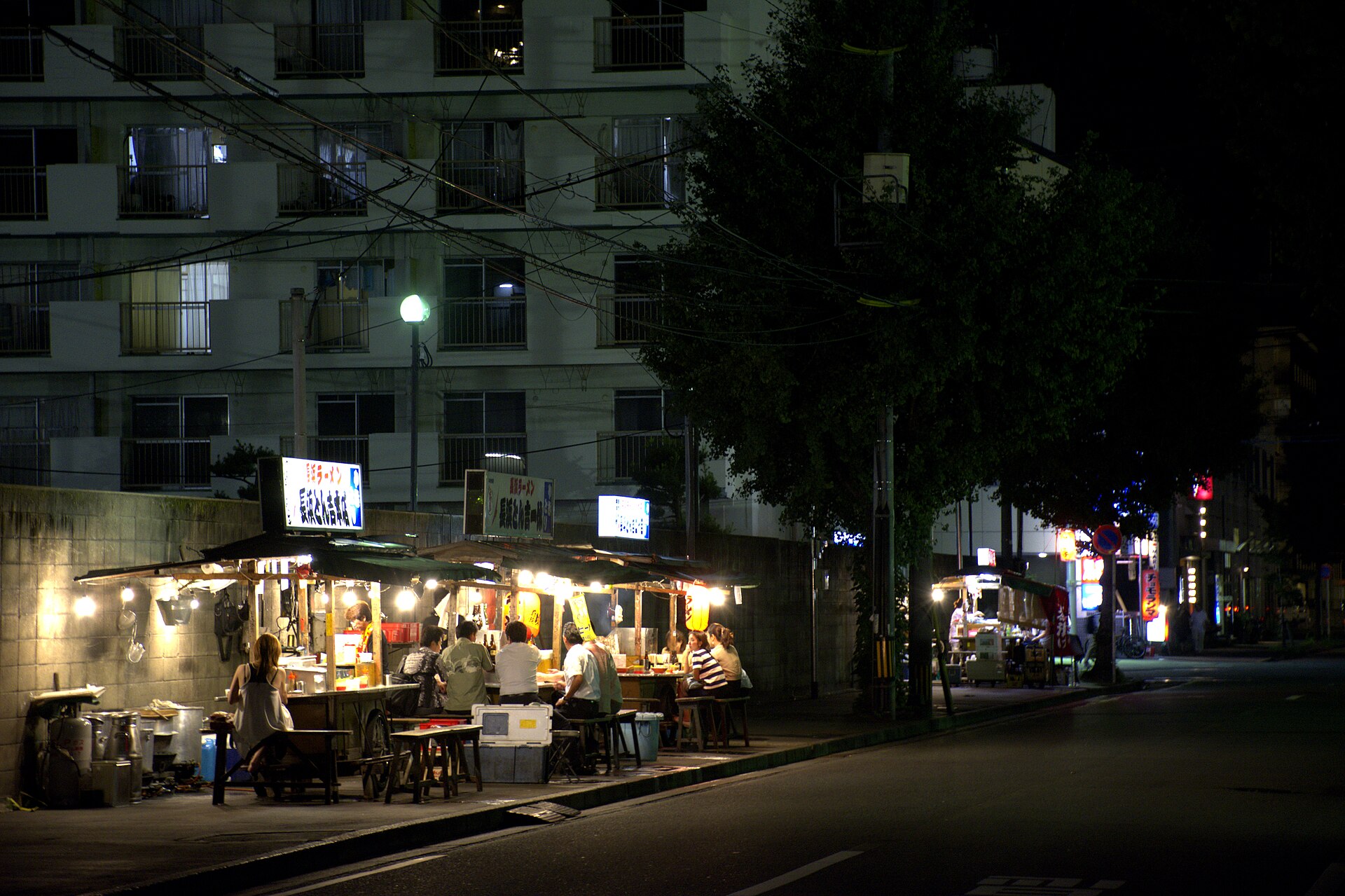
Fukuoka keeps around a hundred licensed street stalls, more than any other Japanese city, and passes the pitches on by public tender. Nagahama is the cluster next to the wholesale fish market, where a walkway open to anyone runs above the auction floor.
- FromHakata Station
- ~20 minSubway, four stops
- Get off atAkasaka Station (Subway Kuko Line)
- On foot
- Fukuoka Yatai
Where it is
28 more notes in Fukuoka · open the map →What to look for — in walking order
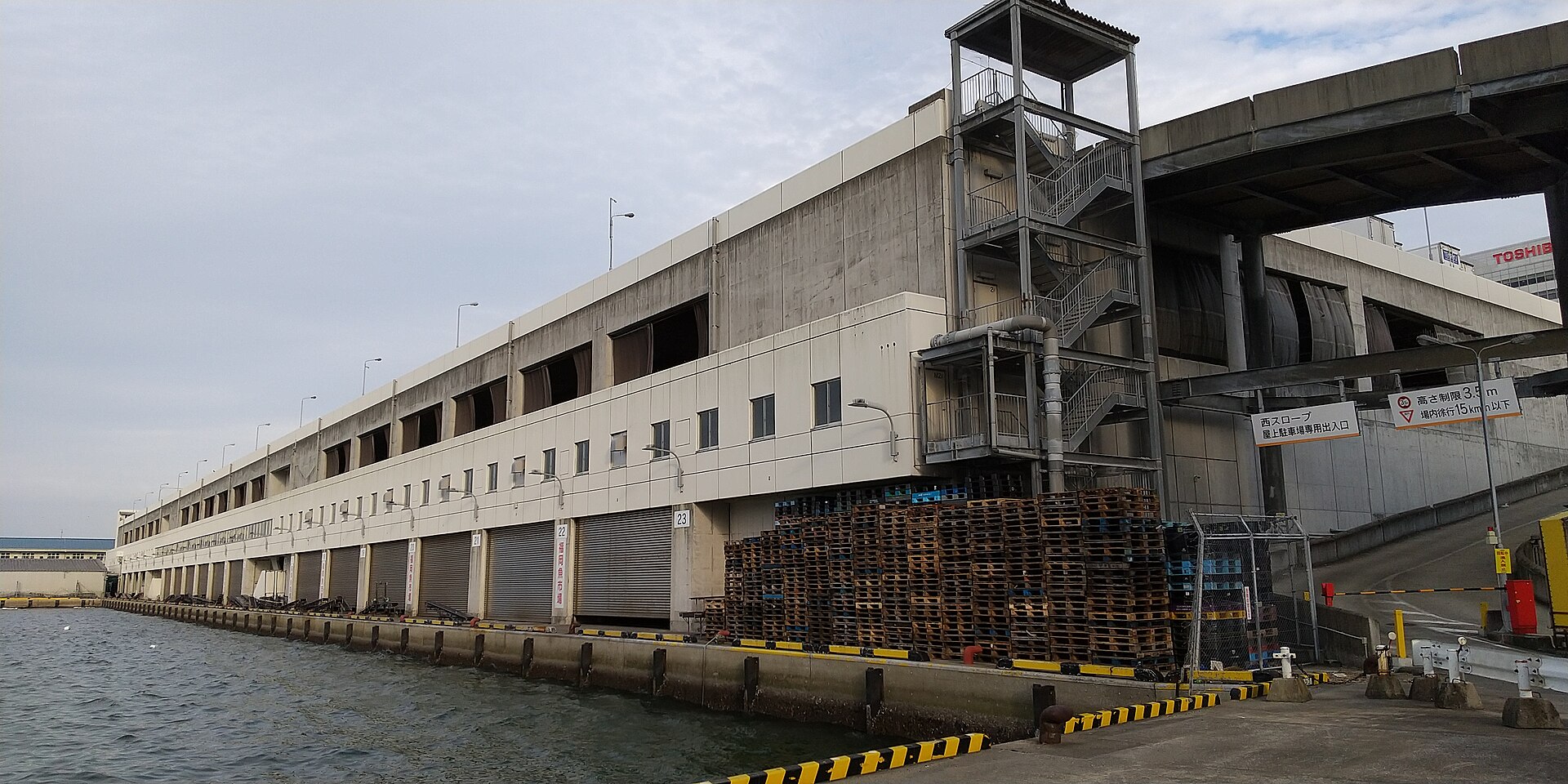
- Fish Market Centerthe one building here open to people without a trade pass, with restaurants on the ground floor
- The observation floora room at the top of the same building, open to anyone, looking out across Hakata Bay
- West wholesale hallan upstairs walkway, free to anyone who turns up, running above the floor where the fish are auctioned
- The yatai on Nanotsu-dorithe Nagahama row, built on the pavement after dark and gone without trace by morning
How to actually get there
- Hakata Station → Akasaka Station (Fukuoka City Subway Kuko Line, four stops via Gion, Nakasu-Kawabata and Tenjin).
- Akasaka Station → the fish market on the waterfront (walk north, roughly six hundred metres).
- Ride up inside the Fish Market Center to the observation floor, then cross to the upstairs walkway in the west wholesale hall.
- In the evening, walk east along Nanotsu-dori to reach the Nagahama stall row.
- Subway from Hakata Station
- Hakata Station →(Fukuoka City Subway, Kuko Line toward Meinohama)→ Akasaka: four stops by way of Gion, Nakasu-Kawabata and Tenjin. Trains on this stretch run often through the day, so there is no timetable to plan around. From Akasaka it is about six hundred metres north on foot to the fish market, and a few hundred metres further east to the stall row.
- Return from Akasaka
- Walk back south to Akasaka and take the Kuko Line four stops to Hakata. The stalls keep working after the subway has stopped, so a late night ends in a taxi — central Fukuoka is compact enough that this is a small expense rather than a problem.
About the place
A yatai is a wheeled stall — in law, a light vehicle fitted out for food service. It is assembled on the pavement in the evening and taken away again the same night. Fukuoka has around a hundred of them, more than any other city in Japan, and they cluster in three places: Nakasu, Tenjin and Nagahama. Every one stands on public land under an occupancy permit, and the size is capped at three metres of frontage and two and a half metres of depth. Nagahama is the northern cluster, on reclaimed ground facing Hakata Fishing Port, where the city's wholesale fish market was working long before the stalls became a tourist matter.
How to enjoy it
The two halves of this place run on opposite clocks. The market works before dawn, and the walkway above the auction floor needs no booking. The stalls appear in the evening and are cleared away before the market starts again. On a single visit, come late and eat on Nanotsu-dori; leave the observation floor and the walkway for another day.
Background & history
Nagahama is made ground, filled in over what had been a long sandbar, and the city's wholesale fish market and fishing port were put on it. Stalls gathered around the market to feed people working unsociable hours, and the district became the third yatai cluster after Nakasu and Tenjin. Over the following decades street stalls vanished from most Japanese cities. Fukuoka went the other way: in 2013 it passed a Yatai Basic Ordinance setting out what a stall is, which permits it needs, and how the city may advertise a pitch and choose who takes it on.
Before you go
- Cash
- The stalls are separate small businesses and many of them work in cash, so carry some. On the market side, the building open to people without a trade pass is the Fish Market Center, which has restaurants on its ground floor. The subway takes transport IC cards, and Akasaka Station has ticket machines.
- Good to know
- Stalls are wheeled out and packed away every night, so rain and typhoons simply mean they do not appear, and there is nothing on this pavement in the afternoon. The market runs on the trade's own calendar and has non-opening days, so check that it is open before giving a morning to it.
- Another way
- From Fukuoka Airport the same Kuko Line runs into the city without a change: stay on past Hakata and Tenjin and get off at Akasaka. From Tenjin, Akasaka is one stop west on the same line, or a short walk.
- After you get off
- From Akasaka Station, walk north — away from the castle park side — for roughly six hundred metres, and the market fills the waterfront ahead of you. The stall row on Nanotsu-dori lies a few hundred metres east of it, on the road that runs behind the port.
Nearby notes
 Yoshikazu TAKADA / CC BY 2.0
Food · Fukuoka★★★
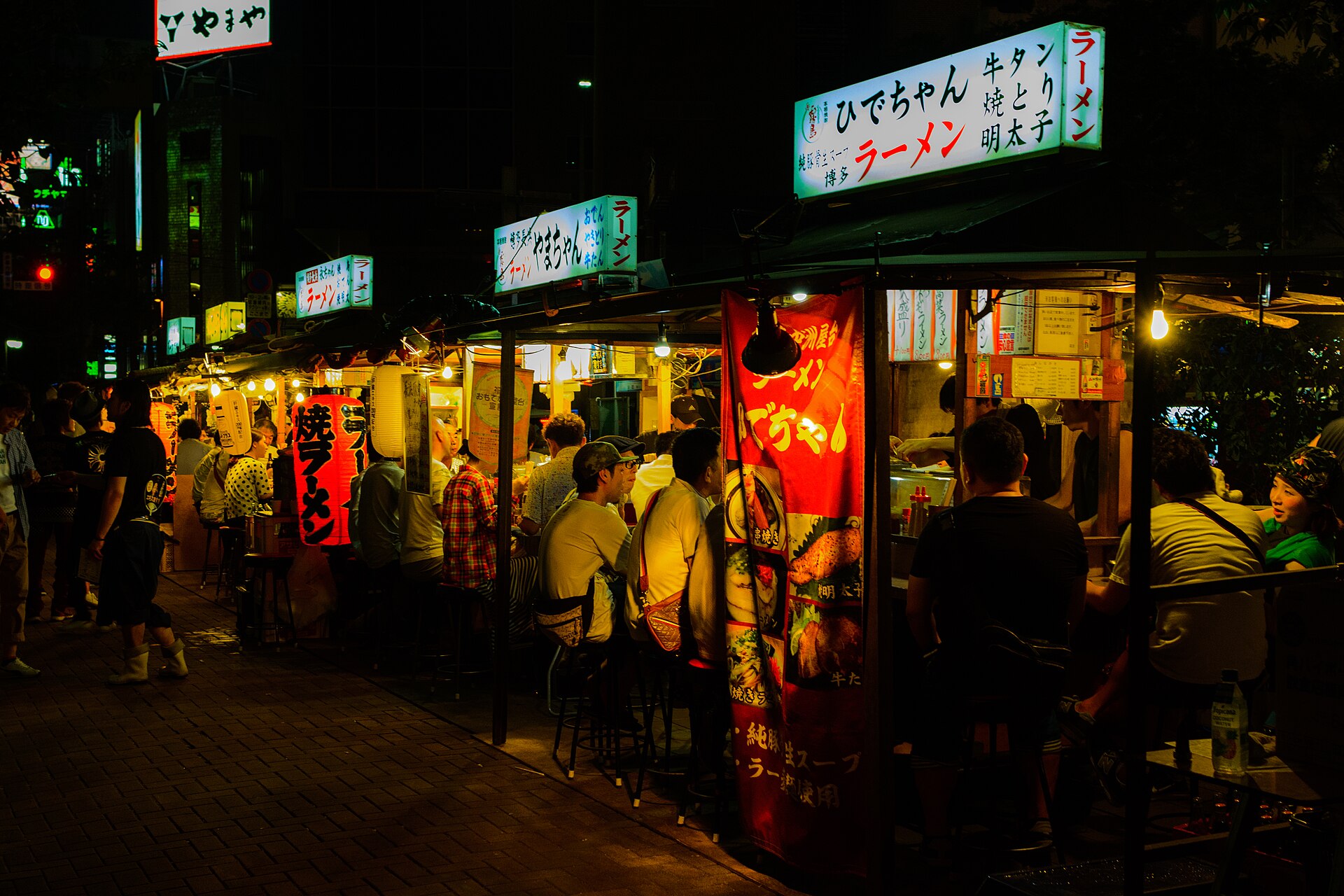
Hakata Tonkotsu Ramen
1.7 km · straight line
 mdid / CC BY 2.0
Culture · Fukuoka★★★
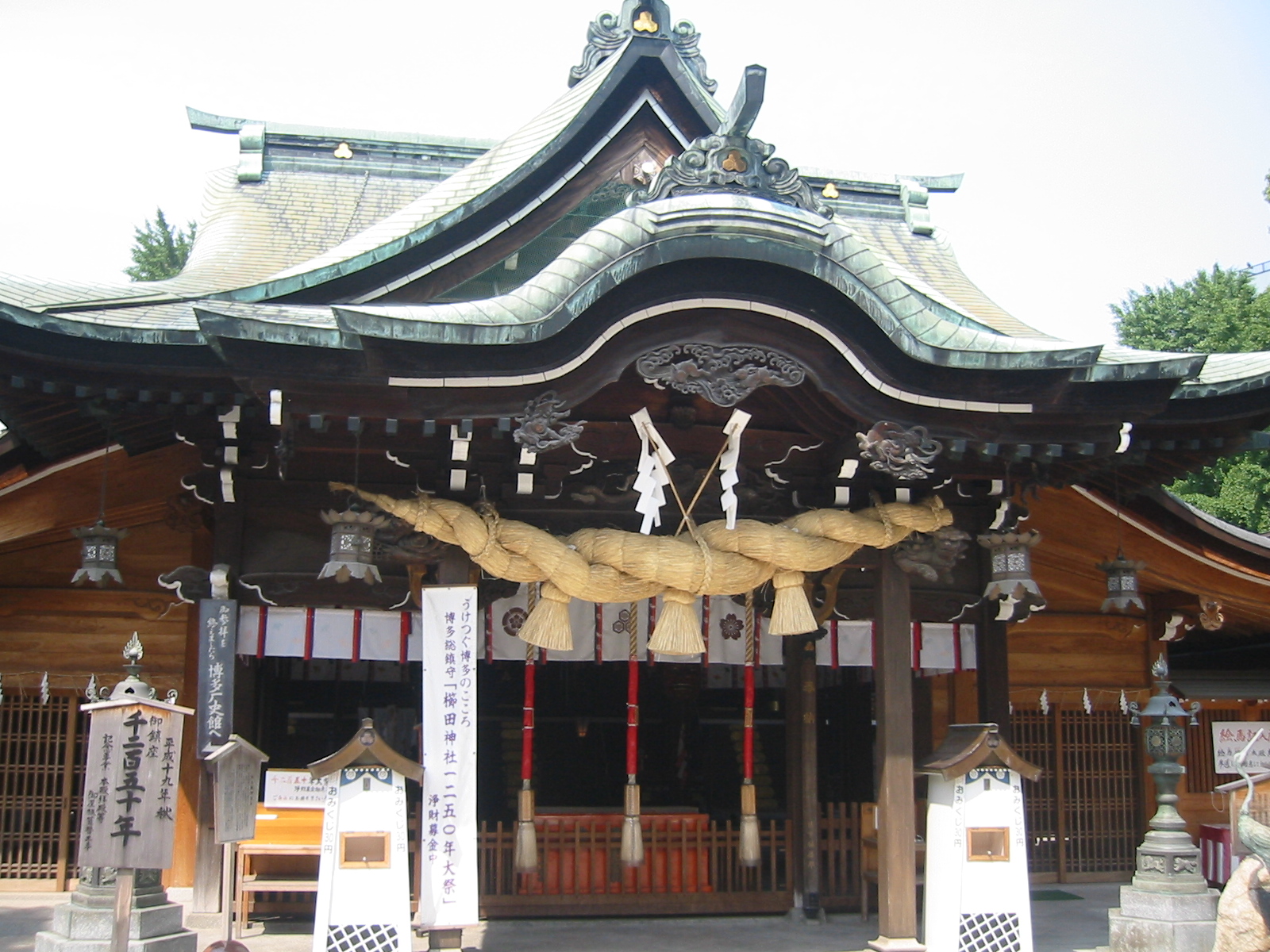
Kushida Shrine
1.9 km · straight line
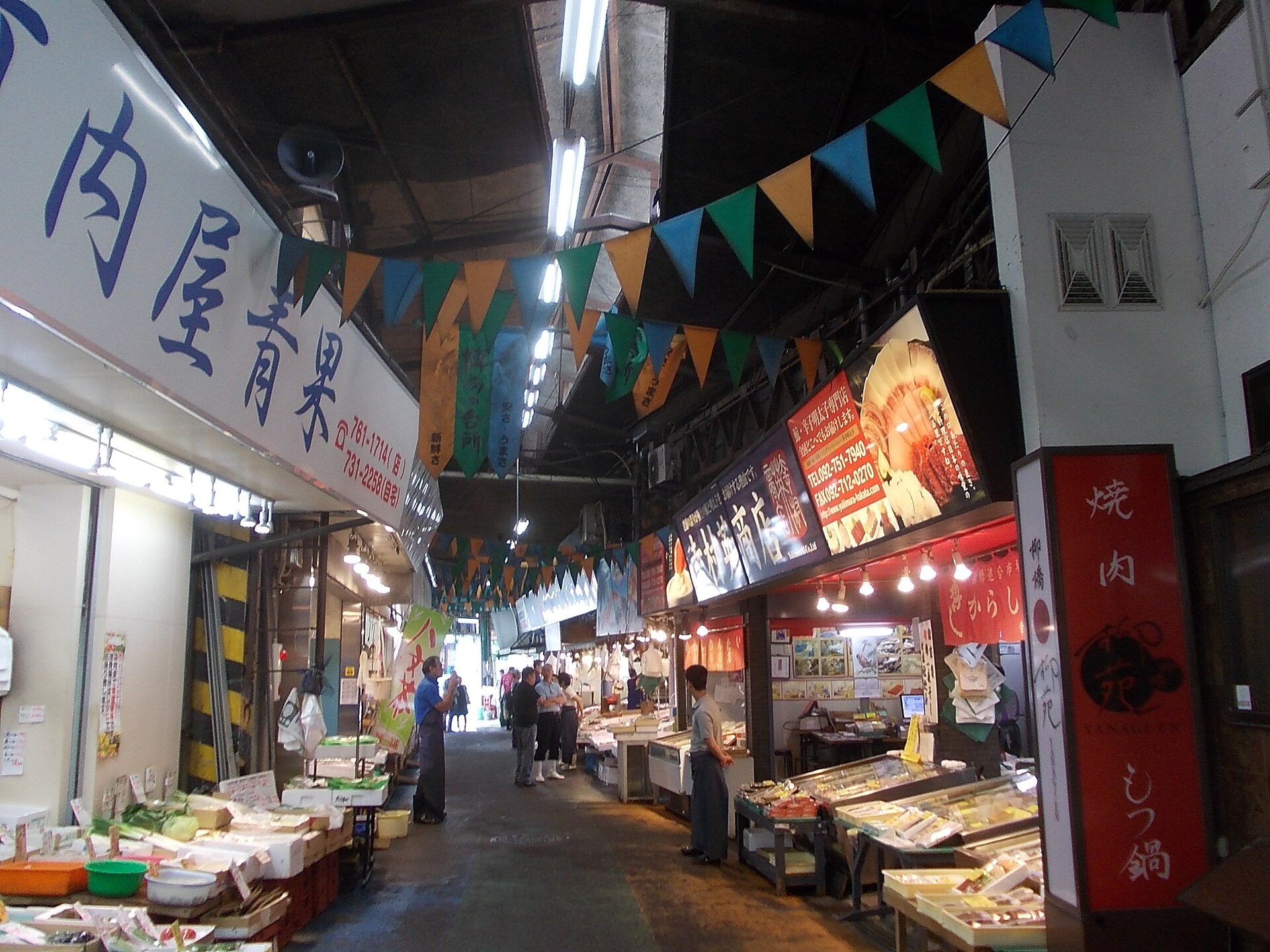 STA3816 / CC BY-SA 4.0
Food · Fukuoka★★★
Karashi Mentaiko
2.1 km · straight line
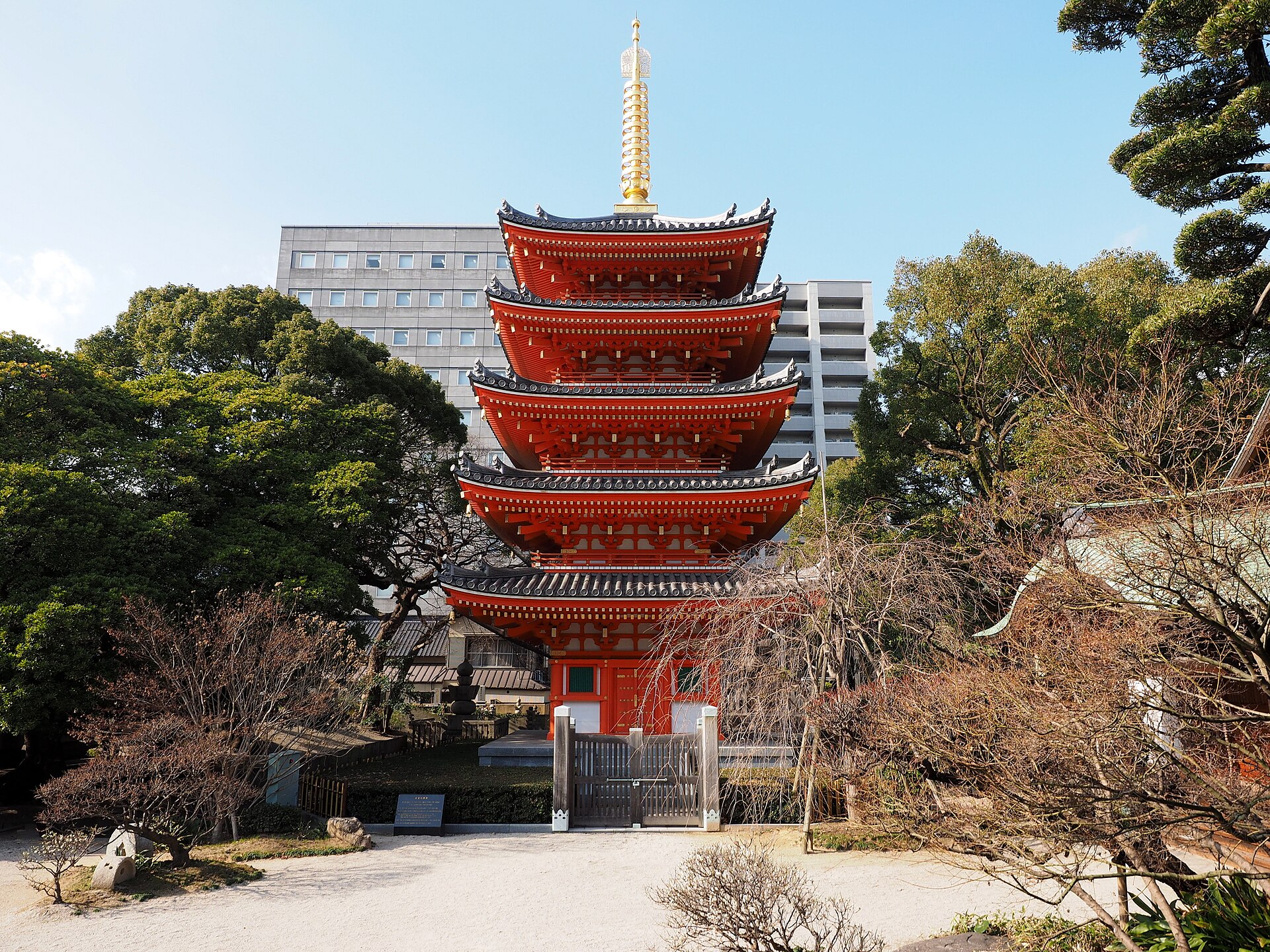 Nick-D / CC BY-SA 4.0
History · Fukuoka★★
Tochoji Temple
2.3 km · straight line
Distances are straight lines on the map, not travel times.