Hida · TakayamaNo.1117★★Open in map →
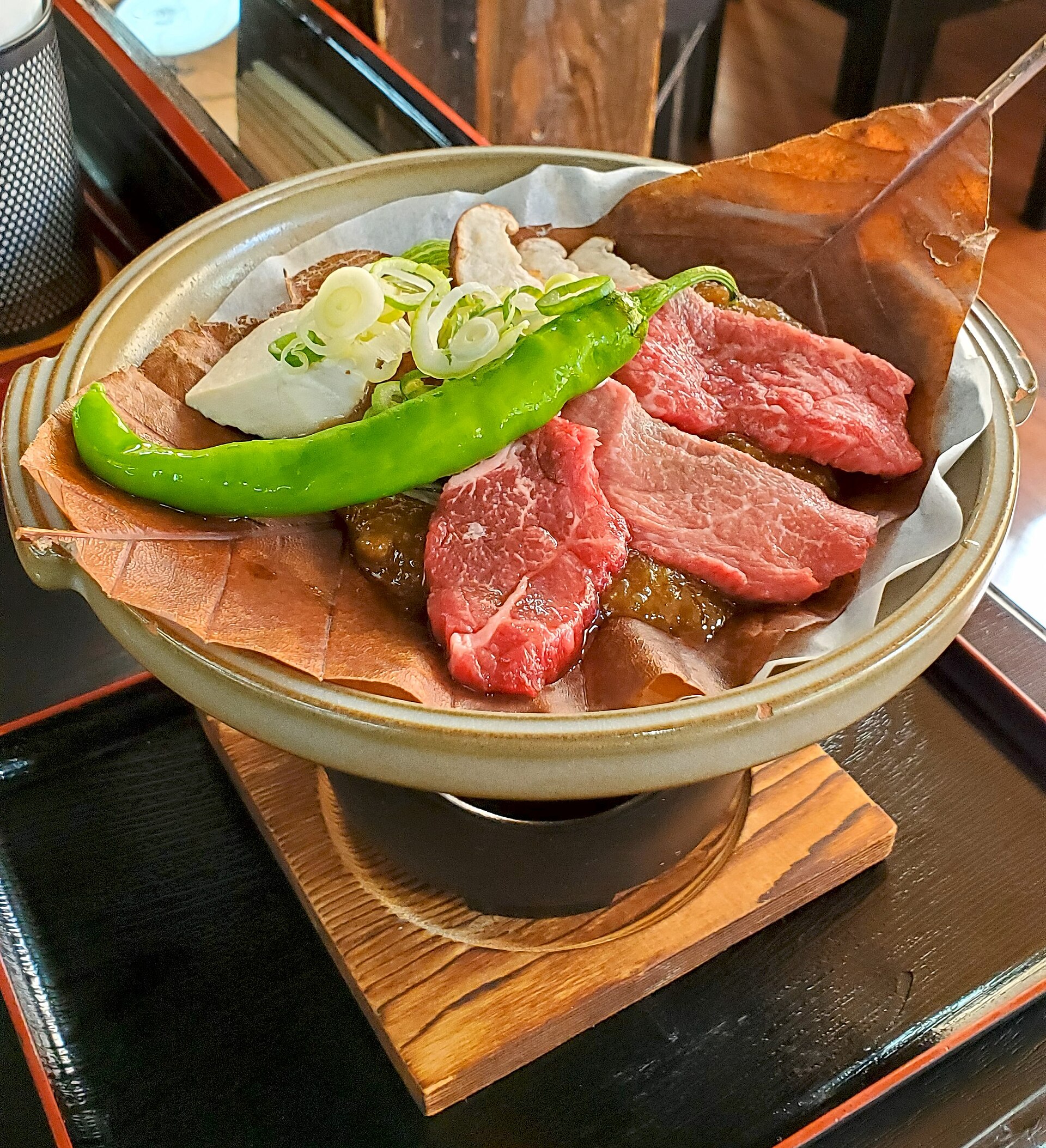
Hoba Miso
— Hida's miso grilled on a magnolia leaf
A dried magnolia leaf used as a pan — miso, spring onion and mushroom laid on top and warmed over a small brazier until the leaf scents the whole thing. It is Hida's own way of eating, and it turns up at breakfast far more often than at dinner.
- FromTakayama Station
- ~10 minLoop bus from the station, ~10 min
- Get off atHida-no-Sato bus stop (Sarubobo Bus)
- On foot
- Hoba Miso
The sweet spot
This is not a hidden dish. Every restaurant in the old town lists it and every souvenir shop sells the leaf with the miso already spread on it. What visitors miss is when it belongs. In Hida it is breakfast food, so a ryokan tray in the morning is the plain version, and the beef course in the evening is the later, showier one.
Where it is
18 more notes in Gifu · open the map →What to look for — in walking order
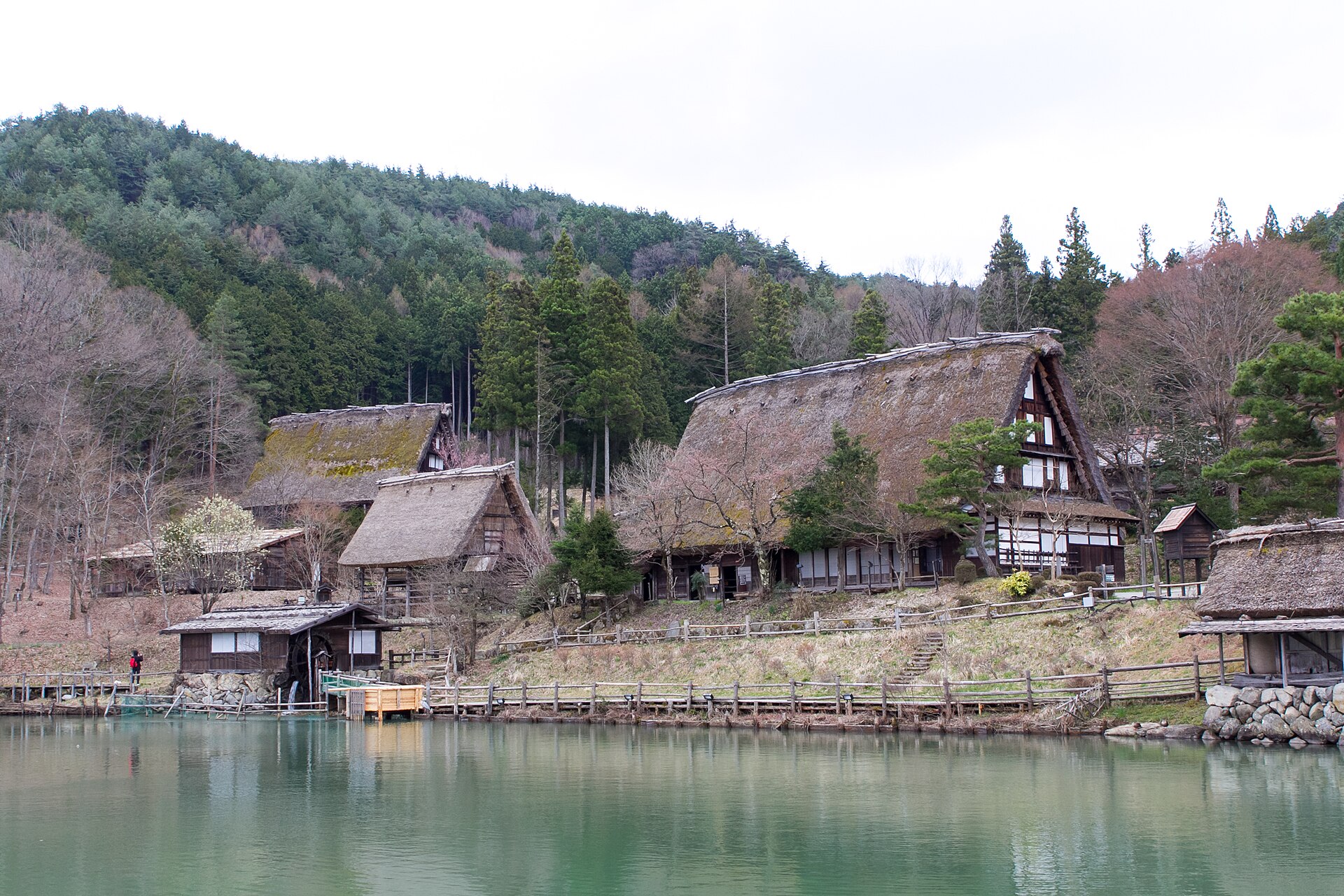
- The pond inside the gatestill water at the foot of the slope, with the thatched roofs standing above it
- The gassho farmhousessteep thatched houses from across Hida, taken down elsewhere and rebuilt here
- The hearth roomsliving rooms laid out around an open floor hearth, the fire this dish belongs to
- The four protected housesthe farmhouses on the site listed as national important cultural properties
How to actually get there
- Takayama Station → the Nohi bus centre beside the station.
- Bus centre → Hida-no-Sato stop on the Sarubobo loop bus, about 10 min.
- Walk the village loop from the pond up past the thatched houses and the hearth rooms.
- Ride back into town for the dish itself, as a meal or as a set from a shop.
- Sarubobo loop bus from Takayama Station
- Takayama Station → the Nohi bus centre beside it, then the Sarubobo loop bus to the Hida-no-Sato stop, about 10 minutes. Fares are a few coins and day passes are sold at the bus centre. The loop runs from mid-morning and departures are spaced out rather than frequent, so read the board before you plan a return.
- Return to Takayama Station
- Take the same loop bus back to the bus centre beside Takayama Station. If you miss a departure, it is about half an hour downhill on foot into the centre of town, which is a reasonable walk in good weather. From the station the Limited Express Hida runs south to Nagoya and north toward Toyama, with only a handful of through services a day.
About the place
Hoba is the leaf of the Japanese bigleaf magnolia, a broad-leaved tree common in these mountains. The leaf resists bacteria, so food wrapped in it keeps longer and takes on its scent. The account told in Hida is that woodsmen used it as a plate and warmed miso on it over a fire in the forest. Households then brought the habit indoors, where a hearth burned in the middle of the living room and a browned leaf could sit on a wire rack above the coals. Pickles and stored onions were thawed on the same rack. What now arrives at the table with sliced beef and a small burner began as winter housekeeping.
How to enjoy it
The village opens at 8:30 and the loop bus starts at nine, which suits the order the dish wants: eat the leaf at your ryokan breakfast, then come out and stand in the room the recipe came from. Doing it the other way round works too, and in summer the slope is better walked before the middle of the day. Back in the centre, shops sell the leaf and the miso as a set, which is the only part of this you can carry home.
Background & history
Hida was logging country, and the dish is credited to the men who worked its forests, who had leaves to hand and no plates. It moved from the forest fire to the household hearth, where winters were long enough that miso and pickles froze solid and had to be warmed before they could be eaten. It stayed a domestic thing until the post-war decades, when the leaf and the miso were packaged together and sold to travellers. That is the point at which a way of getting through February became something you could take home.
Before you go
- Cash
- The village charges admission at the gate and the loop bus is paid on board or with a pass bought at the bus centre. Both are small transactions, so carry coins. The dish itself is bought back in town, either as a meal or as a packaged leaf-and-miso set.
- Good to know
- The village is open through the year and the ground is a slope, partly unpaved. Hida winters are snowy and the houses are unheated timber, which is the point of the place in February and hard going if you are not dressed for it. In summer the climb is exposed and better done early.
- Another way
- By car it is a short run west from the centre of Takayama, with a paid car park at the entrance. A taxi from the station is the fallback once the loop bus has finished for the day.
- After you get off
- From the Hida-no-Sato bus stop it is a couple of minutes on foot, past the car park and down to the ticket gate at the entrance.
Nearby notes
 Alexkom000 / CC BY 4.0
History · Gifu★★
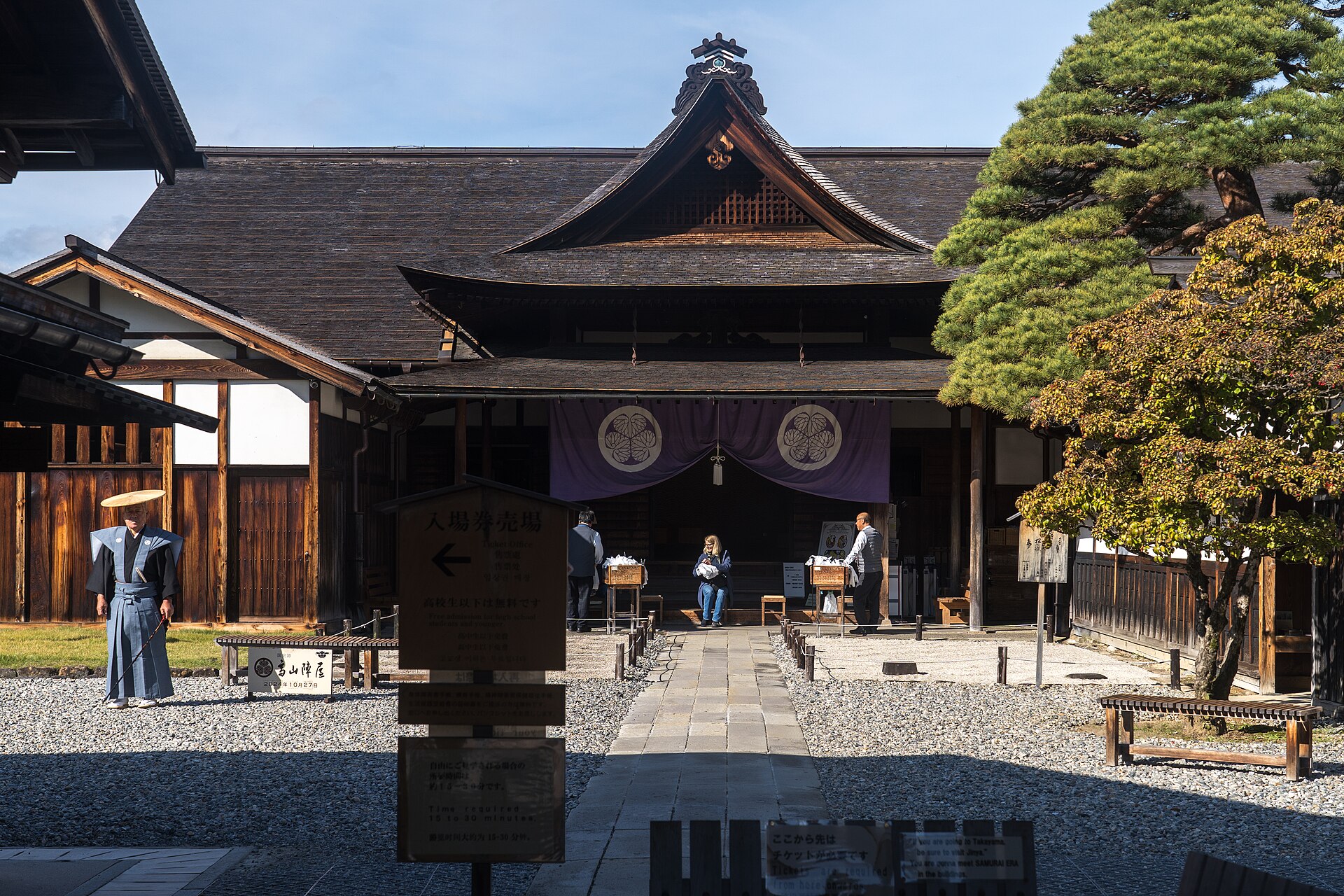
Takayama Jinya
2.2 km · straight line
 Ankur P / CC BY 2.0
History · Gifu★★★
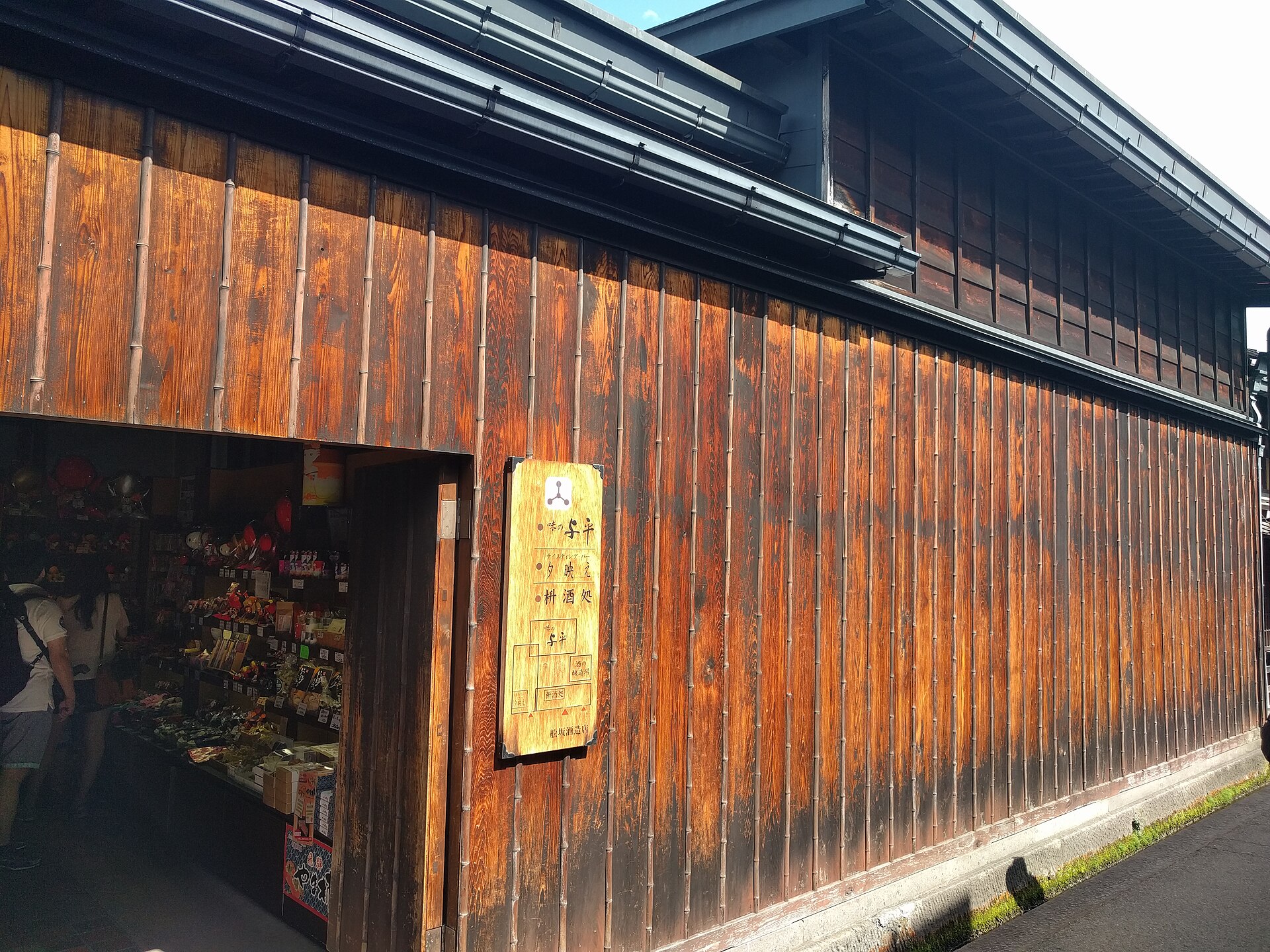
Takayama Sanmachi Old Town
2.4 km · straight line
 Ankur P / CC BY 2.0
Food · Gifu★★★
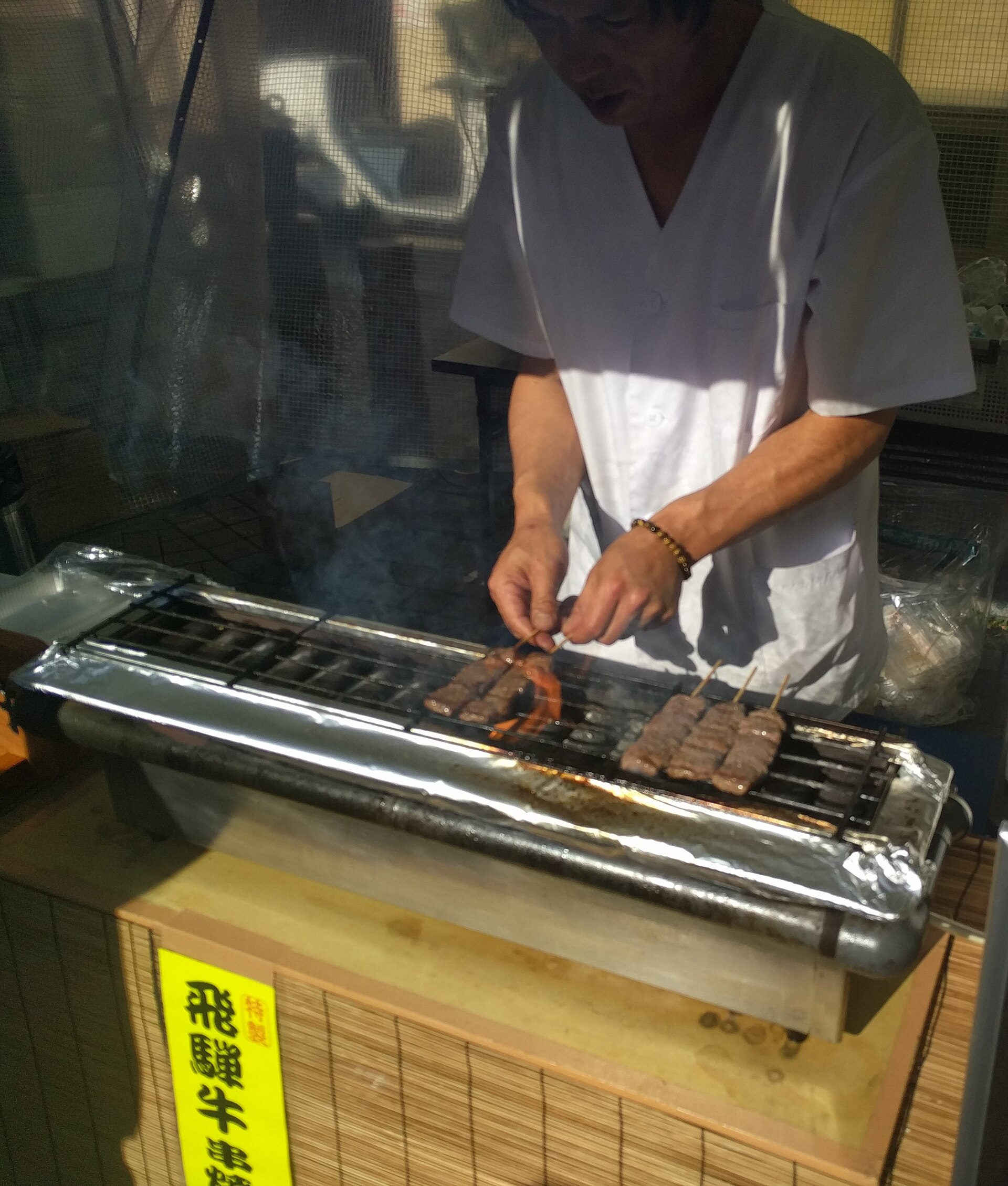
Hida Beef
2.5 km · straight line
 Daderot / CC0
Culture · Gifu★★★
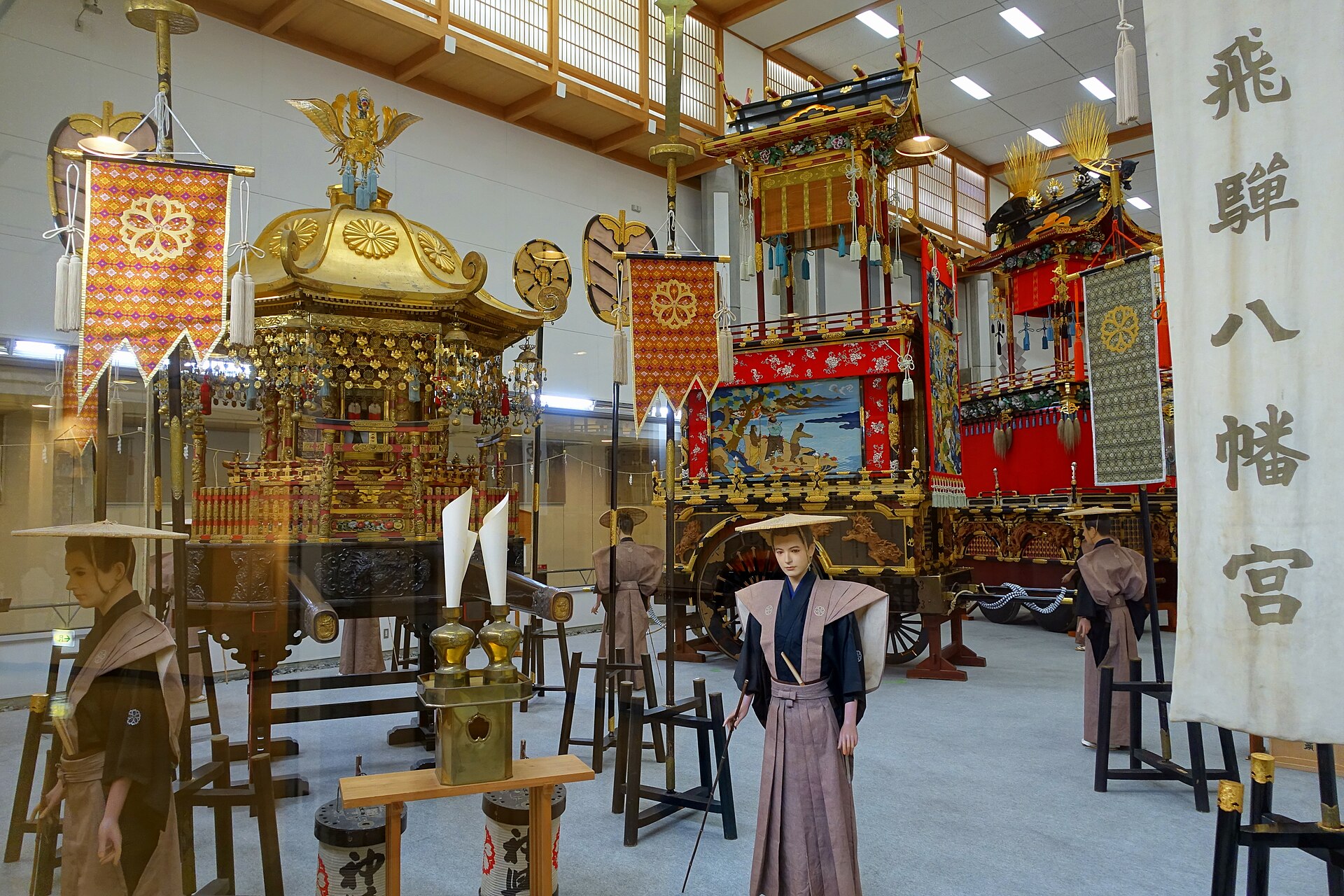
Takayama Festival Floats Exhibition Hall
2.9 km · straight line
Distances are straight lines on the map, not travel times.