N Hokkaido · HorokanaiNo.1137★★Open in map →
Horokanai Soba
— Buckwheat country served at its roadside station
Japan's largest buckwheat-growing municipality keeps its soba at a roadside station in the middle of the town. Hand-cut noodles, a hall of buckwheat goods and a hot spring share one car park, and the fields that supply them begin at its edge.
- FromFukagawa Station
- ~1 hr 35 minJR bus, a few runs a day
- Get off atRuonto-mae (JR Hokkaido Bus, Shinmei Line)
- On foot
- Horokanai Soba
The sweet spot
This is no secret. It is a registered roadside station on a national highway, and cars pull in all day long. What keeps it off most itineraries is access: the town lost its railway line years ago, and the replacement bus makes only a handful of runs a day, so it sits outside the usual rail-pass circuit.
Where it is
102 more notes in Hokkaido · open the map →What to look for — in walking order
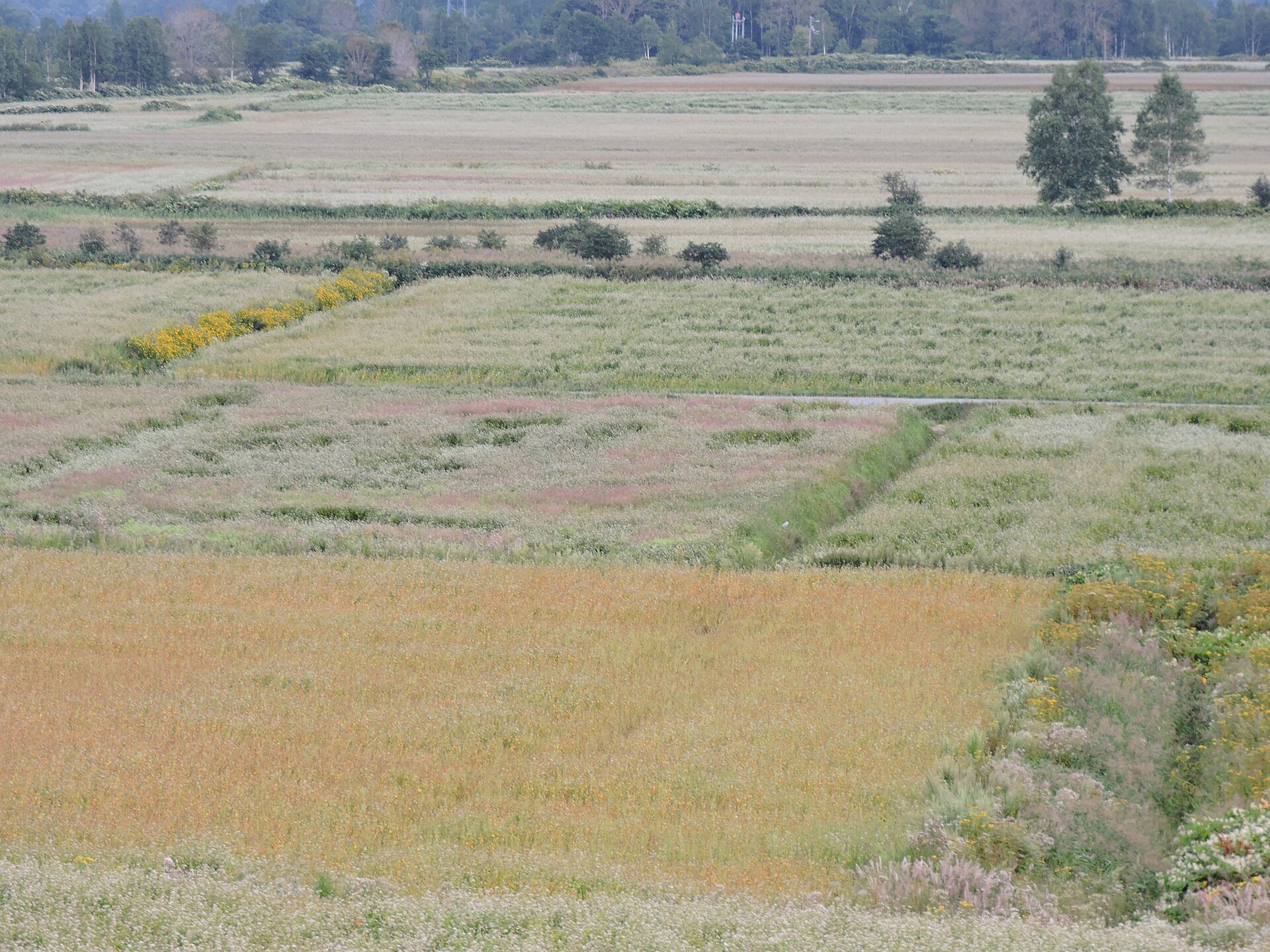
- Buckwheat fields along the highwaywhite blossom from mid-July to mid-August, with viewpoints marked along the road through the town
- Horokanai Products Hallbuckwheat flour, dried noodles, soba gelato and bamboo-grass soft serve, closed through the winter
- Soba no Sato dining roomstone-milled flour and noodles cut by hand on the premises every day
- Seiwa Onsen Ruontoa reddish-brown sodium-chloride spring drawn from the foot of Mt. Santozan
- The open-air bathan outdoor tub facing the wooded slope behind the building
How to actually get there
- Sapporo or Asahikawa → Fukagawa Station (JR Hakodate Main Line).
- Fukagawa Station → Ruonto-mae bus stop (JR Hokkaido Bus, Shinmei Line, about 1 hr 35 min).
- Ruonto-mae → the produce hall, then the dining room and bathhouse behind it, all within the same car park.
- JR Hokkaido Bus, Shinmei Line from Fukagawa
- Fukagawa Station on the JR Hakodate Main Line is the gateway. From the bus stand there, the Shinmei Line runs north to the Ruonto-mae stop in about 1 hr 35 min. Only a few departures a day carry this far, and they are spread across morning, midday and afternoon, so fix your bus before you fix your lunch. The stop is on the highway directly in front of the site.
- Return from Ruonto-mae
- Southbound buses toward Fukagawa call at Ruonto-mae in the late morning, the mid-afternoon and again in the evening, with long empty stretches between. There is no late-night service and no taxi rank. Northbound runs continue toward Lake Shumarinai and Nayoro on a thinner schedule still, so decide your direction before you arrive.
About the place
Horokanai lies in northern Hokkaido, on the highway that runs between Fukagawa and Nayoro. About 3,200 hectares of its farmland are sown with buckwheat, the largest planted area of any municipality in the country. The roadside station Mori to Mizuumi no Sato Horokanai stands in the Seiwa district, roughly midway along the town. One car park serves three things at once: a produce hall, a soba dining room and a hot-spring bathhouse. The kitchen mills its own flour on stone and cuts the noodles by hand each day, using buckwheat grown in the town.
How to enjoy it
The bathhouse keeps the longest hours, running roughly 10:00 to 21:00, while the dining room opens for lunch and again in the evening; both take Wednesdays off, and the produce hall closes for the winter. Build the stop around a meal and a soak rather than a quick look, because the gap between buses is measured in hours, not minutes. In high summer the white blossom on the surrounding fields is reason enough to take an earlier bus and walk the highway shoulder for a while.
Background & history
Buckwheat spread across Horokanai in the early 1970s, when national cuts to rice acreage pushed farmers to find another crop for the cold ground. By 1980 the town held the largest planted area of any municipality in Japan, and it has kept that position since. The railway that once threaded the valley was closed and replaced by a bus service that still carries the old line's name. The bathhouse at the roadside station reopened in 2020 after the building was stripped back and rebuilt inside.
Before you go
- Cash
- The site itself is free to enter and the car park is open to anyone. The bathhouse is listed by the town's tourism association at 500 yen for adults and 250 yen for primary-school children. Carry cash for the bus and for the produce hall rather than relying on cards.
- Good to know
- The produce hall shuts for the winter and takes Tuesdays off in season, while the bathhouse and the dining room close on Wednesdays. Snow lies deep here from late autumn into spring, and the buckwheat fields are bare outside the summer months.
- Another way
- By car the site sits directly on National Route 275, on the road that leads north toward Lake Shumarinai. There is a large car park at the door, and the highway is the main north-south route through this part of Hokkaido.
- After you get off
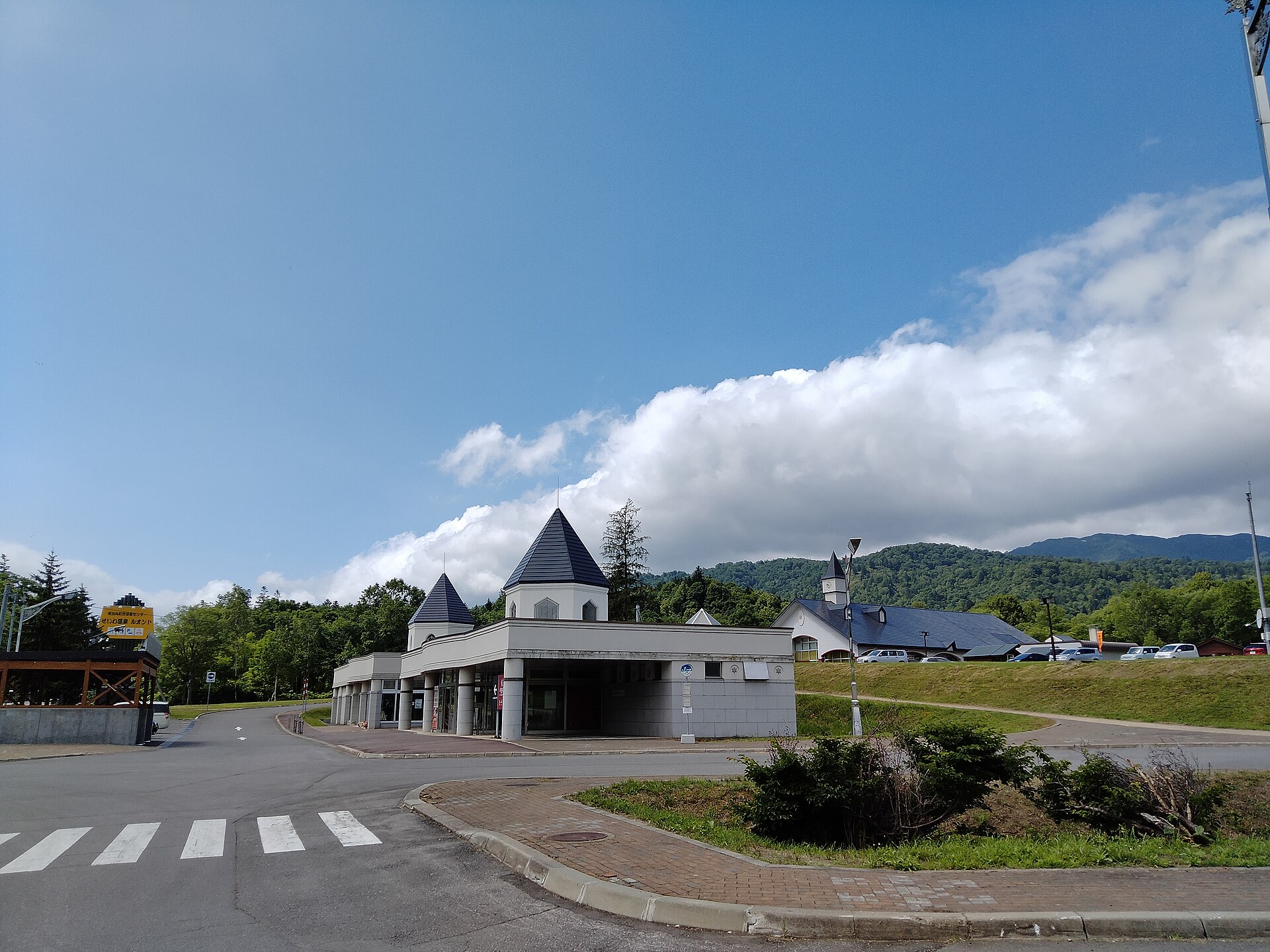
- Ruonto-mae is the stop in front of the site. The toilets and the produce hall stand a few steps back from the road, and the larger building behind them, with the pitched roof and the small tower, holds the bathhouse and the dining room.
Nearby notes
Distances are straight lines on the map, not travel times.