Southwest Okayama · KasaokaNo.598★Open in map →
Kasaoka Islands
— Bridgeless islands on the Seto Inland Sea
A cluster of islands off Kasaoka, in the southwestern corner of Okayama, that no bridge reaches. Two of them make an easy pair for a day out from the mainland: the stone island of Kitagishima and the fishing village of Manabeshima.
- FromOkayama Station
- ~50 minJR train, then a short walk
- Get off atKasaoka Station (JR Sanyo Line)
- From there
- Kasaoka Islands
The sweet spot
These are working islands rather than resort ones. The quarry is live, the school has pupils, the boats are how people commute. What shapes a visit is not crowding but the sailing list: read it first, and the rest of the day arranges itself around it.
Where it is
14 more notes in Okayama · open the map →What to look for — in walking order
- Sumiyoshi Portthe passenger-boat pier in Kasaoka, with the ticket counter and waiting room in the islands centre beside it
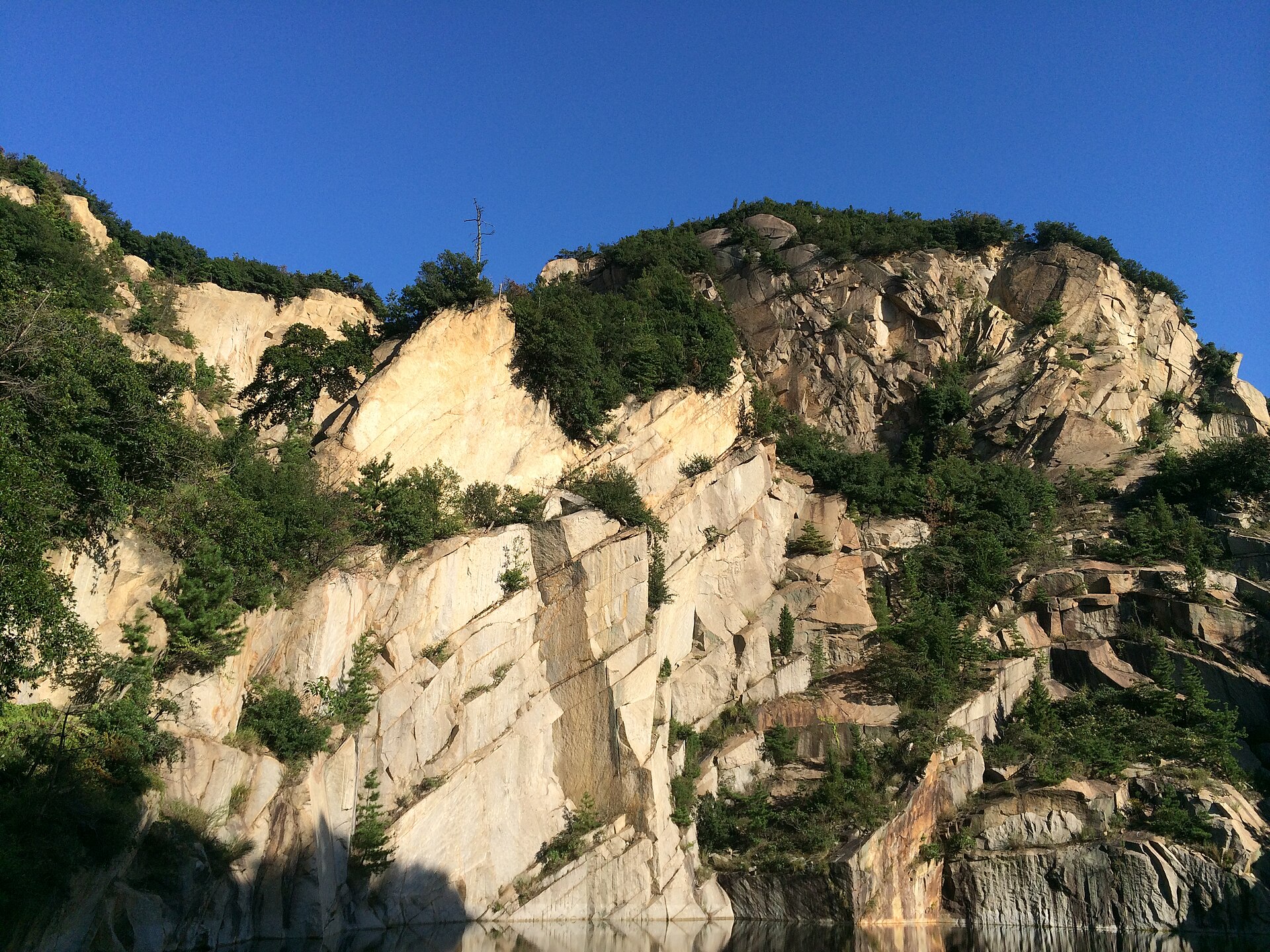
- The Kitagishima quarriescliff faces above pits that are still being worked, with rainwater lakes standing in the ones already cut out
- The Hikari Gekijo cinemaa wooden cinema left on the west of Kitagishima from the years when the stone town was busiest
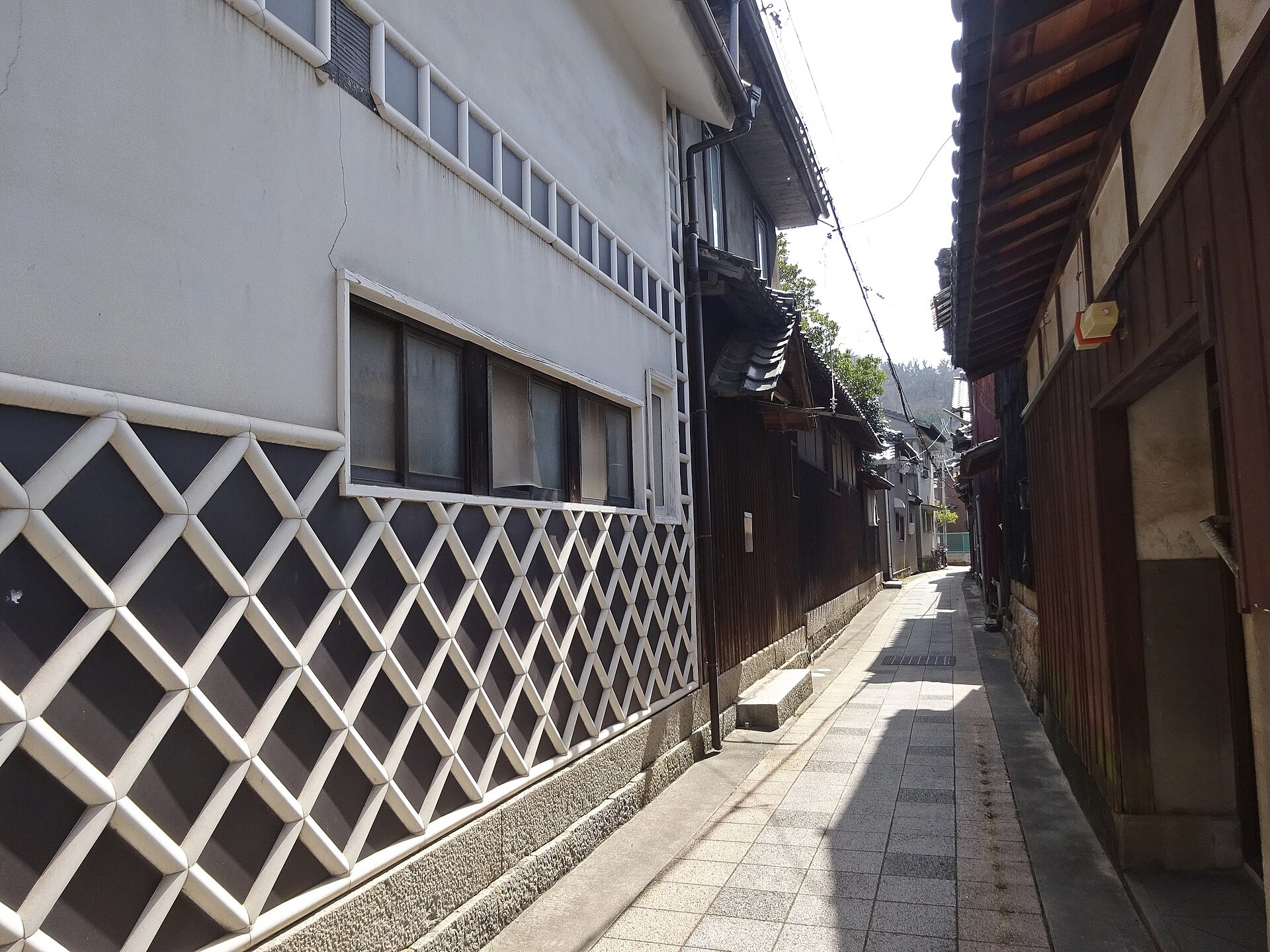
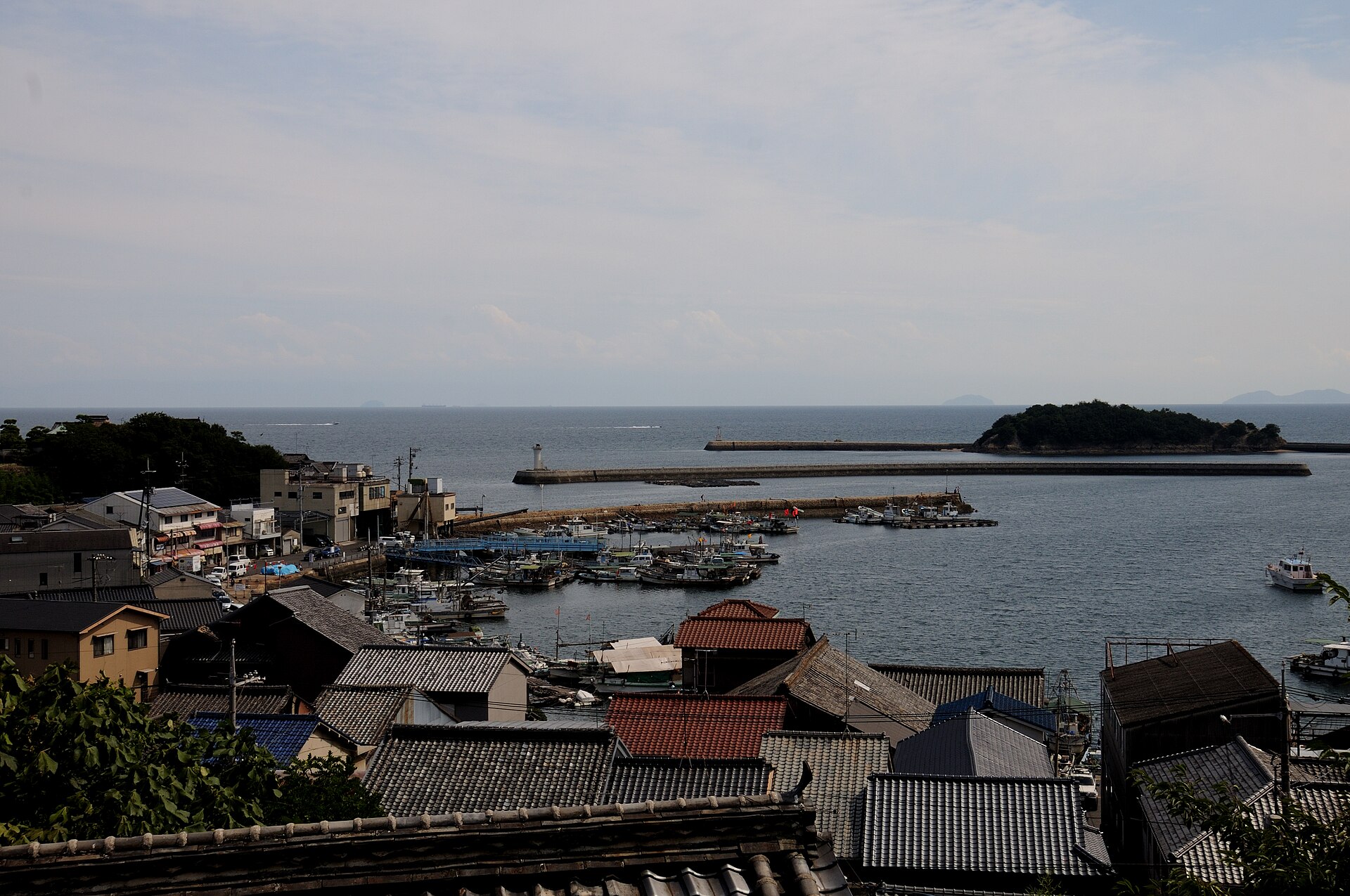
- Manabeshima villagenarrow fishing-town lanes running up from Honura pier, used again and again as a film location
- Manabe Junior High Schoola wooden school building still in daily use, seen from the lane outside
How to actually get there
- Okayama Station → Kasaoka Station (JR Sanyo Line, about 45 minutes).
- Kasaoka Station → Sumiyoshi Port (walk south to the waterfront, about five minutes).
- Sumiyoshi Port → Kitagishima, Ora Port (Sanyo Kisen passenger boat, about 55 minutes; the fast boat takes about 36 minutes).
- Ora Port → Manabeshima, Honura Port (the same route runs on; ordinary boats reach Manabeshima about 70 minutes out of Kasaoka).
- JR to Kasaoka, then the Sanyo Kisen passenger boat
- Trains on the JR Sanyo Line reach Kasaoka from Okayama, and the passenger-boat pier at Sumiyoshi is a short walk south of the station. One route calls at Takashima, Shiraishijima, Kitagishima and Manabeshima in turn, so both islands sit on the same line. Ordinary boats and a faster boat both run, and the faster one skips some of the smaller piers. Tickets are sold in the waiting room and can also be paid on board.
- Return from the island piers
- Boats back to Kasaoka call at the same piers, and the operator's timetable runs out in the early evening — there is no late sailing. Check the return times before you leave the pier in the morning, because a missed boat here means staying the night. Sailings are cancelled in bad weather, and the operator posts the day's status on its own site.
About the place
Thirty-one islands lie off Kasaoka, and seven of them still have people living on them. Bridges went up across most of the Inland Sea but not here, so the boat is the only way across and the timetable sets the shape of the day. Kitagishima, the largest of the group, is the stone island: granite cut here went into the walls of Osaka Castle, and later into the head office of the Bank of Japan, the great torii at Yasukuni Shrine and Tokyo Station. Quarrying still goes on. Manabeshima is the opposite kind of island — narrow lanes between fishing houses, a wooden school still in use, and film crews that keep coming back.
How to enjoy it
Because sailings are few, one island a day works better than trying to fit in both, and the choice is really between stone and streets. A morning boat out and a mid-afternoon boat back leaves enough time to walk either island properly. On Kitagishima aim for the western pier; on Manabeshima everything worth seeing sits within walking distance of Honura.
Background & history
Manabeshima takes its name from the Manabe family, who led the island, and the surname spread from here along the coasts of the Inland Sea. On Kitagishima the story is stone. Granite was already being cut when Osaka Castle was built, and the work of quarrying, splitting and dressing it grew large enough to support a town of its own — at its height the island had cinemas of its own, and the last of them, the wooden Hikari Gekijo, kept its lights on until about 1967. Both islands now belong to a Japan Heritage story about the stone islands of the Inland Sea.
Before you go
- Cash
- Tickets are sold at the counter at Sumiyoshi and can also be paid on board. Bicycles and mopeds travel as special baggage for an extra charge, but cars cannot go on the passenger boats at all. Places to eat on both islands are few and several take reservations only, so carry cash and settle food before you sail.
- Good to know
- Kitagishima's ferry piers on the west and its passenger-boat piers on the east are a long way apart, and crossing the island needs a booked taxi or a rental bicycle. The quarry viewpoint and the old cinema are both on the western side. Manabe Junior High School is a working school and is to be looked at from outside only.
- Another way
- Car ferries leave from Fushigoe Port, a separate pier further along the shore from Sumiyoshi, for Shiraishijima and for Kanaburo and Toyoura on the west of Kitagishima — that is the side to aim for if the quarries are the point. Chartered water taxis also run, from the mainland and from the islands themselves.
- After you get off
- From Kasaoka Station, walk south to the waterfront, about five minutes. The passenger-boat pier is at Sumiyoshi. Check you are not heading for Fushigoe, which is the car ferry pier and lies further along the shore.
Nearby notes
 The Modern Polymath / CC BY-SA 4.0
History · Hiroshima★★
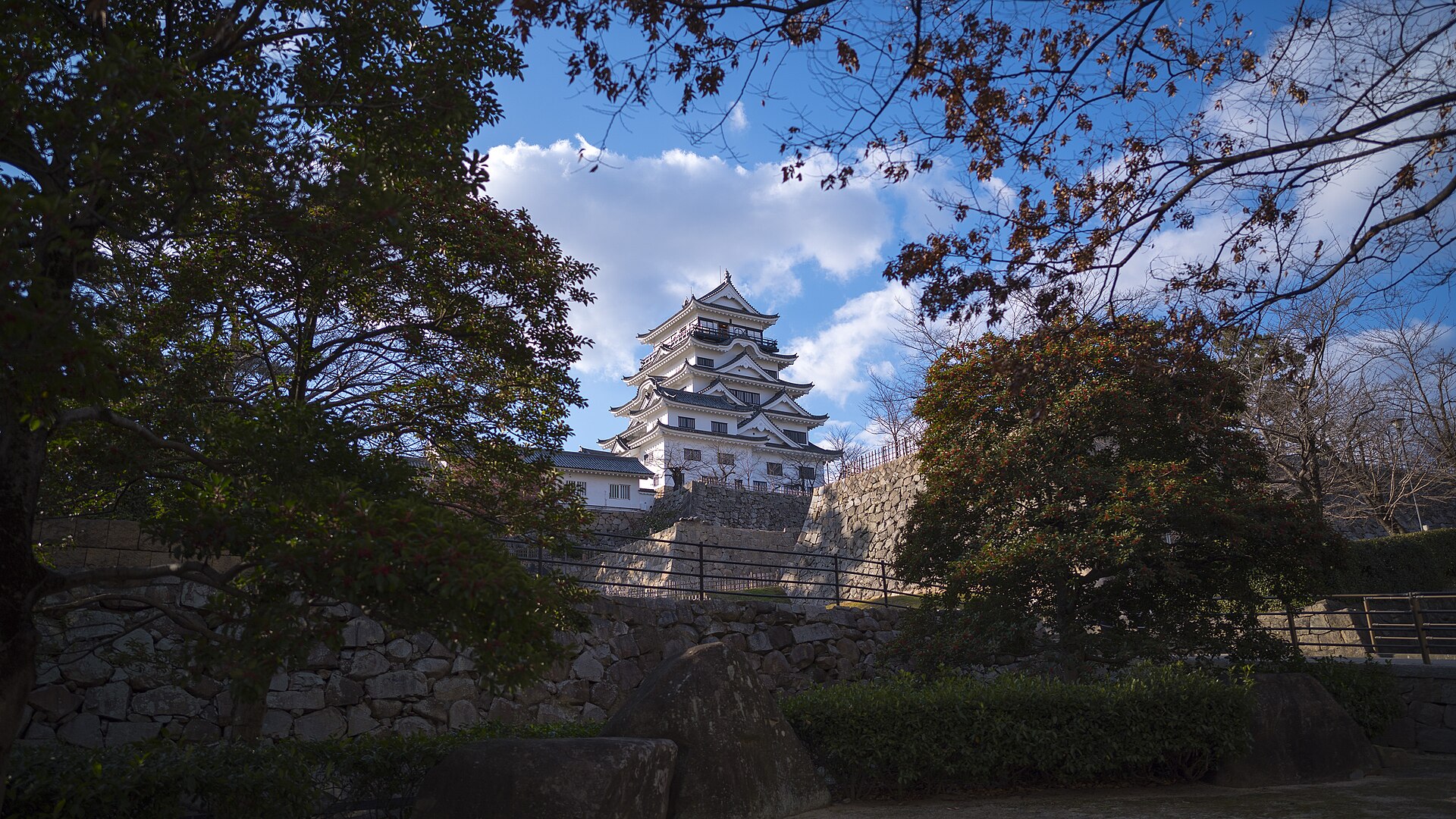
Fukuyama Castle
13.1 km · straight line
 663highland / CC BY 2.5
History · Okayama★★
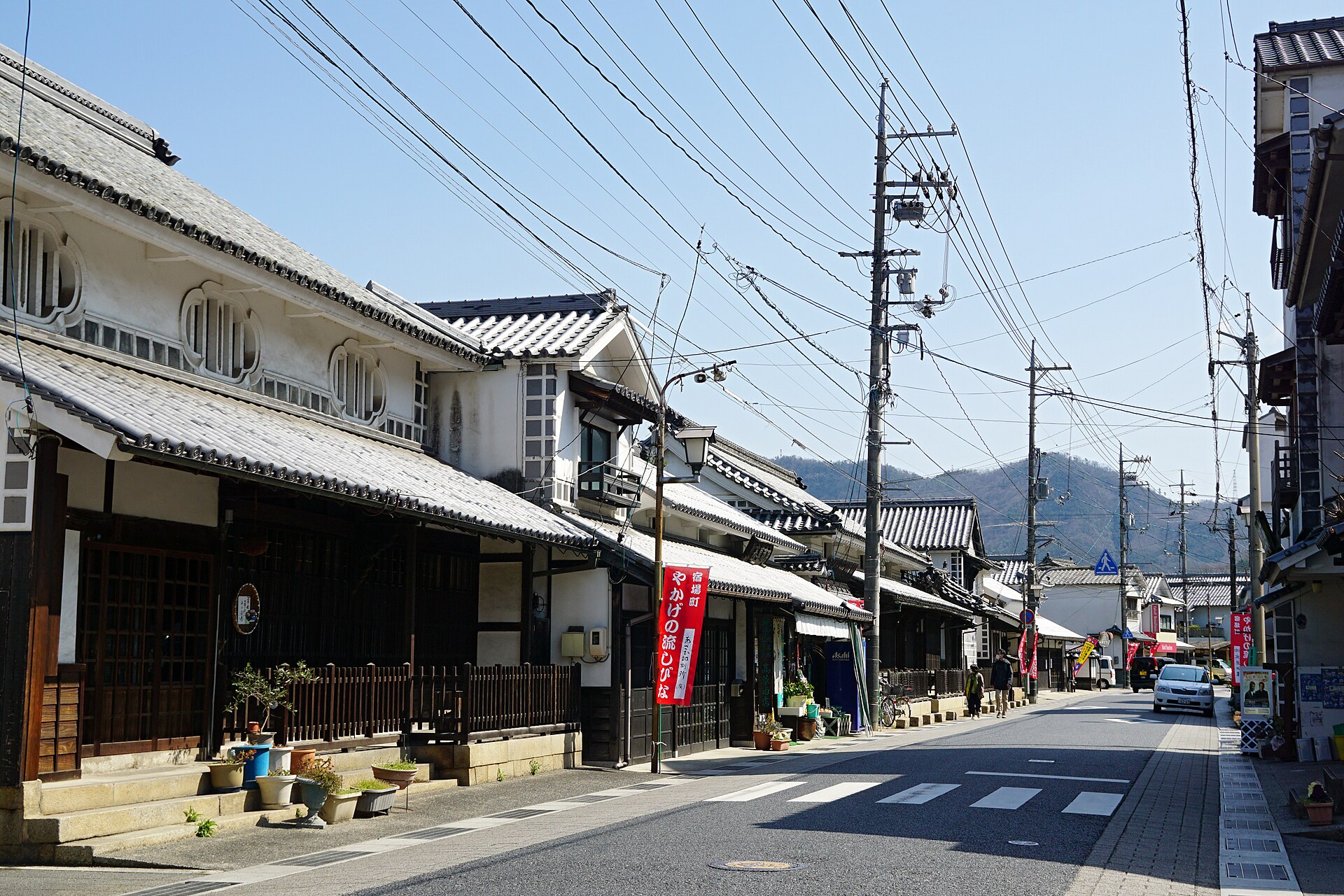
Yakage-juku Post Town
15.5 km · straight line
 Kyu3a / CC BY-SA 4.0
Food · Okayama★★
Okayama White Peach
16.5 km · straight line
 Josep M. Gracia / CC BY-SA 4.0
Local life · Hiroshima★★★
Tomonoura
17.3 km · straight line
Distances are straight lines on the map, not travel times.