South Ishikawa · NomiNo.989★★★Open in map →
Kutani Ware
— Ishikawa's overglaze porcelain at its kiln village
Porcelain painted over the glaze in bold enamel colour, from the south of Ishikawa. The kilns died out not long after they opened and stayed cold for generations before the craft was brought back. At the kiln village in Nomi, the city museum gives each colour of the palette its own room.
- FromKanazawa Station
- ~1 hr 20 minIR train + community bus
- Get off atKutani Togeimura (Nomi community bus)
- On foot
- Kutani Ware
Where it is
16 more notes in Ishikawa · open the map →What to look for — in walking order
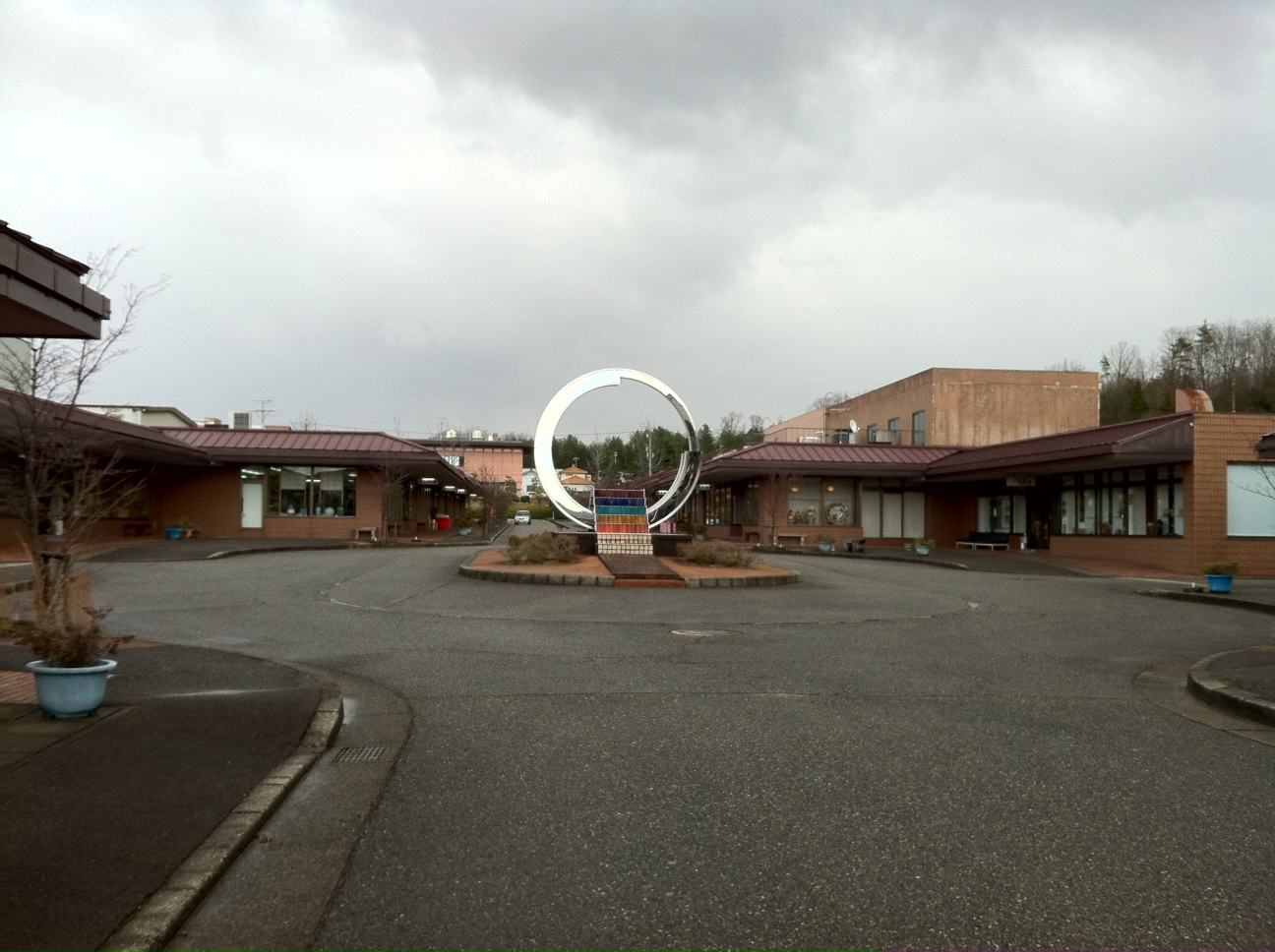
- Kutani Pottery Villageone site holding the city museum, a hands-on hall, artisans' studios and trade showrooms
- Gosai-kanthe main hall, with a separate room for each colour of the palette
- Asakura Isokichi Memorial Halla hall for a modern Kutani maker, entered on the same ticket
- Taiken-kanthe hands-on hall, where visitors paint a piece; the building is free to enter
- Shokunin Koboworking studios for painters and throwers, also free to enter
How to actually get there
- Kanazawa Station → Nomi-Neagari Station (IR Ishikawa Railway toward Fukui, no change).
- Nomi-Neagari Station → the kiln village by Nomi community bus; on weekdays the connecting route stops short, at Izumidai Community Center.
- Start at Gosai-kan, then walk on to the memorial hall, the hands-on hall and the artisans' studios, all on the same ground.
- Return by the same route, and check the bus departures on arrival — services are limited.
- IR Ishikawa Railway from Kanazawa, then the community bus
- Take the IR Ishikawa Railway from Kanazawa Station toward Fukui and get off at Nomi-Neagari. There is no change of train. From the station the Nomi community bus runs out to the kiln village. Counting the transfer and the last stretch on foot, the city puts the whole trip at about an hour and twenty minutes.
- Back to Kanazawa from Nomi-Neagari
- Reverse the route: community bus to Nomi-Neagari Station, then the IR Ishikawa Railway north to Kanazawa. The bus is a municipal service, not a frequent city line, so settle your return departure before you disappear into the galleries.
About the place
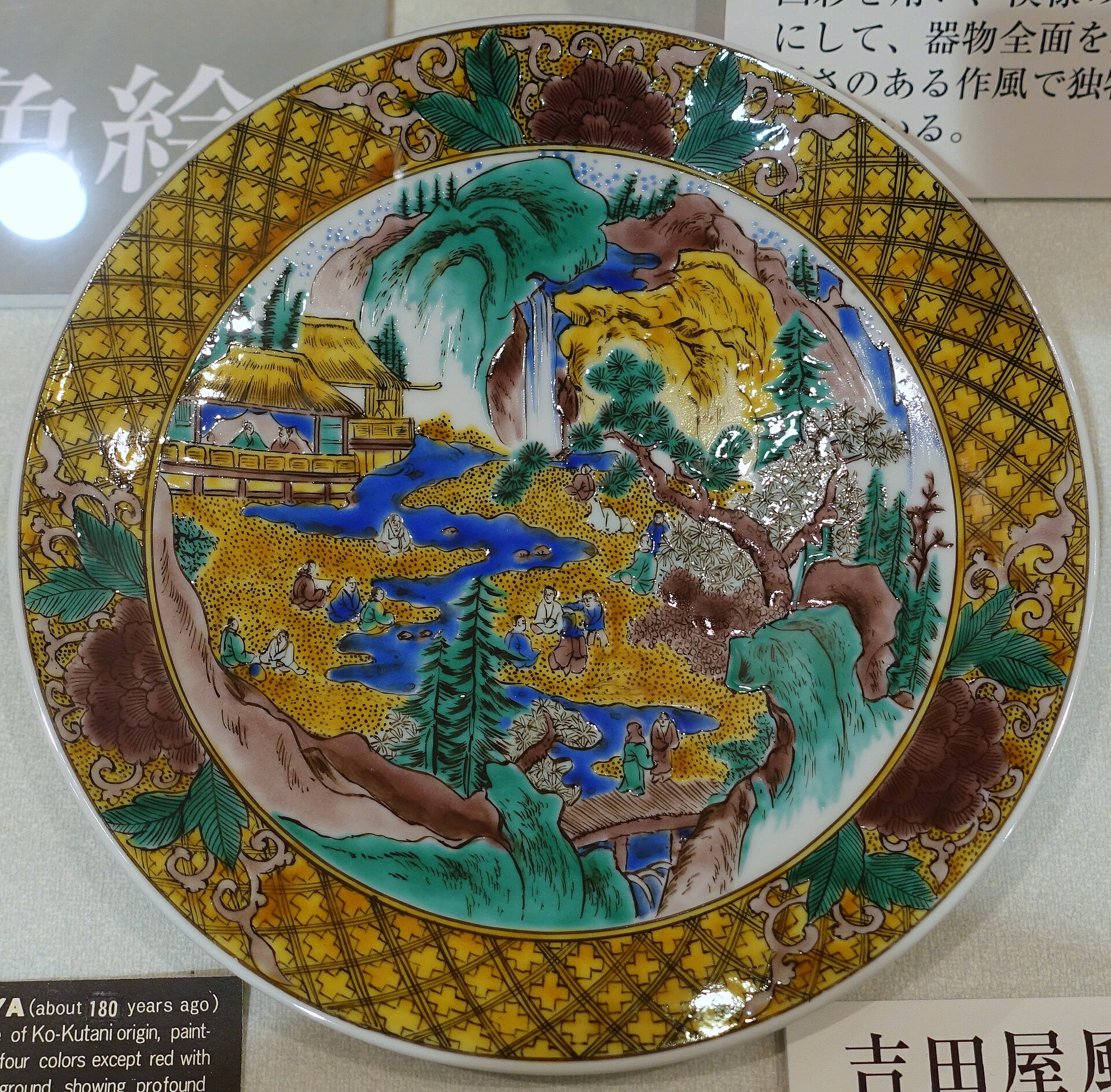
Kutani ware is overglaze porcelain. The body is fired first, then enamel is laid over the glaze and fired again at a lower heat. What matters is the colour. Yellow, green and purple carry most of a design, with deep blue and red brought in to fill it out, and the set is known as the Kutani five. How a workshop uses them is what separates one style from another, and one nineteenth-century manner dropped red altogether. Production today sits in Nomi and its neighbours, where a museum, a hands-on hall, artisans' studios and trade showrooms share a single site.
How to enjoy it
Gosai-kan runs from 9:00 to 17:00 with last admission at 16:30, and it is shut on Mondays — worth checking first, because the halls sit together and a Monday closes all of them at once. Come in the morning and there is time to take the colour rooms slowly before crossing to the hands-on hall and the studios. On weekends and public holidays the sightseeing bus route comes right into the village, which makes the day easier without a car.
Background & history
Firing began at Kutani, in the Daishoji domain, in about 1655, on the order of its first lord Maeda Toshiharu, after a retainer named Goto Saijiro was sent to Arita to learn the technique. Then it stopped: within roughly half a century the kilns went cold, and no settled explanation exists. Porcelain from that first run is called Ko-Kutani, old Kutani. Production resumed only in the nineteenth century, when the Kaga domain and local merchants opened a series of new kilns — Kasugayama, Wakasugi, Yoshidaya, Minzan — each with a manner of its own, and that second wave is known as revived Kutani.
Before you go
- Cash
- Admission to Gosai-kan was 430 yen for adults when checked, with high school students and younger admitted free, and the Asakura Isokichi Memorial Hall is covered by the same ticket. The hands-on hall and the artisans' studios are free to enter. The showrooms are separate companies, so carry cash.
- Good to know
- The museum closes on Mondays, and on the following weekday when a Monday falls on a public holiday, as well as over the new-year period and during exhibition changeovers. The sightseeing bus route that runs into the village itself operates on weekends and public holidays only.
- Another way
- By car it is about fifteen minutes from the Nomi-Neagari smart interchange on the Hokuriku Expressway, and the museum has its own car park. Komatsu Airport is close as well, with taxis and rental cars at the terminal.
- After you get off
- The village stop is at the edge of the site, a few minutes on foot from Gosai-kan. The halls stand around one open plaza, so once you are in you can walk between them. On a weekday the connecting route sets you down further out, at the Izumidai Community Center stop, and the walk in is longer.
Nearby notes
 Kentaro Ohno / CC BY 2.0
History · Ishikawa★★★
Myoryuji Temple
18.1 km · straight line
 Hirorinmasa / CC BY-SA 3.0
Local life · Ishikawa★★
Nagamachi Samurai District
19.0 km · straight line
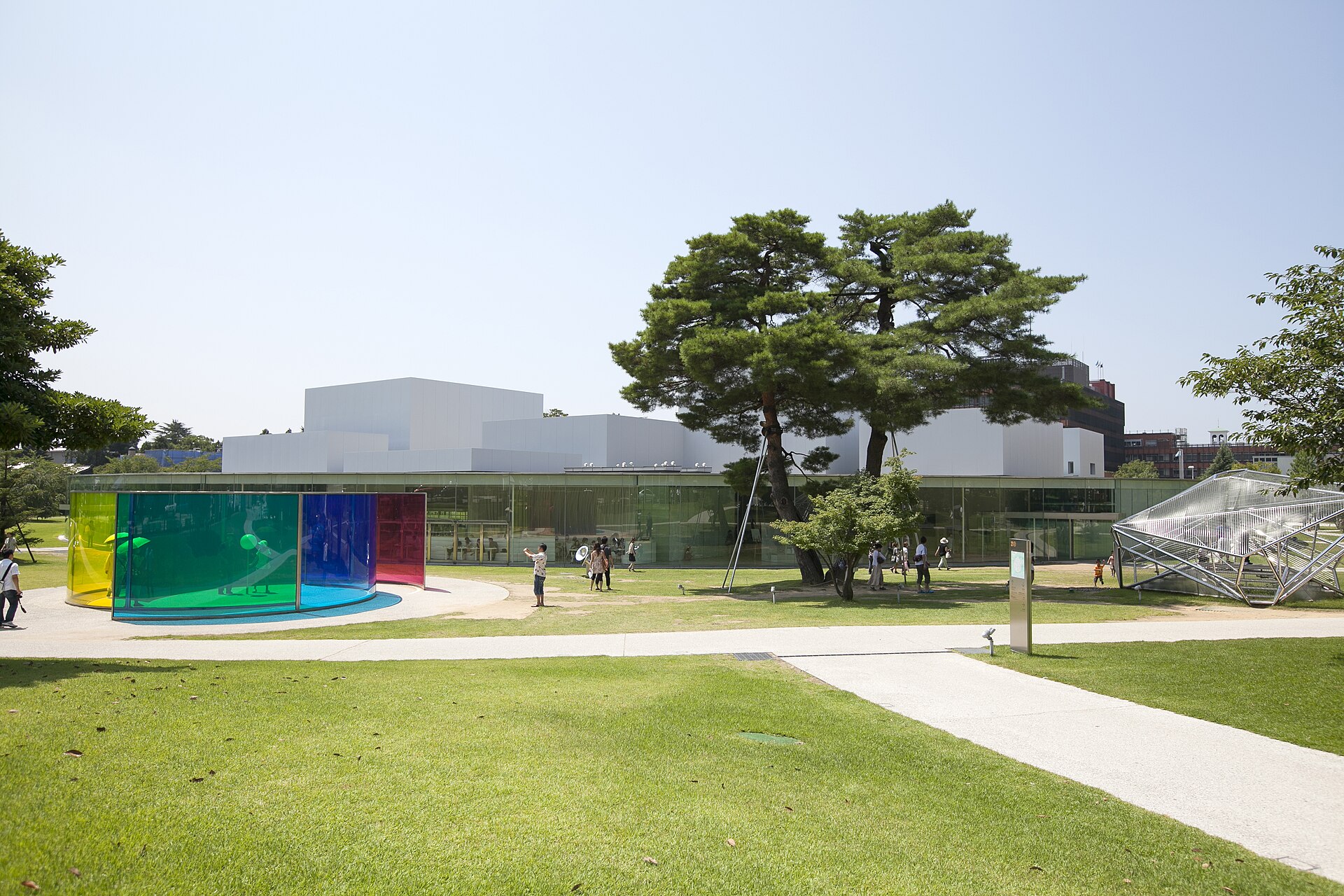 金沢市 / CC BY 2.1 jp
Culture · Ishikawa★★★
21st Century Museum of Contemporary Art
19.1 km · straight line
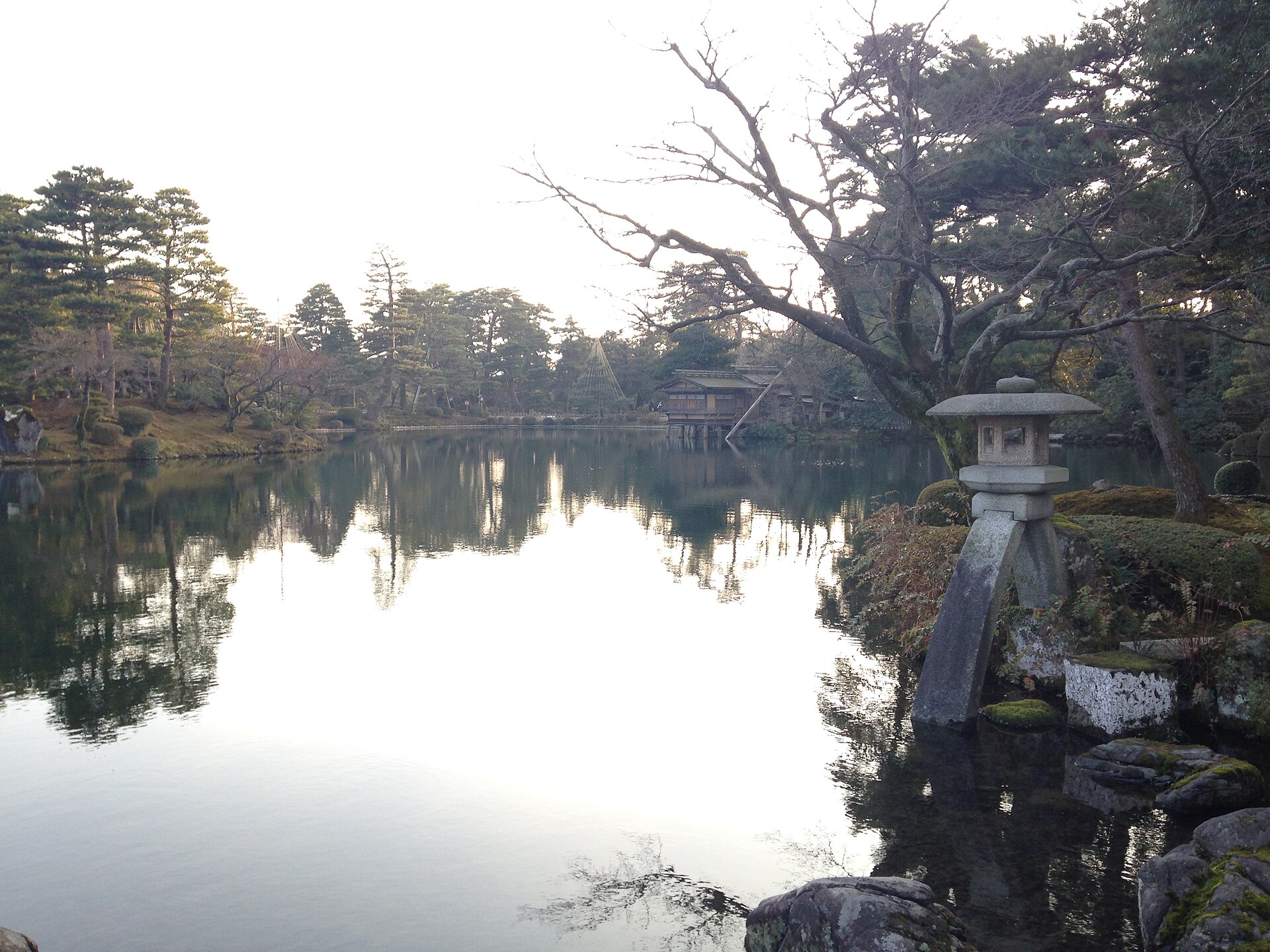 そらみみ / CC BY-SA 4.0
Nature · Ishikawa★★★
Kenrokuen Garden
19.5 km · straight line
Distances are straight lines on the map, not travel times.