Fukushima · MiharuNo.1106★★Open in map →
Miharu Takizakura
— One of Japan's three great cherry trees
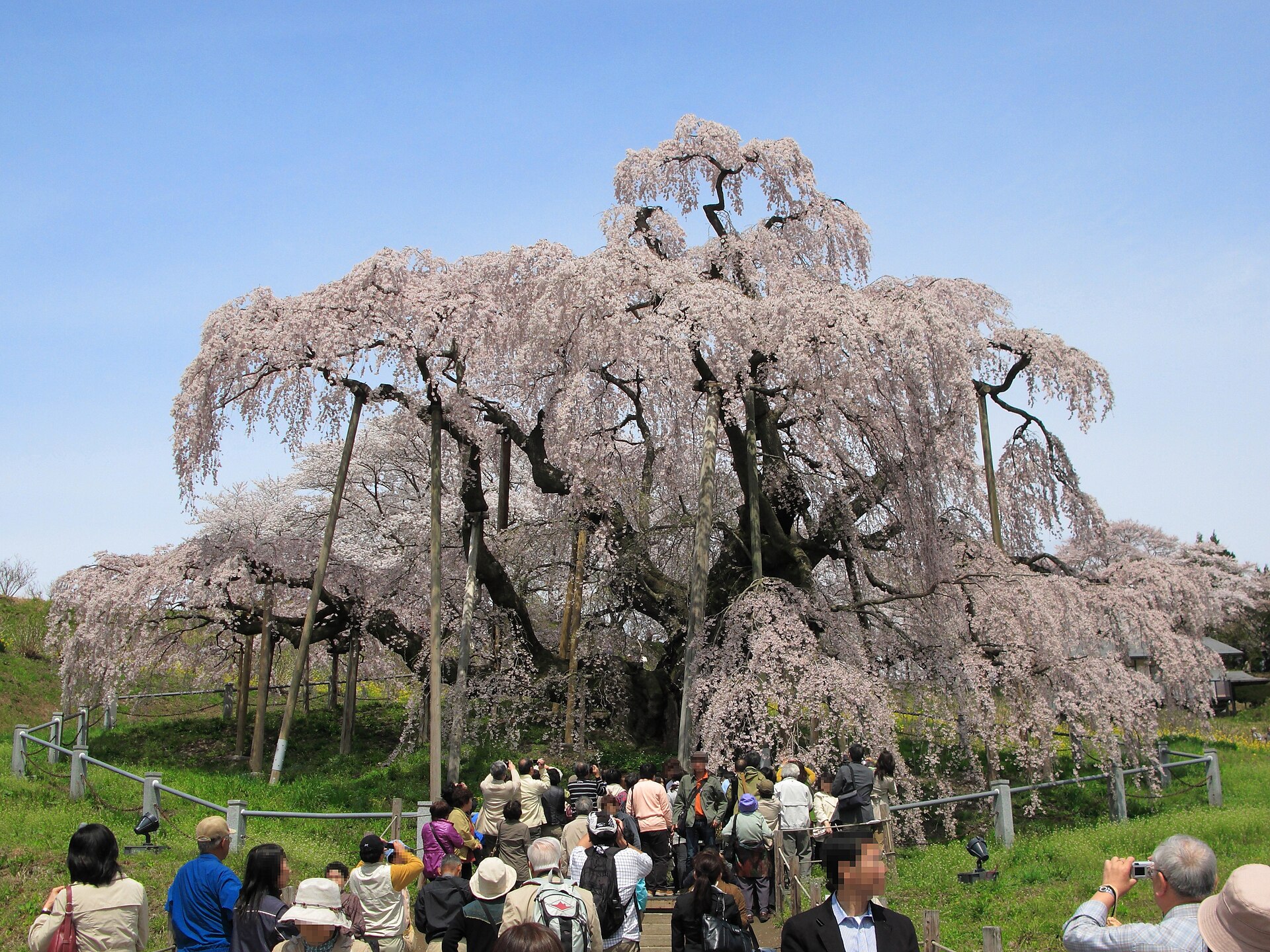
A single red weeping cherry standing on a farmland slope in Miharu, its age estimated at over a thousand years. It is counted among Japan's three great cherry trees, and outside the flowering weeks you can walk up to it with no ticket and no gate.
- FromKoriyama Station
- ~40 minJR line, then bus or taxi
- Get off atMiharu Station (JR Ban-etsu East Line)
- From there
- Miharu Takizakura
The sweet spot
This is one of Japan's three great cherry trees, so it is not a hidden spot. For the two or three weeks of bloom the town runs traffic control, opens a large car park and puts on extra buses, and the slope stays busy through the middle of the day. What you can change is the hour you arrive and the season you choose. Once the petals drop, the fee stops being collected and the tree can be visited freely.
Where it is
20 more notes in Fukushima · open the map →What to look for — in walking order
- Takizakura main car parkthe free lot that opens only for the flowering weeks, with space for coaches
- The viewing gatethe ticket point, in place from the day after the bloom declaration until the leaves come out
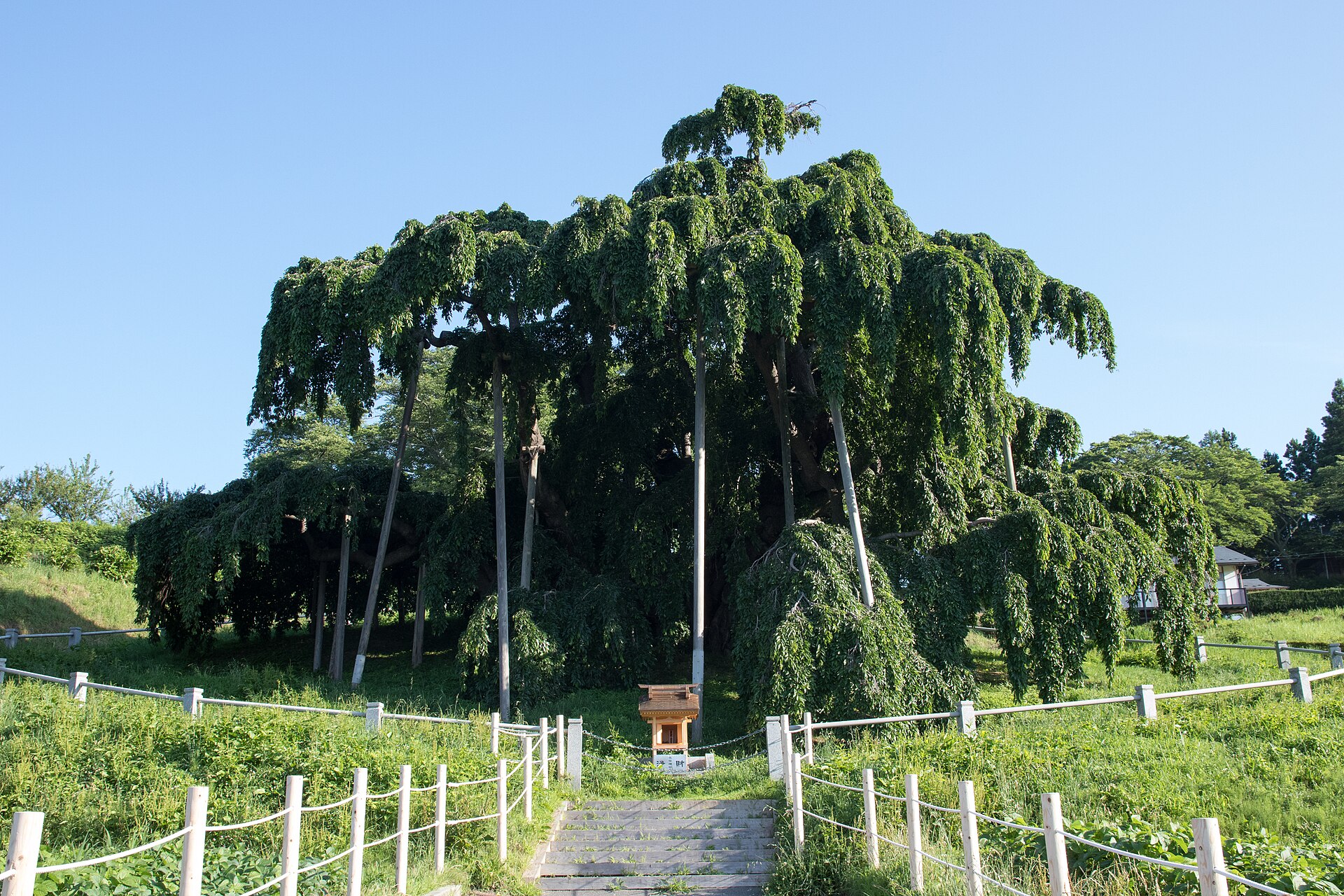
- Takizakuraa single beni-shidare whose limbs reach 14.5 metres out from the trunk on the south side
- Sakura Parka park facing Sakura Lake, the reservoir held back by Miharu Dam
- Miharu Dam museuma stop on the seasonal loop, whose route crosses the dam embankment otherwise closed to visitors
How to actually get there
- Koriyama Station to Miharu Station (JR Ban-etsu East Line; about 13 minutes by the tourism association's timing).
- Miharu Station to the Takizakura car park (seasonal Takizakura-go bus in the flowering weeks, otherwise taxi).
- Car park to the viewing gate, then up the slope to the tree.
- If time allows, ride the seasonal loop on to Sakura Park, the dam museum and the farm-life centre before returning to Miharu Station.
- JR Ban-etsu East Line from Koriyama, then bus or taxi
- Koriyama Station to Miharu Station on the JR Ban-etsu East Line, which the tourism association times at about 13 minutes. From Miharu Station the last stretch to the Takizakura car park is 15 to 20 minutes by road. During the flowering weeks a seasonal bus, the Takizakura-go, covers that leg; outside them a taxi is the practical option, quoted locally at about 2,600 to 3,000 yen one way.
- Return from Miharu Station
- Take the same bus or taxi back to Miharu Station, then the Ban-etsu East Line to Koriyama. Check the departure time on the timetable before you leave the tree rather than after. On a few spring weekends the railway adds two extra services in each direction between Koriyama and Miharu.
About the place
Takizakura stands on a slope in the Taki district of Miharu, not inside a park and not on temple ground. It is a beni-shidare, the red weeping form of the edohigan cherry, and the town records its root girth at 11.3 metres. Wooden props carry the oldest limbs, which reach further to the south and west than to the north. The land around it is worked ground and private plots, so the town asks visitors to keep to the paths and off the verges. The large car park is a separate site further down, opened only for the flowering weeks.
How to enjoy it
During the paid season the gate opens at 6:00, and that first hour is the easiest time to stand in front of the tree, before the traffic control and the coach parties build up. On the closing day the fee and the illumination end together, and from then on the slope is open with no ticket. Come back in summer or autumn and the same walk leads to a green, unflowering Takizakura, which is when the sheer span of the branches reads most clearly.
Background & history
In 1922 Takizakura became the first cherry tree in Japan to be designated a national natural monument, registered under the name Miharu Takizakura. It is counted among the country's three great cherries together with Neodani Usuzumizakura in Gifu and Yamataka Jindaizakura in Yamanashi; the wider list of five adds Karyado no Gebazakura in Shizuoka and Ishito Kabazakura in Saitama. The spring viewing fee is collected under a town ordinance written so the money returns to caring for the tree and the ground around it.
Before you go
- Cash
- The spring viewing fee is 500 yen, free for junior high school age and younger, with no group discount. It is collected only from the day after the bloom declaration until the leaves come out, and the ticket allows re-entry on the day it is issued. Parking is free. The evening bus from Miharu Station that runs during the illumination takes cash only.
- Good to know
- The slope is open ground with no shelter, so weather is felt directly. Flying a drone over the tree or the surrounding area is not permitted without approval. The large car park opens only for the flowering weeks, and the illumination ends on the same day the fee stops.
- Another way
- From Tokyo the usual approach is the Tohoku Shinkansen to Koriyama, then the Ban-etsu East Line. By road the town directs drivers from the Koriyama-Higashi or Funehiki-Miharu interchanges. The tree has no telephone number, so car navigation needs the address or the map code published on the official page.
- After you get off
- Miharu Station is not within walking distance of the tree; the last stretch is by road. In the flowering weeks the seasonal bus and taxis run on a route separate from private cars and pull into the Takizakura car park without queueing. From the car park it is a short walk uphill to the front of the tree.
Nearby notes
Distances are straight lines on the map, not travel times.