Southwest Nagano · Kiso ValleyNo.772★★★Open in map →
Narai-juku
— A preserved post town in the Kiso valley
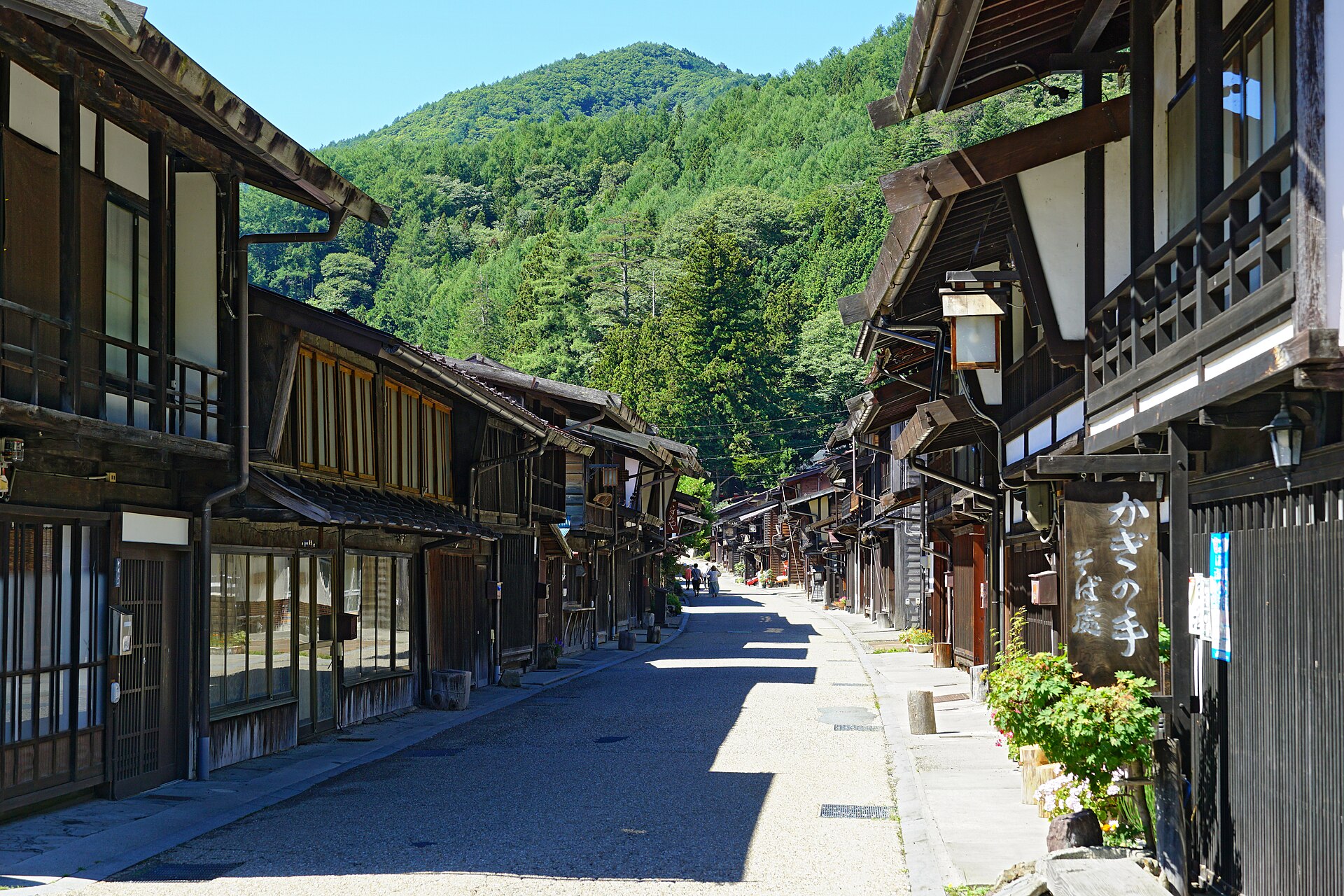
A Nakasendo post town in the Kiso valley preserved along a full kilometre of its original street. Timber merchant houses stand unbroken on both sides, with the railway station at the northern end of the line.
- FromShiojiri Station
- ~35 minJR Chuo Line local from Shiojiri
- Get off atNarai Station (JR Chuo Main Line)
- On foot
- Narai-juku
Where it is
27 more notes in Nagano · open the map →What to look for — in walking order
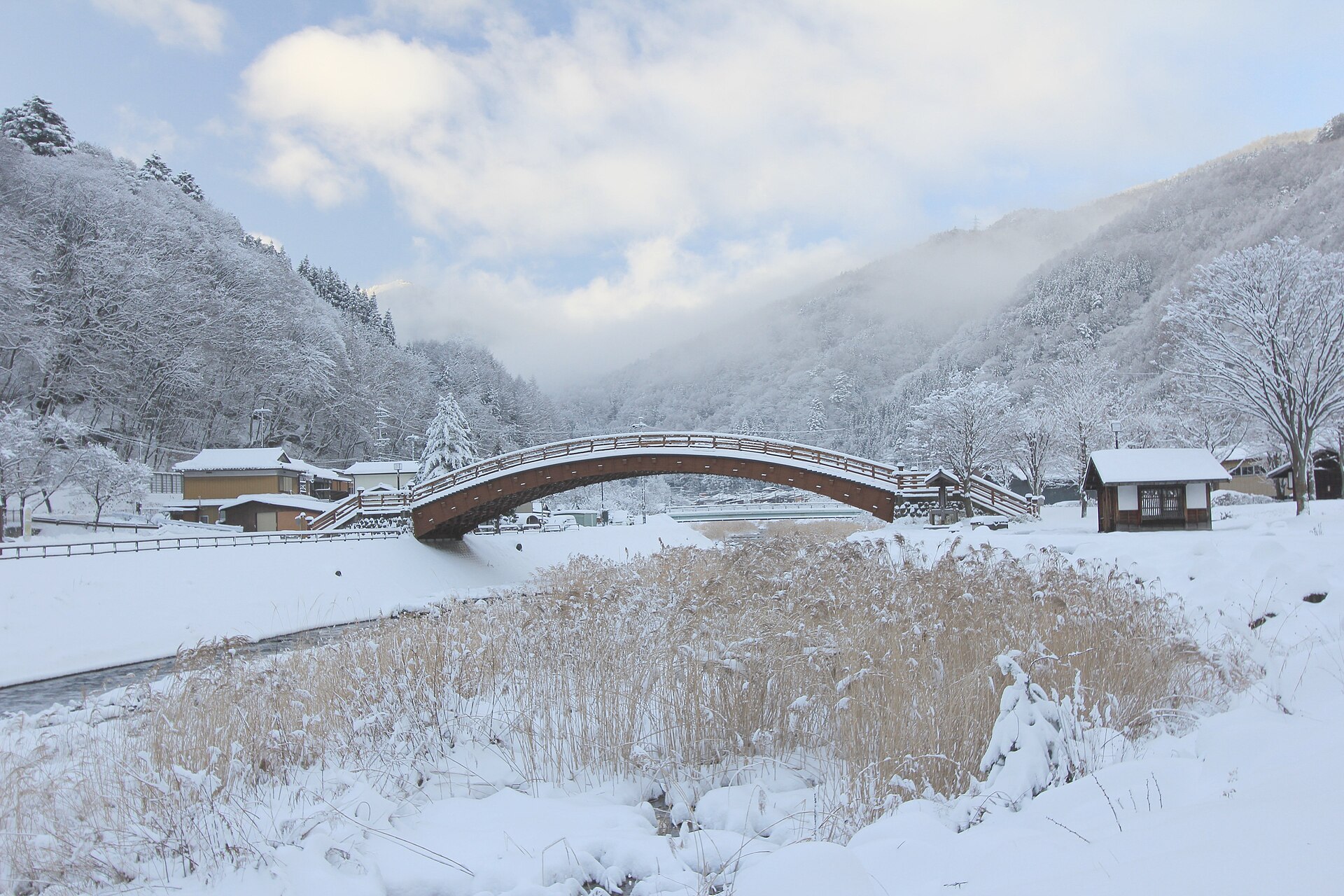
- Kiso no Ohashian arched wooden bridge over the Narai river beside the station, built without piers in midstream
- Nakamura Housethe house of a comb merchant near the northern end, kept open as a museum of the trade
- The water basinssix wooden troughs along the mountain side of the street, fed by pipe and running continuously
- Kami-Toiya Museumthe former post-station officials' house at mid-street, with its rooms and records left in place
- Shizume Shrinethe shrine closing the southern end of the street, with old cedars standing over the approach
How to actually get there
- Shiojiri Station → Narai Station on a Chuo Line local train.
- Detour first to the arched wooden bridge over the river beside the station.
- Enter the street at its northern end and walk south, house by house.
- Stop at the two merchant houses kept open as museums, roughly a third and halfway down.
- Finish at the shrine at the southern end, then walk back up the other side of the street.
- Local train from Shiojiri Station
- Narai is on the JR Central section of the Chuo Main Line and only local trains stop there, so the limited expresses running through the valley are no help. Reckon on a bit over half an hour from Shiojiri. Services on this stretch are thin and gaps of an hour are normal, so build the day around the timetable rather than the other way round.
- Back out of the valley
- The same line runs north to Shiojiri and Matsumoto or south towards Kiso-Fukushima and Nakatsugawa, and you can leave in either direction. Evening services stop early by city standards, and there is very little in the way of alternatives once they do, so fix your return train before you start walking.
About the place
The street is about a kilometre long and it is the old highway itself, not a lane behind one. Houses stand shoulder to shoulder down both sides, most of them with the upper floor pushed out over the ground floor on projecting beams, so the frontages lean towards each other and the sky narrows as you walk. Latticed fronts screen the rooms behind. On the mountain side, wooden water basins fed by pipes stand at intervals — drinking water for travellers once, and fire water for a town built entirely of timber. Cars are kept off the street, which is why the whole length reads as one thing rather than as a set of buildings between parked bumpers.
How to enjoy it
Do the full length in one direction before you stop for anything, then come back slowly on the other side — the street reads completely differently walking back the other way. Late afternoon light runs along the frontages rather than across them, which suits the projecting upper floors. If you have the legs for it, the old pass road climbing out of the southern end is where the post town's whole reason for existing becomes obvious.
Background & history
Narai was the 34th of the 69 post stations on the Nakasendo, and it sat immediately below Torii Pass — the hardest climb on the Kiso section. Travellers stopped here because the pass was ahead of them or behind them, and the town grew rich enough on that traffic to be called Narai Senken, the thousand houses of Narai. The railway took the through traffic away and the street was left largely as it was, which is how so much of it survived. Local preservation work through the post-war decades led to the whole district being designated a national preservation district for groups of traditional buildings in 1978.
Before you go
- Cash
- The street costs nothing to walk. The two merchant houses kept as museums charge admission and set their own opening days, so confirm those on the day rather than assuming. Small shops and tea houses along the way are easier with cash.
- Good to know
- This is a high, cold valley and winter here is snow rather than a chill. Individual houses and museums close on their own days and through the coldest months, and the pass walk south of the town is a different proposition once there is snow on it. Summer afternoons are the crowded window.
- Another way
- By car the town is reached from the Shiojiri interchange on the Nagano Expressway or the Ina interchange on the Chuo Expressway, with 220 spaces in the car parks around the edges. Vehicles are not allowed into the street itself, so you walk in from the parking either way.
- After you get off
- Narai Station sits at the northern end of the street — you step off the platform and you are effectively at the top of it. Walk south and the town unrolls in one line; the river and the arched wooden bridge are a short way off to the side of the station.
Nearby notes
 663highland / CC BY 2.5
Craft · Nagano★★
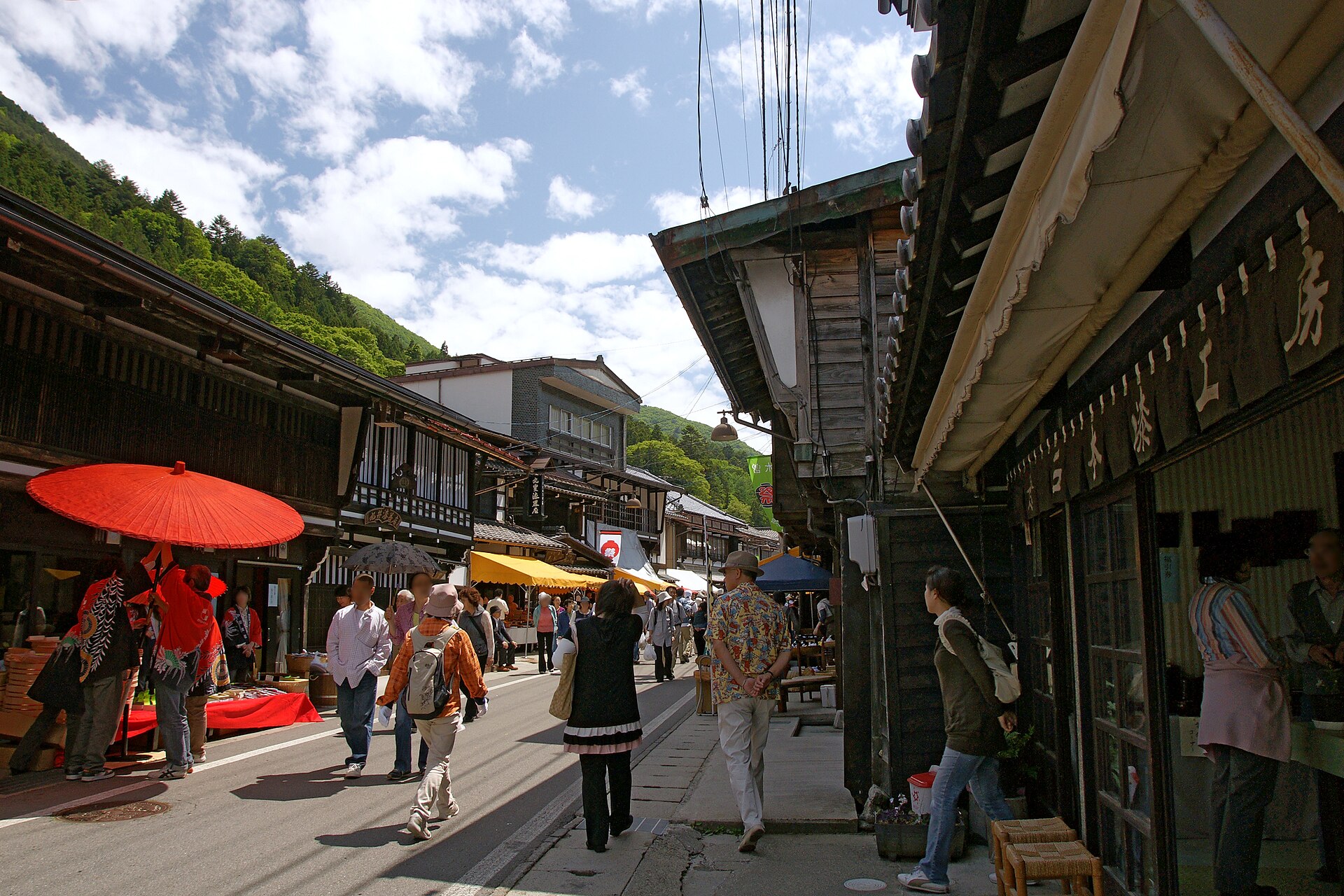
Kiso-Hirasawa Lacquerware Town
2.5 km · straight line
 sota from Tokyo, Japan / CC BY-SA 2.0
Nature · Nagano★★
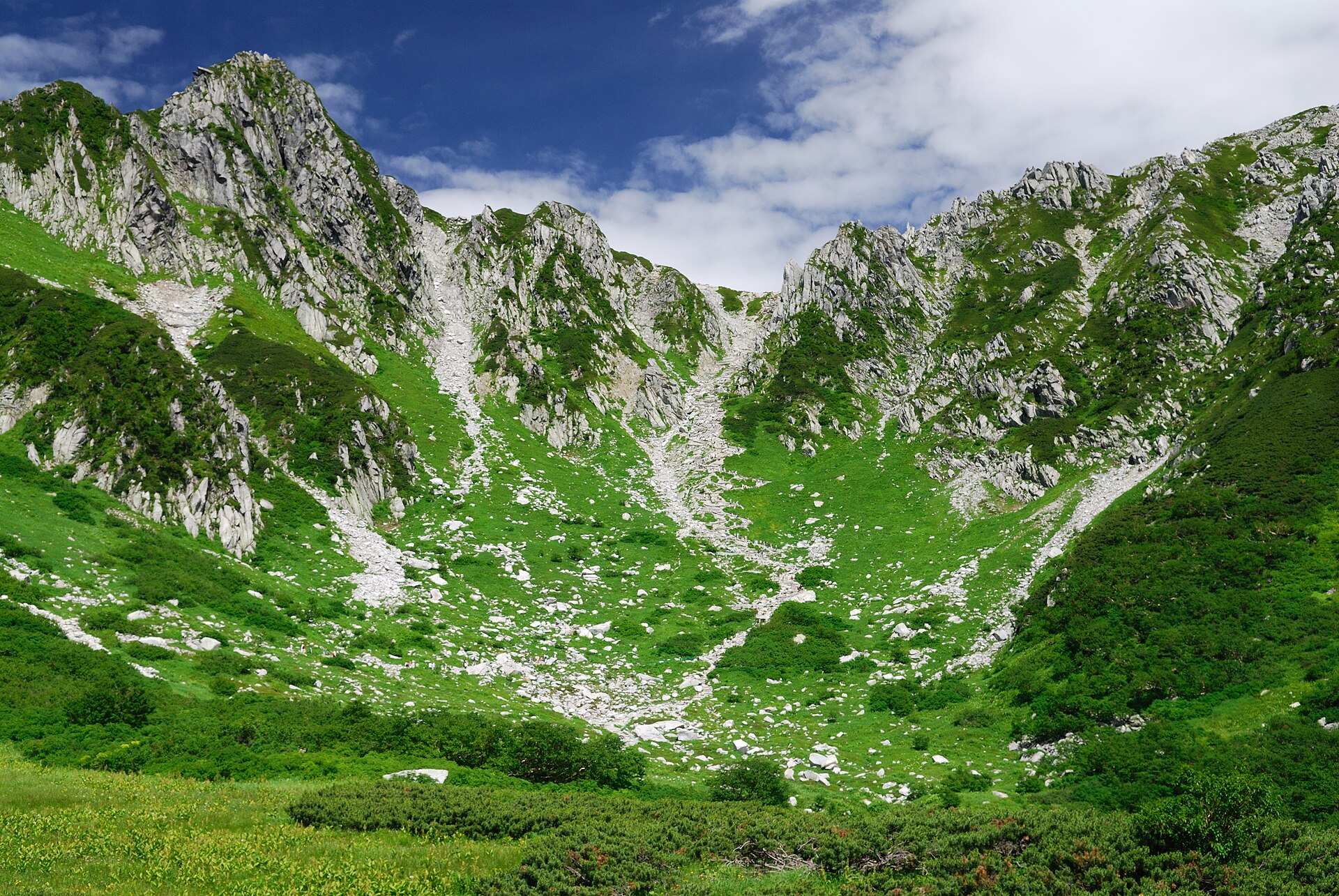
Senjojiki Cirque
20.8 km · straight line
 SHori / CC BY 4.0
Nature · Nagano★★
Norikura Kogen
24.2 km · straight line
 Soica2001 / Public domain
Onsen · Nagano★★
Shirahone Onsen
26.6 km · straight line
Distances are straight lines on the map, not travel times.