Iwate Coast · MiyakoNo.1172★★Open in map →
Sanriku Railway Rias Line
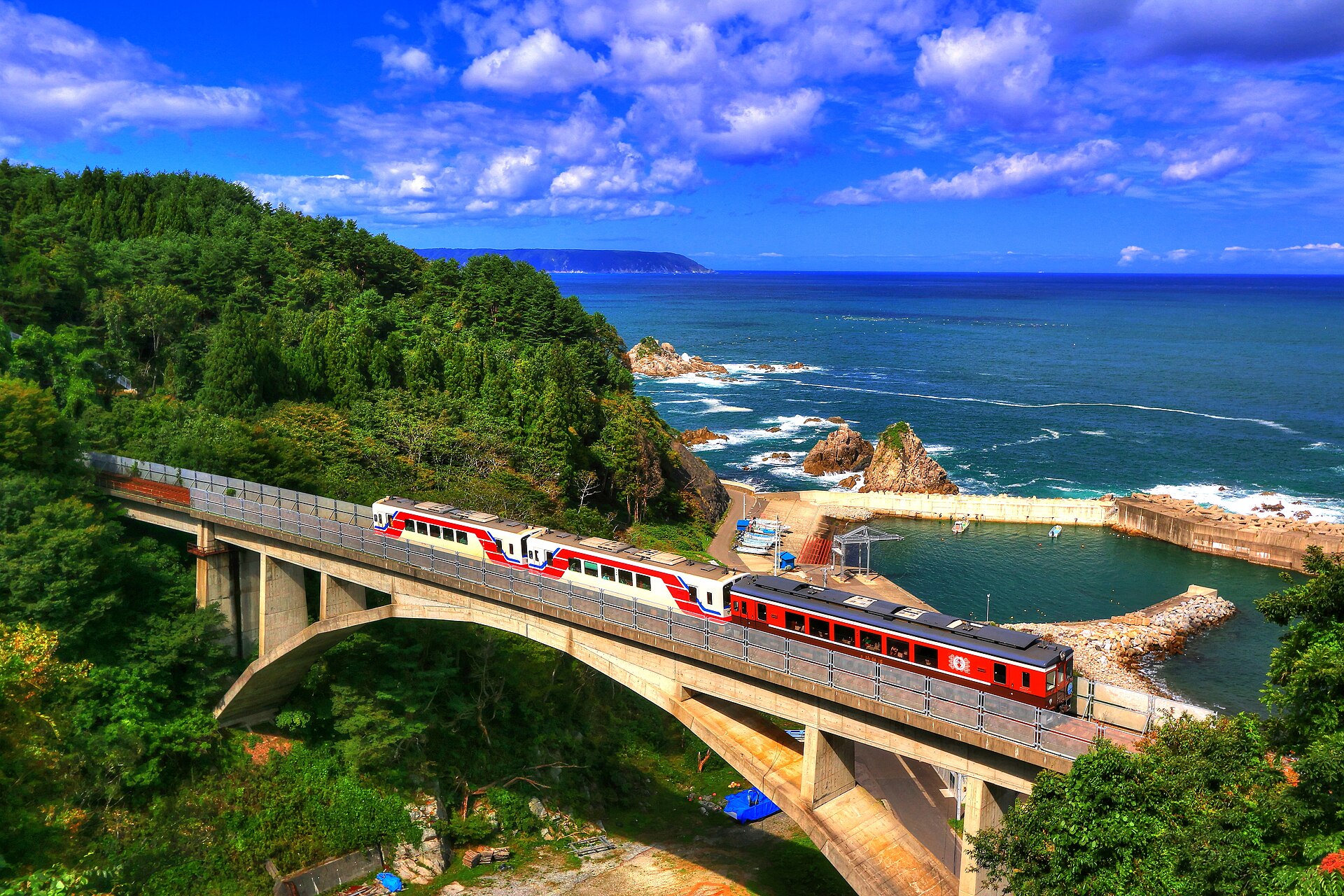
A single local railway threads the whole of Iwate's ria coast, from Sakari in the south to Kuji in the north. Trains are short, stations are small, and the Pacific appears and disappears between tunnels the entire way.
- FromMorioka Station
- ~2 hr 15 minExpress bus from Morioka
- Get off atMiyako Station (Sanriku Railway Rias Line / JR Yamada Line)
- From there
- Sanriku Railway Rias Line
The sweet spot
The coast is not obscure, but it is a detour. Miyako sits a bus ride inland from the nearest Shinkansen station, so most itineraries through Tohoku skip it entirely. Japanese travellers know the line well — it carried a hit NHK morning drama — while foreign visitors are the ones who rarely get this far east.
Where it is
17 more notes in Iwate · open the map →What to look for — in walking order
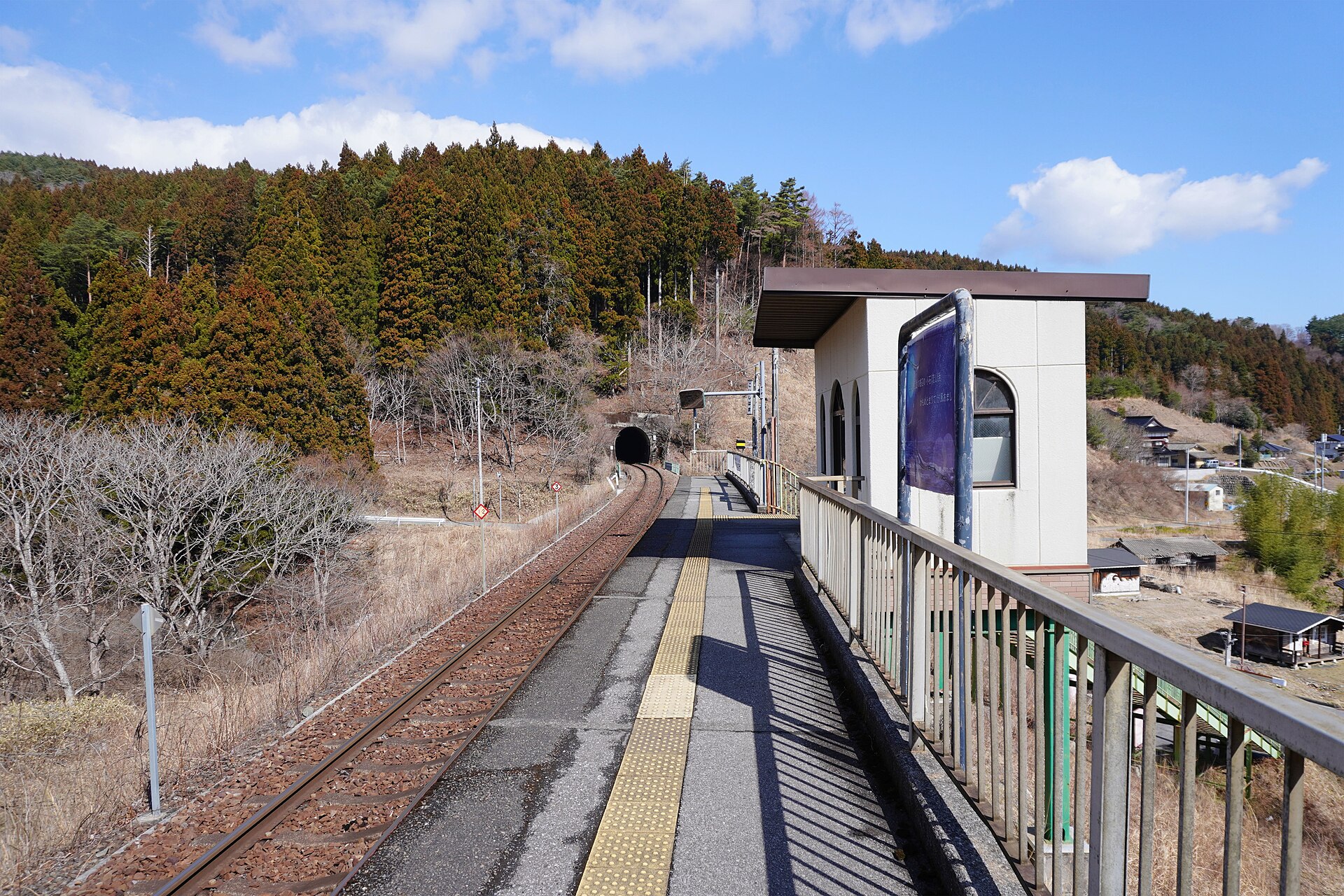
- Koishihama Stationan unstaffed halt in Ofunato whose waiting room is hung with scallop shells written on as votive tablets
- Miyako Stationthe operator's head office and the midpoint where the northern and southern halves of the line meet
- Osawa Bridgea concrete arch in Fudai carrying the track 30 metres above a small fishing harbour, open sea behind
- Akkagawa Bridgea span 33 metres over the mouth of the Akka River, where the valley opens straight out to the Pacific
- Kuji Stationthe northern terminus, and the point of departure for the Kosode coast beyond the town
How to actually get there
- Morioka Station → Miyako Station by the 106 bus (express about 2 hr 15 min, limited-express about 1 hr 40 min).
- Miyako Station → board the Rias Line northbound for Kuji, or southbound for Kamaishi and Sakari.
- Going north, stay on at least as far as Fudai for the bridge section, and sit on the sea side.
- Kuji Station → return down the same line, or change to the JR Hachinohe Line and leave northward.
- Express bus from Morioka, then the Rias Line
- Morioka Station (Tohoku Shinkansen) → Miyako Station on the 106 bus run by Iwate Kenpoku Bus, about 2 hours 15 minutes on the express service and about 1 hour 40 minutes on the faster limited-express one. Buses leave from stand 7 at the east exit of Morioka Station and are spread through the day. Rias Line trains start from the same station building at the Miyako end.
- Return to Morioka, or leave north from Kuji
- The same bus runs back to Morioka from stand 6 on the Miyako station forecourt, with the last departure well before midnight — check the board there if you plan to ride late. From Kuji at the northern end you can instead leave on the JR Hachinohe Line toward Hachinohe and pick up the Shinkansen there.
About the place
The Rias Line is operated by Sanriku Railway, a company owned jointly by Iwate Prefecture and the coastal towns it serves. It covers 163 kilometres between Sakari Station in Ofunato and Kuji Station at the northern end, making it the longest line worked by a single third-sector railway in Japan. The route follows a ria coastline — drowned valleys that leave deep inlets between steep headlands — so the track alternates between tunnels bored through the ridges and short bridges thrown across the bays. Trains are normally one or two cars. Some carriages have seats turned toward the windows, because the view is the reason the line survives.
How to enjoy it
On the northern half, trains pause about a minute on Osawa Bridge so passengers can look out at the sea, and slow across Akkagawa Bridge with a commentary; both are worth planning the direction of travel around. Services thin out sharply outside commuting hours, so read the timetable before stringing several hops together. In winter, heated kotatsu tables are fitted into some carriages on weekend and holiday services.
Background & history
Sanriku Railway began operating on 1 April 1984, taking over three national railway lines that were unprofitable or still unfinished, and became the first third-sector railway in Japan created that way. The tsunami of 11 March 2011 tore out stations, embankments and bridges along this coast; five days later the company restarted a short northern stretch as a free service, and the two surviving lines were fully reopened in April 2014. On 23 March 2019 the JR Yamada Line between Miyako and Kamaishi was transferred across, joining the northern and southern halves into one Rias Line.
Before you go
- Cash
- Fares are distance-based. Sanriku Railway also sells its own tickets: a pass covering the whole line for two days, and one-day passes covering one of three sections on Saturdays, Sundays and holidays. Buy them at staffed station windows, at JR travel centres or through the operator's online outlet. Several of the smaller halts, Koishihama among them, have no staff at all.
- Good to know
- This is an exposed coast, and services can be suspended in strong wind, heavy snow or after an earthquake. Winter daylight is short here, so an early start keeps more of the ride in the light; the same section in the dark shows you nothing but tunnel walls.
- Another way
- From the south, the Shinkansen and the JR Kamaishi Line reach Kamaishi, which puts you in the middle of the Rias Line rather than at either end. That works well if you want the southern half around Koishihama and Sanriku rather than the bridges in the north.
- After you get off
- Sanriku Railway shares the Miyako Station building with the JR Yamada Line, and the company's head office is in the same building. The Rias Line platform is inside; the bus stands are on the forecourt immediately outside the entrance.
Nearby notes
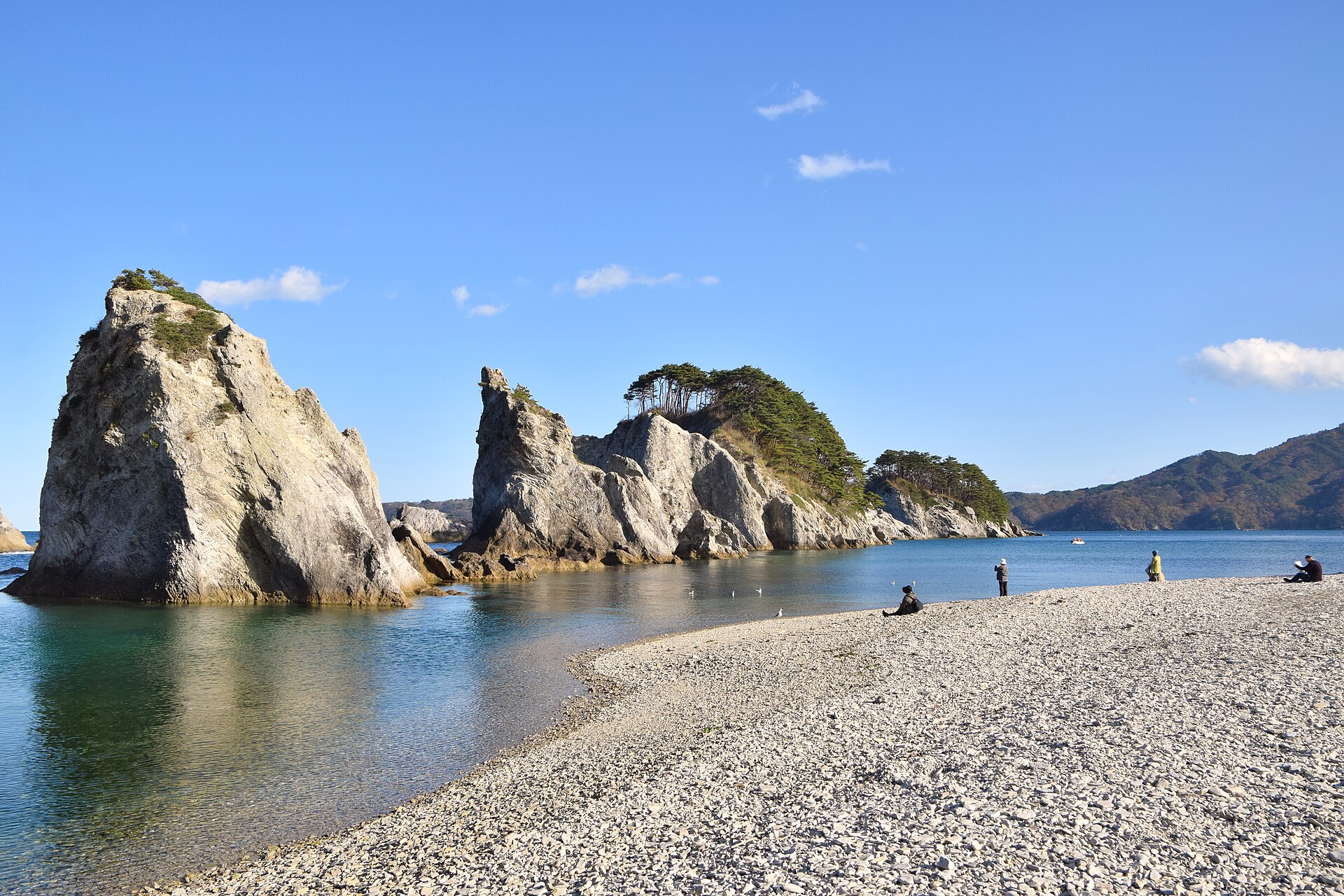 Raita Futo / CC BY 2.0
Nature · Iwate★★★
Jodogahama
3.1 km · straight line
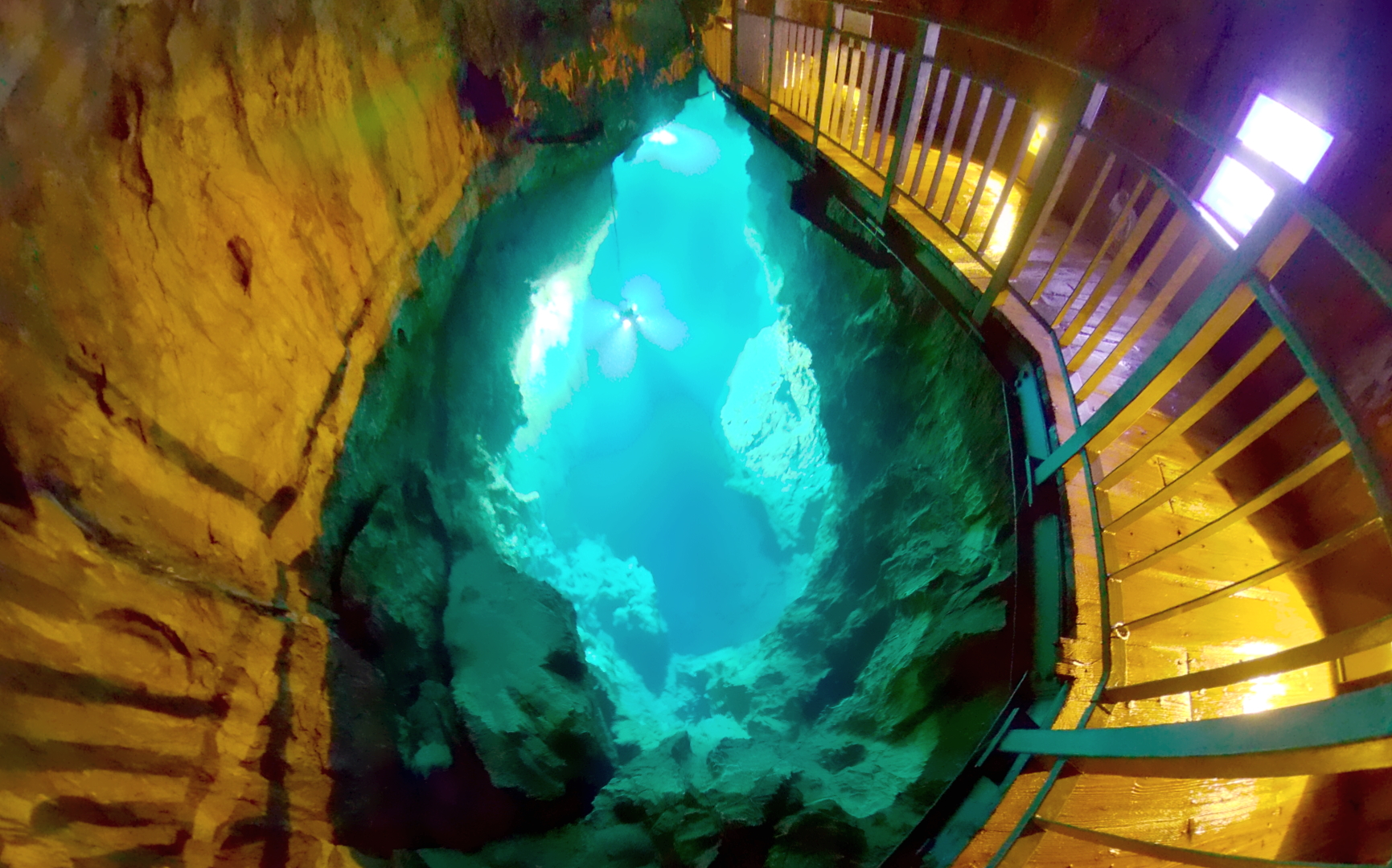 あおもりくま / Public domain
Nature · Iwate★★★
Ryusendo Cave
27.6 km · straight line
Distances are straight lines on the map, not travel times.