Akita City · Kanto OdoriNo.970★★★Open in map →
Akita Kanto Festival
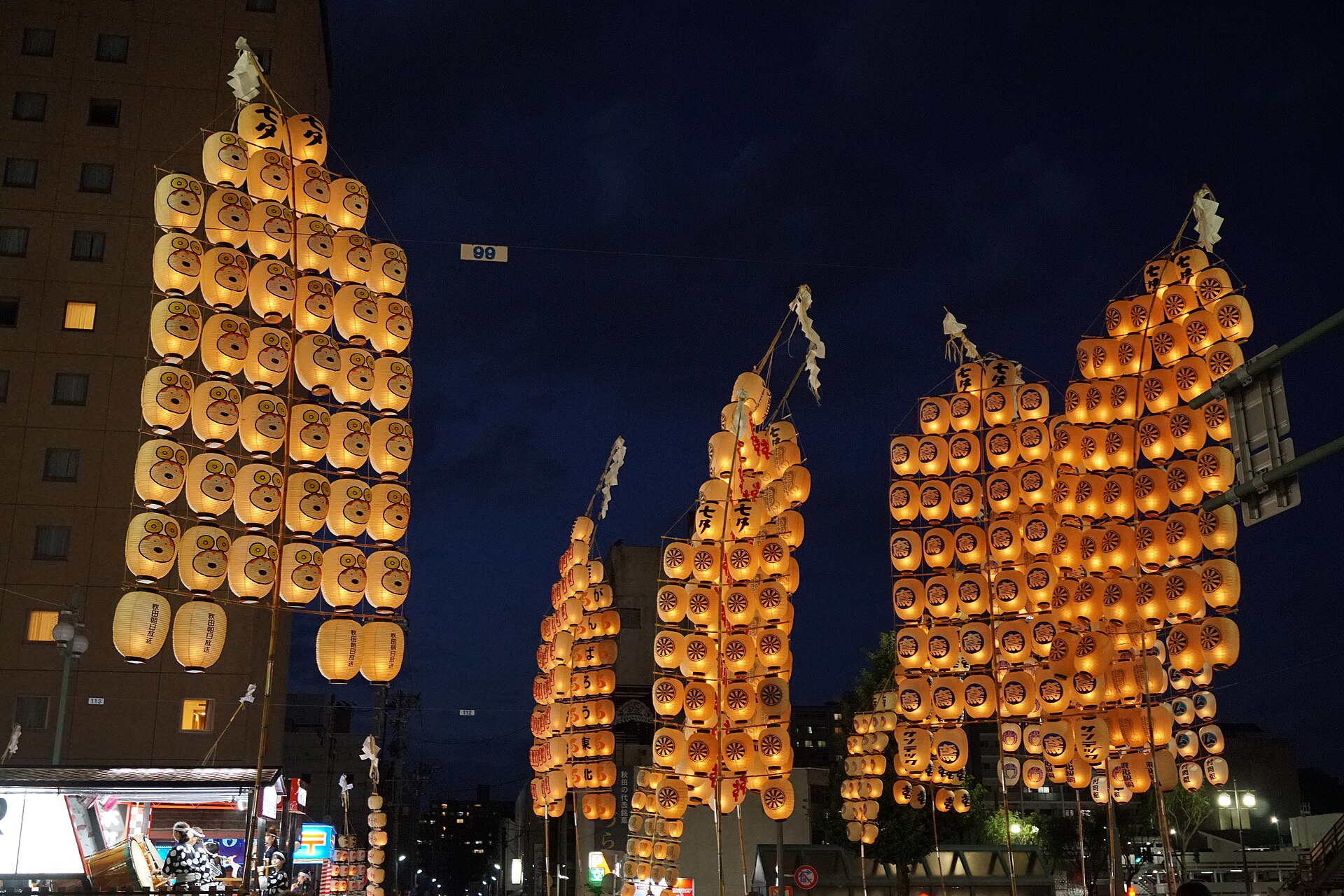
From 3 to 6 August, Akita City closes Kanto Odori and raises poles of paper lanterns above the crowd. It is one of the three great summer festivals of Tohoku, and a designated Important Intangible Folk Cultural Property.
- FromAkita Station (Akita Shinkansen and JR lines)
- 10-15 min on footWalk from Akita Station west exit
- Akita Kanto Festival
Where it is
34 more notes in Akita · open the map →What to look for — in walking order
- Area Nakaichi Nigiwai Hirobaopen square near the station where the daytime pole-handling contest is judged
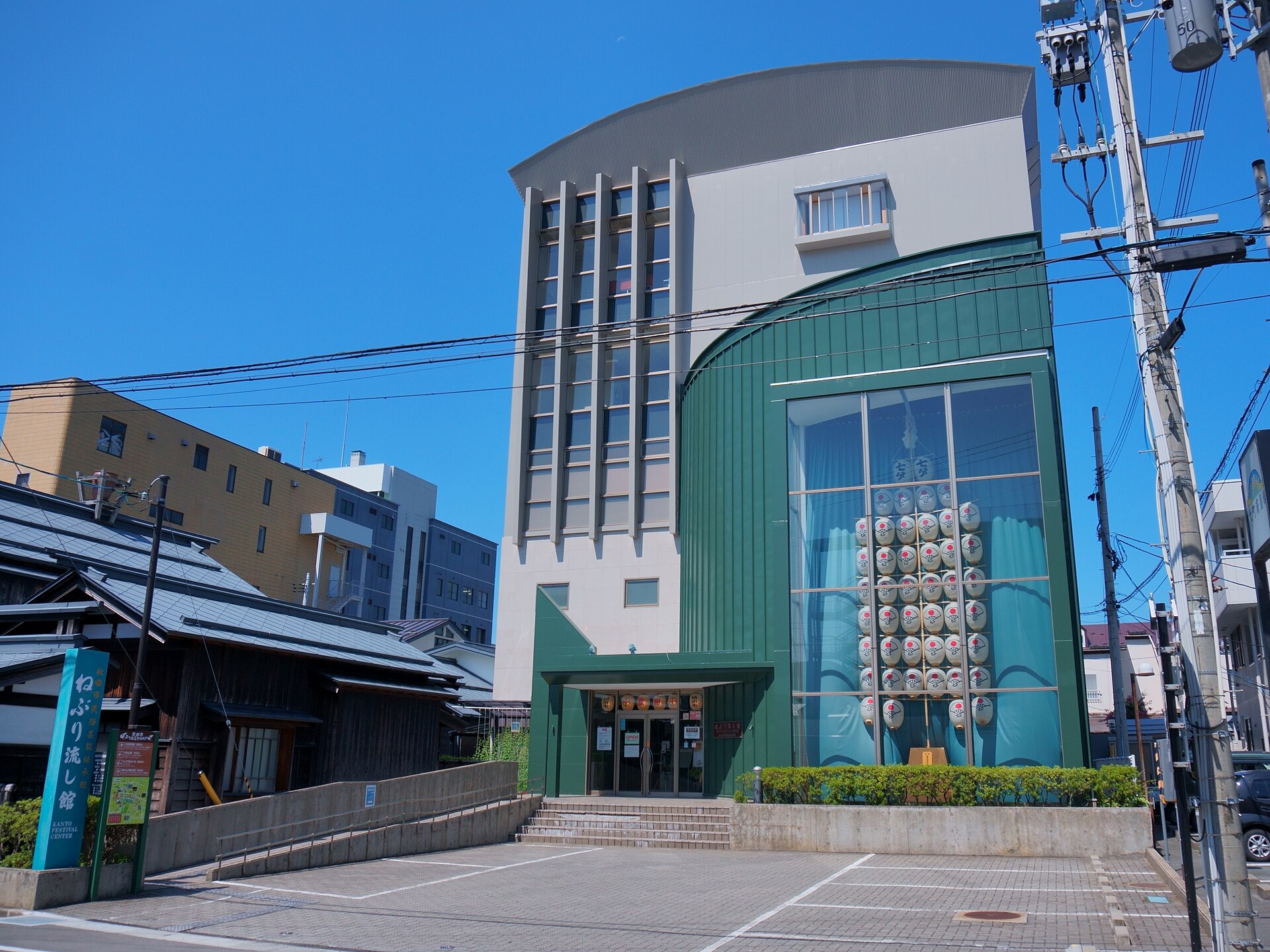
- Akita City Folk Performing Arts Heritage Centerfull-size kanto visitors can lift, with displays on the city's other festivals
- Former Kaneko Residencemerchant house kept next door to the heritage centre
- Nichome-bashieast end of the avenue, where the closed section begins
- Kanto Odorithe avenue itself, tiered seating running along the central divider
How to actually get there
- Tokyo → Akita Station (Akita Shinkansen Komachi, no change).
- Akita Station west exit → Area Nakaichi, for the daytime contest.
- On to the heritage centre in Omachi, where a full-size pole can be lifted.
- South to Kanto Odori, then west along the closed section for the evening.
- On foot from Akita Station
- Akita Station is the terminus of the Akita Shinkansen and the meeting point of the JR Ou, Uetsu and Oga lines, so nearly everyone arrives on one concourse. Leave by the west exit and keep walking west. The near end of the avenue comes first and the middle of the performance stretch is a few minutes further. No local transfer, and no fare beyond the one that brought you into the city.
- Back to Akita Station
- The same walk east, against a crowd that leaves all at once when the barriers come down. Shinkansen, local lines and the airport bus all meet at the station forecourt, so there is no second leg to find. Allow more time than the walk out took.
About the place
A kanto is a long bamboo pole strung with cross-pieces and paper lanterns, raised as an image of ripe rice. The largest size, the owaka, carries forty-six lanterns, stands twelve metres and weighs about fifty kilograms. Some two hundred and eighty poles go up along the avenue together, and across all four sizes the lanterns come to roughly ten thousand. Bearers work in relays rather than alone. Extension rods are added while a pole is already standing, so the whole thing grows, bends and sways above the crowd.
How to enjoy it
Traffic control on the avenue starts at 18:15 and lifts at 21:30, and the poles go up inside that window. The daytime contest runs on the later days of the festival, in the square nearer the station, and it is the easier place to watch the technique close up. Come outside the festival and the heritage centre is open through the day, shutting in the late afternoon.
Background & history
The festival grew out of neburi-nagashi, a midsummer rite in which decorated bamboo was carried through the streets and floated away on the river to send off drowsiness and bad air. Something close to today's form is thought to have existed by the Horeki era, and a traveller's account of 1789 already describes poles of lanterns going through Akita. Candles, and the tall lanterns of the Bon season, turned the rite into a contest of balance. The state listed it as an Important Intangible Folk Cultural Property in 1980.
Before you go
- Cash
- The avenue is a public street and the paid seating is confined to the central divider. Those tiered seats are booked in advance through the festival office, group bookings opening before individual ones. The heritage centre charges admission, and there is a combined ticket that also covers the city's red-brick museum, so a little cash is worth carrying.
- Good to know
- The four dates do not move, and bad weather does not cancel the evening: the organisers shorten the programme and wait for a break in the rain instead. The daytime contest has an indoor fallback venue. The heritage centre closes over the new year.
- Another way
- Arriving by air, the limousine bus from Akita Airport reaches the west exit of Akita Station in about 40 minutes and takes IC cards, so a flight lands you at the same starting point as the train.
- After you get off
- From the west exit, follow the wide avenue straight west. Traffic control begins in the early evening, so on festival nights the last stretch is walked on the roadway itself.
Nearby notes
 掬茶 / CC BY-SA 4.0
Culture · Akita★★
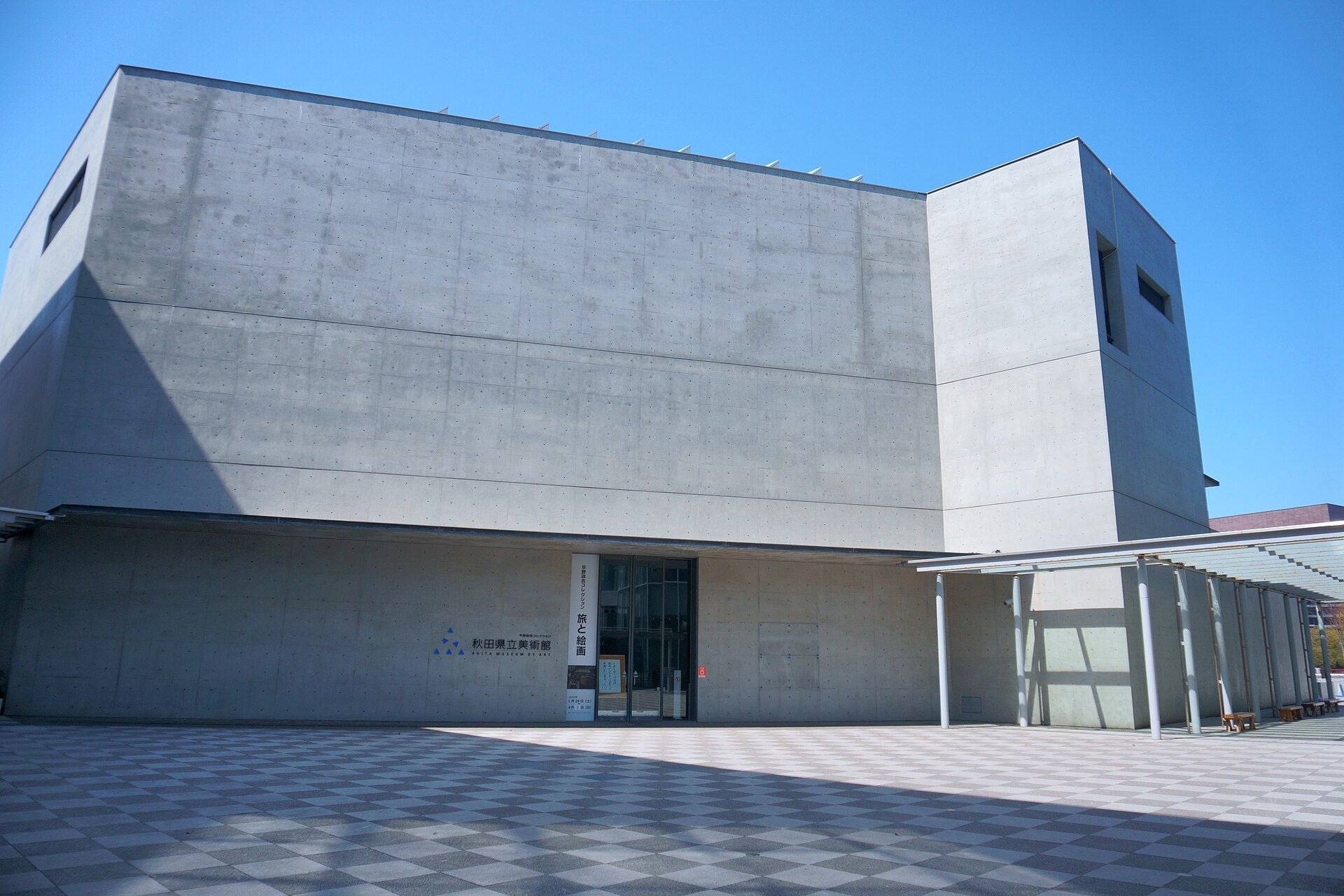
Akita Museum of Art
0.7 km · straight line
 Chensiyuan / CC BY-SA 4.0
Food · Akita★★★
Kiritanpo
1.1 km · straight line
 whiz0520 / CC BY 3.0
Culture · Akita★★
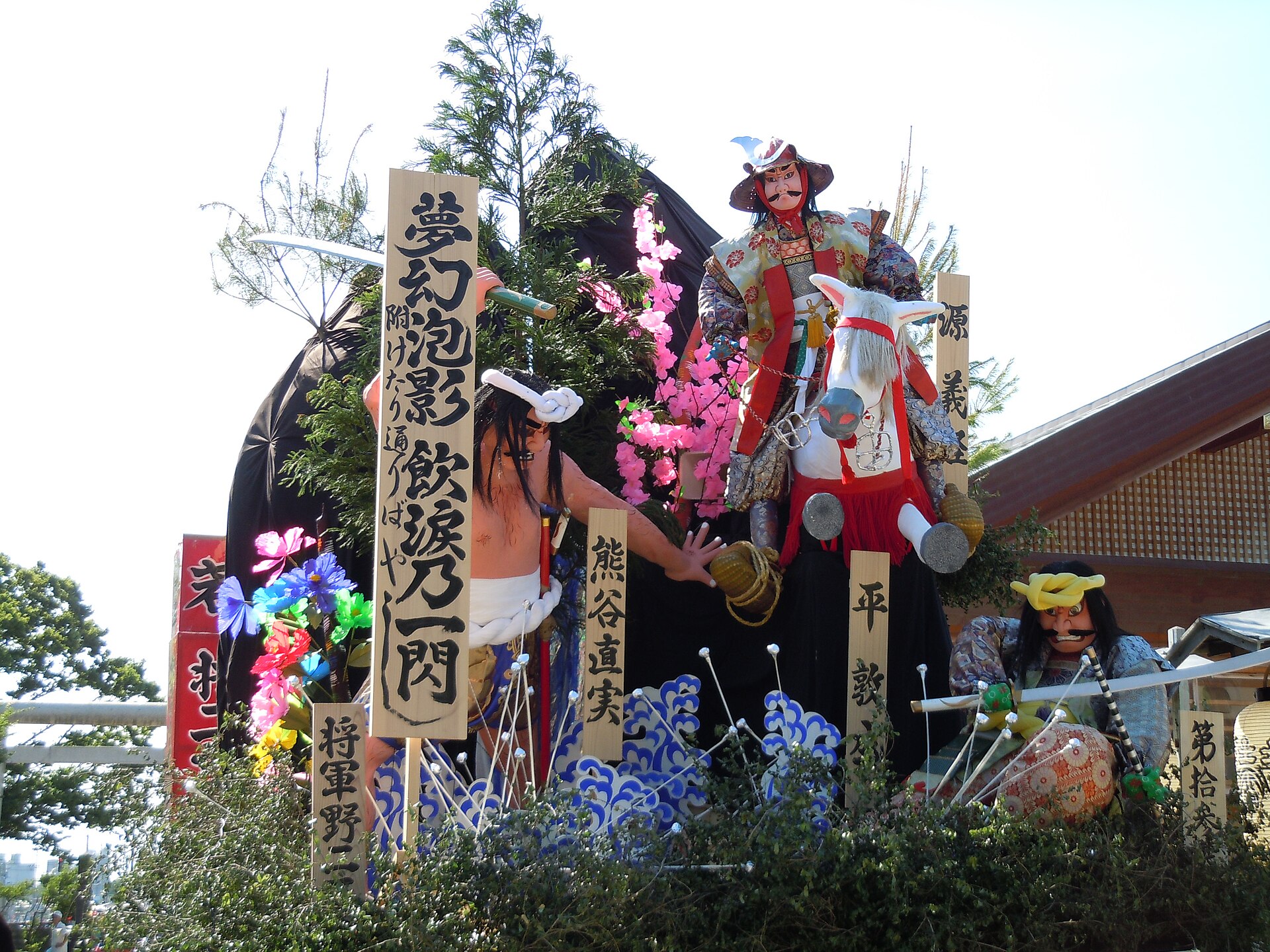
Tsuchizaki Minato Hikiyama Festival
5.6 km · straight line
 Sun show du Kae / CC0
Food · Akita★★
Hatahata Sandfish
29.0 km · straight line
Distances are straight lines on the map, not travel times.