Central Nagano · AzuminoNo.739★★Open in map →
Daio Wasabi Farm
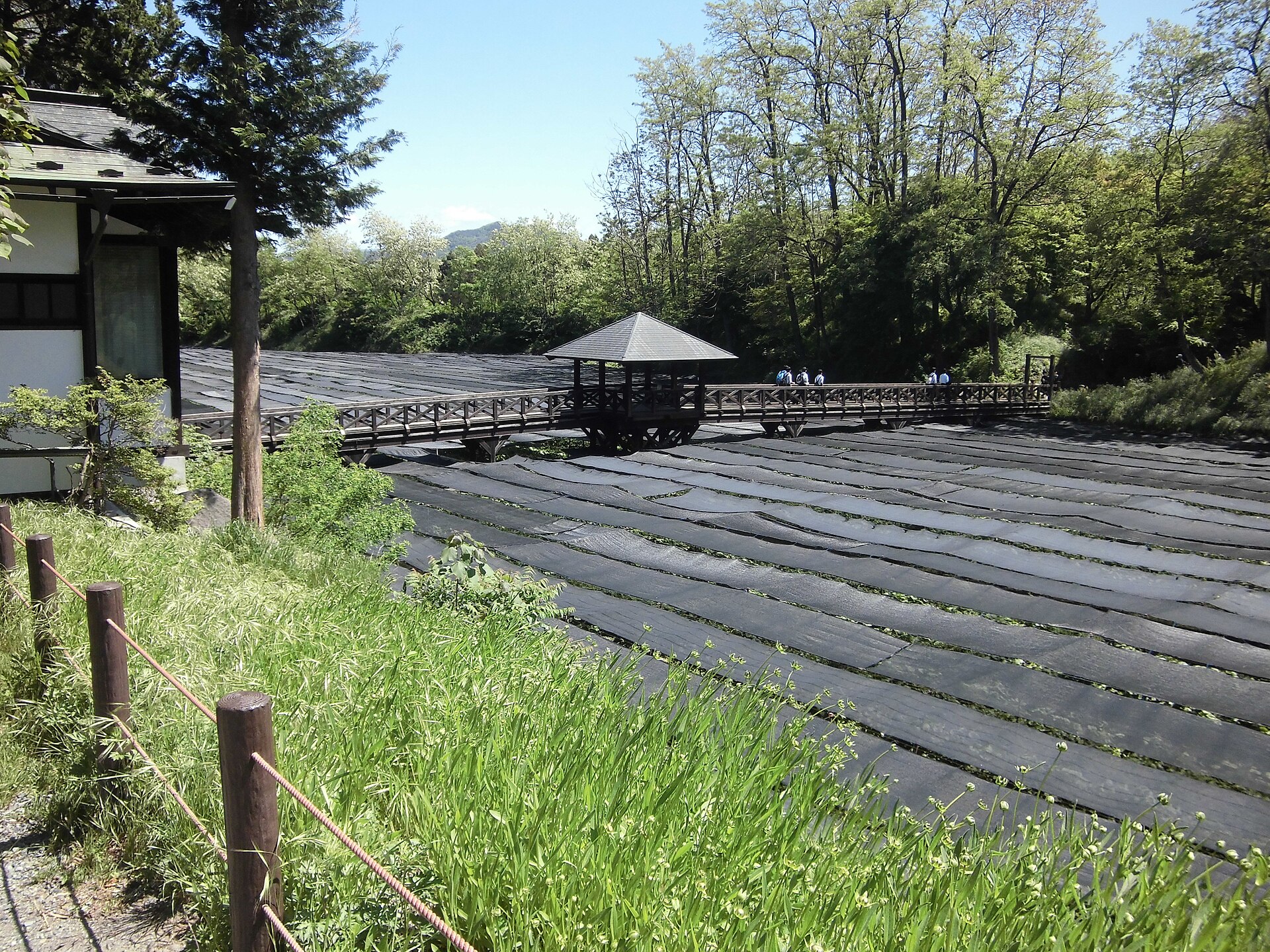
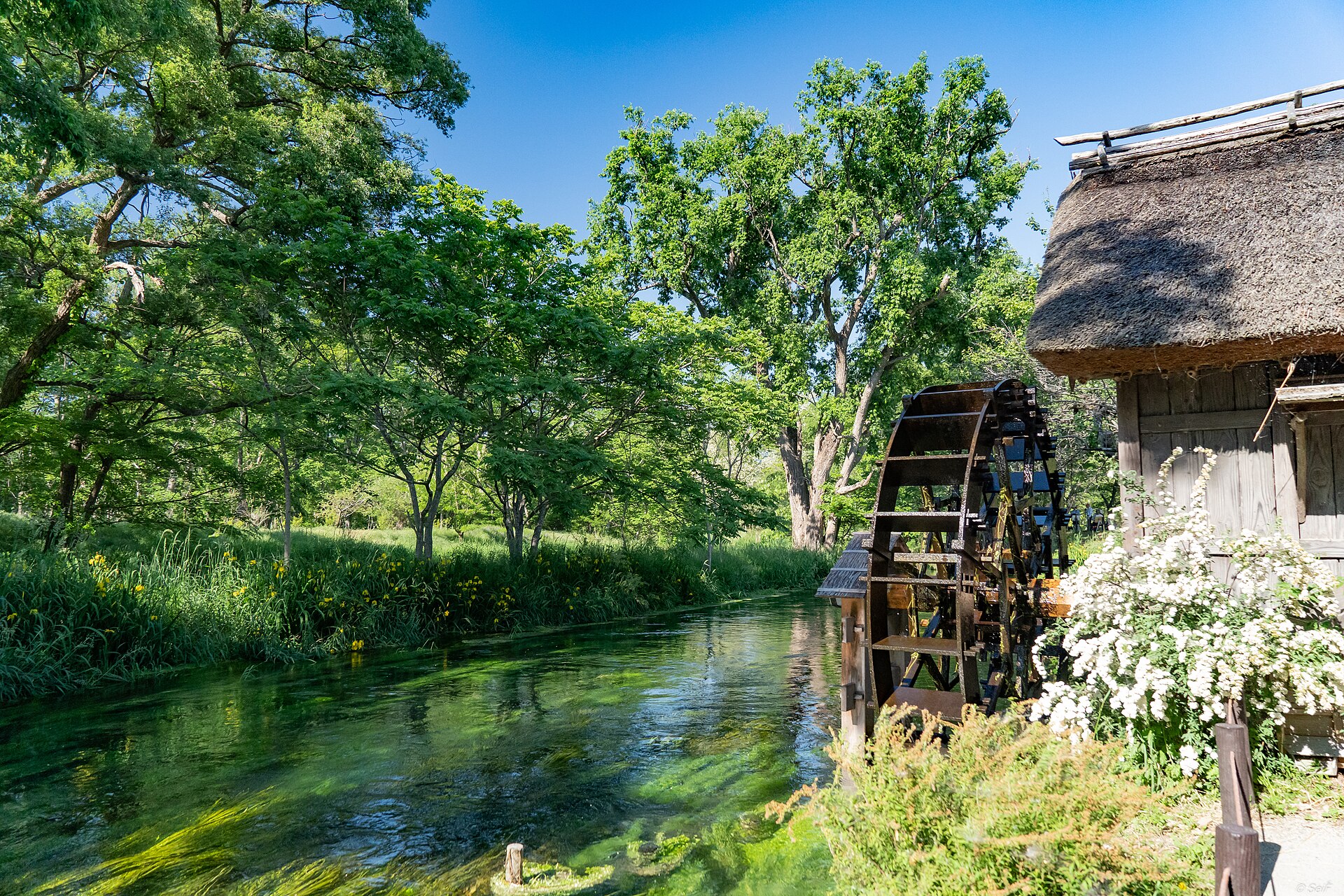
A working wasabi farm on the Azumino fan, where Northern Alps snowmelt surfaces and runs past sand ridges kept in shade. The grounds are free to enter, and three wooden water wheels stand on the river at the far end.
- FromMatsumoto Station
- ~30 minJR Oito Line, then a walk or a short taxi
- Get off atHotaka Station (JR Oito Line)
- From there
- Daio Wasabi Farm
The sweet spot
Nobody would call this a hidden place. It is one of the fixed points of an Azumino day and the operator itself calls the view the region's signature landscape. What repays attention is that the site is legible: the water arrives, is divided, does its work and leaves, and you can follow that whole sequence on foot inside half an hour. The earlier in the day you start it, the easier the sequence is to read.
Where it is
27 more notes in Nagano · open the map →What to look for — in walking order
- The wasabi bedssand ridges in a sunken cut, spring water running past them at 13 to 15 degrees all year
- The Tade River water wheelsthree wooden wheels turning where two clear rivers meet, the set left behind by a film crew
- Daio Shrinesmall shrine on the grounds, raised to the demon king the farm takes its name from
- Daio-kutsu and Kaiun-doa built reconstruction of the Ariake mountain cave where that demon king made his last stand
- The water plazaopen bank where the spring water is shallow and reachable, at the quiet end of the loop
How to actually get there
- Matsumoto Station → Hotaka Station on the JR Oito Line.
- East from the station on foot across the fan, or take a taxi from the rank.
- Walk the paths between the wasabi beds first, while the light is still low.
- Follow the Tade River to the three water wheels, then loop back past the shrine and the caves.
- JR Oito Line to Hotaka
- From Matsumoto take the JR Oito Line north to Hotaka, the main station for Azumino sightseeing and a stop for limited expresses as well as local trains. From the station the farm is about 2.3 km east across the fan — roughly half an hour on foot, or about ten minutes by taxi from the rank outside.
- Back to Hotaka and Matsumoto
- The same route in reverse. The Oito Line is a rural single track and the gaps between trains widen in the middle of the day and again in the evening, so fix your return train before you start walking back. Taxis wait at Hotaka but not usually at the farm, so order one from the site if you want to ride.
About the place
The farm covers roughly fifteen hectares of the Azumino fan, and almost all of it is water in motion. Snow falling on the Northern Alps sinks into the gravel of the plain and surfaces here. The method used is the flat-ground type: level land near a river is dug down several metres to the level where the groundwater comes up, sand ridges are raised in the cut, and the wasabi is planted along both flanks of each ridge. Because the plant will not take direct summer sun, the ridges are shaded with cloth or by planted trees, so from a distance the fields read as dark corduroy rather than as green crop rows. Walk the paths between them and the sound is low and unbroken — a field irrigated by gravity alone. Beyond the beds the Tade River runs clear enough to show the weed lying flat in the current.
How to enjoy it
The gate opens at eight in the warm months, early for a site of this size and worth using: the sun is still low, it lies along the water rather than on it, and the beds hold their shade. Give the loop about an hour if you want the wheels and the caves as well as the fields. Spring and early summer put the best light on the water; autumn lifts the Alps out clearly behind the beds. The thing to eat here is the wasabi soft-serve, which is better than it sounds.
Background & history
In 1915 the founder settled on this stretch of the fan for its spring water and spent two years buying the land out of five separate villages; it was gravel waste at the time, good for nothing else. Clearing started in March 1917 and the last of the beds was finished in 1935, about two decades of work. Recognition came much later: the Environment Agency's hundred selected waters, listed in 1985, includes the Azumino wasabi-field spring group. The wheels on the river arrived for an unrelated reason — Kurosawa built them for the episode set in a watermill village in his 1990 film, and they were left standing when the crew went home.
Before you go
- Cash
- Entry to the grounds is free. The shops and the eating places on site charge as normal and their prices change with the season, so treat any figure you have read in advance as provisional. Bring some cash for the smaller counters.
- Good to know
- Hours run 8:00 to 17:00 from March to November and 9:00 to 16:00 from December to February, with the site closed on 31 December. Winter is short-daylight country here and the wind comes straight off the Alps; the paths between the beds are gravel and unshaded, so summer needs a hat rather than a coat.
- Another way
- By car it is about ten minutes from the Azumino interchange on the Nagano Expressway, and there is parking on site. Rental cycles are the other common way across the fan, since Azumino is flat and the lanes between the wasabi beds and the river are quiet.
- After you get off
- From Hotaka Station the road runs east across open farmland with the Alps behind you the whole way; it is level, and the last stretch follows the river. There is no shade on this walk, which is the argument for the taxi in August.
Nearby notes
 663highland / CC BY 2.5
History · Nagano★★★
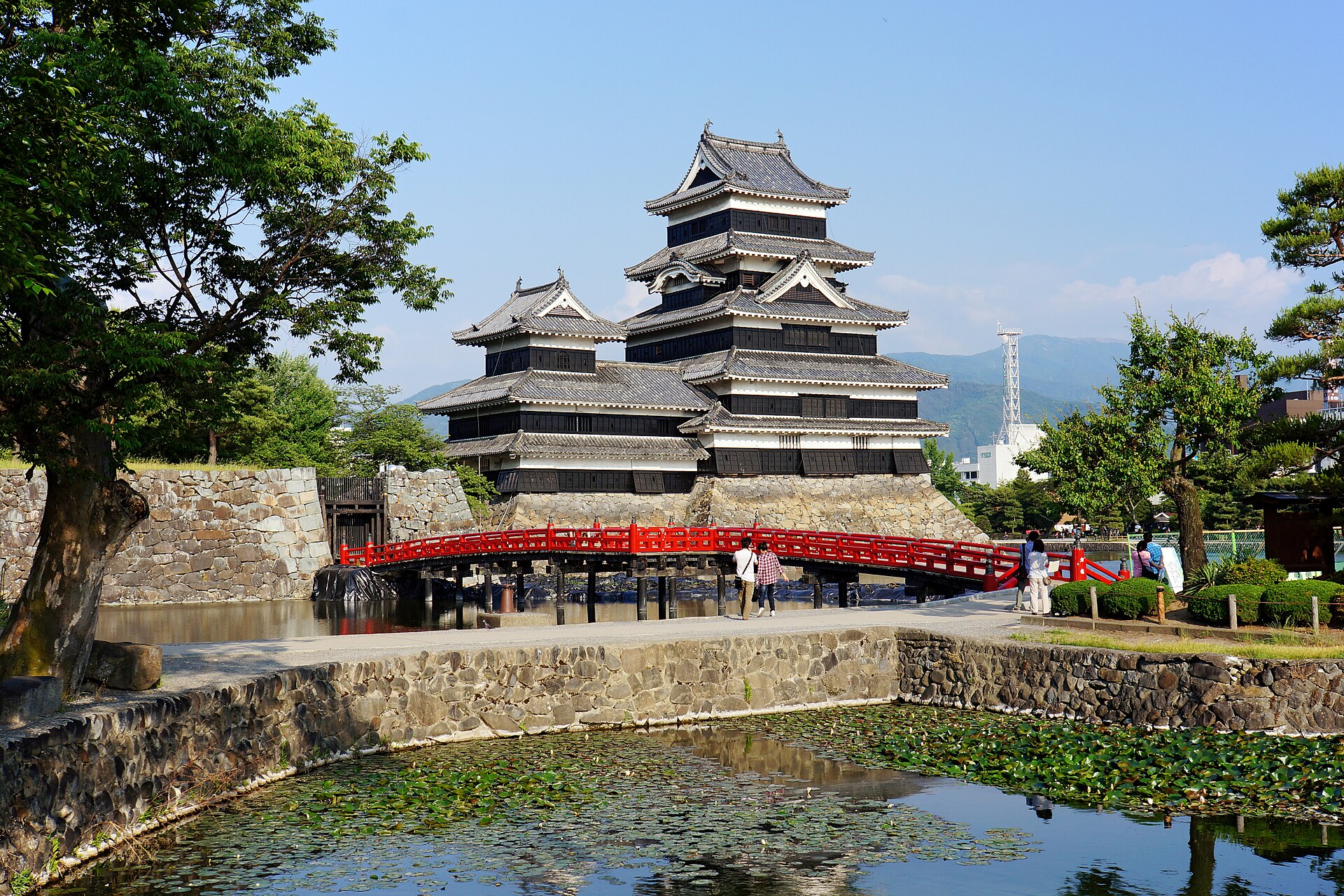
Matsumoto Castle
12.4 km · straight line
 ほっきー / CC0
Onsen · Nagano★★
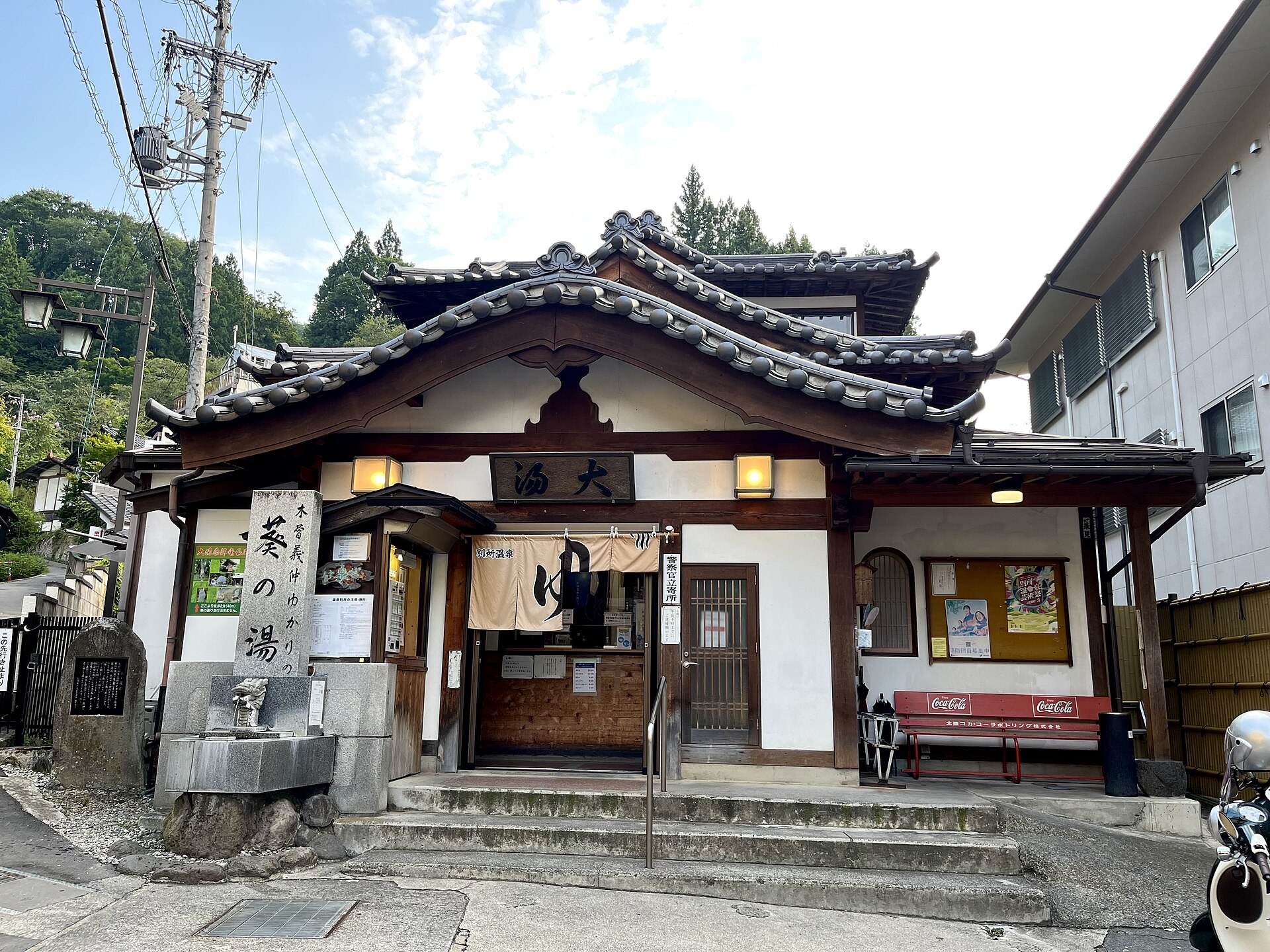
Bessho Onsen
22.5 km · straight line
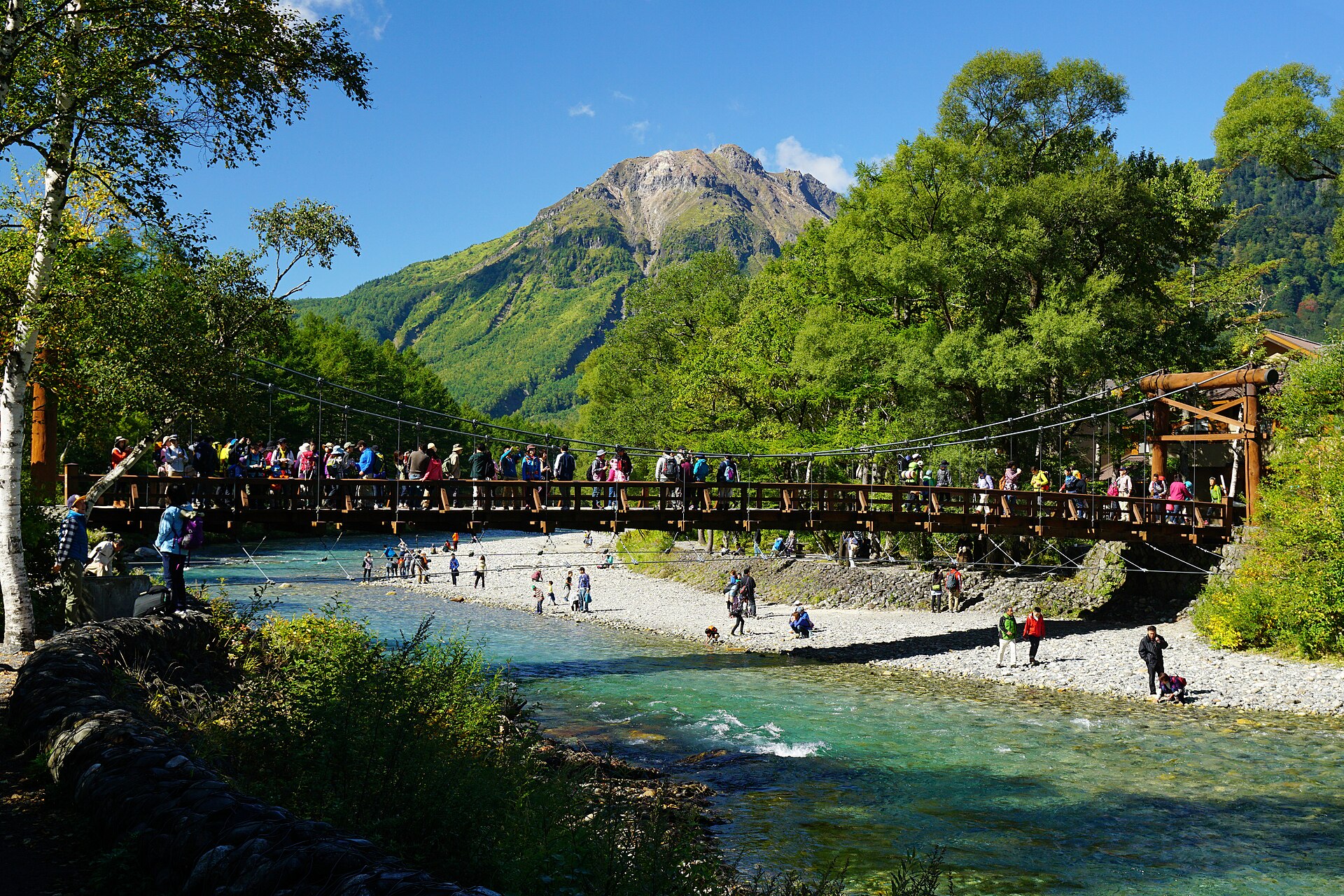 663highland / CC BY 2.5
Nature · Nagano★★★
Kappa Bridge
26.3 km · straight line
Distances are straight lines on the map, not travel times.