Ibaraki north · DaigoNo.269★Open in map →
Fukuroda Falls
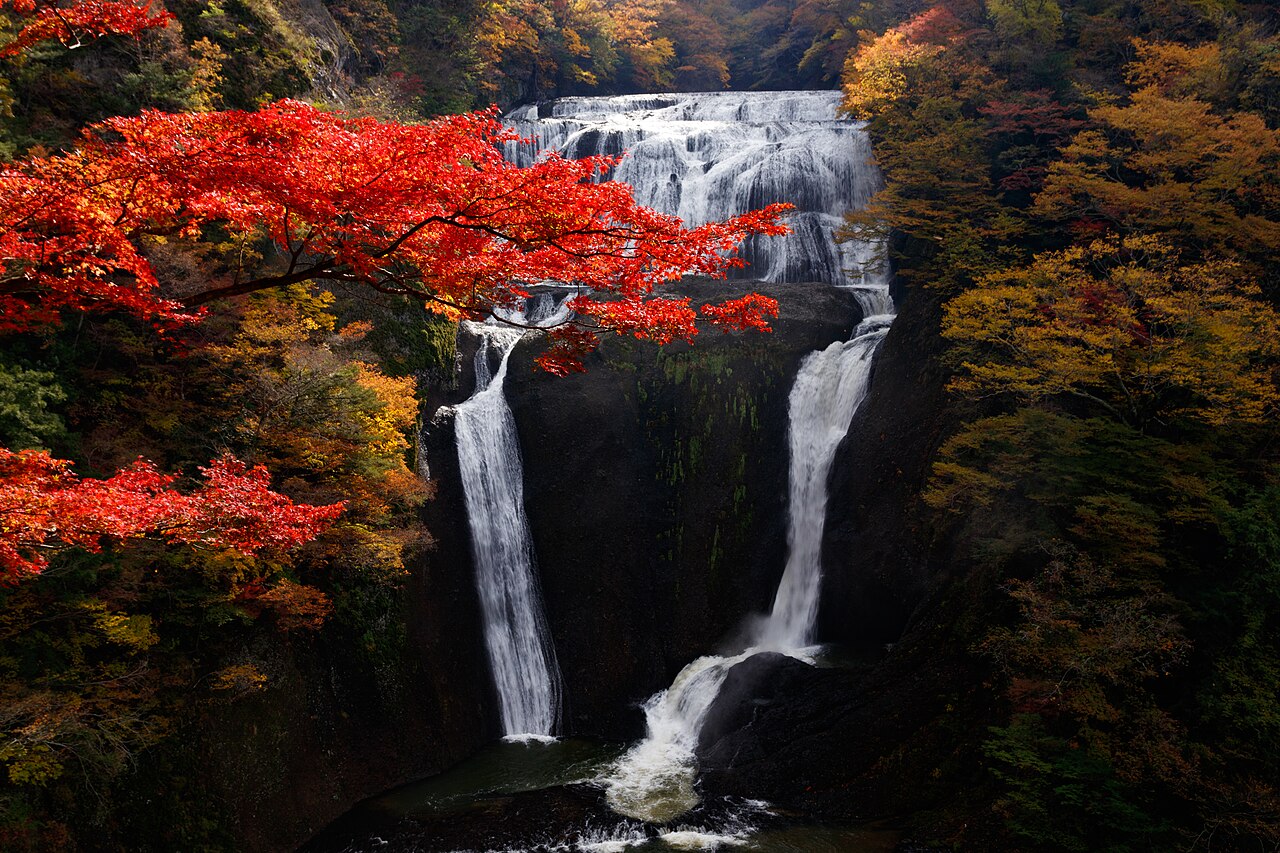
A 120-metre-high, 73-metre-wide waterfall in the hills of northern Ibaraki that falls in four separate tiers, viewed from decks reached through a tunnel in the cliff.
- FromTokyo Stn
- ~2 hr 45 mintrain + bus (~hourly)
- Get off atFukuroda Station (JR Suigun Line)
- From there
- Fukuroda Falls
The sweet spot
Fukuroda is counted among Japan's three great waterfalls and was designated a National Place of Scenic Beauty together with Nase Falls upstream on 10 March 2015 — yet it sits in northern Ibaraki, off the standard Tokyo–Nikko–Hakone circuit, so it draws mostly domestic visitors even in peak autumn.
Where it is
13 more notes in Ibaraki · open the map →What to look for
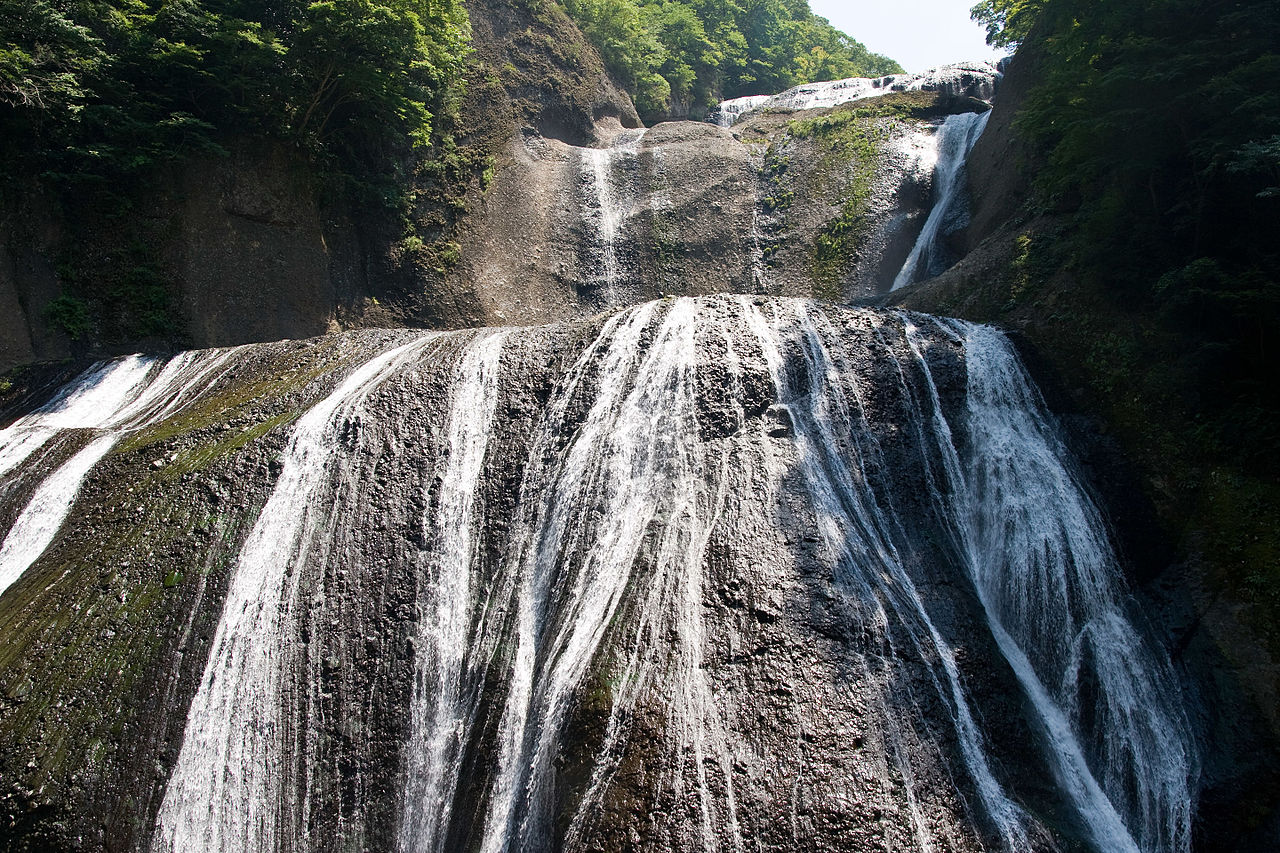
- The four tiers from the tunnel deckthe head-on view the tunnel was built for, close enough that the spray reaches the railing in high water
- The second observation platformthree decks added in 2008, set high enough to take in the full 120-metre drop and the width of the rock wall at once
- The suspension bridge and Nase Fallscross the bridge and climb the Tsukiori-yama path to reach Nase Falls, a roughly 15-metre drop upstream that almost no day visitor bothers with
- The frozen falls in deep winterin the coldest spells the whole face ices over into a blue-white wall — the reason a certain kind of visitor comes in January rather than November
How to actually get there
- Tokyo Station → Mito Station (JR Joban Line limited express Hitachi / Tokiwa).
- Mito Station → Fukuroda Station (JR Suigun Line, local; check the timetable — services are infrequent).
- Fukuroda Station → Takimoto stop (local bus, ~10 min, 260 yen), then ~10 min on foot to the tunnel entrance.
- Limited express + local line + bus (via Mito and Fukuroda Stn)
- Tokyo Station →(JR Joban Line limited express Hitachi or Tokiwa)→ Mito Station →(JR Suigun Line, local)→ Fukuroda Station. Total from Tokyo is about 2 hr 45 min with two changes. From Fukuroda Station take the local bus toward Takimoto (~10 min, 260 yen for adults) and get off at the Takimoto stop; the tunnel entrance is about a 10-minute walk from there. Suigun Line trains are infrequent — check the day's timetable at Mito before boarding.
- Return the same way from Takimoto
- Take the bus from Takimoto back to Fukuroda Station (~10 min), then the JR Suigun Line to Mito and the Joban Line limited express to Tokyo. Buses and Suigun Line trains both run at wide intervals, so note the return times posted at the Takimoto stop when you arrive rather than working them out afterwards.
About the place
Fukuroda Falls drops 120 metres down a rock wall 73 metres across, and it does not come down in a single sheet — the water splits into four distinct steps on the way. That is the plain reason for its old name, Yodo-no-taki, the Falls of Four Times. A second reading has travelled alongside it for centuries: the wandering monk Saigyo is said to have visited and declared that you cannot know the true character of this waterfall unless you come once in each of the four seasons. Both readings are still quoted on the town's own signage. The falls are approached not from the riverbank but through a tunnel cut into the cliff, which opens onto viewing decks set directly across from the water. In the coldest winters the entire face freezes into a wall of blue-white ice.
How to enjoy it
Autumn colour in the gorge is the peak season and the busiest, but the falls genuinely do change character four times a year, which is the whole point of the name — fresh green in early summer, high water after rain, red maples in late autumn, and ice in midwinter. Give yourself the extra 40 minutes to cross the suspension bridge for Nase Falls upstream; the crowd thins out almost immediately past the bridge. Combine the trip with the hot spring town of Daigo, and use the 500-yen area bus pass if you plan more than one stop.
Background & history
The falls have carried the name Yodo-no-taki — 'the falls of four times' — since long before they were a tourist site, from the four steps the water takes down the rock face. The story attached to that name credits the monk Saigyo with saying the falls must be visited once in each season before their real character can be judged, and Daigo Town still prints the line on its own materials. Fukuroda Falls and Nase Falls, roughly 15 metres high and a short climb upstream, were together designated a National Place of Scenic Beauty on 10 March 2015. Modern access runs through a tunnel driven into the cliff to reach the water head-on; a second observation platform with three decks was added in 2008, opening a higher and wider angle across all four tiers.
Before you go
- Cash
- Entry to the observation tunnel is 500 yen for adults and 300 yen for children (400 / 200 yen for groups of 20 or more). The Fukuroda–Daigo area free pass gives unlimited local bus rides for 500 yen a day and pays for itself on a round trip plus one detour. Carry cash — this is a rural line and rural buses.
- Good to know
- Opening hours change by season: 8:00–18:00 from May to October, 8:00–17:00 in November, and 9:00–17:00 from December to April. The site is open every day. The tunnel and decks stay cool and damp year-round, and the winter ice display means genuinely cold air — bring a layer even in early autumn.
- Another way
- If you miss the bus, Fukuroda Station to the falls is about a 40-minute walk along the valley road, or roughly 10 minutes by taxi. Both are practical; the walk follows the river for much of the way.
- After you get off
- From the Takimoto bus stop, walk up the shop-lined lane beside the river for about 10 minutes to the tunnel entrance, where the ticket window is.