Hida · GeroNo.472★★★Open in map →
Gero Onsen
— one of Japan's three great hot springs
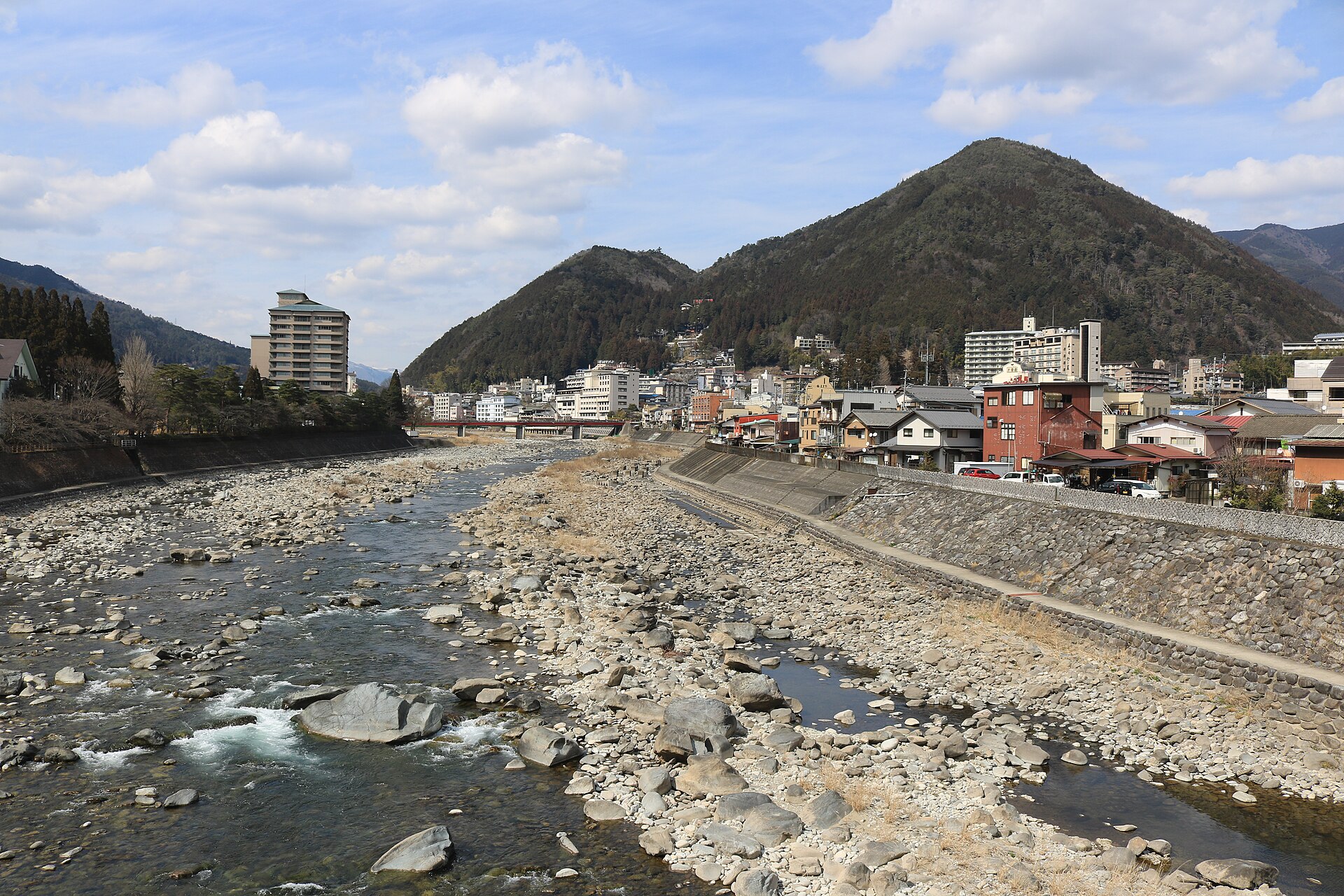
A hot-spring town on the Hida River in southern Hida, named alongside Arima and Kusatsu as one of Japan's three great springs. The famous pool in the riverbed is now for looking at, and the bathing has moved to the street above it.
- FromNagoya Station
- ~1 h 40 minLimited Express Hida, all trains stop
- Get off atGero Station (JR Takayama Main Line)
- On foot
- Gero Onsen
Where it is
18 more notes in Gifu · open the map →What to look for — in walking order
- Gero Ohashithe road bridge from the station side into the onsen town, also called Ideyu-bashi
- Funsenchithe open pool out in the Hida riverbed, kept as a landmark now that bathing there has stopped
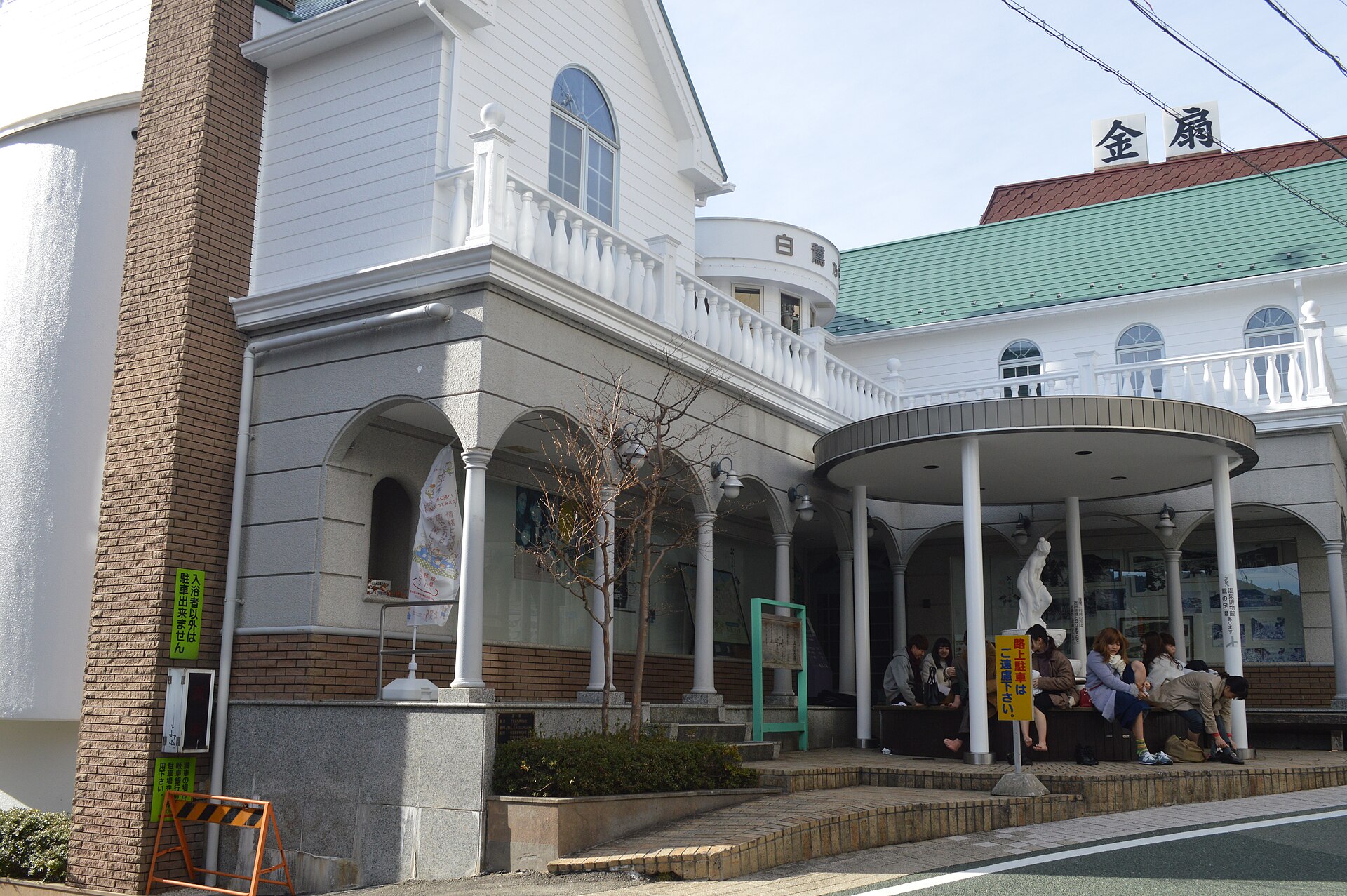
- The Yunoshima onsen streetthe lane of inns and shops behind the bathhouses, the spine of the east bank
- Shirasagi-no-yua public bathhouse on that street, named for the heron of the founding legend
- Kur Garden Rotenburoan open-air public bath further north along the river, away from the busiest stretch
How to actually get there
- Nagoya Station → Gero Station (JR Limited Express Hida, roughly 1 h 40 min, reserved seat advised).
- Gero Station → cross the Gero Ohashi bridge to the east bank (a few minutes on foot).
- Go down to the Funsenchi pool in the riverbed to see it, then back up to the onsen street.
- Bathe at Shirasagi-no-yu, or walk north along the river to the open-air Kur Garden.
- Limited Express Hida from Nagoya
- Nagoya Station →(JR Limited Express Hida, roughly an hour and forty minutes)→ Gero Station. Every Hida service on the Takayama Main Line calls at Gero, but the line runs only a handful of through trips a day, so reserve a seat and build the day around the train.
- Return from Gero Station
- Cross back over the bridge to Gero Station for the Hida south to Nagoya, or north toward Takayama and Toyama. This is a mountain line with limited departures and no late fallback, so check the last train on the board before you settle into a bath.
About the place
Gero's water rises alkaline and simple in composition, with a pH a little over nine, and that is what gives it the soap-slick feel the town sells as the beauty spring. The town is laid out along the Hida River, with the station on one bank and the inns stacked up the slope on the other, joined by the Gero Ohashi road bridge — locally, Ideyu-bashi, the bridge of the hot water. Three public bathhouses are open to people who are not staying the night. That is what makes Gero work as a stop and not only as an overnight.
How to enjoy it
Gero is an evening town. The inns fill in the late afternoon, the lights come on along the river, and the bathhouses are at their best once the day visitors have gone back over the bridge. If you are staying, the yumeguri tegata pass buys the baths of three member inns, which is the cheapest way to try the water in more than one building. If you are not staying, come for one bath and the walk, and keep enough margin to catch the last Hida.
Background & history
The spring was first found in the tenth century, in the Tenryaku years, high on Mount Yugamine above the valley. It failed there and reappeared beside the Hida River, and the town dates that move to the riverside to 1265. A white heron is said to have shown the villagers where the new water lay, which is why the bird turns up on everything here. A Muromachi monk praised the spring in verse, and in the Edo period the Confucian scholar Hayashi Razan set Gero beside Arima and Kusatsu as the finest under heaven — the line the town has lived on ever since.
Before you go
- Cash
- Walking the town and looking at the riverbed pool cost nothing. The public bathhouses each charge their own entry, and the inn-hopping pass is bought separately through the tourist association. Gero Station is staffed and has a ticket window for the reserved seats the Hida needs.
- Good to know
- Bathing in the Funsenchi pool is prohibited, so treat it as a landmark rather than a bath. It sits out in the open riverbed with no shelter of any kind. The public bathhouses keep their own opening hours and rest days, so check before making one of them the plan for the evening.
- Another way
- From the north, the same Limited Express Hida comes down from Takayama and Toyama, which makes Gero a break in a Hida trip rather than a separate journey. A direct highway bus also runs between Nagoya and Gero.
- After you get off
- Gero Station stands on the west bank. Leave by the front, turn toward the river and cross the Gero Ohashi bridge; the onsen street begins on the far side, a few minutes' walk away.
Nearby notes
Distances are straight lines on the map, not travel times.