Kobe · SannomiyaNo.340★★Open in map →
Ikuta Shrine
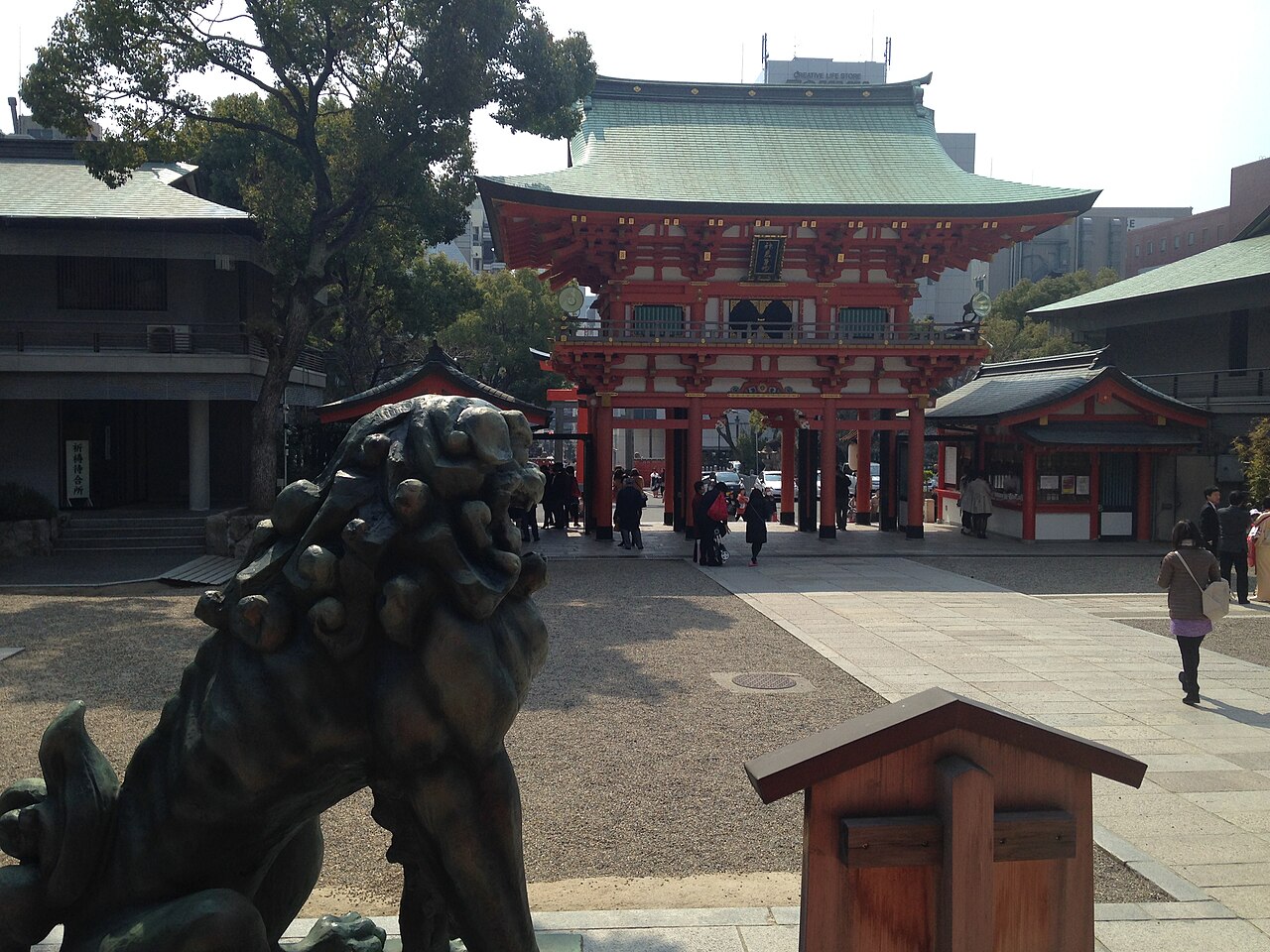
A vermilion shrine eight minutes' walk from Sannomiya, recorded as founded in the year 201. The households assigned to serve it were called kanbe — the word that became Kōbe, the name of the city.
- FromSannomiya Station (JR / Hankyū / Hanshin / subway)
- ~10 minwalk ~8 min from station
- Ikuta Shrine
The sweet spot
Almost nobody arriving in Kobe knows the city is named after a shrine, and the shrine is eight minutes from the main station. That single fact reframes the whole city for a visitor — and the grove behind the hall adds a Genpei War battlefield to the walk, all of it free and open at dawn. For the effort involved, no other Kobe site gives you as much of the city's own story.
Where it is
30 more notes in Hyogo · open the map →What to look for — in walking order
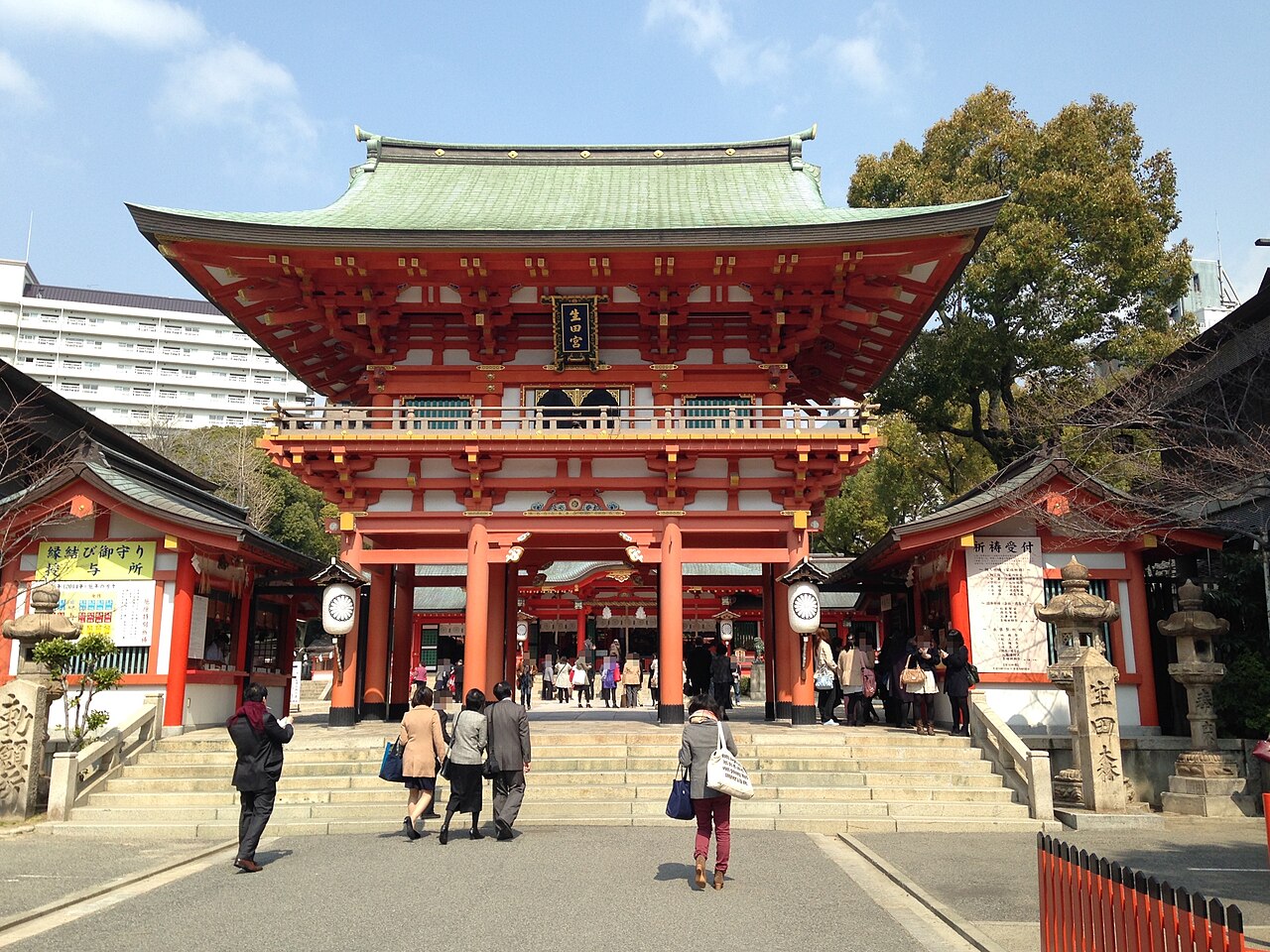
- Rōmon gate and vermilion hallsthe gate closes off the shopping street entirely; the halls behind are among the most photographed vermilion in Kobe
- Ikuta Forestthe grove behind the main hall, named in the Tale of the Heike as ground fought over in 1184
- Water fortune pondfloat a blank paper slip on the spring water and the fortune appears — a small ritual most visitors do here
- Matsuo Shrine, in the grovea subordinate shrine to the sake deity, wrapped in an old wisteria; a quiet corner few people walk to
How to actually get there
- Osaka Stn → Sannomiya Stn (JR Special Rapid, ~20 min), or Shin-Kobe → Sannomiya (Kobe Municipal Subway, 1 stop).
- Sannomiya Stn → Ikuta Shindō street (walk north-west, ~3 min).
- Ikuta Shindō → shrine gate (~5 min further on foot).
- Walk north from Sannomiya
- From JR Sannomiya, Hankyū Kobe-Sannomiya or Hanshin Kobe-Sannomiya, head north-west along Ikuta Shindō — about 8 minutes on foot. Sannomiya is roughly 20 min from Osaka on the JR Special Rapid, or 30 min from Shin-Kobe on the Sanyō Shinkansen plus one subway stop.
- Walk back to Sannomiya, or continue uphill to Kitano
- Sannomiya is the same 8-minute walk south. If you are continuing, Kitano's ijinkan merchant houses are about 15 minutes uphill to the north, and Shin-Kobe Station for the Shinkansen is beyond them.
About the place
You walk up Ikuta Shindō from Sannomiya past bars and boutiques, and the street simply stops at a vermilion gate. Inside, the noise drops by half. The enshrined deity is Wakahirume-no-Mikoto, and the Nihon Shoki dates the founding to the year 201, under Empress Jingū. Behind the main hall is the Ikuta Forest — a fragment of woodland, small now, but named in war chronicles: in 1184 the Taira held this ground against the Minamoto in the fighting around Ichi-no-Tani, and the grove appears in the Tale of the Heike. The shrine is best known today for love and marriage prayers, and there is a pond where you float a paper fortune and watch the writing surface. But the detail that sticks is quieter. When the 1995 Great Hanshin earthquake brought the worship hall down, the shrine was rebuilt the following year, and people began calling the deity here the god of coming back to life.
How to enjoy it
This is a ten-minute detour, not an expedition — fold it into an evening in Sannomiya rather than planning a day around it. Early morning is the best light and the emptiest precinct; the grounds open around dawn while the amulet office starts at nine. New Year sees enormous queues, as does the wedding season, and the shrine hosts a lot of Shinto weddings on weekends, which is worth seeing if you happen on one. Kitano's foreign merchant houses are fifteen minutes uphill and Nankinmachi fifteen minutes down, so Ikuta slots neatly between them.
Background & history
The Nihon Shoki records the shrine's founding in 201, during the regency of Empress Jingū, and it appears in the 10th-century Engishiki register of official shrines. To support it, the court assigned it kanbe — households whose taxes and labour went to the shrine rather than the state. Forty-four such households were attached to Ikuta, and over centuries the word kanbe softened in local speech into Kōbe, which became the name of the settlement and eventually the port city. The Ikuta Forest behind the shrine was a battlefield in 1184 during the Genpei War. The worship hall collapsed in the January 1995 earthquake that devastated the city and was rebuilt by the end of 1996, an early and visible marker of Kobe's recovery.
Before you go
- Cash
- Free to enter. Amulets, the water fortune and goshuin seal stamps are cash only, typically a few hundred yen. IC cards (ICOCA / Suica) cover all rail into Sannomiya. ATMs and convenience stores line the approach street.
- Good to know
- The grounds open around dawn and close at dusk; the amulet office runs roughly 9:00–17:00. Open year-round. Expect very heavy crowds over New Year (1–3 January).
- Another way
- Minatogawa Shrine, dedicated to the 14th-century commander Kusunoki Masashige, is two stops west and gives a second layer of Kobe's pre-port history if shrines are your thing.
- After you get off
- From the JR Sannomiya west exit, cross to Ikuta Shindō — the street signed with the shrine name — and follow it north-west. The vermilion gate is visible from several blocks away once you are on the right street.
Nearby notes
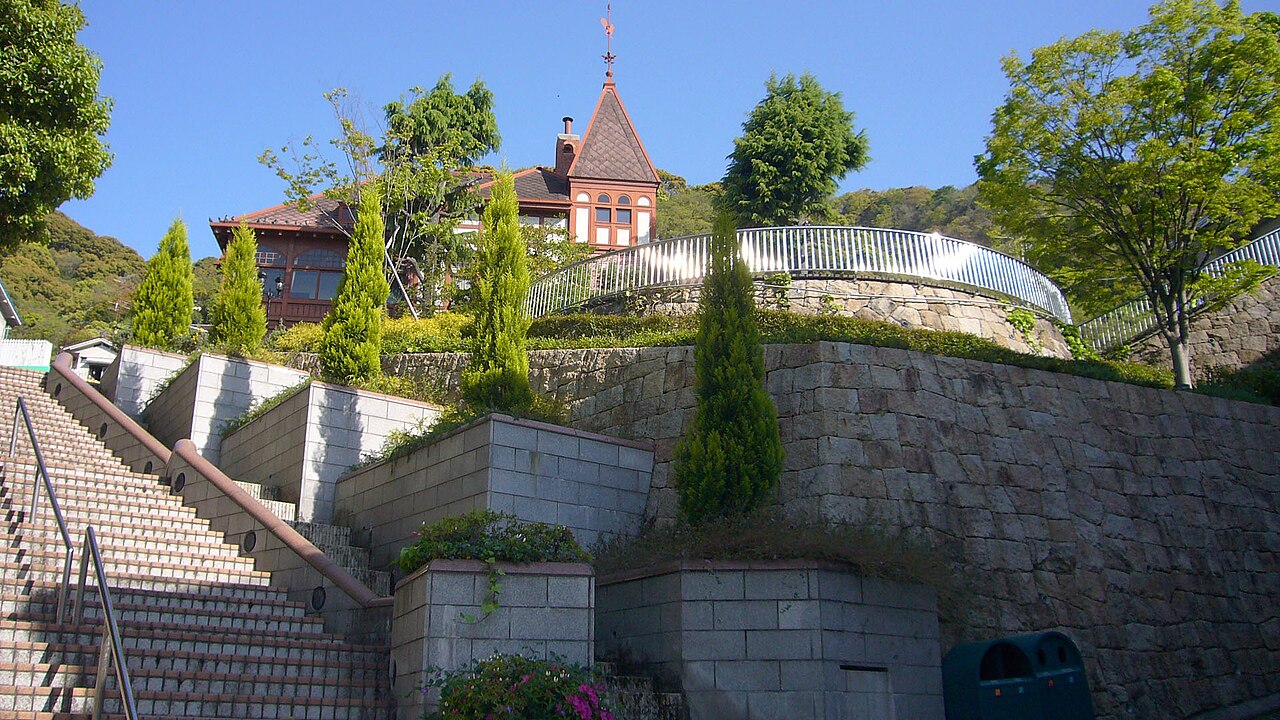 663highland / CC BY 2.5
Local life · Hyogo★★
Kitano Ijinkan
0.7 km · straight line
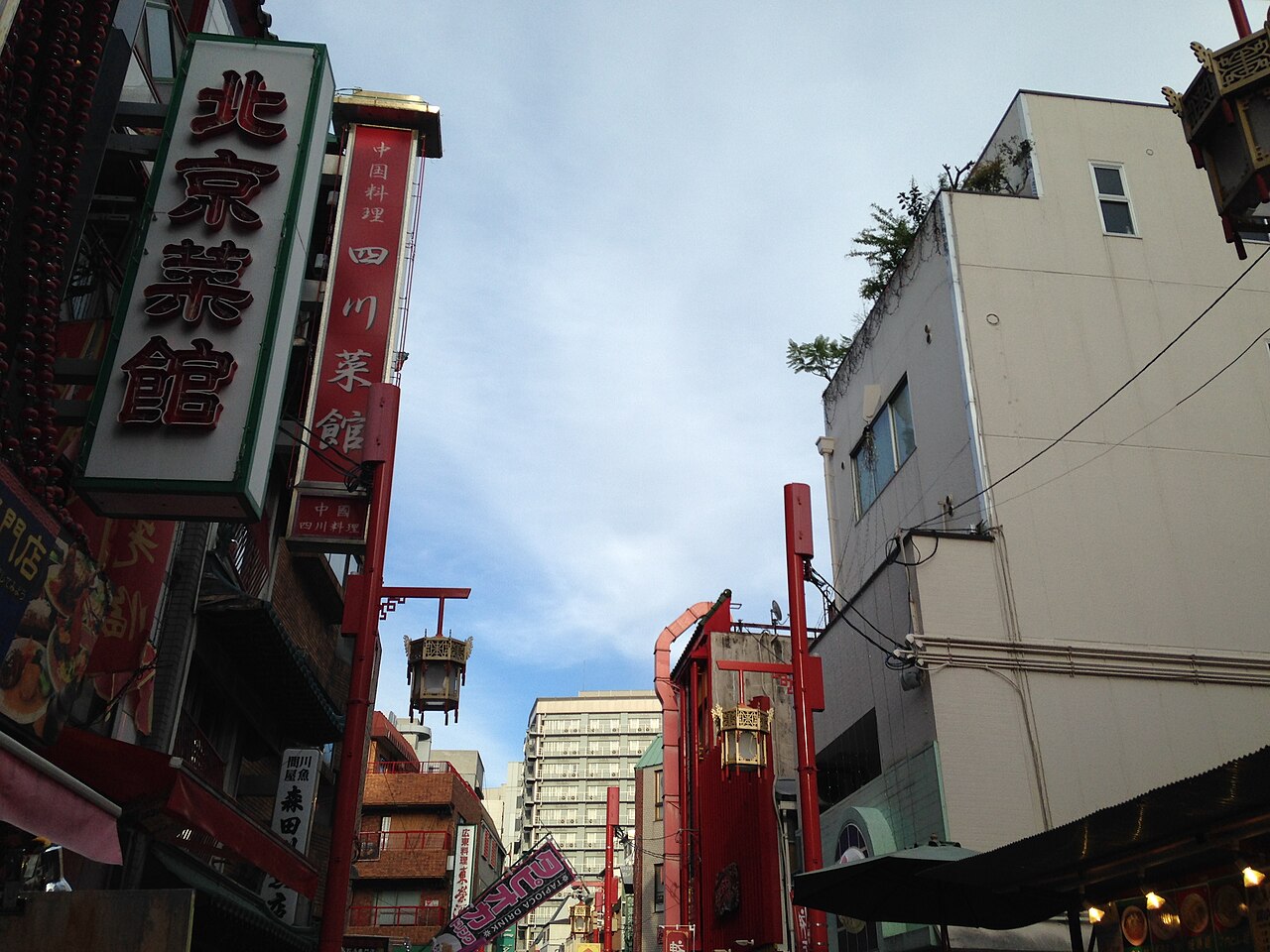 そらみみ (Soramimi) / CC BY-SA 4.0
Food · Hyogo★★
Nankinmachi
0.8 km · straight line
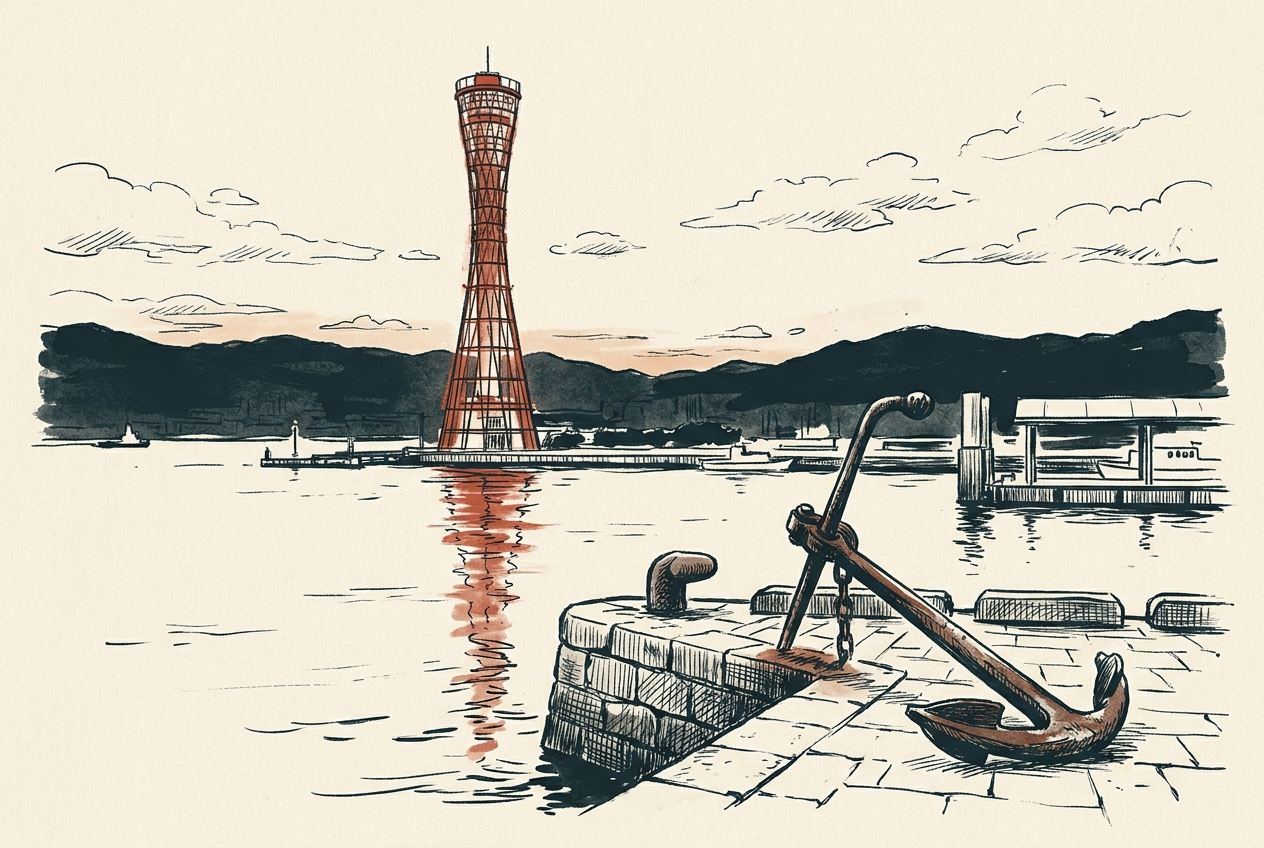 illustration (AI-illustrated)
Local life · Hyogo★★★
Kobe Harborland & Meriken Park
1.4 km · straight line
 小田急4000系ファン / CC0
Local life · Hyogo★★★
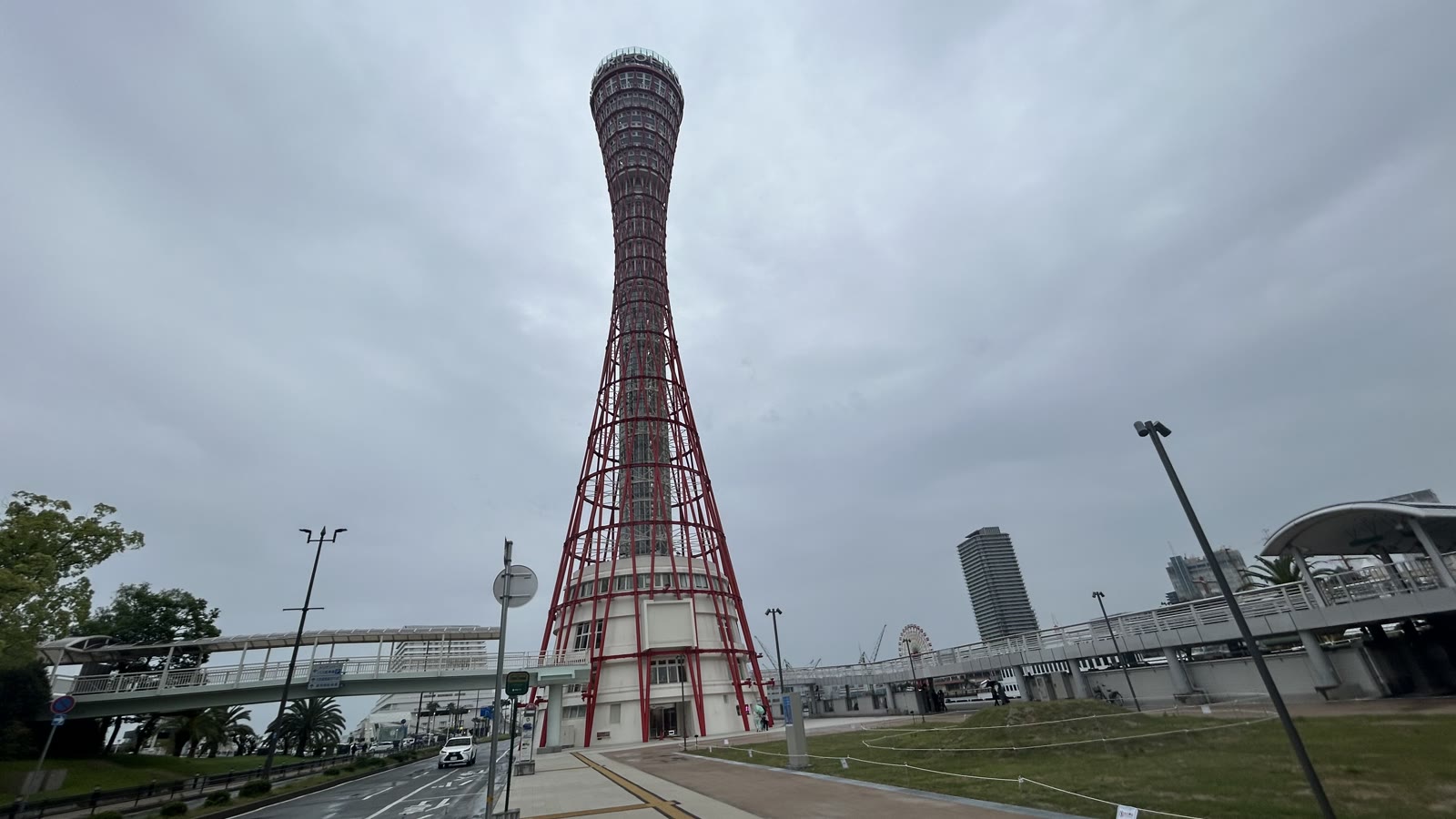
Kobe Port Tower
1.4 km · straight line
Distances are straight lines on the map, not travel times.