West Hiroshima · MiyajimaNo.595★★★Open in map →
Itsukushima Shrine
— The shrine built out over the tide on Miyajima
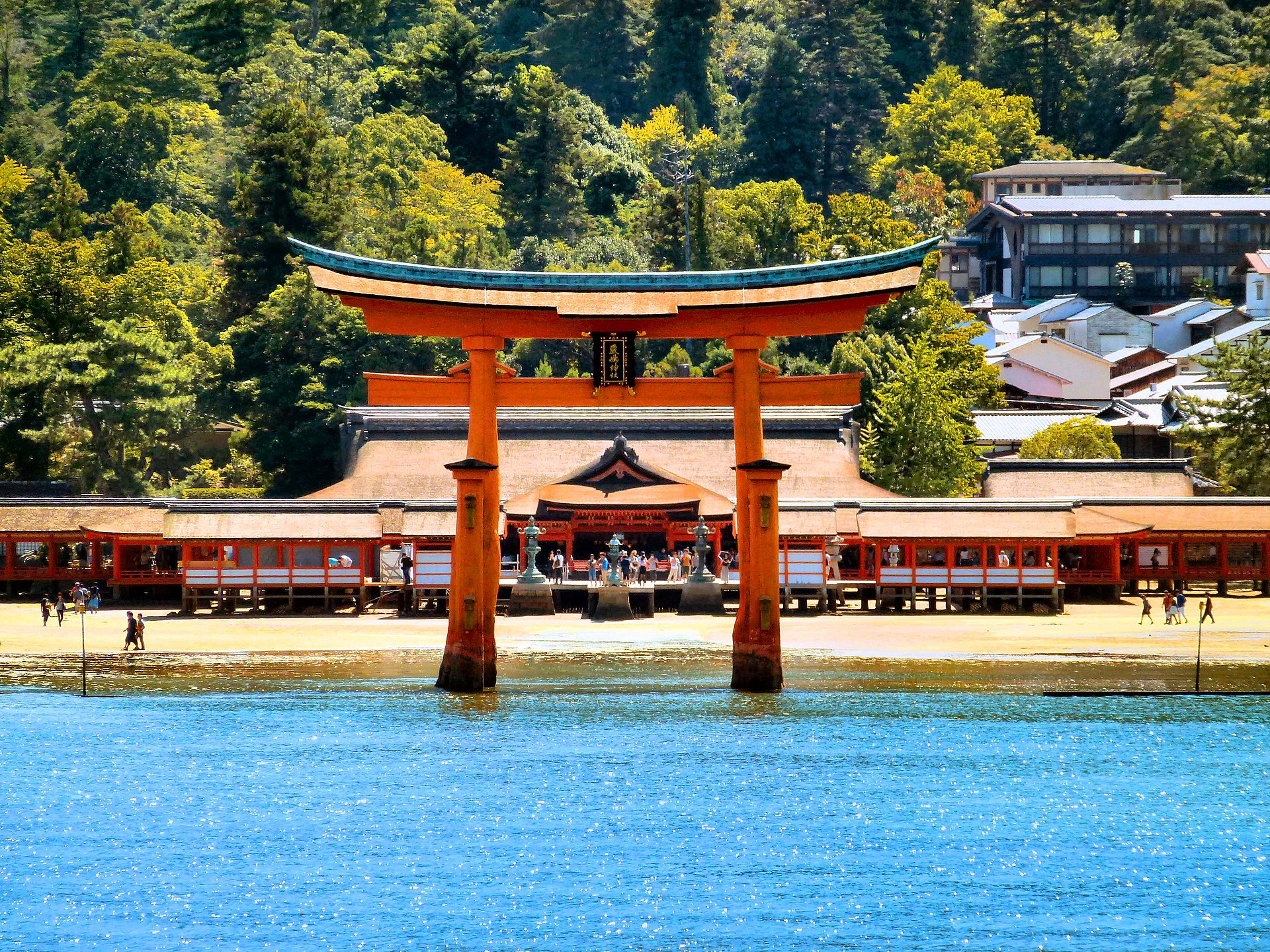
On the north shore of Miyajima, an island in Hiroshima Bay that was itself held to be sacred. Rather than build on its ground, the halls were raised over the tidal flat — a vermilion corridor on posts, and a torii standing out in the water.
- FromHiroshima Station
- ~45 minJR train, then a 10 min ferry
- Get off atMiyajima Pier (ferry from Miyajimaguchi)
- On foot
- Itsukushima Shrine
Where it is
25 more notes in Hiroshima · open the map →What to look for — in walking order
- Marodo Shrinethe first hall on the route and the largest of the auxiliary shrines, where the rites of the year begin
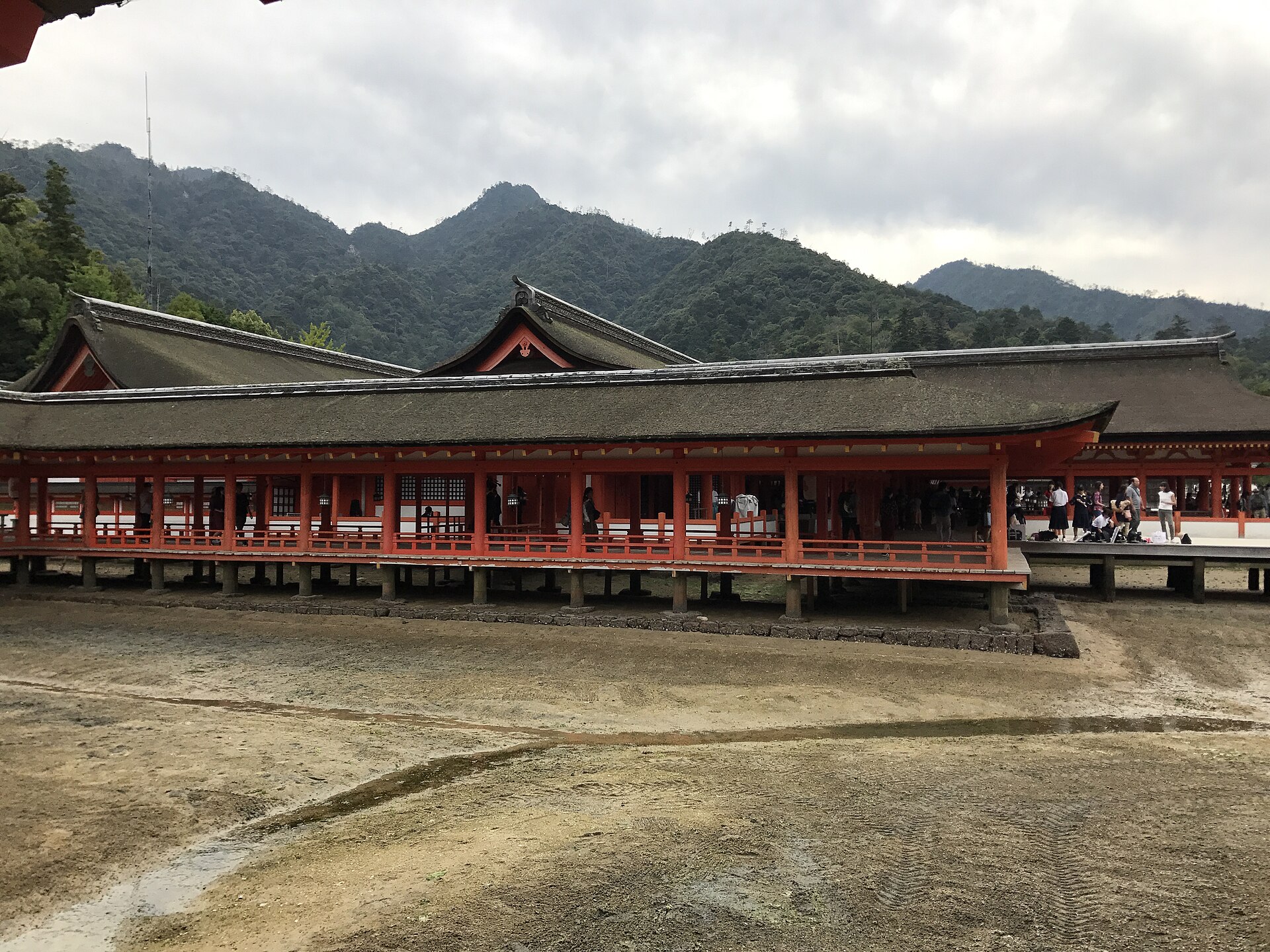
- The East Corridora covered walkway on posts, its floorboards laid with gaps so a high tide can rise through them
- The main hall and open deckthe heart of the complex, with a raised stage for court dance and a flat deck facing the water
- The Noh stagea stage standing out in the water, left unpainted, later in date than the halls around it
- The great toriiout on the flat beyond the deck, about 60 tonnes of timber and ballast held down by its own weight
How to actually get there
- Hiroshima Station → Miyajimaguchi Station (JR Sanyo Line toward Iwakuni, about half an hour).
- Miyajimaguchi Station → the passenger terminal (a few minutes on foot).
- Miyajimaguchi → Miyajima Pier (ferry, about ten minutes; two operators run it and either ticket is valid).
- Miyajima Pier → the shrine entrance (walk south along the shore, about a kilometre).
- JR to Miyajimaguchi, then the ferry
- Trains on the JR Sanyo Line run from Hiroshima Station to Miyajimaguchi in about half an hour, and the passenger terminal is a few minutes on foot from the station. Two companies work the same crossing to the island and either ticket gets you over. From the pier it is a shore walk of about a kilometre south to the shrine entrance.
- Return from Miyajima Pier
- Ferries run back to Miyajimaguchi from early morning until late at night, so an unhurried return needs little planning. From Miyajimaguchi both JR trains and the Hiroden tram run back toward central Hiroshima. Note that the shrine closes long before the last boat, so an evening on the island is an evening on the street rather than in the halls.
About the place
Itsukushima Shrine stands on the north shore of Miyajima, an island in Hiroshima Bay that was itself held to be sacred. Because building on the island's ground was thought improper, the halls were raised on posts over the tidal flat instead, in the shinden style of a Heian aristocrat's house and roofed in cypress bark. Corridors on posts link the buildings, and their floorboards are laid with deliberate gaps so that a high tide pushes up through them rather than lifting the deck. Out in the water stands the great torii, its camphor main pillars carrying it to a height of 16.6 metres.
How to enjoy it
The gates open at half past six every day of the year, and that first hour — before the heavy ferries begin landing — is when the corridors can be walked at your own pace. Check the tide table before choosing an hour: at high water the halls sit over the sea, and at low water the flat drains and the foot of the torii can be reached on foot. From mid-morning to late afternoon the JR ferry runs a crossing that swings in close to the torii on the way over.
Background & history
The founding is placed in 593, the year Empress Suiko came to the throne, when the chieftain who held the island is said to have been given the site by the deities and chose a place where the tide ran in and out. The present form comes from Taira no Kiyomori, who as governor of Aki rebuilt the halls in the shinden style in 1168 and drew the capital's court, its music and its dance out to the island. Storms and fire have forced rebuilding many times, but the plan has been kept. The torii now standing was put up in 1875, and the shrine was inscribed as a World Heritage site in 1996.
Before you go
- Cash
- There is an admission at the shrine entrance, and the combined ticket with the treasure hall is sold at that counter only. A separate visitor levy applies to people crossing to the island, so budget a little beyond the ferry fare. The ferries take cash and nationwide transport IC cards.
- Good to know
- Closing time moves with the season, earliest in December and latest through the middle of the year, so check before planning a late visit. Work on the fabric is under way: as of this writing the East Corridor is being structurally reinforced and the five-storey pagoda on the rise above is under restoration, both scheduled to continue past this year. The corridor floorboards have deliberate gaps in them and heels catch.
- Another way
- The Hiroden tram runs from central Hiroshima to Hiroden-Miyajimaguchi beside the same pier — slower than JR, but with no transfer. Boats also cross to the island directly from the Peace Memorial Park in central Hiroshima and from Hiroshima Port.
- After you get off
- From Miyajima Pier, walk south along the waterfront for about a kilometre. The path runs past the shopping street, and the shrine entrance is at the far end, where the corridor begins out over the water.
Nearby notes
 ノボホショコロトソ / CC BY 4.0
Food · Hiroshima★★
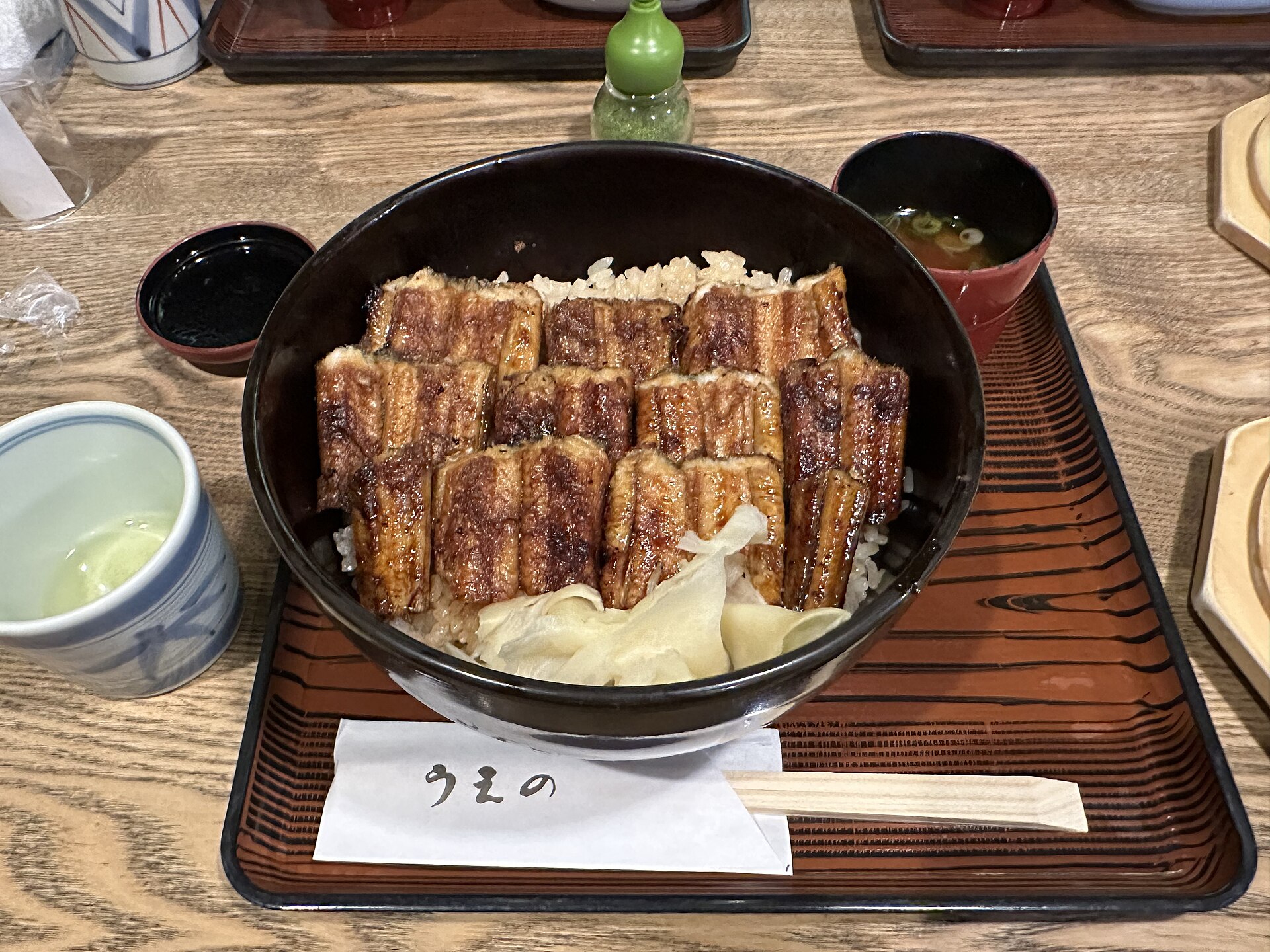
Anagomeshi on Miyajima Omotesando
0.3 km · straight line
 Daderot / Public domain
Food · Hiroshima★★★
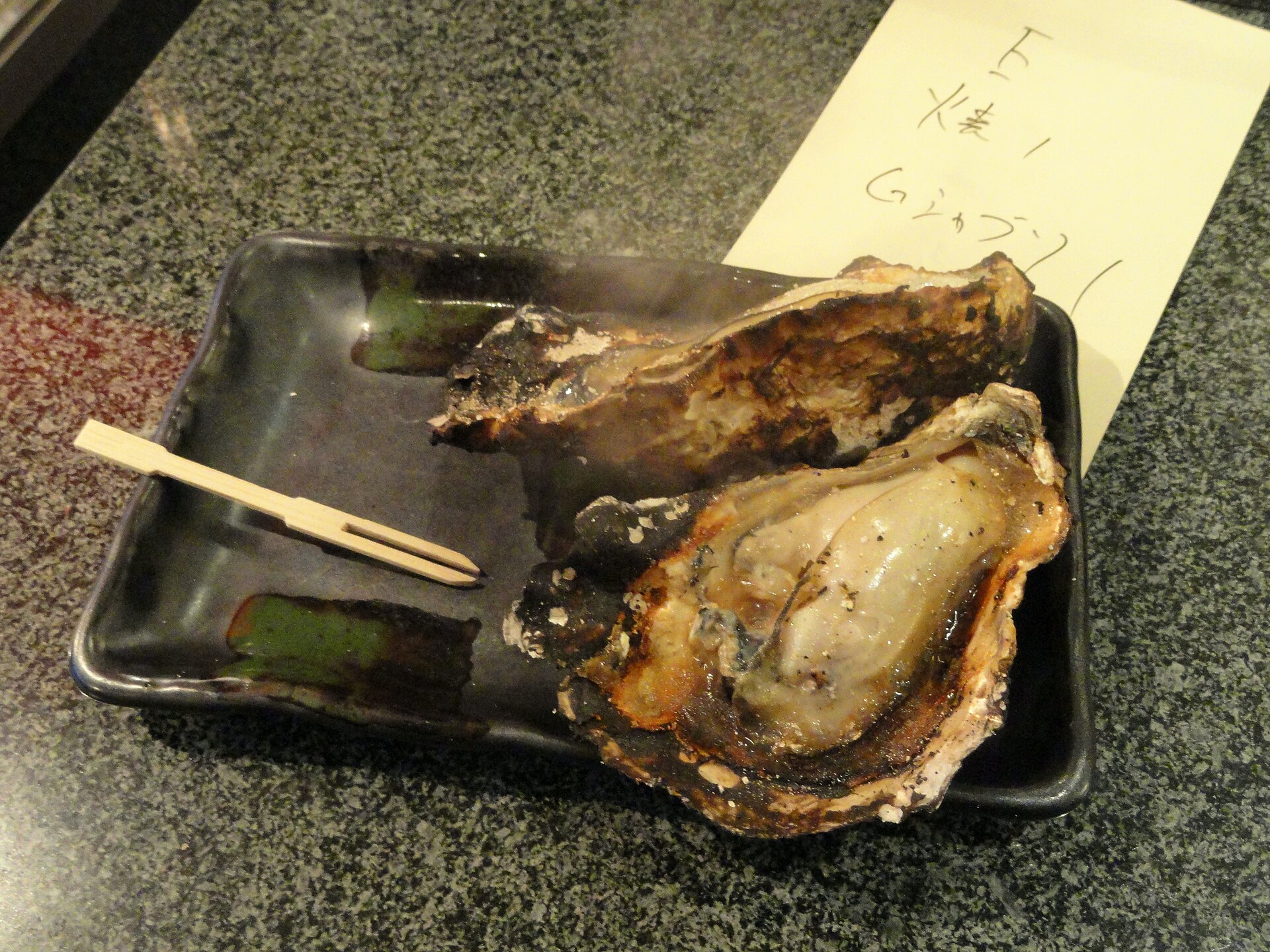
Hiroshima Oysters
0.4 km · straight line
 Daderot / CC0
Craft · Hiroshima★★
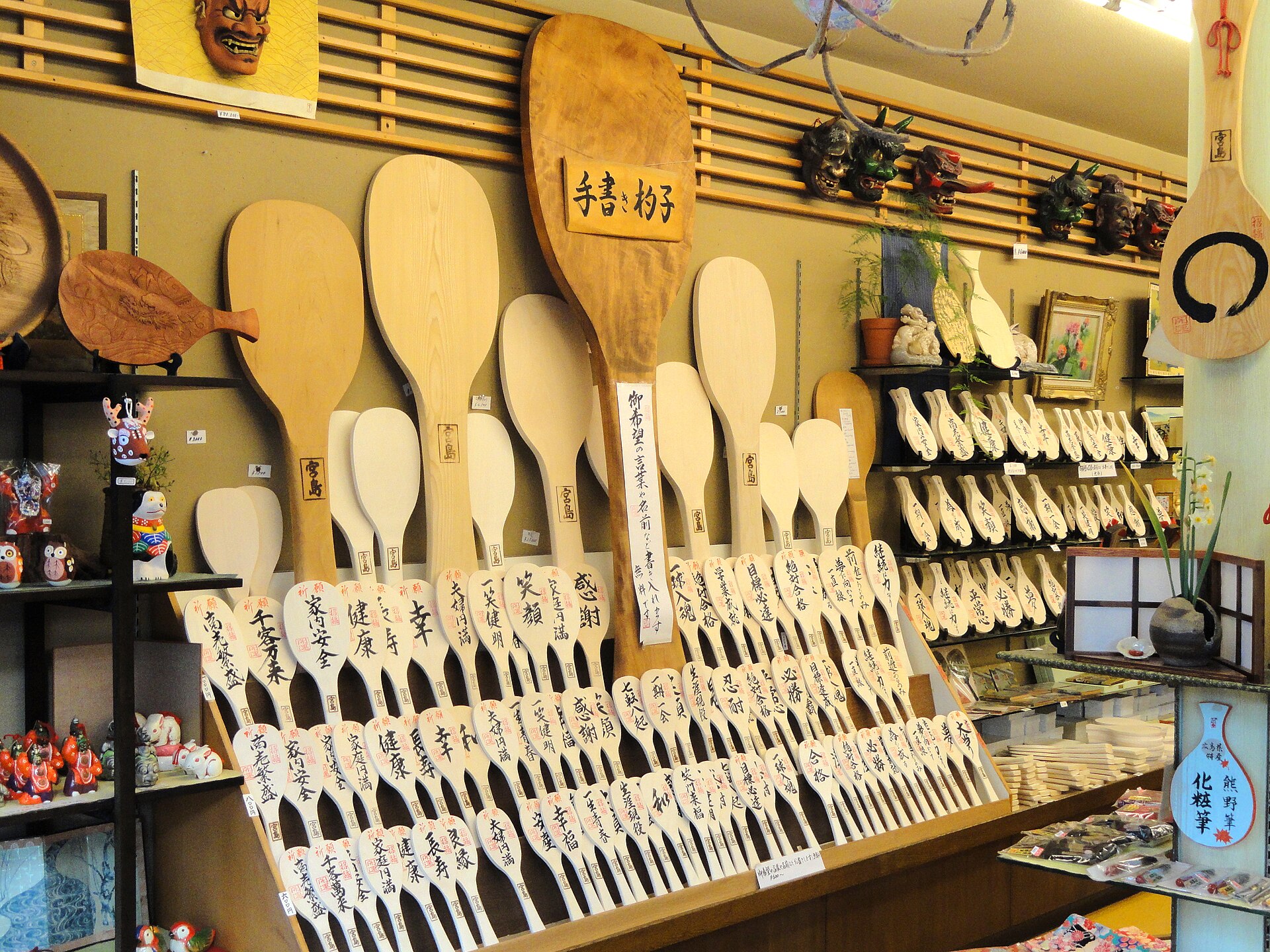
Miyajima Woodcraft
0.8 km · straight line
 Ocdp / CC0
Food · Hiroshima★★★
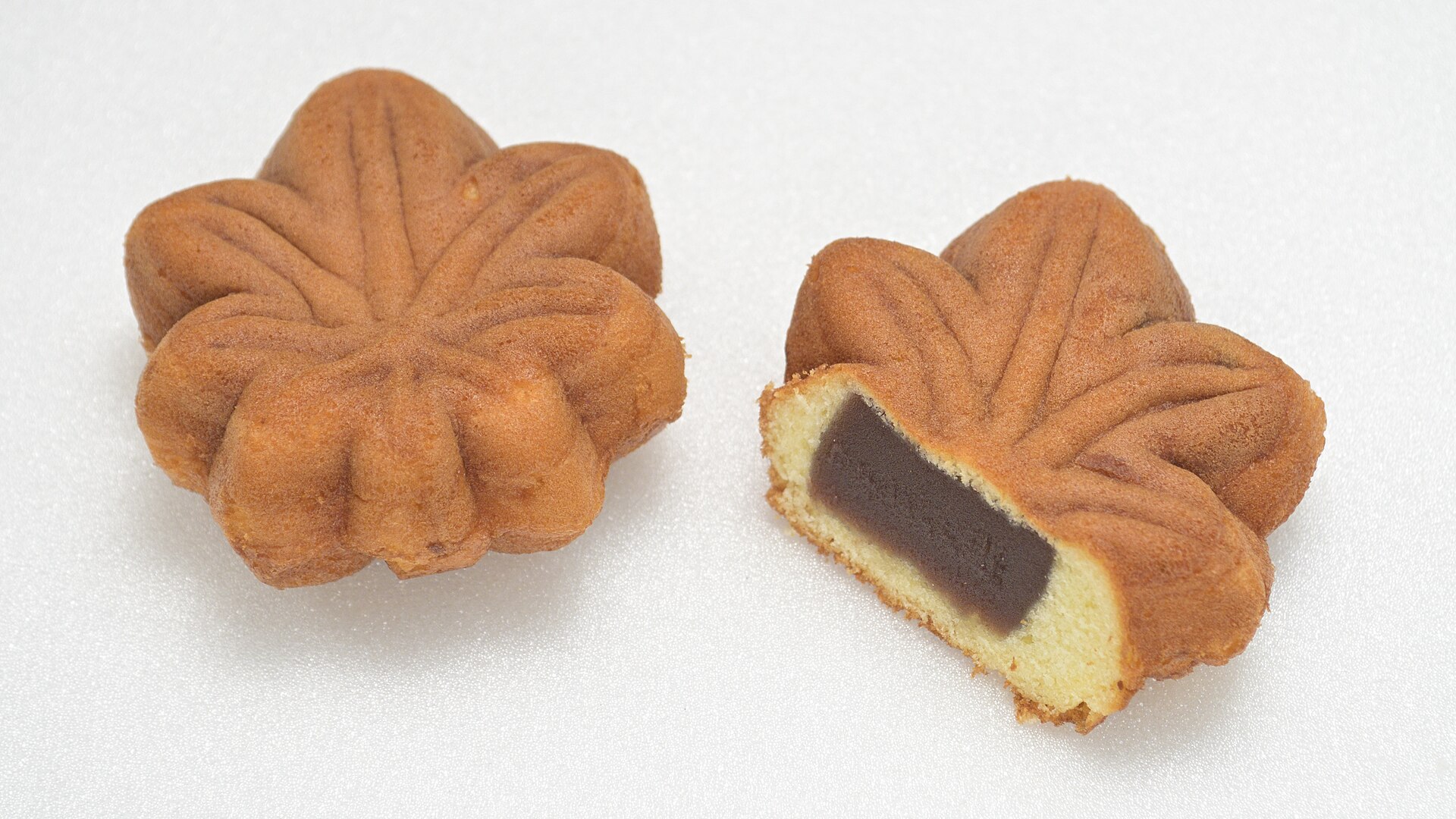
Momiji Manju
2.2 km · straight line
Distances are straight lines on the map, not travel times.