Northeast Nagano · YamanouchiNo.751★★★Open in map →
Jigokudani Monkey Park
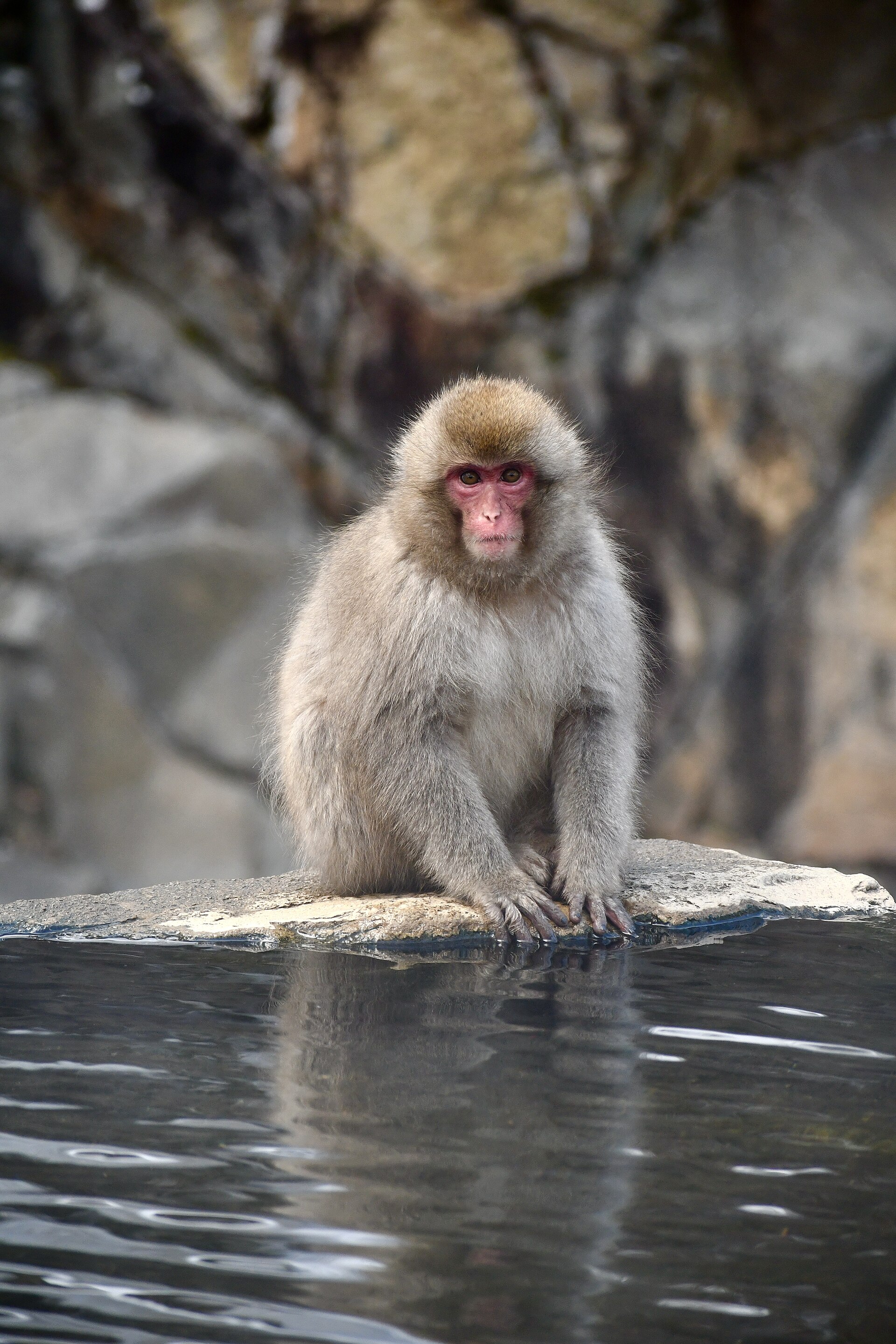
A valley of hot springs above Yamanouchi where wild Japanese macaques come down to sit in the water. There is no road to the gate — you reach it on a forest path from the hot-spring village at the road head.
- FromYudanaka Station
- ~45 minNagaden bus, then on foot
- Get off atKanbayashi Onsen stop (Nagaden Bus)
- From there
- Jigokudani Monkey Park
Where it is
27 more notes in Nagano · open the map →What to look for — in walking order
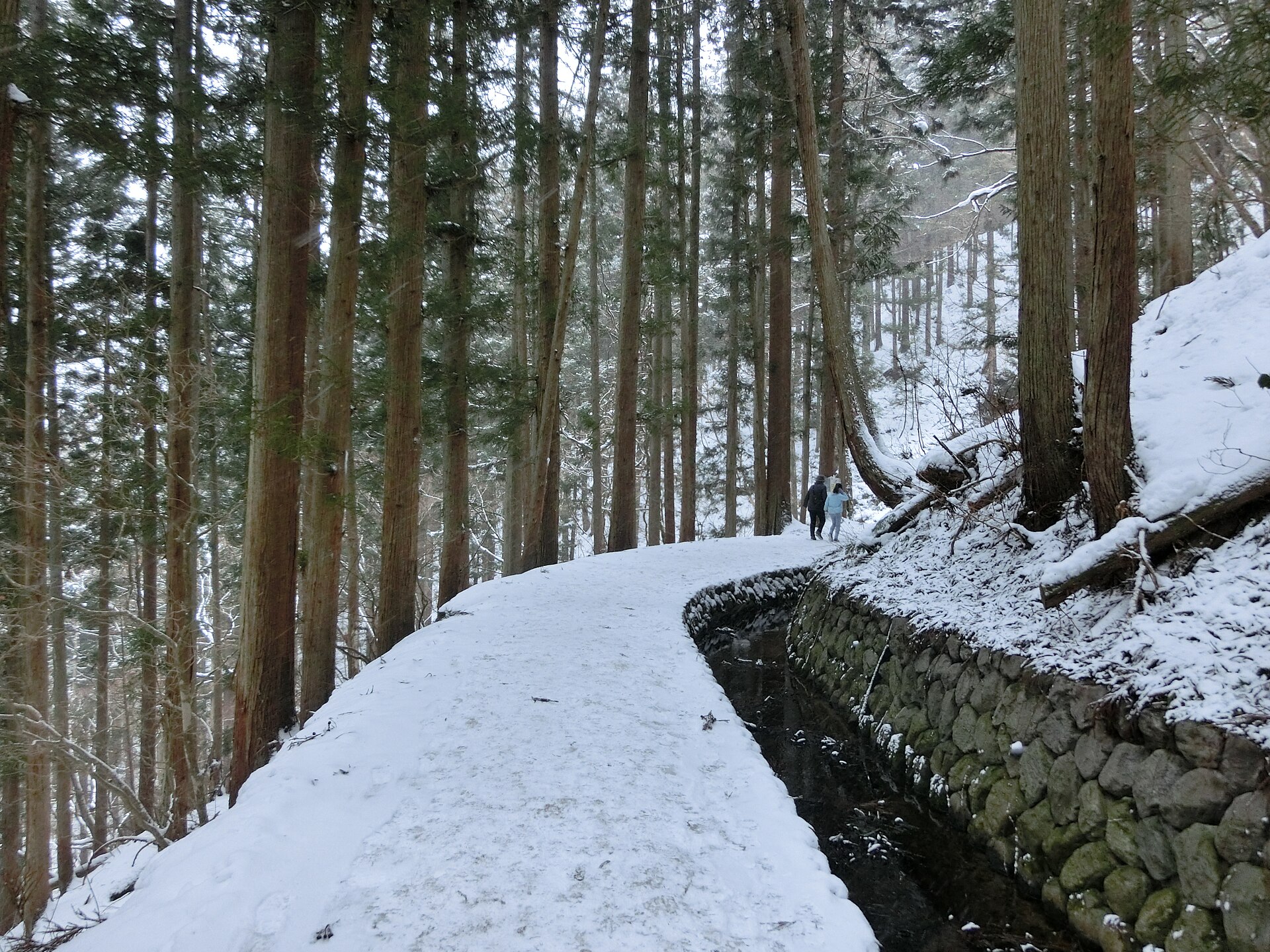
- The Yudo patha near-level forest track cut into the valley side, cedar above and the Yokoyu below
- The steam on the valley floorhot water breaking out of bare rock, the reason the gorge was named after hell
- The monkeys' poolthe park's own open-air bath, ringed by a low path with no barrier between visitors and the troop
- The rocks around the watergrooming, feeding and squabbling on dry ground, which is where most of the troop usually is
How to actually get there
- Nagano Station → Yudanaka on the Nagano Dentetsu line.
- Yudanaka → Kanbayashi Onsen on the Nagaden bus.
- Walk the Yudo path along the valley side to the park gate.
- Pay at the gate and follow the last stretch down to the pool.
- Nagaden bus from Yudanaka Station
- Ride the Nagano Dentetsu line to Yudanaka, then take the Nagaden bus toward Shiga Kogen or Kanbayashi Onsen, about fifteen minutes, and get off at Kanbayashi Onsen. From there the park is a walk of about thirty minutes. Express buses also run from the east side of Nagano Station direct to the Snow Monkey Park stop, which trades the train for a longer ride.
- Back down to Yudanaka
- The same path in reverse and the same bus line back to Yudanaka, where the Nagano Dentetsu trains run down to Nagano. Mountain services thin out in the late afternoon and the forest path has no lighting, so fix your return before you start up rather than after.
About the place
The monkeys here are wild. Nobody puts them in the water and nobody keeps them in it. The troop lives in the forest above and comes down to the valley floor when it suits them, which is why the park publishes a forecast of how many are likely to appear and keeps a camera running on the pool. The valley itself sits at about 850 metres on the Yokoyu river, in a pocket of steam and bare rock that earned it the name jigokudani, hell valley. The bath they use was dug by the park, for the monkeys, after they had already picked up the habit somewhere else.
How to enjoy it
Check the park's attendance forecast and live camera on the morning you go — the animals are wild, some days few come down, and it is better to know that before the walk than after it. Winter is when they use the water most and also when the path is snow and ice, so boots with grip matter more than anything else you carry. Doors run roughly 8:30 to 17:00 in the green season and 9:00 to 16:00 in winter, which puts the last sensible start up the trail well before closing.
Background & history
The park opened in 1964 as a place to watch the troop's social life at close range. In its first season a young macaque climbed into the open-air bath of a nearby inn, the Korakukan, and the adults copied it. Wild monkeys sharing a bath with paying guests was never going to hold, so the park dug a pool of its own further up the valley and the habit moved with them. Everything photographed here since — the steam, the wet fur, the closed eyes — grew out of that one copied idea.
Before you go
- Cash
- Admission is charged at the gate at the top of the path and the rate is published on the park's official site. The path itself and the car park at Kanbayashi Onsen cost nothing. Carry cash — this is a mountain site a long way from a bank.
- Good to know
- Hours are shorter in winter than in the green season, so read the official page for the day you are going rather than a summary. The path is not lit and is not cleared down to bare ground in snow; from midwinter, a late start is the mistake to avoid.
- Another way
- By car, the park's free car park is at Kanbayashi Onsen and you walk in from there. A paid car park closer to the valley is reached by a forest road that shuts in winter, so in the snow months everyone uses the same path.
- After you get off
- Kanbayashi Onsen is the last stop with a road. The Yudo path leaves the hot-spring village and runs roughly level along the valley side under cedars for about two kilometres, with the river below on one side, and the ticket gate waits at the far end of it.
Nearby notes
 Lsattayamas / CC BY-SA 4.0
Onsen · Nagano★★★
Shibu Onsen
2.9 km · straight line
 koichi_hayakawa / CC BY 4.0
Nature · Nagano★★
Shiga Kogen
3.0 km · straight line
 Aspere / CC0
Onsen · Gunma★★★
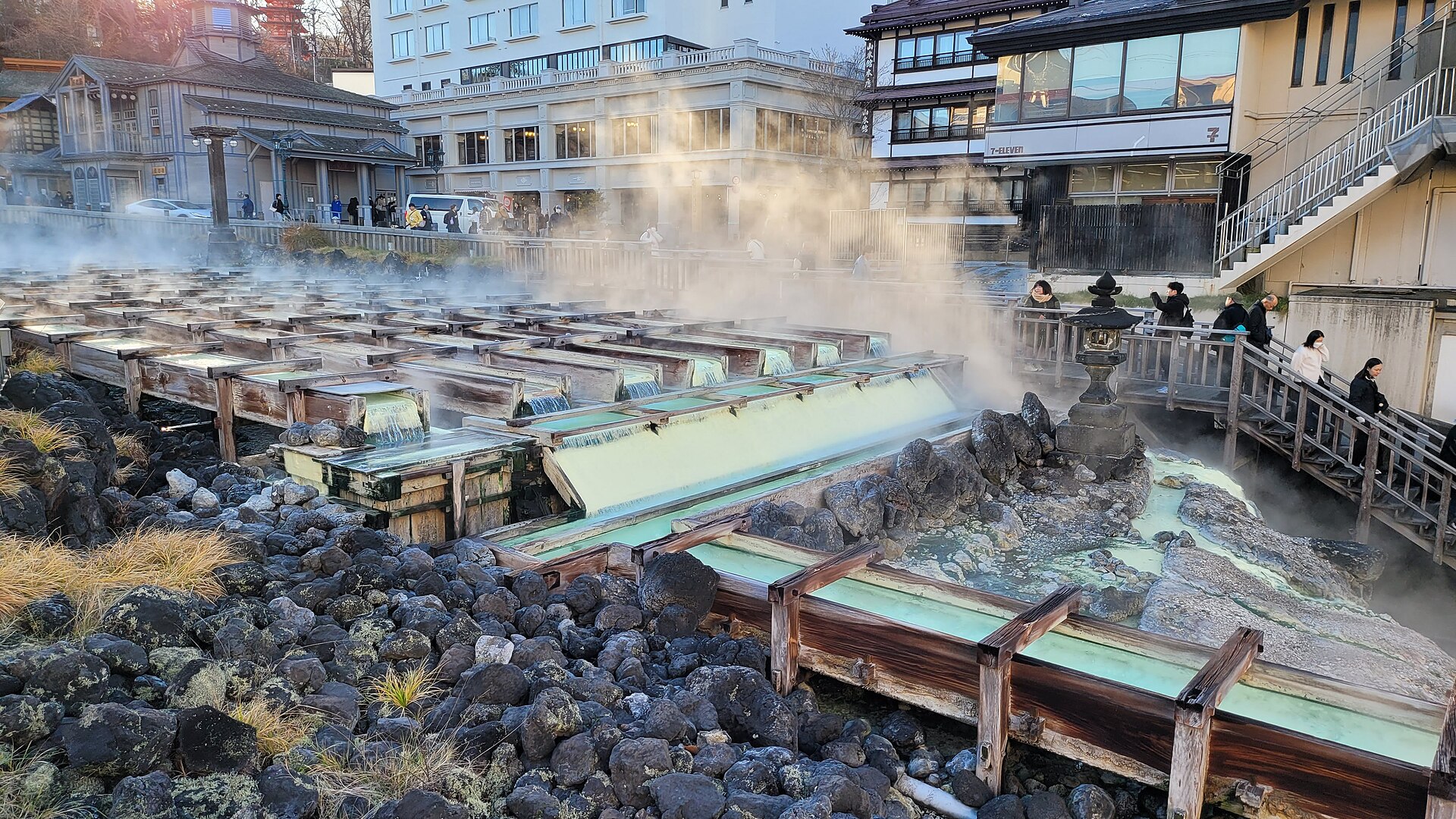
Kusatsu Onsen's Yubatake
17.1 km · straight line
 小石川人晃 / CC BY-SA 4.0
Onsen · Nagano★★
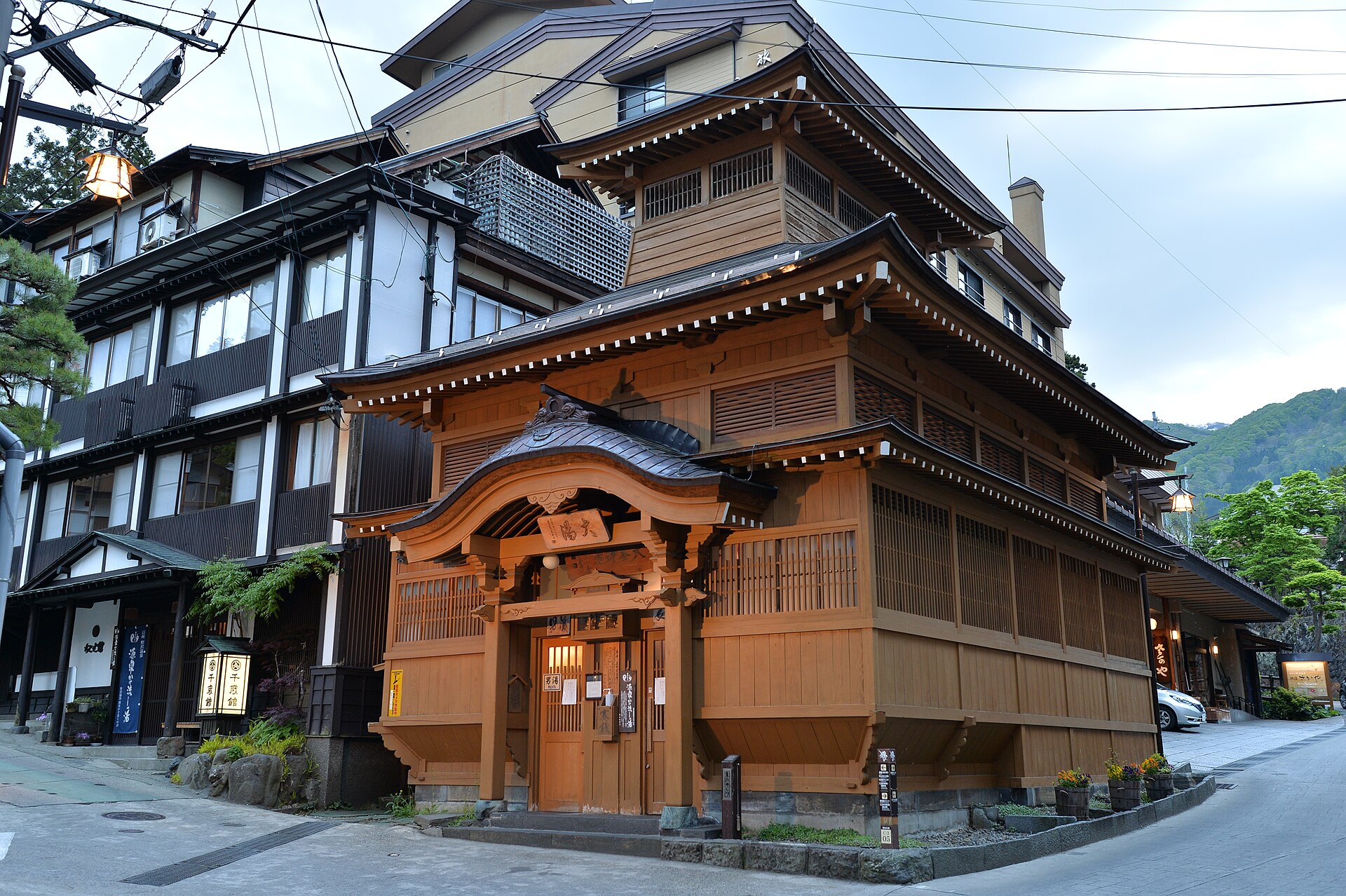
Nozawa Onsen
21.2 km · straight line
Distances are straight lines on the map, not travel times.