West Shirakami · FukauraNo.810★★★Open in map →
Juniko Aoike
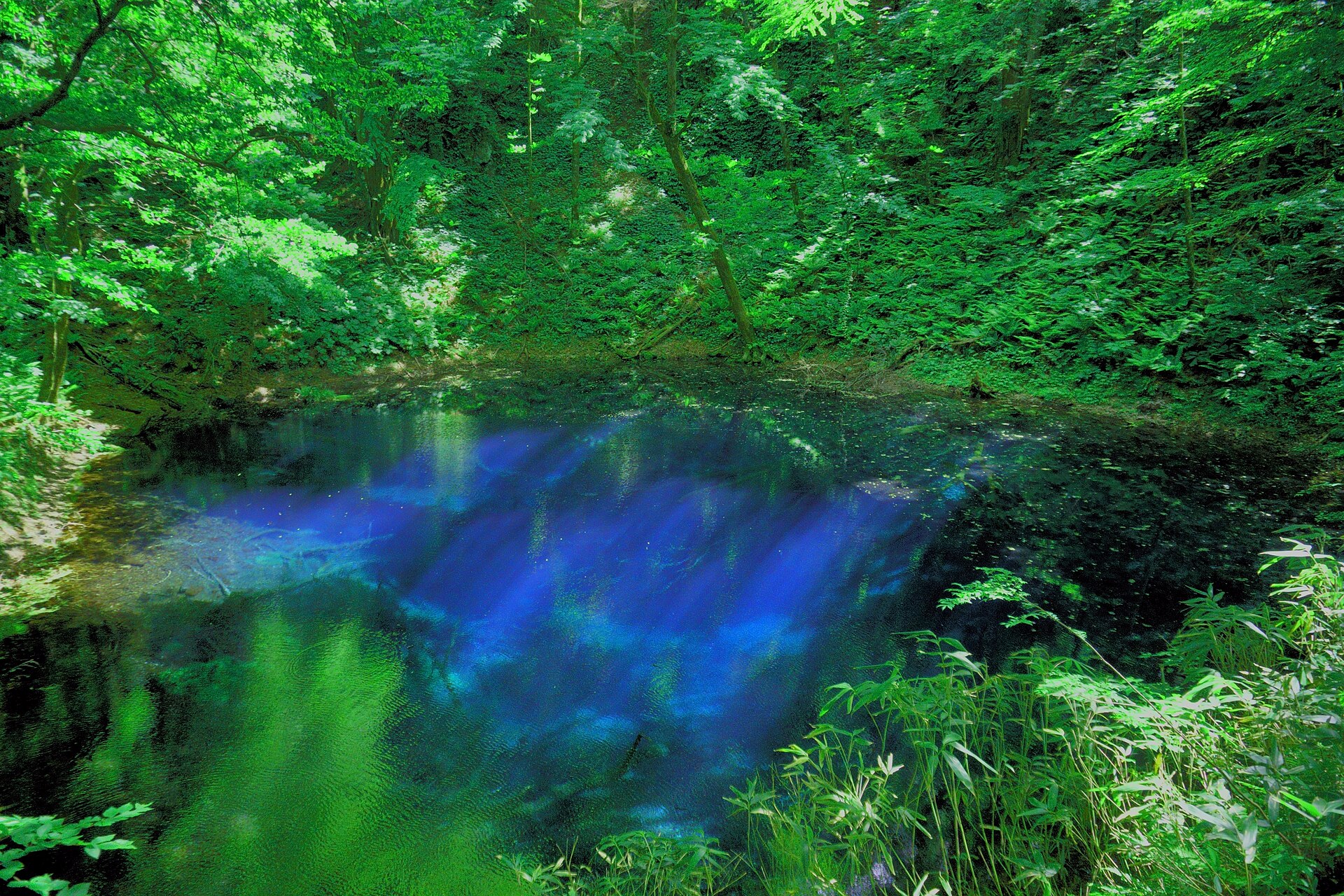
— The cobalt pond in the Shirakami beech lakes
A small pond of intense cobalt water in the beech forest of Fukaura, on the western edge of the Shirakami mountains. Reaching it means a branch-line train and a bus that only runs for part of the year.
- FromHigashi-Noshiro Station
- ~2 hr 5 minJR Gono Line, then a seasonal bus
- Get off atJuniko Station (JR Gono Line)
- From there
- Juniko Aoike
Where it is
34 more notes in Aomori · open the map →What to look for — in walking order
- Nagaikea long narrow lake near the trailhead, watched for kingfishers in season
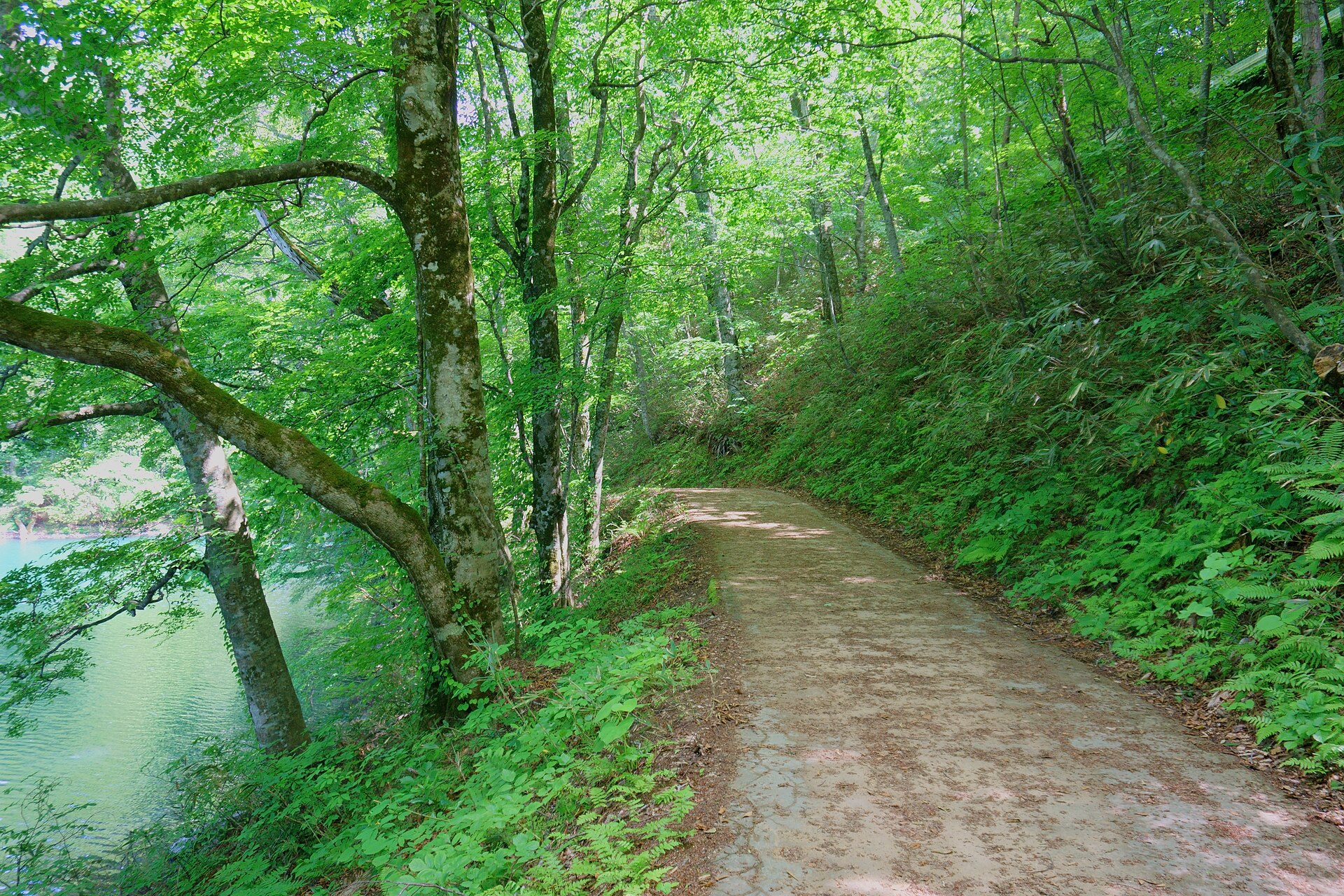
- The natural beech grovepath under old beech and katsura, the heaviest trunks set back from the track
- Wakitsubo-no-ikea spring-fed pond that stays unfrozen through the Aomori winter
- Aoikethe cobalt pond itself, with sunken trunks visible through the water
- Juniko Visitor Centerthe seasonal information point for route maps and trail closures
How to actually get there
- Higashi-Noshiro Station → Juniko Station (JR Gono Line, about 1 hr 50 min by the visitor centre's guide).
- Juniko Station → Oku-Juniko (Konan Bus Juniko line, about 15 min, 1,000 yen one way).
- Walk the Wakitsubo-and-Aoike therapy road through the beech grove to Aoike.
- Return on the same bus, having checked the last departure before you set off.
- JR Gono Line from Higashi-Noshiro
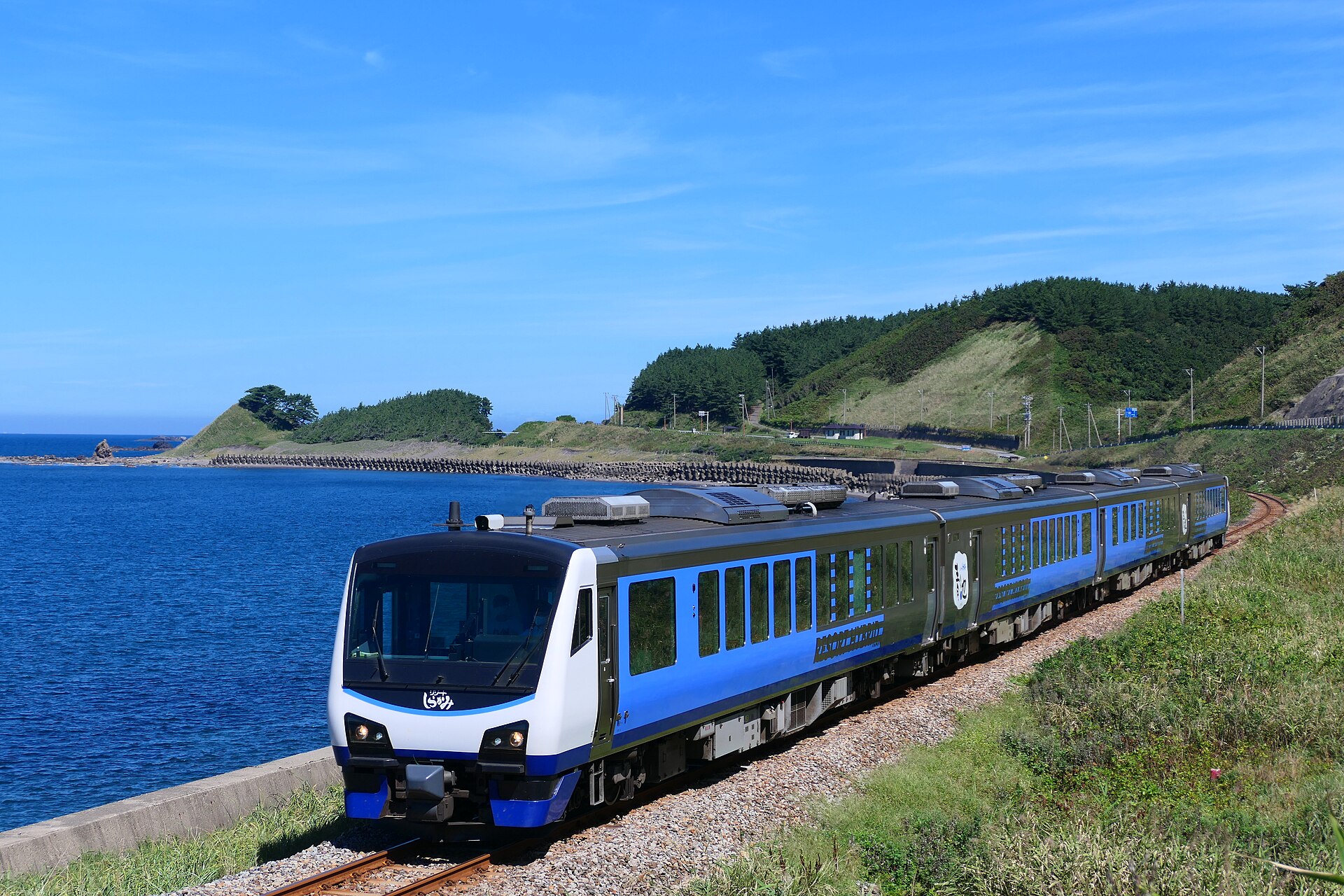
- Higashi-Noshiro Station →(JR Gono Line, about 1 hr 50 min by the Juniko visitor centre's own guide)→ Juniko Station, then the Konan Bus Juniko line to its Oku-Juniko terminus. Local trains on this line are few. The Resort Shirakami sightseeing service between Akita and Aomori also calls here, but it is a seasonal rapid and does not run every day.
- Back from Juniko Station
- The same bus returns from Oku-Juniko to the station. From there the Gono Line runs south to Higashi-Noshiro and north around the coast toward Fukaura and Kawabe. Departures are sparse in both directions, so fix your return train before you start walking rather than after.
About the place
Juniko is the collective name for a group of lakes and ponds spread through beech forest in Fukaura, at the western foot of the Shirakami mountains. Aomori Prefecture and the local visitor-centre site both count 33 of them. Aoike is the one people come for: the water reads as flat cobalt, and sunken trunks stay visible well below the surface. The whole area sits inside Tsugaru Quasi-National Park, and the paths are laid out as forest-therapy routes rather than as one sightseeing circuit. The pond is a point on those routes, not a destination with a gate.
How to enjoy it
Give it the loop rather than the photograph: the Wakitsubo-and-Aoike therapy road takes about 2.5 hours and links the beech grove and both ponds in one walk. Before you set out, look at Fukaura Town's map of which sections are open, because repair work still closes parts of the network. The visitor centre and the eco-museum keep different seasons, so confirm which one is open on the day you go.
Background & history
The lakes are thought to have formed after a large earthquake in 1704 brought down a mountainside and dammed the streams below. The prefecture's tourism office and Japanese reference works give the same account. The name is usually explained by the view from the Kuzure ridge above the water, from which 12 of the ponds can be counted, though writers note the etymology has never been settled. The beech around them is natural forest rather than plantation, and the walking routes through it were later formalised as forest-therapy roads.
Before you go
- Cash
- The lakes and the paths are free. The Konan Bus Juniko line charges 1,000 yen one way to Oku-Juniko, half that for children, on the operator's published table; carry cash. The 2026 season on that line is given as mid-April to the end of November.
- Good to know
- Fukaura Town publishes a map of which sections of the Juniko paths can be walked, because repair work after heavy rain has closed parts of the network. The town and prefectural roads into the lakes shut for winter, and the visitor centre is closed from December to the end of March.
- Another way
- From Hirosaki, take the JR Ou Main Line to Higashi-Noshiro and change to the Gono Line. Coming from the Aomori side instead, the Gono Line can be joined at Kawabe and followed the long way round the coast through Fukaura.
- After you get off
- Juniko Station is a small unstaffed halt on the coast road, and the lakes are inland from it. Take the Konan Bus up to the Oku-Juniko terminus, about 15 minutes, and walk in from there. On foot, the eco-museum is about 20 minutes from the station.
Nearby notes
Distances are straight lines on the map, not travel times.