Ishikawa · KanazawaNo.1257★★★Open in map →
Kanazawa Station Tsuzumi-mon
— A Noh-drum gate and glass dome at the east exit
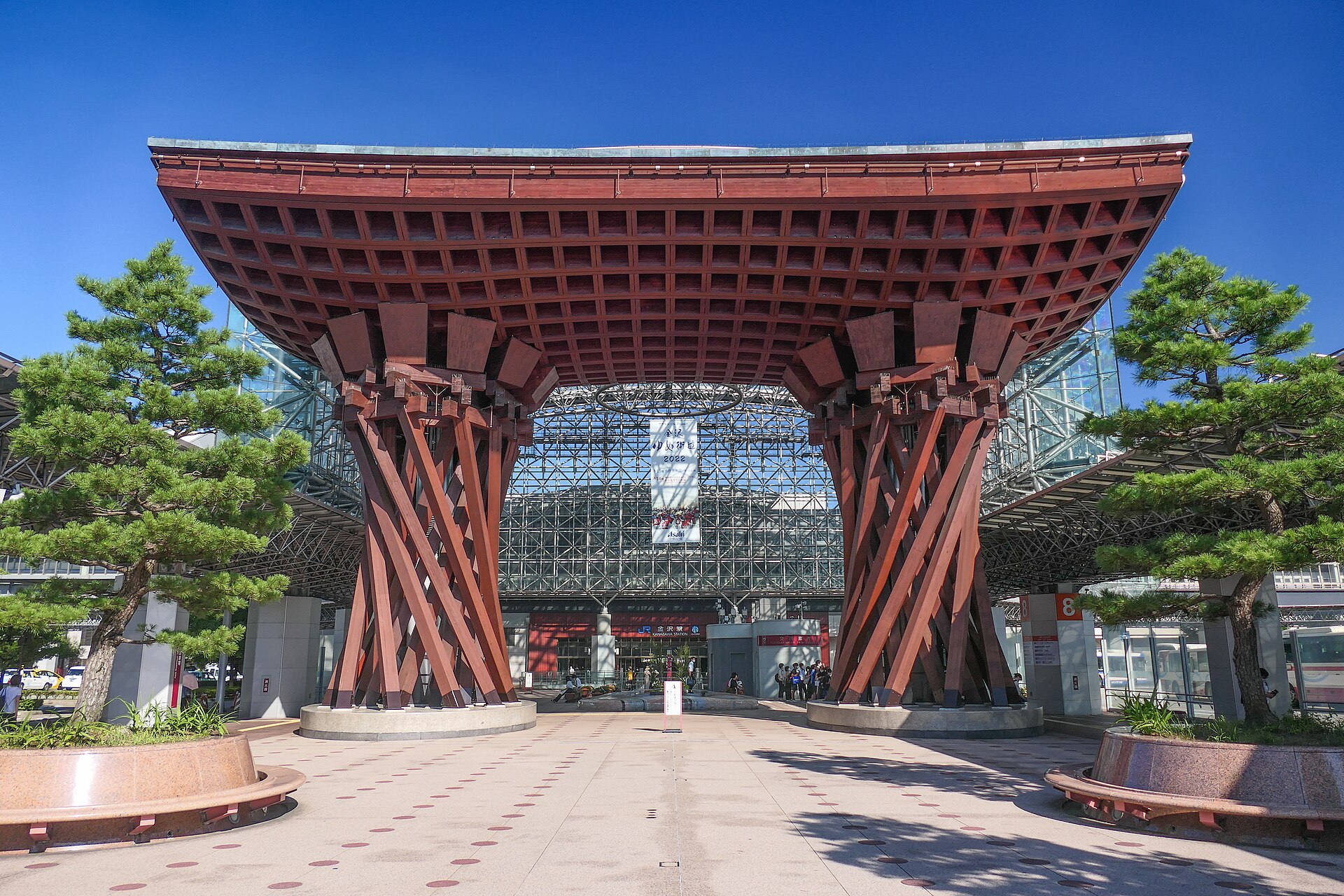
The Kenrokuen Exit of Kanazawa Station, where a wooden gate modelled on a Noh drum stands at the edge of a glass dome built as an umbrella for arriving travellers. It is the city's front door, and walking through costs nothing.
- FromTokyo Station
- 2 hr 24 min (fastest)Hokuriku Shinkansen from Tokyo
- Get off atKanazawa Station (Hokuriku Shinkansen)
- On foot
- Kanazawa Station Tsuzumi-mon
Where it is
16 more notes in Ishikawa · open the map →What to look for — in walking order
- Shinkansen platform pillarspillars on the Shinkansen platforms faced with Kanazawa gold leaf
- Craft displaysKutani porcelain, Kaga yuzen silk and other local crafts set into the station's interiors
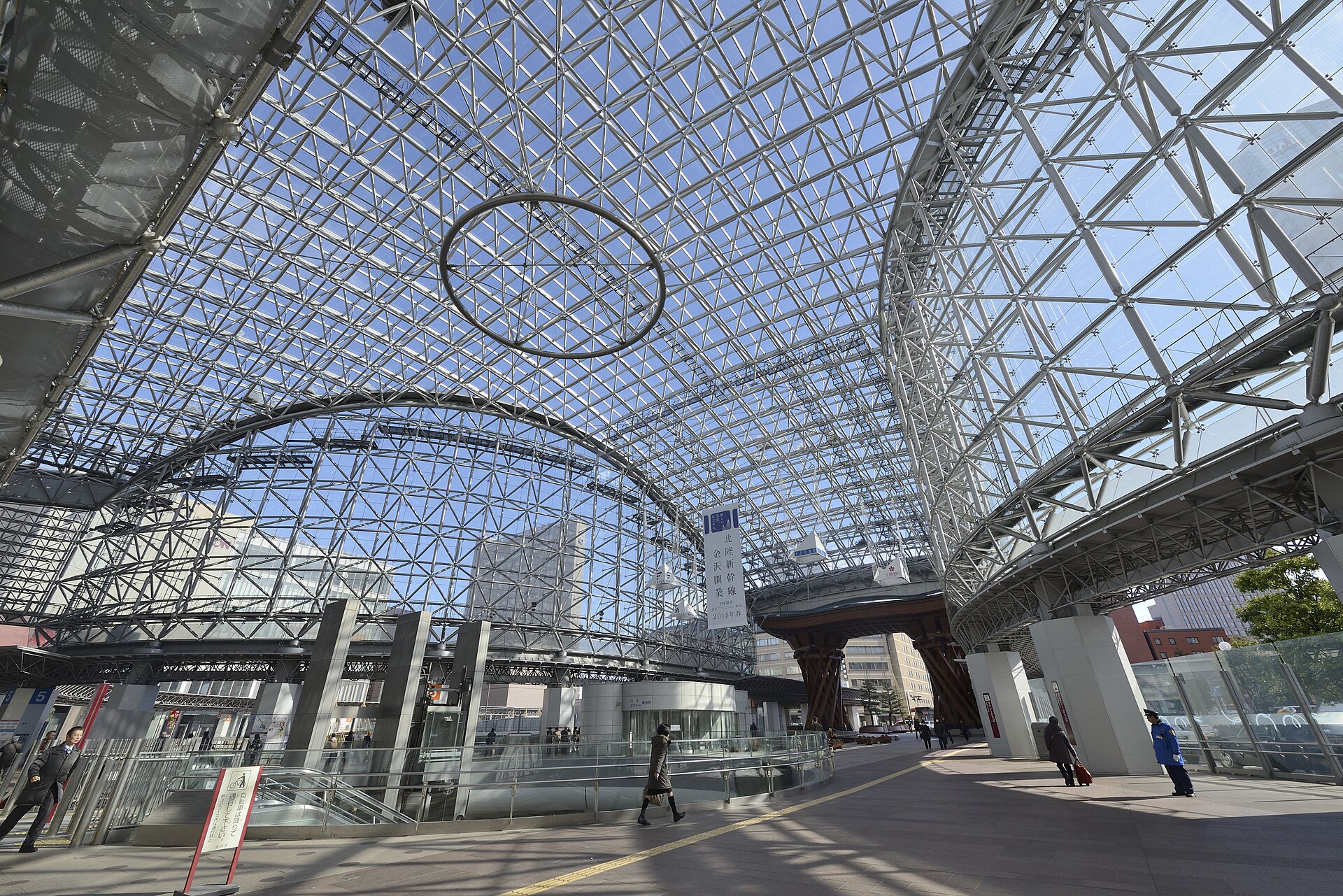
- Motenashi Domethe glass-and-aluminium canopy over the Kenrokuen Exit, shaped like an open umbrella
- Tsuzumi-mona 13.7-metre wooden gate whose two pillars twist in spirals like the cords of a tsuzumi drum
How to actually get there
- Tokyo Station → Kanazawa Station (Hokuriku Shinkansen; the fastest Kagayaki takes 2 hr 24 min).
- Follow signs for the Kenrokuen Exit (East Exit) and walk out under the Motenashi Dome.
- Pass under the Tsuzumi-mon onto the plaza, then turn around to see the gate against the glass dome.
- After dark, come back on the hour to catch the gate's colour light-up.
- Hokuriku Shinkansen from Tokyo
- Tokyo Station →(Hokuriku Shinkansen; the fastest Kagayaki trains take 2 hr 24 min)→ Kanazawa Station. Inside the station, follow signs for the Kenrokuen Exit (East Exit). The Motenashi Dome starts right outside that exit.
- Back into the station
- Walk back through the dome to the station. Hokuriku Shinkansen trains run east toward Toyama, Nagano and Tokyo, and west toward Fukui and Tsuruga. If you stay late, check the departure boards for the last train.
About the place
Kanazawa Station's Kenrokuen Exit, on its east side, opens under the Motenashi Dome, a canopy of glass and aluminium alloy set with 3,019 panes. The name means 'hospitality dome'. It was conceived as an umbrella held out to people stepping off the train, because Kanazawa gets a great deal of rain and snow. At its outer edge stands the Tsuzumi-mon, a wooden gate modelled on the tsuzumi hand drum of Noh theatre, a performing art long popular in the city. Together they turn the station exit into the city's front door.
How to enjoy it
Walk out through the dome, pass under the gate and turn around on the plaza. After dark the gate is lit from sunset until midnight, and on the hour it glows for two minutes in shades based on the five traditional colours of Kaga.
Background & history
The dome and the gate were completed in 2005, a decade before the Hokuriku Shinkansen reached the city. In 2011 the web edition of the US travel magazine Travel + Leisure listed Kanazawa among the world's 14 most beautiful stations. The Shinkansen arrived from Nagano in March 2015, and in 2024 the line was extended west to Tsuruga in Fukui Prefecture. This side of the station, once called the East Exit, is now signed as the Kenrokuen Exit.
Before you go
- Cash
- There is no charge: the dome and the gate form the station's public plaza on the east side, open for anyone to walk through. Train fares are separate.
- Good to know
- The dome keeps the rain off in front of the exit, but the plaza beyond the gate has no roof, and Kanazawa sees a lot of rain and snow. The gate is lit only after sunset.
- Another way
- From Osaka or Kyoto, take the JR Thunderbird limited express to Tsuruga and change there to the Hokuriku Shinkansen for Kanazawa.
- After you get off
- From the ticket gates, follow signs for the Kenrokuen Exit (East Exit). The Motenashi Dome begins at the exit, and the Tsuzumi-mon stands at its outer edge, facing the plaza.
Nearby notes
 DimiTalen / CC0
Food · Ishikawa★★★
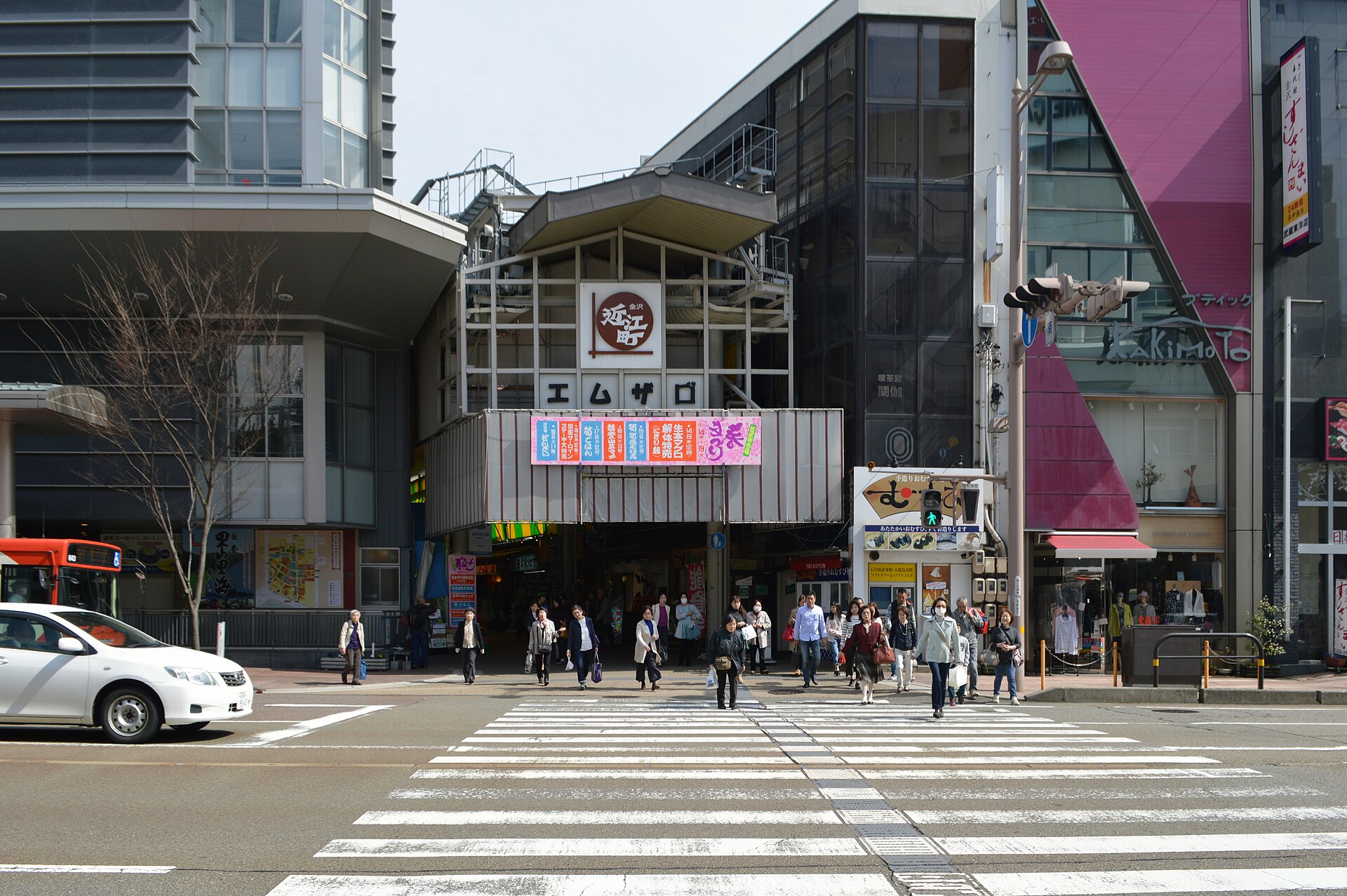
Omicho Market
1.0 km · straight line
 Hirorinmasa / CC BY-SA 3.0
Local life · Ishikawa★★
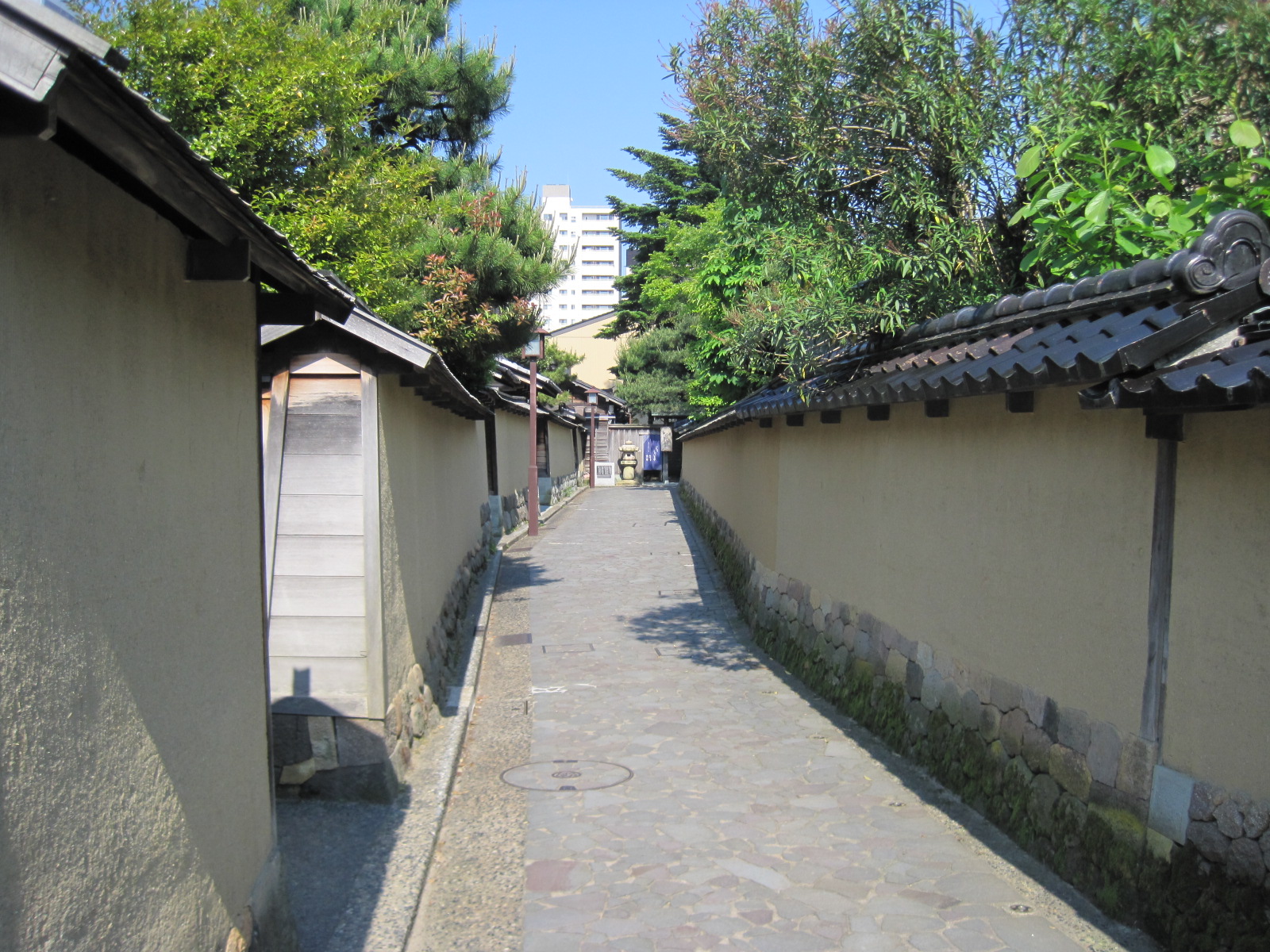
Nagamachi Samurai District
1.5 km · straight line
 金沢市 / CC BY 2.1 jp
Craft · Ishikawa★★★
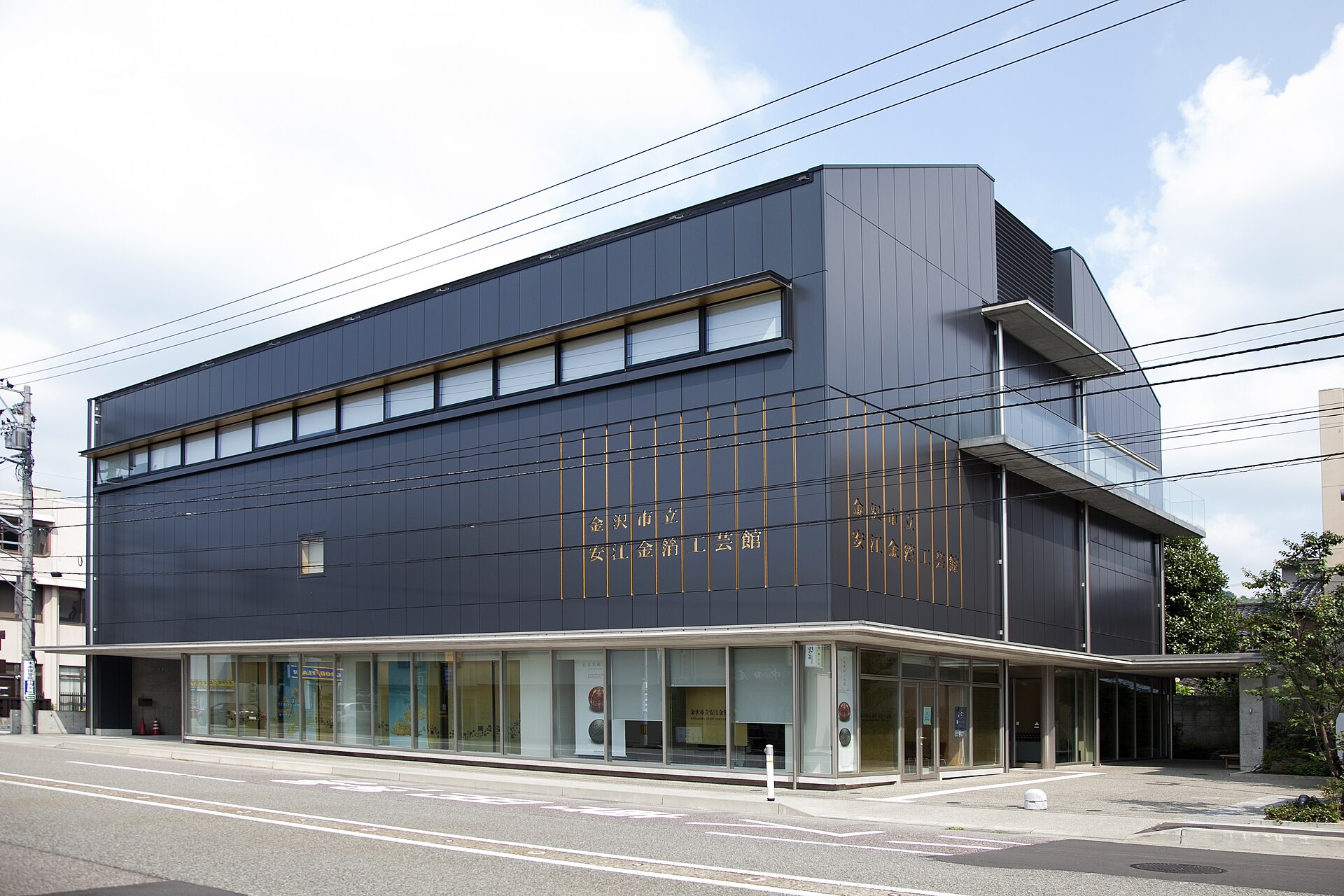
Kanazawa Gold Leaf
1.6 km · straight line
 Zairon / CC BY-SA 4.0
History · Ishikawa★★★
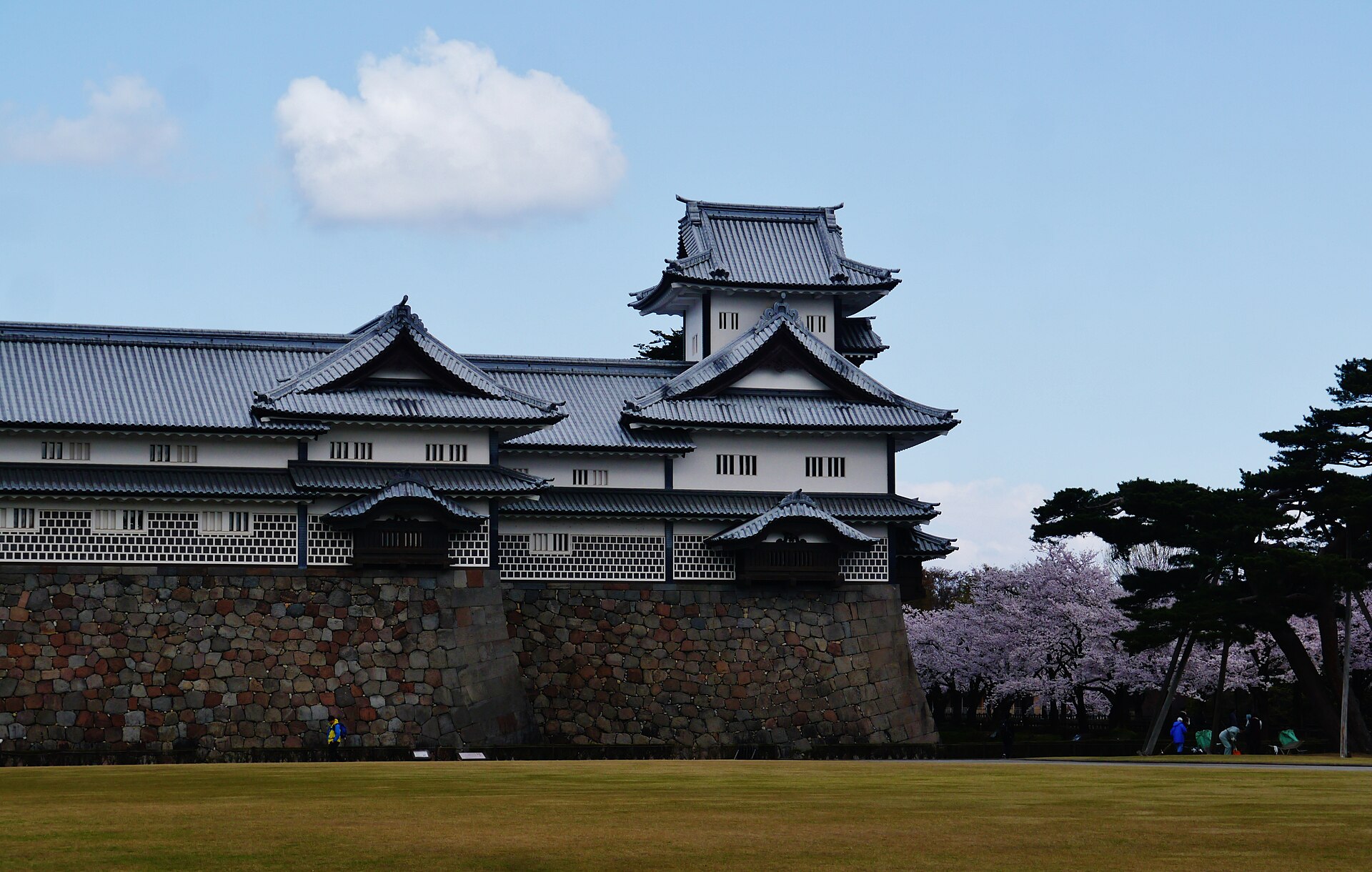
Kanazawa Castle Park
1.6 km · straight line
Distances are straight lines on the map, not travel times.