Aichi · Nagoya StationNo.986★★★Open in map →
Kishimen
— Aichi's flat wheat noodle, eaten at the station
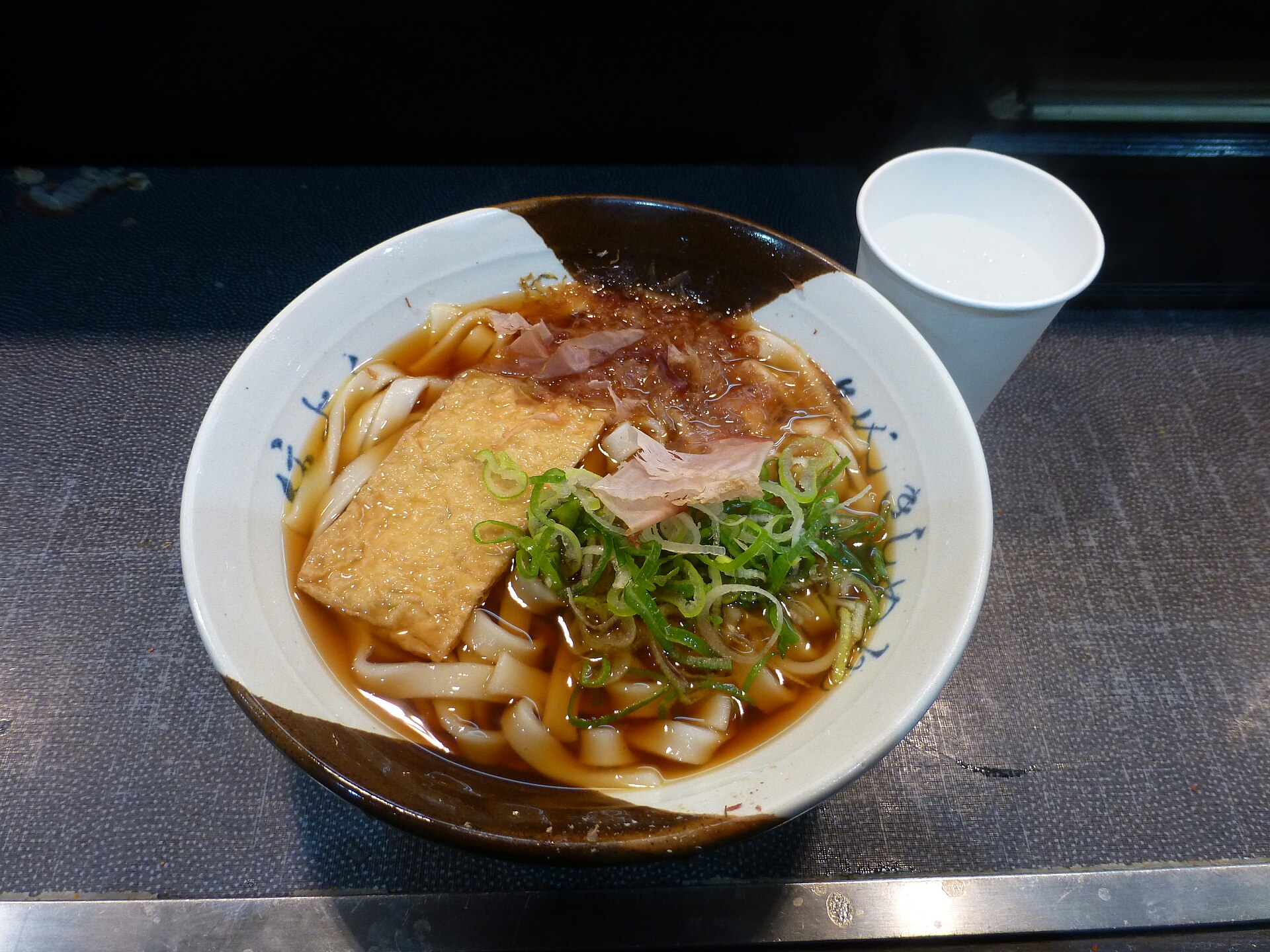
Aichi's kishimen is a wheat noodle rolled flat and wide, so a strong tamari broth has something to cling to. Nagoya Station is the simplest place to meet it: a food street off the concourse, and stands on the platforms themselves.
- FromChubu Centrair Airport Station
- ~28 minMeitetsu μ-SKY, direct from Centrair
- Get off atMeitetsu Nagoya Station (Meitetsu Airport Line)
- On foot
- Kishimen
Where it is
27 more notes in Aichi · open the map →What to look for — in walking order
- Meitetsu Nagoya Station passagethe underground link that carries airport arrivals through to the JR station
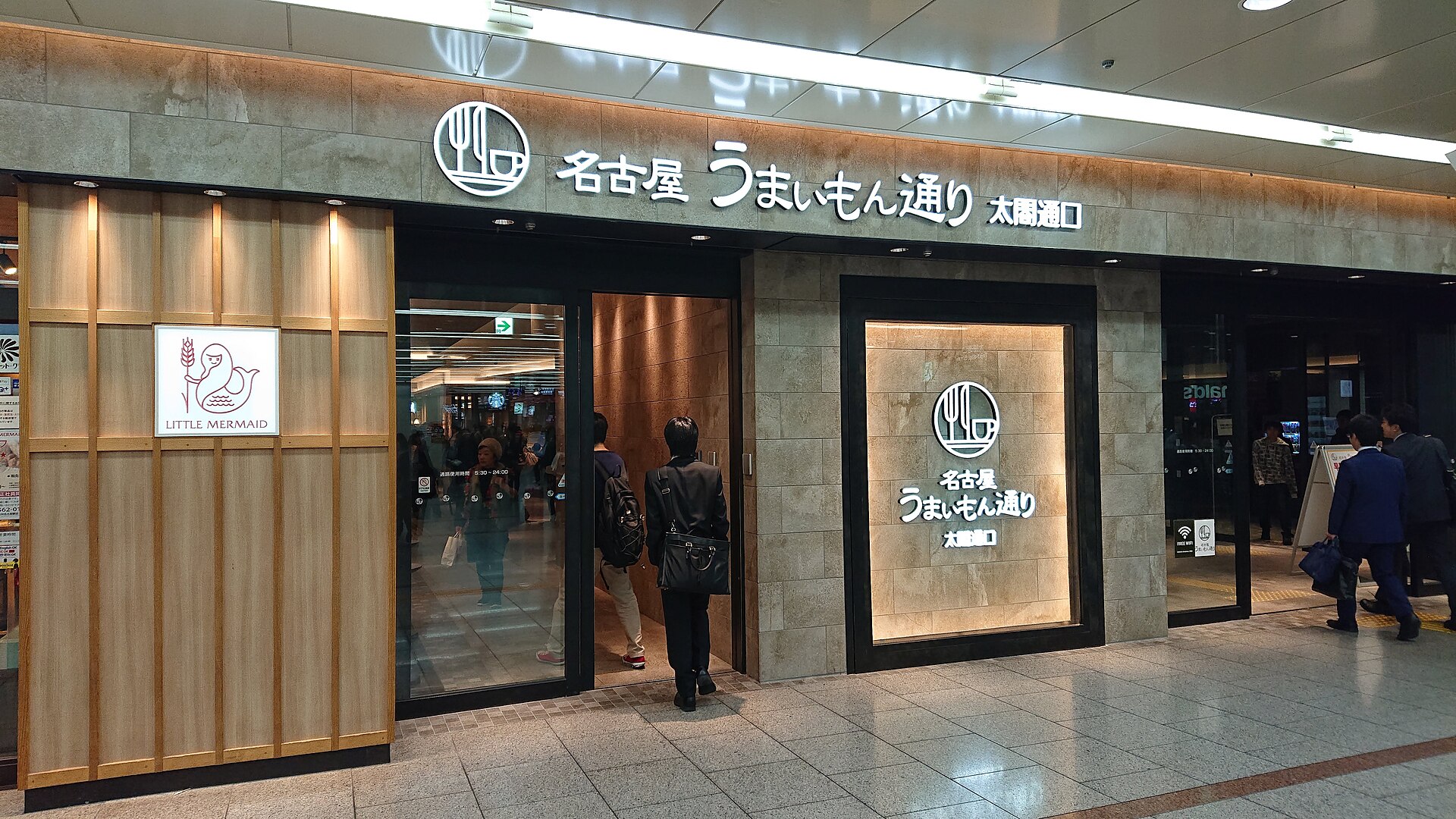
- Nagoya Umaimon-dori, Hirokoji exitthe city-side section of a food street spread across three areas of the JR station
- Nagoya Umaimon-dori, Taiko-dori exitthe western section, facing the Taiko-dori exit on the Shinkansen side
- The platform noodle standslong-running standing counters on the JR platforms, inside the ticket gates
How to actually get there
- Chubu Centrair Airport Station → Meitetsu Nagoya Station (Meitetsu Airport Line, μ-SKY, about 28 min; a μ-Ticket is required).
- Meitetsu Nagoya Station → JR Nagoya Station (underground passage, a few minutes on foot).
- Walk the Hirokoji-exit section of Nagoya Umaimon-dori, then cross to the Taiko-dori-exit section on the western side.
- If you are boarding rather than staying, use the platform stands instead — they sit inside the ticket gates.
- μ-SKY from Centrair
- Chubu Centrair Airport Station →(Meitetsu Airport Line, μ-SKY limited express, about 28 min)→ Meitetsu Nagoya Station. μ-SKY is an all-reserved train, so a μ-Ticket seat coupon is needed on top of the ordinary fare. Regular limited expresses run the same route with non-reserved cars, which need no coupon but take a little longer.
- Back to Centrair
- The same line runs in reverse from Meitetsu Nagoya, with μ-SKY and limited expresses alternating through the day. Airport-bound trains thin out late in the evening, so if you are flying out, check the departure board before you sit down to eat rather than after.
About the place
Kishimen is defined by its shape. Japan's agricultural standard reserves the name for dried noodles rolled at least 4.5 millimetres wide, so each strand arrives as a ribbon rather than a rod. The flatness has a purpose. Aichi builds its broth on tamari soy sauce, with dashi drawn from soda bonito and mackerel scad, and a broth that strong needs a surface to hold on to. Fried tofu, fish cake, a few greens and a drift of shaved bonito are the standard finish. Nagoya Station serves the dish in two registers: sit-down counters off the concourse, and stands up on the platforms.
How to enjoy it
The food street runs from morning service through to dinner, though each shop keeps its own hours, so read the door before you commit. If your connection is tight, the platform stands are the version built for it; with half an hour to spare, take a stool in the concourse instead. In summer the dish turns up cold, noodles and broth both, under the name koro.
Background & history
The trail leads to Imokawa, a settlement on the Tokaido highway in what is now Kariya, southeast of Nagoya. Travellers there were sold a flat udon known as himokawa, and Edo carried the name east, where himokawa still means a flat noodle today. How the Nagoya version came to be called kishimen is unsettled. The most repeated account points to a Chinese sweet shaped like go stones; others credit the province of Kishu, or a pheasant-topped noodle offered to a lord.
Before you go
- Cash
- Walking the food street costs nothing — you pay only at the shop you sit down in, and each posts its prices at the door. The platform stands are inside the ticket gates, so reaching them needs a valid rail ticket.
- Good to know
- The street has no closing day of its own, but individual shops set their own hours and rest days. Everything here is indoors, so weather never enters the plan; the real constraint is your own connection time.
- Another way
- By Shinkansen, Nagoya is a scheduled stop on the Tokaido line between Tokyo and Shin-Osaka, and the food street sits a few minutes from the Shinkansen gates. From inside the city, the Higashiyama and Sakuradori subway lines both call at Nagoya.
- After you get off
- From Meitetsu Nagoya Station, take the underground passage north and west into the JR station. The Hirokoji-exit section of the food street is a few minutes on foot; the Taiko-dori-exit section lies on the western side of the tracks.
Nearby notes
 岩佐 栄三 / CC0
Food · Aichi★★
Nagoya Uiro
0.2 km · straight line
 Geographer / CC BY-SA 3.0
Food · Aichi★★★
Tebasaki
0.6 km · straight line
 Bariston / CC BY-SA 4.0
Culture · Aichi★★★
Toyota Commemorative Museum of Industry and Technology
1.4 km · straight line
 Asturio Cantabrio / CC BY-SA 4.0
Local life · Aichi★★
Osu Shopping District
2.1 km · straight line
Distances are straight lines on the map, not travel times.