Aomori · Aomori CityNo.1071★★Open in map →
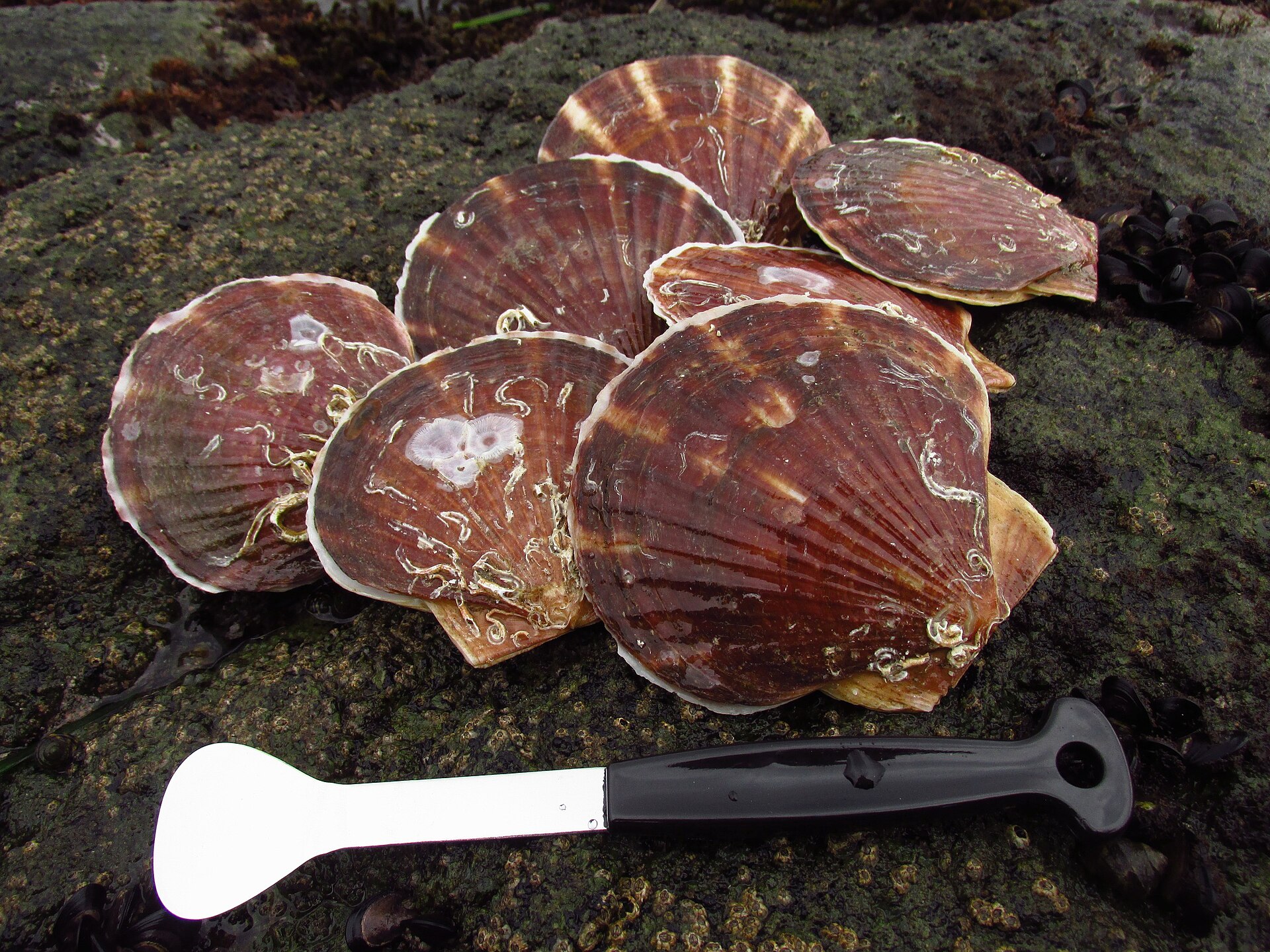
Mutsu Bay Scallops
— The nokkedon market behind Aomori Station
Mutsu Bay is scallop country, and the simplest way to eat its catch is a covered market just behind Aomori Station. You buy meal tickets, take a bowl of rice, then walk the aisles choosing toppings tray by tray.
- FromAomori Station (JR Ou Main Line, Tsugaru Line, Aoimori Railway)
- ~5 minOn foot from Aomori Station
- Mutsu Bay Scallops
The sweet spot
This is not an undiscovered place. The market is on most Aomori itineraries and the bowl has its own brand name. What is easy to miss is that it remains a working market rather than a food court. The shops keep market hours, the rice counters stop when the rice is gone, and one day a week the shutters stay down. Come in the morning and the scallop trays are full; arrive mid-afternoon and you are looking at what is left.
Where it is
34 more notes in Aomori · open the map →What to look for — in walking order
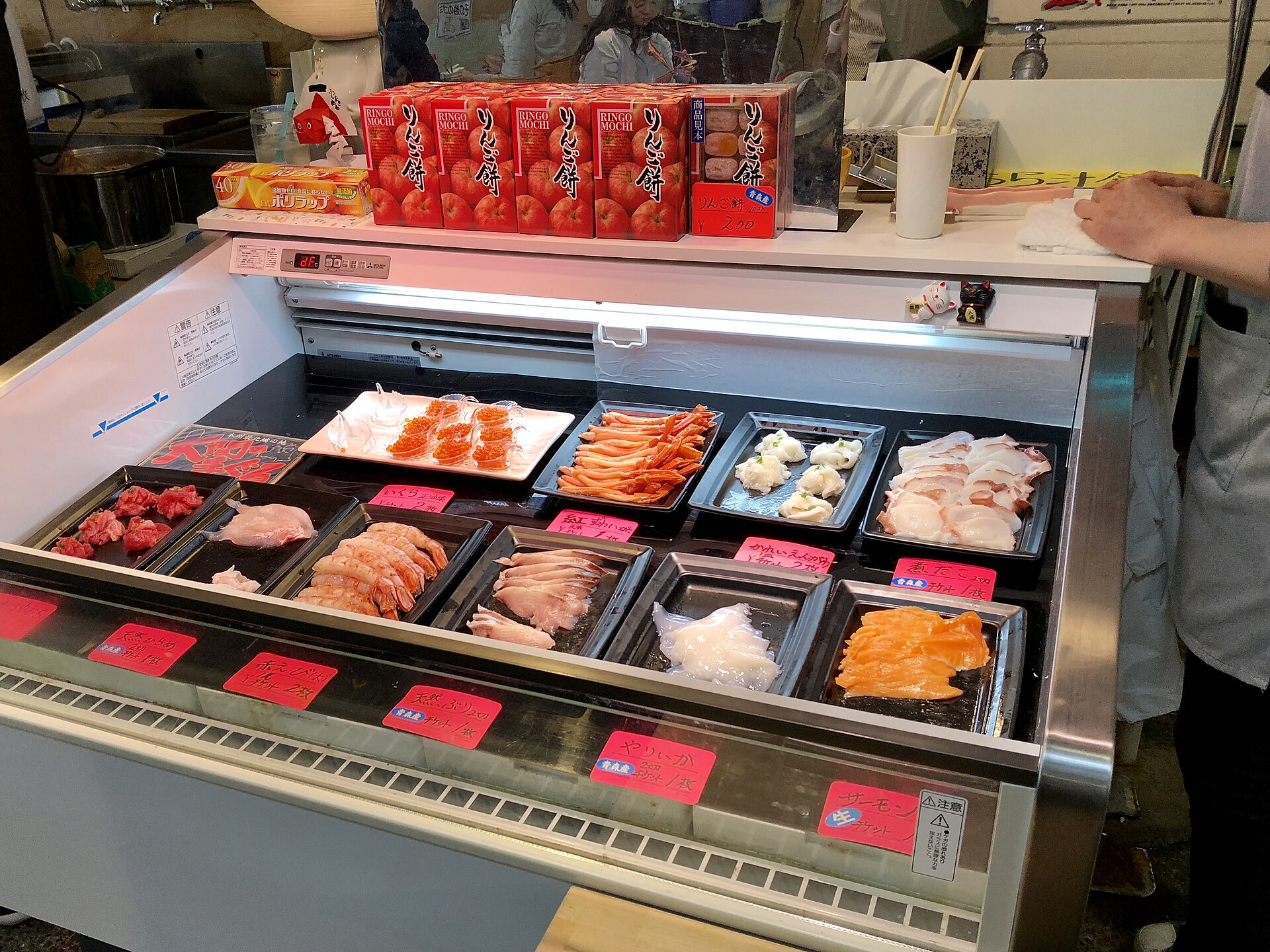
- The nokkedon information deskthe counter selling the meal tickets, good for about thirty shops in the hall
- The rice countersshops under a red sign, where one ticket buys the bowl of rice
- The sashimi caseschilled cases of the morning's fish, each tray marked with its ticket count
- The scallop traysbay scallops set out raw, grilled or simmered depending on the shop
- The eating space in the halltables kept inside the market for assembled bowls
How to actually get there
- Shin-Aomori Station → Aomori Station on the JR Ou Main Line; the Shinkansen and the local line meet at Shin-Aomori.
- Aomori Station front exit → Aomori Gyosai Center, about five minutes on foot.
- Buy meal tickets at the desk, take the rice first, then work the aisles for toppings.
- Eat at the tables inside the hall, and check the return train times before you leave.
- Shin-Aomori to Aomori by local train
- The Tohoku Shinkansen terminates at Shin-Aomori, which is not the city centre. Change there to the JR Ou Main Line for Aomori Station, a single short hop, and the market is about five minutes on foot from the front exit. Aoimori Railway and the Tsugaru Line also end at Aomori Station, so the local routes converge on the same place.
- Back to Shin-Aomori and beyond
- Local trains run back to Shin-Aomori through the day, but the last Shinkansen south leaves in the early evening, so a late lunch here can sit awkwardly against onward travel. Aoimori Railway services toward Hachinohe also thin out after dark. Read the departure board at Aomori Station on the way in.
About the place
Mutsu Bay is almost a closed sea, held between the Tsugaru and Shimokita peninsulas and fed by water off the Hakkoda range. Prefecture material calls it a natural holding tank, and the scallop is what it is known for, farmed on hanging lines in stacked cages or strung up by a hole drilled through the ear of the shell. The market behind Aomori Station sells that catch alongside the morning's fish. Its own scheme, nokkedon, turns the aisles into a bowl: you carry rice from one counter and pay for each topping with a ticket, so the meal is assembled rather than ordered.
How to enjoy it
The official listing gives the bowl a window from seven in the morning until around four, with the market closed on Tuesdays and the dates shifting for Nebuta week, Obon and the New Year, so the official calendar is the thing to check before committing a morning. Go early. The sashimi cases are fullest at opening, and the rice counters finish when the day's rice runs out.
Background & history
Scallop farming in Mutsu Bay moved from a sideline to an industry in the late 1960s and early 1970s, once growers worked out how to catch the spat reliably, using cedar fronds packed into onion sacks and hung in the bay for the young shells to settle on. Aomori's own material dates that shift to the same decade in which the market behind the station became the city's kitchen. The nokkedon scheme is much younger. The chamber of commerce built it on top of shops that were already there, as a way to bring visitors through the aisles.
Before you go
- Cash
- Everything inside runs on the market's meal tickets, sold in a strip at the information desk and handed over one or more at a time depending on what you pick. Ticket prices and the counts per item are revised, so take the figures from the official site on the day rather than from a guide. Carry cash; not every counter takes a card.
- Good to know
- The market takes one day off a week and shifts its calendar for the Nebuta festival, the Obon period and the New Year, so confirm the date on the official calendar. The hall is covered and heated, which matters in an Aomori winter, but the walk from the station is exposed and snow is banked along it from December.
- Another way
- From the south, Aoimori Railway runs up from Hachinohe to Aomori Station on the old main line, which lands you at the same front exit without a change at Shin-Aomori. The Tsugaru Line from the Tsugaru peninsula terminates here too.
- After you get off
- From the front exit of Aomori Station, keep the station behind you and walk south along the shopping street. The market is a low building on the left with its name across the front.
Nearby notes
 掬茶 / CC BY-SA 4.0
Culture · Aomori★★★
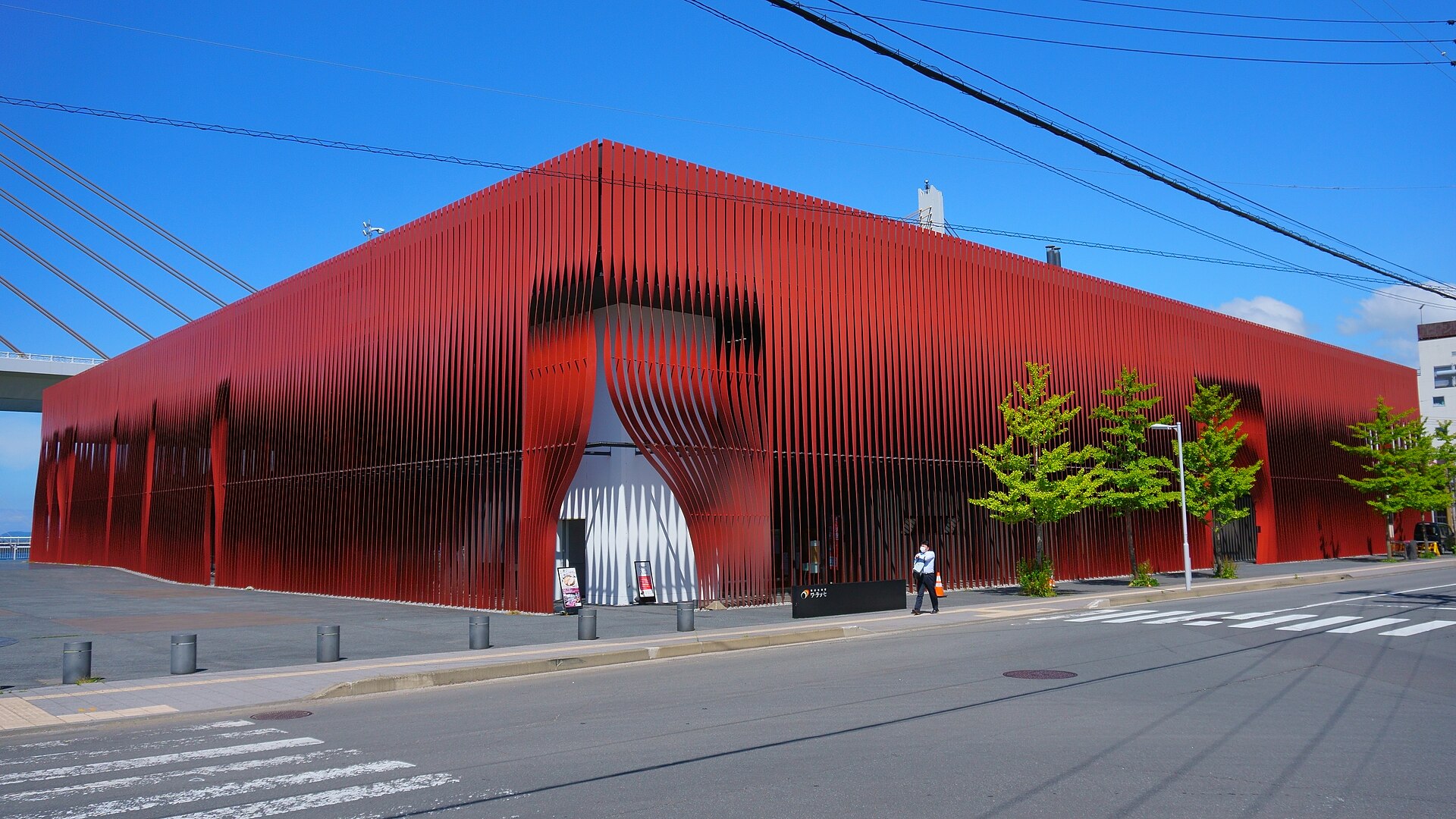
Nebuta Museum Wa Rasse
0.4 km · straight line
 663highland / CC BY 2.5
Culture · Aomori★★
Aomori Museum of Art
3.6 km · straight line
 663highland / CC BY 2.5
History · Aomori★★★
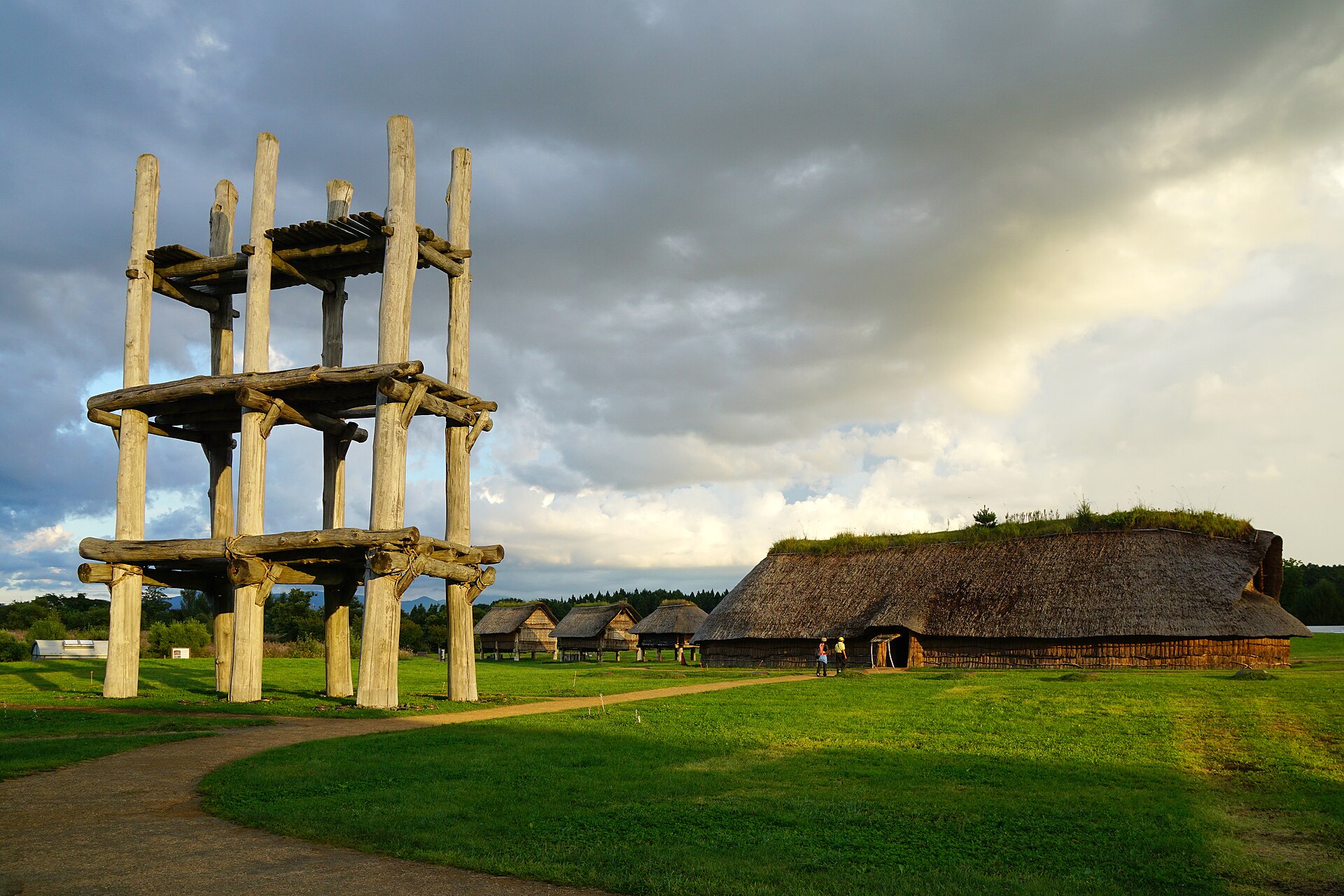
Sannai-Maruyama Site
3.8 km · straight line
 ブルーノ・プラス / CC BY 4.0
Onsen · Aomori★★
Asamushi Onsen
12.8 km · straight line
Distances are straight lines on the map, not travel times.