Osaka · NakanoshimaNo.389★★Open in map →
Osaka Central Public Hall
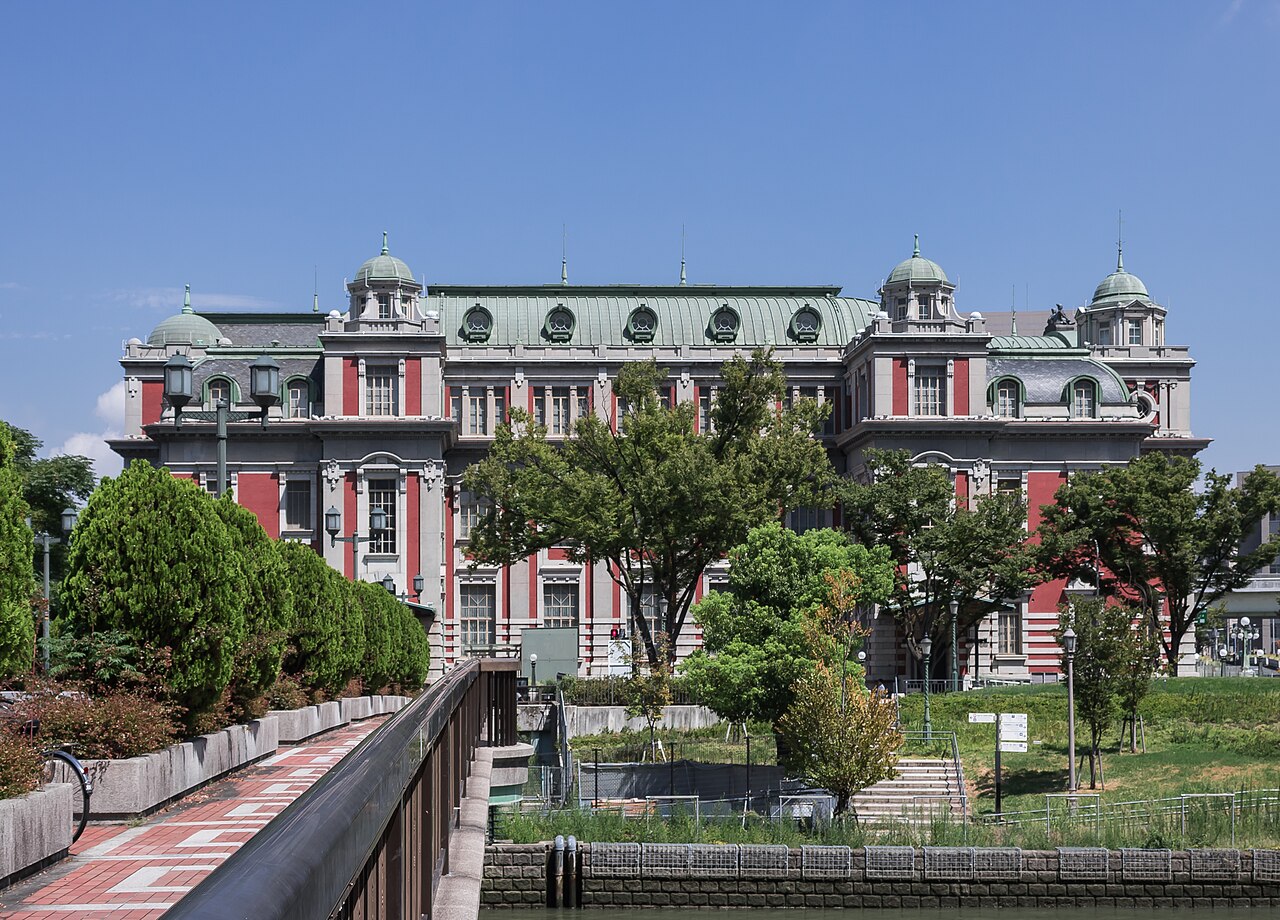
A 1918 red-brick neo-Renaissance civic hall on Osaka's Nakanoshima island, an Important Cultural Property funded entirely by a single private donor and still in active use.
- FromOsaka / Umeda Stn
- ~10 minMetro / Keihan
- Get off atNaniwabashi Station (Keihan Nakanoshima Line)
- On foot
- Osaka Central Public Hall
The sweet spot
Most visitors to Osaka never set foot on Nakanoshima at all, and the hall costs nothing to look at. The story behind it is the part that never reaches a guidebook: a stockbroker paid the entire construction cost, then lost his fortune and his life two years before it opened. That story is told properly in a free basement room that almost nobody walks into.
Where it is
40 more notes in Osaka · open the map →What to look for — in walking order
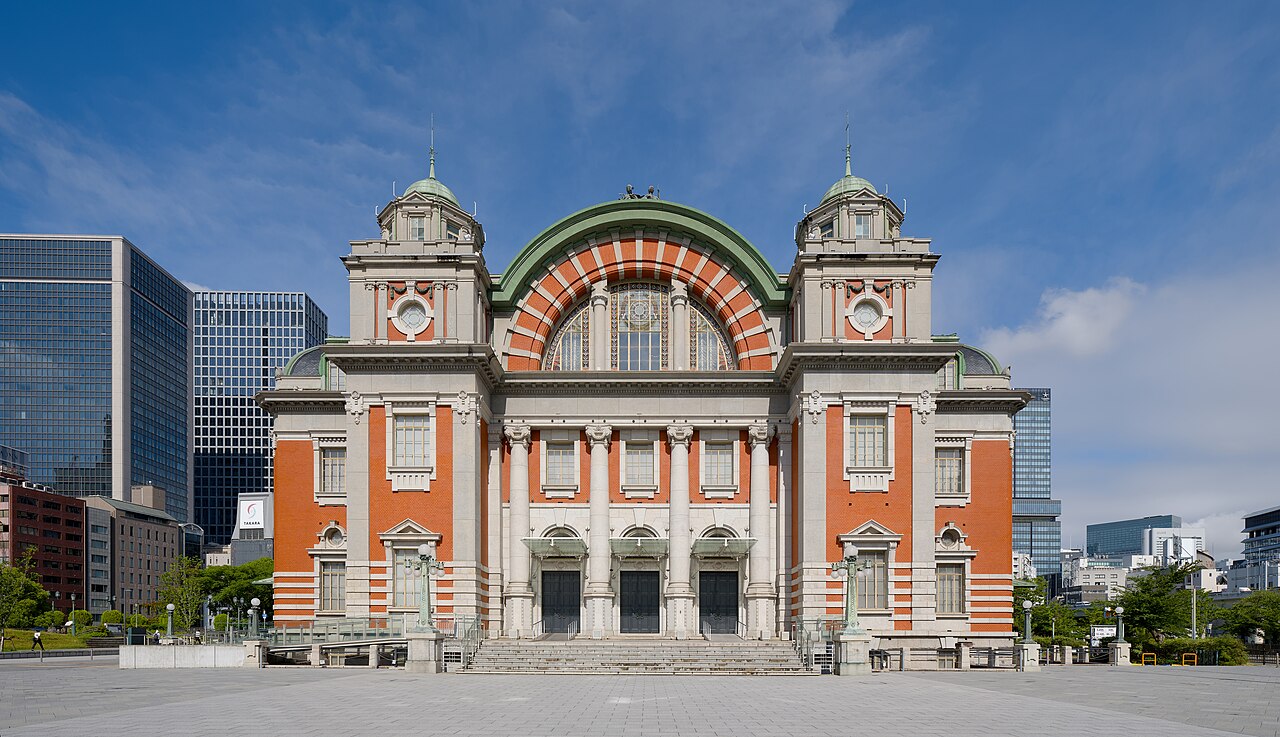
- The facade from the waterred brick banded in white stone with a copper barrel roof; the view from the north bank of the Tosabori or from Naniwabashi bridge is the one to take
- Free basement exhibition roomopen to anyone without a ticket — construction drawings, materials, and the story of the donor Iwamoto Einosuke
- The Special Roomthe former state reception room, its ceiling painted with scenes from Japanese creation myth; visitable only on the paid guided tour
- The island around itthe Nakanoshima Library (also an Important Cultural Property), the Museum of Oriental Ceramics and the rose garden are all within a flat ten-minute walk
How to actually get there
- Umeda → Yodoyabashi (Midosuji Line, 1 stop) or Keihan Nakanoshima Line → Naniwabashi.
- Walk onto Nakanoshima; the hall is on the north side of the island, about 5 min from Yodoyabashi.
- See the free basement exhibition, then view the facade from across the Tosabori — best after dark when it is lit.
- Umeda → Yodoyabashi or Naniwabashi
- Umeda →(Osaka Metro Midosuji Line, 1 stop, ~3 min)→ Yodoyabashi Stn → walk north across the Tosabori river and east along the island, about 5 minutes. Alternatively take the Keihan Nakanoshima Line to Naniwabashi Station, whose exit surfaces beside the hall. Total about 10 minutes from Umeda.
- Walk the island west, or straight back to Yodoyabashi
- Return to Yodoyabashi for the Midosuji Line, or walk west along Nakanoshima past the Museum of Oriental Ceramics and the rose garden to Watanabebashi and the Keihan Nakanoshima Line. The island is flat, continuous and pleasant to walk end to end.
About the place
Nakanoshima is a long narrow sandbar in the middle of Osaka, held between the Dojima and Tosabori rivers, and the Central Public Hall stands on it like a piece of another city — red brick banded in white stone, a copper barrel roof, arched windows, unmistakably European and unmistakably early twentieth century. It is not a museum piece. The hall is a working venue: concerts, lectures, receptions and civic events run through it constantly, which is why the building feels lived in rather than preserved. The basement holds a free exhibition room open to anyone, with drawings, materials from the construction, and the story of the man who paid for it. The Special Room upstairs — the former state reception room, with a painted ceiling of Japanese creation myth — is reachable only on a short guided tour. From the outside the building is best from across the water: the north bank of the Tosabori, or the Naniwabashi bridge, especially after dark when the facade is lit.
How to enjoy it
Come in the evening. The hall is floodlit after dark and the reflection off the Tosabori is the reason most photographs of it exist; the walk along the north bank between Yodoyabashi and Naniwabashi takes ten minutes and is quiet once the offices empty. During the day, the free basement room is worth twenty minutes and tells the Iwamoto story properly. If you want the Special Room, book the guided tour ahead — it is short, paid, and does not accommodate walk-ins reliably. Then keep walking: Nakanoshima is flat and continuous, and the library, the ceramics museum and the rose garden line up along the same island in either direction.
Background & history
In 1911 Iwamoto Einosuke, an Osaka stockbroker who had made a fortune, donated one million yen — an enormous sum then — to build the city a public hall, having been impressed on a trip to America by the civic institutions that wealthy citizens there funded. A design competition was held under the supervision of Tatsuno Kingo, the leading architect of the day; it was won by Okada Shin'ichiro, then twenty-nine. Tatsuno and Kataoka Yasushi carried out the working design. Iwamoto, meanwhile, lost heavily in the markets and took his own life in 1916, two years before the hall he had paid for was completed in 1918. The building survived the war, was restored between 1999 and 2002, and in December 2002 became the first public-hall building in western Japan designated an Important Cultural Property.
Before you go
- Cash
- The exterior and the basement exhibition room are free. The guided tour of the Special Room and main auditorium is paid, runs about 30 minutes and generally requires booking in advance through the hall's website — it is not a walk-in. Events in the hall are ticketed separately by their organisers. The building's restaurant and café take cards.
- Good to know
- The building closes on the fourth Tuesday of each month and over the New Year period. Because it is an active venue, interior access depends on the day's bookings — the auditorium is often unavailable. Check the official site before travelling if seeing inside matters to you.
- Another way
- Keihan Nakanoshima Line to Naniwabashi Station puts you directly under the building. From Osaka Station, walking south along Midosuji and then east onto the island takes about 20 minutes and passes the Bank of Japan Osaka branch, another Tatsuno-era landmark.
- After you get off
- Naniwabashi Station's exit comes up on the island beside the hall; from Yodoyabashi, cross the river north and walk east along the waterfront for about 5 minutes.
Nearby notes
 663highland / CC BY 2.5
Culture · Osaka★★
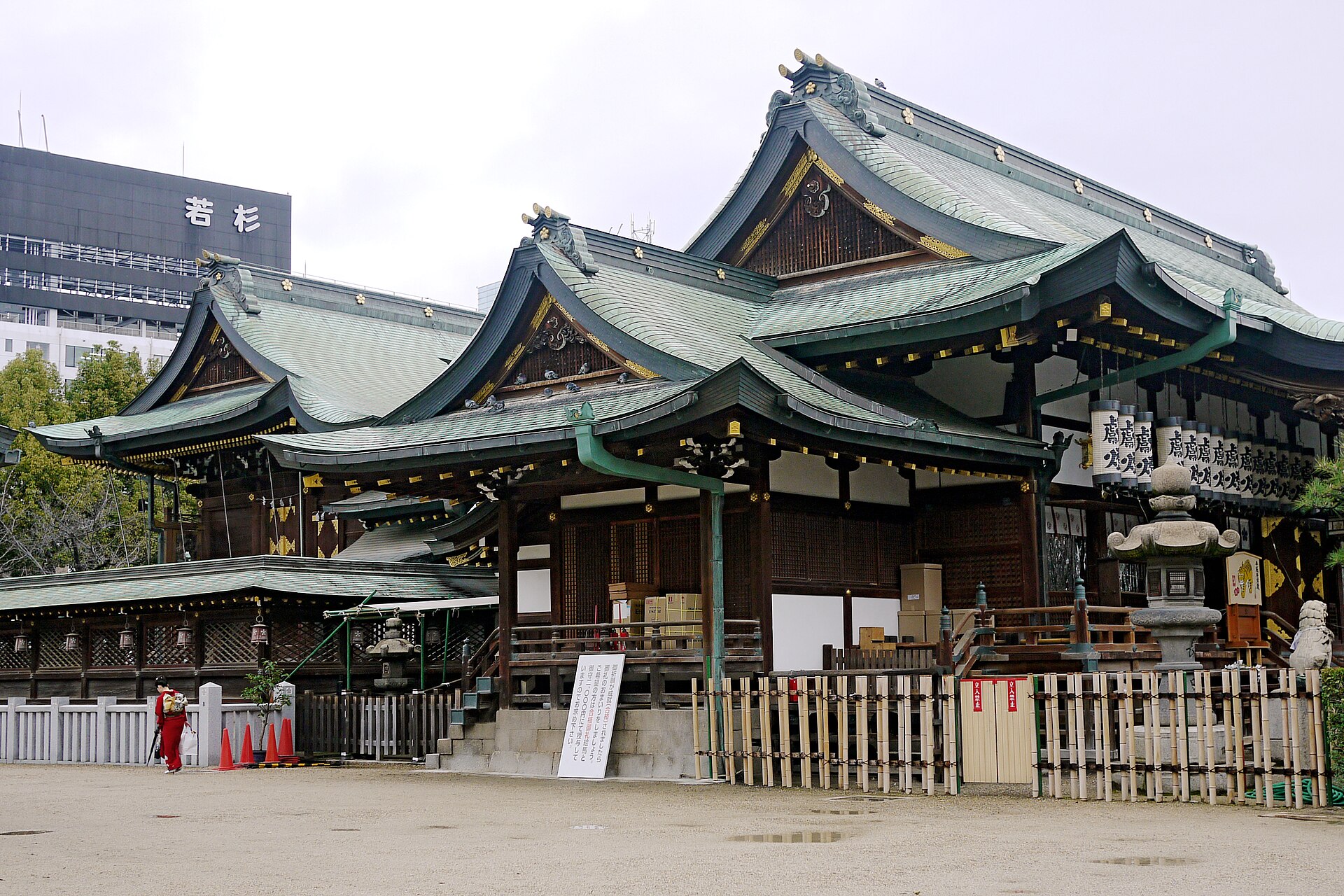
Osaka Tenmangu Shrine
1.0 km · straight line
 Bytemarks / CC BY 2.0
Local life · Osaka★★★
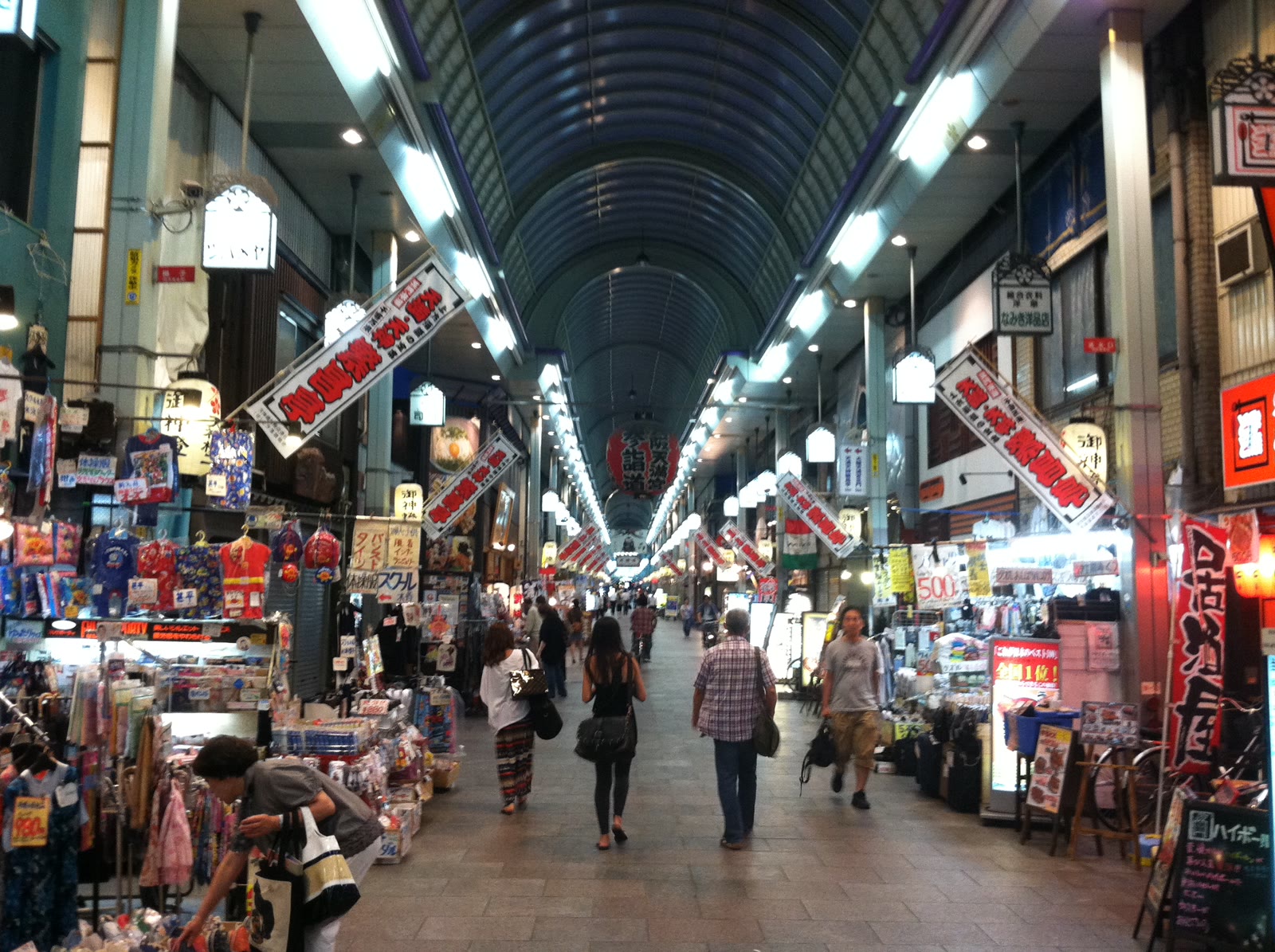
Tenjinbashisuji Shopping Street
1.1 km · straight line
 Fotointheworld / CC BY 4.0
Food · Osaka★★★
Osaka Kushikatsu
1.2 km · straight line
 illustration (AI-illustrated)
Local life · Osaka★★★
Umeda Sky Building
1.7 km · straight line
Distances are straight lines on the map, not travel times.