Miyagi · NarukoNo.827★★★Open in map →
Naruko Onsen
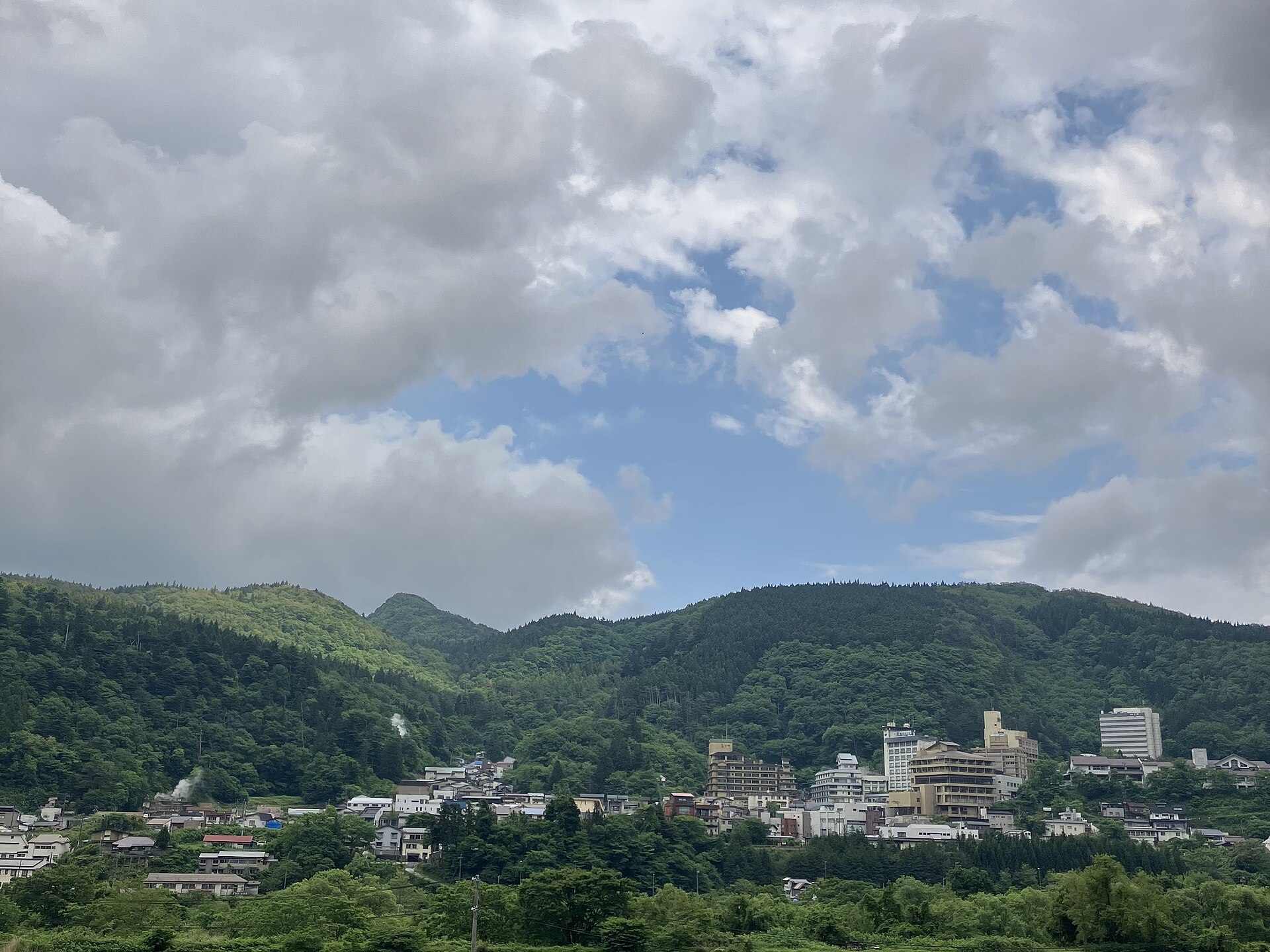
A hot-spring town in a volcanic valley in northern Miyagi, where seven of the ten spring types classified in Japan come out of the ground. The bathhouse is on the main street, the foot bath is inside the station, and kokeshi are turned in between.
- FromSendai Station
- ~1 hr 50 minJR local lines, one change
- Get off atNaruko-Onsen Station (JR Rikuu East Line)
- On foot
- Naruko Onsen
Where it is
23 more notes in Miyagi · open the map →What to look for — in walking order
- The station foot batha hinoki-lined foot bath inside the station building, at the start of the walk
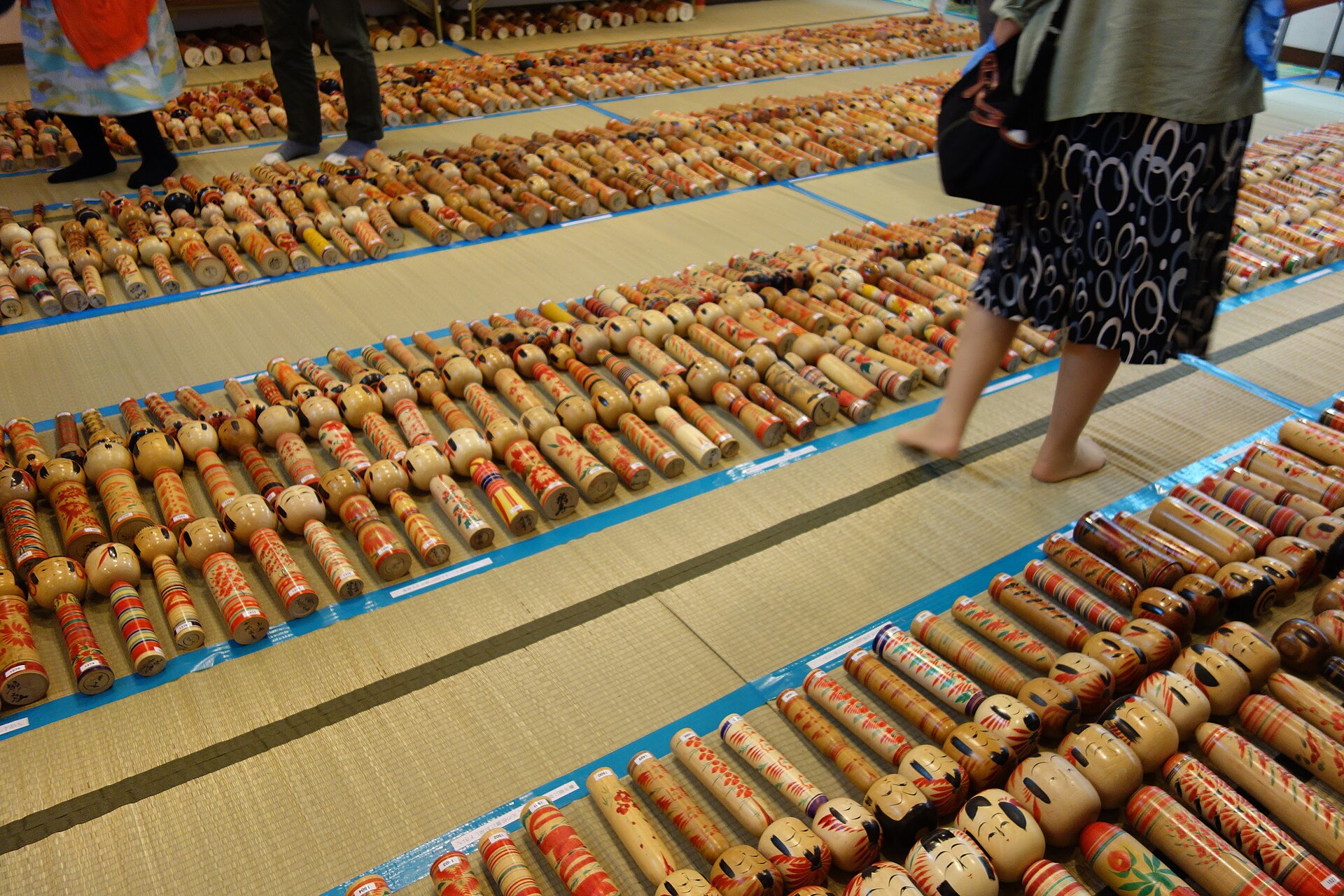
- The kokeshi shops on the main streetwoodturners' shops along the sloping street that runs up from the station square
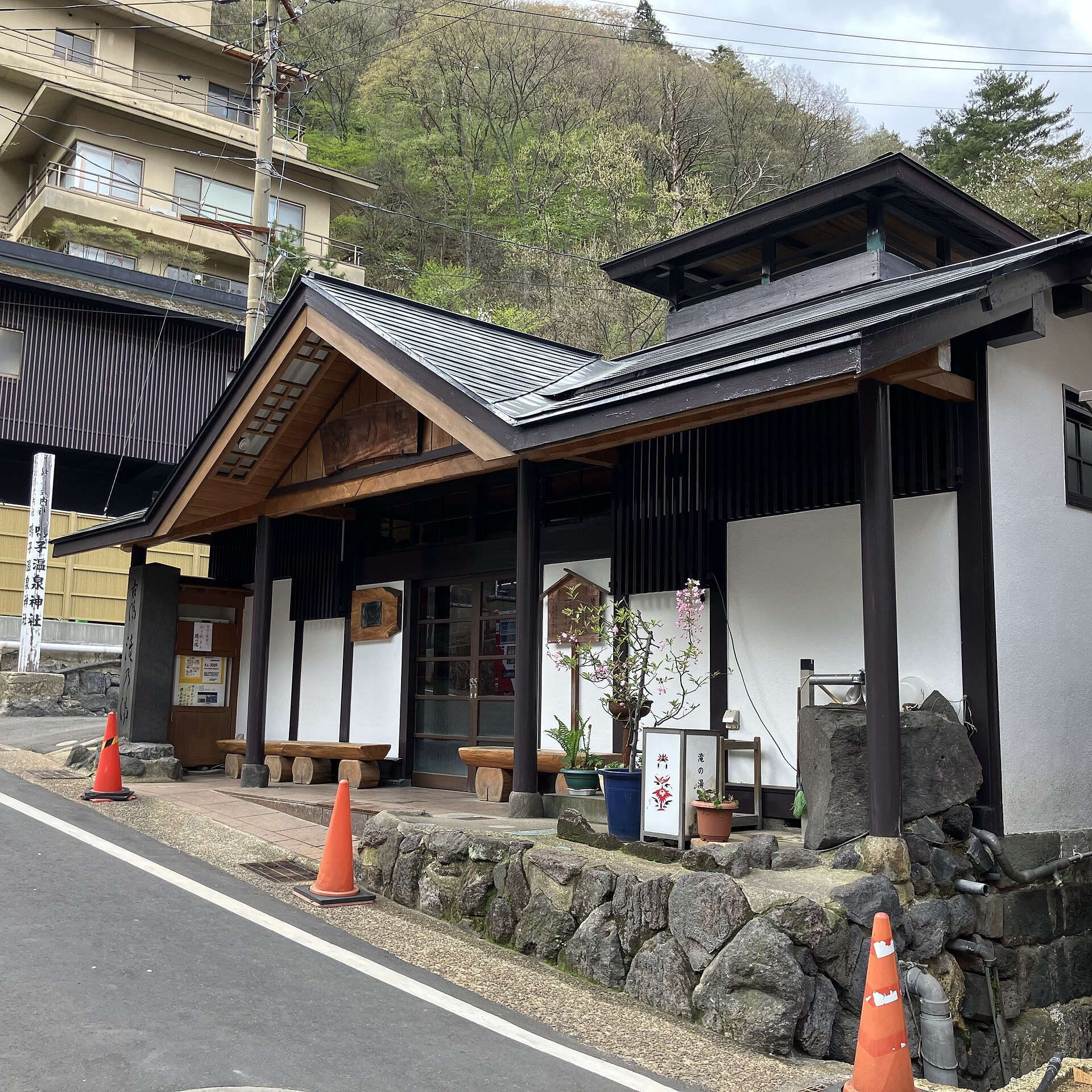
- Takinoyuthe town's public bathhouse, hinoki throughout, with two tubs held at different temperatures
- Onsen Shrinethe shrine on the slope above the bathhouse, whose sacred water the bath below is said to carry
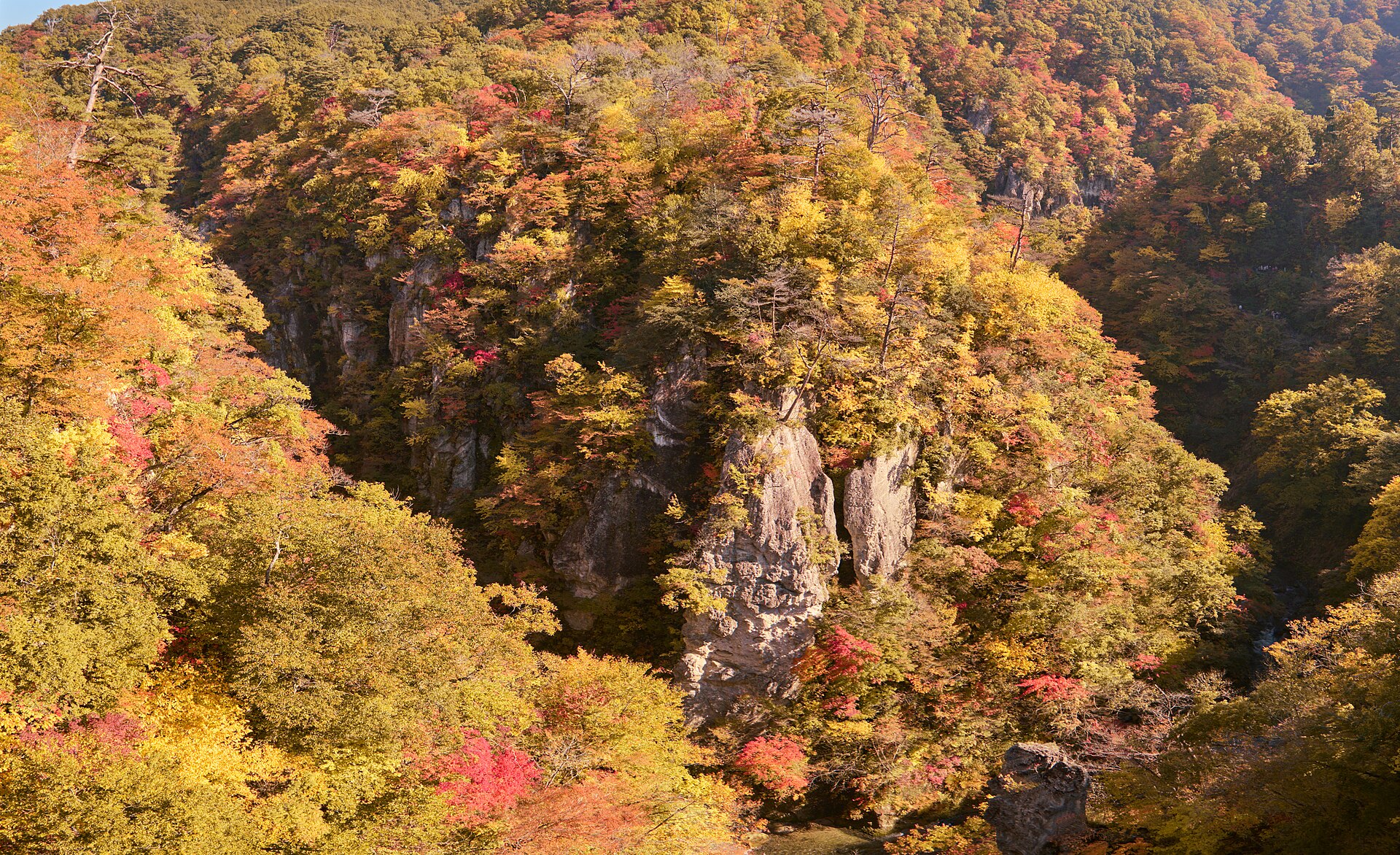
- Naruko Gorgea steep-sided gorge out beyond the town, at its best when the leaves turn
How to actually get there
- Sendai Station → Kogota (JR Tohoku Main Line).
- Kogota → Naruko-Onsen Station (JR Rikuu East Line).
- Walk up the main street from the station square to Takinoyu, the public bathhouse.
- Carry on to the shrine above it, or head out to Naruko Gorge before returning to the station.
- JR from Sendai, one change at Kogota
- Sendai Station →(JR Tohoku Main Line)→ Kogota →(JR Rikuu East Line, the Oku-no-Hosomichi Yukemuri Line)→ Naruko-Onsen Station. About 1 hour 45 minutes riding, one change, 1,782 yen with an IC card at the time of checking. Local services only, so check the connection before you leave.
- Return from Naruko-Onsen Station
- The same pair of lines runs back to Sendai. The Rikuu East Line is a rural single-track line with long gaps between services, so choose your return train before you get in the bath rather than after. The station building has a staffed tourist information desk if the timetable is hard to read.
About the place
Naruko sits in a volcanic valley in Osaki, in the north of Miyagi prefecture. It is the largest of the spring areas grouped under the name Naruko Onsen-kyo, alongside Higashi-Naruko, Kawatabi, Nakayamadaira and Onikobe. Between them they draw on around 370 separate sources, which is why the water changes so much from one street to the next. The town itself is small: the station, the public bathhouse and the woodturners' shops stand within a few hundred metres of each other along one sloping street. It reads as a cure town first and a sightseeing town second.
How to enjoy it
Takinoyu opens at 7:30 and closes at 21:00, which makes the early bath the easy one, before the ryokan guests come out. Take your own soap — there are no showers and no taps — and note that photography is banned throughout the building. Keep the gorge for the afternoon and put the bath at one end of the day.
Background & history
Naruko's water is old. A ninth-century chronicle records hot water appearing in this valley along with volcanic activity, and the shrine on the slope above the town was granted court rank soon afterwards. The bathhouse below it, Takinoyu, is still described as that shrine's sacred bath. Kokeshi came much later, turned by woodworkers who used the beech forests around the valley and sold the dolls to people taking the cure. Naruko is counted among the founding centres of the craft, and a national kokeshi festival is held in the town.
Before you go
- Cash
- Takinoyu was 300 yen for adults and 100 yen for children at the time of checking, bought from a ticket machine. Bring cash and your own soap: nothing is sold inside, there are no showers or taps, and there are no coin lockers — only a small box for a wallet.
- Good to know
- The Rikuu East Line is cut west of the town. The section from Nakayamadaira-Onsen to Shinjo has been closed since storm damage in July 2024 and is covered by replacement buses, with reopening years away, so any plan to arrive from the Yamagata side has to be checked first.
- Another way
- The Tohoku Shinkansen stops at Furukawa, which is where the Rikuu East Line begins; the tourism association gives that as the standard route from Tokyo. Miyagi Kotsu also runs a bus between Sendai and Naruko Onsen.
- After you get off
- Naruko-Onsen Station opens straight onto the spring quarter. The main street climbs away from the station square, and Takinoyu, the public bathhouse, is a short walk up it.
Nearby notes
 KQuhen / CC BY-SA 4.0
Craft · Miyagi★★
Miyagi Traditional Kokeshi
1.8 km · straight line
 lumoplank / CC0
Nature · Miyagi★★
Naruko Gorge
2.2 km · straight line
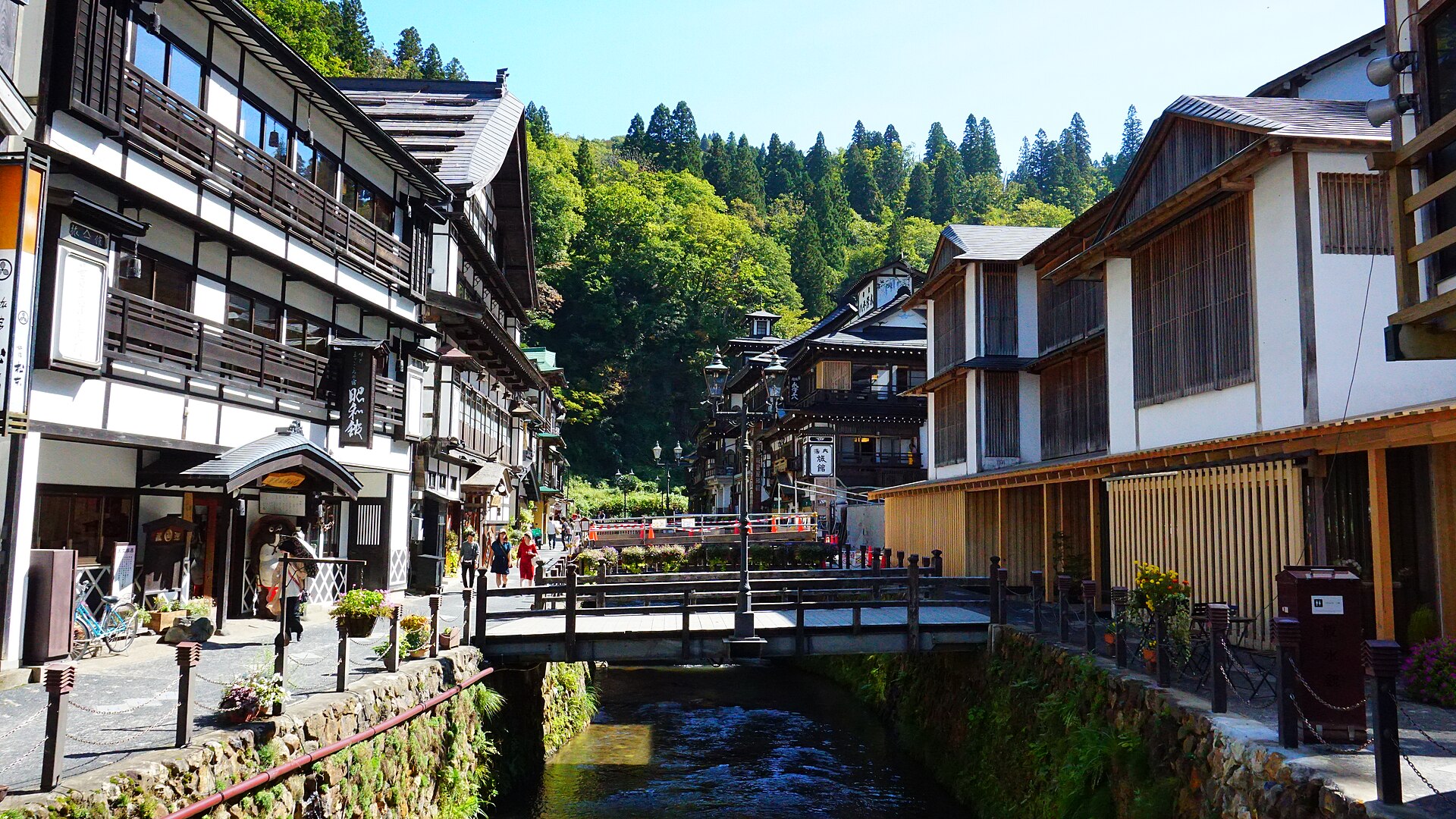 掬茶 / CC BY-SA 4.0
Onsen · Yamagata★★★
Ginzan Onsen
25.1 km · straight line
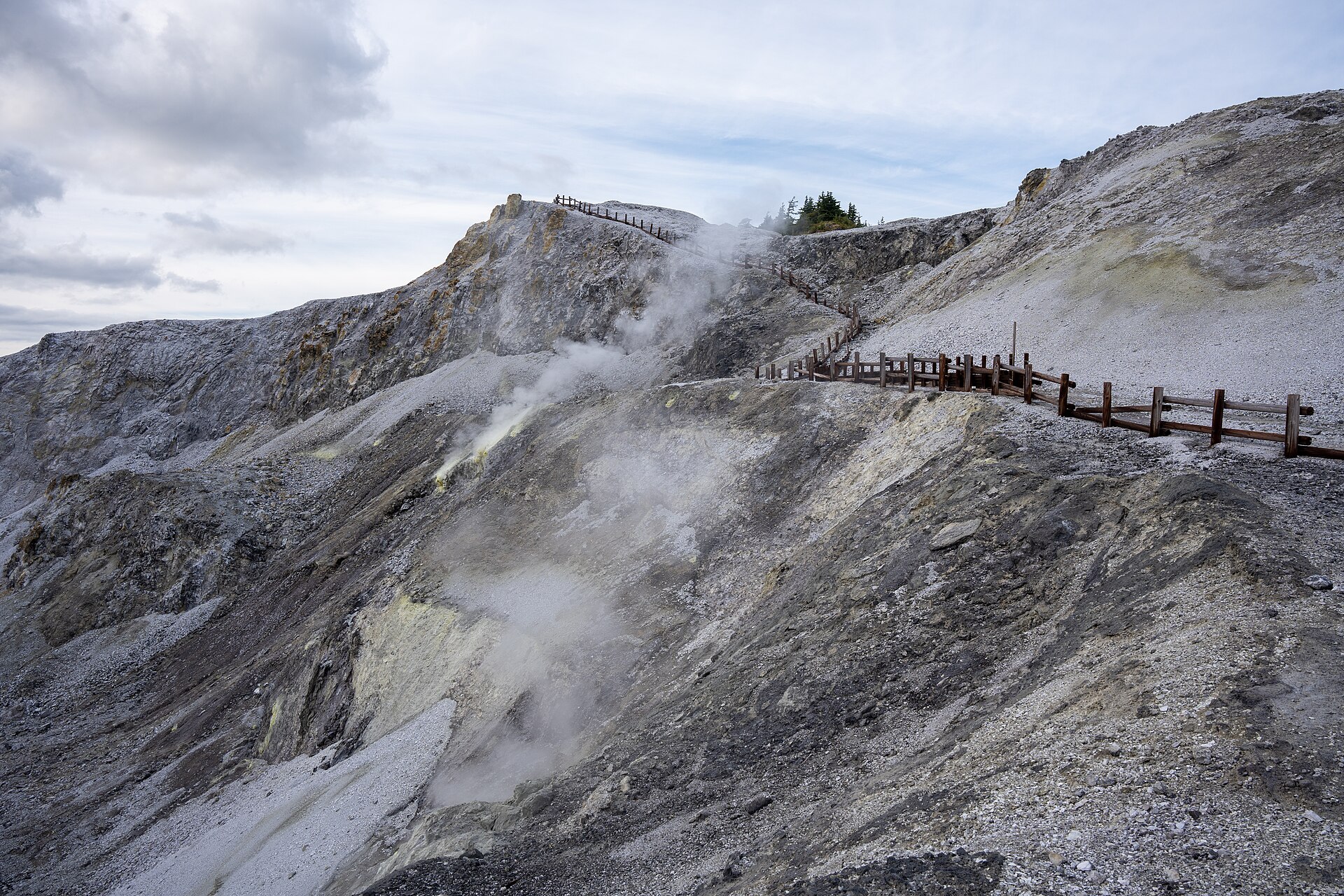 Raita Futo from Tokyo, Japan / CC BY 2.0
Nature · Akita★★
Kawarage Jigoku
29.4 km · straight line
Distances are straight lines on the map, not travel times.