Northwest Nagasaki · Ojika IslandsNo.900★★Open in map →
Former Nokubi Church
— A brick chapel left on an island with no residents
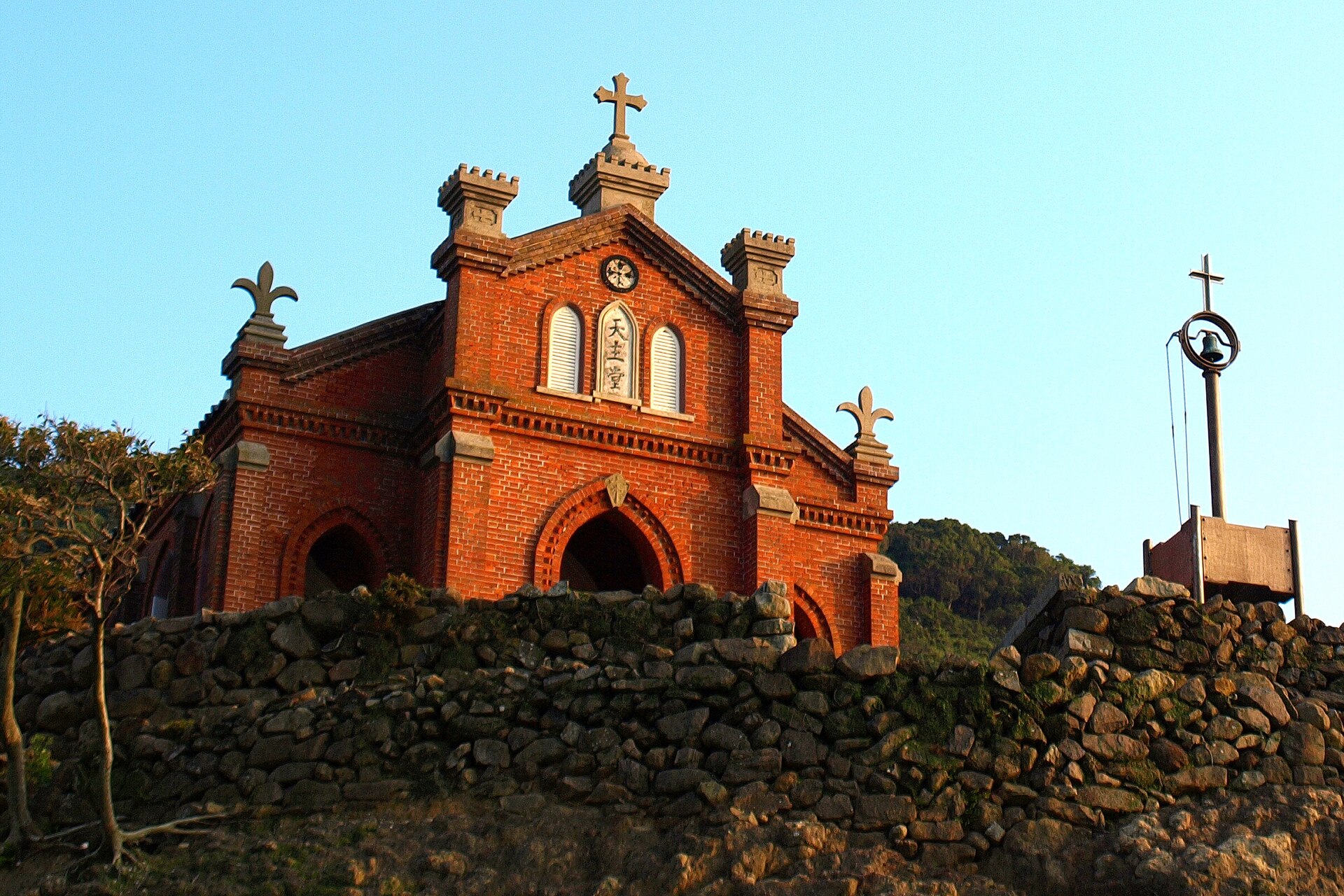
A brick church stands on a hillside on Nozaki, an island east of Ojika whose last villagers left decades ago. It was raised by the Christians who had hidden there, and the village site around it now carries a World Heritage listing.
- FromOjika Port
- ~35 minTown ferry, two sailings a day
- Get off atNozaki Port (town ferry Hamayu)
- On foot
- Former Nokubi Church
The sweet spot
Nozaki is quiet because reaching it takes planning rather than luck: a handful of sailings, no shops, and a request you send in advance. That is also what makes the trip worth arranging. You get a World Heritage site with the volume turned down, but you have to build the day around the boat rather than the other way round.
Where it is
1 more note in Nagasaki · open the map →What to look for — in walking order
- Nozaki Portthe landing, with the collapsing houses of Nozaki village behind it
- The ridge roadthe single made road climbing from the harbour toward the island's waist
- Nokubi village sitestone terrace walls and house platforms standing in open grass
- Former Nokubi Churchbrick walls facing the sea, with a ribbed vault over the nave inside
- Nokubi beacha curve of sand below the church with no buildings on it at all
How to actually get there
- Register the crossing with the island tourism office before travelling.
- Ojika Port (Fuefuki) to Nozaki Port on the town ferry Hamayu (about 35 minutes).
- Walk the road from the harbour over the ridge to the Nokubi village site.
- See the church and the beach below it, then walk back for the return sailing.
- Town ferry Hamayu from Ojika Port
- Ojika Port at Fuefuki to Nozaki Port on the town boat Hamayu, about 35 minutes, calling at Mushima on the way. The timetable is short and fixed, with extra sailings on some weekends and rest days each month, so check the calendar before you plan the day.
- Last boat back to Ojika
- Return sailings leave from the same pier. Miss the last one and you are on an island with no shop and no scheduled way off, so treat the afternoon departure as the hard end of the day rather than a target.
About the place
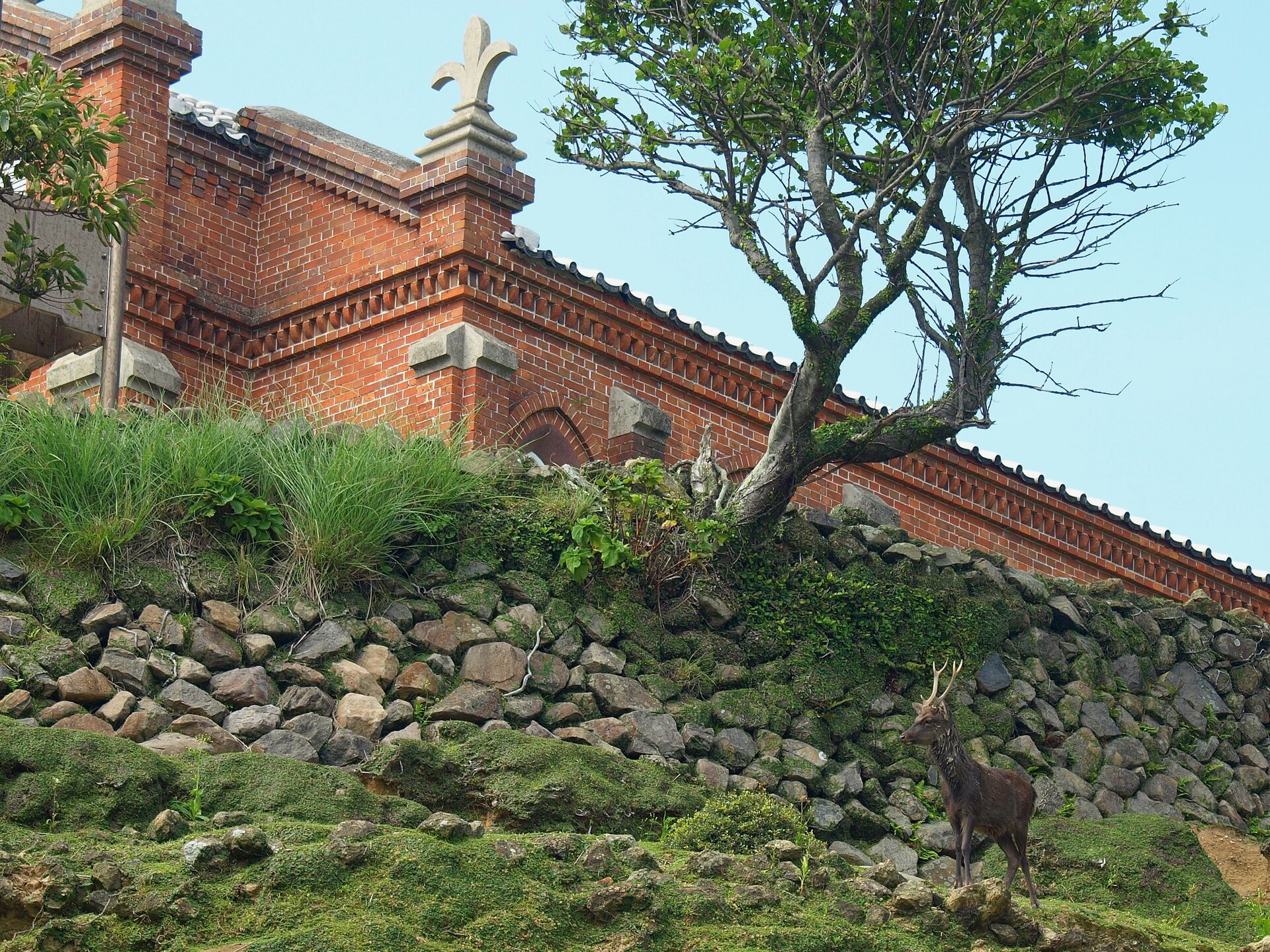
Nozaki lies a short crossing east of Ojika, a long ridge of an island with a narrow waist in the middle. Three villages once shared it and more than six hundred people lived here, working terraces cut into slopes too steep to plough. All of them are gone now. What is left is stonework in the grass, a shrine in the forest at the north end, about four hundred wild deer, and one brick church on the slope above Nokubi beach with nothing built around it. The deer keep the grass down, which is the only reason the terrace walls are still readable.
How to enjoy it
Send the notice in before you book anything else. The island asks visitors to register in advance, and the church is unlocked only if someone knows you are coming. Take the morning boat rather than the afternoon one, which turns around in a short window. Walking is the only way to move here and there is nowhere to buy food, so carry lunch and water across with you.
Background & history
Nozaki was a Shinto holy island, the domain of Okinokojima Shrine, and that is exactly why hidden Christians settled its empty middle and southern ends around 1800. Registering as shrine parishioners made the perfect cover. Once the ban on Christianity was lifted, the 17 households at Nokubi spent years saving for a proper church, and in 1908 Tetsukawa Yosuke, who went on to build churches across the Goto Islands, finished it for them in brick. Nokubi emptied in 1971 and the village sites were inscribed as World Heritage in 2018.
Before you go
- Cash
- The crossing is 520 yen one way for adults. Guided walks and the island's only lodge, a converted school, are arranged and paid separately through the island tourism office.
- Good to know
- Register your crossing with the island tourism office in advance; the church interior is opened only while the boat is running and stays shut on its rest days. Ruined houses near the harbour are unsafe to enter, and the mountain tracks to the north and south are rough and used by wild boar.
- Another way
- Ojika itself is reached from Sasebo by fast ferry or car ferry, and from Hakata by the overnight Ferry Taiko, so most people sleep on Ojika and cross the next morning.
- After you get off
- From Nozaki Port one road leads inland and over the ridge. Stay on it and Nokubi opens up below, with the church on the slope above the beach.