Oita · TaketaNo.903★★★Open in map →
Oka Castle Ruins
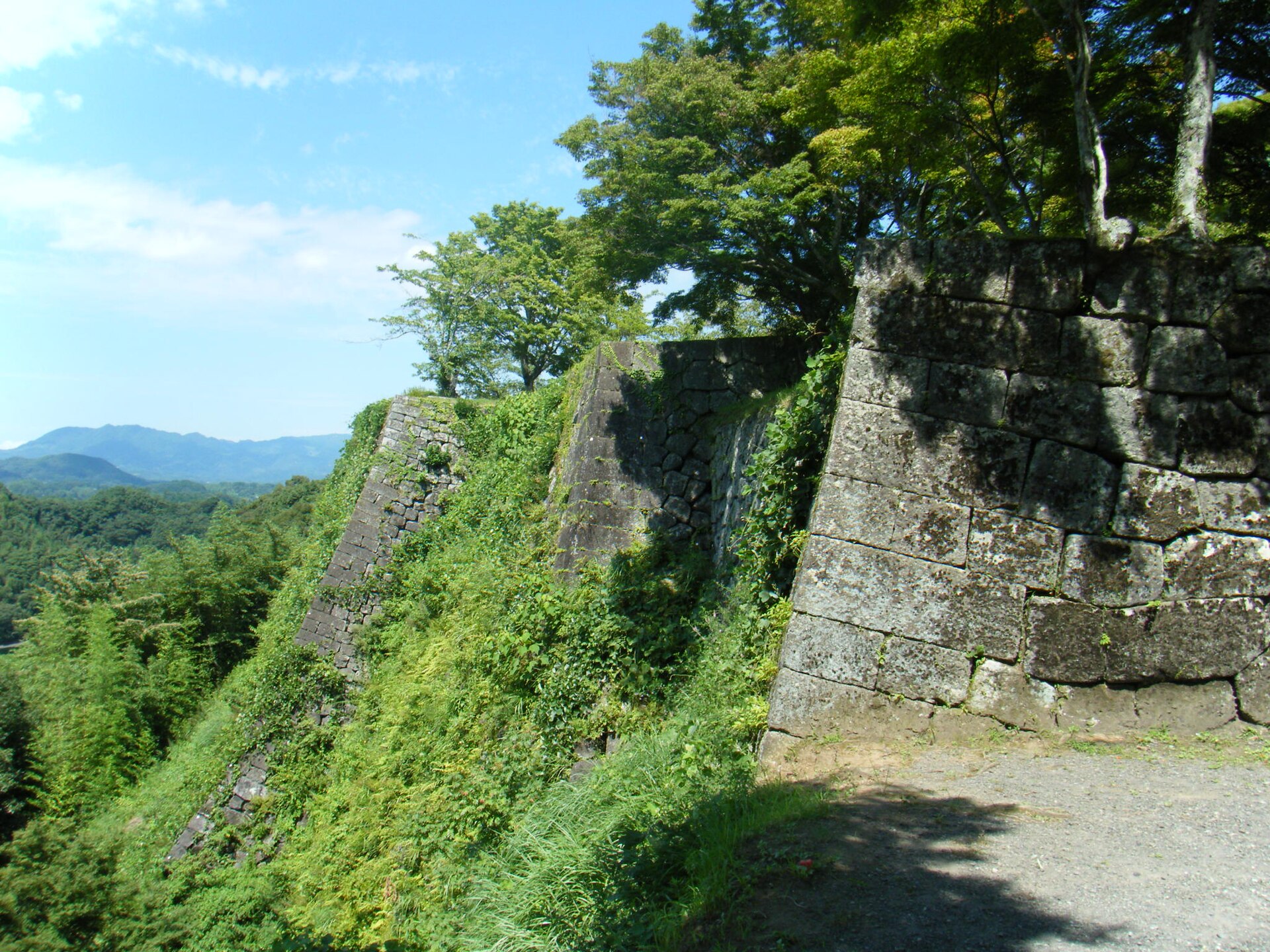
A mountain castle with nothing left standing. Its buildings were taken down in the 1870s, leaving dressed stone walls that trace the edge of a lava tableland between two rivers, and the song a boy from the town below wrote about them.
- FromOita Station
- ~1 hr 30 minJR Hohi Main Line
- Get off atBungo-Taketa Station (JR Hohi Main Line)
- From there
- Oka Castle Ruins
Where it is
12 more notes in Oita · open the map →What to look for — in walking order
- Otemon gate sitethe main gate, a stone-lined dogleg where foundation stones still mark the doorway
- Nishinomaru baileythe widest enclosure, built as a retired lord's residence with a riding ground
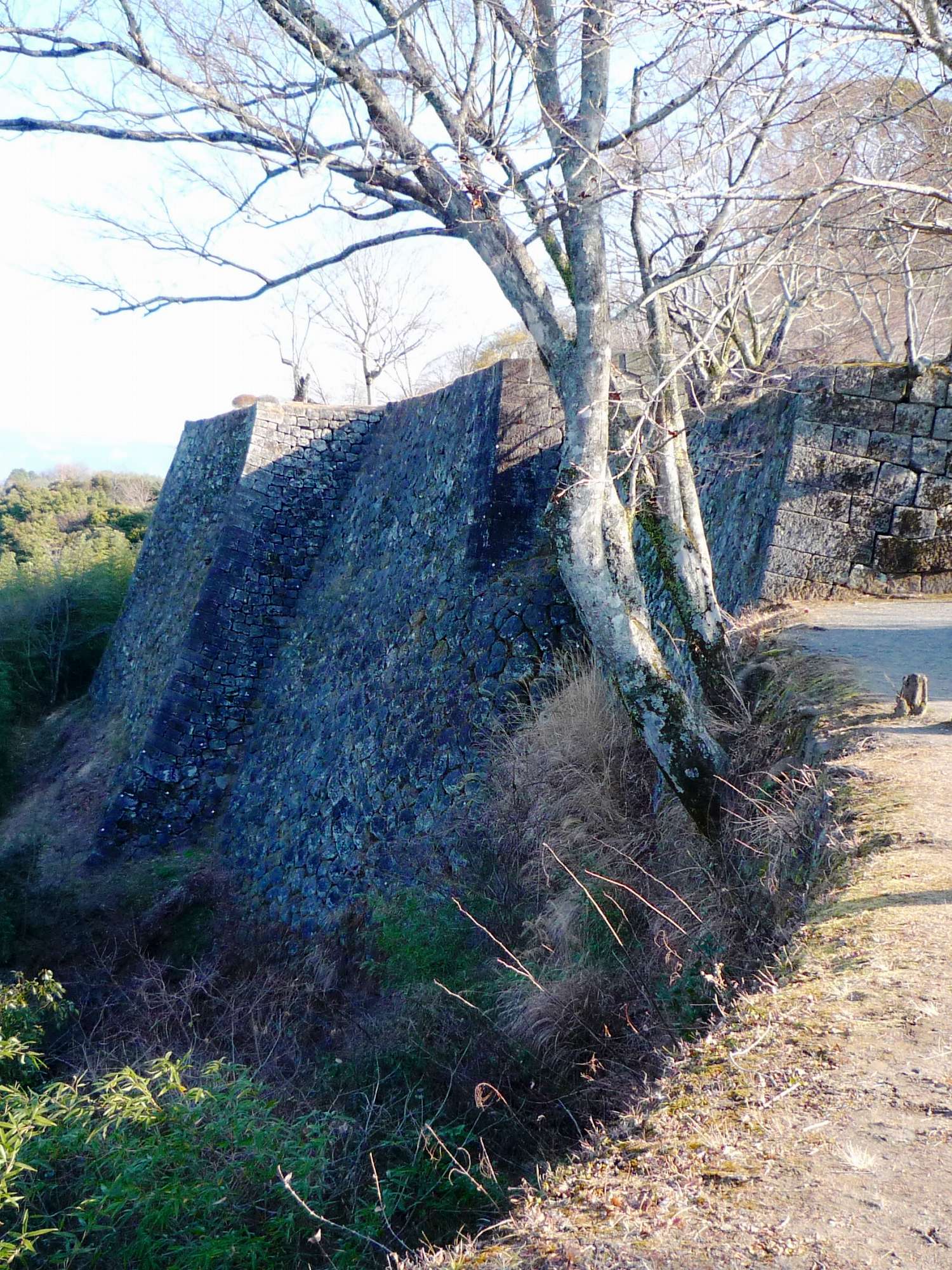
- Taikoyagura gate sitethe tightest entrance to the core, huge blocks fitted together without gaps
- The Third Bailey's high stone wallthe tallest run of masonry, dropping straight off the edge of the tableland
- Honmaru, the main baileythe top platform, where the lord's hall and the three-storey tower once stood
How to actually get there
- Oita Station → Bungo-Taketa Station (JR Hohi Main Line).
- Walk east from the station forecourt to the Oka Castle gate house, or take a taxi.
- Buy a ticket and climb the ramp to the Otemon gate site.
- Follow the ridge east through the baileys to the Honmaru, then return the same way.
- JR Hohi Main Line from Oita
- Oita Station →(JR Hohi Main Line)→ Bungo-Taketa Station. Limited express services on the trans-Kyushu route call here and this is the town's main door; the station plays Kojo no Tsuki as trains pull in, which tells you what the castle means locally. From the forecourt the gate house is a little over a kilometre on foot, uphill at the end.
- Return from Bungo-Taketa
- Trains toward Oita run through the day, but services in the Kumamoto direction are few, so check the board before you commit to the long circuit. The tourist desk inside the station hires bicycles, which takes the sting out of the return leg.
About the place
The castle sits on a tableland about 325 metres above sea level, formed by a pyroclastic flow from Aso and cut away on both sides by river valleys. The geology did the defensive work: the masonry simply continues the cliff upward, so from below it is hard to see where rock ends and wall begins. Nothing above ground level survives. What remains is the stonework itself, following the ridge in a long chain of gates and bailey platforms, and from the higher baileys the Kuju range and Aso are visible on a clear day.
How to enjoy it
The ticket office is open from 9:00 to 17:00. The castle publishes three walking routes — roughly thirty to forty minutes for the main bailey, forty to sixty for the western bailey, and ninety to a hundred and twenty minutes for the full circuit — and only the longest reaches the eastern gate and the mortuary shrine. Taki Rentaro's bronze stands at the point where the far mountains open out, which is where most people stop anyway.
Background & history
Tradition dates the first fort here to 1185, raised to receive Minamoto no Yoshitsune as he fled his brother. The Shiga family made it their seat from 1369 and held it through the Shimazu invasion of 1586, when the young lord Shiga Chikatsugu threw back repeated attacks and the castle earned its name as one that could not be taken. Nakagawa Hidenari arrived in 1594 and rebuilt the whole site in stone. Fire destroyed most of the buildings in 1771; the rest came down in the 1870s. The ruins became a national historic site in 1936.
Before you go
- Cash
- Admission is 300 yen from high-school age upward and 150 yen for primary and junior-high children, with lower rates for groups of twenty or more. Cash is accepted and so are cards, transport IC cards and the common QR apps.
- Good to know
- The site is open every day except 31 December to 3 January. There are no railings along the tops of the walls and no handrails on the steeper flights, so the edges deserve respect, and the stone stays slippery on the day after rain as well as during it.
- Another way
- From Bungo-Taketa Station a bus toward Ogata and Mie reaches the Okajo-iriguchi stop in about five minutes, leaving roughly a quarter of an hour on foot. By car it is about seven minutes from Taketa interchange on the trans-Kyushu road, and the car park below the gate is free.
- After you get off
- Leave the station and follow the valley road east; the gate house stands at the foot of the cliff at the far end, with the free car park beside it. In spring and autumn a small free shuttle sometimes runs from the gate up to the middle of the site.
Nearby notes
 Belle Equipe / CC BY-SA 3.0
Onsen · Oita★★
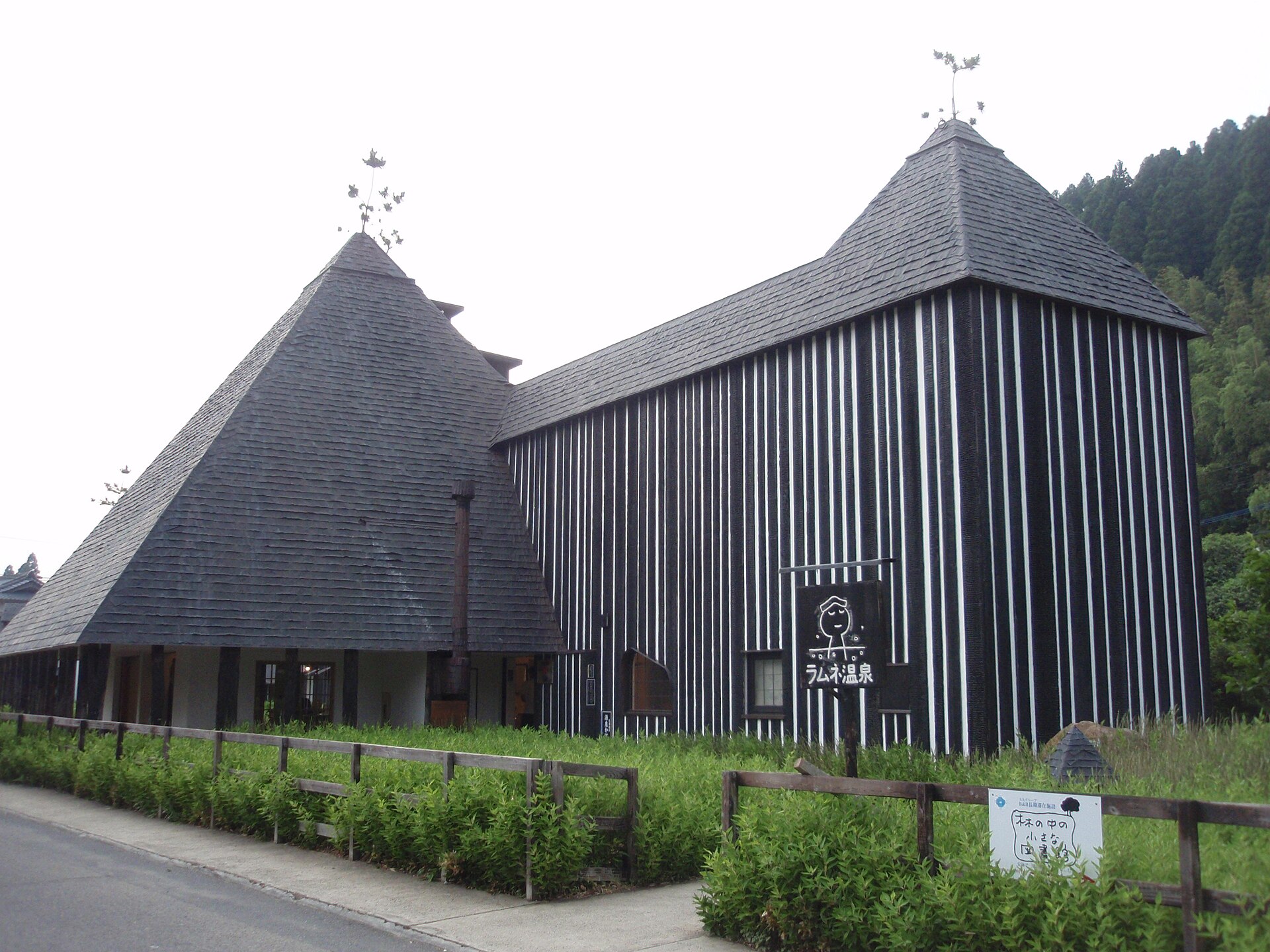
Nagayu Onsen
11.3 km · straight line
 Ann Lee / CC BY-SA 2.0
History · Kumamoto★★
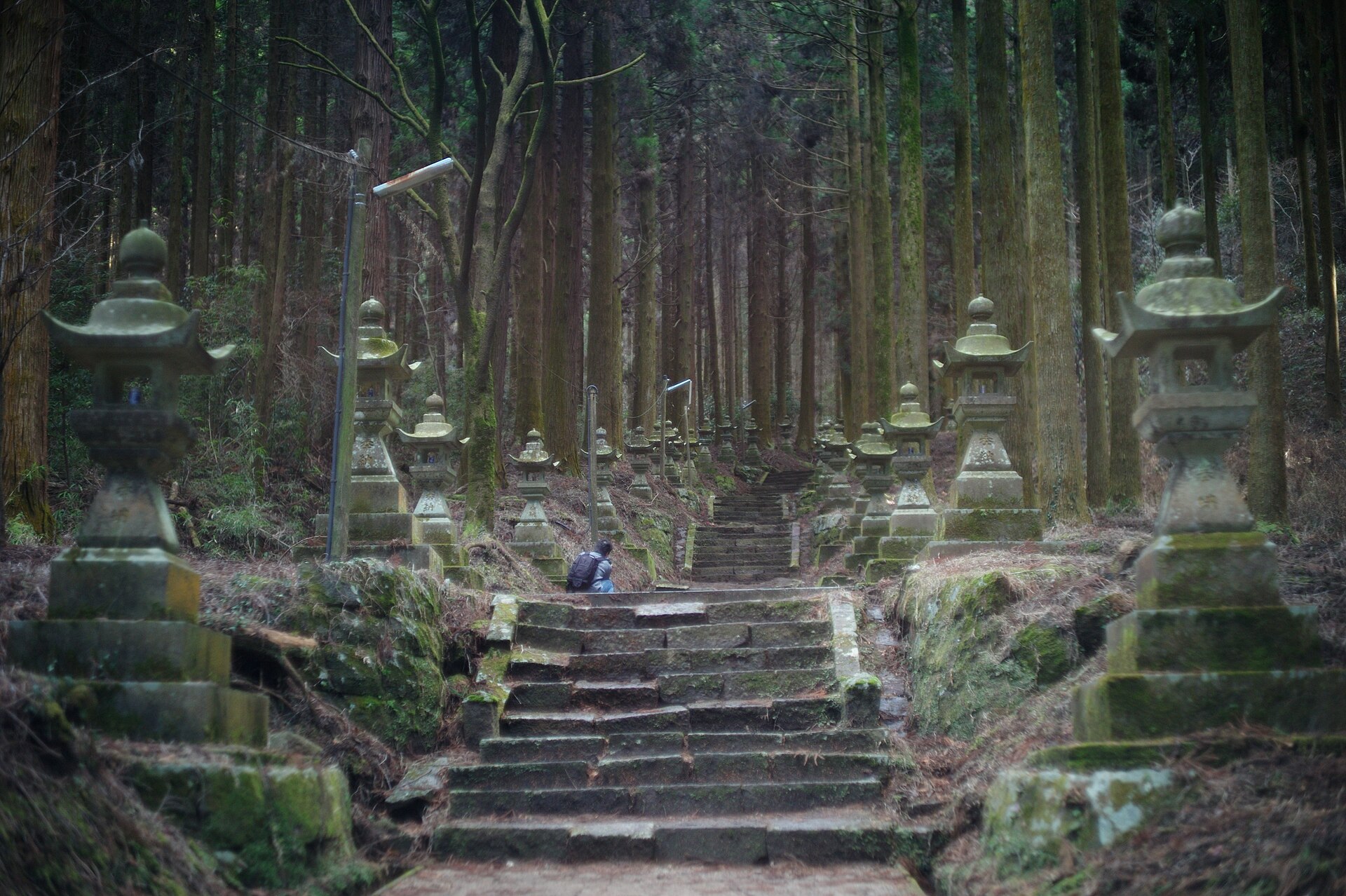
Kamishikimi Kumanoimasu Shrine
26.6 km · straight line
 Big Ben in Japan / CC BY-SA 2.0
History · Miyazaki★★★
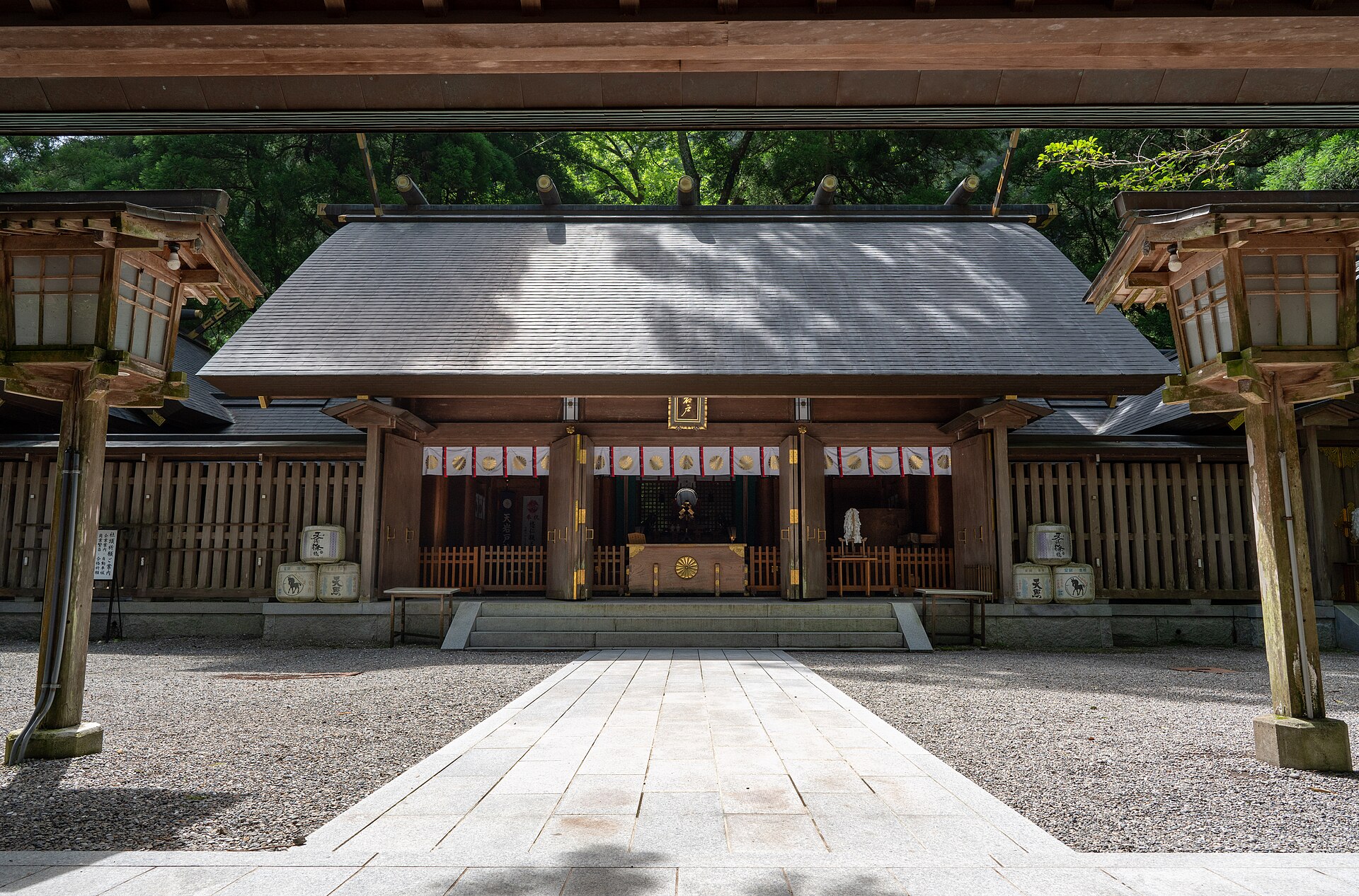
Amanoiwato Shrine
26.6 km · straight line
 Totti / CC BY-SA 4.0
History · Kumamoto★★
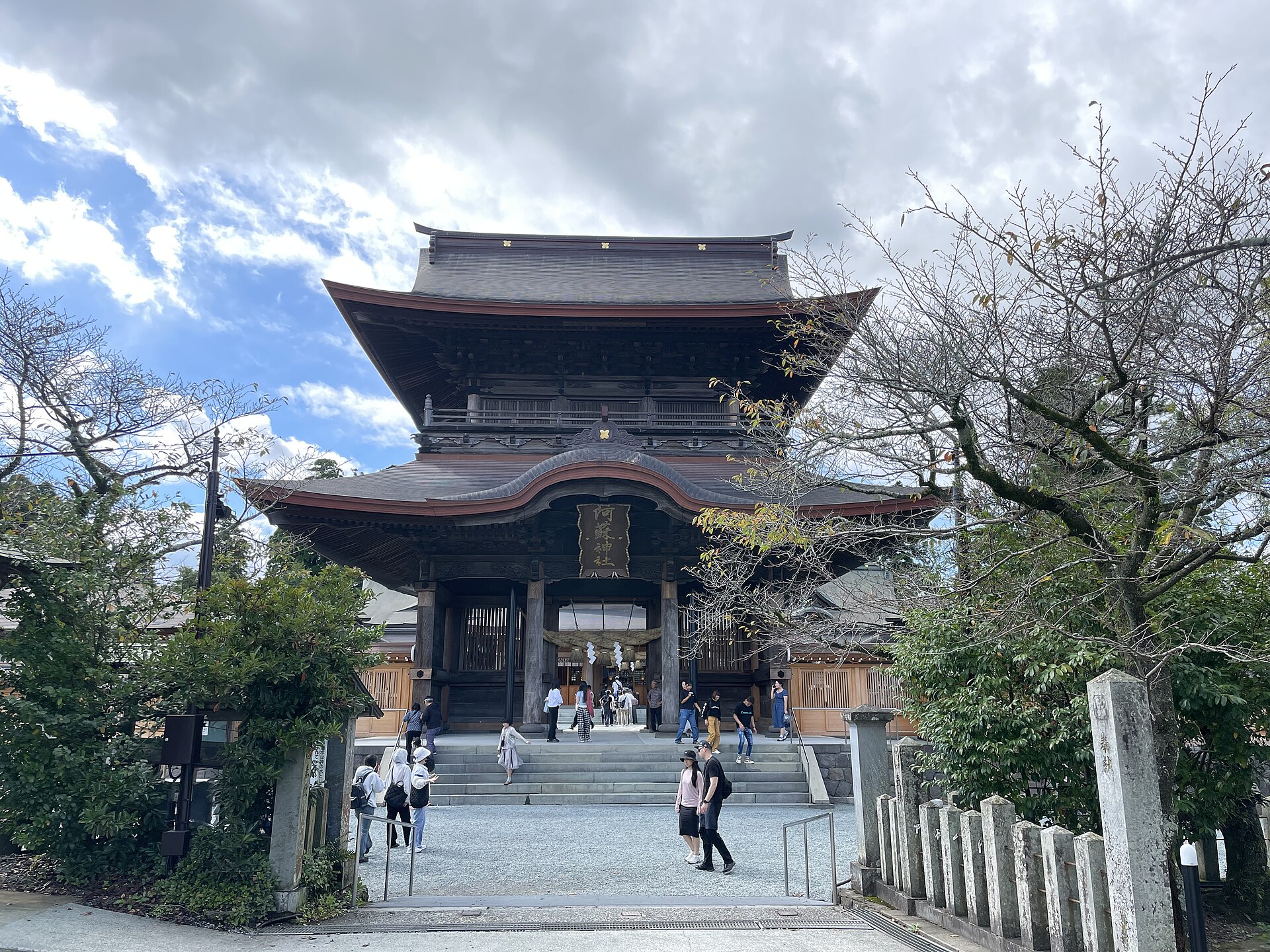
Aso Shrine Romon Gate
27.3 km · straight line
Distances are straight lines on the map, not travel times.