Oita · TaketaNo.897★★Open in map →
Nagayu Onsen
— Carbonated hot springs in the Serikawa valley
A spa town in the uplands of Taketa where the water carries dissolved carbon dioxide. The baths run cool, the bubbles settle on your skin, and public taps along the street invite you to drink the water as well as sit in it.
- FromOita Station
- ~2 hr from OitaJR Hohi Line + valley bus
- Get off atBungo-Taketa Station (JR Hohi Main Line)
- From there
- Nagayu Onsen
The sweet spot
Nagayu is well known inside Japan as a place to take a cure, so it is not a discovery. It stays unhurried because of what the water asks of you. A carbonated bath is worked slowly and drunk between soaks, and a town organised around that rhythm does not fill and empty the way a sightseeing hot spring does.
Where it is
12 more notes in Oita · open the map →What to look for — in walking order
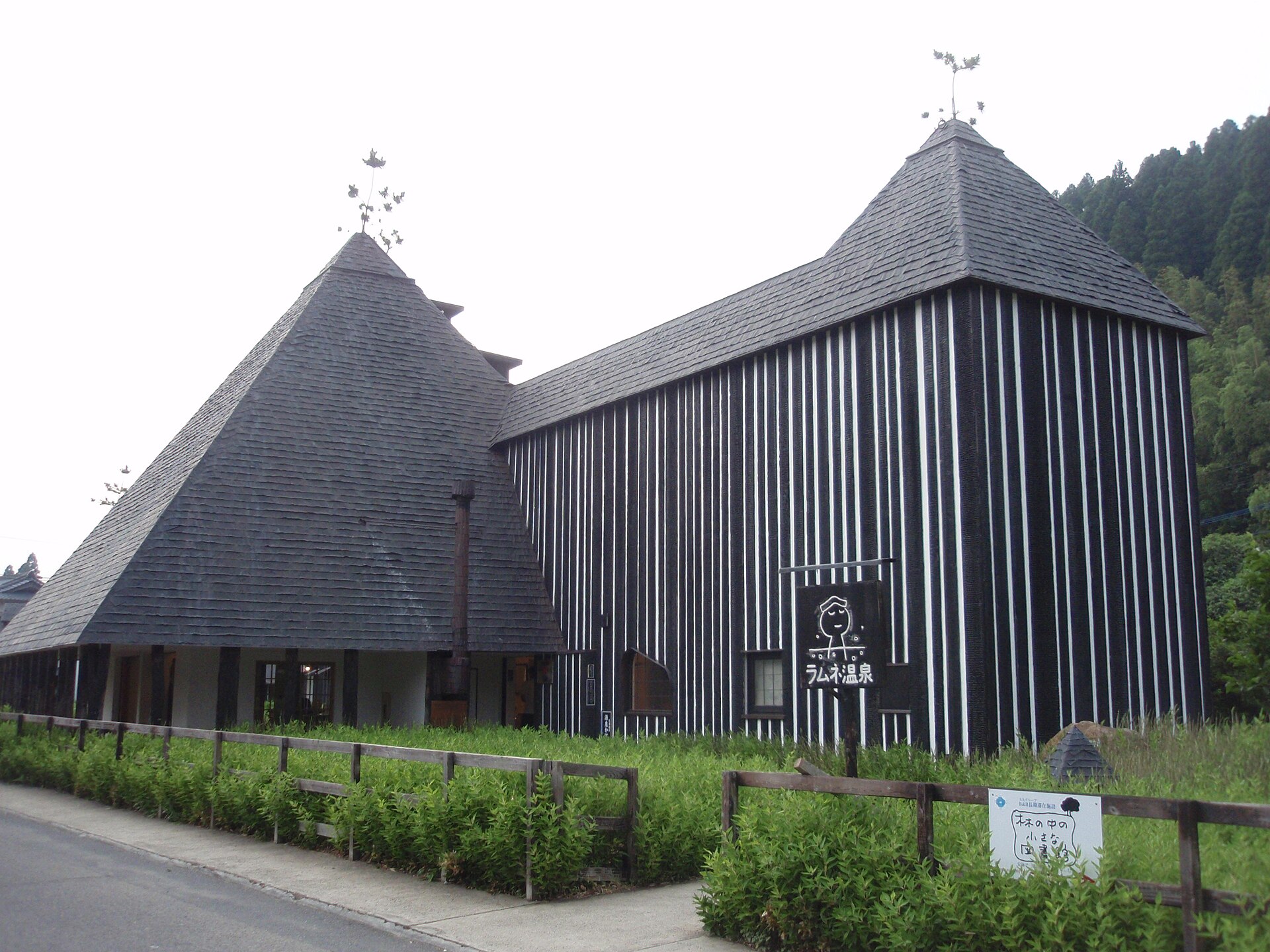
- Lamune Onsen-kana charred-cedar and plaster bathhouse by Terunobu Fujimori, with a bubble bath outdoors at 32°C
- The drinking tapspublic spouts along the street where the carbonated water is taken by the cup
- Gozenyuthe municipal bathhouse on the riverbank, on the site the Oka lords used
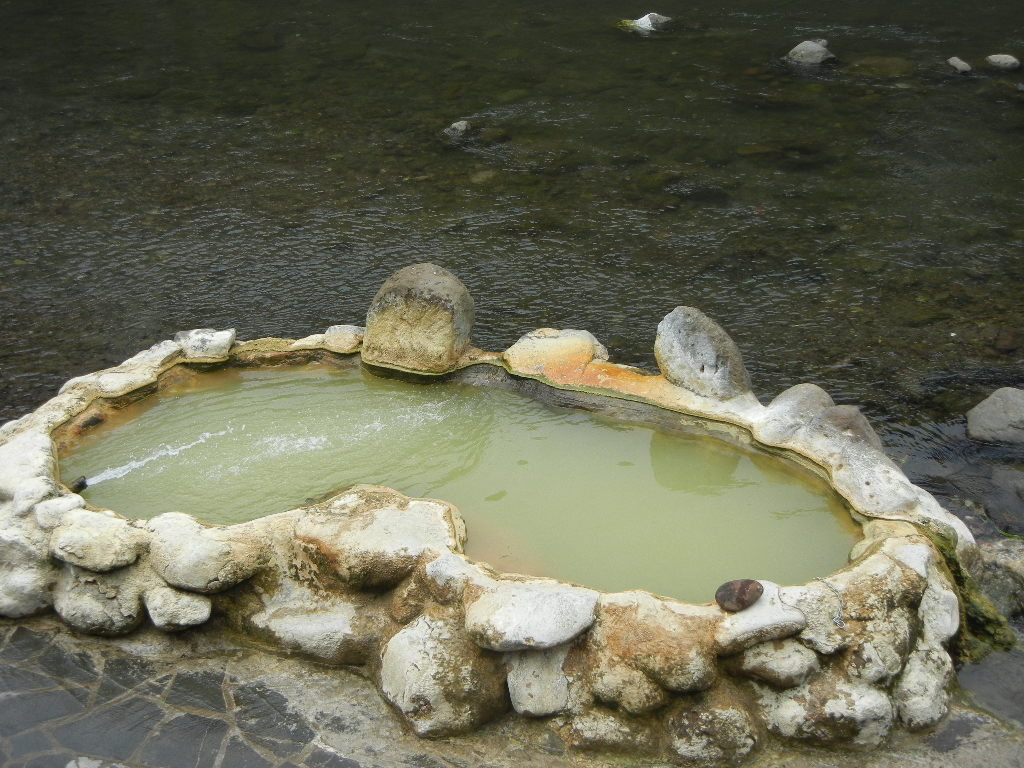
- Gani-yua free stone tub set among the boulders of the Serikawa riverbed, open to the sky and the road
- Michi-no-Eki Nagayu Onsenthe roadside station at the top of the town, with parking and local produce
How to actually get there
- Oita Station → Bungo-Taketa Station (JR Hohi Main Line).
- Bungo-Taketa Station → Nagayu (Ono-Taketa Bus up the Serikawa valley, roughly forty to fifty minutes).
- Walk the valley from Lamune Onsen-kan down to the riverbed tub; the bathhouses are a few minutes apart on foot.
- Check the last bus down before the final soak.
- JR Hohi Main Line, then the valley bus
- Oita Station →(JR Hohi Main Line)→ Bungo-Taketa Station, then an Ono-Taketa Bus service that climbs the Serikawa valley to Nagayu in roughly forty to fifty minutes. Both legs run to a country timetable, so pair the train and the bus before you set out rather than after you arrive.
- Return down the valley
- The same bus works back down to Bungo-Taketa, but departures are few and the last one is not late. Note the return time when you get off, because there is no walking alternative and no second route out of the valley.
About the place
Nagayu sits in the Serikawa valley in the uplands of Taketa, and the water that comes up here carries dissolved carbon dioxide. In a carbonated bath the gas comes out of solution against your skin and clings to it as a coat of fine silver bubbles. The water is cooler than most Japanese hot springs, which changes the whole shape of a visit: you stay in far longer than you would in a scalding tub, and the town is built around that. Bathhouses and inns line both banks, a stone tub sits out in the riverbed itself, and taps for drinking stand along the streets.
How to enjoy it
Give the water time. A carbonated bath is worked slowly, and the local pattern is a long sit in the cooler outdoor tub rather than a short hot one. Drink from a street tap between baths — that is half of what the town is for — then walk the bank to see the stone tub sitting in the bed of the Serikawa.
Background & history
Nagayu's baths began as a retreat for the lords of the Oka domain in the Edo period, who had a bathhouse built over the springs so they could stay and take the water. The municipal bath that stands on the site still carries the name Gozenyu, the lord's bath. Taketa is twinned with Bad Krozingen, a German spa town built on the same kind of carbonated water, and that link shows in how the springs are presented here — as a course of treatment rather than a night out. Lamune Onsen-kan, the town's other landmark bath, is the work of the architect Terunobu Fujimori.
Before you go
- Cash
- The stone tub in the riverbed is free and always open. The indoor bathhouses charge per entry, with rates posted at each door. Carry cash and small change; this is a spa town of separate small operators rather than one ticketed resort.
- Good to know
- Each bathhouse keeps its own closing day, and the main ones take a weekday off once a month, so check before planning around a single building. The riverbed tub has no changing room and stands in full view of the road and the inns above it — most visitors treat it as a landmark rather than a bath.
- Another way
- By car the valley is reached from the Oita Expressway at Yufuin and over the Kuju uplands. The roadside station at the top of the town has parking and doubles as the place to stop for local produce.
- After you get off
- Bungo-Taketa Station is the rail end of the trip, not the destination. The bus stand is outside the station building, and the ride up the valley takes most of an hour. In Nagayu the stops are on the through road, a few minutes above the river and the bathhouses on its banks.
Nearby notes
 As6673 / Public domain
History · Oita★★★
Oka Castle Ruins
11.3 km · straight line
 TANAKA Juuyoh (田中十洋) / CC BY 2.0
Nature · Oita★★★
Kokonoe Yume Otsurihashi
18.5 km · straight line
 HyunJae Park / Public domain
Onsen · Oita★★★
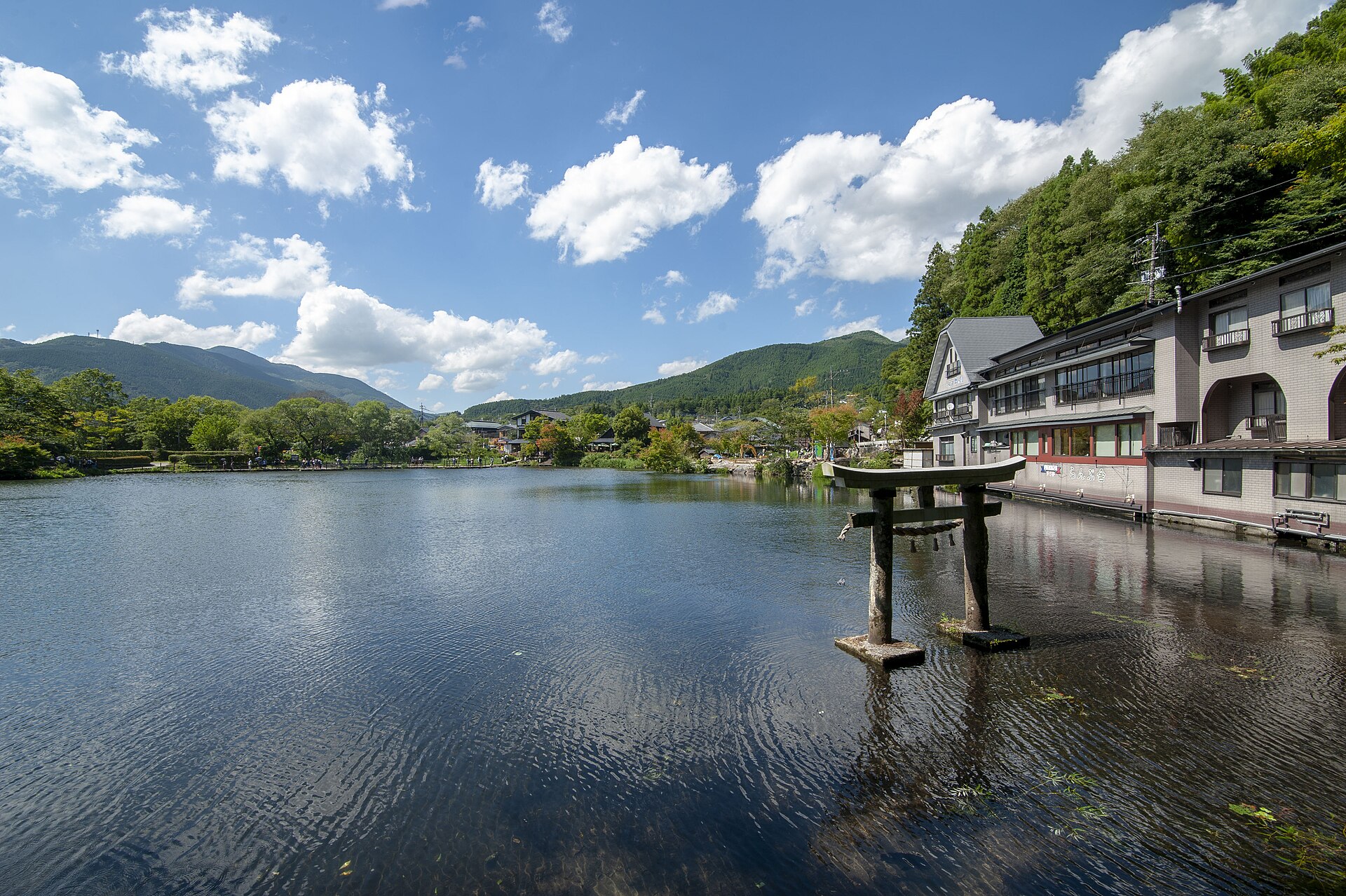
Lake Kinrin
22.1 km · straight line
 Tzu-hsun, Hsu / CC BY-SA 4.0
Onsen · Kumamoto★★★
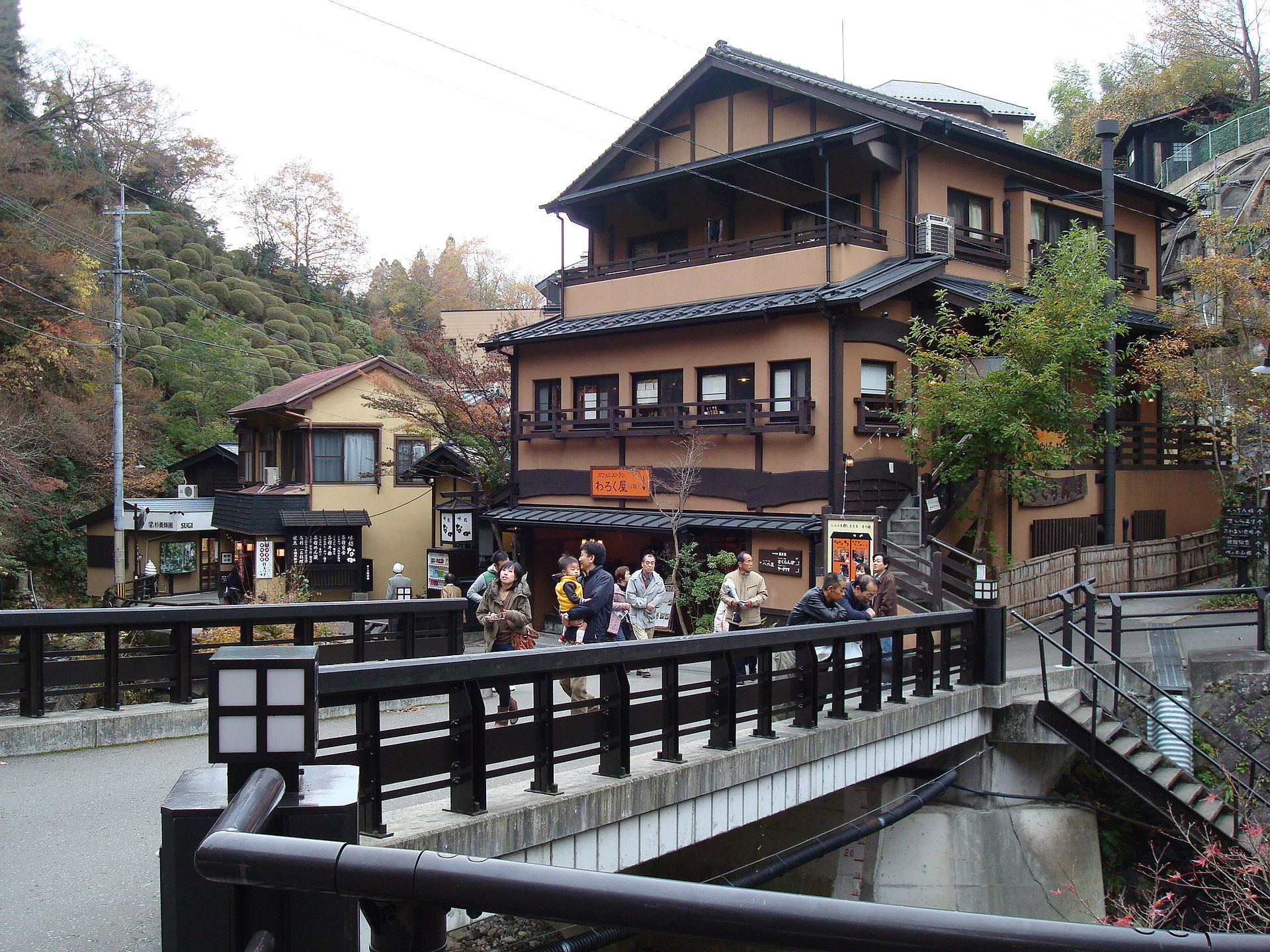
Kurokawa Onsen
22.2 km · straight line
Distances are straight lines on the map, not travel times.