Oita · KokonoeNo.880★★★Open in map →
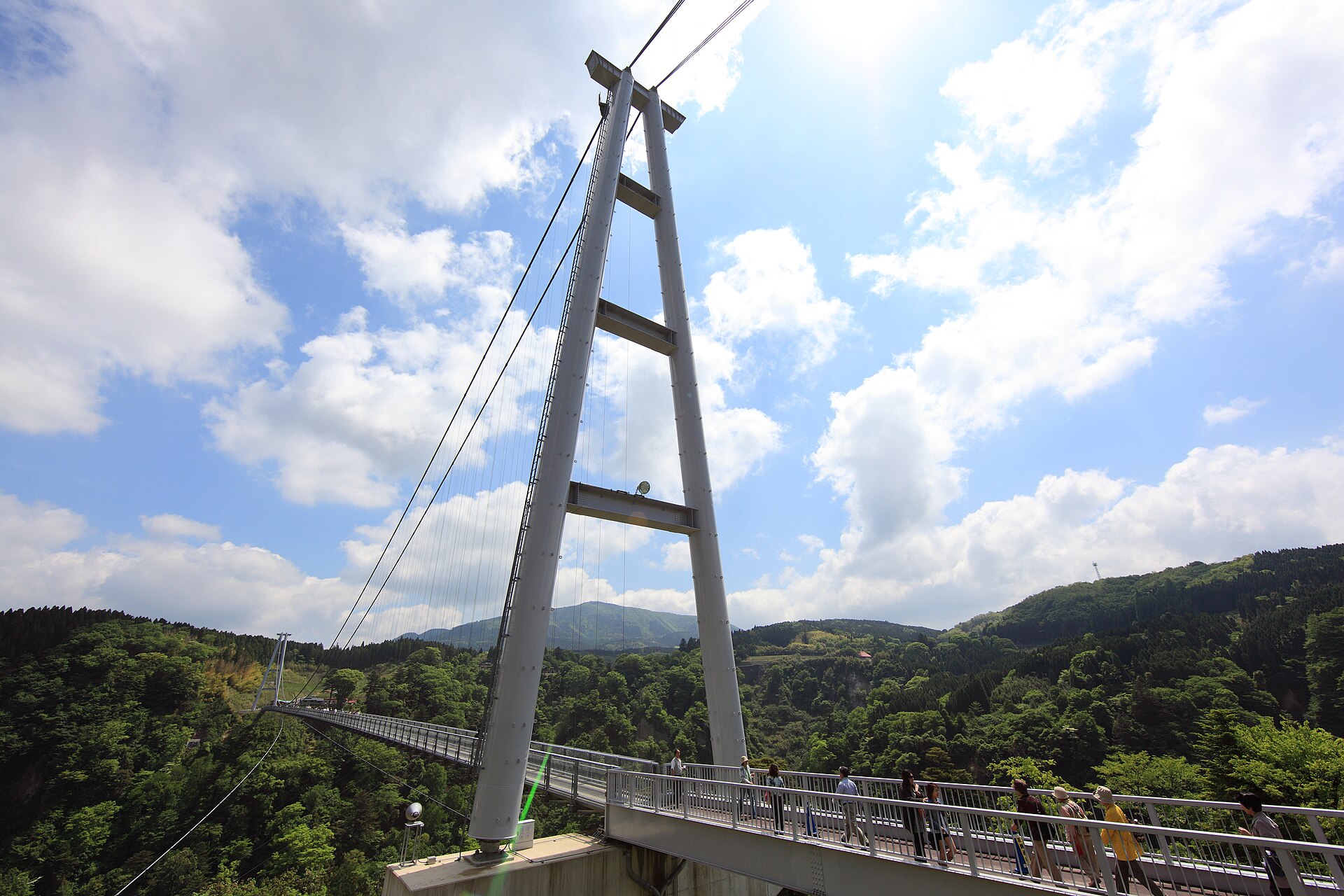
Kokonoe Yume Otsurihashi
— Japan's highest bridge built only for people on foot
A pedestrian-only suspension bridge strung across a gorge in the Kuju highlands. It carries no traffic and leads nowhere in particular, so the crossing itself is the point, with waterfalls upstream and forest a long way down.
- FromOita Station
- ~2 hrJR then town bus
- Get off atOtsurihashi Nakamura-guchi (Kokonoe town bus)
- On foot
- Kokonoe Yume Otsurihashi
Where it is
12 more notes in Oita · open the map →What to look for — in walking order
- Nakamura-side gatethe main entrance beside the large free car park, with the information desk
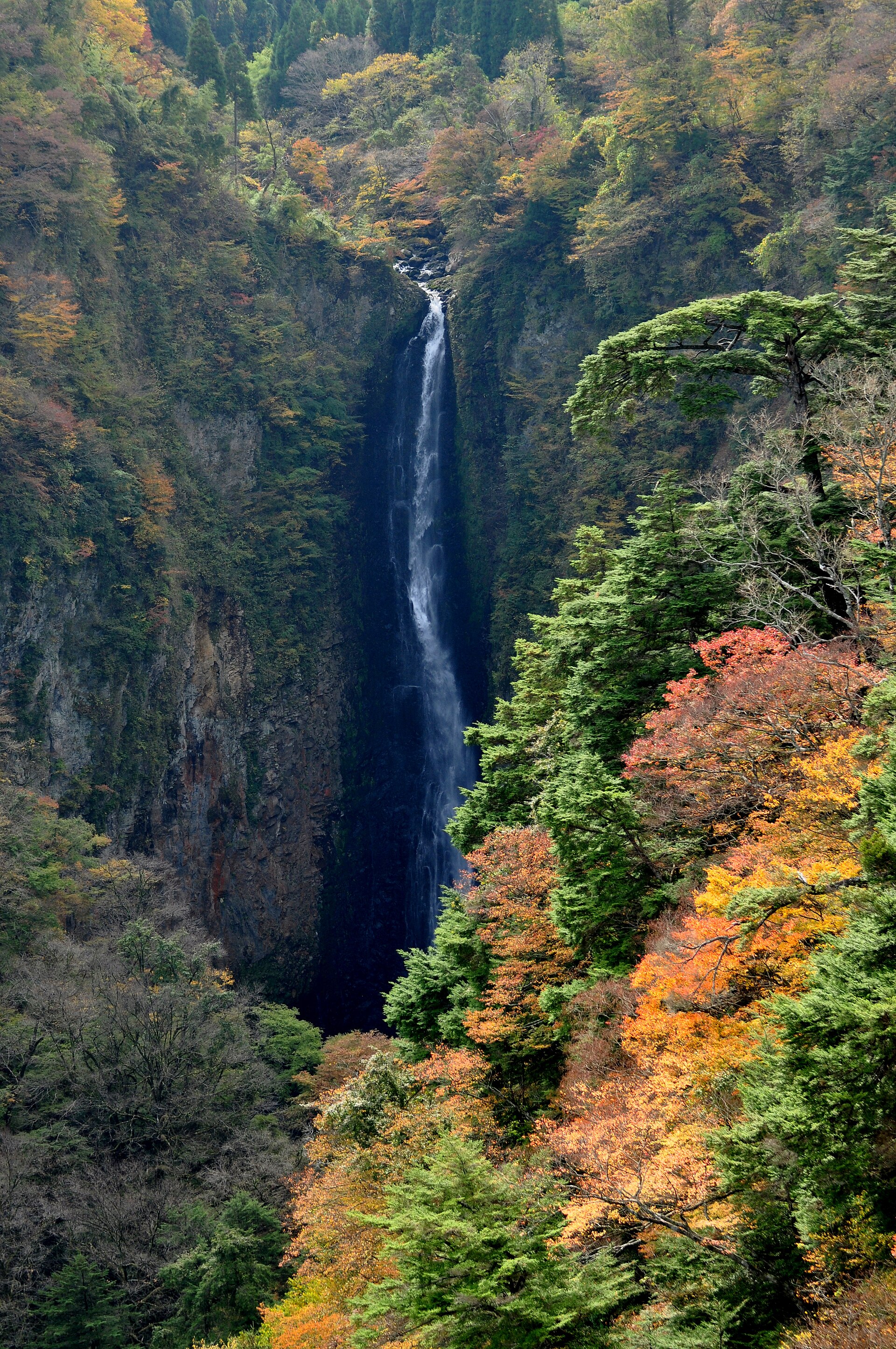
- Shindo Falls, the male fallone of Japan's hundred selected waterfalls, upstream and to the left as you cross
- Shindo Falls, the female fallthe slimmer drop of the same pair, set further back into the cleft
- Grating panels at mid-spansteel lattice floor at the centre of the deck, open straight down to the river
- Kitagata sidethe far landing, with a smaller car park and a stall selling local produce
How to actually get there
- Oita Station → Bungo-Nakamura Station (JR Kyudai Main Line).
- Bungo-Nakamura Station → Otsurihashi Nakamura-guchi (Kokonoe town bus, Judan Line).
- Walk up through the car park to the Nakamura-side gate and buy a crossing ticket.
- Cross to the Kitagata bank, then walk back the same way, keeping left both times.
- JR and the town bus from Oita
- Oita Station →(JR Kyudai Main Line)→ Bungo-Nakamura Station, then the Kokonoe town bus on its Judan Line, which runs daily between Kusu, Bungo-Nakamura Station and the Kuju trailheads. The fare is flat at 500 yen for an adult however far you ride, seats are not reserved and no booking is taken, and the stop for the bridge is signed Otsurihashi Nakamura-guchi.
- Back to Bungo-Nakamura
- The same town bus returns toward Bungo-Nakamura Station and Kusu. It exists to move residents rather than sightseers, so departures are spread thinly through the day and the last one leaves earlier than a visitor expects. Read the timetable at the stop before you cross, not after.
About the place
The deck runs 390 metres and hangs 173 metres above the water, which makes this the highest bridge in Japan built for people on foot. It is also narrow: 1.5 metres between the handrails. The crossing therefore feels less like a viewing platform than a line drawn through open air. The structure is rated for about 1,800 adults at once, though the gate is closed long before that. Panels of steel grating at mid-span open the floor to the gorge below, and the Kuju range fills the horizon on either side.
How to enjoy it
The gate opens at 8:30 and closes at 17:00 from November through June, and at 18:00 from July through October, with tickets sold until half an hour before closing. Staff ask everyone to keep left, because from the Nakamura side that puts the falls in front of you rather than over your shoulder. There is no closing day, but weather can shut the deck at short notice.
Background & history
The bridge is recent. It opened on 30 October 2006, built and run by the town of Kokonoe itself rather than by the prefecture or the state, at a total cost of around two billion yen and with no subsidy from either. The town had gambled that visitors would pay to walk across a gorge, and the gamble worked: arrivals ran far ahead of the figures written into the plan. The ten millionth ticket was sold in March 2017.
Before you go
- Cash
- Crossing costs 500 yen from junior-high age upward and 200 yen for primary-school children, with younger children free and a reduction for groups of thirty or more. The ticket covers the gate only: the car parks, toilets and shops on both banks are open to anyone.
- Good to know
- There is no regular closing day. The deck is shut when wind passes 15 metres a second, in fog thick enough to hide people on the span, under heavy-rain or heavy-snow advisories, after a quake of shindo 4 or above until an inspection is finished, and whenever more than 800 people are already crossing. Umbrellas are not allowed on the bridge; a rain jacket is.
- Another way
- By road it is about twenty minutes from Kokonoe interchange on the Oita Expressway, and express coaches between Fukuoka, Oita and the Kuju area call at the interchange itself. Sightseeing coaches also run up from the Beppu and Yufuin hot-spring towns.
- After you get off
- The stop stands beside the big car park on the Nakamura bank, below the bridge. Walk up through the car park and past the produce shop; the ticket windows are at the head of the slope, and the gate is immediately behind them.
Nearby notes
 Tzu-hsun, Hsu / CC BY-SA 4.0
Onsen · Kumamoto★★★
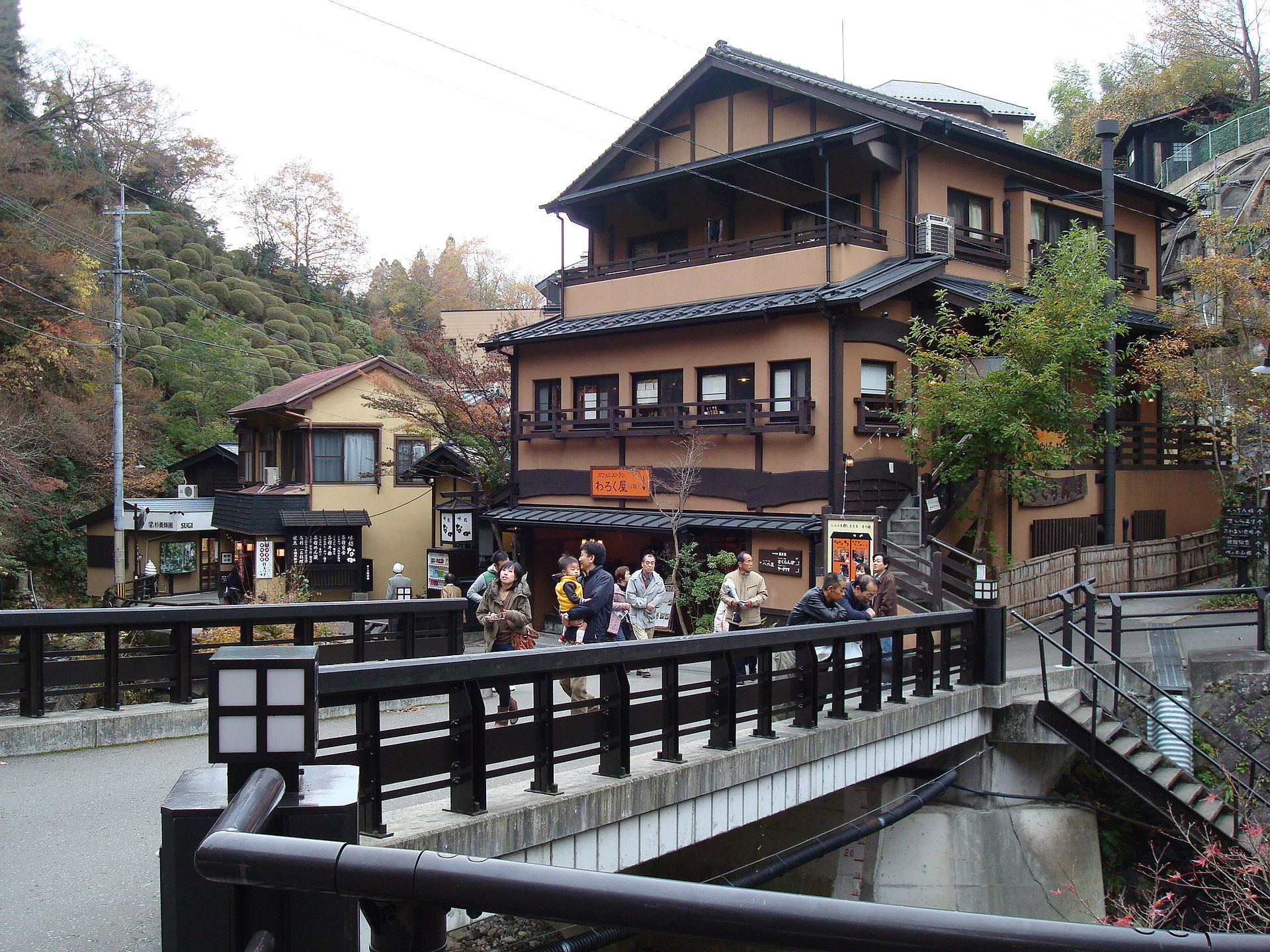
Kurokawa Onsen
13.3 km · straight line
 HyunJae Park / Public domain
Onsen · Oita★★★
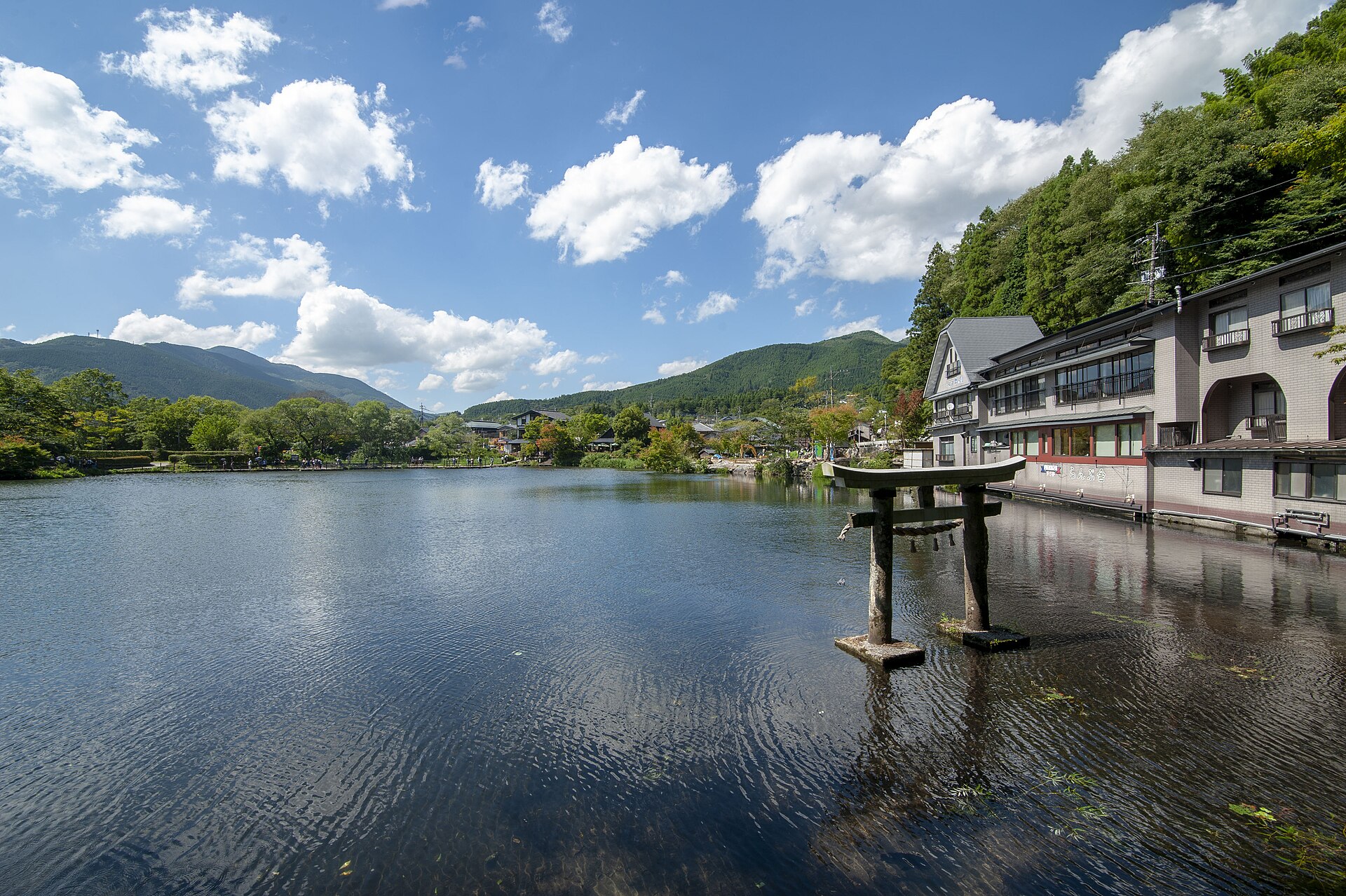
Lake Kinrin
16.8 km · straight line
 Sanjo / CC BY-SA 4.0
Onsen · Kumamoto★★
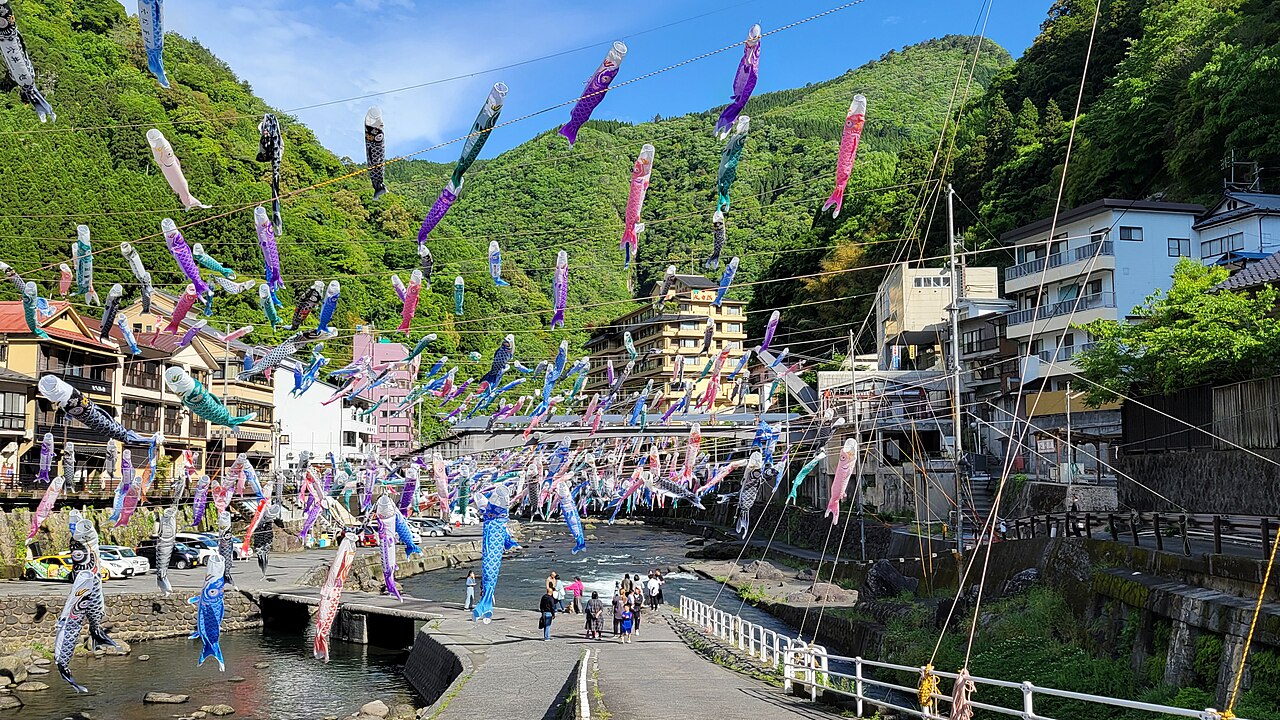
Tsuetate Onsen
17.9 km · straight line
 Big Ben in Japan / CC BY-SA 2.0
Nature · Kumamoto★★★
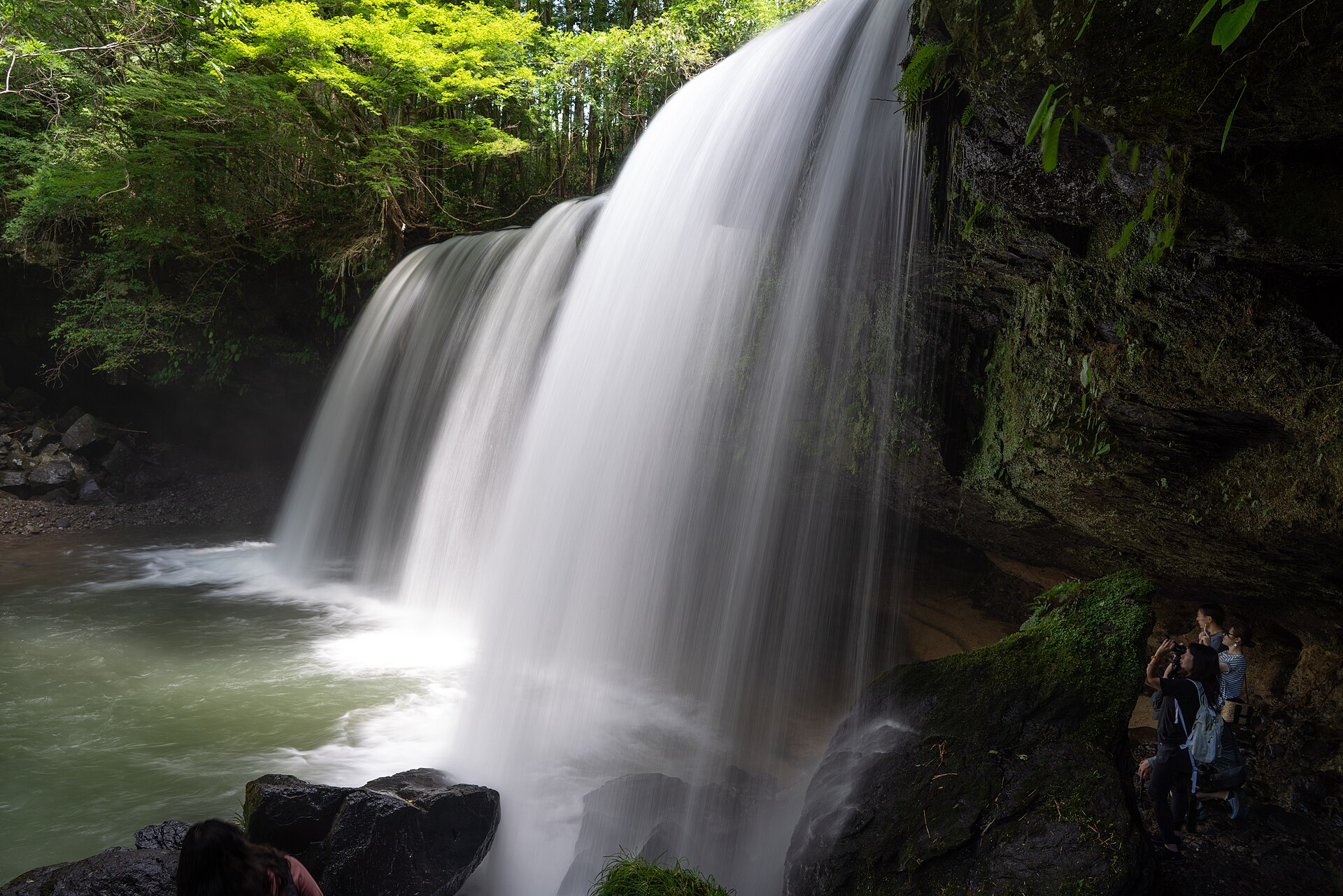
Nabegataki Falls
18.2 km · straight line
Distances are straight lines on the map, not travel times.