Aizu · ShimogoNo.576★★★Open in map →
Ouchi-juku
— A thatched post town on the old Shimotsuke Kaido
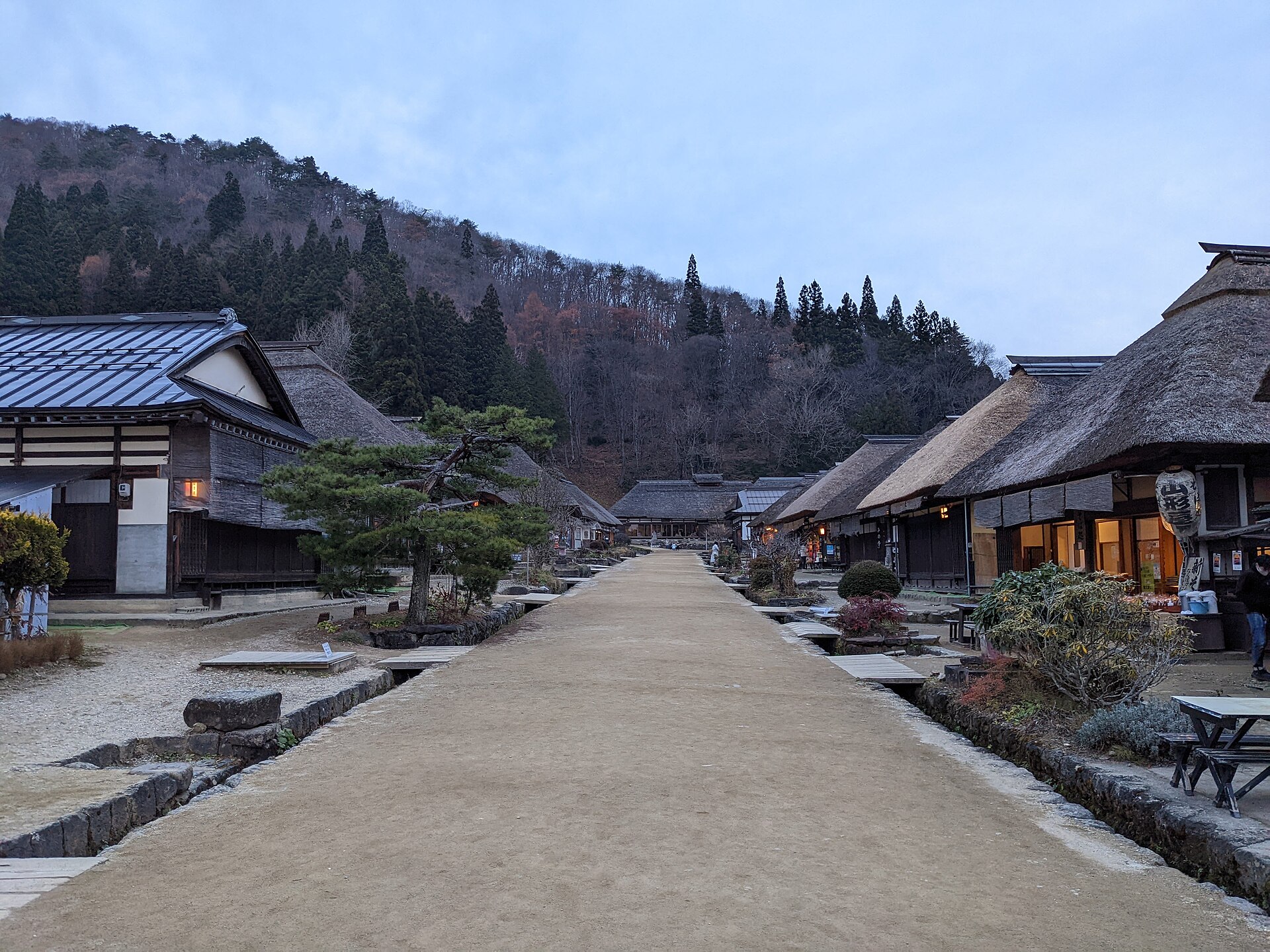
A single street of thatched farmhouse-inns in the Aizu mountains, standing on a highway that lost its traffic in the Meiji era and was never redeveloped. Listed as a preservation district, and still lived in rather than staffed.
- FromAizu-Wakamatsu Station
- ~1 hrAizu Railway, then shuttle bus
- Get off atYunokami-Onsen Station (Aizu Railway Aizu Line)
- From there
- Ouchi-juku
Where it is
20 more notes in Fukushima · open the map →What to look for — in walking order
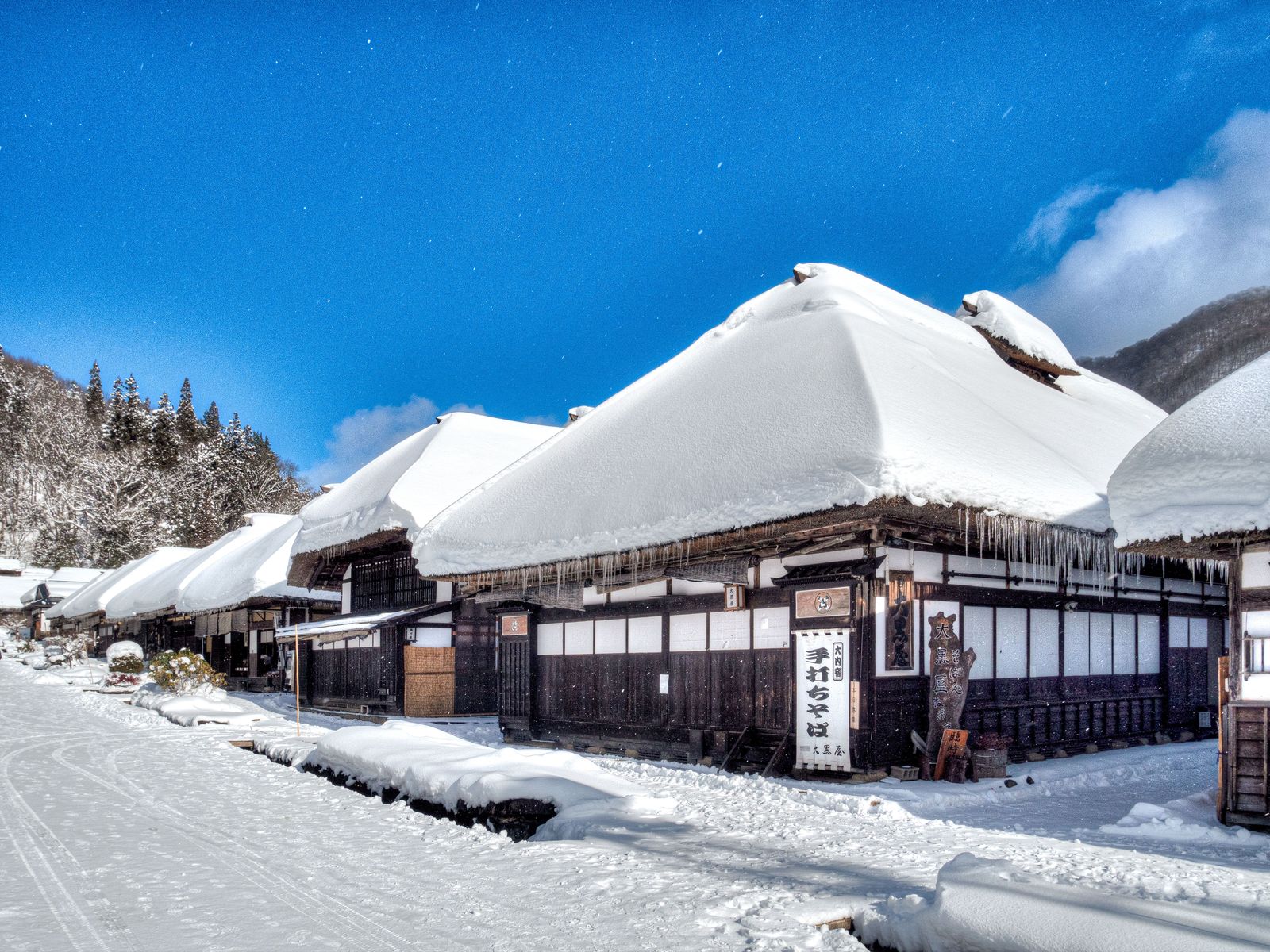
- The two rows of thatched roofsfarmhouse-inns facing each other down the length of the street, still lived in
- Ouchi-juku Townscape Museuma rebuild of the honjin, the official lodging, holding tools and photographs of the working village
- The soba housesshopfronts serving Takato soba, eaten with a whole spring onion in place of chopsticks
- The sweet and snack stallstochimochi pounded with horse-chestnut, shingoro rice cakes, and honey sold from the frontages
How to actually get there
- Aizu-Wakamatsu Station → Yunokami-Onsen Station (Aizu Railway Aizu Line, roughly hourly).
- Yunokami-Onsen Station → Ouchi-juku (Saruyu-go shuttle bus in season, or taxi).
- Walk the street end to end, then read the honjin rebuild at the Townscape Museum.
- Eat the onion soba, then take the same road back for your train.
- Aizu Railway from Aizu-Wakamatsu
- Aizu-Wakamatsu Station →(Aizu Railway Aizu Line)→ Yunokami-Onsen Station. Trains run roughly once an hour along the whole line, and the AIZU Mount Express rapid stops here too, so this is a journey to plan around a timetable rather than turn up for. The station building itself is thatched, which is a fair warning of what is coming.
- Return from Yunokami-Onsen Station
- Back down the same line to Aizu-Wakamatsu, where the JR Ban'etsu West Line continues toward Koriyama. The last connections out of the valley go early, and the shuttle bus from the village finishes before the trains do, so fix your return before you start eating.
About the place
Ouchi-juku is one street of thatched houses standing on the Shimotsuke Kaido, the road that carried traffic between Aizu and the Kanto plain by way of Nikko. It worked as a post town where travellers stopped and horses were changed, and its households farmed at the same time, so the village was half inn and half farm. When the Meiji era redrew the transport map, the road went quiet and the village was passed over rather than rebuilt. Residents later set down a charter for themselves — do not sell, do not lend, do not destroy — and it is the reason the frontages have stayed as they are.
How to enjoy it
Most of the street is open from around nine in the morning until about four in the afternoon, and the association says as much — outside those hours you can walk it, but little will be trading. Eat the soba with the onion; it is not a stunt, it is how the dish arrived here from Takato with the lord who grew up there. In winter the snow banks up to the eaves, and the snow festival falls on the second weekend of February.
Background & history
The village grew as a stage on the Shimotsuke Kaido during the Edo period, serving the road while working its own fields. The Meiji era moved the traffic elsewhere; the road faded, and because nothing came to replace it the houses stayed. Preservation began with the residents, who wrote their own rule against selling, lending or demolishing, and the state followed in 1981 by listing Ouchi-juku as an Important Preservation District for Groups of Traditional Buildings. What the listing protects is the shape of the settlement rather than any single roof.
Before you go
- Cash
- Walking the street costs nothing. Parking is charged if you drive in, and the shops, soba houses and museum are small operations in a mountain village, so carry cash rather than relying on cards.
- Good to know
- This is heavy snow country and the village is at altitude: paths are cleared but narrow in midwinter, and boots matter more than they look like they will. The shuttle bus from the station runs in the green season only, so a winter visit means a taxi or a car. Shops shut in the late afternoon, earlier than the light does in summer.
- Another way
- By car, the village is about fifteen minutes from Yunokami-Onsen Station on the valley road, with paid parking at the entrance to the street.
- After you get off
- From Yunokami-Onsen Station the last few kilometres are covered by the Saruyu-go shuttle bus, which runs in the tourist season, or by taxi at any time of year. The bus sets down at the foot of the street, and you walk in from there rather than through the village.
Nearby notes
 Kohei Fujii / CC BY-SA 2.0
Nature · Fukushima★★
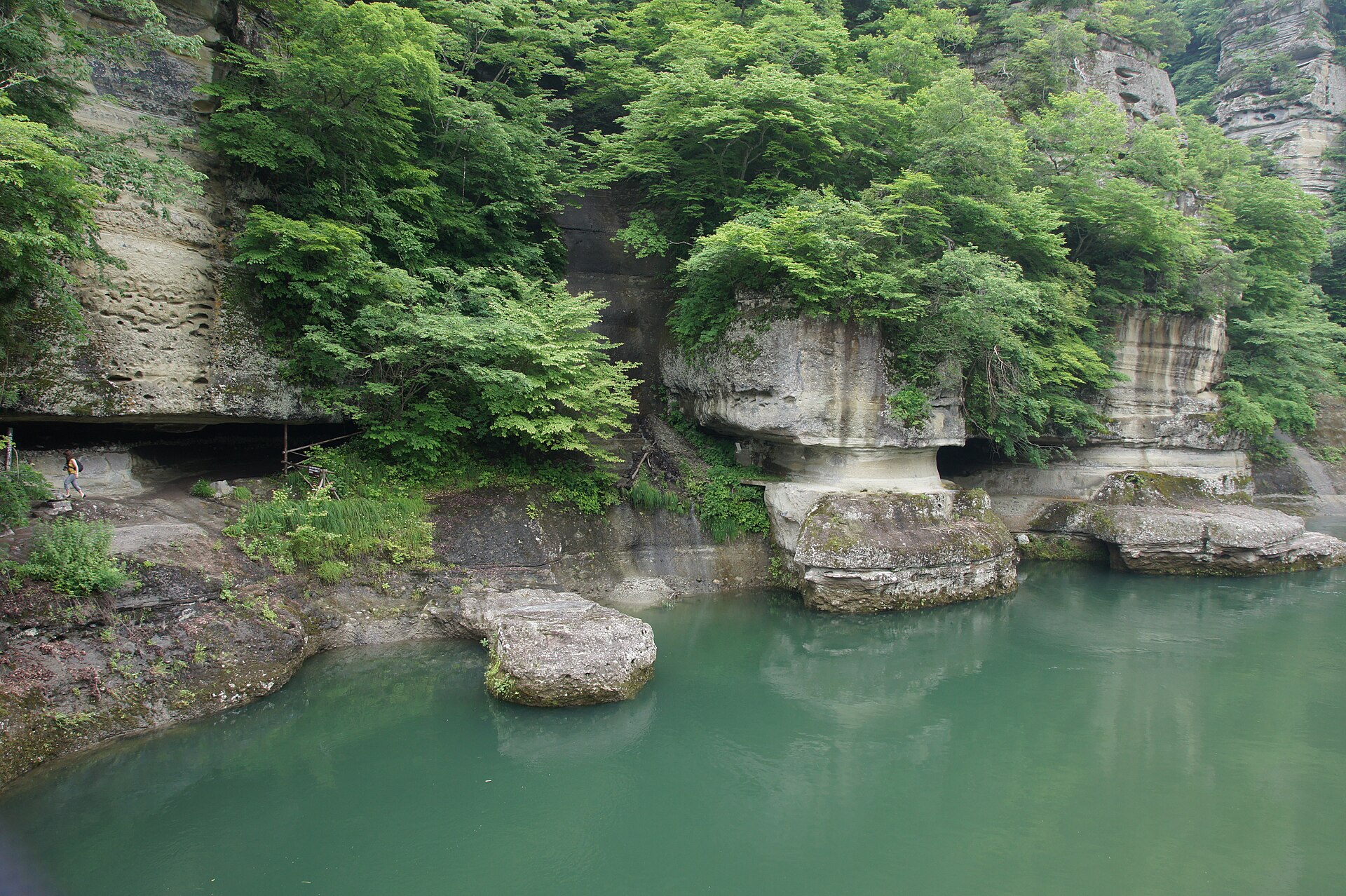
To-no-Hetsuri Cliffs
7.8 km · straight line
 Bernie Ongewe / CC BY-SA 4.0
History · Fukushima★★★
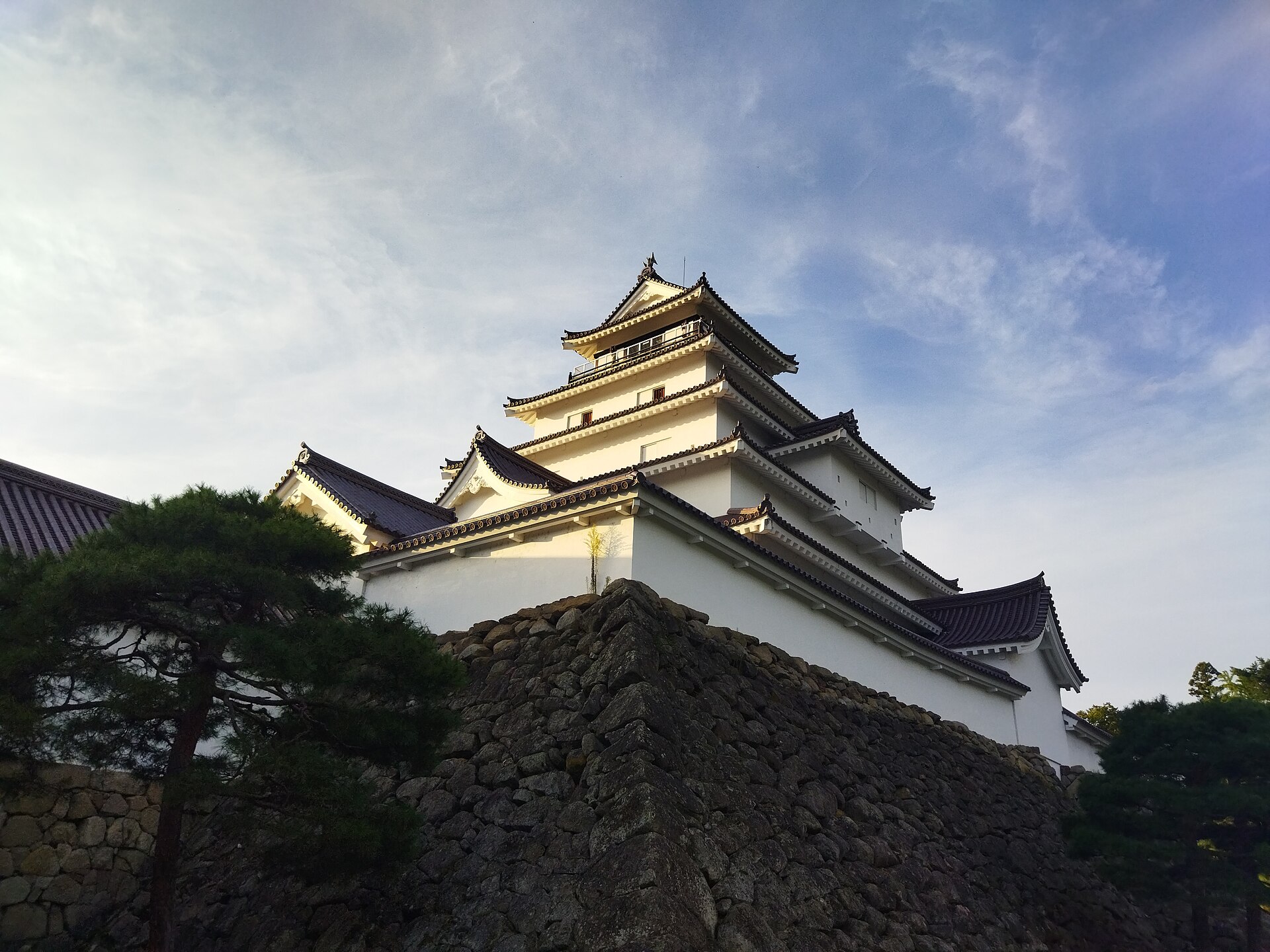
Tsuruga Castle
18.1 km · straight line
 Raita Futo / CC BY 2.0
Onsen · Fukushima★★
Higashiyama Onsen
18.3 km · straight line
 ganden / CC BY 4.0
History · Fukushima★★
Aizu Bukeyashiki
18.7 km · straight line
Distances are straight lines on the map, not travel times.