North Hokkaido · SarufutsuNo.1143★★Open in map →
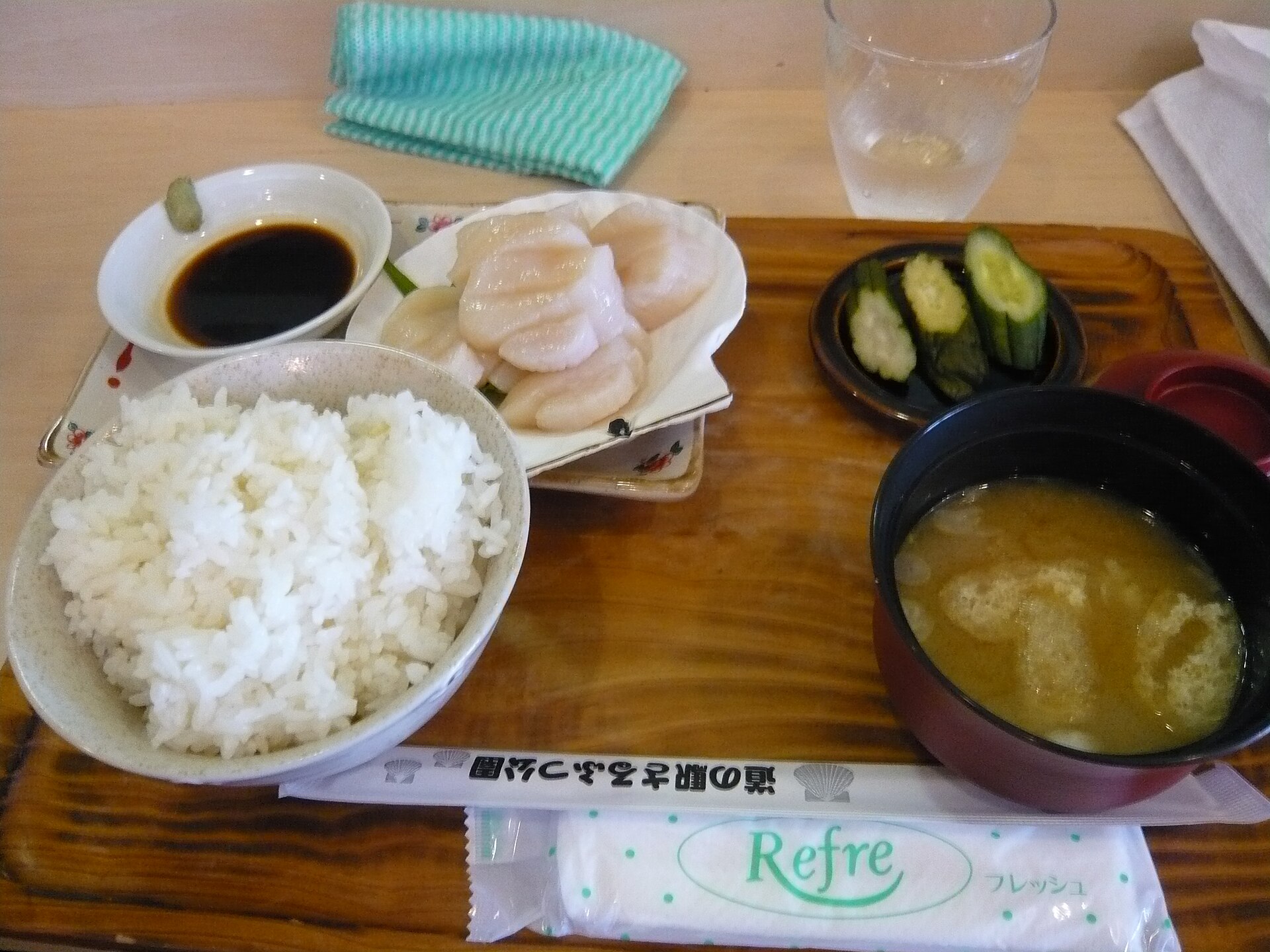
Sarufutsu Scallops
— Japan's top scallop village on the Okhotsk coast
A village-run roadside park on the Okhotsk coast, where the scallops that made Sarufutsu's name are sold, cooked and eaten within sight of the water they were dredged from. The bus from Wakkanai stops at the gate.
- FromWakkanai Station
- ~2 hrSoya Bus, a few runs a day
- Get off atSarufutsu Koen-mae (Soya Bus, Tenpoku-Soyamisaki Line)
- On foot
- Sarufutsu Scallops
The sweet spot
This is not a hidden place. The village puts scallops on its own signboard, and the road round Cape Soya brings traffic past the gate. What is easy to miss is that the park is village infrastructure rather than a tourist complex. The shop runs on a spring-to-autumn season, the roadside station counter shortens its day in the cold months, and the bus that reaches the door comes a handful of times. The scallop is not a souvenir bolted on afterwards. It is the thing the village rebuilt itself around.
Where it is
102 more notes in Hokkaido · open the map →What to look for — in walking order
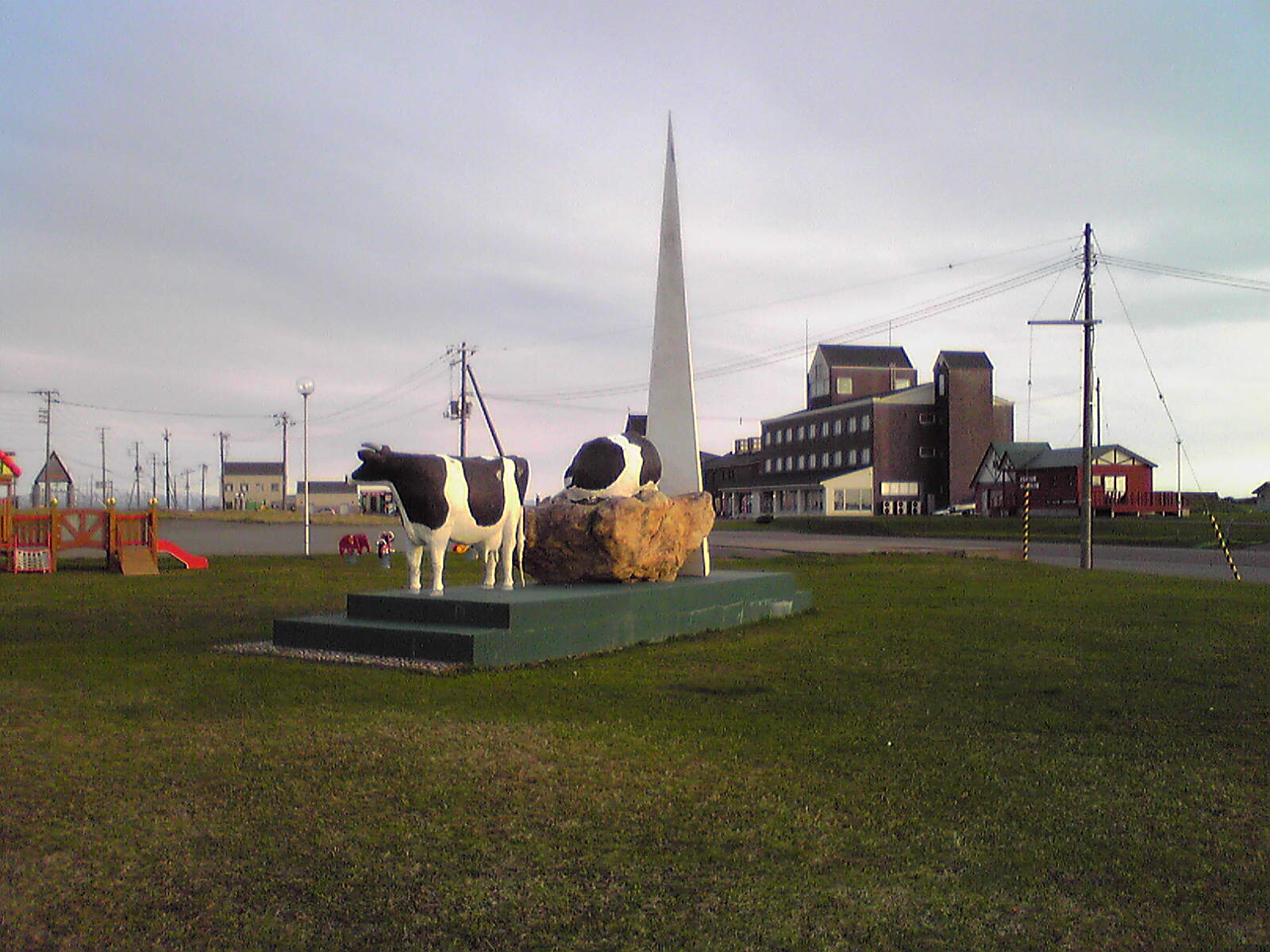
- The roadside station buildingthe village counter and tourist information, first off the road
- Yumekuma shopscallop products and boxed lunches, open on a spring-to-autumn season
- Fusetsu restaurantthe dining room inside Hotel Sarufutsu, cooking scallops and other local seafood
- The lawn and its monumentsopen grass holding the fishing monument and the memorial to the Indigirka wreck offshore
- Ikoi-no-Yu bathhousethe village public bath, on the same grounds
How to actually get there
- Wakkanai Station bus terminal → Sarufutsu Koen-mae (Soya Bus, Tenpoku-Soyamisaki Line, via Cape Soya).
- Get off at the park and start at the roadside station building, nearest the road.
- Cross the lawn in turn: shop, restaurant, monuments, bathhouse.
- Check the return departure at the stop before you settle in.
- Soya Bus, Tenpoku-Soyamisaki Line from Wakkanai
- From the bus terminal in front of Wakkanai Station, take the Tenpoku-Soyamisaki Line and get off at Sarufutsu Koen-mae. The route runs out to Cape Soya, then turns down the Okhotsk shore toward Hamatonbetsu. Timetable data puts the ride at a little under two hours, and the village's own guide gives about two hours between Sarufutsu and Wakkanai. The operator runs a single year-round timetable on this line.
- Back toward Wakkanai
- Departures from this stop toward Wakkanai number two on a weekday, and services toward Hamatonbetsu and Onishibetsu run at their own separate times, so read the destination board before boarding. Fix your return before you settle in, because the next one may be hours away. Parts of this line are a free-boarding section, so ask the driver where you can be set down.
About the place
Sarufutsu is the northernmost village in Japan, strung along Route 238 where the Okhotsk Sea meets a shore of pasture and dune. Its scallops are not hung on lines. Juvenile shells are sown onto the seabed and left to fatten in open water. The grounds are cut into four blocks, one block is sown each year, and that block is dredged only in its fourth year, so a rested section comes up every season. That rotation is what carries the landings the village is known for. The place where the catch reaches anyone who turns up is Michi-no-Eki Sarufutsu Park, a village-run park on the coast road.
How to enjoy it
Official listings put the shop on a spring-to-autumn season, shorten the roadside station counter in the cold months, and open the restaurant in two blocks around midday and evening. A midday arrival therefore finds the most of the park open at once. The bus is the tighter constraint: with so few runs, the gap between the arrival you take and the departure you need is simply how long you have.
Background & history
Herring and scallop landings on this coast collapsed after the war, and the coal mines that had propped the village up closed soon after. The answer the fishery chose was to stop hunting and start growing. In 1971 Sarufutsu carried out the first large-scale release of juvenile scallops in Japan, and the grounds have been sown and rested in turn ever since. The roadside station opened on the same coast road in 1998, gathering the village shop, restaurant and bathhouse onto one lawn.
Before you go
- Cash
- Walking the park costs nothing. The shop, restaurant, bathhouse and hotel each charge separately and post their prices on site. This is a rural bus line and the fare is paid on board, so carry cash.
- Good to know
- The shop keeps a spring-to-autumn season, the roadside station counter closes earlier from November, and the New Year period is a break; confirm the date against the official listing. The park is open lawn on an exposed coast with little shelter between buildings, and the fishing season stops for the winter when sea ice reaches this shore.
- Another way
- By car it is the national road southeast from Wakkanai, round Cape Soya and down the Okhotsk shore, which the village puts at about an hour; the park has 112 spaces for cars. Carry on past it and the road reaches the Esanuka Line, a dead-straight village road with no poles or guardrails along it.
- After you get off
- The stop is named for the park and stands at its edge on the national road, so there is no walk to speak of. Cross the frontage and the buildings are in front of you.
Nearby notes
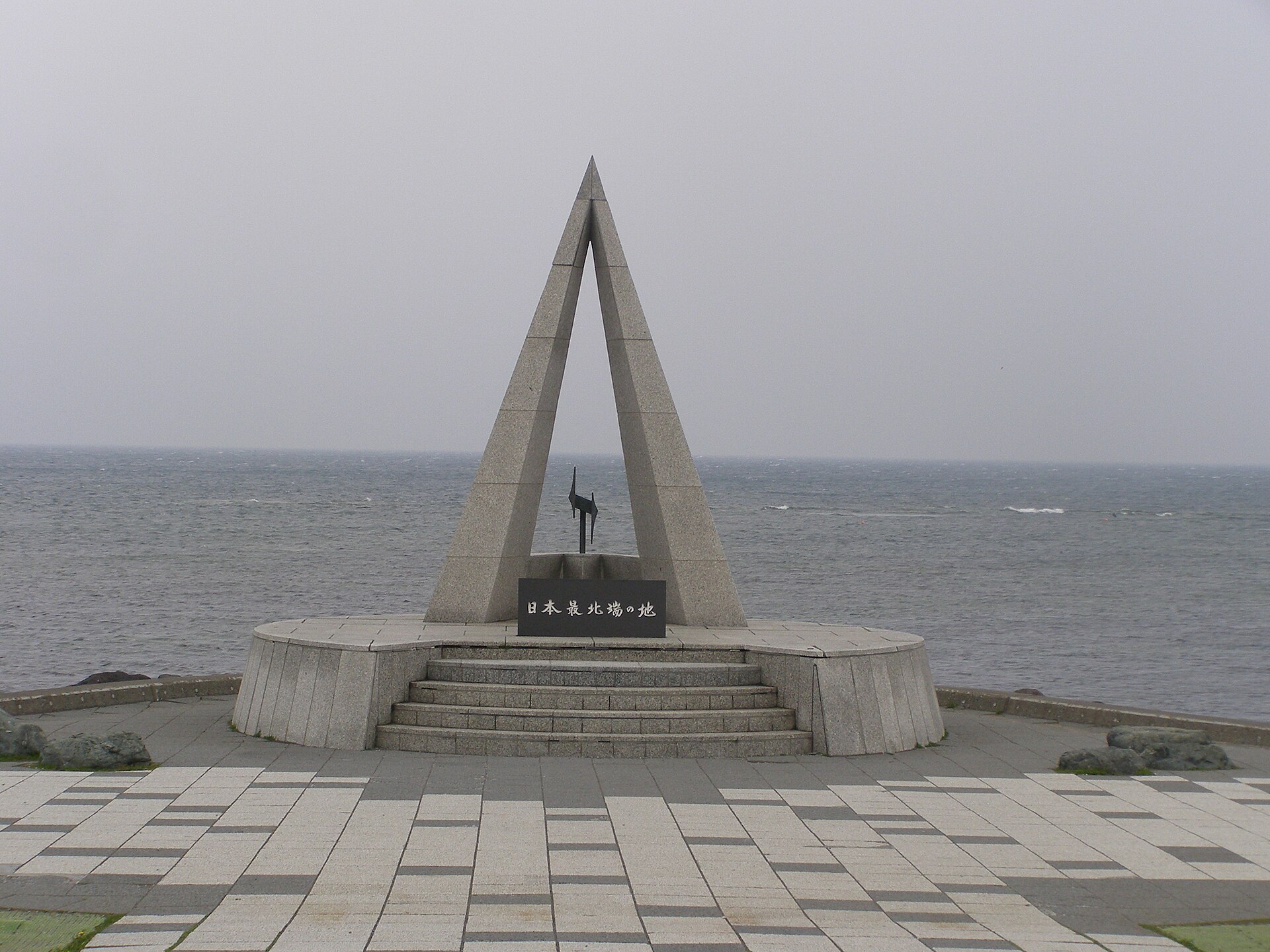
Distances are straight lines on the map, not travel times.