Okinawa · Naha ShikinaNo.684★★Open in map →
Shikinaen Royal Garden
The Ryukyuan royal villa south of Shuri, where a looping path circles a pond cut to the outline of the character for heart. Built to receive envoys from the Chinese emperor, it holds a hexagonal pavilion, an arched stone bridge and a red-tiled statehouse.
- FromNaha Bus Terminal
- ~30 minCity bus, routes 2, 3, 5 and 14
- Get off atShikinaen-mae (Naha Bus routes 2, 3, 5 and 14)
- On foot
- Shikinaen Royal Garden
The sweet spot
This is a World Heritage property inside a capital city, so it is not undiscovered. What keeps it calm is that it sits off the Shuri and Kokusai-dori circuits, reached by city bus rather than the monorail, and that the garden is designed to break sightlines — the loop hides one part of itself from another, so it never reads as full.
Where it is
41 more notes in Okinawa · open the map →What to look for — in walking order
- The heart-shaped pondwater cut to the outline of the character for heart, with the path looping its edge
- Ikutokusen springthe spring that feeds the pond, enclosed by a low curved wall of coral limestone
- The arched stone bridgea Chinese-style bridge of cut stone crossing the water
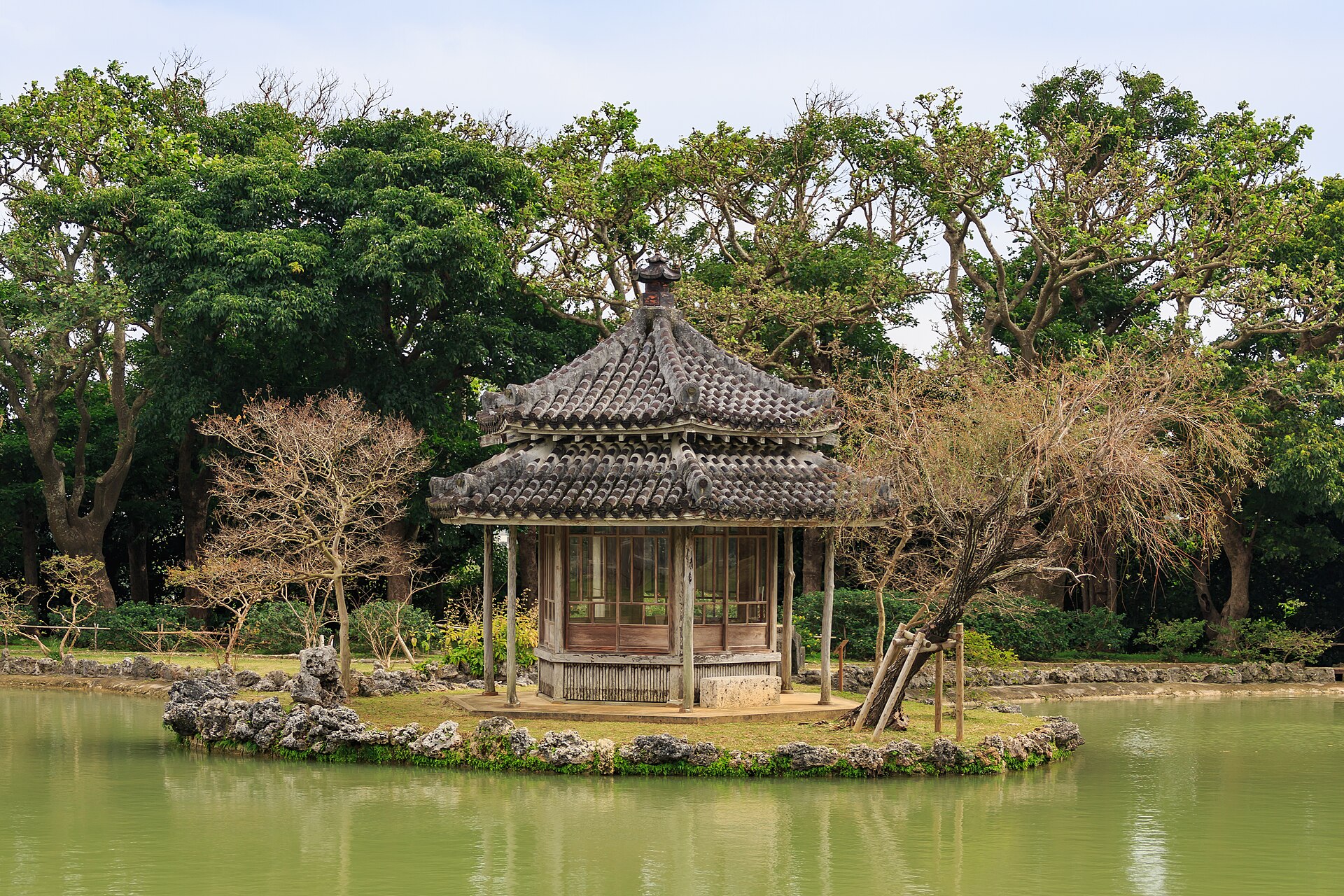
- Rokkakudothe hexagonal Chinese-style pavilion standing out above the pond
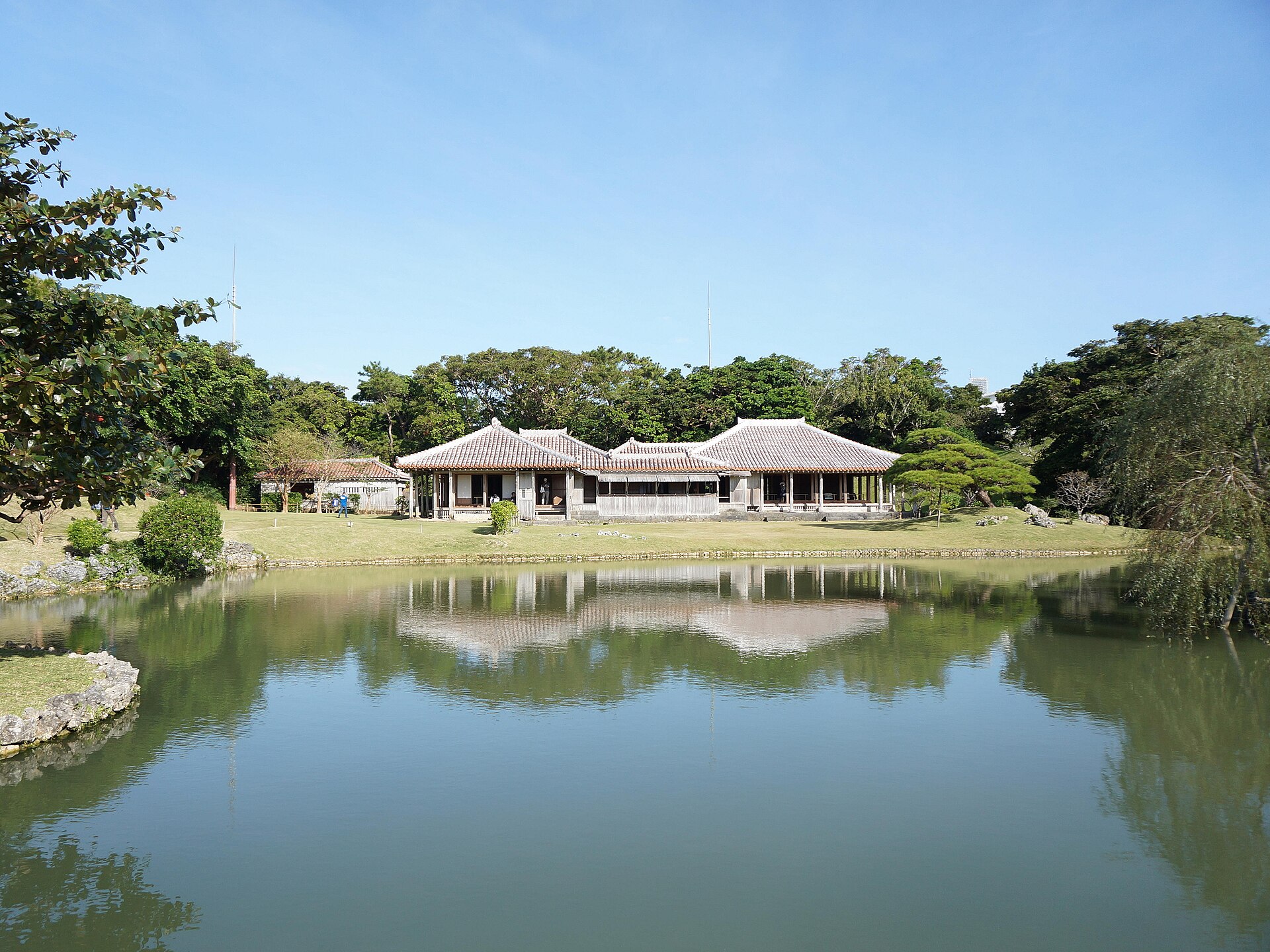
- The udun statehousethe villa's main building, low under red Okinawan roof tile
How to actually get there
- Naha Bus Terminal → Shikinaen-mae (Naha Bus route 2, 3, 5 or 14, about 30 min).
- Shikinaen-mae → the main gate (walk 1-2 min; the grounds start at the southeast corner of the junction).
- Follow the circuit path around the pond, past the spring and the stone bridge to the pavilion and the statehouse.
- Carry on to the Kankodai terrace at the far side before returning to the gate.
- Naha Bus from Naha Bus Terminal
- Naha Bus Terminal → Shikinaen-mae, about 30 minutes on city routes 2, 3, 5 or 14. Routes 2 and 3 stop just west of the Shikinaen-mae junction; routes 5 and 14 use a stop of the same name about a minute further north, so check which one you have been dropped at.
- Return from Shikinaen-mae
- The same routes run back down into central Naha, and route 14 is a loop, so read the direction posted on the front before boarding. City services thin out in the evening, but the garden closes well before that, so leaving while buses are still frequent is easy.
About the place
Shikinaen lies south of Shuri, on a slope away from the castle, and it was built for a purpose the gusuku never had. The plan is a circuit garden: a path loops the pond so the view keeps replacing itself as you walk. Chinese elements and Ryukyuan ones sit side by side — an arched bridge of cut stone and a hexagonal pavilion of the Chinese kind, next to an udun statehouse low under red Okinawan tile. A spring called Ikutokusen feeds the pond from the northern edge, ringed by a low curved wall of coral limestone.
How to enjoy it
The garden opens at 9:00. It closes at 18:00 from April to September and at 17:30 from October to March, with last entry half an hour before either, and it shuts on Wednesdays. The circuit is not long, so go slowly and let the path do its work — most of the good views are the ones you turn into rather than see coming.
Background & history
Work is said to have begun in the late eighteenth century, and the garden was finished in 1799. Its role was diplomatic: this is where the court entertained the sappushi, the investiture envoys sent by the Chinese emperor. The Kankodai terrace at the far side of the circuit was placed so that no sea is visible from it, which is read as an attempt to make the kingdom seem larger to its guests. Almost every building burned in the Second World War and reconstruction began in 1975. The garden was designated a Special Place of Scenic Beauty in 2000 and inscribed on the World Heritage list in December of the same year.
Before you go
- Cash
- Admission is 400 yen for adults and 200 yen for children of junior-high age and below, as posted by Naha City at the time of checking. Carry cash — Naha's city buses are paid on board.
- Good to know
- The garden closes on Wednesdays, and on the following day when a Wednesday falls on a public holiday or on 23 June, Okinawa's memorial day. It also closes whenever a storm warning is in force during a typhoon approach, which Naha City states on the garden's own page.
- Another way
- Coming by monorail, get off at Kenchomae or Makishi and pick up route 2, 5 or 14 in central Naha. Tamaudun and Shuri Castle sit on the same side of the city, so the garden pairs naturally with a Shuri morning.
- After you get off
- From the Shikinaen-mae stop, the grounds begin at the southeast corner of the junction. The main gate is on the north side, one to two minutes on foot.
Nearby notes
 663highland / CC BY 2.5
History · Okinawa★★
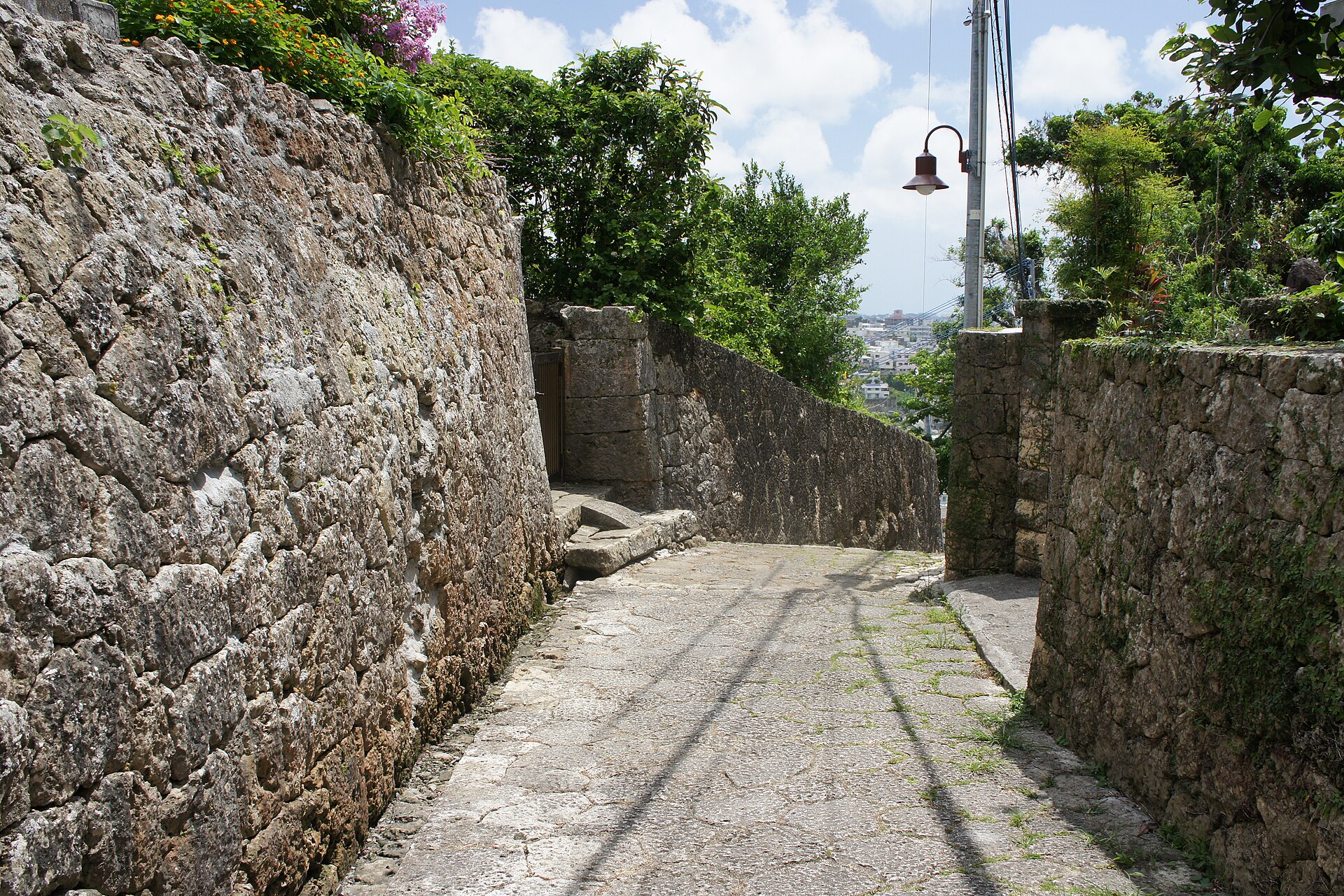
Kinjocho Stone-Paved Road
1.4 km · straight line
 Renate Hano / CC BY-SA 4.0
History · Okinawa★★★
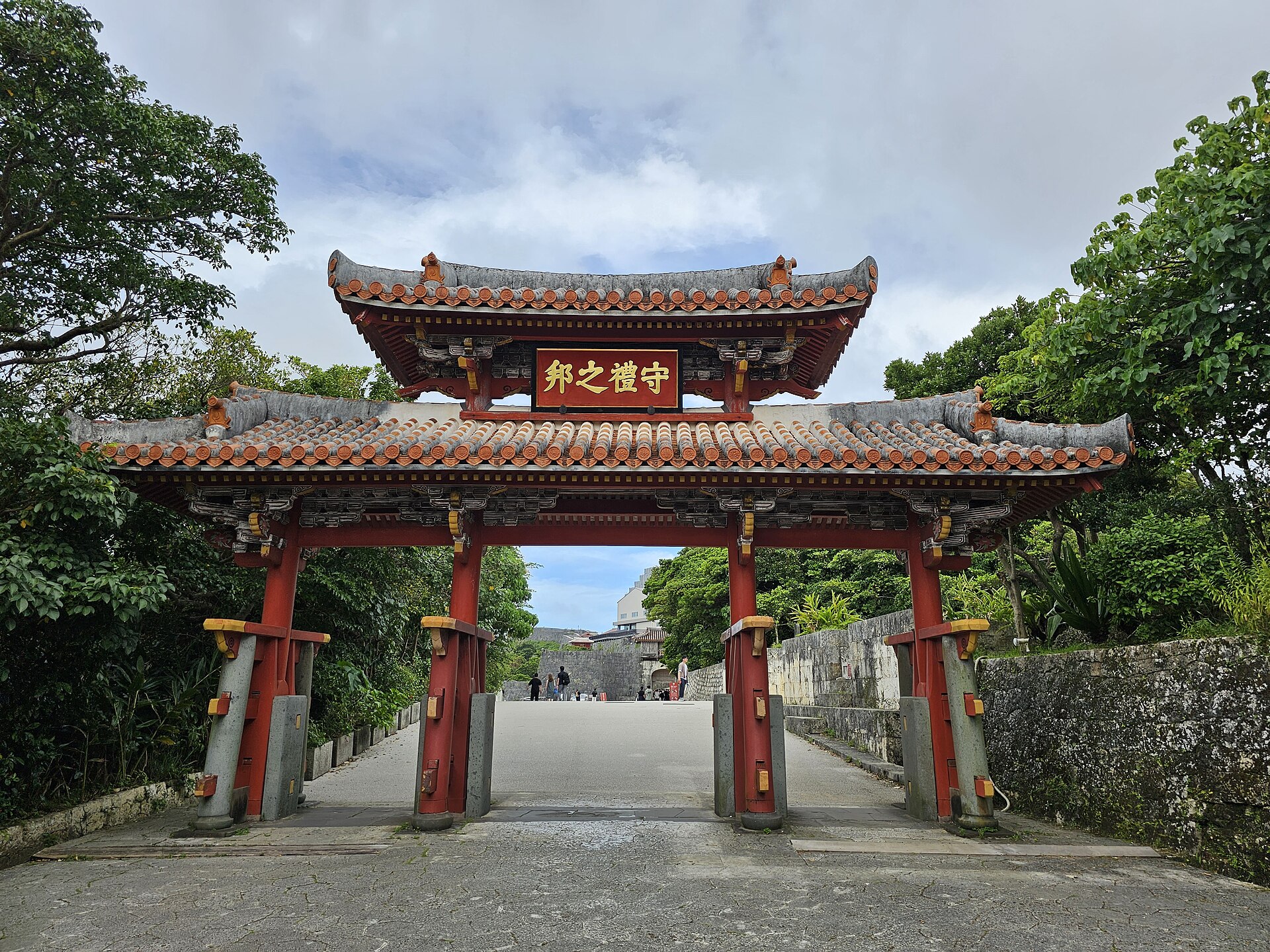
Shurijo Castle Park
1.5 km · straight line
 663highland / CC BY 2.5
History · Okinawa★★
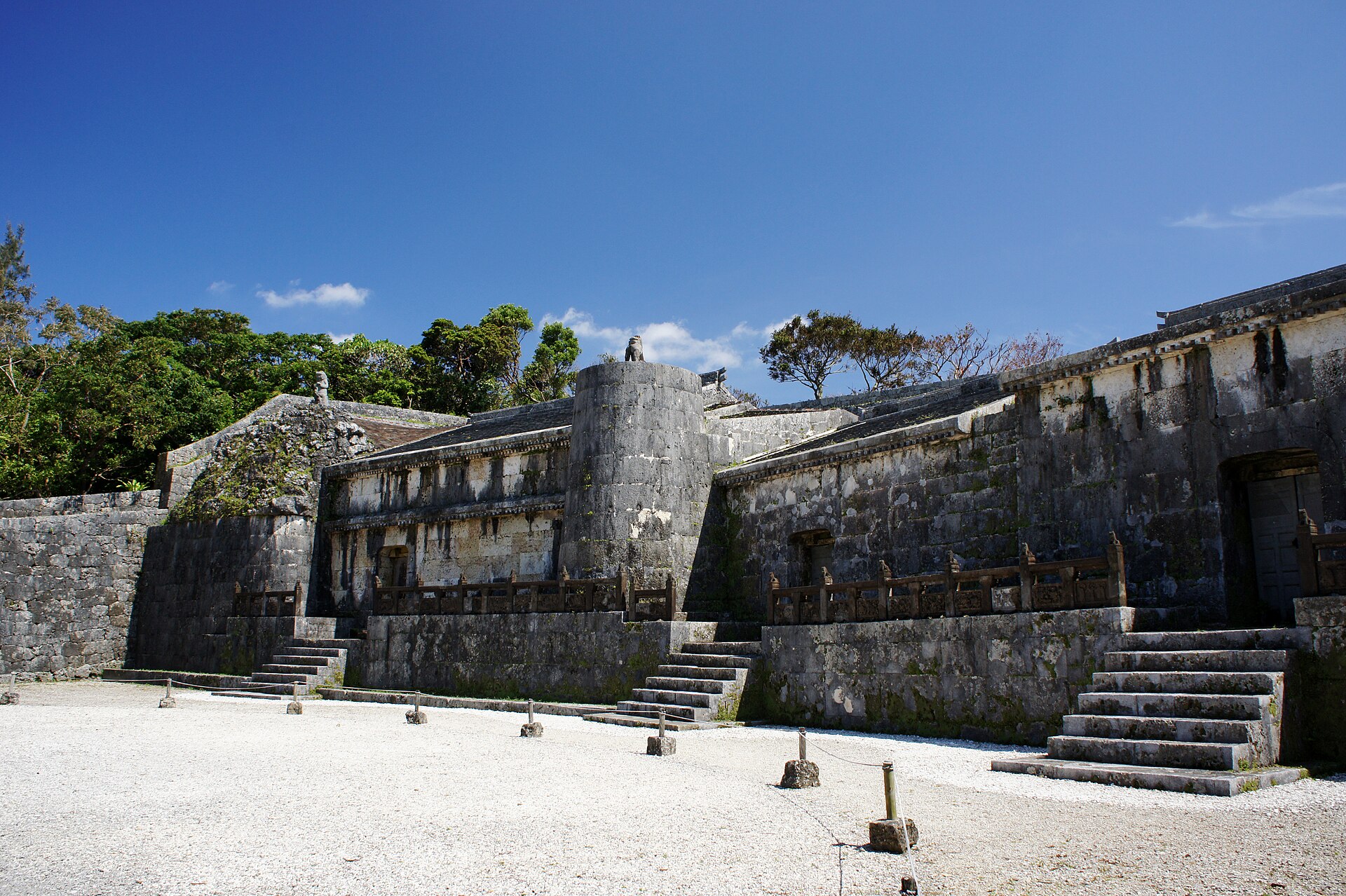
Tamaudun Royal Mausoleum
1.6 km · straight line
 663highland / CC BY 2.5
Food · Okinawa★★★
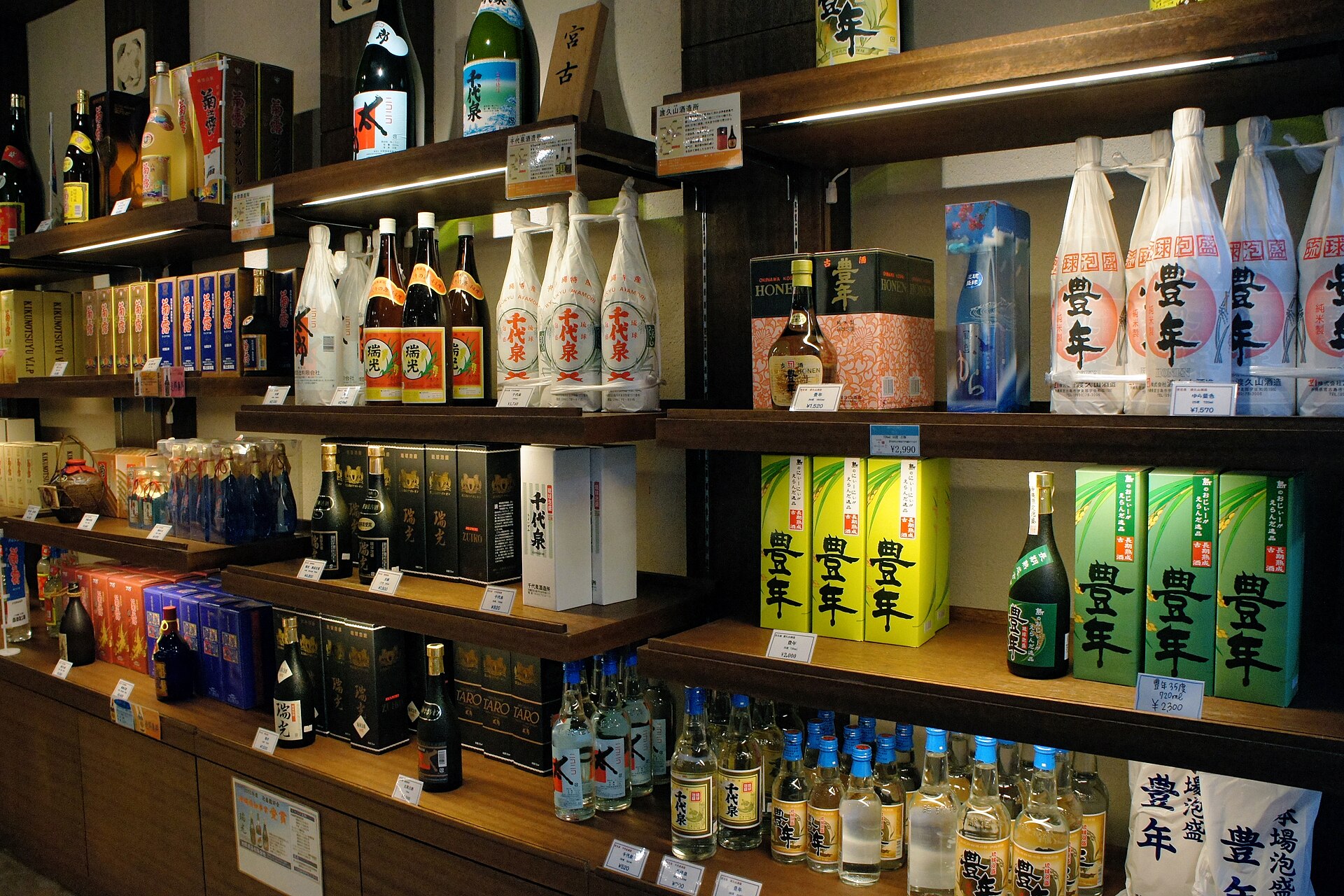
Awamori of Shuri Sanka
1.7 km · straight line
Distances are straight lines on the map, not travel times.