Hida · Shirakawa-goNo.495★★★Open in map →
Shirakawa-go Gassho Village
— Gifu's World Heritage thatched hamlet
A World Heritage hamlet of steep thatched farmhouses in a heavy-snow Gifu valley, reached by reserved bus from Takayama. People still live in it, and about once a year the villagers gather to rethatch a roof together.
- FromTakayama Station
- ~50 minReserved bus, ~50 min
- Get off atShirakawa-go Bus Terminal (Nohi Bus)
- From there
- Shirakawa-go Gassho Village
Where it is
18 more notes in Gifu · open the map →What to look for — in walking order
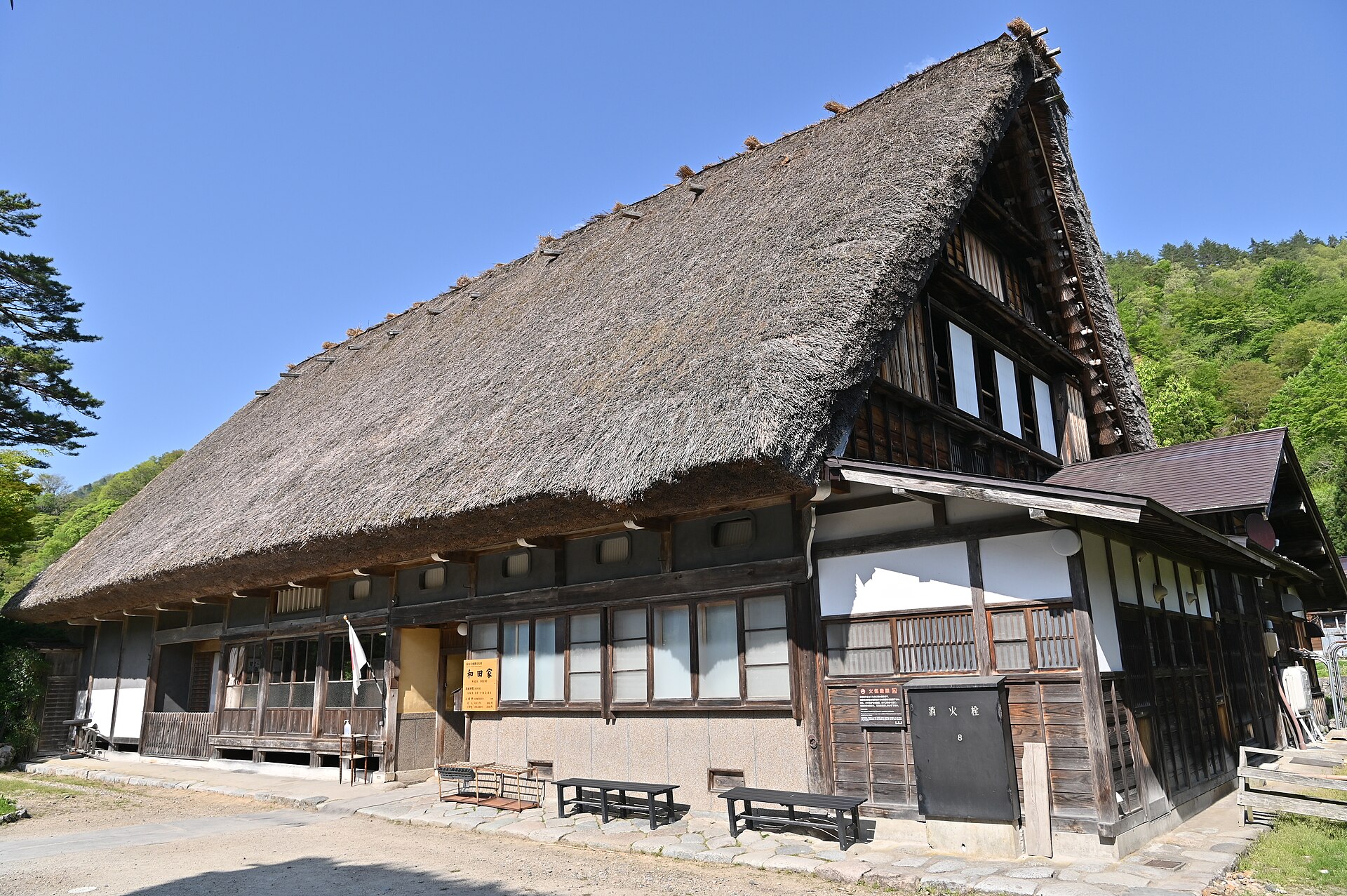
- Wada Houseone of the largest gassho houses in Shirakawa-go, a nationally designated Important Cultural Property still lived in, with part of the ground floor and the upper floor open
- The Ogimachi main streetone lane of lived-in farmhouses, with irrigation channels and worked paddies between them
- Myozenjia temple mid-settlement whose thatched bell gate and gassho-style priests' quarters are designated prefectural cultural properties
- Deai-bashithe pedestrian suspension bridge over the Sho River, the only way in from the visitor car park
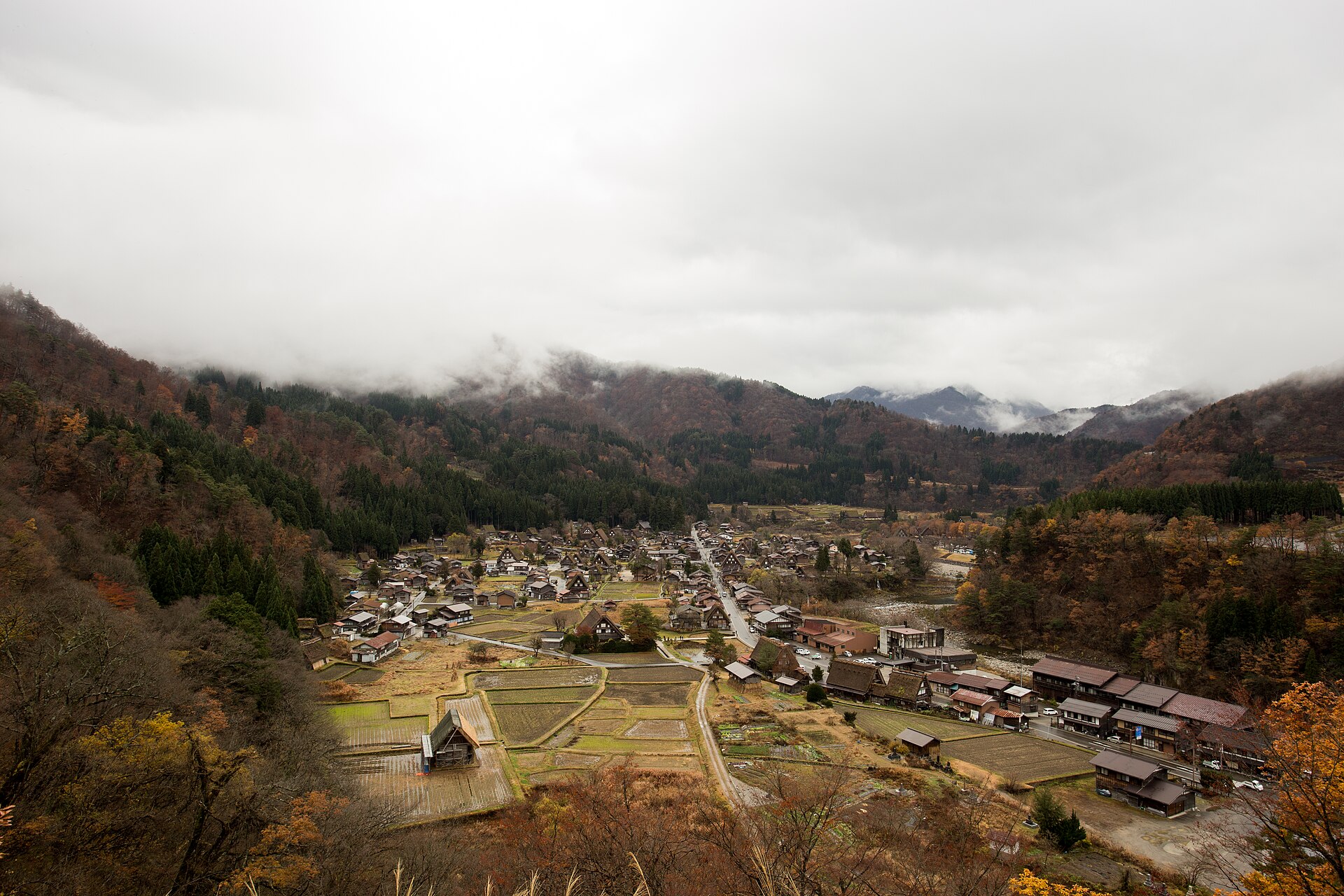
- Ogimachi Castle Ruins observation pointthe terrace on the slope above the village, where the whole valley of roofs fits one frame
How to actually get there
- Takayama Nohi Bus Center, beside Takayama Station → Shirakawa-go Bus Terminal (reserved express bus, about 50 min, 2,800 yen).
- Bus terminal → the Ogimachi main street, walking south to the Wada House.
- Follow the street south past Myozenji, then west across the Deai-bashi footbridge and back.
- Climb to the Ogimachi Castle Ruins observation point for the view over the roofs, then return to the terminal for the booked bus.
- Reserved bus from Takayama
- Takayama Nohi Bus Center, beside Takayama Station →(reserved express bus, about 50 minutes, 2,800 yen one way)→ Shirakawa-go Bus Terminal. Every service on this route is reservation-only, so book a seat before travelling rather than turning up at the counter.
- Return from Shirakawa-go Bus Terminal
- Buses back to Takayama, and onward services to Kanazawa, Toyama and Takaoka, all leave from the same terminal. The Takayama bus needs a reservation, so book the return leg when you book the outbound; the World Heritage Bus toward Gokayama and Takaoka also carries unreserved seats. Read the posted last departure when you arrive. This is a valley timetable, not a city one.
About the place
Ogimachi is the largest of the three gassho settlements listed together by UNESCO, and the protected zone covers 45.6 hectares of valley floor between the Sho River and the wooded slope behind it. Gassho-zukuri means praying-hands construction: a steeply pitched gabled roof, framed in timber and lashed with rope rather than nailed, shaped to shed a winter's worth of snow. A roof like that has to be rethatched, and the work was shared out among the households under an arrangement the village calls yui. Contractors now do much of it, but about once a year the villagers still gather to rethatch a roof together. People still work the paddies between the houses and answer their own doors.
How to enjoy it
Coach parties work through the middle of the day, so the settlement sits at its steadiest at the ends of the timetable rather than at noon. Walk the street first, while the houses that open their interiors are still unhurried, and keep the castle-ruins terrace for last, because the overview reads better once you know what is under the roofs. Leave an hour of margin before the booked return, because a reserved bus will not wait.
Background & history
The country selected Ogimachi for preservation in 1976, in the category kept for mountain villages, and UNESCO listed it in 1995 alongside the Ainokura and Suganuma hamlets over the ridge in Toyama. Most of the houses still standing were raised between the close of the Edo period and the end of Meiji. The Wada House, one of the largest in Shirakawa-go, belonged to a family that dealt in saltpetre, the valley's Edo-period cottage industry. It is now a nationally designated Important Cultural Property; the family still lives there, and part of the house is open to visitors.
Before you go
- Cash
- Walking the settlement is free. The houses that open their interiors, and the open-air museum across the river, each charge their own admission. Pay for reserved bus seats the way each operator specifies.
- Good to know
- Private cars cannot be driven into the settlement. Drivers leave them at the Seseragi Park car park across the river and cross the Deai-bashi footbridge on foot, and that car park runs on posted hours with a last entry in the afternoon, which puts a hard end on a driving day trip. The valley is designated a heavy-snow area, so a winter visit is a winter visit.
- Another way
- From the Sea of Japan side, reserved express buses run from Kanazawa Station in about an hour and a quarter, and other services come up from Toyama and Takaoka. There is also a direct highway bus from Nagoya.
- After you get off
- The bus terminal stands at the northern end of the settlement. Walk south from the exit and the main street begins within a few minutes; the Wada House is the first of the large gassho buildings you reach.
Nearby notes
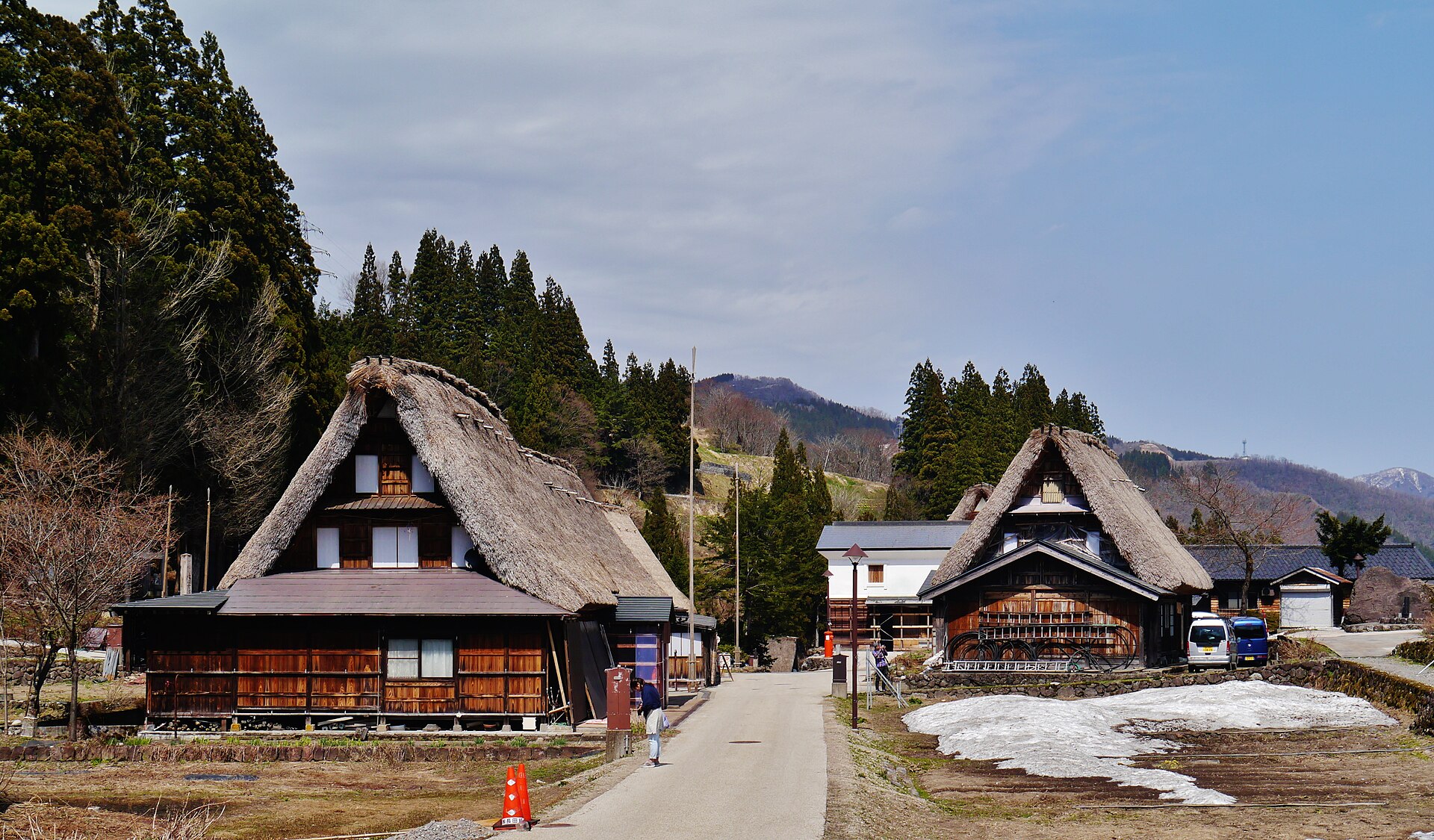 Zairon / CC BY-SA 4.0
History · Toyama★★★
Ainokura Gassho Village
18.7 km · straight line
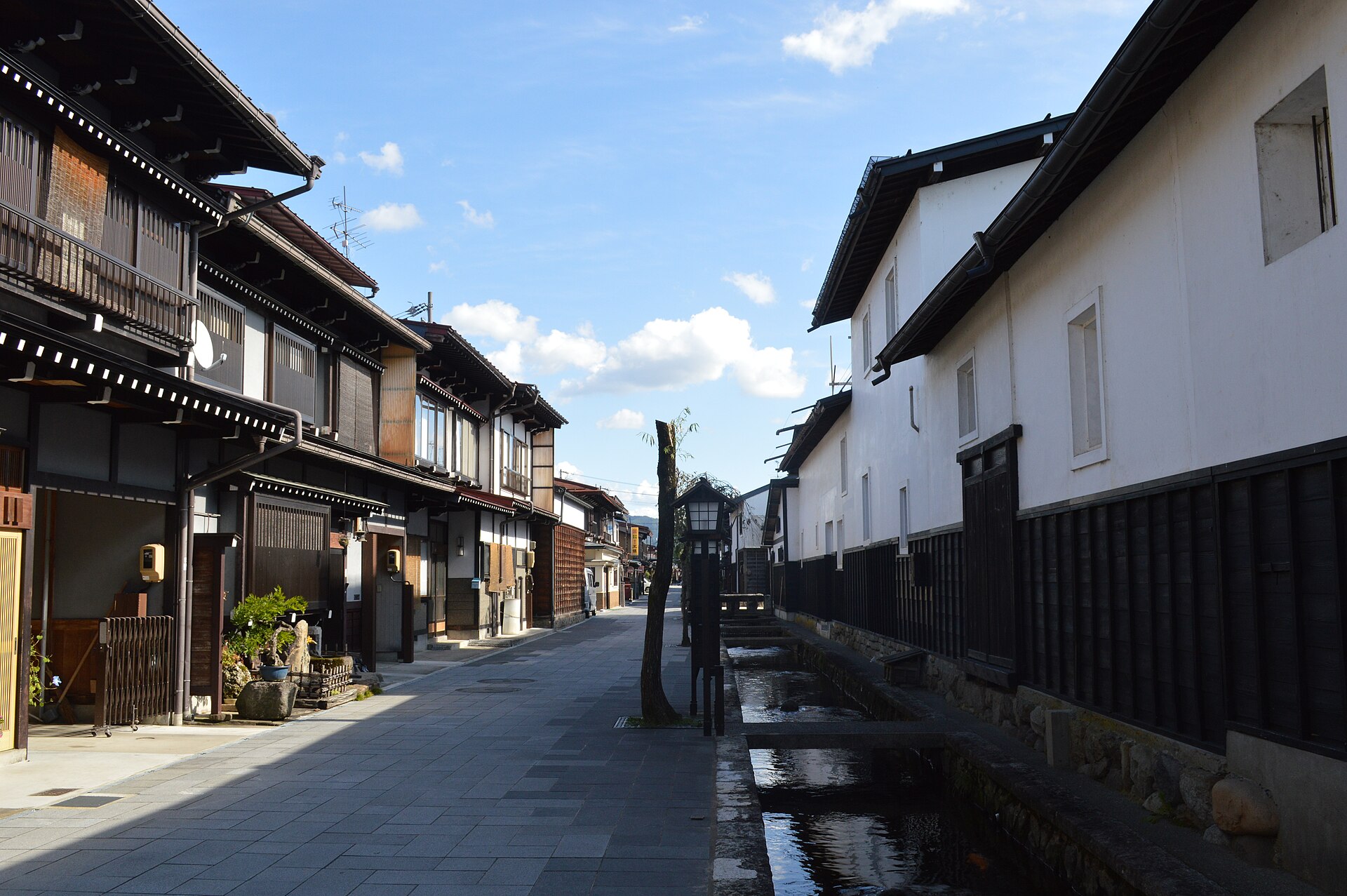 Asturio Cantabrio / CC BY-SA 4.0
Local life · Gifu★★
Hida Furukawa Setogawa Canal
25.2 km · straight line
Distances are straight lines on the map, not travel times.