Iwate · HiraizumiNo.1177★★Open in map →
Takkoku no Iwaya Bishamondo
— Cliff-set hall of Bishamonten west of Hiraizumi
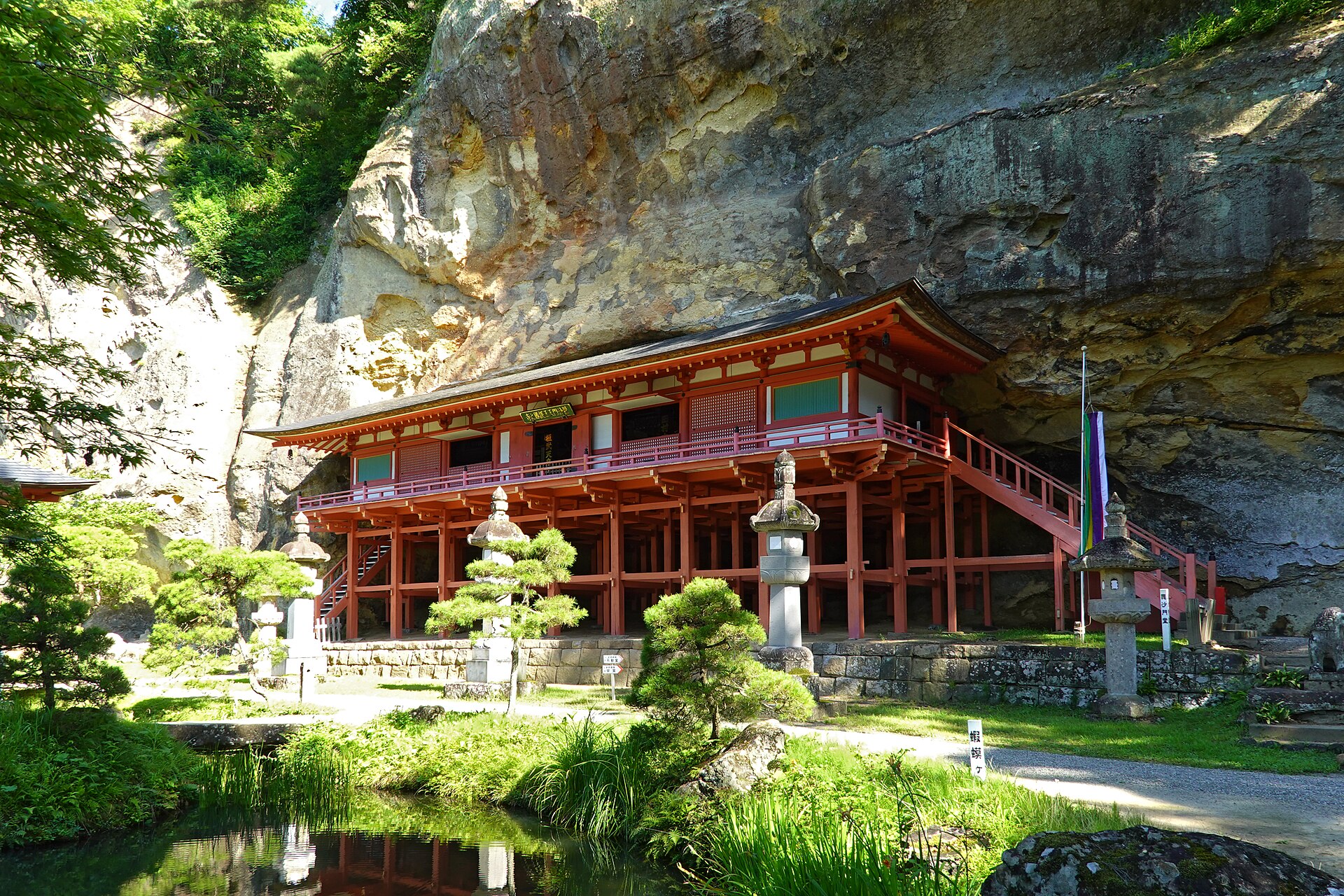
A red worship hall driven in under an overhanging rock face in the hills west of Hiraizumi, with a Buddha carved into the cliff beside it. It sits off the walking circuit of the famous temples and needs a taxi or a bicycle.
- FromIchinoseki Station
- ~25 minJR train, then a short taxi ride
- Get off atHiraizumi Station (JR Tohoku Main Line)
- From there
- Takkoku no Iwaya Bishamondo
The sweet spot
Hiraizumi's famous temples sit within walking or easy cycling range of the station, and that is where almost everyone stops. This one is far enough west to need a taxi or a bicycle, and that small extra step is usually enough to keep the precinct unhurried on an ordinary weekday.
Where it is
17 more notes in Iwate · open the map →What to look for — in walking order
- Bishamondothe main hall, its rear half swallowed by the rock and its front carried on red posts
- Iwaya Daibutsuthe carving on the cliff west of the hall, the face alone about 3.6 metres from chin to crown
- Gamagaike Bentendoa small hall to Benzaiten standing beside the pond below the rock
- Himemachi Fudodoa hall of Fudo Myoo set back among the trees, named after the Himemachi falls nearby
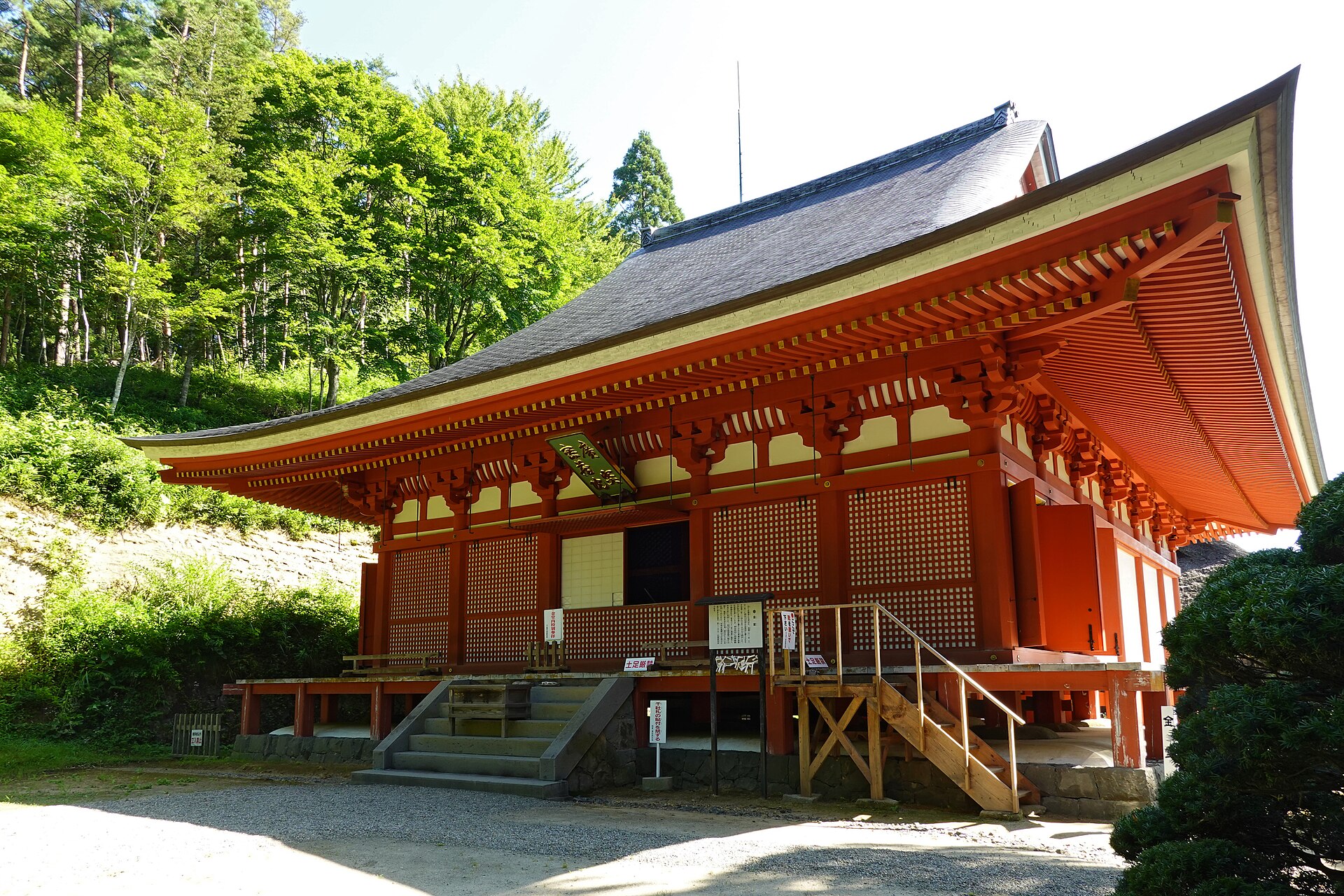
- Kondothe broad vermilion hall up the slope at the back of the precinct
How to actually get there
- Ichinoseki Station → Hiraizumi Station (JR Tohoku Main Line, two stops, under ten minutes).
- Hiraizumi Station → Takkoku no Iwaya by taxi (about ten minutes), or by rental bicycle from the counter at the station.
- Walk the circuit: the Bishamondo first, then the cliff Buddha, the pond hall, and the Kondo up the slope.
- Return to Hiraizumi Station the same way, adding Motsuji on the way back if there is time.
- JR Tohoku Main Line from Ichinoseki, then taxi
- Ichinoseki Station (Tohoku Shinkansen) → Hiraizumi Station, two stops north on the JR Tohoku Main Line, under ten minutes. From the station forecourt a taxi reaches the temple in about ten minutes. Door to door, allow roughly 25 minutes plus waiting time. The tourist information counter is inside the Hiraizumi station building.
- Return from Hiraizumi Station
- Go back to Hiraizumi Station the same way, then take the Tohoku Main Line south to Ichinoseki for the Shinkansen. Local trains thin out through the evening, so fix a return time before you set off — this is not a place you can walk back from if you miss the last one.
About the place
Takkoku no Iwaya lies in a wooded valley west of central Hiraizumi, at the foot of a bluff that leans out over the ground. The Bishamondo, the main hall, is built hard against it: the back of the building disappears into the rock and the front is held out on a lattice of red-lacquered posts so that the floor runs level. That is kake-zukuri, the cantilevered method used at Kiyomizu-dera in Kyoto, and the temple's own record says the hall was modelled on it. West along the same face, a Buddha roughly 16.5 metres tall is carved directly into the cliff. A pond and a lantern-lined path run below the hall.
How to enjoy it
Allow under an hour for an unhurried circuit — the precinct is compact and the path loops back on itself — which makes this easy to pair with Motsuji or Chusonji in the same day, provided you have wheels for this leg. Closing time shifts with the season and is earlier in winter, so put the temple in the first half of the day rather than the tail end of it.
Background & history
The temple's record dates its founding to 801, when the general Sakanoue no Tamuramaro, campaigning in the north for the imperial court, is said to have raised a hall here and enshrined 108 images of Bishamonten in thanks for his victory. Tradition attributes the rock-face Buddha to Minamoto no Yoshiie, cut in memory of the dead on both sides of the eleventh-century wars in the northeast; its lower half broke away in an earthquake in 1896. The hall burned in 1946 and the present building was put up in 1961. The site was designated a National Historic Site in 2005.
Before you go
- Cash
- Admission was 500 yen for adults and 200 yen for junior and senior high school students when checked against the Hiraizumi Tourism Association and the Iwate prefectural tourism guide, with elementary school children and younger admitted free. Pay at the entrance. Bring cash.
- Good to know
- The precinct is open year round, but the closing time moves with the season and comes earlier in winter than in summer. The approach and the ground around the hall are gravel and turn slippery after rain or snow, and the stair up to the hall itself is steep.
- Another way
- By car, the temple's own access page gives about fifteen minutes from the Hiraizumi-Maesawa interchange on the Tohoku Expressway. Coming from Ichinoseki by road, the temple sits on the way out toward the Genbikei gorge, so the two combine into one half-day loop.
- After you get off
- From Hiraizumi Station the temple is several kilometres west and well out of walking range. Take a taxi, or rent a bicycle at the tourist counter by the station: the standard Hiraizumi cycling loop runs Chusonji, then Motsuji, then the Himemachi falls, and reaches Takkoku no Iwaya from there.
Nearby notes
 663highland / CC BY-SA 4.0
Nature · Iwate★★
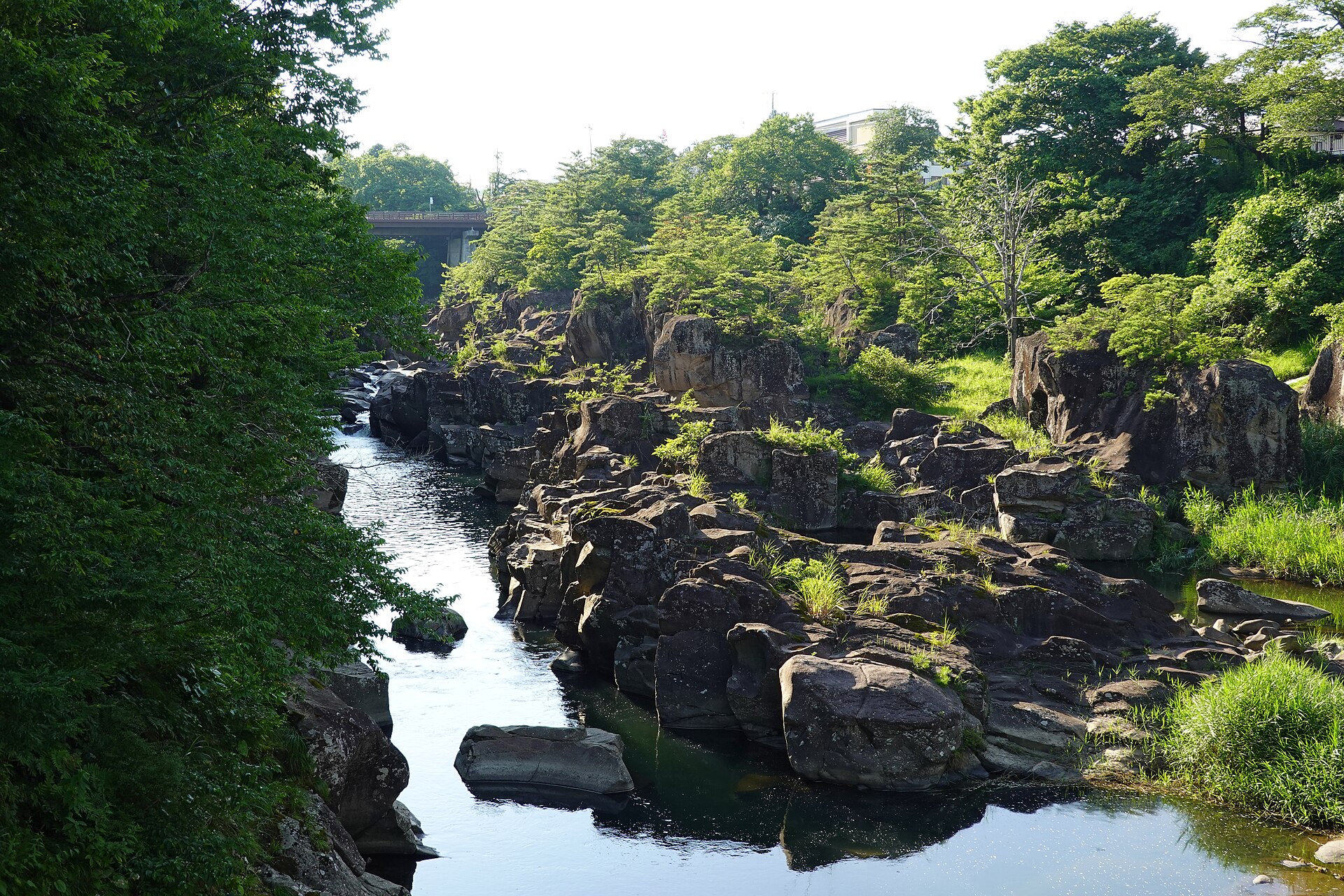
Genbikei Gorge
2.8 km · straight line
 Nerotaso / CC BY-SA 3.0
History · Iwate★★★
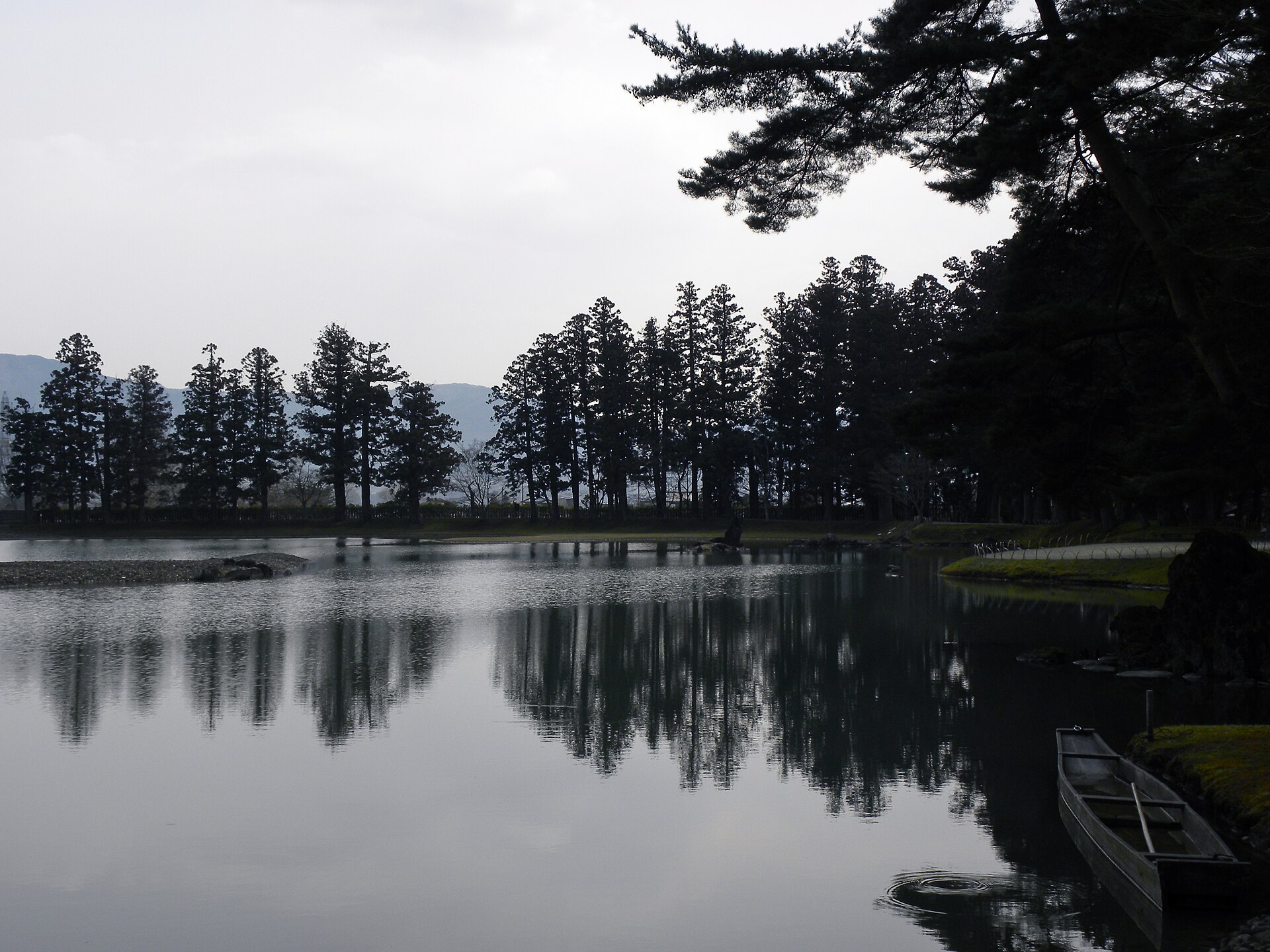
Motsuji Temple
4.7 km · straight line
 くろふね / CC BY 4.0
History · Iwate★★★
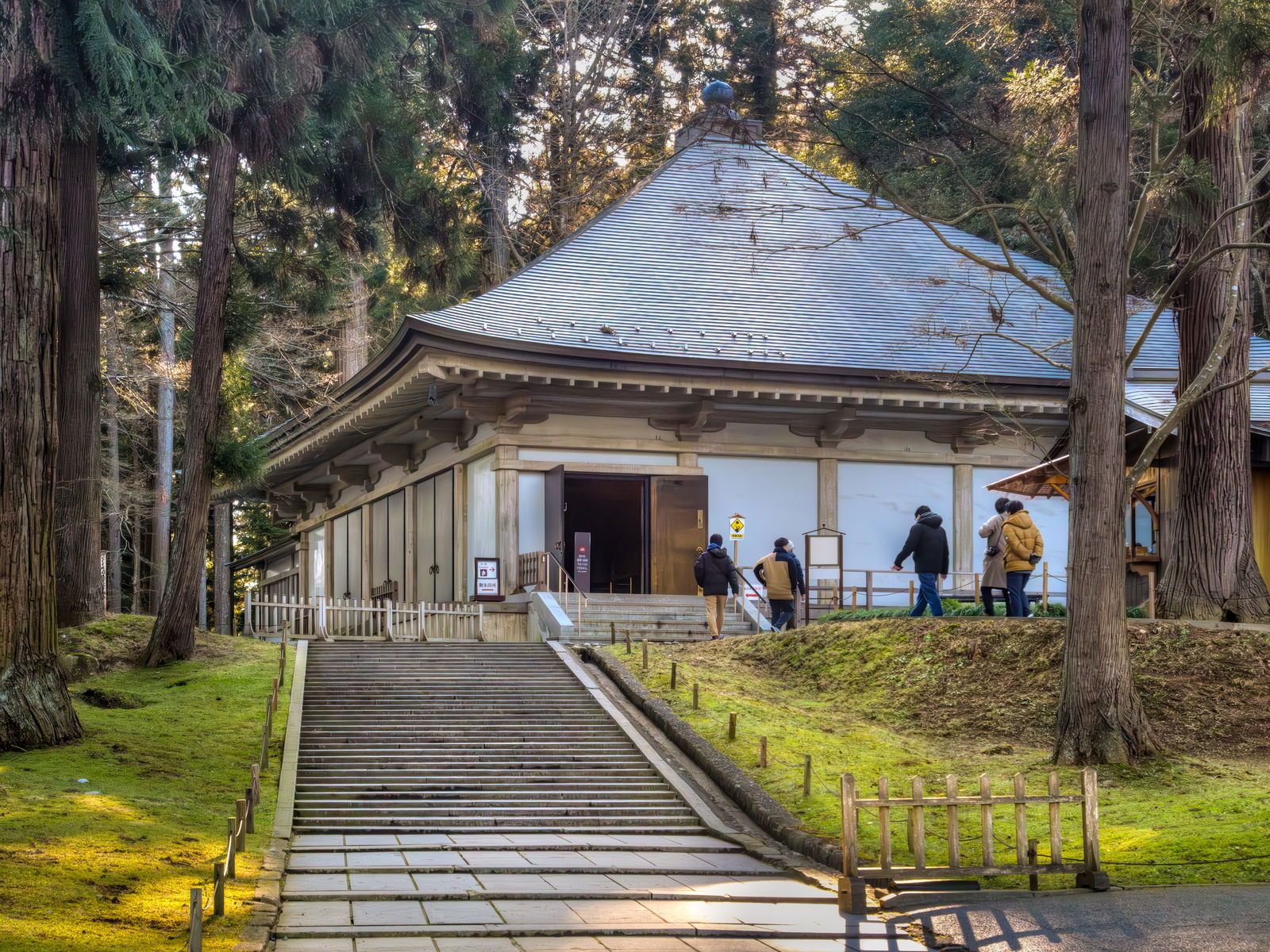
Chusonji Konjikido
5.1 km · straight line
 663highland / CC BY-SA 4.0
Nature · Iwate★★★
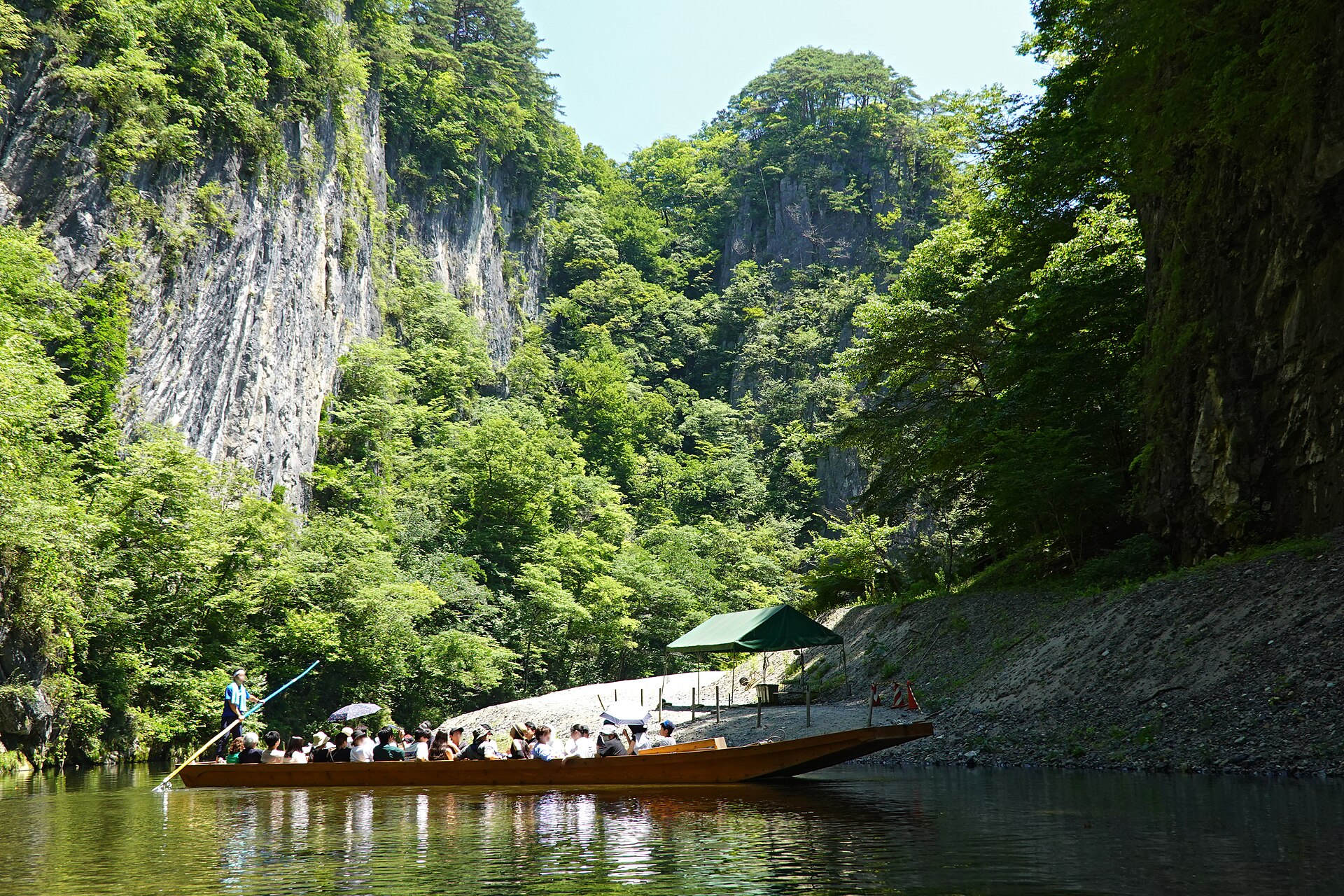
Geibikei Gorge
17.2 km · straight line
Distances are straight lines on the map, not travel times.