Kyoto · Arashiyama / SaganoNo.203★★★Open in map →
Tenryu-ji
— a 700-year-old garden framed by mountains
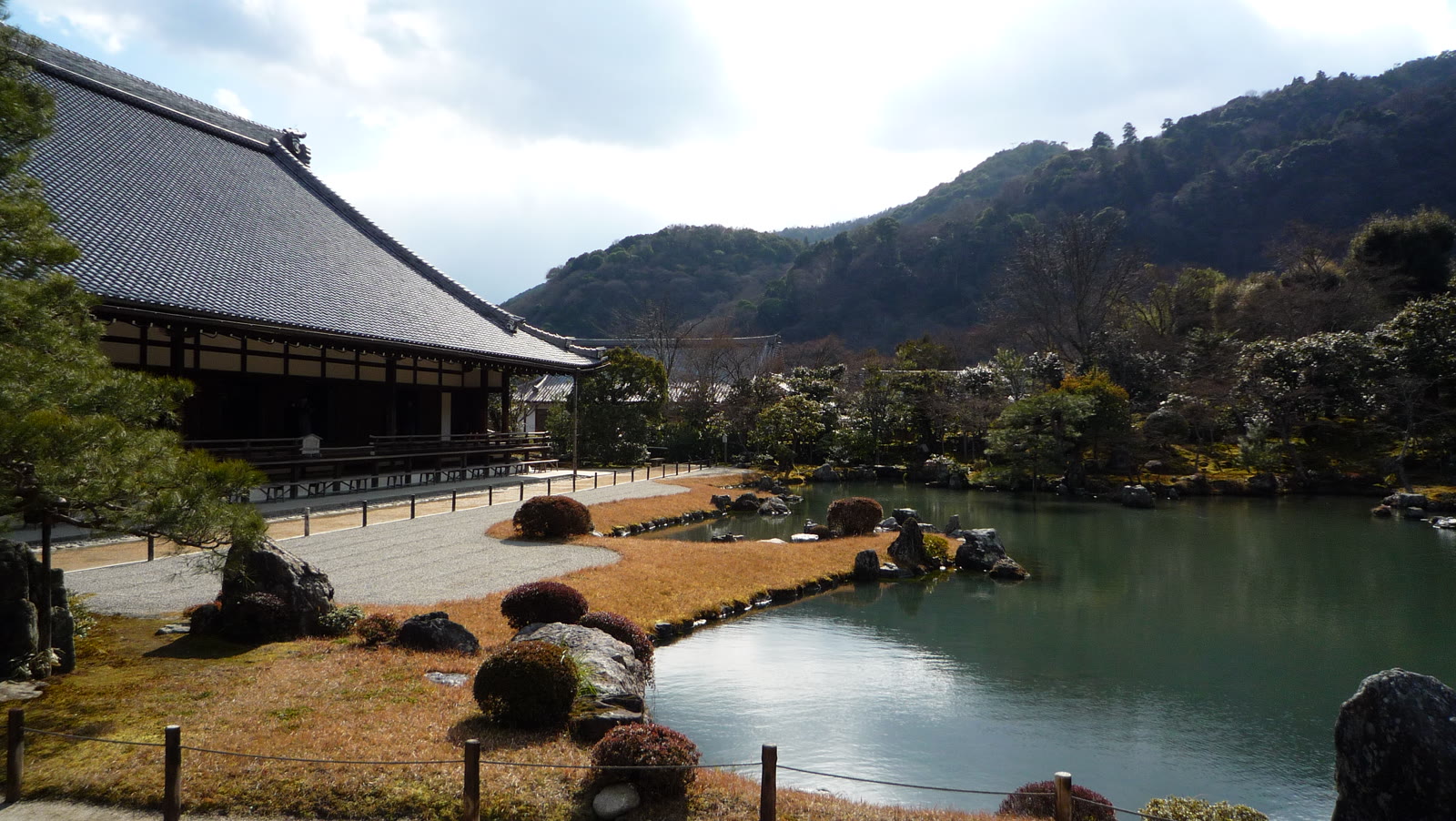
The most important temple in the Arashiyama district, founded in 1339 and ranked first among Kyoto's five great Zen temples. Its Sogenchi garden, designed around a central pond with Arashiyama and Kameyama as the backdrop, has been recognised since the 14th century.
- FromKyoto Stn
- ~20 minJR (frequent)
- Get off atSaga-Arashiyama Station (JR San-in Line)
- On foot
- Tenryu-ji
Where it is
90 more notes in Kyoto · open the map →What to look for — in walking order
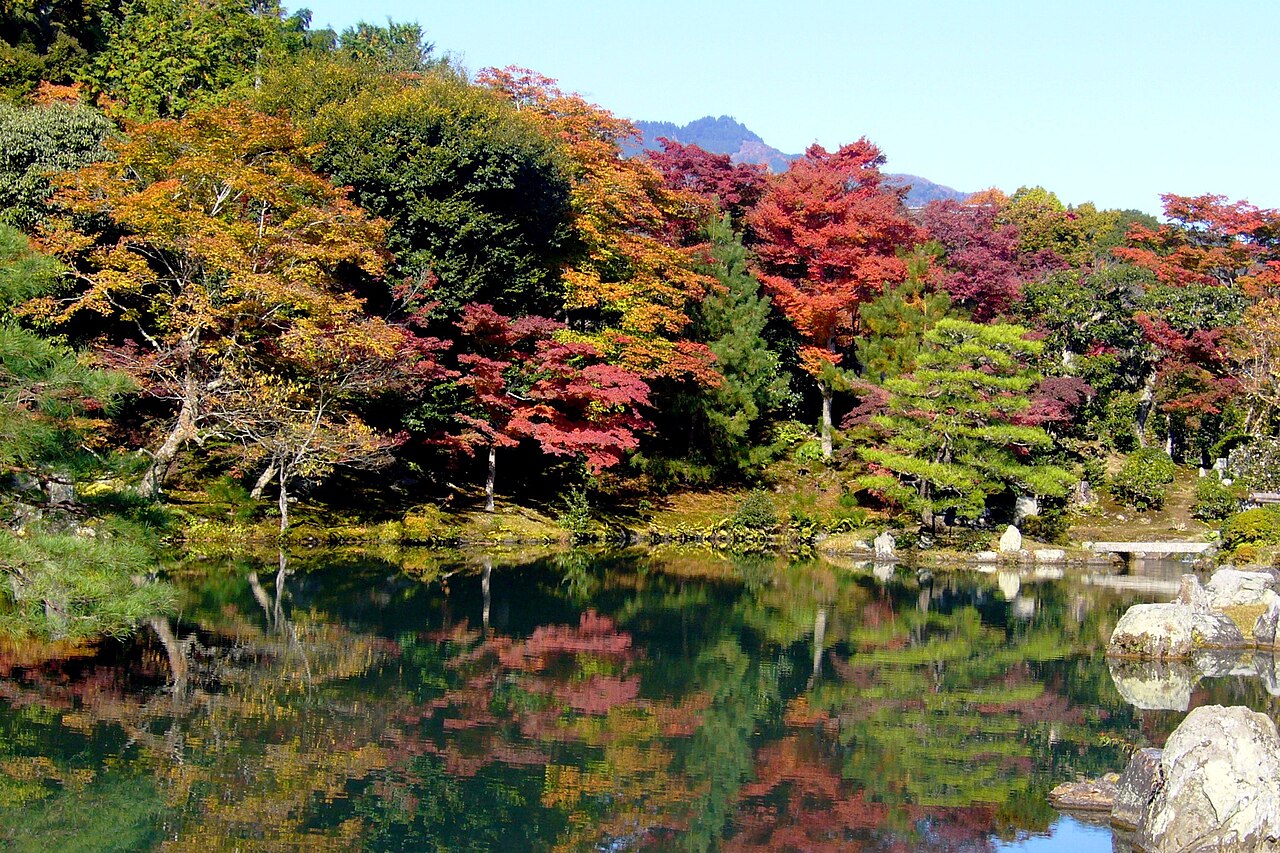
- Sogenchi Pond (Sogen-chi)the central pond, designed in 1345 and largely unchanged; the path around it takes about 20 minutes at a gentle pace
- Arashiyama and Kameyama as borrowed scenerythe wooded hills behind the garden used as a natural extension of the composition
- Stone bridges and rockwork14th-century stonework along the pond's edge, using dry-stone techniques associated with Muso Soseki
- Hatto (Dharma Hall) and the Cloud Dragon paintinga large dragon painted on the ceiling of the main hall; open on weekends and select periods, with a separate admission
How to actually get there
- Kyoto Station tracks 32/33 → Saga-Arashiyama Station (JR San-in Line local, ~15 min, ~240 yen).
- Station → walk south-west ~13 min → Tenryu-ji Chokushimon gate (garden entrance).
- Stroll the Sogenchi pond path (~20 min); then exit through the north gate into the bamboo grove.
- Kyoto Stn → Saga-Arashiyama Stn (JR San-in Line)
- From Kyoto Station, take the JR San-in Line (track 32 or 33, local or rapid bound for Sonobe/Kameoka) and get off at Saga-Arashiyama Station. Journey time is about 15 minutes, fare approximately 240 yen. Trains run frequently. From the station, Tenryu-ji is about a 13-minute walk south-west.
- Return from Saga-Arashiyama Stn or Arashiyama Stn (Keifuku)
- Take the JR San-in Line back from Saga-Arashiyama Station to Kyoto Station. Alternatively, the Keifuku Randen Arashiyama Line station is a short walk southwest of the temple and connects to central Kyoto (change at Sijo-Omiya). Both options run frequently and need no booking.
About the place
The Sogenchi garden at Tenryu-ji centres on a large pond and uses the technique of shakkei — 'borrowed scenery' — to fold the wooded slopes of Arashiyama and Kameyama into the composition beyond the garden wall. The designer was Muso Soseki, the founder of the temple, who created the garden in 1345. Unlike many Japanese gardens that were later reshaped or relocated, Sogenchi has kept its essential form for nearly seven centuries and was designated Japan's first Special Historic Site and Special Scenic Beauty. The path around the pond winds through planting chosen to give a different palette in each season.
How to enjoy it
Enter when the gates open at 8:30 to walk the Sogenchi garden while it is quiet — the reflected mountains in the pond read best in still morning light. The garden admission (500 yen) covers the stroll around the pond; there is a separate charge for the main buildings (additional 300 yen) and a further charge for the Hatto's Cloud Dragon painting on weekends. After Tenryu-ji, the famous bamboo grove of Arashiyama begins just past the north gate — it is included in the walk for no extra charge.
Background & history
Tenryu-ji was founded in 1339 by the shogun Ashikaga Takauji to honour Emperor Go-Daigo, who had died that year. The Zen master Muso Soseki was appointed founding abbot and designed the Sogenchi garden. Construction was completed in 1345. The temple was ranked first among Kyoto's Five Mountains (Gozan), the five most important Zen temples in the city. Despite burning and rebuilding several times over the centuries, the garden survived essentially intact. In 1994, Tenryu-ji was inscribed as part of the UNESCO World Heritage Site 'Historic Monuments of Ancient Kyoto.'
Before you go
- Cash
- Garden admission (Sogenchi stroll garden): 500 yen for adults, 300 yen for children. Adding the main temple buildings costs an extra 300 yen. The Hatto Cloud Dragon viewing (weekends and special periods) has a separate admission of 500 yen. JR trains accept IC cards (Suica, ICOCA, etc.).
- Good to know
- The garden is open year-round, 8:30–17:00 (last entry 16:50). It is very crowded during cherry blossom season (late March to mid-April) and autumn colour (mid-November). Weekday mornings from late spring to early autumn are among the quieter times.
- Another way
- The Keifuku Randen Arashiyama Line offers a scenic alternative route from central Kyoto, connecting at Shijo-Omiya Station in Shimogyo-ku. It is slower but picturesque.
- After you get off
- From JR Saga-Arashiyama Station, walk south-west about 13 minutes. Tenryu-ji's Chokushimon gate is the main entrance for the garden.
Nearby notes
 Hyppolyte de Saint-Rambert / CC BY 4.0
History · Kyoto★★
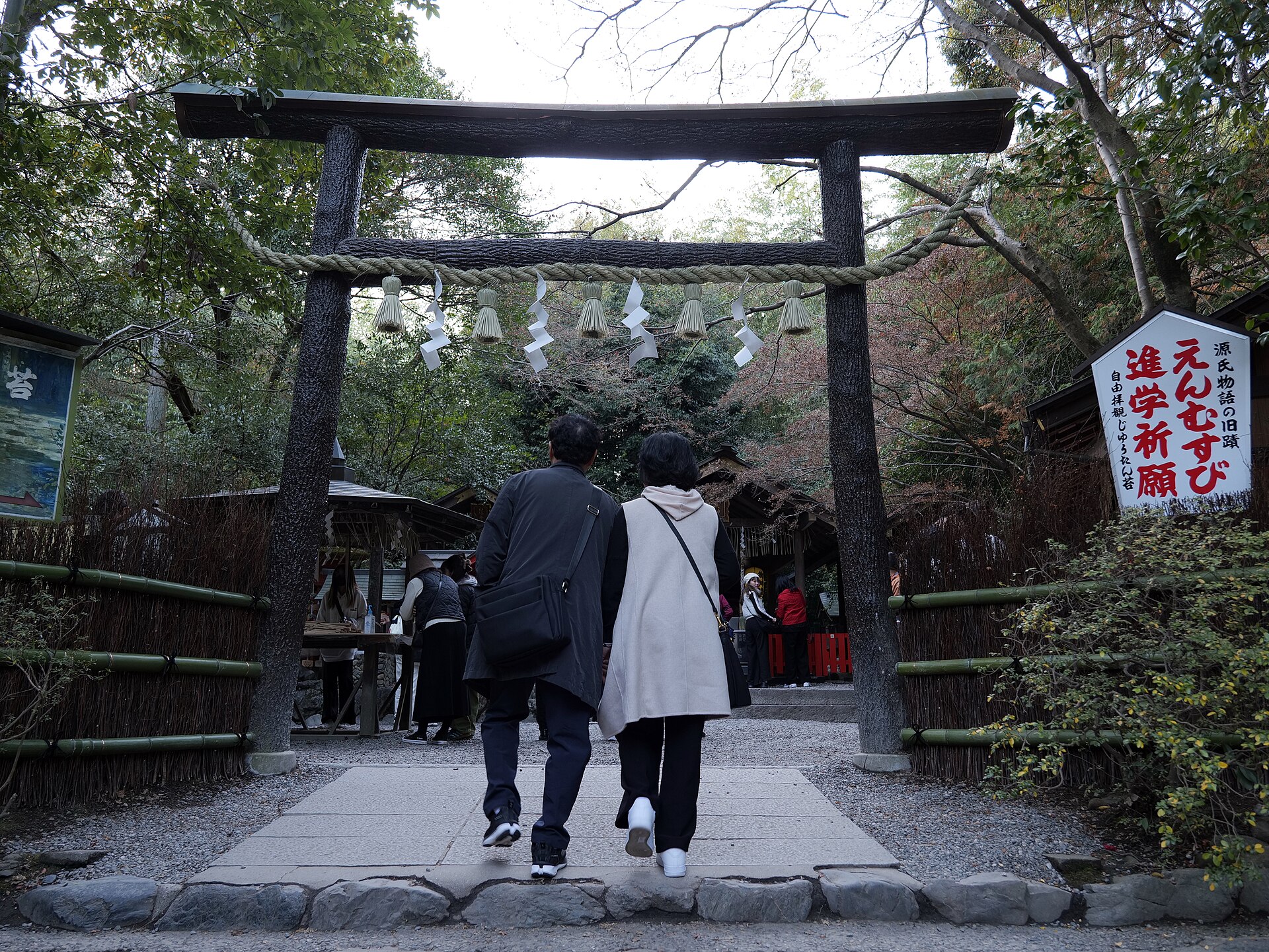
Nonomiya Shrine
0.2 km · straight line
 Erol Ahmed / CC0
Nature · Kyoto★★★
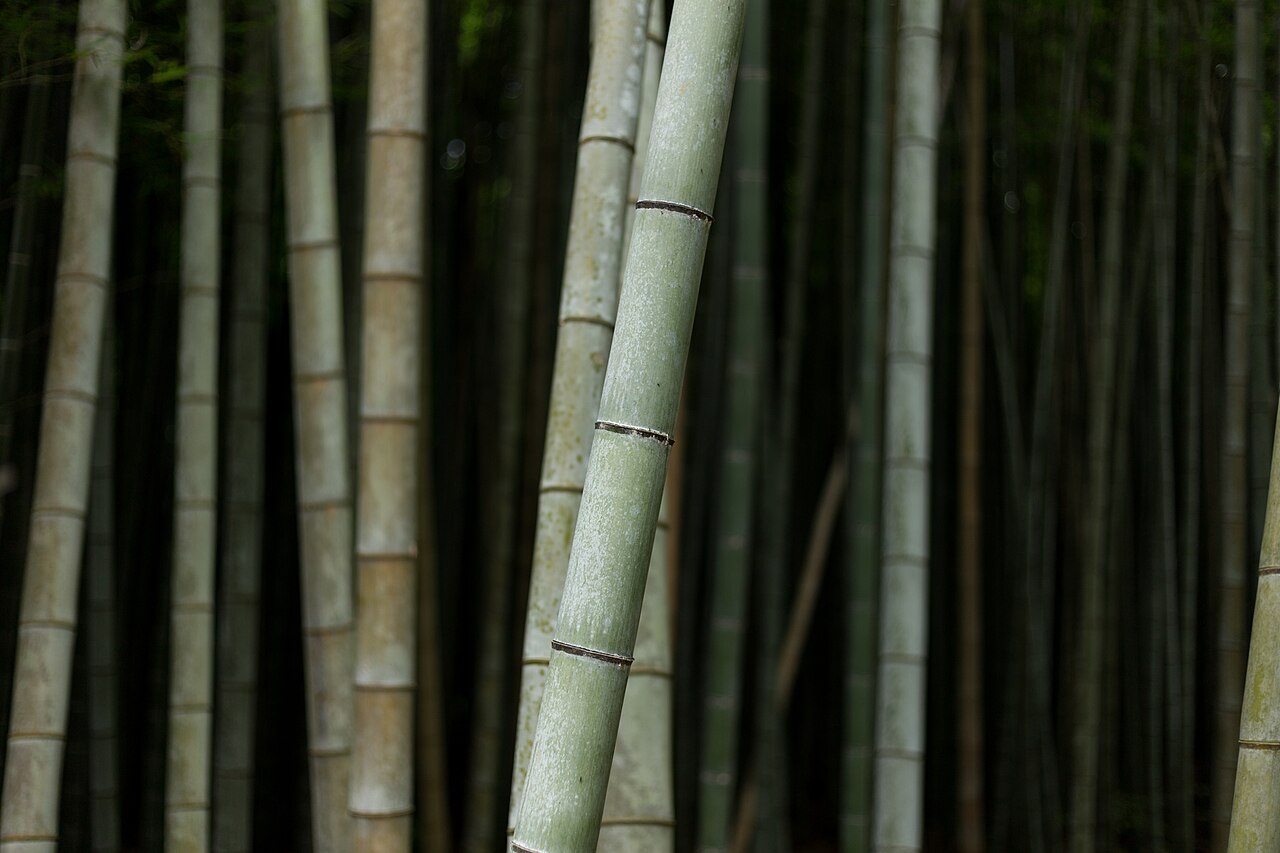
Arashiyama Bamboo Grove
0.2 km · straight line
 dres2222 / CC BY-SA 3.0
Nature · Kyoto★★★
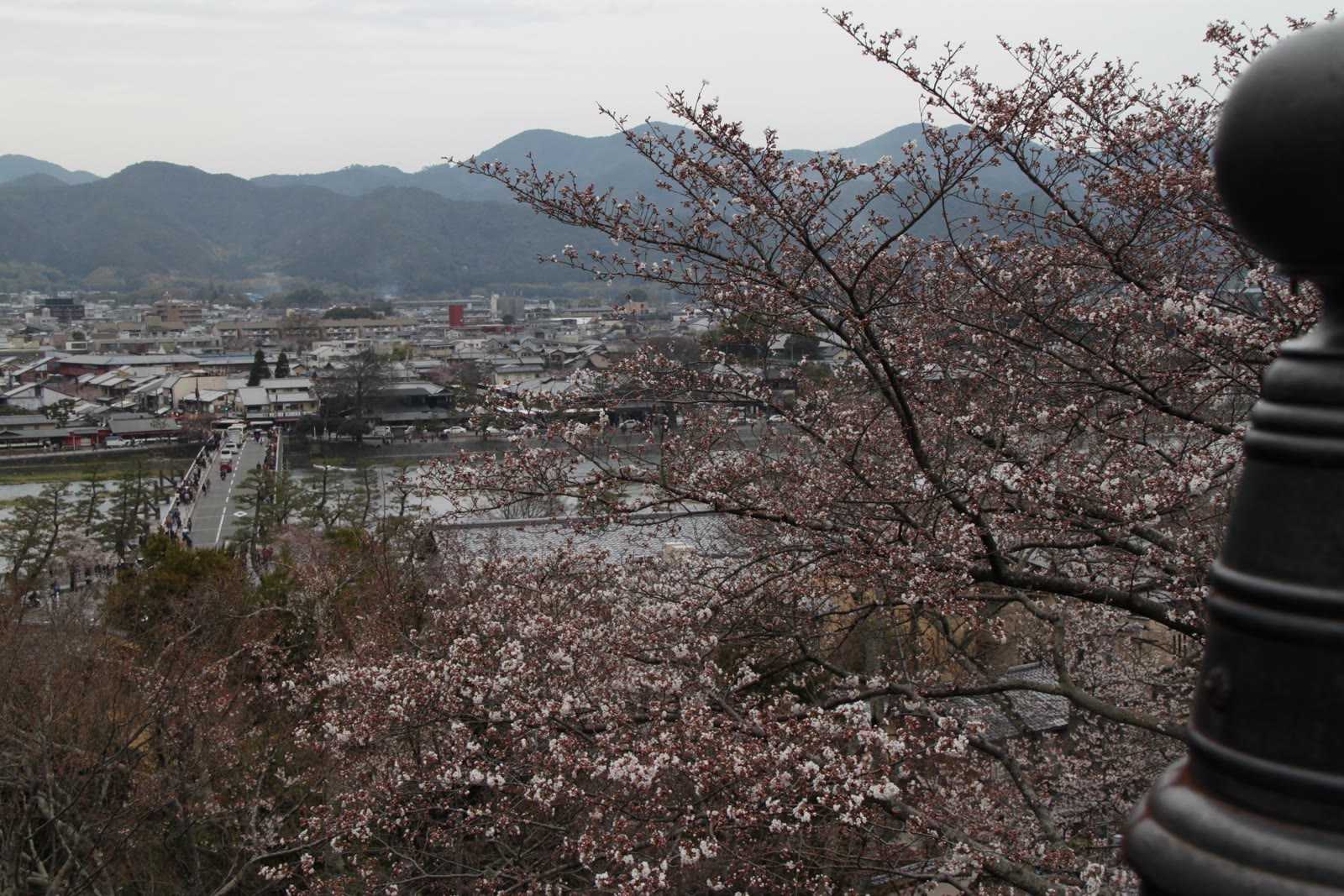
Togetsukyo Bridge
0.5 km · straight line
 Hyppolyte de Saint-Rambert / CC BY 4.0
Nature · Kyoto★
Arashiyama Monkey Park Iwatayama
0.6 km · straight line
Distances are straight lines on the map, not travel times.