Osaka east · Tsuruhashi / IkunoNo.327★★★Open in map →
Tsuruhashi
— grill smoke and Japan's largest Korea Town
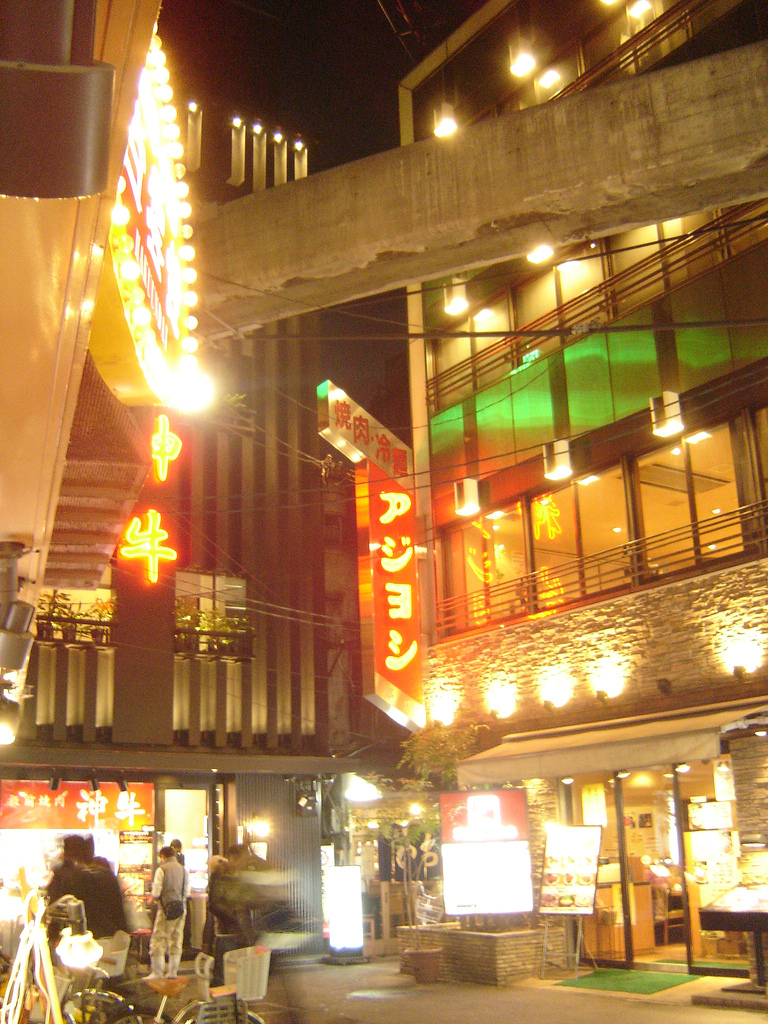
Two connected districts in east Osaka: the dense covered market around Tsuruhashi Station, grown from a post-war black market and packed with yakiniku restaurants, and Miyukidori in Ikuno — Osaka Korea Town — a 500-metre shopping street of about 120 shops.
- FromOsaka Stn
- ~15 minJR loop line
- Get off atTsuruhashi Station (JR Osaka Loop Line / Kintetsu / Metro Sennichimae Line)
- On foot
- Tsuruhashi
Where it is
40 more notes in Osaka · open the map →What to look for — in walking order
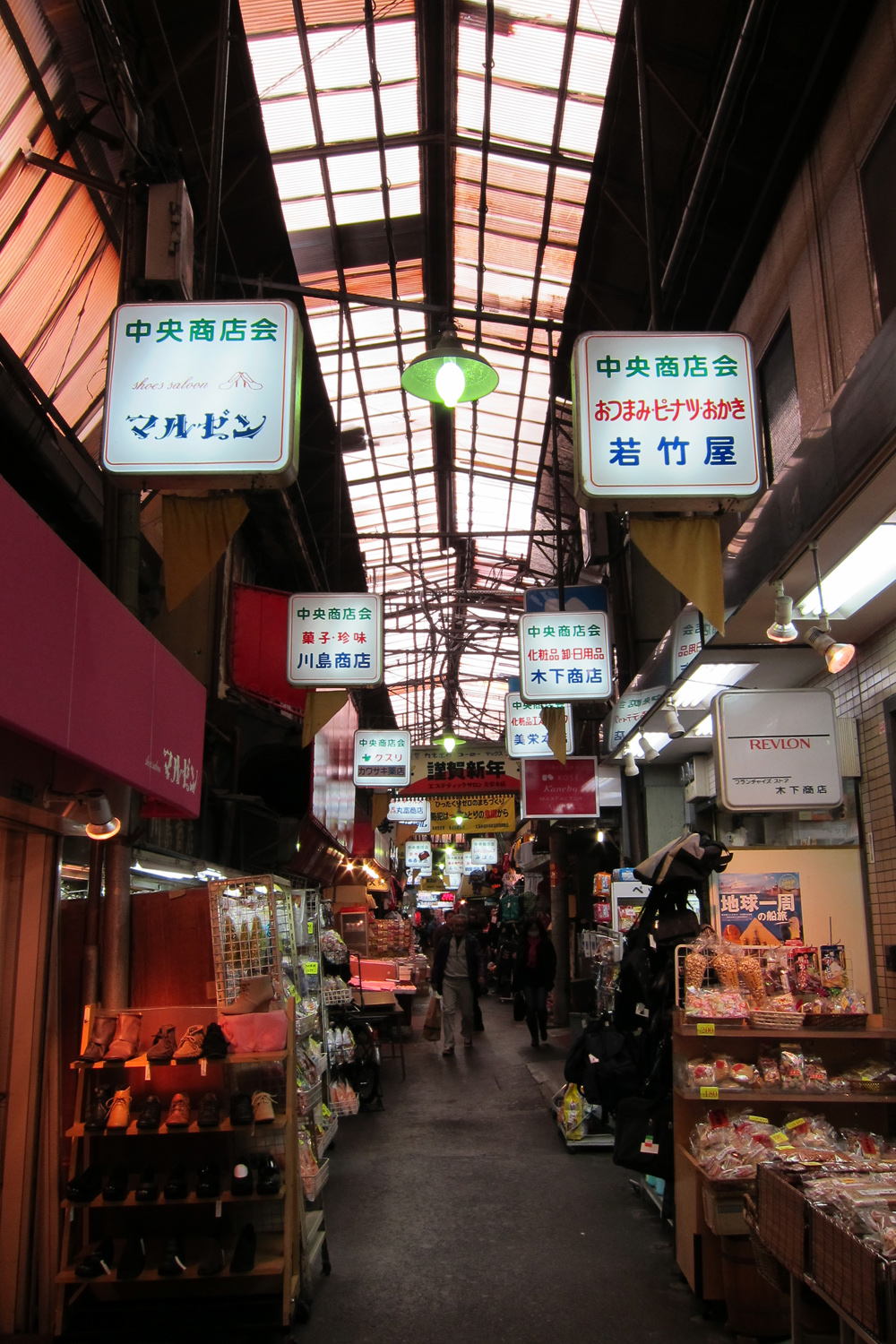
- Tsuruhashi market arcadescovered lanes pressed against the railway, bending and dead-ending as the post-war market originally laid them out; fish, dried goods, kimchi by the kilo
- The yakiniku lanesgrill restaurants wedged into gaps between stalls — the smoke that reaches the station platform comes from here
- Miyukidori and the Kudara-mon gateabout 500 metres of shopping street with roughly 120 shops, between decorated gates; the eastern gate is named for the ancient Korean kingdom of Baekje
- Osaka Korea Town History Museumopened on the street in April 2023, documenting the Ikaino community from the 1920s onward
How to actually get there
- Osaka Station → Tsuruhashi Station (JR Osaka Loop Line, outer track, ~15 min).
- Tsuruhashi Station → market arcades (immediately outside the gates); walk the lanes and eat yakiniku.
- Tsuruhashi Station → Miyukidori Korea Town (walk east ~15 min); the Osaka Korea Town History Museum is on the street. Return via Momodani Station (~10 min walk).
- Osaka Stn →(JR Osaka Loop Line)→ Tsuruhashi Stn →(walk)→ Miyukidori Korea Town
- Osaka Station →(JR Osaka Loop Line, outer track toward Tennoji, ~15 min)→ Tsuruhashi Station. The market arcades start at the station exit. For Korea Town, walk about 15 minutes east along the main road to Miyukidori. Loop line trains run every few minutes, so no timetable check is needed.
- Return from Tsuruhashi, or from Momodani
- Tsuruhashi is served by the JR Osaka Loop Line, the Kintetsu Osaka Line and the Osaka Metro Sennichimae Line, so almost anywhere in the city is reachable directly. From the Korea Town end, Momodani Station on the Loop Line is about 10 minutes on foot and saves the walk back. Trains run late, and the yakiniku restaurants stay open well past dinner.
About the place
The smell reaches the ticket gate. Tsuruhashi Station sits on top of its own market, and the market is a warren of covered arcades pressed right against the tracks: fish stalls, kimchi tubs by the kilo, dried goods, cheap clothes, and yakiniku restaurants wedged into gaps barely wide enough for two people to pass. It grew out of a post-war black market and was never rationalised into a shopping centre, so the lanes still bend and dead-end the way they originally did. That is one half of Tsuruhashi. The other is a fifteen-minute walk east into Ikuno, where Miyukidori runs about 500 metres between decorated gates — the eastern one named Kudara-mon after the ancient Korean kingdom of Baekje — with roughly 120 shops along it. This is Osaka Korea Town, and it is a working neighbourhood before it is a destination: shops selling kimchi and banchan by weight to people who cook with them, alongside the hotteok and tteokbokki stands and K-pop goods that draw teenagers from across the Kansai region on weekends. The two halves feel different on purpose. Tsuruhashi is old, tight and smoky; Miyukidori is bright, wide and loud.
How to enjoy it
Do the market first and Korea Town after — the fresh stalls near the station shut from mid-afternoon while Miyukidori keeps going, and the walk between the two takes you through ordinary residential Ikuno, which is the point. Go on a weekday if you want to move: Miyukidori on a Saturday afternoon is close to shoulder-to-shoulder with teenagers. For yakiniku, the small places in the market lanes are the reason people come, but they are tiny — expect to wait, or eat early. Carry cash, and expect to be handed things to taste at the kimchi counters.
Background & history
Ikuno ward holds the largest concentration of residents of Korean descent in Japan, and the community's roots reach back to the 1920s, when river improvement works on the Hirano drew labourers and a direct ferry service ran between Osaka and Jeju Island. The area around Miyukidori was formerly known as Ikaino. The market at Tsuruhashi Station took its present form in the years after the Second World War, when an open black market established itself beside the tracks and was gradually roofed over and consolidated rather than cleared, which is why its lanes remain so irregular. In April 2023 the Osaka Korea Town History Museum opened on Miyukidori to document that history.
Before you go
- Cash
- Many market stalls and small shops are cash only, including a lot of the kimchi and prepared-food counters. Larger yakiniku restaurants take cards and IC. Bring small notes — most street-food stands on Miyukidori are cash.
- Good to know
- The wholesale and fresh-produce stalls around the station open early and start shutting from mid-afternoon; the yakiniku restaurants run into the night. Miyukidori is a daytime street — most shops close in the early evening — and it is at its busiest, close to shoulder-to-shoulder, on weekend afternoons. Many individual shops take a weekday rest day, so a weekday visit finds it calm but with some shutters down.
- Another way
- Momodani Station (JR Osaka Loop Line), one stop from Tsuruhashi, is about 10 minutes on foot from Miyukidori and is the shorter approach if you only want Korea Town and not the market.
- After you get off
- From Tsuruhashi Station, the market arcades begin immediately outside the ticket gates in every direction. For Korea Town, head east on the main road for about 15 minutes until the decorated gate over Miyukidori appears.
Nearby notes
 illustration (AI-illustrated)
History · Osaka★★★
Shitennoji Temple
1.9 km · straight line
 illustration (AI-illustrated)
Food · Osaka★★★
Kuromon Ichiba Market
2.3 km · straight line
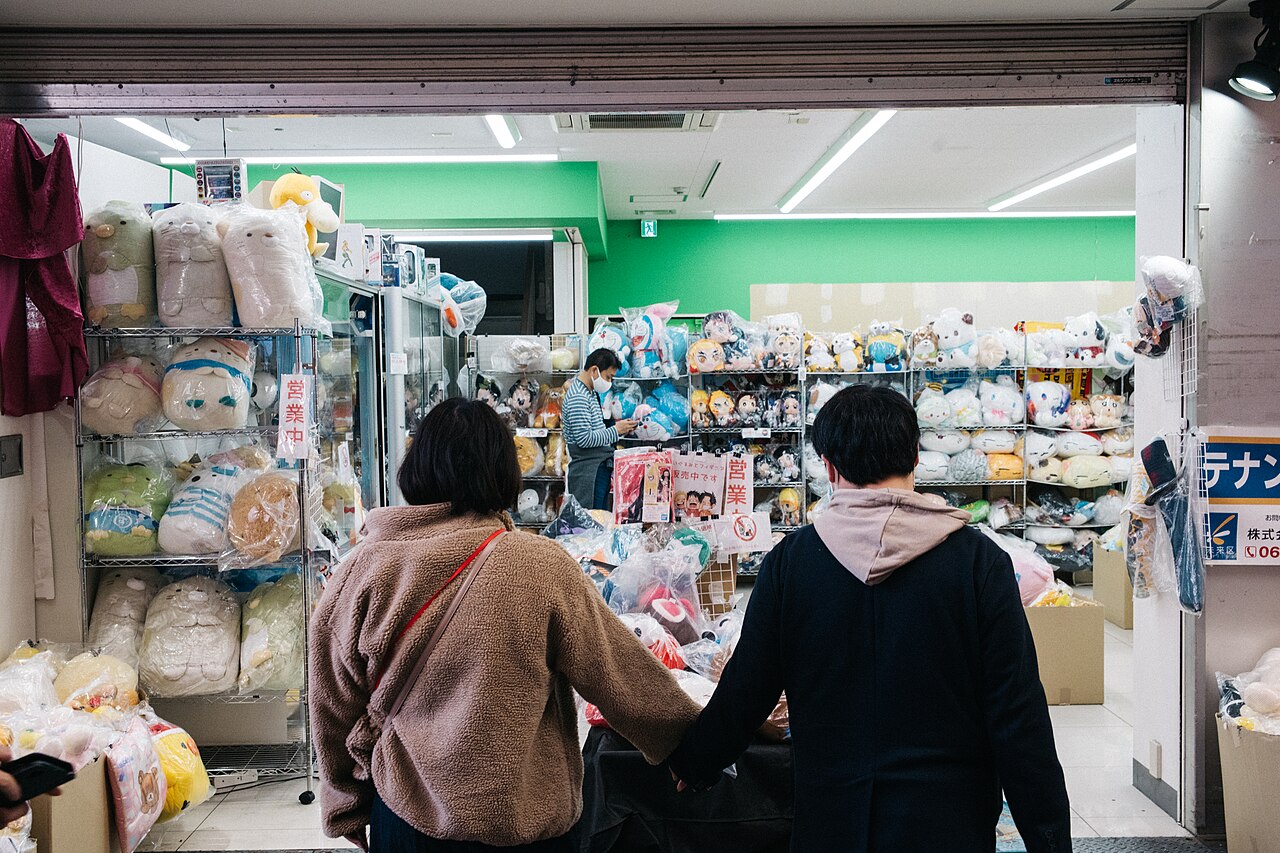 Dick Thomas Johnson from Tokyo, Japan / CC BY 2.0
Craft · Osaka★★
Doguyasuji
2.5 km · straight line
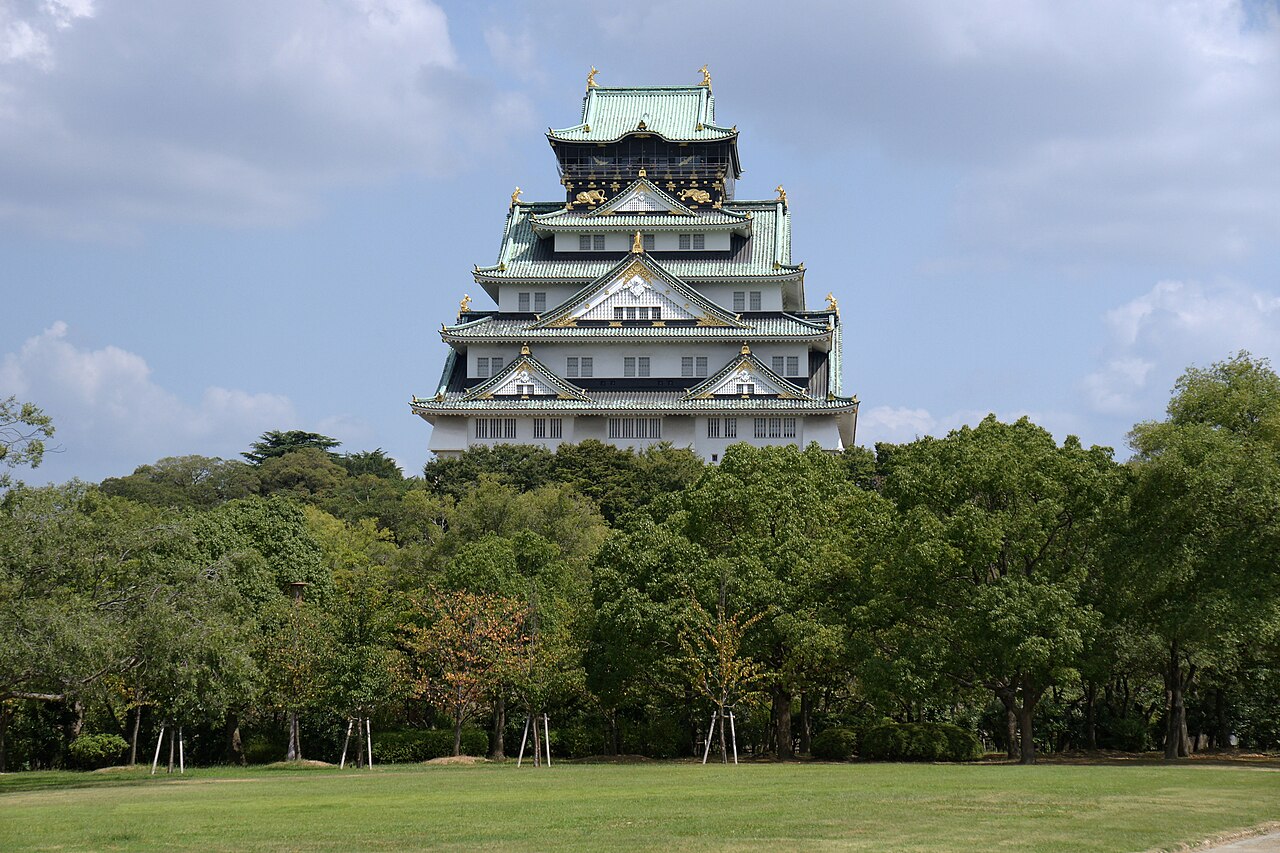 663highland / CC BY 2.5
History · Osaka★★★
Nishinomaru Garden
2.5 km · straight line
Distances are straight lines on the map, not travel times.