Hyōgo · ToyookaNo.342★★Open in map →
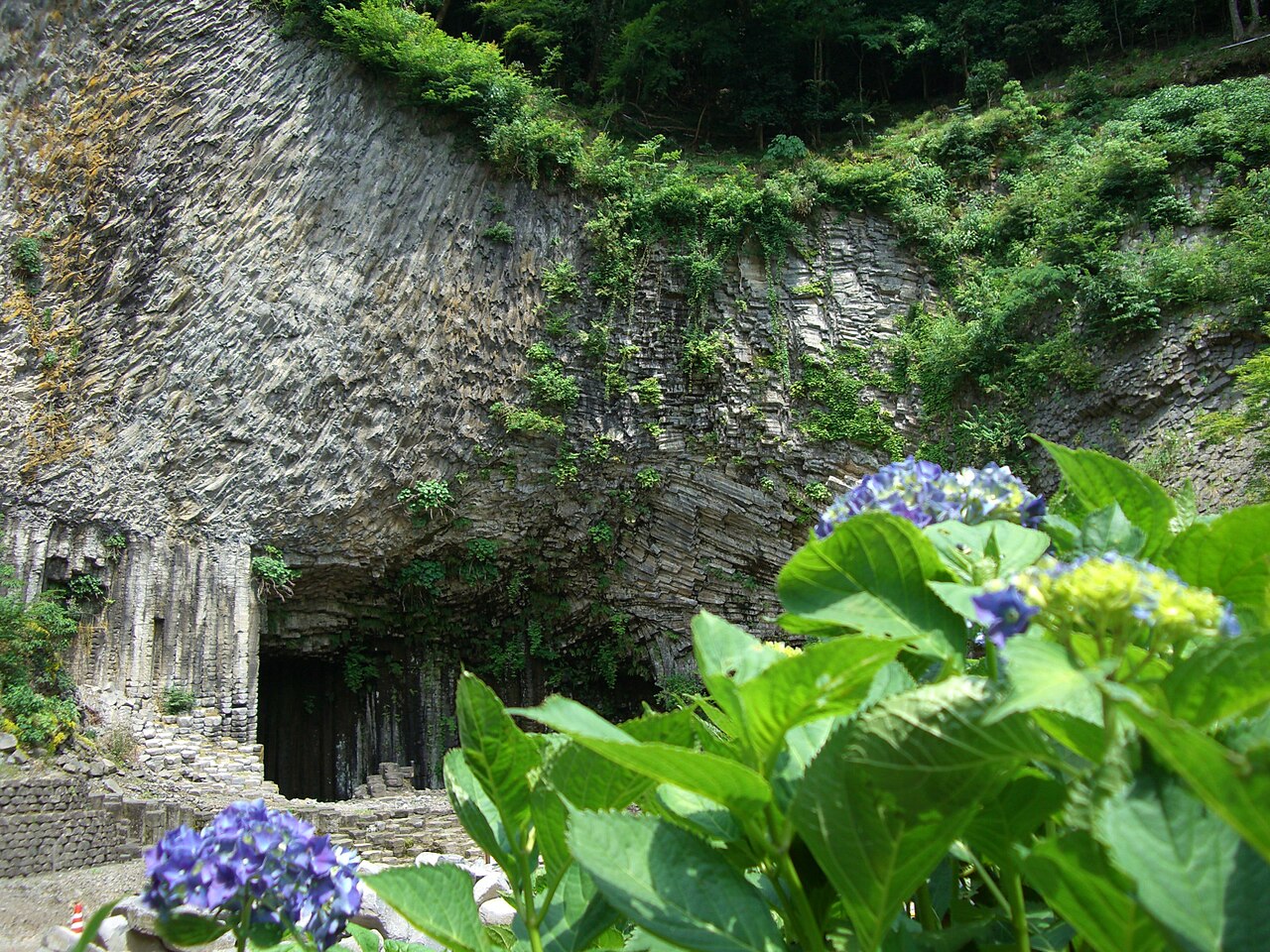
Genbudō
— a cliff of hexagonal basalt columns
A riverside cliff of hexagonal basalt columns in the San'in Kaigan UNESCO Global Geopark, a national natural monument since 1931. Rocks measured here in 1926 gave the first evidence that Earth's magnetic field reverses.
- FromKinosaki-onsen Stn
- ~20 minlocal bus ~20 min
- Get off atGenbudō Kōen bus stop (Zentan Bus, Kinosaki–Toyooka–Genbudō line)
- From there
- Genbudō
The sweet spot
Columnar basalt exists in a number of places worldwide, but few of them named a rock type in a national language and fewer still produced a discovery that helped establish plate tectonics. Genbudō did both, and it is a twenty-minute bus ride from one of Japan's best-preserved hot spring towns. For anyone building a northern Hyōgo trip around Kinosaki, this is the geology half of the day.
Where it is
30 more notes in Hyogo · open the map →What to look for — in walking order
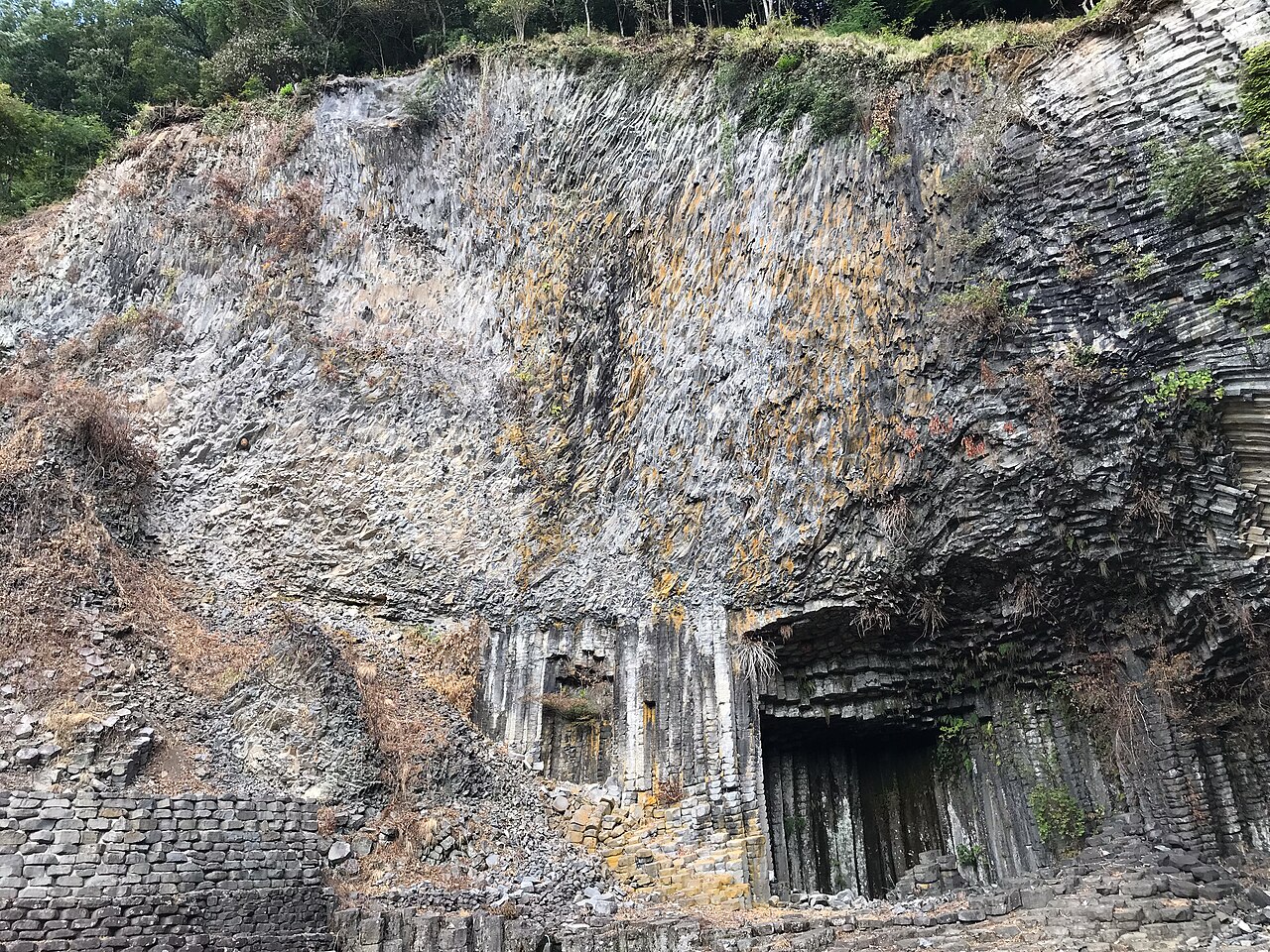
- Genbudōthe largest face, with the coiling column pattern that gave the site its name in 1807
- Seiryūdōthe longest columns on the site, running in near-vertical lines with water at the base
- Byakkodō and the two Suzaku cavessmaller faces further along the path, each showing a different angle of cooling fracture
- Riverside viewpointthe walk back along the Maruyama River gives the full cliff in one frame, best in low afternoon light
How to actually get there
- Kyoto Stn → Kinosaki-onsen Stn (limited express Kinosaki, ~2 hr 30 min), or Osaka Stn → Kinosaki-onsen (limited express Kōnotori, ~2 hr 45 min).
- Kinosaki-onsen Stn → Genbudō Kōen bus stop (Zentan Bus, ~20 min).
- Bus stop → park entrance and the five cave faces (walk, short paved circuit).
- Bus from Kinosaki Onsen or Toyooka
- Kinosaki-onsen Stn → Zentan Bus on the Kinosaki–Toyooka–Genbudō line, alighting at Genbudō Kōen (~20 min). From JR Toyooka Station the same line runs in the other direction, taking a similar time. Reach Kinosaki-onsen from Kyoto by limited express Kinosaki (~2 hr 30 min) or from Osaka by limited express Kōnotori (~2 hr 45 min).
- Same bus back toward Kinosaki or Toyooka
- Return buses use the stop by the park entrance. Service is limited — check the posted timetable when you arrive and note the last departure, as there is no taxi rank at the site.
About the place
From the riverbank path the cliff reads first as decoration — a wall of columns fanning, curving and stacking like something built rather than cooled. It was built, partly: the columns were exposed by centuries of quarrying, the stone carted off for walls and foundations, which is why the faces are called caves. There are five of them, named for the guardian beasts of Chinese cosmology: Genbu, Seiryū, Byakko, and the north and south Suzaku. The name arrived in 1807, when the Confucian scholar Shibano Ritsuzan looked at the coiling columns, thought of Genbu — the black tortoise entwined with a snake — and named the place. Seventy-seven years later the geologist Kotō Bunjirō borrowed that name for the rock type itself: basalt is genbugan in Japanese, after this cliff. Then in 1926 Matuyama Motonori measured the remanent magnetism of these rocks and found it reversed relative to today's field. It was the first solid evidence that the Earth's magnetic poles swap, and the geological epoch that followed carries his name — the Matuyama Reversed Chron.
How to enjoy it
An hour on site is enough — the five faces are linked by a short paved circuit with some steps. It pairs naturally with a stay at Kinosaki Onsen, twenty minutes away, and works well as a morning before an afternoon in the baths. Autumn colour frames the columns from early November. Note that JR Genbudō Station sits on the opposite bank of the river from the park: the only way across is a small ferry run by the adjacent museum, which takes about seven minutes and needs booking, and trains at that unstaffed station are very infrequent. The bus from Kinosaki or Toyooka is the reliable approach.
Background & history
The basalt formed roughly 1.6 million years ago when lava from a nearby eruption pooled and cooled slowly, contracting into the hexagonal columns visible today. Quarrying from the Edo period cut into the flow and created the five hollows now called caves; the stone appears in walls and foundations across the region. Shibano Ritsuzan named the site Genbudō in 1807. In 1884 Kotō Bunjirō adopted the name for the Japanese term for basalt. Matuyama Motonori's 1926 paleomagnetic work here, later confirmed worldwide, became foundational to the theory of plate tectonics. The site was designated a national natural monument in 1931 and now lies within San'in Kaigan National Park and the San'in Kaigan UNESCO Global Geopark.
Before you go
- Cash
- Admission ¥500 adults, ¥300 students; groups of 20 or more pay ¥400 and ¥240. Cash at the reception. IC cards (ICOCA / Suica) work on the Zentan bus and on JR. There is no ATM at the park.
- Good to know
- 9:00–17:00, with no admission after 16:30. Closed 29 December to 3 January. Paths can be slippery after rain.
- Another way
- The small ferry from JR Genbudō Station on the far bank runs to the museum landing in about seven minutes (roughly ¥500 one way, ¥900 return, reservation required) — atmospheric, but the station has very few trains, so treat it as a novelty rather than a plan.
- After you get off
- The Genbudō Kōen bus stop is at the park entrance on the east bank of the Maruyama River. Do not aim for JR Genbudō Station unless you have booked the ferry — it is on the opposite bank with no bridge nearby.
Nearby notes
 MaedaAkihiko / CC0
Onsen · Hyogo★★
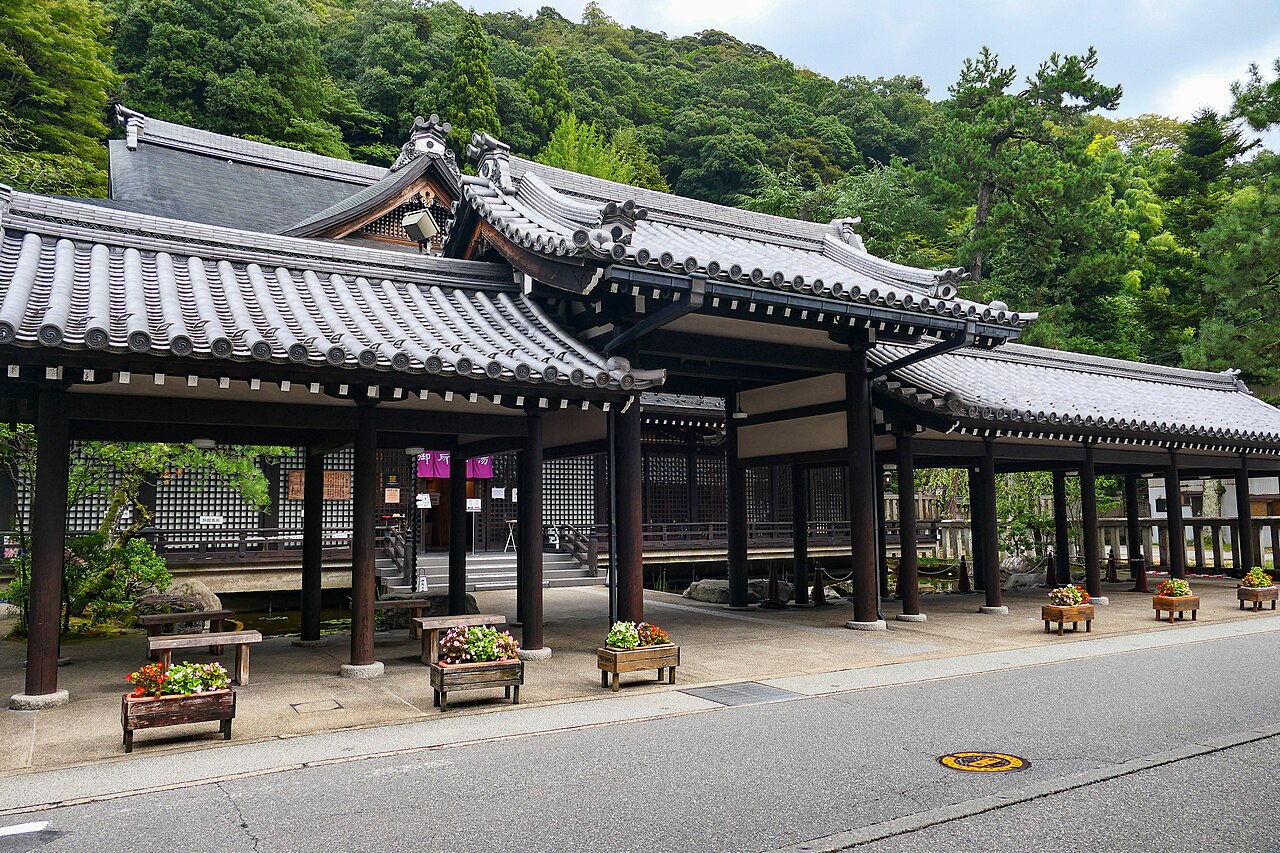
Kinosaki Onsen
4.2 km · straight line
 Samchan91 / CC BY-SA 4.0
Food · Hyogo★★
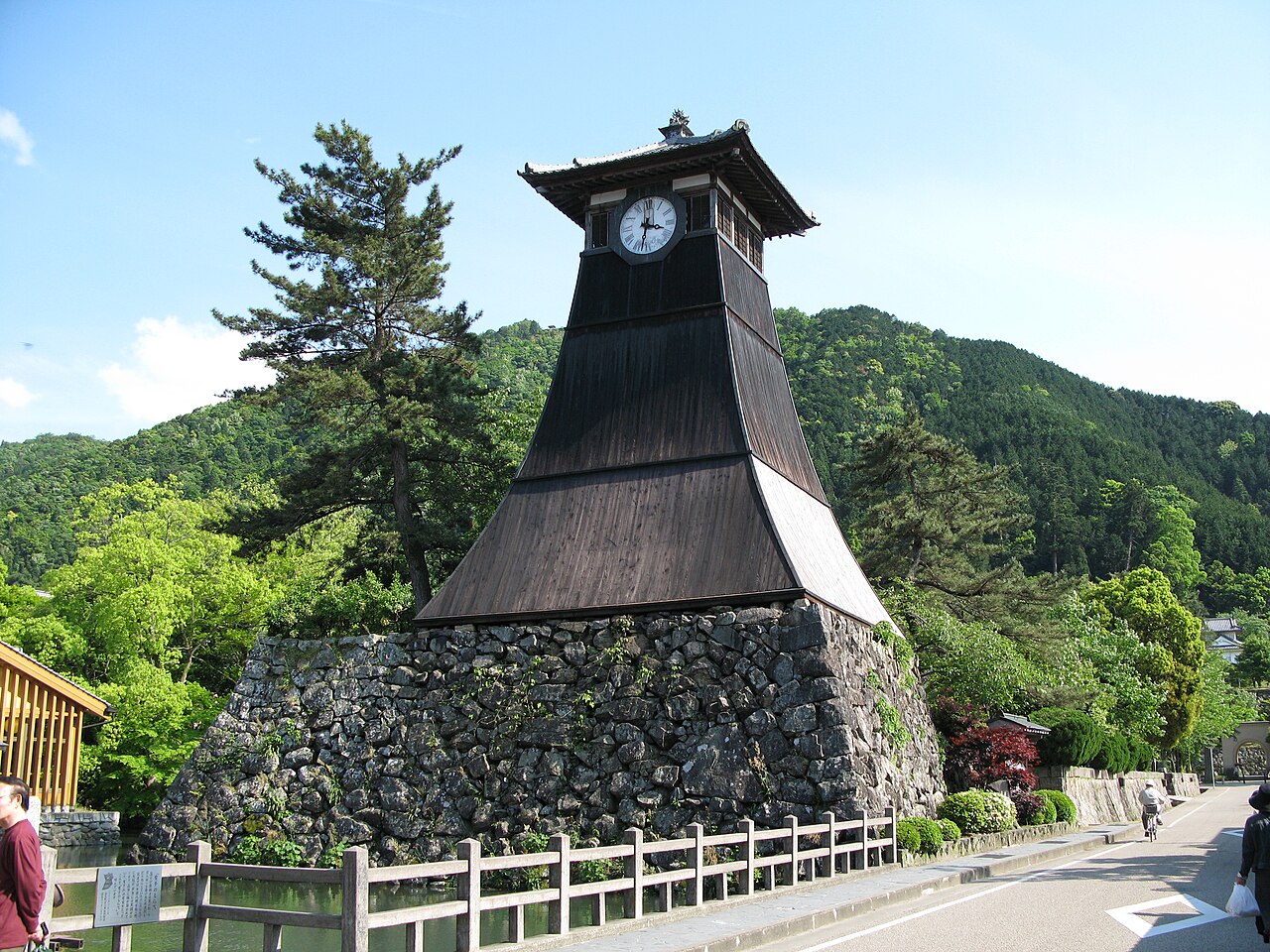
Izushi castle town
15.2 km · straight line
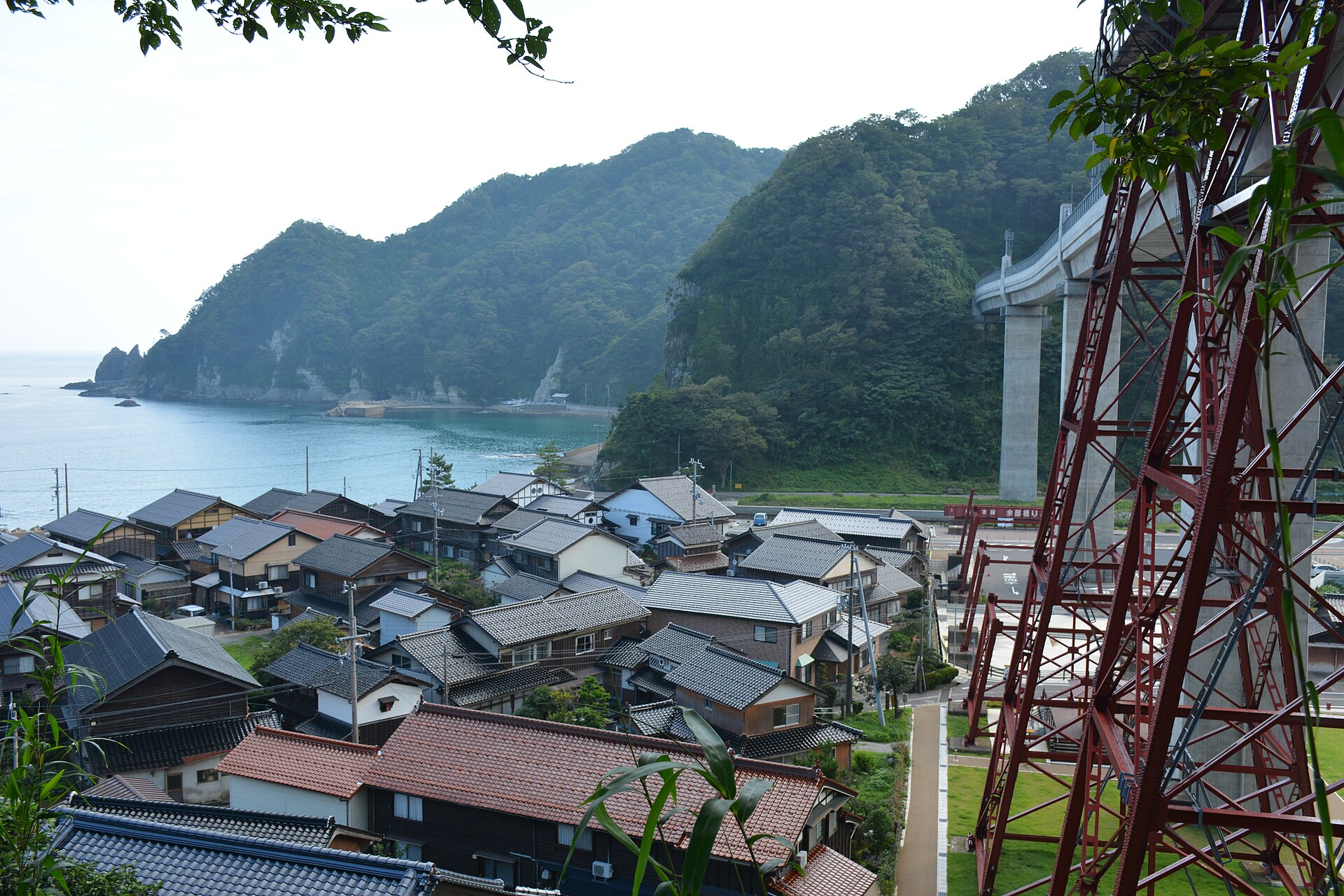 Cheng-en Cheng / CC BY-SA 2.0
History · Hyogo★★
Amarube Sky Station
23.3 km · straight line
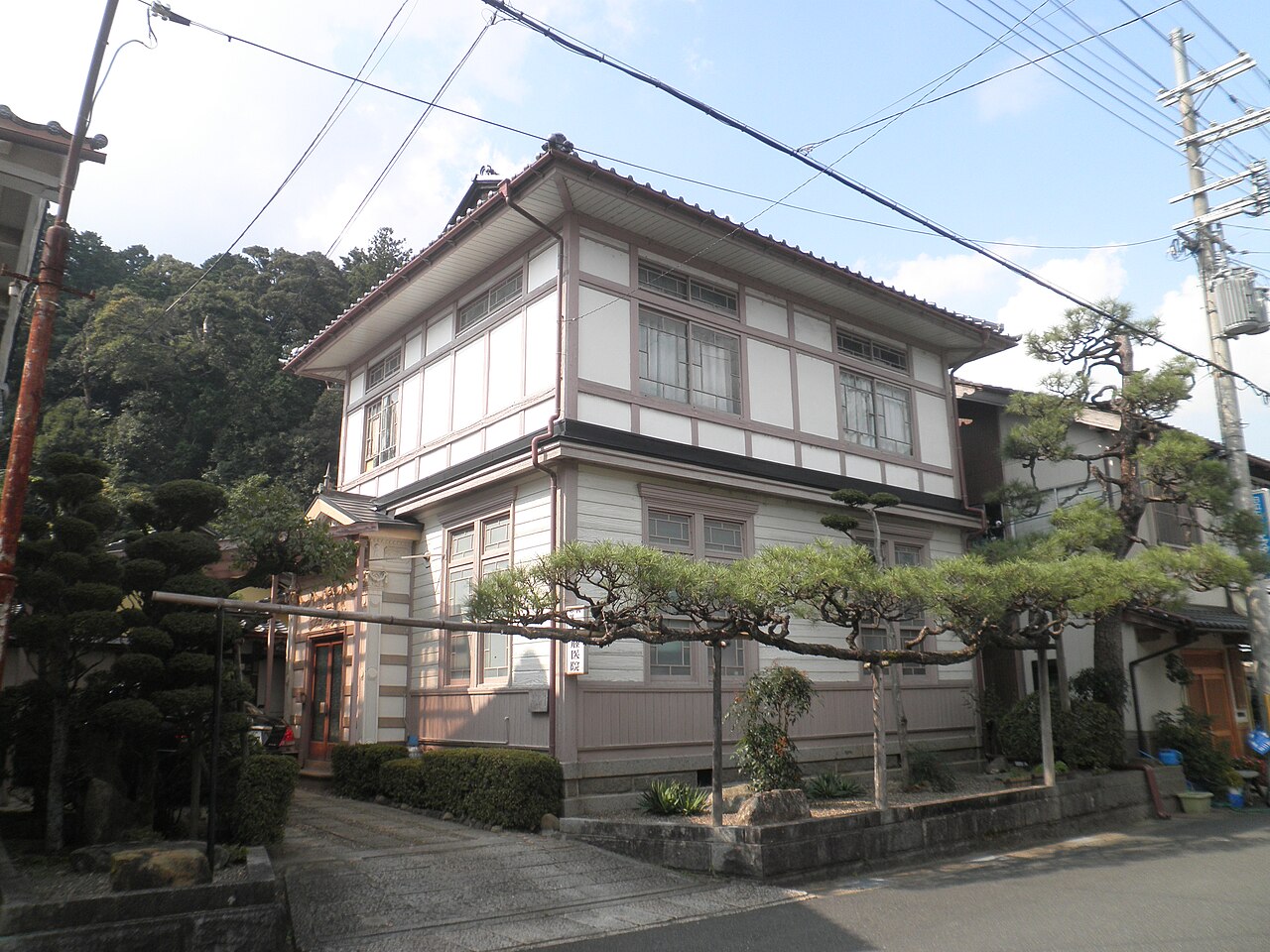 At by At / CC BY-SA 3.0
Craft · Kyoto★
Chirimen Kaido
27.6 km · straight line
Distances are straight lines on the map, not travel times.