West Hakodate · MotomachiNo.1126★★Open in map →
Old Public Hall of Hakodate Ward
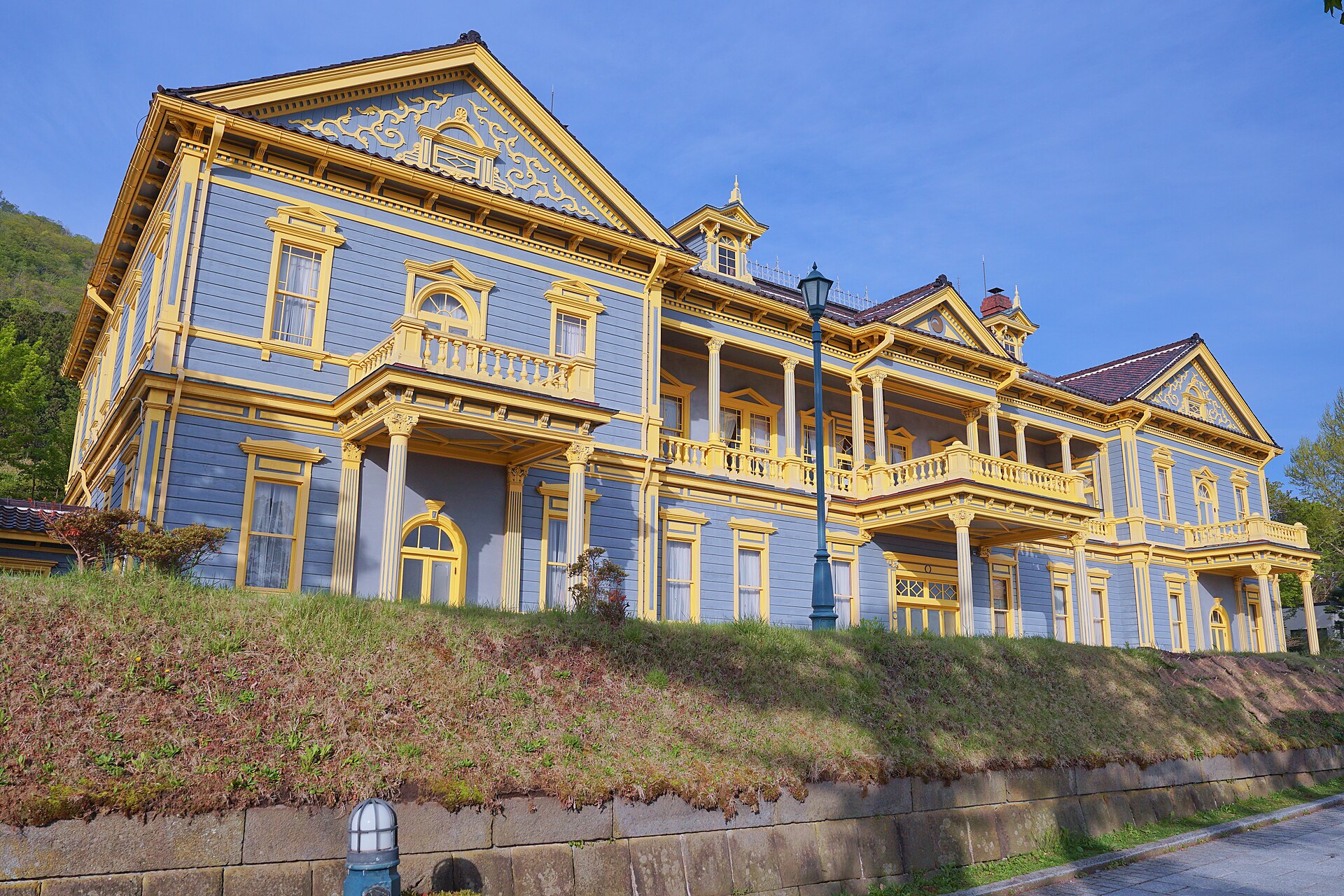
A blue-grey and yellow timber hall of the Meiji years, standing above Motomachi Park at the top of Hakodate's hillside of slopes. It is a national Important Cultural Property, and its upper floor opens onto a balcony over the harbour.
- FromHakodate Station
- ~20 minCity tram Line 5, direct
- Get off atSuehiro-cho tram stop (Hakodate City Tram, Line 5)
- From there
- Old Public Hall of Hakodate Ward
The sweet spot
This is not a hidden spot. Hachiman-zaka is the postcard image of Hakodate and has been since a television commercial made it famous in the 1980s. What gets missed is the order. The slope is the picture, but the reason the slope exists is above it: the park, the hall, and the ground the town was governed from.
Where it is
102 more notes in Hokkaido · open the map →What to look for — in walking order
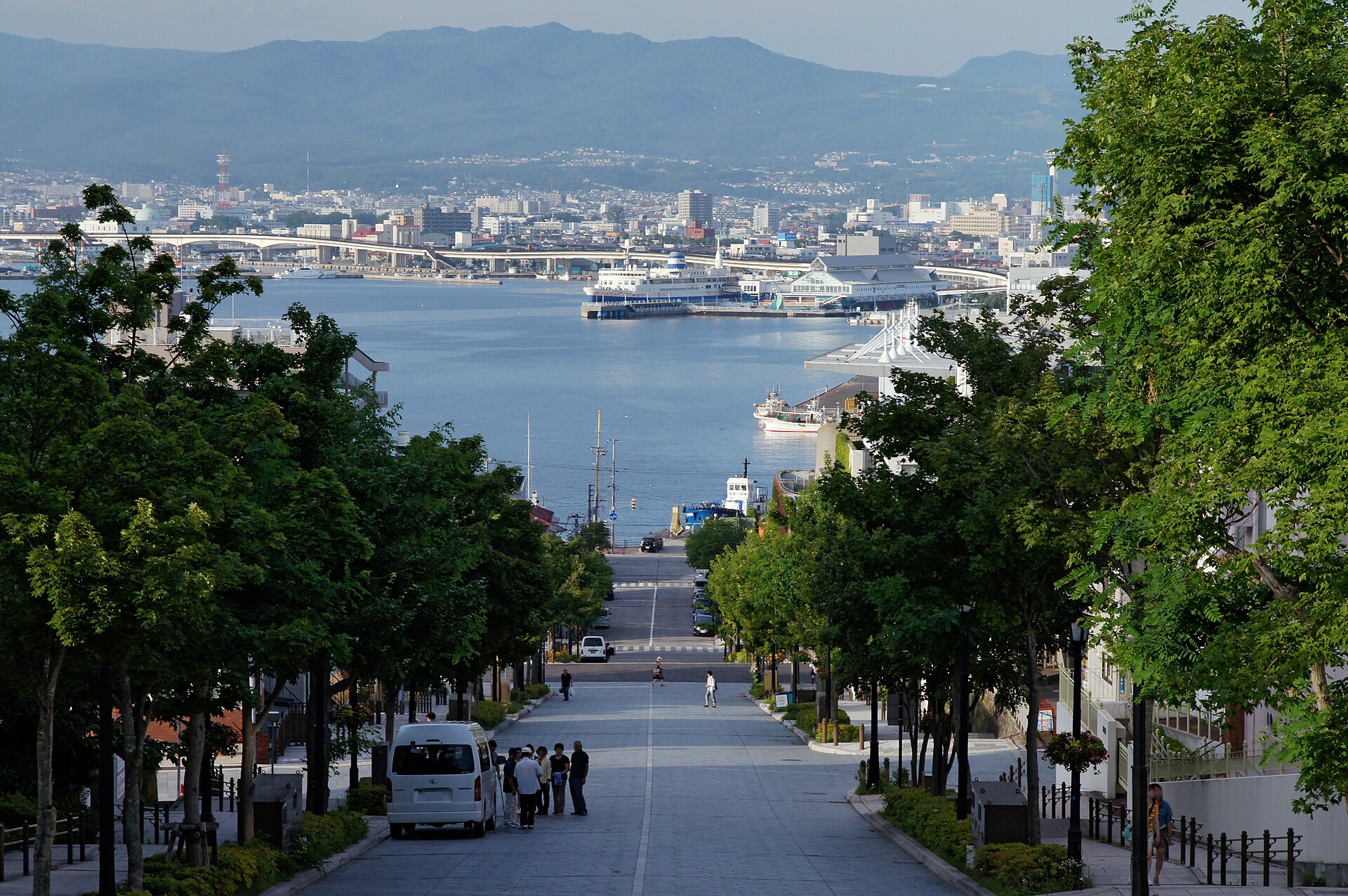
- Motoi-zakathe wide slope up from the waterfront, named for the road-distance marker that once stood at its foot
- Motomachi Parka terraced park on the ground of the old Hakodate magistracy, with the prefecturally designated former branch office building
- The Kaitakushi book vaulta small store built for the colonial commission's Hakodate branch, still standing at the edge of the park
- The upper assembly hall and balconyone long room taking up most of the second floor, opening onto a balcony that runs the width of the front
- Hachiman-zakaa stone-paved slope running straight to the harbour, with the retired ferry Mashu Maru at the end of the sightline
How to actually get there
- Hakodate Station → Suehiro-cho (Hakodate City Tram Line 5, shortest fare band, 250 yen).
- Suehiro-cho → the foot of Motoi-zaka (walk about 5 min west along the tram street).
- Up Motoi-zaka past Motomachi Park to the Old Public Hall on the terrace above it.
- Come down Hachiman-zaka with the harbour ahead of you, back to the tram street.
- Hakodate City Tram, Line 5 from Hakodate Station
- Hakodate Station tram stop →(City Tram Line 5, toward Hakodate Dokku-mae)→ Suehiro-cho, then about seven minutes uphill on foot to the hall. Confirmed at the time of writing, this ride falls in the operator's shortest fare band at 250 yen. Trams run from 6:07 to 23:27. Suehiro-cho lies beyond Jujigai, where the two lines split, so this stretch is served less often than the trunk section.
- Return from Suehiro-cho
- Walk down Hachiman-zaka to the tram street and take Line 5 back toward Hakodate Station. The last tram of the day runs at 23:27, but the section past Jujigai is the thin end of the network, so read the board at the stop instead of assuming one will be along. Motomachi is a hillside, and the walk down is quicker than the walk up was.
About the place
Hakodate's western district is a hillside scored by named slopes that run straight down to the harbour, and Motomachi lies in the middle of them. The Old Public Hall of Hakodate Ward stands at the top of one, on the terrace above Motomachi Park — ground that had held the seat of local government since the shogunate ran its Hakodate magistracy here. The hall is a two-storey timber building under a tiled hipped roof, its clapboard walls and window frames painted blue-grey and yellow. The ground floor is divided into small rooms: a dining room, a billiard room, meeting rooms. The floor above is given over almost entirely to one assembly hall, with a balcony across the front facing the port.
How to enjoy it
Confirmed at the time of writing, the hall opens at 9:00 and shuts at 18:00 from April to October, staying open until 19:00 from Saturday to Monday, and closes at 17:00 from November to March. Go up Motoi-zaka and come down Hachiman-zaka, so the harbour is in front of you on the descent rather than behind you on the climb. The assembly hall and its balcony are the part that rewards unhurried time.
Background & history
A fire in August 1907 burned down the district's town assembly rooms and chamber of commerce, leaving Hakodate Ward without a public hall, and the appeal for funds went nowhere. In 1908 the merchant Soma Tetsuhei offered 50,000 yen, and building began on a budget that came to roughly 58,000 yen: started in May 1909, finished in September 1910. The ward engineer Konishi Asajiro drew it and the master carpenter Muraki Jinzaburo built it. The crown prince, later the Taisho emperor, lodged here on a tour of Hokkaido in 1911, and the hall was designated an Important Cultural Property in 1974.
Before you go
- Cash
- The slopes and Motomachi Park are public streets and open ground, with no admission. Entry to the hall was confirmed at 300 yen for adults and 150 yen for students and children at the time of writing. The tram takes cash with a numbered boarding ticket, and also nationwide IC cards including Kitaca, Suica, ICOCA and nimoca.
- Good to know
- The hall is closed from 31 December to 3 January, with occasional stocktaking days on top of that, so it is not a safe fixed point in a tight plan. Every route up to it is a climb, and in winter the slopes carry snow and ice. The building was shut for restoration work and reopened in April 2021, so older photographs of the interior may not match what is there now.
- Another way
- Get off at Jujigai instead of riding on to Suehiro-cho and climb into Motomachi from the east. The slopes of the western district run parallel up the same hillside, so any of them will bring you out onto the terrace the park and the hall stand on.
- After you get off
- From the Suehiro-cho tram stop the hall is about 350 metres uphill, roughly seven minutes on paved streets. Hachiman-zaka begins almost at the stop; Motoi-zaka starts about five minutes west along the tram street, and Motoi-zaka is the one that delivers you to the park and the hall.
Nearby notes
 663highland / CC BY 2.5
History · Hokkaido★★
Kanemori Red Brick Warehouse
0.6 km · straight line
 Hector Martin / CC BY-SA 2.0
Food · Hokkaido★★★
Hakodate Shio Ramen
0.7 km · straight line
 洞内定晴 / CC BY 4.0
Nature · Hokkaido★★★
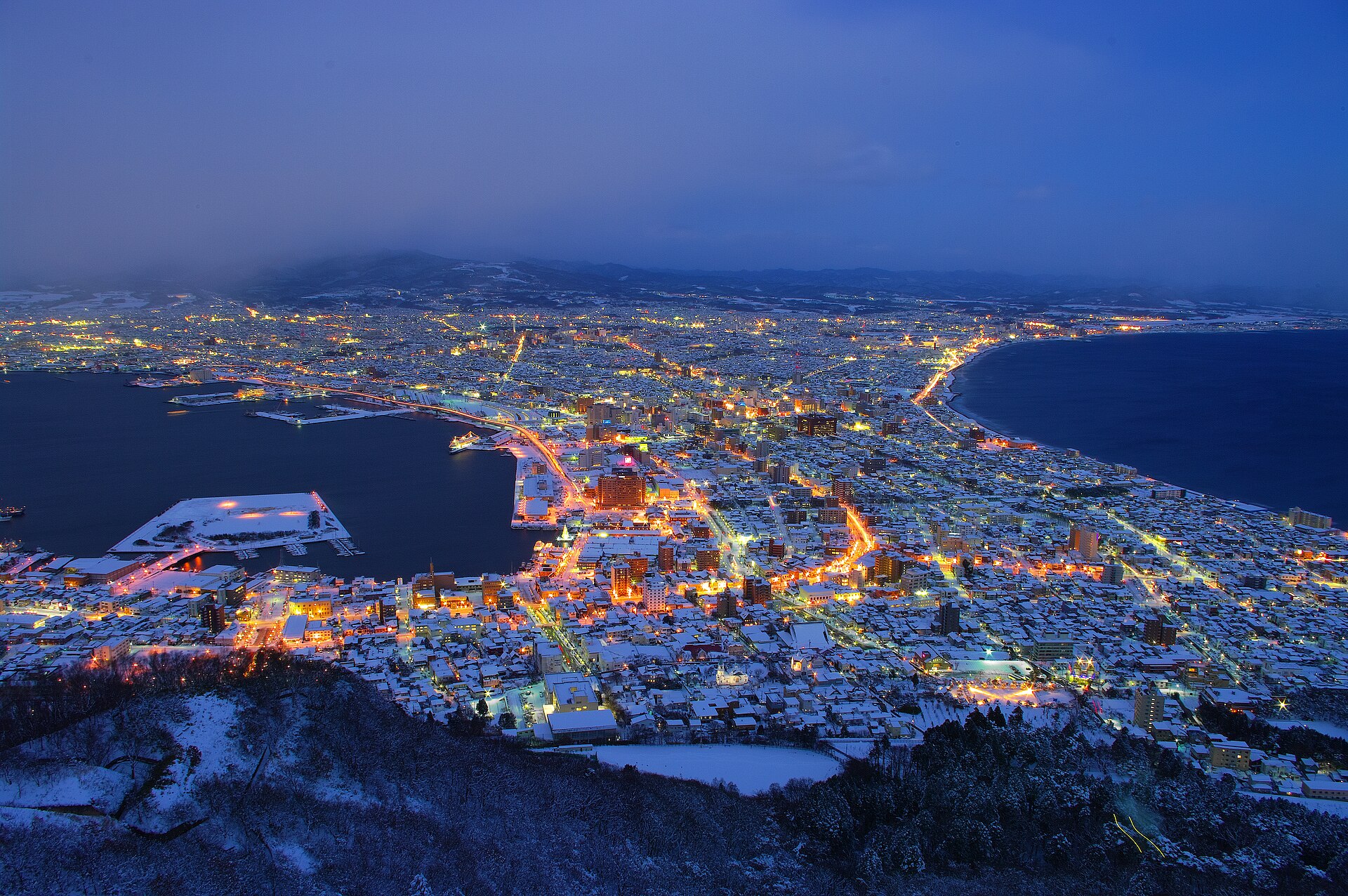
Mount Hakodate
0.7 km · straight line
 663highland / CC BY 2.5
Food · Hokkaido★★★
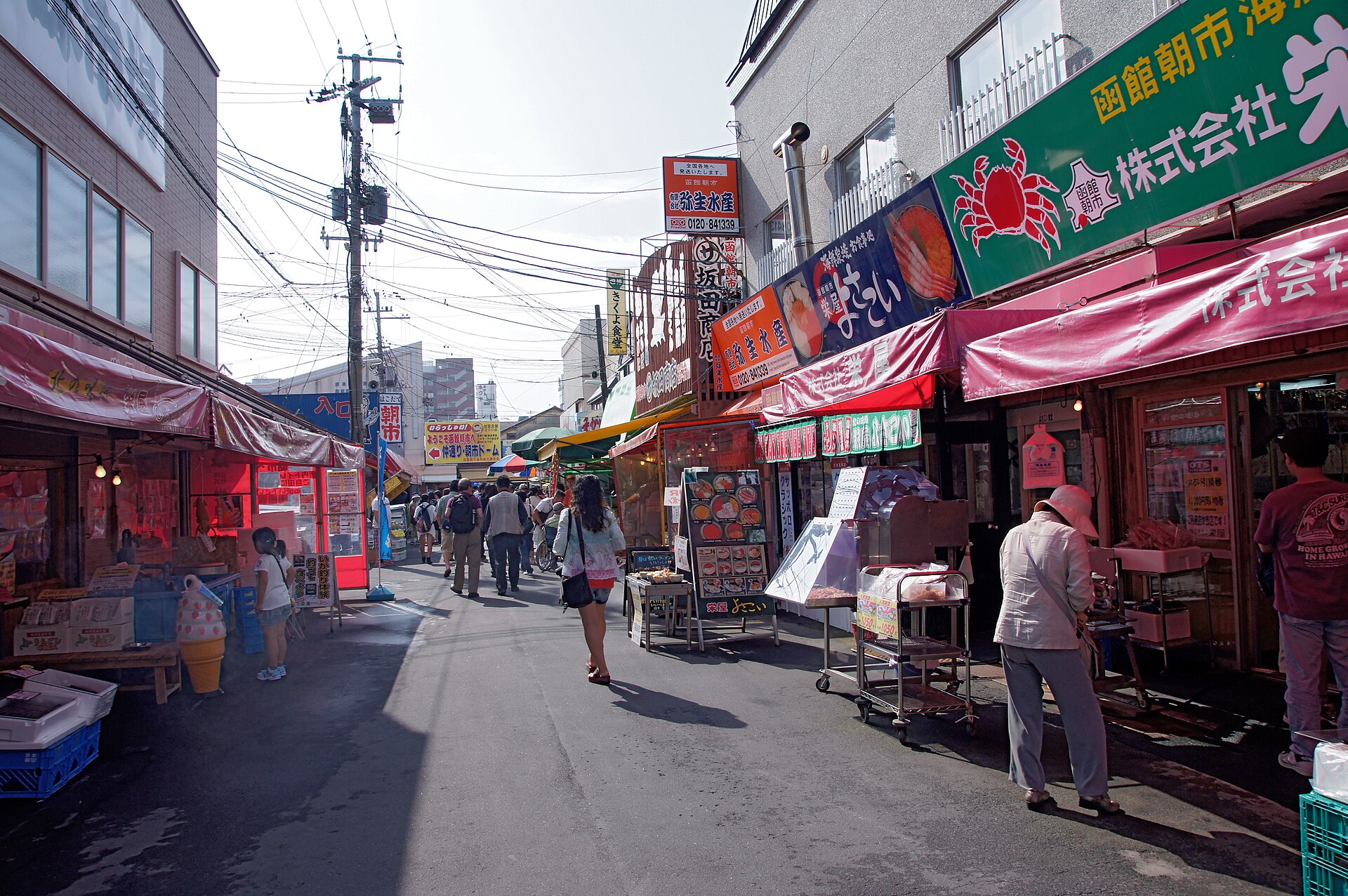
Hakodate Morning Market
1.6 km · straight line
Distances are straight lines on the map, not travel times.