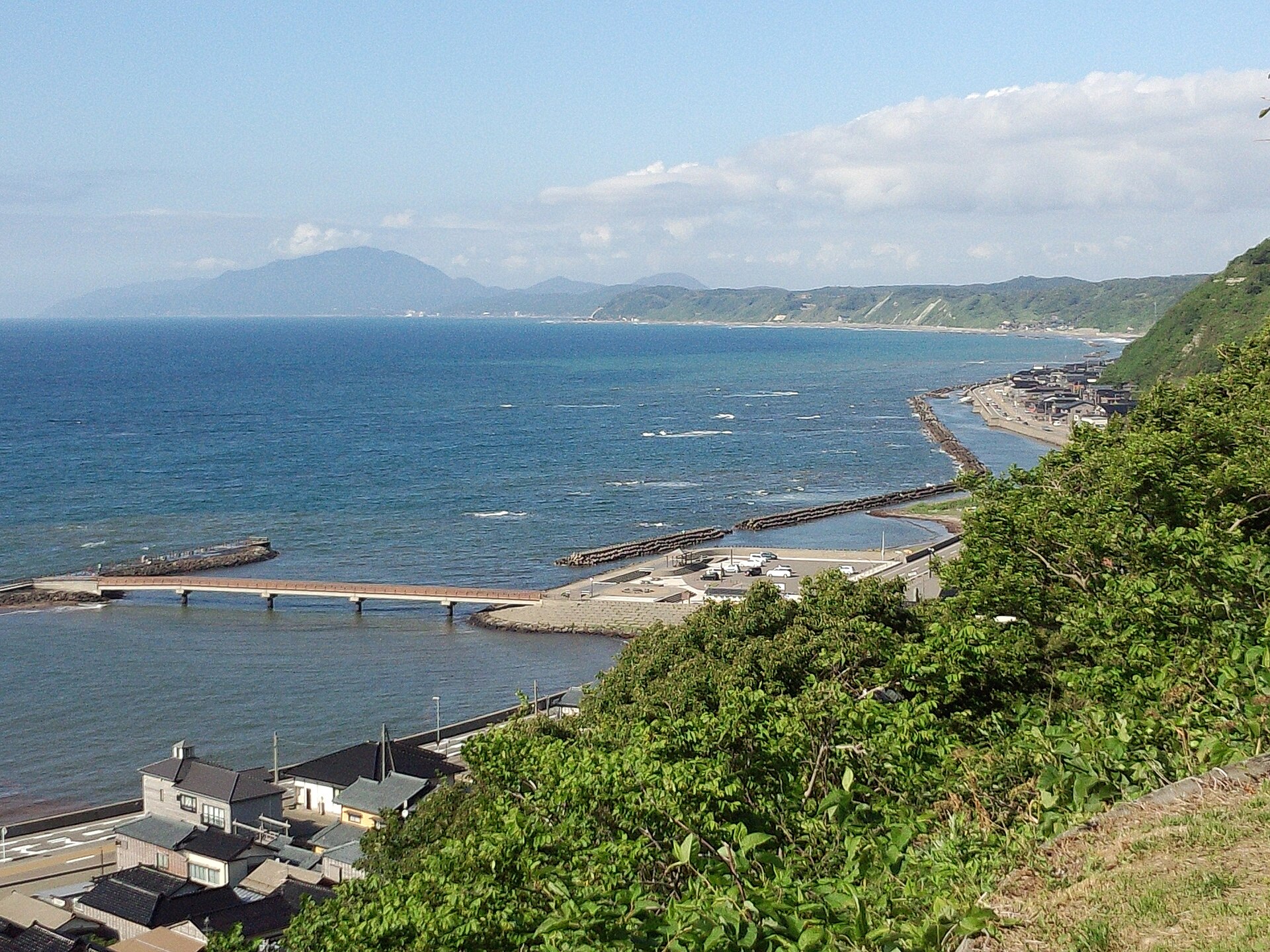
Niigata Coast · IzumozakiNo.479★Open in map →
Izumozaki
— A shogunal gold port lined with gable-front houses
A shogunal port on the Sea of Japan where the metal from the Sado mines came ashore, and where a shortage of flat land produced a street of houses turned gable-end to the road. It runs from one end of the town to the other, unbroken.
- FromNagaoka Station
- ~1 hEchigo Kotsu bus from Nagaoka
- Get off atRyokando-mae bus stop (Echigo Kotsu)
- On foot
- Izumozaki
The sweet spot
Izumozaki is not undiscovered, but it is not on the way to anywhere either. The Echigo Line station sits up on the plateau, and the coast road carries most traffic straight past at speed. The street is the sight here, and it only reads on foot — which is why the town is usually experienced through a windscreen.
Where it is
12 more notes in Niigata · open the map →What to look for — in walking order
- Ryokan-dothe seafront hall on the site of the Tachibanaya house, where the poet-monk was born
- Basho-ena small garden holding the stone carving of the verse about Sado and the Milky Way
- The gable-front streetnarrow fronts and deep plots, one after another along the old highway
- Hokkoku Kaido Tsumairi Kaikana free town house with the tsumairi floor plan rebuilt inside it
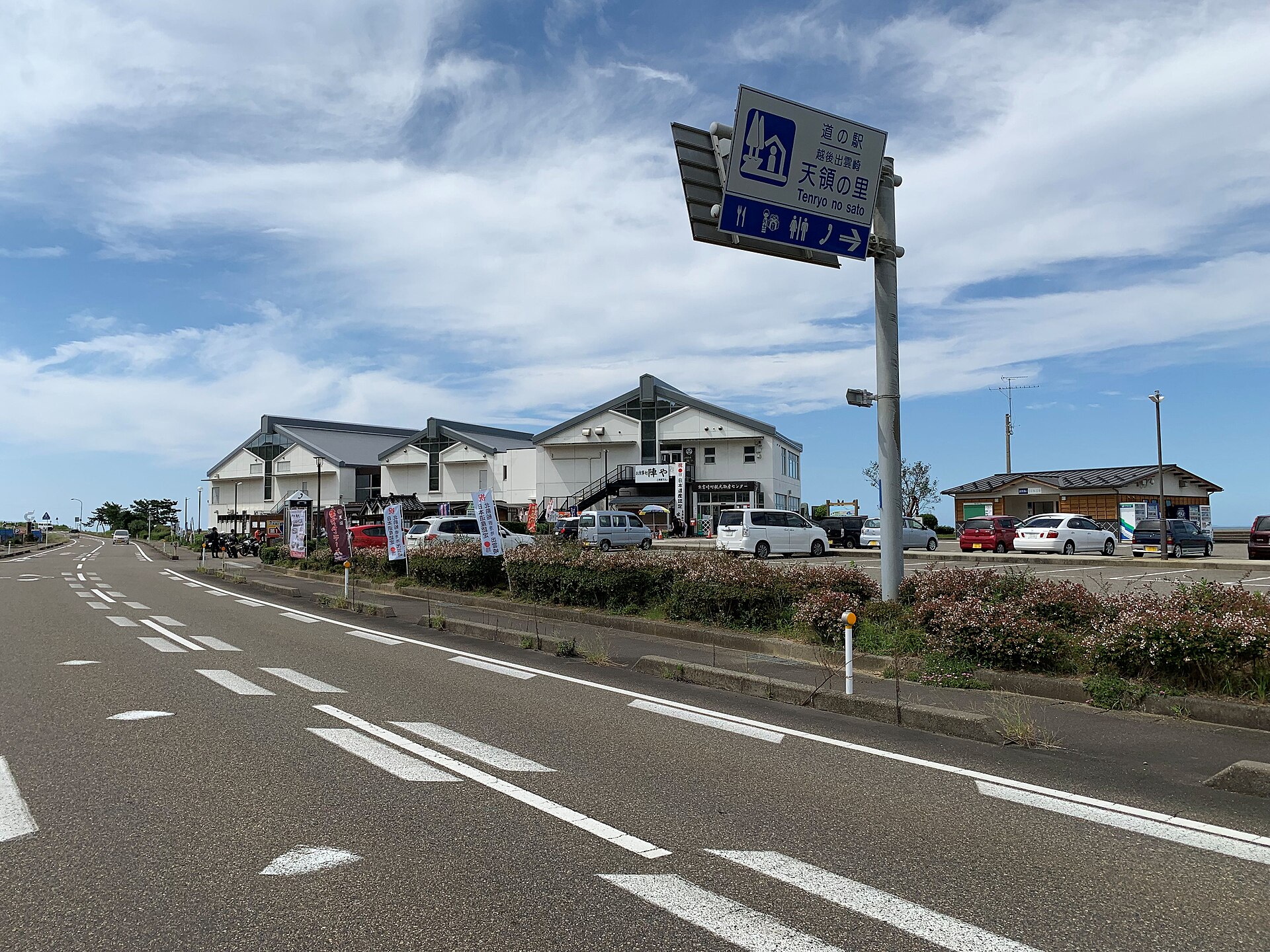
- Tenryo no Satothe roadside station at the south end, holding the Edo-period museum and the oil museum
How to actually get there
- Nagaoka Station → Ryokando-mae (Echigo Kotsu bus toward Izumozaki Shako, a little under an hour).
- Walk south along the old Hokkoku highway through the gable-front street.
- Stop at the Tsumairi Kaikan to see how one of these houses is laid out inside.
- Carry on to Amaze for the magistrate's office site and the roadside station.
- Echigo Kotsu bus from Nagaoka
- Nagaoka is the Joetsu Shinkansen stop for this coast. From the station take the Echigo Kotsu bus signed for Izumozaki Shako; it crosses the plain westward and drops to the sea in a little under an hour. Get off at Ryokando-mae, which leaves you in the middle of the street rather than at one end of it.
- Return to Nagaoka
- The same route runs back from the seafront to Nagaoka. It is a country service, so read the return times off the pole before you start walking rather than after. Nagaoka is the nearest place with trains running late.
About the place
The town has almost no level ground. The ridge comes down close to the water and leaves a shelf a few hundred metres wide, and everything had to fit on it: the highway, the shipping agents, the inns, the houses. The answer was tsumairi — turn the gable end to the street, keep the frontage narrow, run the building back. Frontage was also what the Edo authorities taxed, which sharpened the habit until it became the shape of the whole town. The line of gable-fronted houses runs about 3.6 kilometres from Inohana to Amaze, and the town claims it as the longest of its kind in the country.
How to enjoy it
The Tsumairi Kaikan opens from ten in the morning until four, and it is the only place you can see the inside of one of these houses, so build the walk around that window. Otherwise this is a late-in-the-day town: it faces west across open water toward Sado, and the whole street points at the sunset.
Background & history
The shogunate took Izumozaki into its own hands in 1616 and set up a magistrate's office here, the first in Echigo, to handle the metal shipped over from Sado. Cargo, crews and money followed; the town became a post station on the Hokkoku highway, thick with shipping agents, inns and a licensed quarter. The poet-monk Ryokan was born here into one of those merchant families. Basho broke his Oku no Hosomichi journey in the town and left the line about the Milky Way lying across the sea toward Sado. Later the shore turned industrial, and Amaze became the place where Japan's modern oil industry began.
Before you go
- Cash
- Walking the street costs nothing, and the Tsumairi Kaikan on the old highway is free to go into. The museum at the roadside station charges admission — 500 yen for adults at the time of checking, which also covers the oil museum beside it.
- Good to know
- The Tsumairi Kaikan shuts over the new year, and the museum at the roadside station takes the first Wednesday of most months off. This is a snow coast: winter puts wind straight off the sea into a street with no shelter, and the sunsets the town is known for arrive with it.
- Another way
- By train the JR Echigo Line stops at Izumozaki, but the station is inland on the plateau and needs a bus or a long walk down to the water. By car, Route 352 runs the length of the shore and the roadside station has a large free car park.
- After you get off
- Ryokando-mae sets you down on the old highway, in front of the seafront hall marking Ryokan's birthplace. Turn south and follow the street. It stays the same street the whole way — narrow fronts on both sides — and about a kilometre later it opens out at the roadside station in Amaze.
Nearby notes
 Kakidai / CC BY-SA 4.0
History · Niigata★★
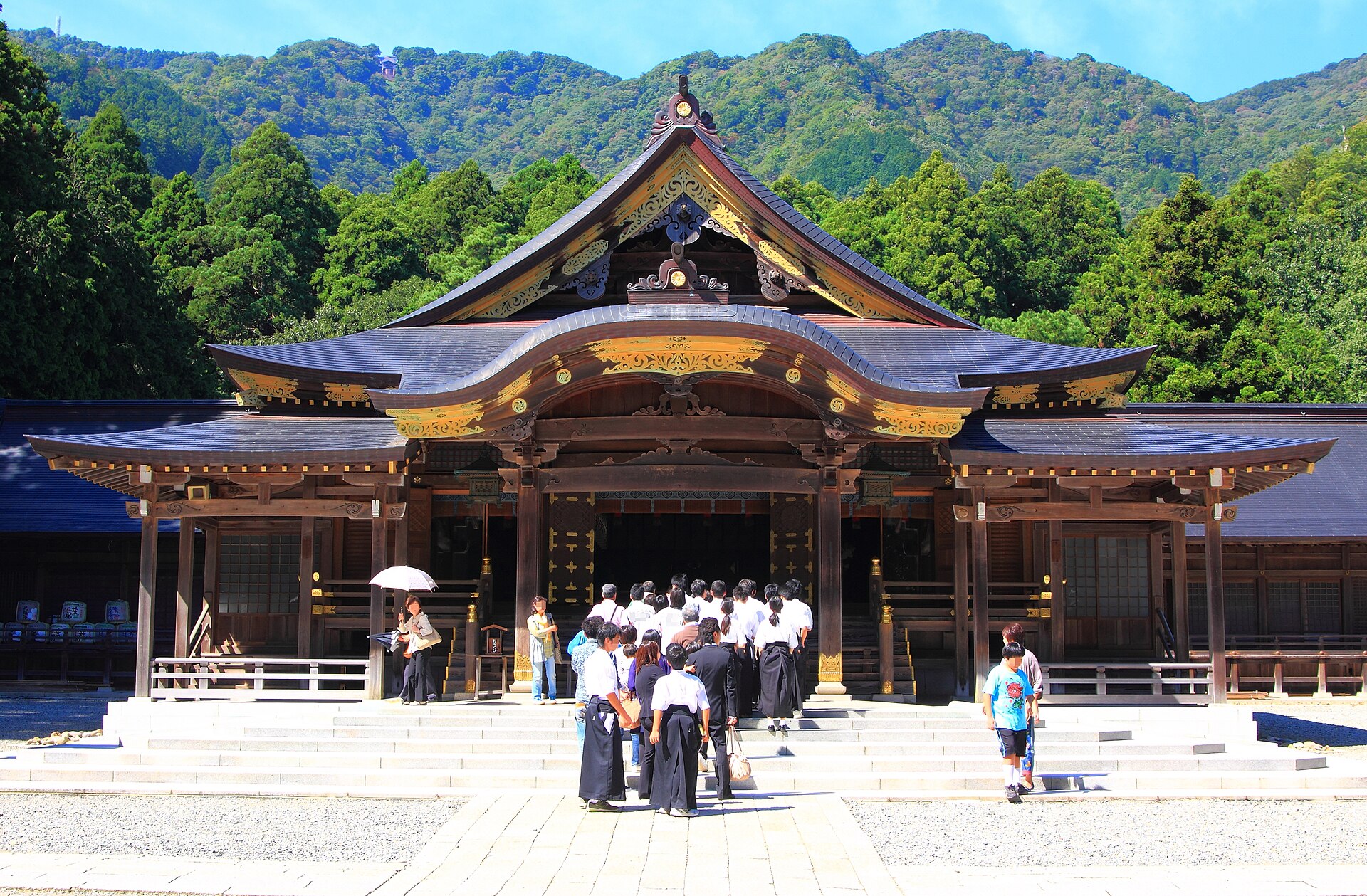
Yahiko Shrine
22.8 km · straight line
 Tail furry / CC BY-SA 4.0
Craft · Niigata★★★
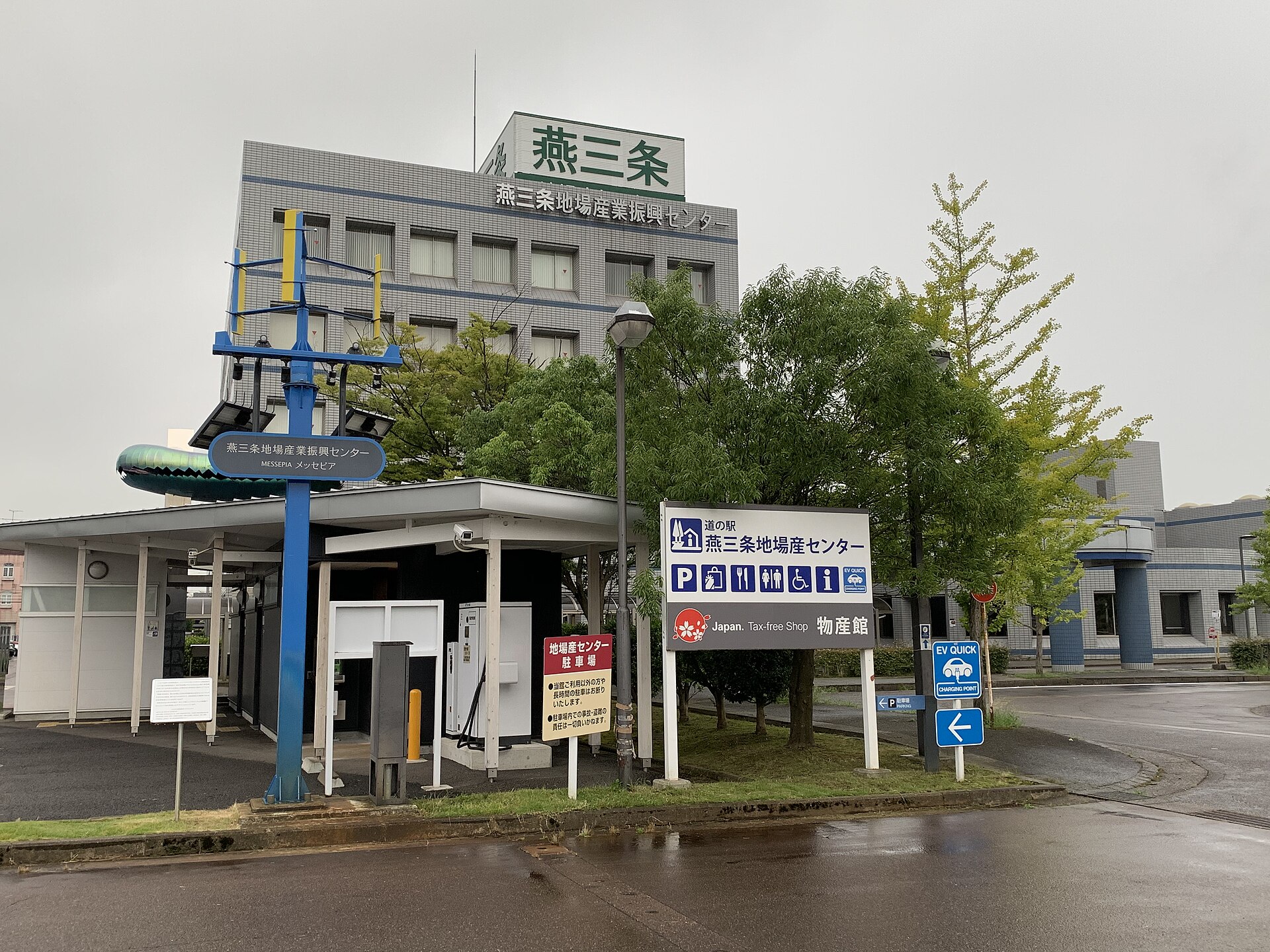
Tsubame-Sanjo Jibasan Center
25.6 km · straight line
Distances are straight lines on the map, not travel times.