Saitama · TokorozawaNo.367★★Open in map →
Kadokawa Musashino Museum
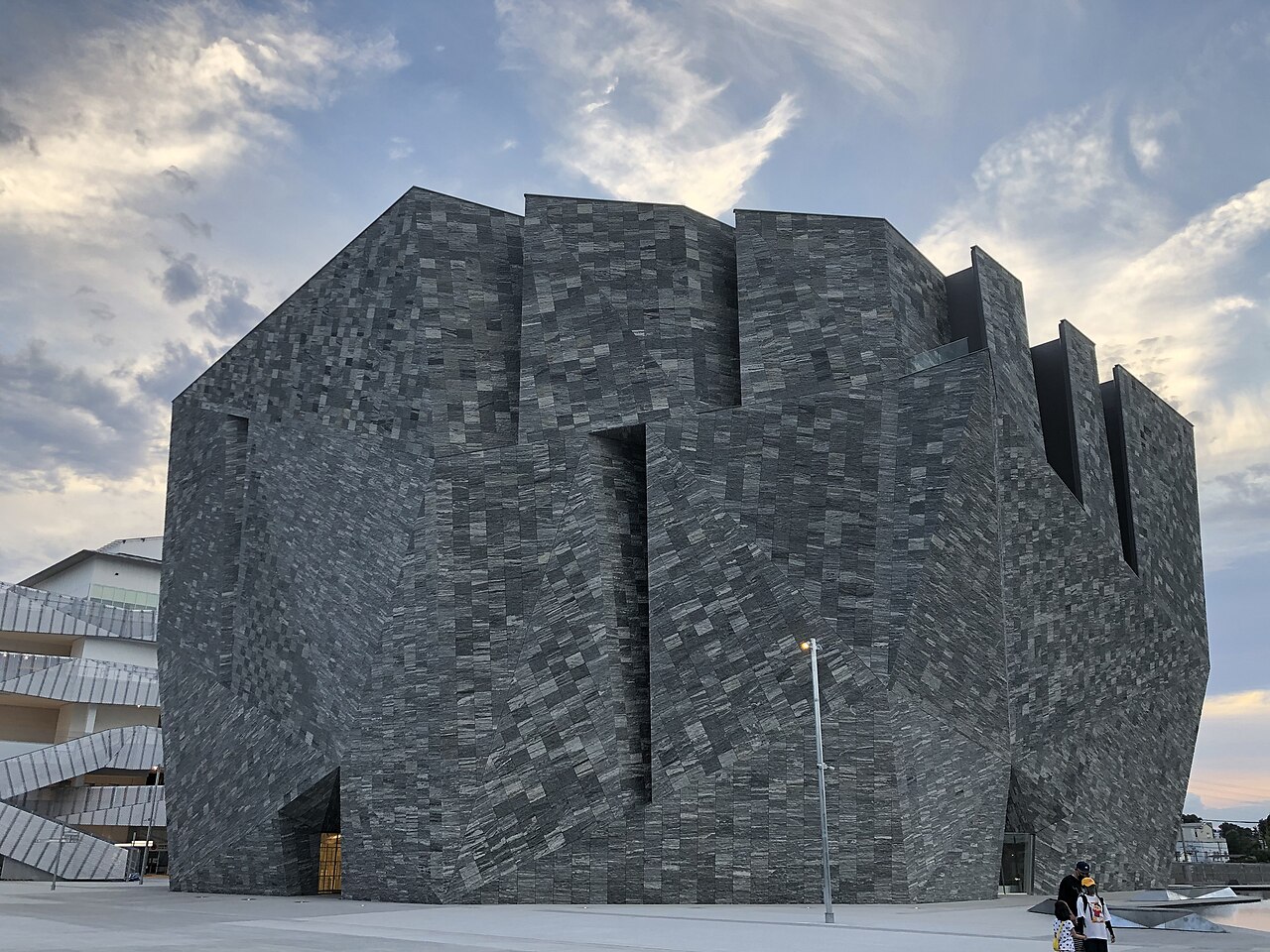
A cultural complex in Tokorozawa, Saitama, designed by Kengo Kuma as a faceted rock clad in roughly twenty thousand granite plates. Its centrepiece is the Bookshelf Theatre, a room walled in eight-metre shelves of books where a projection-mapping show runs on the spines.
- FromShinjuku Stn
- ~50 min50 min from Shinjuku, then 10 min on foot
- Get off atHigashi-Tokorozawa Station (JR Musashino Line)
- On foot
- Kadokawa Musashino Museum
The sweet spot
Foreign visitors chasing contemporary Japanese architecture generally stay inside Tokyo's 23 wards and never cross into Saitama, so a major Kuma building fifty minutes from Shinjuku goes almost unseen abroad. It is also one of the few places where Japan's publishing and pop-culture industry puts itself on display as architecture rather than as merchandise — a useful counterweight to Akihabara.
Where it is
19 more notes in Saitama · open the map →What to look for — in walking order
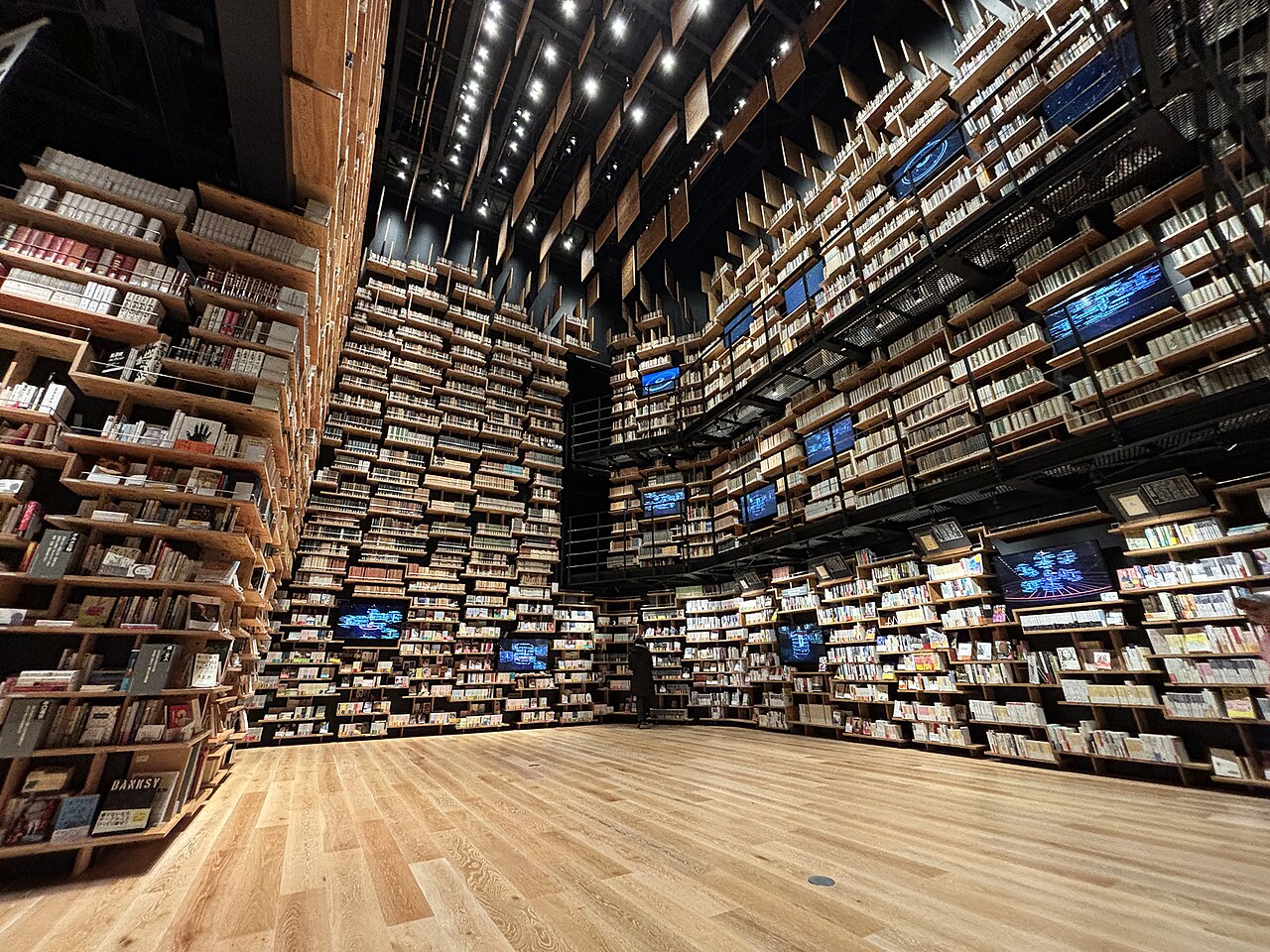
- Bookshelf Theatrethe signature hall: shelves about eight metres high on every side, with a projection-mapping show played across the book spines at set times
- Edit Town book streeta long corridor of shelves arranged by association rather than genre, designed to make you take a wrong turn on purpose
- Kengo Kuma's granite exteriorroughly twenty thousand stone plates on an irregular faceted volume — worth circling once outside before going in
- Musashino Reiwa Jinjaa small contemporary shrine on the same grounds, built as part of the complex rather than inherited from the past
How to actually get there
- Shinjuku Station → Nishi-Kokubunji Station (JR Chuo Line rapid, ~25 min).
- Nishi-Kokubunji Station → Higashi-Tokorozawa Station (JR Musashino Line, ~12 min).
- Higashi-Tokorozawa Station → Kadokawa Culture Museum (on foot, ~10 min).
- Chuo Line then Musashino Line
- Shinjuku Station →(JR Chuo Line rapid toward Tachikawa, ~25 min)→ Nishi-Kokubunji Station →(JR Musashino Line toward Minami-Urawa / Nishi-Funabashi, ~12 min)→ Higashi-Tokorozawa Station. From the station exit, Sakura Town is about 10 minutes on foot along a signposted street; the museum is the stone building at the far end of the plaza.
- Same route back, or via Ikebukuro
- Higashi-Tokorozawa Station →(JR Musashino Line toward Fuchu-Honmachi, ~12 min)→ Nishi-Kokubunji Station →(JR Chuo Line rapid, ~25 min)→ Shinjuku Station. Alternatively ride the Musashino Line the other way to Musashi-Urawa and change to the JR Saikyo Line for Ikebukuro and Shinjuku.
About the place
From the outside the building refuses to look like a museum. Kengo Kuma clad it in about twenty thousand plates of granite and broke the volume into irregular facets, so that from the plaza it reads as a single piece of stone dropped onto the flat Musashino plain — the kind of rock that would be older than the town around it. Inside, the logic reverses: the material becomes paper. The building holds a library, an art museum and a museum of popular culture at the same time, and it does not keep them in separate wings. Books are shelved by association rather than by decimal classification, so a shelf of natural history slides into mythology and then into detective novels, and the point is to be led sideways by something you did not come for. The room everyone comes for is the Bookshelf Theatre: a double-height hall enclosed on all sides by shelves rising about eight metres, with a staircase and a mezzanine cutting through them, and every so often the lights drop and a projection-mapping show plays across the book spines themselves. It is a publisher's building — Kadokawa is one of Japan's largest, and this is its warehouse, archive and stage in one — and it opened in 2020 on the edge of a town that most Tokyo residents have never had a reason to visit.
How to enjoy it
Check the projection-mapping timetable when you buy your ticket and build the visit around it, because the Bookshelf Theatre is a different room with the lights up and with the lights down. Allow two to three hours: the exhibition floors change regularly and often need a separate ticket, so decide at the entrance how deep you want to go. Almost everything on the shelves is in Japanese, but the building is the exhibit here as much as the collection is. Weekday afternoons are noticeably quieter than weekends, when the Sakura Town plaza fills with events.
Background & history
The museum stands inside Tokorozawa Sakura Town, a complex built by the publisher Kadokawa together with the city of Tokorozawa, combining printing and distribution facilities, an events hall, a hotel and the museum on a single site. The building was designed by the architect Kengo Kuma and opened in 2020, with the museum operated by the Kadokawa Culture Promotion Foundation. Tokorozawa itself sits on the Musashino plateau west of Tokyo and grew as a suburb of the capital in the twentieth century; the Sakura Town project was conceived as a way to give the area a cultural anchor rather than a purely residential identity. A Shinto shrine, Musashino Reiwa Jinja, was built on the same grounds and is dedicated in part to the written word.
Before you go
- Cash
- Admission is charged, and special exhibitions on the upper floors are usually ticketed separately from the standard museum ticket — check the combination at the counter. Cards and IC payment are accepted throughout the complex, and IC cards work on both JR lines.
- Good to know
- The museum has regular closed days (typically one weekday per week) and closes between exhibition changes, so check the calendar before travelling. The projection-mapping show in the Bookshelf Theatre runs only at fixed times through the day, and the theatre is occasionally closed for private events.
- Another way
- From central Tokyo the JR Keiyo–Musashino through service from Tokyo Station reaches Higashi-Tokorozawa in around 70 minutes without a change. Coming from the Saikyo Line, transfer to the Musashino Line at Musashi-Urawa. The Seibu Ikebukuro Line serves Tokorozawa Station, which is a different station some way west — from there use a local bus rather than walking.
- After you get off
- Higashi-Tokorozawa Station has a single main exit; turn toward the sculpture-lined street and walk about 10 minutes north-east to the Sakura Town plaza. The museum entrance faces the plaza.
Nearby notes
 ja:利用者:Dddeco / CC BY-SA 3.0
Culture · Tokyo★★
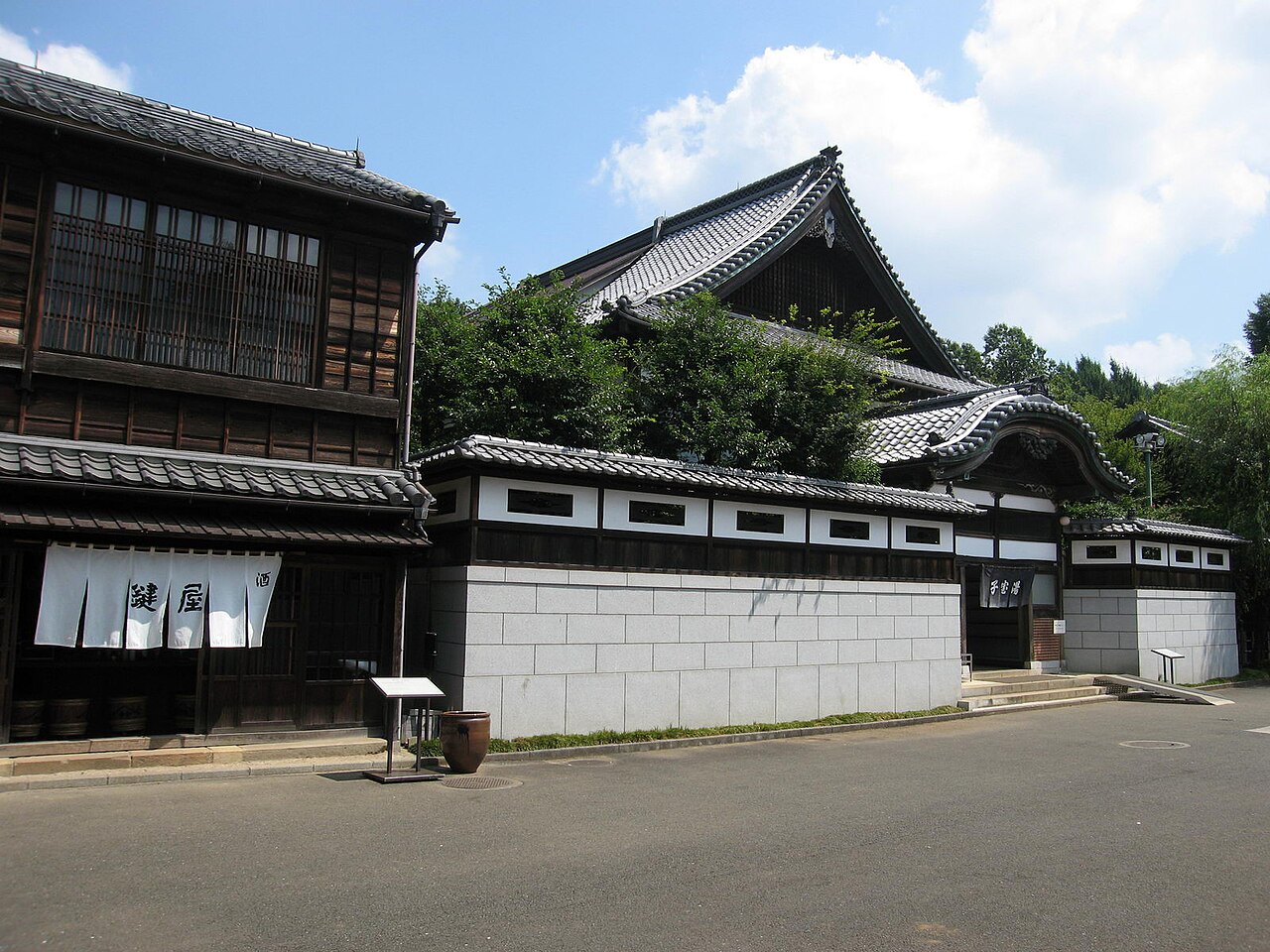
Edo-Tokyo Open Air Architectural Museum
9.1 km · straight line
 ARandomName123 / CC BY-SA 4.0
Nature · Tokyo★★
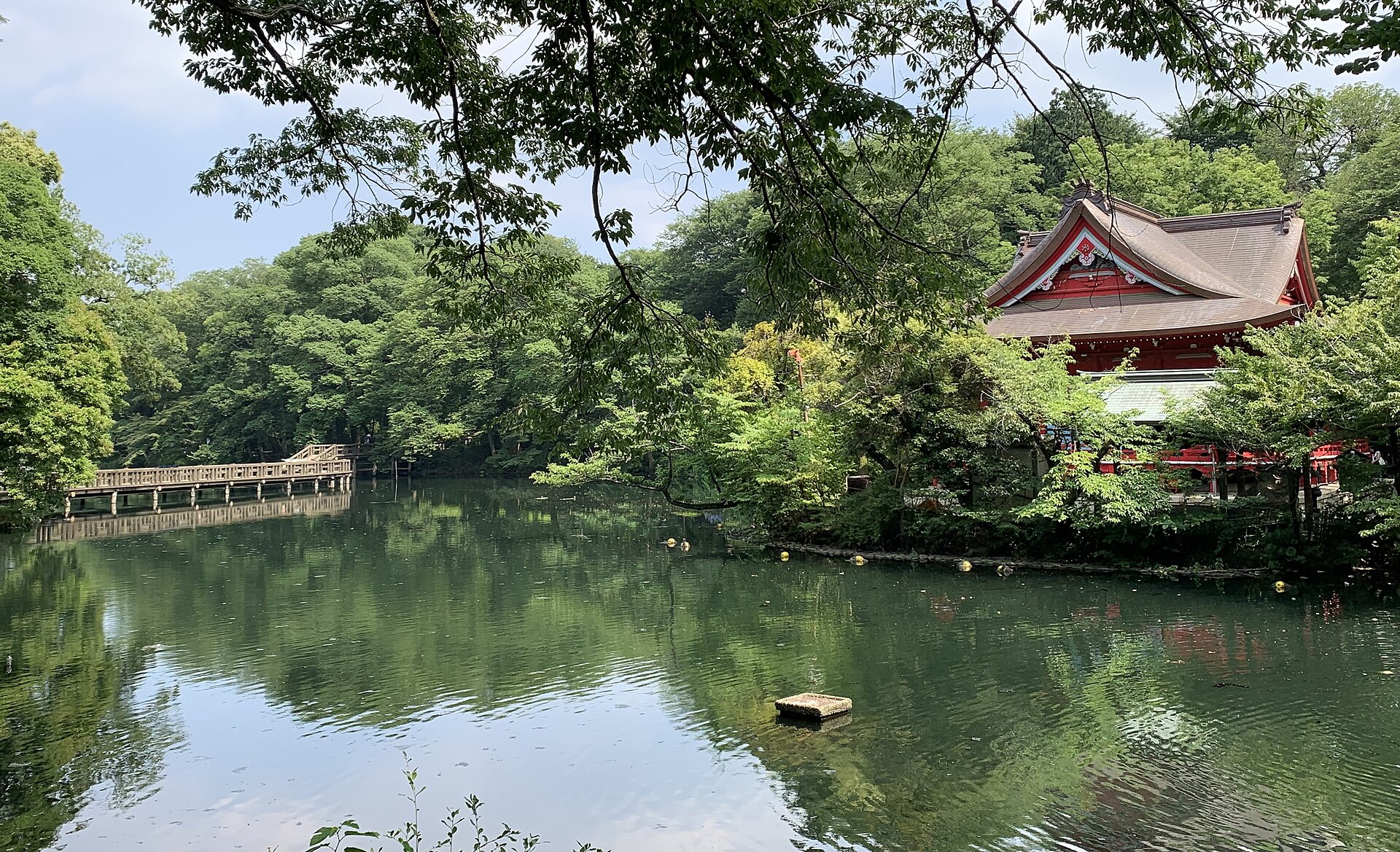
Inokashira Park
12.3 km · straight line
 illustration (AI-illustrated)
Culture · Tokyo★★★
Ghibli Museum
12.6 km · straight line
 Abasaa / Public domain
Local life · Saitama★★
Kawagoe's Taisho Roman Dream Street
13.8 km · straight line
Distances are straight lines on the map, not travel times.