Western Tokyo · KoganeiNo.353★★Open in map →
Edo-Tokyo Open Air Architectural Museum
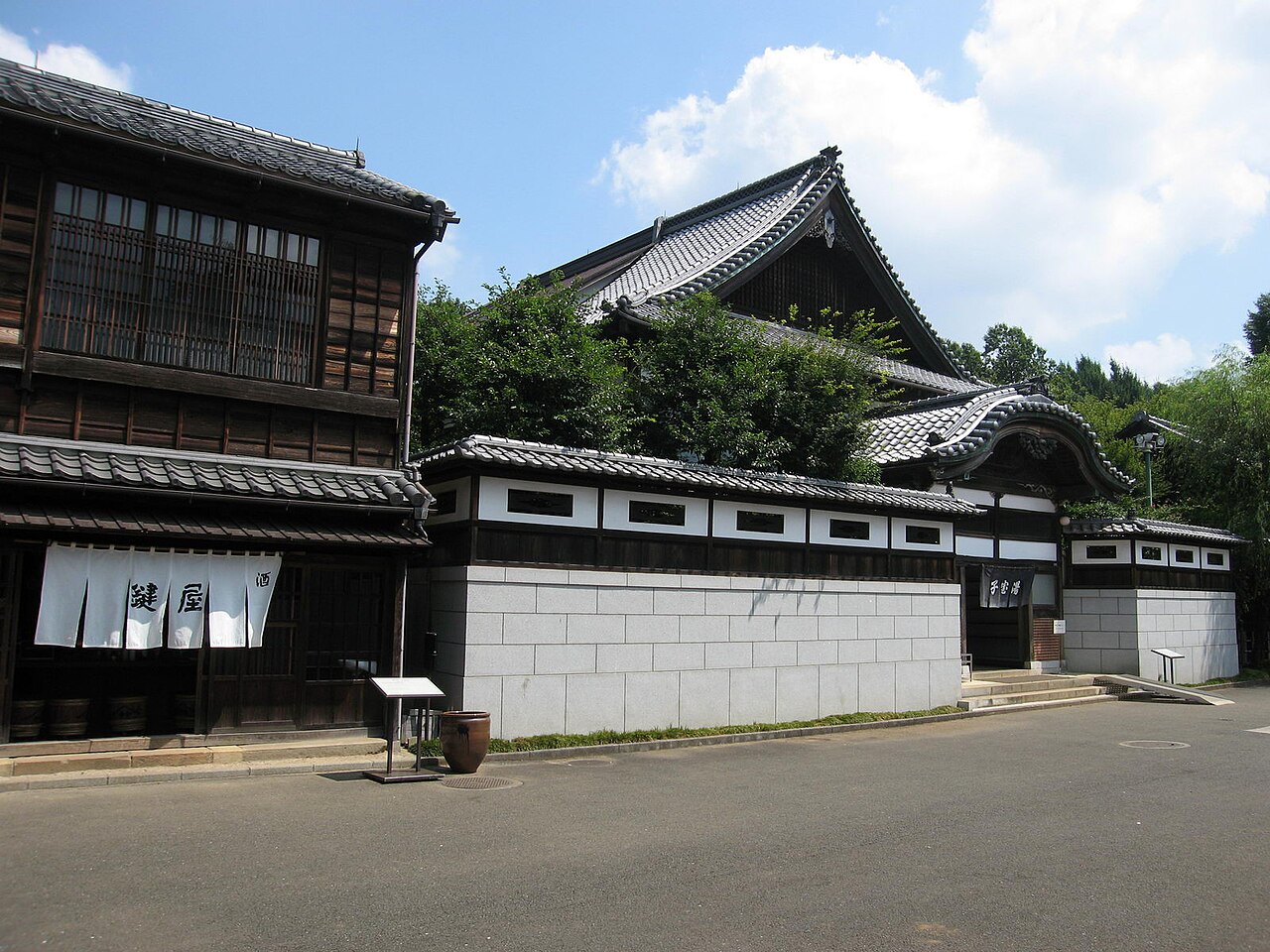
An open-air museum in Koganei Park, western Tokyo, opened in 1993. Around thirty buildings from the Edo period through the mid-twentieth century — farmhouses, shops, a public bathhouse, an architect's own home — were relocated here from across Tokyo and rebuilt with their interiors open to visitors.
- FromShinjuku Stn
- ~45 minJR + bus
- Get off atMusashi-Koganei Station (JR Chuo Line)
- From there
- Edo-Tokyo Open Air Architectural Museum
The sweet spot
Most heritage sites in Japan preserve the extraordinary: castles, temples, the houses of the rich. This one preserves what almost never survives — a bathhouse, a tavern, a stationer's shop, a farmhouse kitchen — and lets you stand inside them. The result is a much more direct sense of how the city actually lived than any reconstructed castle keep provides. It is also markedly uncrowded compared with central Tokyo, and generous with time: nothing here is on a timed ticket.
Where it is
77 more notes in Tokyo · open the map →What to look for — in walking order
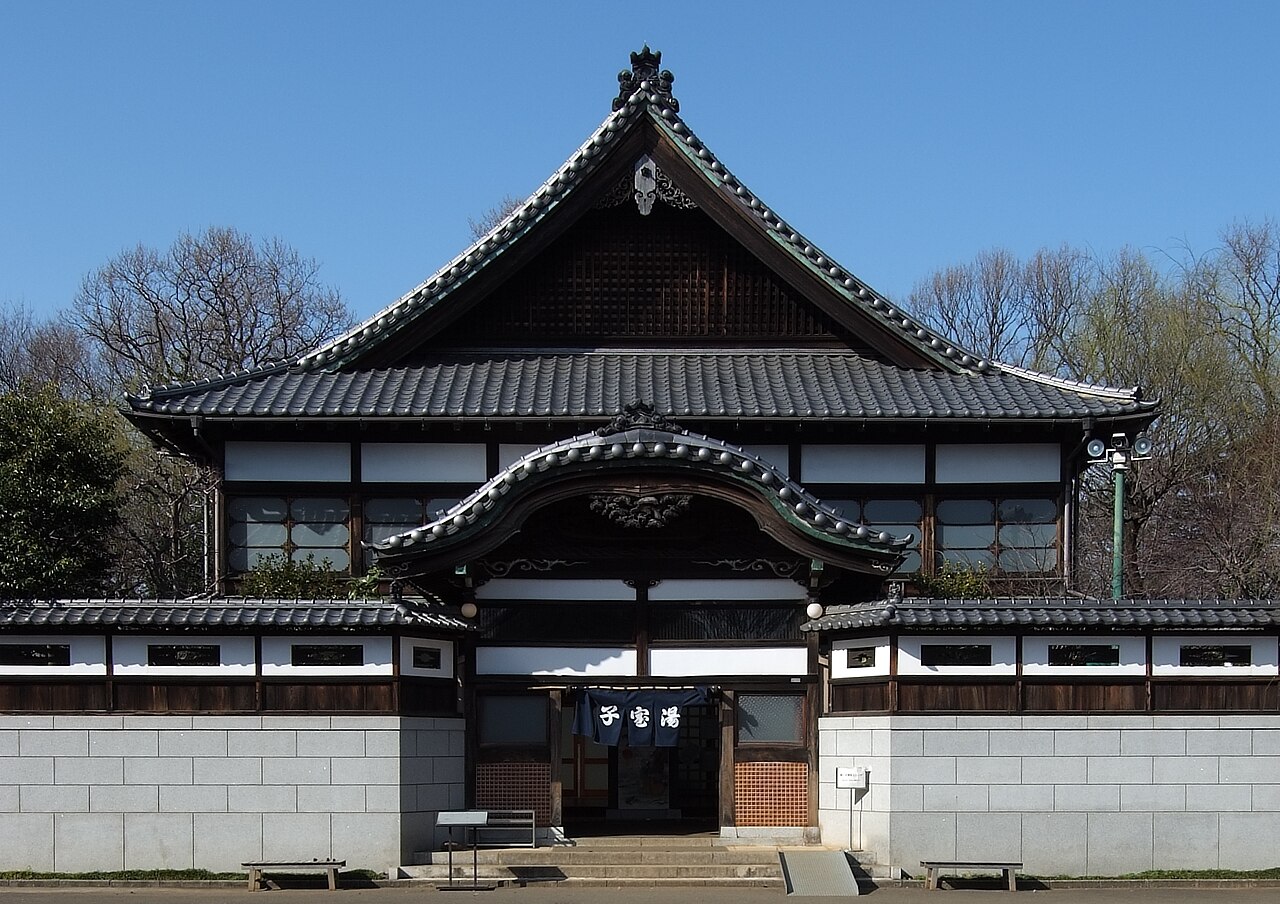
- Kodakara-yu bathhouseA prewar public bath whose entrance carries a curved gabled roof of the kind normally seen on temples — a deliberate borrowing of dignity for a neighbourhood facility. You can walk through the changing rooms and stand in the tiled bath hall itself, which is where the scale of the building registers.
- The shitamachi shop streetA row of relocated storefronts — soy sauce dealer, stationer, kitchenware shop, umbrella maker — with their goods, counters and back rooms in place. Go inside each rather than photographing the facades; the stock rooms and living quarters behind the shops are the part that is genuinely rare.
- Kunio Maekawa's own houseThe wartime home of one of Japan's leading modernist architects, built under severe material restrictions and still remarkably light and open inside. It reads as a direct argument about how a Japanese house could be modern, made in the least favourable circumstances imaginable.
- The Edo-period farmhousesAt the far end of the site stand thatched farmhouses with earth-floored working areas and irori hearths. Volunteers light the hearths on many days — the smoke is what preserves the thatch, and the smell is the part no photograph carries.
How to actually get there
- Shinjuku Station → Musashi-Koganei Station (JR Chuo Line rapid, ~25 min).
- Musashi-Koganei North Exit, bus stop 2 or 3 → Koganei-koen Nishiguchi (Seibu Bus, ~5 min).
- Koganei-koen Nishiguchi → museum entrance (walk through the park, ~5 min).
- JR Chuo Line to Musashi-Koganei, then Seibu bus
- Shinjuku Station →(JR Chuo Line rapid, ~25 min)→ Musashi-Koganei Station → North Exit, bus stops 2 or 3 →(Seibu Bus, ~5 min)→ get off at Koganei-koen Nishiguchi → walk ~5 min into the park to the museum entrance. Total ~45 min. Buses are frequent; if you prefer, the walk from the station is about 20 minutes on flat streets.
- Return from Koganei-koen Nishiguchi
- Take the Seibu bus back to Musashi-Koganei Station and the JR Chuo Line toward Shinjuku and Tokyo. Buses run into the evening, well past the museum's closing time, and the Chuo Line runs until past midnight.
About the place
Tokyo demolishes itself continually. Fires, the 1923 earthquake, wartime bombing and then simple economics have meant that very little of the ordinary built city survives where it stood. This open-air museum, opened in 1993 in Koganei Park in western Tokyo, is the response: when a building of historical value could not be preserved on its original site, it was taken apart, moved here, and reassembled. Around thirty structures now stand across a wooded site, spanning the Edo period to the middle of the twentieth century. They are arranged in three zones. The east zone reconstructs a shitamachi streetscape — a soy sauce shop, a stationer's, a kitchenware store, a tavern, and Kodakara-yu, a public bathhouse with a gabled temple-style roof over its entrance. The west zone holds houses, including the private home the modernist architect Kunio Maekawa built for himself and a Western-style residence from the prewar foreign community. The centre is anchored by a ceremonial pavilion that now serves as the visitor centre. What makes the place work is that the interiors are furnished and open — you take your shoes off and step up into them.
How to enjoy it
Allow two to three hours; people routinely underestimate this and end up rushing the west zone. Go on a weekday if you can — weekends bring families out into Koganei Park and the shop street gets busy. Shoes come off at most building entrances, so wear something easy to slip on and off, and socks rather than bare feet in winter, when the floors are cold. The site is largely flat and pushchair-friendly, but gravel paths and step-up entrances mean full step-free access is limited in the older buildings. The tavern building serves simple food, and Koganei Park outside is one of Tokyo's largest — worth an extra hour in cherry blossom season.
Background & history
The museum opened in 1993 as a branch of the Edo-Tokyo Museum, on a site in Koganei Park that had earlier held a ceremonial pavilion built for an imperial occasion; that pavilion survives as the visitor centre. The collection was assembled from buildings that could not be preserved where they stood — a policy that produced an unusual mix, since it captured ordinary commercial and domestic architecture alongside the notable. The bathhouse and shop street in the east zone are frequently cited as visual references behind the bathhouse in Studio Ghibli's Spirited Away.
Before you go
- Cash
- There is an admission charge, reduced for students and free for junior high age and below. Cards and IC payment are accepted at the ticket counter. The shop and the museum's tavern-style eatery are inexpensive; carry some cash for small purchases.
- Good to know
- Closed on Mondays — or the following weekday when Monday is a public holiday — and over the New Year period. Closing time is earlier in winter than in summer, and last admission is 30 minutes before closing.
- Another way
- From Hana-Koganei Station on the Seibu Shinjuku Line, take a Seibu bus from the South Exit toward Musashi-Koganei Station and get off at Koganei-koen Nishiguchi. This is the easier route if you are coming from the Seibu Shinjuku side of the city.
- After you get off
- Musashi-Koganei Station North Exit, bus stops 2 and 3, both serve Koganei-koen Nishiguchi. From the bus stop, cross into Koganei Park and follow the signposted path about 5 minutes to the museum gate.
Nearby notes
 illustration (AI-illustrated)
Culture · Tokyo★★★
Ghibli Museum
5.6 km · straight line
 ARandomName123 / CC BY-SA 4.0
Nature · Tokyo★★
Inokashira Park
5.7 km · straight line
 User: (WT-shared) Chatnoir at wts wikivo / CC BY-SA 3.0
Food · Tokyo★
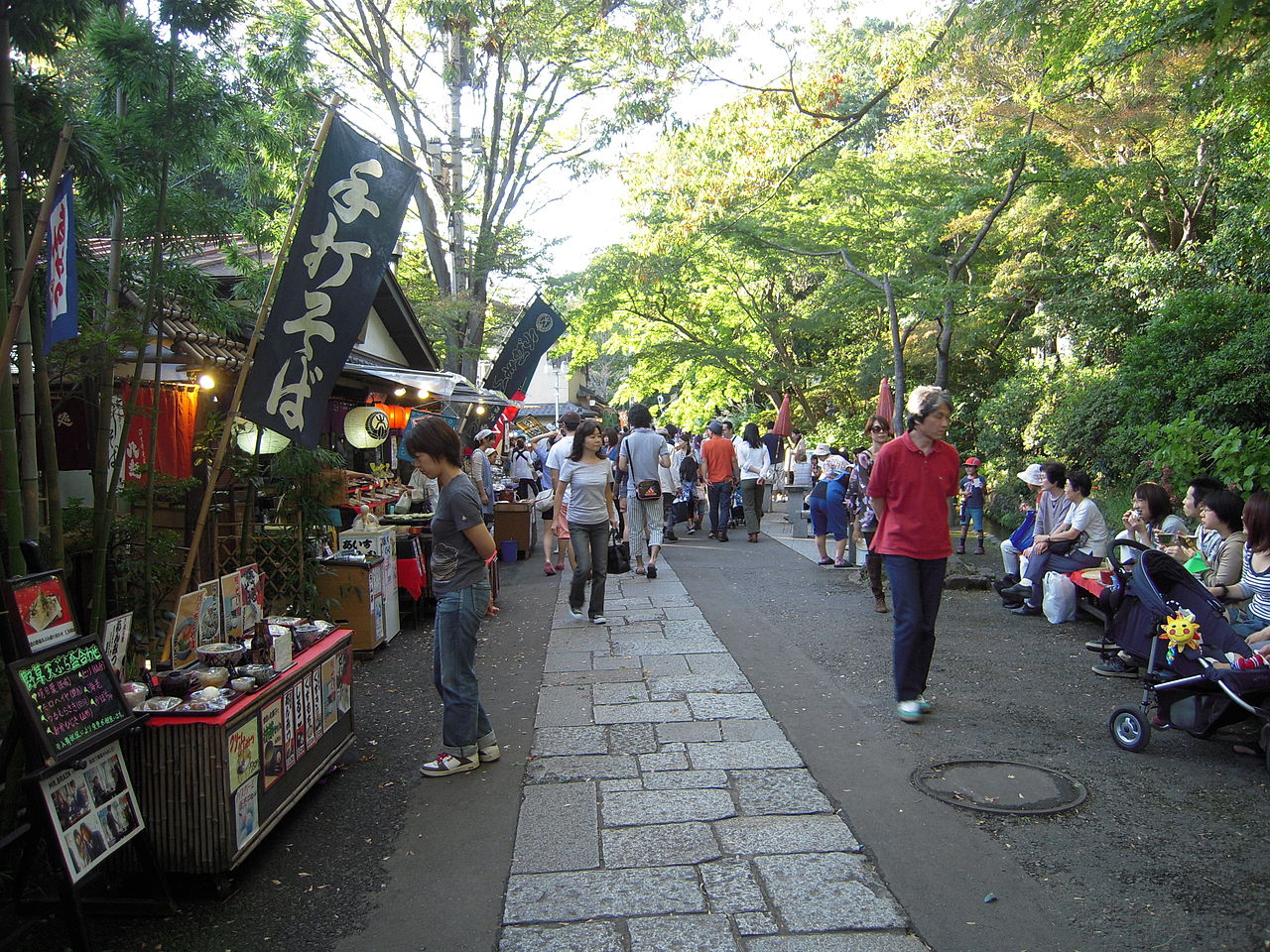
Jindaiji Soba
6.3 km · straight line
 Kaijooo / CC BY-SA 4.0
Culture · Saitama★★
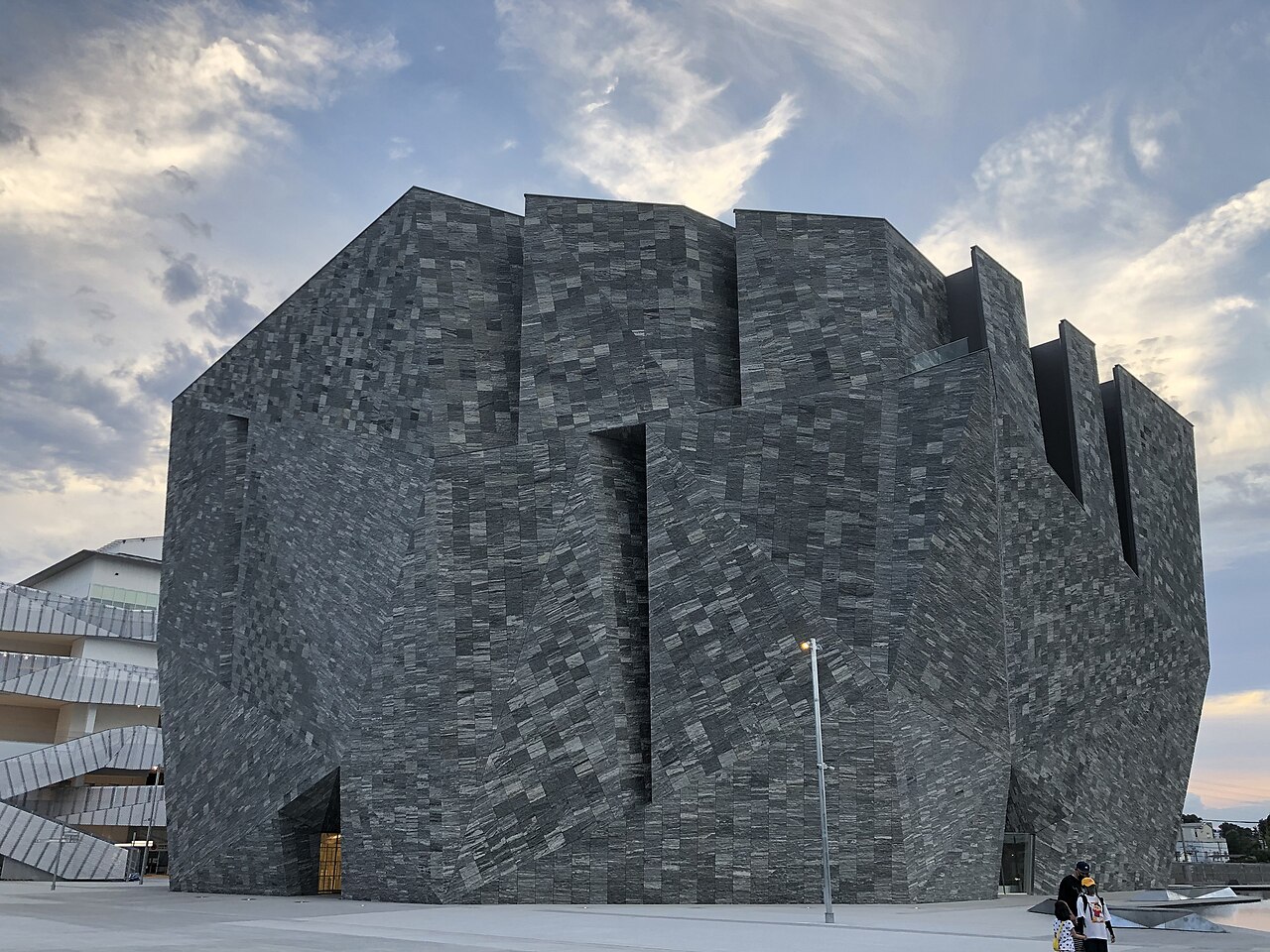
Kadokawa Musashino Museum
9.1 km · straight line
Distances are straight lines on the map, not travel times.