Yamanashi · Kiyosato, southern YatsugatakeNo.381★★Open in map →
Kiyosato Highlands & Moegi Village
— a forest carousel at 1,200 m
A highland resort area at about 1,200 m on the southern flank of the Yatsugatake mountains. Moegi no Mura scatters restaurants, craft workshops, a music box museum and a carousel through a garden of trees rather than lining them up along a street.
- FromShinjuku Stn
- ~2.5 hrLimited express + Koumi Line
- Get off atKiyosato Stn (then ~10-min walk)
- On foot
- Kiyosato Highlands & Moegi Village
The sweet spot
Kiyosato is one of the few places in Japan where you can see a full resort boom-and-bust and its aftermath in one walk. The infrastructure of a much busier era is still standing, the crowds are gone, and what remains at Moegi no Mura — workshops, a brewery, a music box collection, a carousel among trees — is genuinely good and almost empty on a weekday.
Where it is
18 more notes in Yamanashi · open the map →What to look for — in walking order
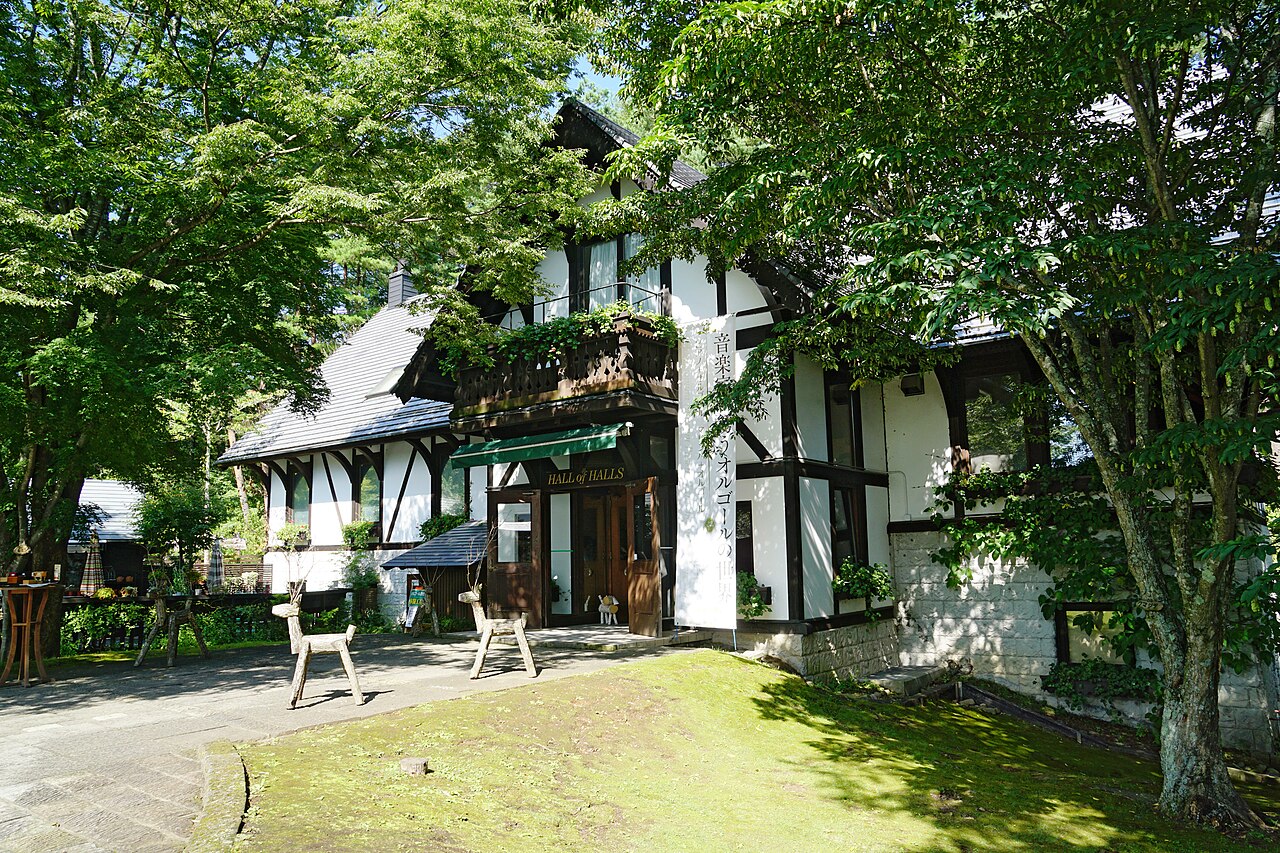
- Hall of Hallsthe music box museum — antique automatic instruments and street organs, demonstrated rather than displayed behind glass
- The carousela merry-go-round standing in a clearing among the trees, with no theme park attached to it
- ROCK brewery restaurantYatsugatake beer brewed on site and the curry the place is known for across Japan
- The natural garden and workshopsthe planted grounds the whole village sits inside, with independent craft studios and shops scattered through them
How to actually get there
- Shinjuku Station → Kobuchizawa Station (JR Chuo Line limited express Azusa, ~2 hr).
- Kobuchizawa → Kiyosato Station (JR Koumi Line, ~25 min); check the return timetable on arrival.
- Walk ~10 min to Moegi no Mura: the natural garden and workshops first, then Hall of Halls, the carousel and ROCK.
- Shinjuku → Kobuchizawa → Kiyosato on the Koumi Line
- Shinjuku Station → (JR Chuo Line limited express Azusa toward Matsumoto, about 2 hours) → Kobuchizawa Station → (transfer to the JR Koumi Line, about 25 minutes) → Kiyosato Station. From the station, walk about 10 minutes to Moegi no Mura. Total roughly two and a half hours. The Koumi Line is a scenic single-track local line but runs infrequently — check connections against your Azusa arrival.
- Koumi Line back to Kobuchizawa
- Return on the Koumi Line to Kobuchizawa and take the Azusa back to Shinjuku. Koumi Line services are sparse and finish relatively early, so note the last useful departure when you arrive rather than assuming an evening train will be there.
About the place
Kiyosato is a strange and rather moving place. It was built as a highland resort, it became wildly fashionable with young Japanese in the 1980s, and then the crowds moved on, leaving behind a mountain village full of buildings designed for far more people than now arrive. What survived that cycle is the good part. Moegi no Mura is the clearest example: instead of a strip of shops, it is a wooded garden with paths through it, and the buildings — a brewery restaurant, craft workshops, a music box museum, a small hotel — are set among the trees so that you keep coming across them rather than walking past them. In a clearing near the middle, a carousel turns. There is no theme park around it and no queue; it is simply there in the forest, which is a much odder and better experience than a carousel in an amusement park. The brewery restaurant pours Yatsugatake beer made on site and is known nationally for its curry. At 1,200 metres the air in August is a different substance from Tokyo's, which was the original reason anyone came up here at all.
How to enjoy it
Entry to the grounds is free; individual shops set their own hours, so check the village site for the day you are going, especially outside summer. From Kiyosato Station it is about a 10-minute walk, or about 20 minutes by car from the Sudama interchange on the Chuo Expressway. August is the peak — the Kiyosato Field Ballet runs on the outdoor stage and the highland is at its best — but late September and October, with the larches turning and almost nobody around, arguably suit the place better. Seisen-ryo, a short distance away, is the other Kiyosato institution and is worth the detour for the soft-serve alone.
Background & history
Kiyosato owes its existence to Paul Rusch, an American who came to Japan in the 1920s and developed this highland as a model agricultural and educational community, founding the Seisen-ryo centre and the work that became the KEEP association — a history that makes Kiyosato unusual among Japanese resorts in having been designed, not accreted. The area boomed as a destination for young travellers through the 1980s and quietened afterwards. Moegi no Mura grew as a cluster of independent shops, workshops and eating places set in a natural garden; its outdoor stage hosts the Kiyosato Field Ballet in summer, performed in the open air under the trees.
Before you go
- Cash
- Entry to the village grounds is free. The museum, the carousel, the restaurants and the workshops each charge their own prices. Cards are accepted in most of the larger venues but carry some cash for the smaller studios.
- Good to know
- Shops keep individual hours and some close outside the summer season — confirm on the village site before travelling in winter or early spring. At 1,200 m, evenings are cold even in midsummer; bring a layer regardless of what Tokyo's forecast says.
- Another way
- By car, it is about 20 minutes from the Sudama interchange on the Chuo Expressway, which also makes it easy to combine with Seisen-ryo and the wider Yatsugatake foothills. Driving is the more practical option if you want to move around the highland rather than stay in one village.
- After you get off
- From Kiyosato Station, walk southeast along the main road for about 10 minutes. The village entrance opens off the road into trees rather than a car park, so watch for the sign.
Nearby notes
 hoge asdf / CC BY 2.0
Nature · Yamanashi★
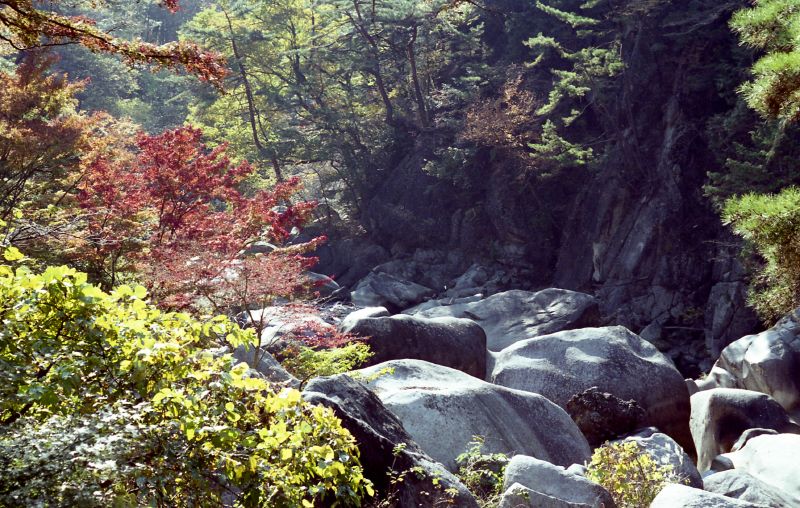
Shosenkyo
21.4 km · straight line
 Σ64 / CC BY 3.0
Onsen · Yamanashi★★
Hottarakashi Onsen
29.8 km · straight line
Distances are straight lines on the map, not travel times.