Kanagawa · KamakuraNo.1244★★Open in map →
Komachi-dori
— Kamakura's shopping and eating street
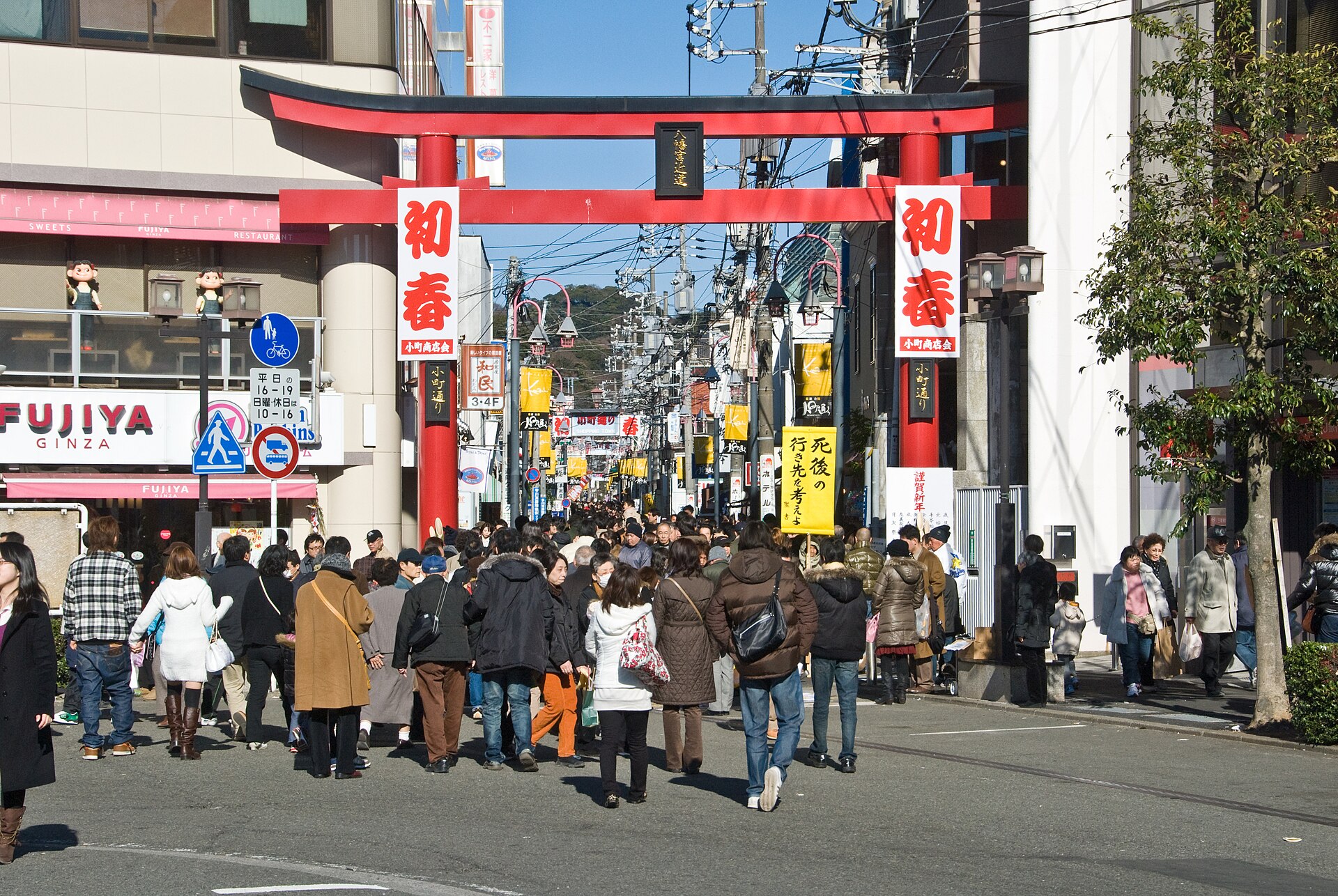
The busiest street in Kamakura, running from the station's east exit to the edge of the Tsurugaoka Hachimangu grounds. A red torii marks the southern entrance, and the plaque hung on it reads, plainly, shortcut to Hachimangu.
- FromTokyo Stn
- ~60 minJR or Enoden, then straight out the east exit
- Get off atKamakura Station (JR Yokosuka Line)
- From there
- Komachi-dori
The sweet spot
This is the busiest street in Kamakura, not a quiet one, and no hour of the day empties it. What can be chosen is direction. Walking north with the one-way flow, then returning on the broad parallel avenue, means never pushing back through the same oncoming crowd. That the city puts this street at the head of its weekend traffic-restriction list is a fair measure of how full it gets — and of why the loop is worth planning.
Where it is
43 more notes in Kanagawa · open the map →What to look for — in walking order
- The Komachi-dori toriithe red gate at the station end, its plaque reading shortcut to Hachimangu
- The lanes running eastshort cross-lanes linking the street to Wakamiya-oji, one block over
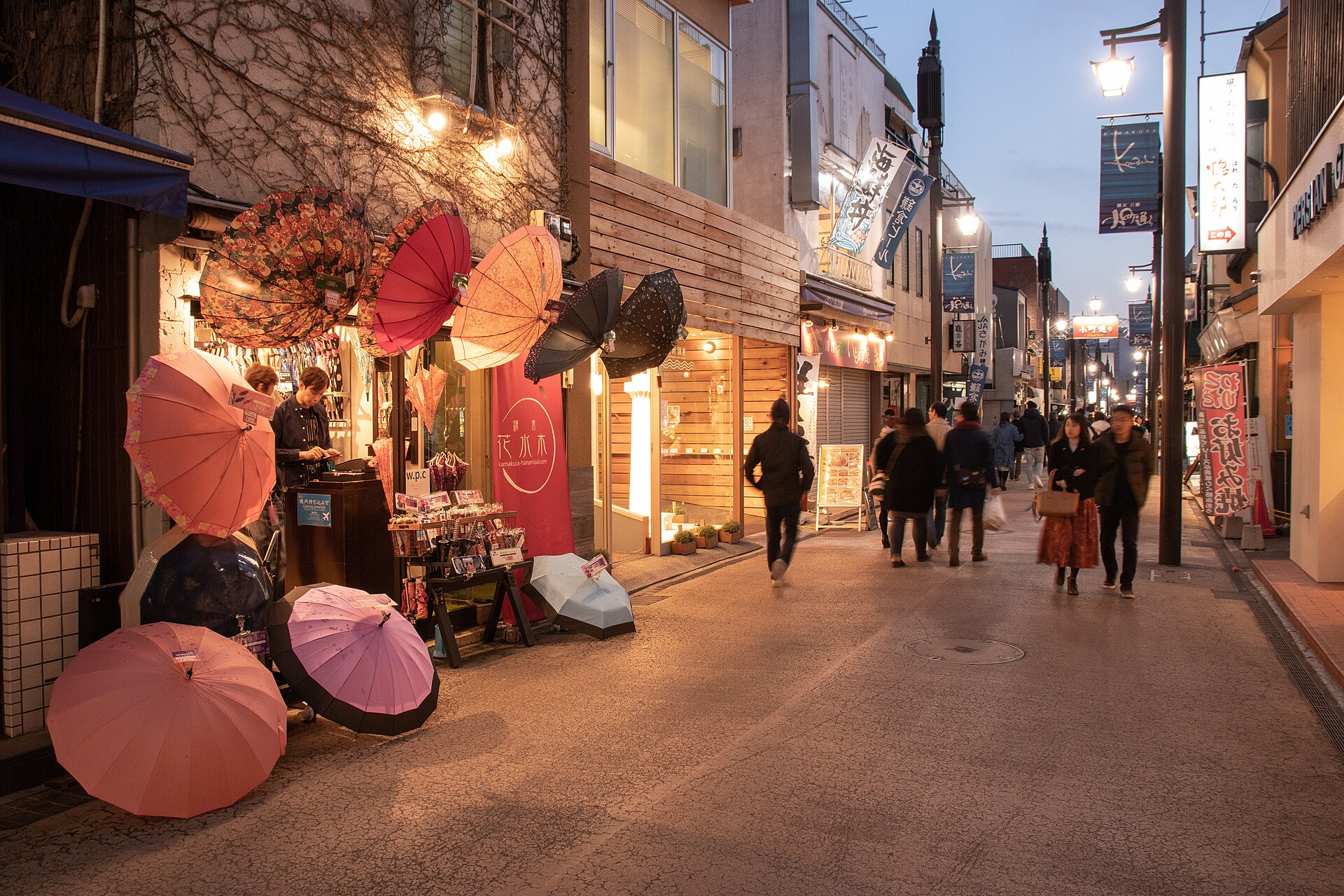
- Komachi-dori, mid-streetthe densest run of shopfronts, with goods set out toward the road
- Yokodaiji crossingthe north end, at the southwest corner of the Tsurugaoka Hachimangu grounds
- Wakamiya-oji and the Dankazurathe wide parallel avenue and its raised cherry-lined path, for the walk back
How to actually get there
- Leave Kamakura Station by the east exit and cross the road in front of it to the red torii; read the blue restriction sign under it before stepping in.
- Walk north up Komachi-dori, turning into the short lanes on the east side whenever the main run backs up — they all come out on Wakamiya-oji.
- At the Yokodaiji crossing at the north end you are at the southwest corner of the Tsurugaoka Hachimangu grounds; enter from there.
- Come back south along Wakamiya-oji and its raised Dankazura walkway instead of retracing Komachi-dori.
- JR Yokosuka Line from Tokyo
- Tokyo Station →(JR Yokosuka Line, about an hour)→ Kamakura Station, direct and frequent through the day. From the Shinjuku side, Shonan-Shinjuku Line services call at the same station. Leave by the east exit; the red torii stands across the road.
- Same station, both lines
- Return trains leave from the platforms you arrived on. Check the last-train board at Kamakura Station before settling into a long evening meal, and note that the Enoden, which shares the station, runs to its own timetable.
About the place
Komachi-dori runs north from the east side of Kamakura Station and ends at the southwest corner of the Tsurugaoka Hachimangu grounds, where it meets Yokodaiji. It sits one block west of Wakamiya-oji, the wide ceremonial avenue, and the two run parallel the whole way. Long-established confectioners, souvenir shops, craft stores and small kitchens stand shoulder to shoulder along it, and the goods are set out toward the road. The street is narrow and carries one-way traffic northward, with no separated footway. Kamakura City names it among the main places in town where vehicles are kept out for posted blocks of hours at weekends and on holidays.
How to enjoy it
Read the blue sign under the torii before you start: it carries the days and hours when cars are kept out, and those are the easiest hours on foot. Walk north to the Yokodaiji crossing, then turn back south on Wakamiya-oji rather than retracing your steps. Much of what is sold along the way is meant to be eaten standing up, so keep one hand free.
Background & history
Before the railway, the line of the street was a farm track known as Seto-kochi. The opening of Kamakura Station on the Yokosuka Line in 1889 pulled the centre of the town toward it, and shops began to gather along the old track. The Great Kanto Earthquake of 1923 brought down merchant houses standing nearer the station, and traders who lost them rebuilt here instead. A shopkeepers' association was organised later and still runs the street under its name.
Before you go
- Cash
- The street is a public road, so walking it costs nothing and there is no gate or ticket. Payment terms are set shop by shop and the smallest counters may take cash only, so carry some.
- Good to know
- There is no closing time for the street itself; shops keep their own days and hours. Outside the posted restricted hours cars still move along it northward, so the middle of the road is not a footpath.
- Another way
- The Enoshima Electric Railway terminates at the same Kamakura Station, so the street can be reached from the Hase and Enoshima side without changing stations. To see the shrine first, enter at the Yokodaiji crossing and walk south — the same loop, run backwards.
- After you get off
- Use the east exit at Kamakura Station. Cross the bus rotary and the road in front of it, and the red torii over the street entrance is in plain sight.
Nearby notes
 Tarourashima / Public domain
History · Kanagawa★
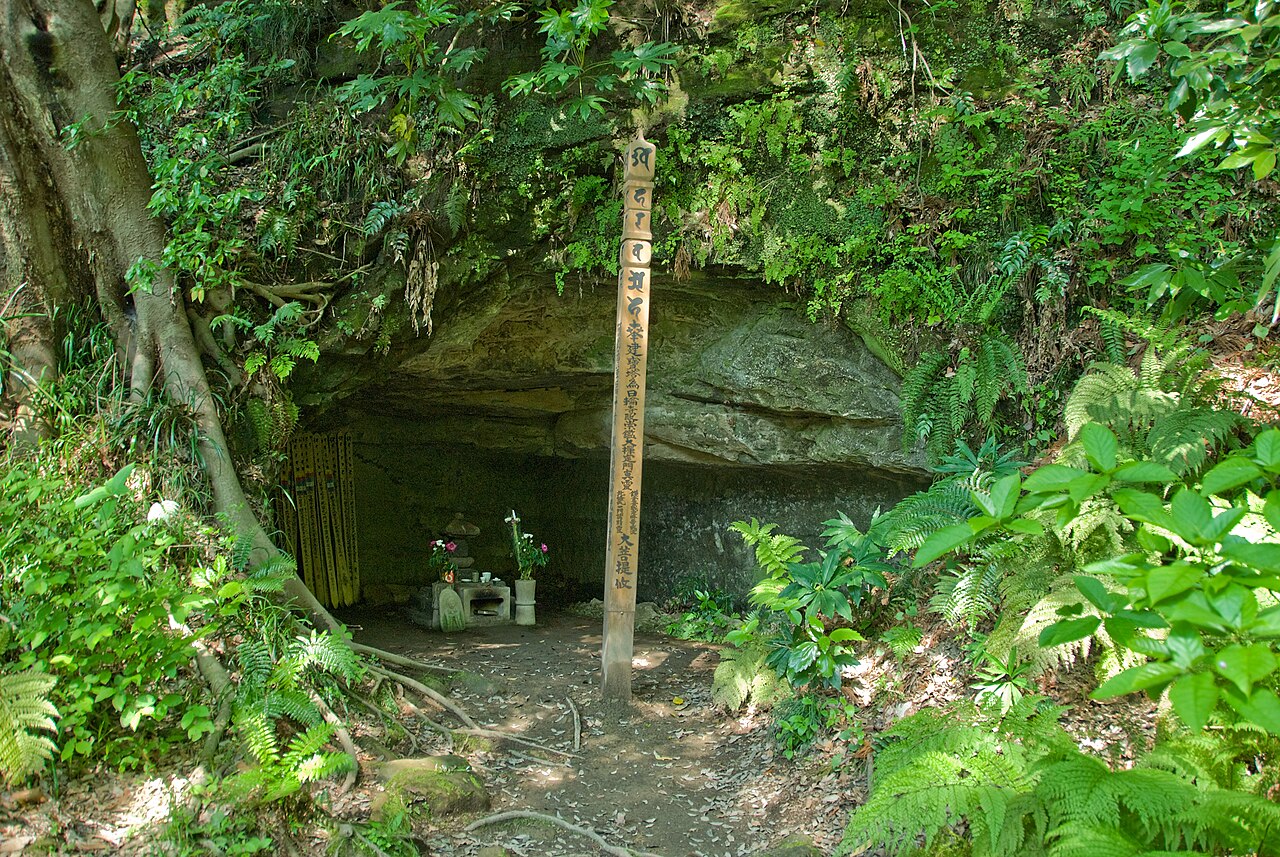
Toshoji Ruins & Harakiri Yagura
0.8 km · straight line
 Ocdp / CC0
History · Kanagawa★★
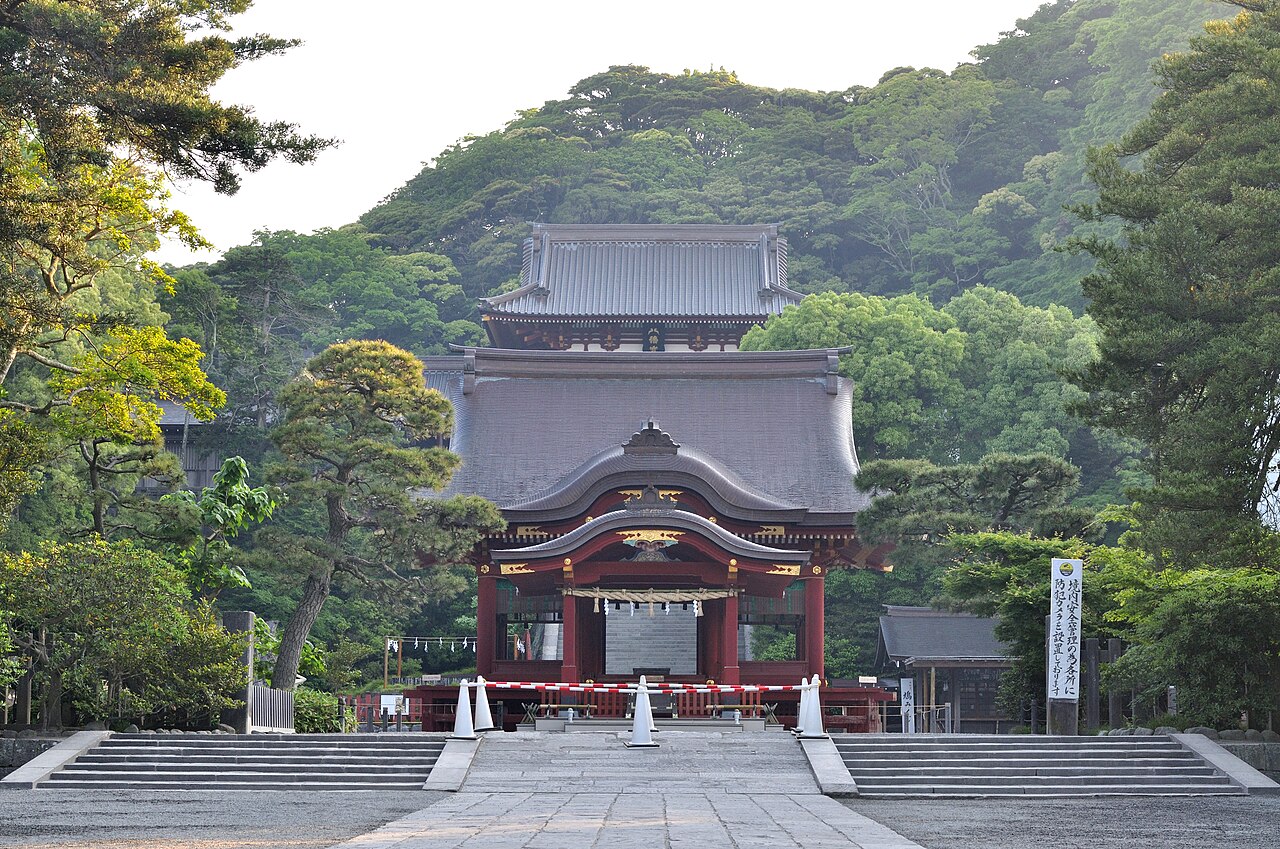
Tsurugaoka Hachimangu
0.9 km · straight line
 Davide Mauro / CC BY-SA 4.0
History · Kanagawa★
Zeniarai Benzaiten
1.0 km · straight line
 Ocdp / CC0
History · Kanagawa★
Sasuke Inari Shrine
1.2 km · straight line
Distances are straight lines on the map, not travel times.