Kyoto · Ichijoji / Shugakuin foothillsNo.376★★Open in map →
Manshuin Monzeki
— the little Katsura, a sukiya temple
One of the five Tendai monzeki temples, headed historically by members of the imperial family. Moved to this hillside in 1656 by Prince-Abbot Ryosho, it holds sukiya-style shoin halls and a dry landscape garden designated a National Place of Scenic Beauty.
- FromDemachiyanagi Stn
- ~30 minEizan Railway + ~20-min uphill walk
- Get off atShugakuin Stn (Eizan Railway, then ~20-min walk)
- On foot
- Manshuin Monzeki
The sweet spot
Katsura Imperial Villa is the reference point for sukiya architecture in Japan and is only visitable on a booked, guided, keep-moving circuit. Manshuin was built by the son of Katsura's founder in the same idiom, sits at the end of a quiet lane, and lets you sit on the veranda for an hour. It is the closest thing to unrestricted access to that architecture.
Where it is
90 more notes in Kyoto · open the map →What to look for — in walking order
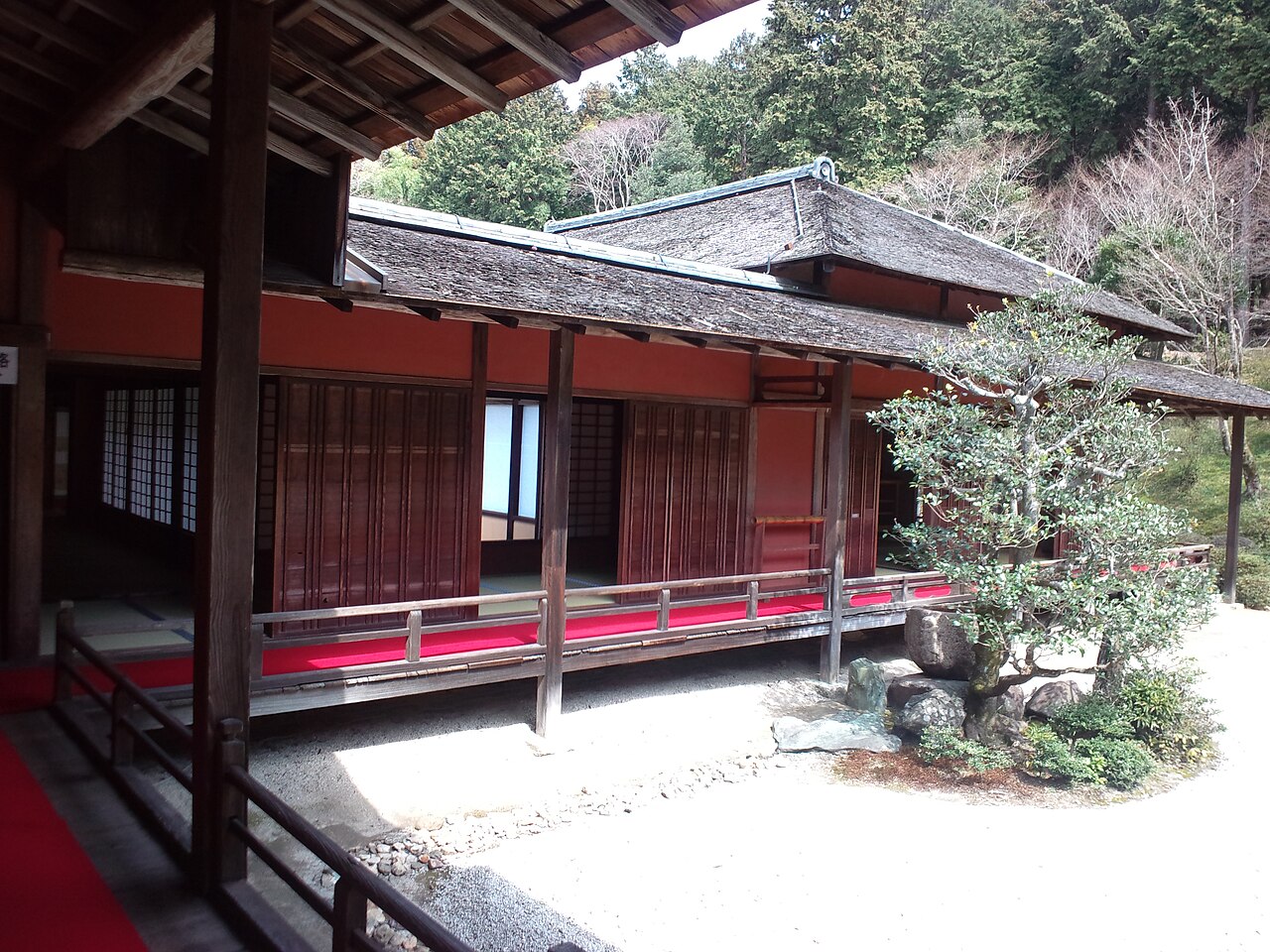
- The Great Shointhe main reception hall in sukiya style, with painted sliding doors and the fitted shelving that architects come here specifically to study
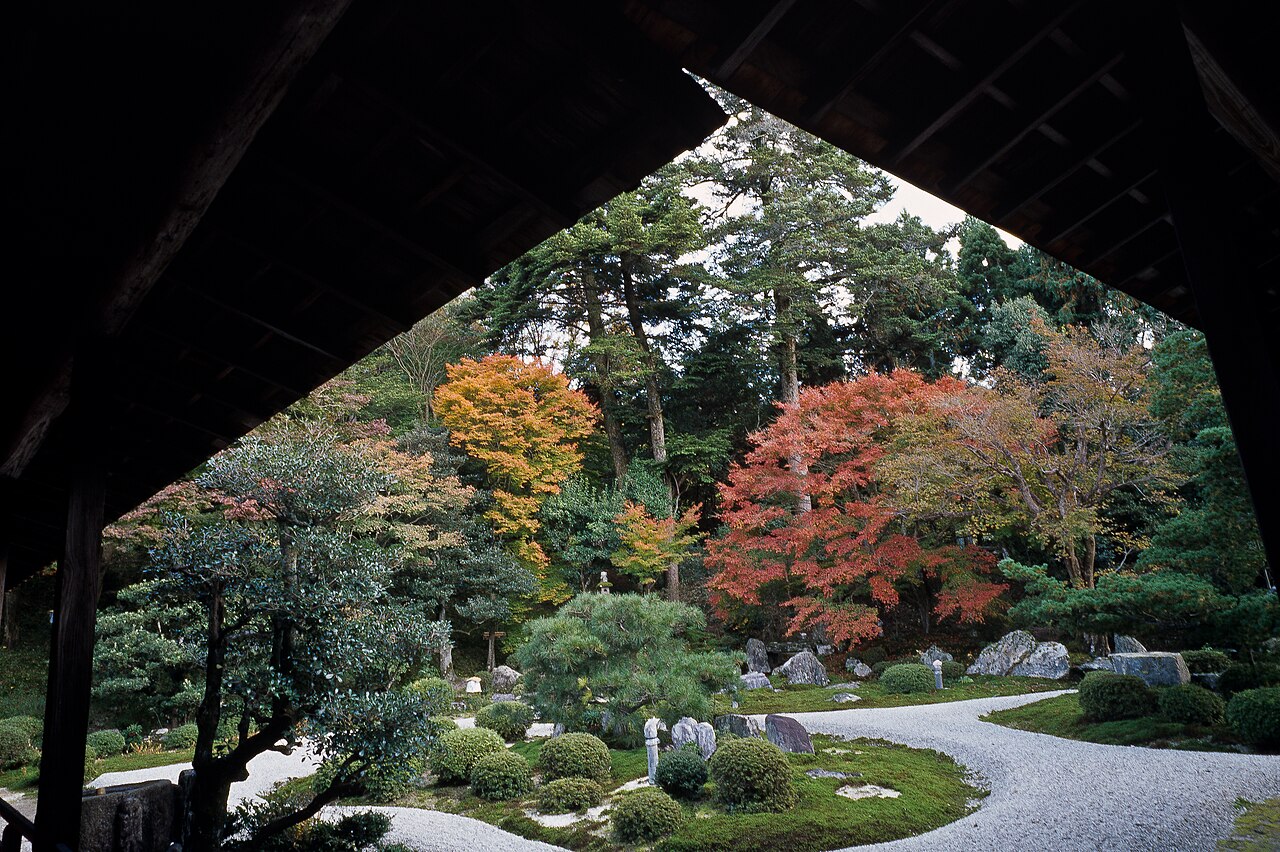
- The dry landscape gardenraked white gravel read as water, with crane and tortoise stone islands and a pine trained flat across it; a National Place of Scenic Beauty
- The Small Shoin and its windowsthe inner rooms, where the window and transom openings are cut as deliberate frames onto the garden
- Kirishima azaleas and maplesthe azaleas fire up in early May and the approach lane turns dense red in late November — the two weeks the lane gets busy
How to actually get there
- Demachiyanagi Station → Shugakuin Station (Eizan Railway Eizan Line, ~8 min).
- Walk east and uphill along the lane, ~20 min, to the temple gate at the top.
- Enter the Great Shoin first, then move through to the Small Shoin and sit facing the gravel garden.
- Demachiyanagi → Shugakuin, then 20 minutes uphill
- From Demachiyanagi Station take the Eizan Railway Eizan Line toward Yase-Hieizanguchi and ride about 8 minutes to Shugakuin Station. From the exit, head east and keep climbing — the lane rises steadily past houses and small fields for about 20 minutes to the temple gate. Trains run every 10–15 minutes.
- Downhill to Shugakuin Station
- Retrace the lane downhill, about 15–20 minutes, to Shugakuin Station and take the Eizan Line back to Demachiyanagi for the Keihan Line to central Kyoto and Osaka. Alternatively walk south along the hillside lane to Shisendo and come down to Ichijoji Station instead.
About the place
Manshuin is the last building on the lane before the hills take over, and getting there is a twenty-minute climb from the nearest station past rice plots and houses. What waits at the top is not a temple in the usual sense. Monzeki temples were headed by princes and abdicated emperors, and the buildings reflect it: instead of a great hall you get a sequence of residential shoin rooms in the refined sukiya manner, low and light, with fitted shelving, painted sliding doors, and window openings framed like pictures. The reason it is called 'the little Katsura' is genealogical as well as visual. Prince-Abbot Ryosho, who moved the temple here in 1656 and shaped what stands today, was the son of Prince Toshihito, the man who began Katsura Imperial Villa — the acknowledged summit of Japanese domestic architecture. Katsura itself requires an advance reservation and a guided circuit. Manshuin you simply walk into, sit down in, and look at for as long as you like. Beyond the veranda the dry garden spreads out: white gravel raked into water, two islands of stone, and a pine trained low and wide across the gravel.
How to enjoy it
Open 9:00–17:00 with last entry at 16:30; admission is 800 yen. There are 50 free parking spaces, unusual for a Kyoto temple, so this is one of the rare cases where driving is genuinely easier than the train. The walk up from Shugakuin Station is about 20 minutes and steadily uphill — allow for it, and consider pairing Manshuin with Shisendo and Enkoji, which sit on the same hillside lane, into a single half-day. Early May (azaleas) and late November (maples) are the crowded windows; the rest of the year the shoin rooms are close to empty.
Background & history
Manshuin is one of the five Tendai monzeki — temples whose head priests were drawn from the imperial family and the highest nobility — and traces its origins back centuries before its present site. In 1656 Prince-Abbot Ryosho relocated it to this slope below Mount Hiei and built the Great Shoin and Small Shoin in the sukiya idiom of his father's Katsura villa. The garden laid out at the same time is designated a National Place of Scenic Beauty. Among the temple's treasures is a National Treasure manuscript of the Kokin Wakashu anthology, and it is also known for a portrait scroll that local tradition calls the ghost painting.
Before you go
- Cash
- Admission 800 yen, cash at the entrance. Parking is free for 50 standard cars. IC cards work on the Eizan Railway and city buses but not at the temple desk.
- Good to know
- Last entry is 16:30. The approach is a genuine 20-minute climb with no shade for much of it — in July and August, go early. Photography rules inside the shoin rooms are posted at the entrance; follow them.
- Another way
- By bus: Kyoto City Bus 5 to the Ichijoji-Shimizucho stop, then about 20 minutes uphill on foot. If you are driving, the 50 free spaces make this one of the easiest major Kyoto temples to reach by car.
- After you get off
- From Shugakuin Station, cross to the east side and follow the lane uphill. Keep going past the residential stretch — the temple is the last thing on the lane before the forest, behind a long earthen wall.
Nearby notes
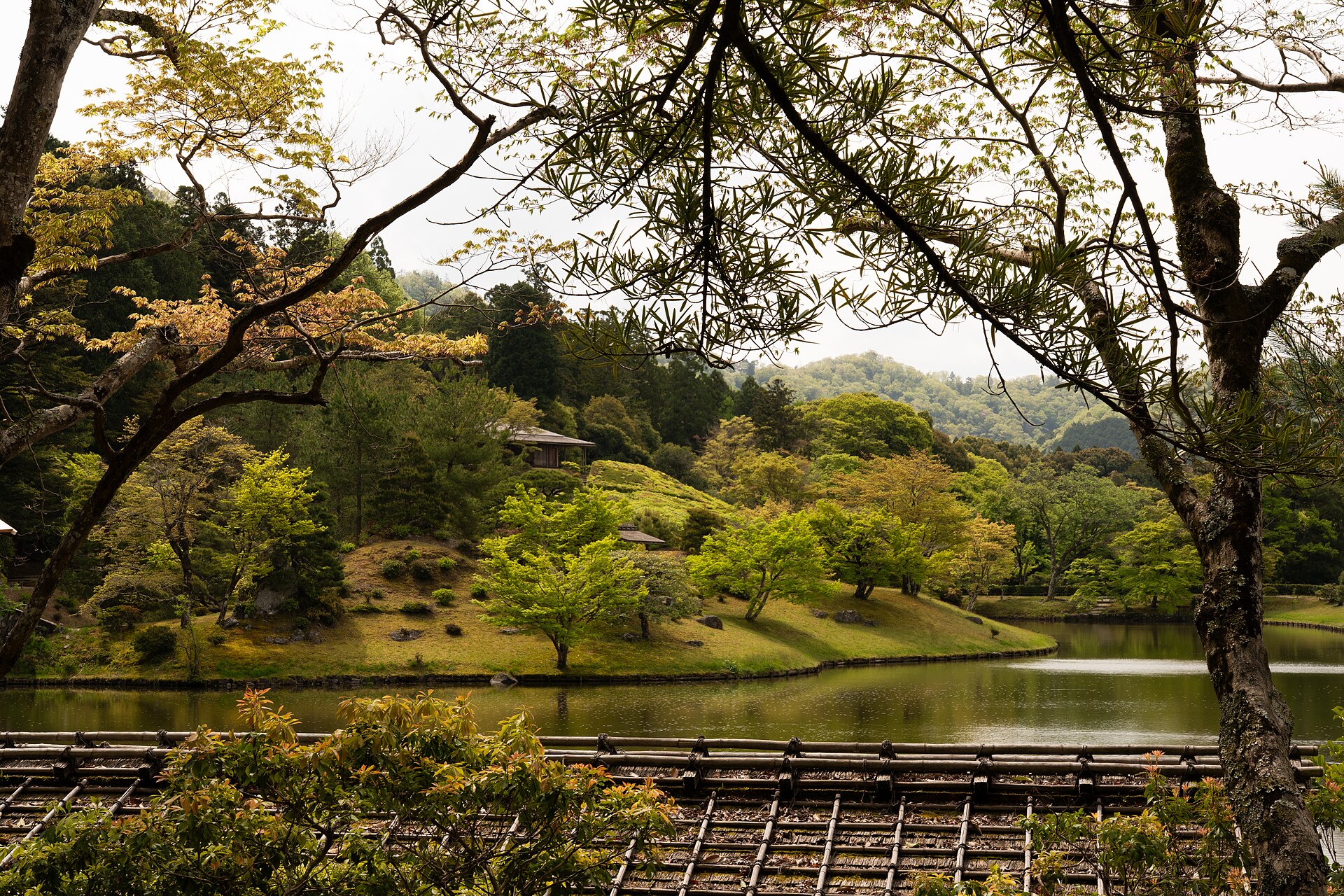 SRP1998 / CC BY-SA 4.0
History · Kyoto★★
Shugakuin Imperial Villa
0.6 km · straight line
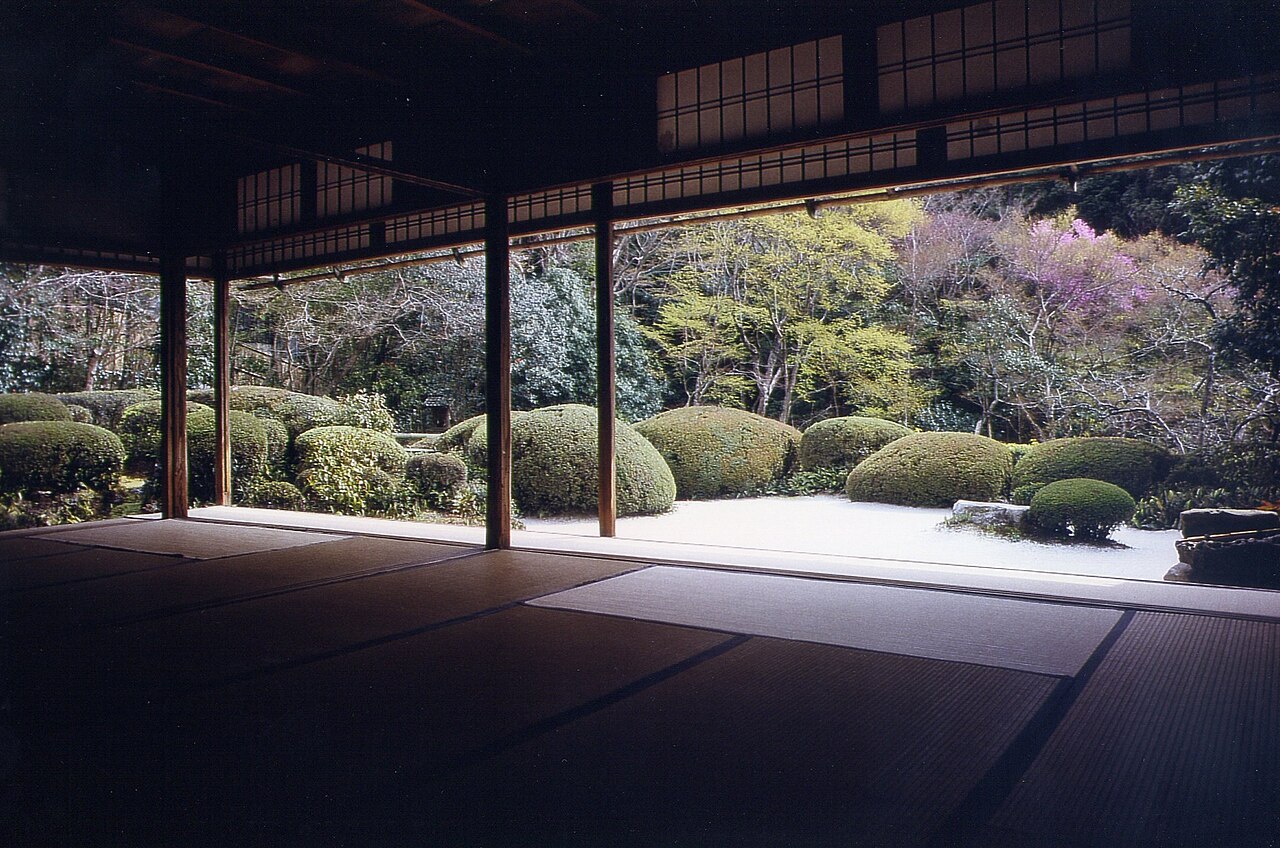 Bigjap / CC BY-SA 4.0
History · Kyoto★★
Shisendo
0.8 km · straight line
 Naokijp / CC BY-SA 4.0
History · Kyoto★★
Rurikoin
1.7 km · straight line
 Hahifuheho / CC0
Nature · Kyoto★
Yase & the Takano River
1.9 km · straight line
Distances are straight lines on the map, not travel times.