Kyoto · Ichijoji, northeast foothillsNo.375★★Open in map →
Shisendo
— a poet's retreat
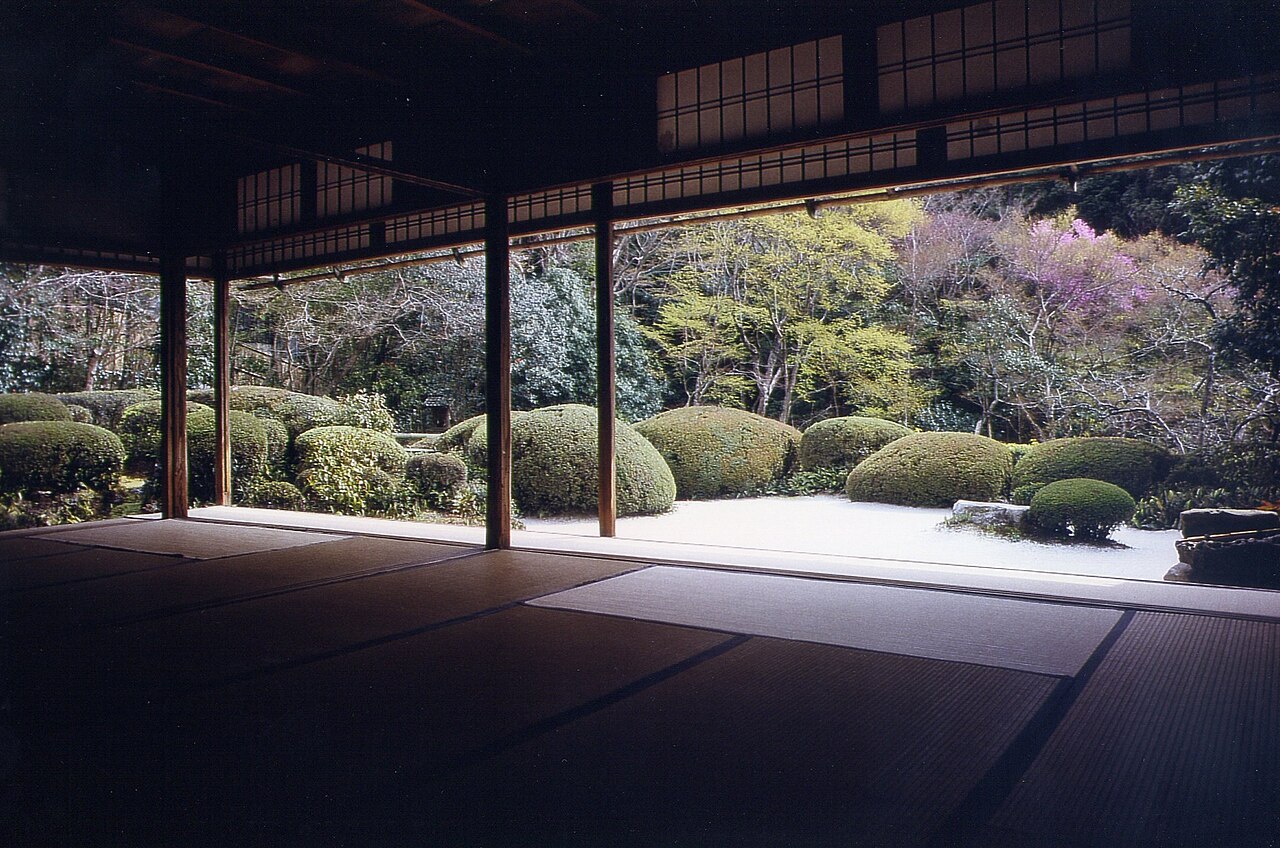
The hillside villa built in 1641 by Ishikawa Jozan, a former Tokugawa retainer turned scholar-poet, now a Soto Zen temple. Its core is a room hung with portraits of thirty-six Chinese poets and a garden measured by the knock of a bamboo water clapper.
- FromDemachiyanagi Stn
- ~20 minEizan Railway (every ~10-15 min)
- Get off atIchijoji Stn (Eizan Railway, then ~15-min walk)
- On foot
- Shisendo
The sweet spot
Most famous Kyoto gardens are designed to be looked at. Shisendo is designed to be sat in and heard: it is small, it is entered barefoot on tatami, and its best-known feature is a sound. The bamboo clapper credited to Jozan is now a stock image of Japan, and this is where the idea is said to have come from.
Where it is
90 more notes in Kyoto · open the map →What to look for — in walking order
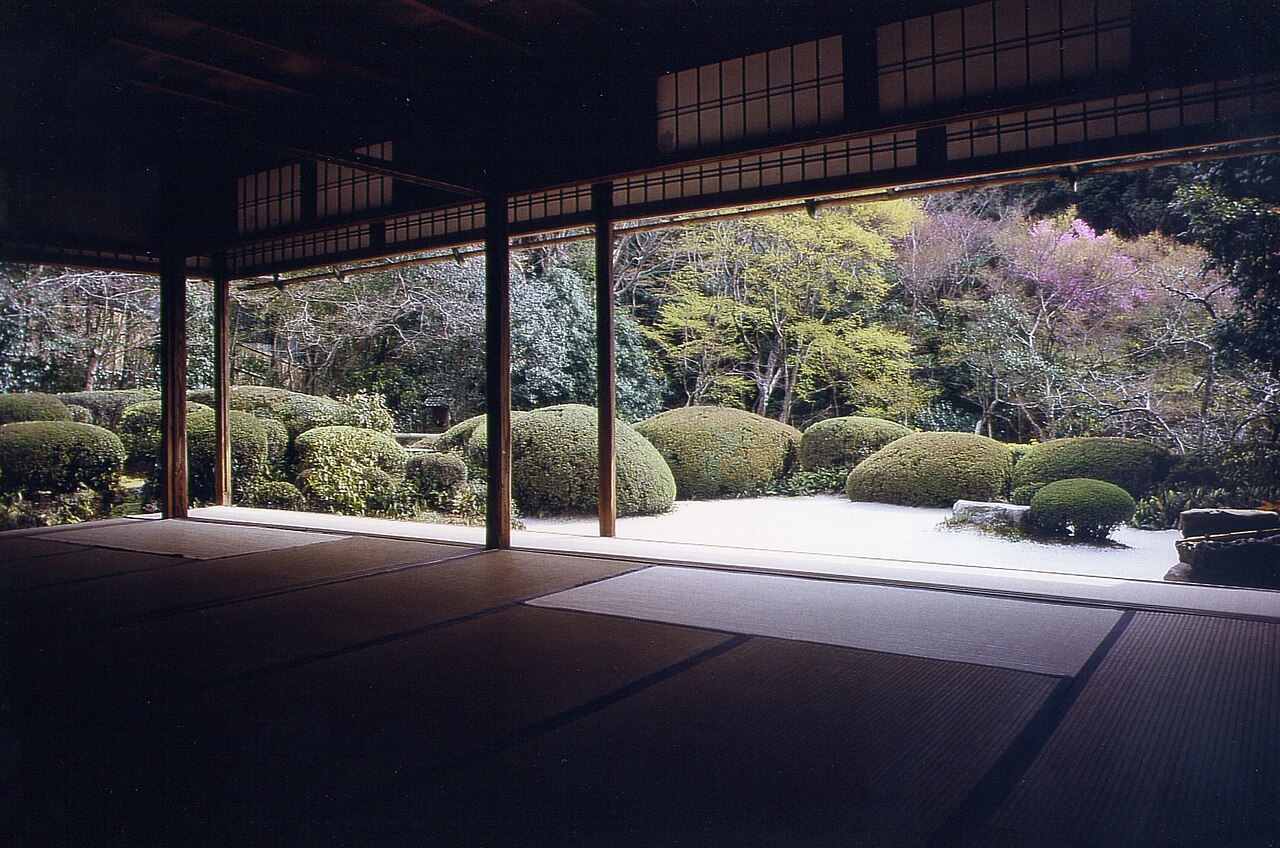
- Shisen no Mathe poetry hall itself — thirty-six portraits of Chinese poets ringing the room, each with Jozan's own inscription
- The sozuthe bamboo water clapper in the lower garden, said to have been devised here; the knock arrives at unpredictable intervals
- The terraced gardenwhite sand, clipped satsuki azaleas that bloom in late May, and maples that turn in November, all read from the veranda
- Shogetsuro towerthe small upper chamber at the corner of the building, one of the named features of Jozan's 'hollow-and-bump dwelling'
How to actually get there
- Demachiyanagi Station → Ichijoji Station (Eizan Railway Eizan Line, ~6 min).
- Walk east and uphill along the lane, ~15 min, to the small thatched entrance gate.
- Take off your shoes, sit on the veranda facing the garden, and wait for the sozu to knock before moving on to the poetry hall.
- Demachiyanagi → Ichijoji on the Eizan Railway
- From Demachiyanagi Station (the terminus of the Keihan Oto Line), take the Eizan Railway Eizan Line toward Yase-Hieizanguchi and ride 5 stops, about 6 minutes, to Ichijoji Station. Leave the station on the east side and walk uphill along the lane for about 15 minutes; the entrance gate is small and set into a hedge on the left. Trains run every 10–15 minutes.
- Back down to Ichijoji Station
- Walk back down the lane to Ichijoji Station, about 15 minutes downhill, and take the Eizan Line back to Demachiyanagi, where the Keihan Line connects to Sanjo, Gion-Shijo and Osaka. Trains run into the evening.
About the place
Shisendo sits on the lower slope of the eastern hills, up a lane above Ichijoji, and it is small enough that you can see all of it from one seated position. That is the point. Ishikawa Jozan served the Tokugawa as a warrior, left that life, spent decades studying Chinese classics, and in 1641 built this place to grow old in. He called it Ototsuka — 'the hollow-and-bump dwelling' — after the uneven ground it stands on. In the main room he hung portraits of thirty-six great Chinese poets, each with a verse written in his own hand, and that room gave the villa the name it goes by now: the hall of poetry immortals. Sit on the veranda facing the garden and the composition resolves: clipped azalea mounds against white sand, the hillside rising behind, and a small upper tower off to one side. Then, at irregular intervals, a bamboo tube fills with water, tips, empties, and falls back onto a stone with a hard knock. Jozan is credited with devising this device — the sozu, better known now as a shishi-odoshi, originally meant to startle deer off the garden. It turns the silence into something you notice.
How to enjoy it
Open 9:00–17:00, with reception closing at 16:45; admission is 700 yen for adults, 500 for high school students and 300 for elementary and junior high. The temple closes for one day a year, 23 May, the anniversary of Jozan's death. Come on a weekday morning and you may have the veranda largely to yourself, which matters here more than at most temples — the whole design is built for sitting still and listening. Late May brings the azaleas, November the maples. Shisendo sits on the same lane as Manshuin and Enkoji, so the three make a natural half-day walk through the northeastern foothills.
Background & history
Ishikawa Jozan built the villa in 1641 and lived here for the rest of his life, writing Chinese-style verse and practising calligraphy. The thirty-six portraits in the Shisen no Ma were painted to his specification, with his own inscriptions of each poet's work — a Japanese scholar's personal canon of Chinese poetry, assembled in one room. After his death the property passed into religious hands; it is today a temple of the Soto Zen school, formally Jozan-ji, and the buildings and garden preserve the layout he set out.
Before you go
- Cash
- Admission is 700 yen for adults, 500 yen for high school students, 300 yen for elementary and junior high students, paid in cash at the entrance. IC cards work on the Eizan Railway and the city buses.
- Good to know
- Closed on 23 May each year for the anniversary of Jozan's death. Reception ends at 16:45. Shoes come off at the entrance and you sit on tatami, so wear socks you are happy to be seen in.
- Another way
- By bus: Kyoto City Bus 5 to the Ichijoji-Sagarimatsucho stop, then about 7 minutes uphill on foot — slower from central Kyoto but useful if you are already on the bus network.
- After you get off
- From Ichijoji Station, cross to the east side and follow the lane uphill for about 15 minutes. The gate is deliberately modest — a low thatched roof over a narrow opening in a hedge — so watch for the sign rather than for a temple facade.
Nearby notes
 Lordcolus / CC BY 2.0
History · Kyoto★★
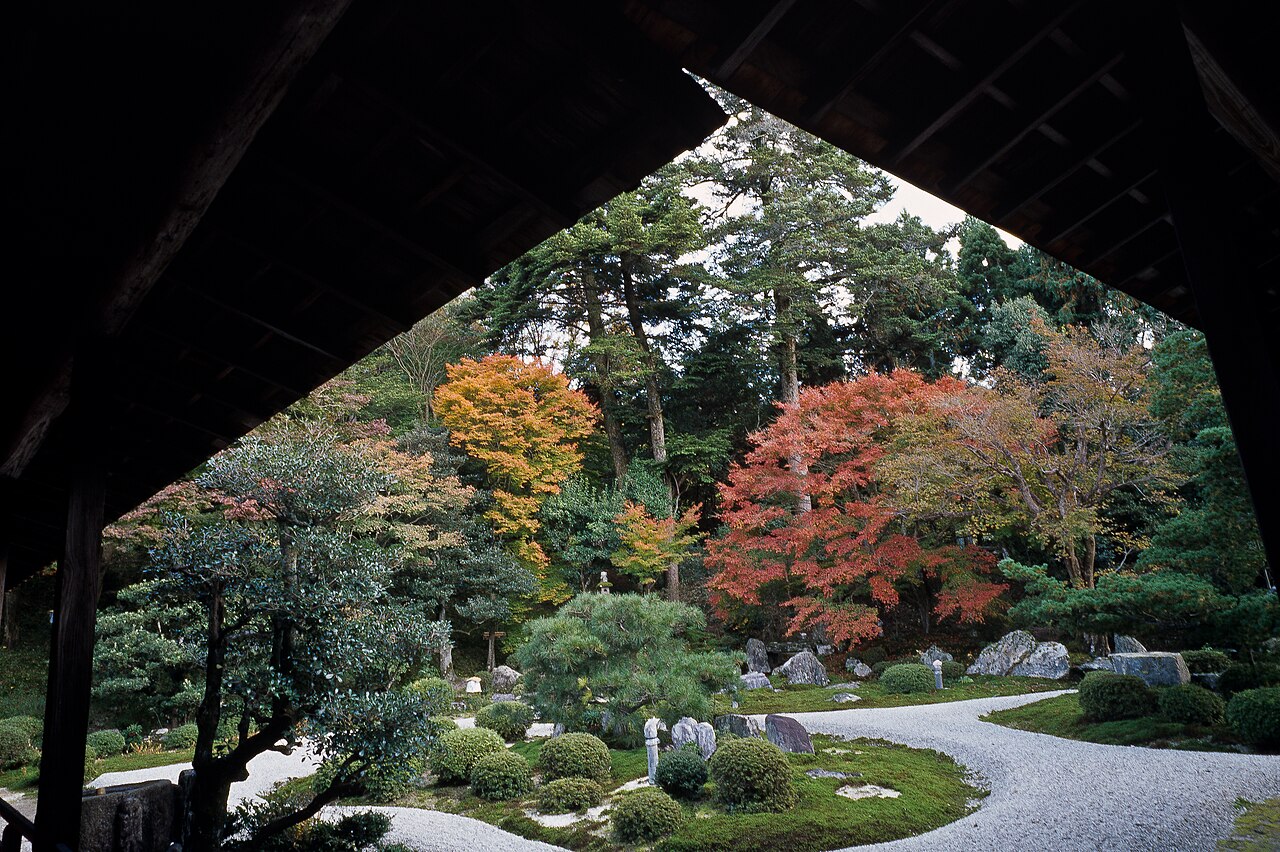
Manshuin Monzeki
0.8 km · straight line
 SRP1998 / CC BY-SA 4.0
History · Kyoto★★
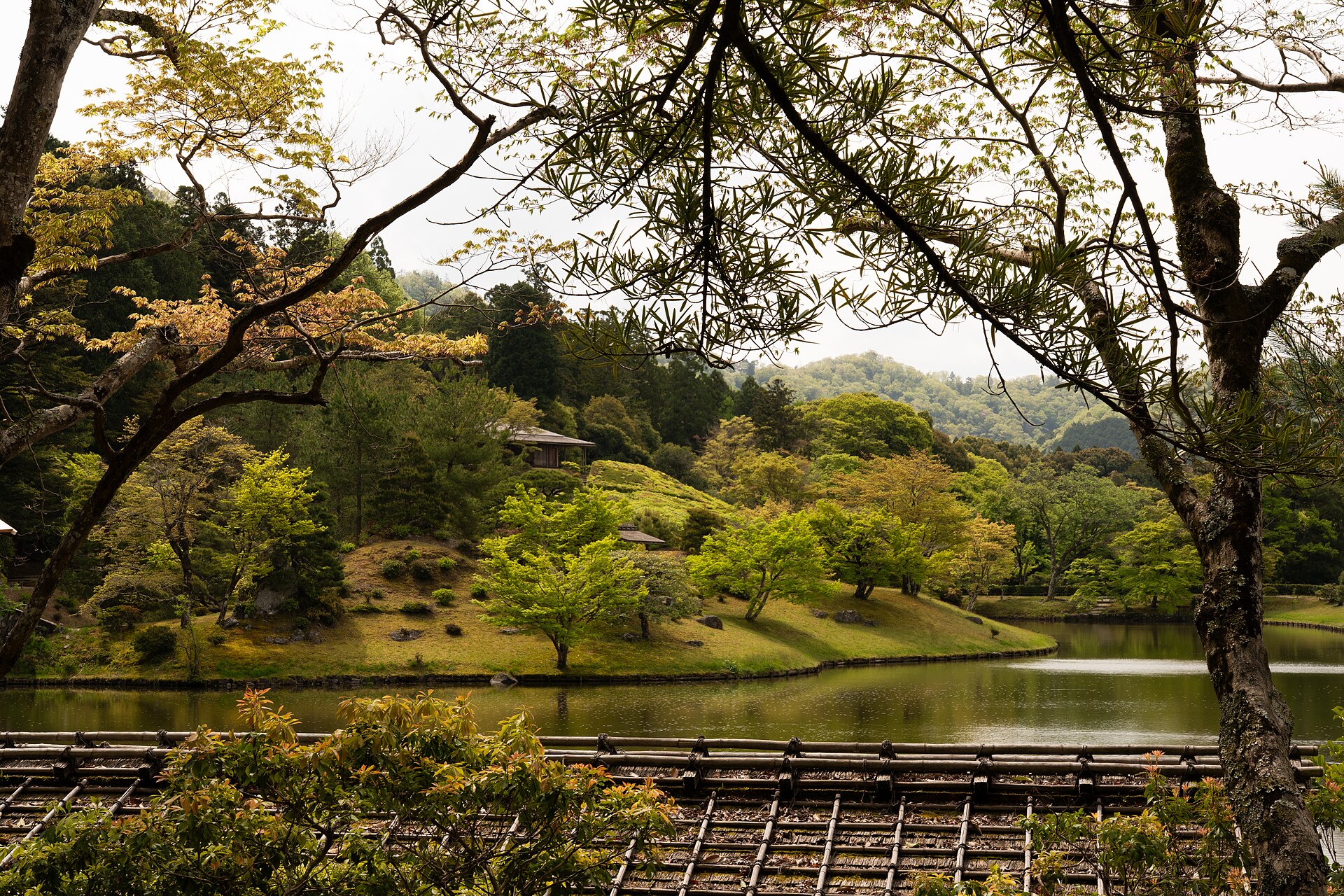
Shugakuin Imperial Villa
1.2 km · straight line
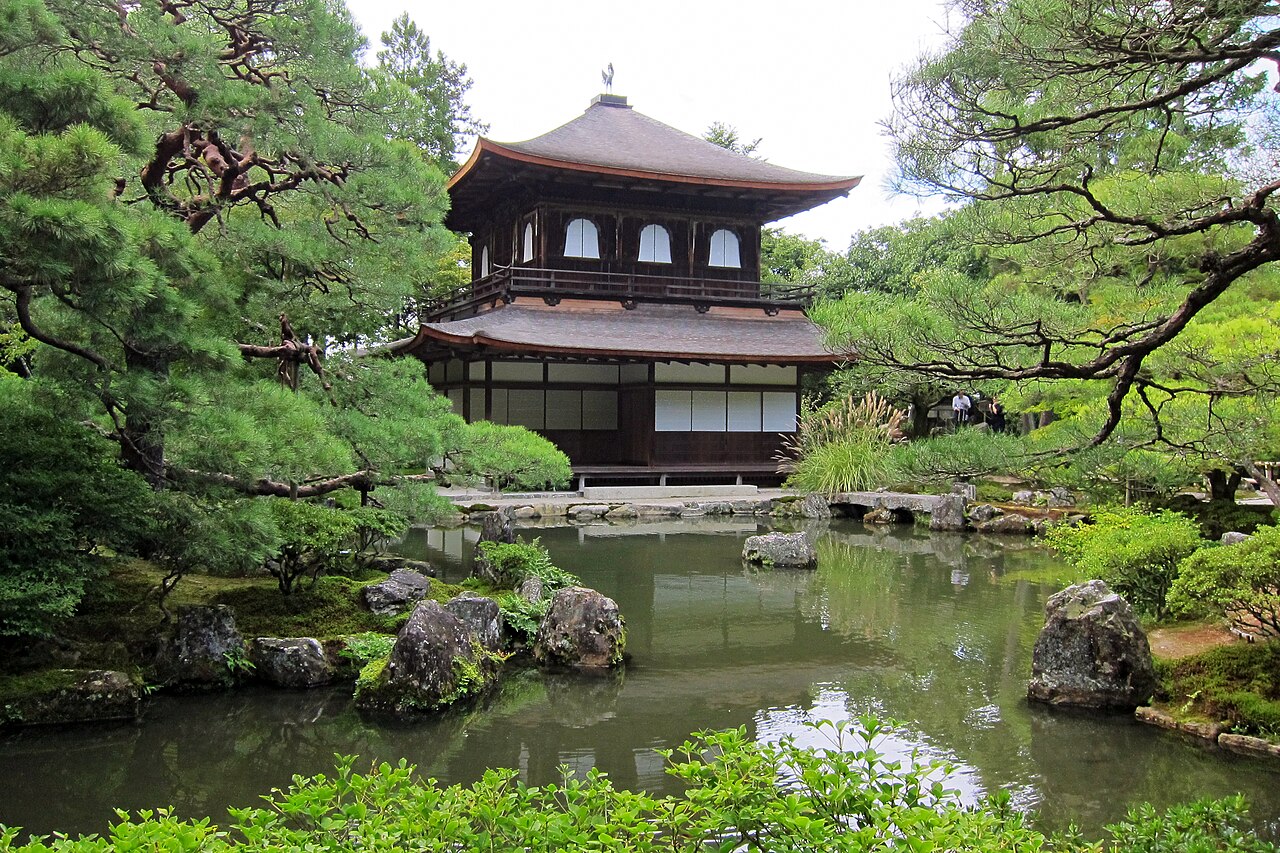 Oilstreet / CC BY 2.5
History · Kyoto★★
Ginkaku-ji
1.9 km · straight line
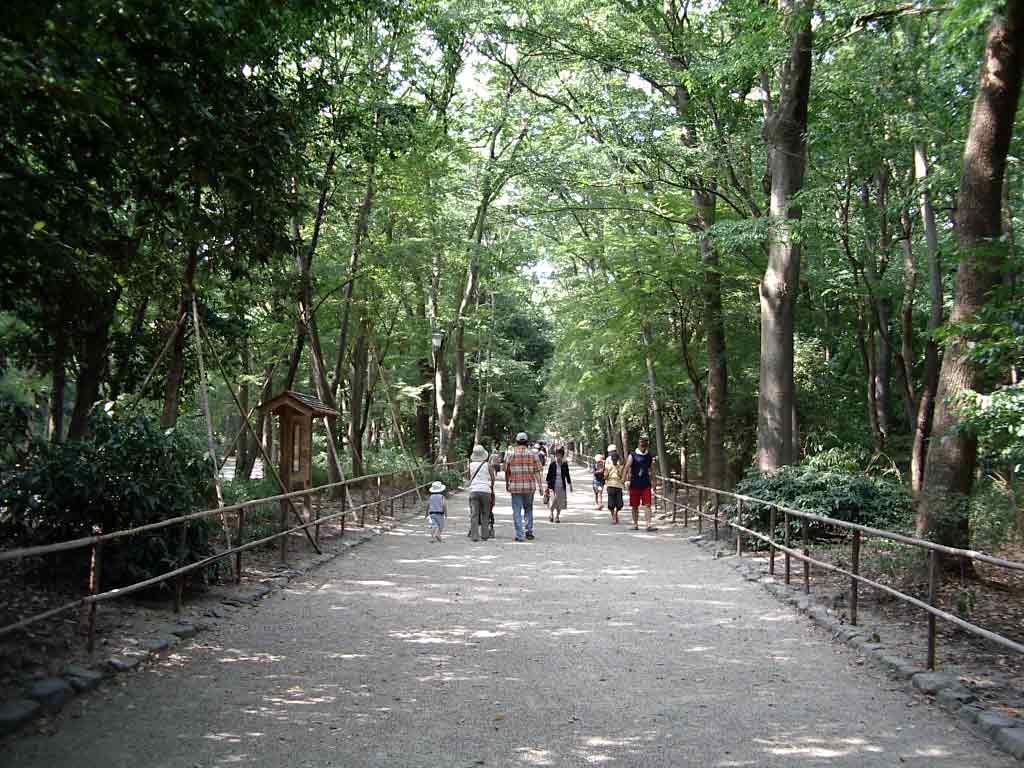 Mochi at Japanese Wikipedia / CC BY-SA 3.0
History · Kyoto★★★
Shimogamo Shrine
2.1 km · straight line
Distances are straight lines on the map, not travel times.