Northeast Kyoto · YaseNo.334★★Open in map →
Rurikoin
— the temple with the garden-reflecting table
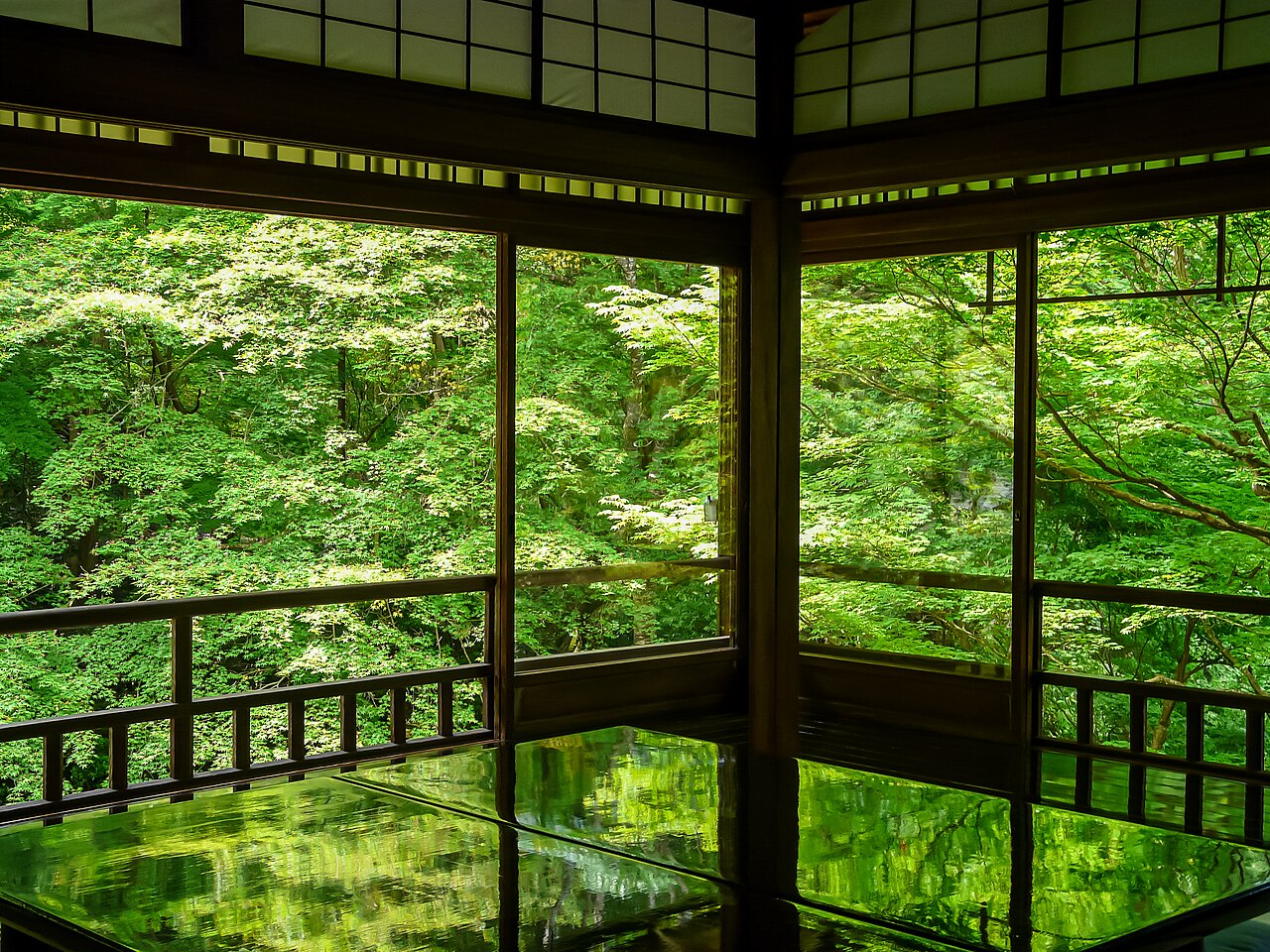
A temple at the foot of Mt. Hiei in Yase, open only for set periods in spring, summer and autumn. Known for the lacquered upper-floor table that reflects the maples outside as a clean inverted image.
- FromKyoto Station
- ~45 mintrain + walk (seasonal opening)
- Get off atYase-Hieizanguchi Stn
- From there
- Rurikoin
The sweet spot
Everyone in Japan has seen the photograph; far fewer people realise the temple is closed most of the year, and the seasonal-booking system keeps foreign visitor numbers well below what the image's fame would suggest.
Where it is
90 more notes in Kyoto · open the map →What to look for — in walking order
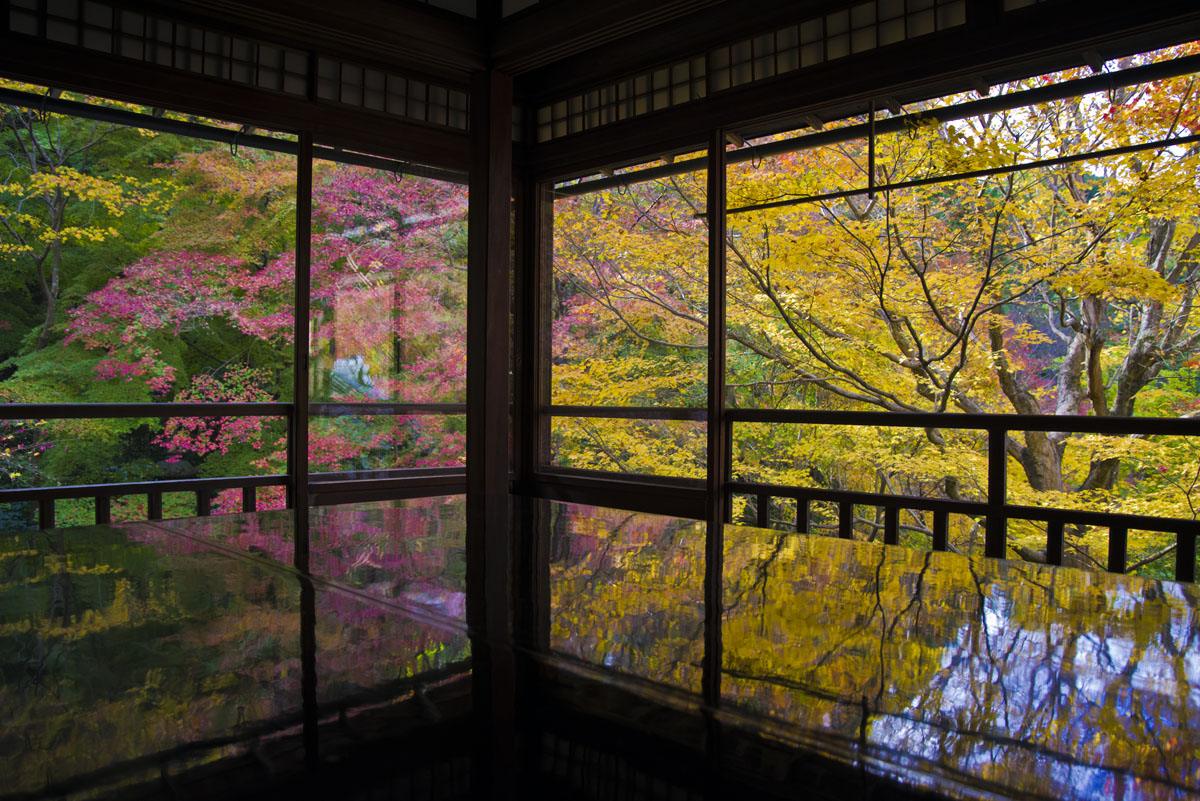
- The lacquered table (upper floor)the reflection view — maples inverted on a polished black writing table
- Ruri no Niwa (the lapis garden)the moss garden below, laid out to be seen from inside the building
- The villa joineryfine domestic carpentry — this was built as a house, not as a hall
- The Yase kamaburothe preserved traditional steam bath, part of the valley's old healing tradition
How to actually get there
- Kyoto Stn → Tofukuji Stn (JR Nara Line, ~2 min) → Demachiyanagi Stn (Keihan Main Line, ~11 min).
- Demachiyanagi Stn → Yase-Hieizanguchi Stn (Eizan Railway, ~14 min, every ~10 min).
- Yase-Hieizanguchi Stn → Rurikoin (on foot, ~12 min). Check the seasonal opening dates first.
- Keihan + Eizan Railway, then walk
- Kyoto Stn →(JR Nara Line, ~2 min)→ Tofukuji Stn →(Keihan Main Line, ~11 min)→ Demachiyanagi Stn →(Eizan Railway, ~14 min)→ Yase-Hieizanguchi Stn → walk about 12 minutes to the temple. Total roughly 45 minutes. The Eizan Railway runs about every 10 minutes, so there is no fixed departure to catch.
- The same route in reverse
- Walk back to Yase-Hieizanguchi and take the Eizan Railway to Demachiyanagi, then the Keihan and JR lines to Kyoto Station. These are frequent city services running until late evening; the temple closes well before the trains do.
About the place
Rurikoin sits at the foot of Mt. Hiei in Yase, on the edge of Kyoto where the city gives out and the mountain begins. It was built as a private villa and only became a temple in 2005, which explains the building: a domestic-scale wooden house with fine joinery and a series of gardens designed to be seen from inside it, rather than a temple laid out around a hall. The famous view is on the upper floor. A long black-lacquered writing table stands parallel to an open window, and when the maples outside are green in spring or red in autumn, the polished surface holds them upside down with almost no distortion. It is real, and it is also the reason the temple restricts access — it opens for a set period in spring, summer and autumn only, and the autumn season normally requires booking in advance.
How to enjoy it
Green season is the better bet. The spring and summer openings show the same reflection in fresh green, cost the same, need no reservation in most cases, and are far less crowded than late November. Whichever season, go on a bright but not glaring day — the reflection is strongest when the light outside is even.
Background & history
The buildings began as a private villa in the early twentieth century, built at Yase — a valley long used as a retreat and known historically for its steam-bath healing tradition. The property became a temple of the Jodo Shinshu Komyoji lineage in 2005 and has been opened to the public only in limited seasonal periods since. The restricted opening is part of why the interior and the moss gardens survive in the condition they do.
Before you go
- Cash
- Admission is ¥2,000 (about ¥1,000 for students with ID). Trains take IC cards such as ICOCA and Suica.
- Good to know
- The temple opens only during set seasonal periods — in 2026, roughly 15 Apr-31 May, 1 Jul-17 Aug and 1 Oct-13 Dec, from 10:00 to 17:00 with last entry at 16:30. The autumn period normally requires advance reservation. Confirm the current dates on the official site before travelling.
- Another way
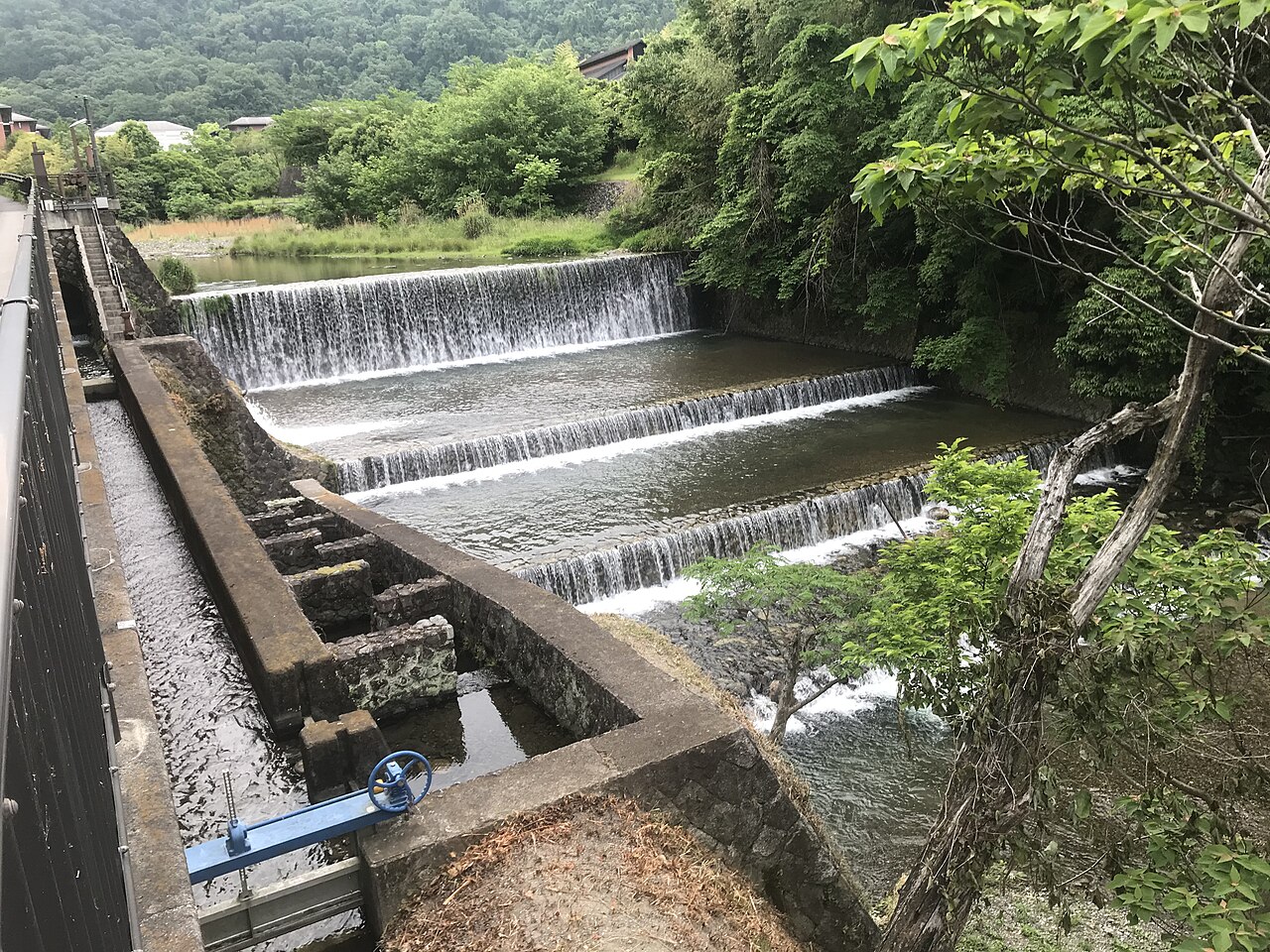
- The Takano River below the station is a cool, quiet riverside walk, and the Eizan Cable Car up Mt. Hiei leaves from beside the same station.
- After you get off
- From Yase-Hieizanguchi Station, walk about 12 minutes up toward the temple. There is no visitor parking, and cars are discouraged in the surrounding lanes during opening periods.
Nearby notes
 Hahifuheho / CC0
Nature · Kyoto★
Yase & the Takano River
0.2 km · straight line
 SRP1998 / CC BY-SA 4.0
History · Kyoto★★
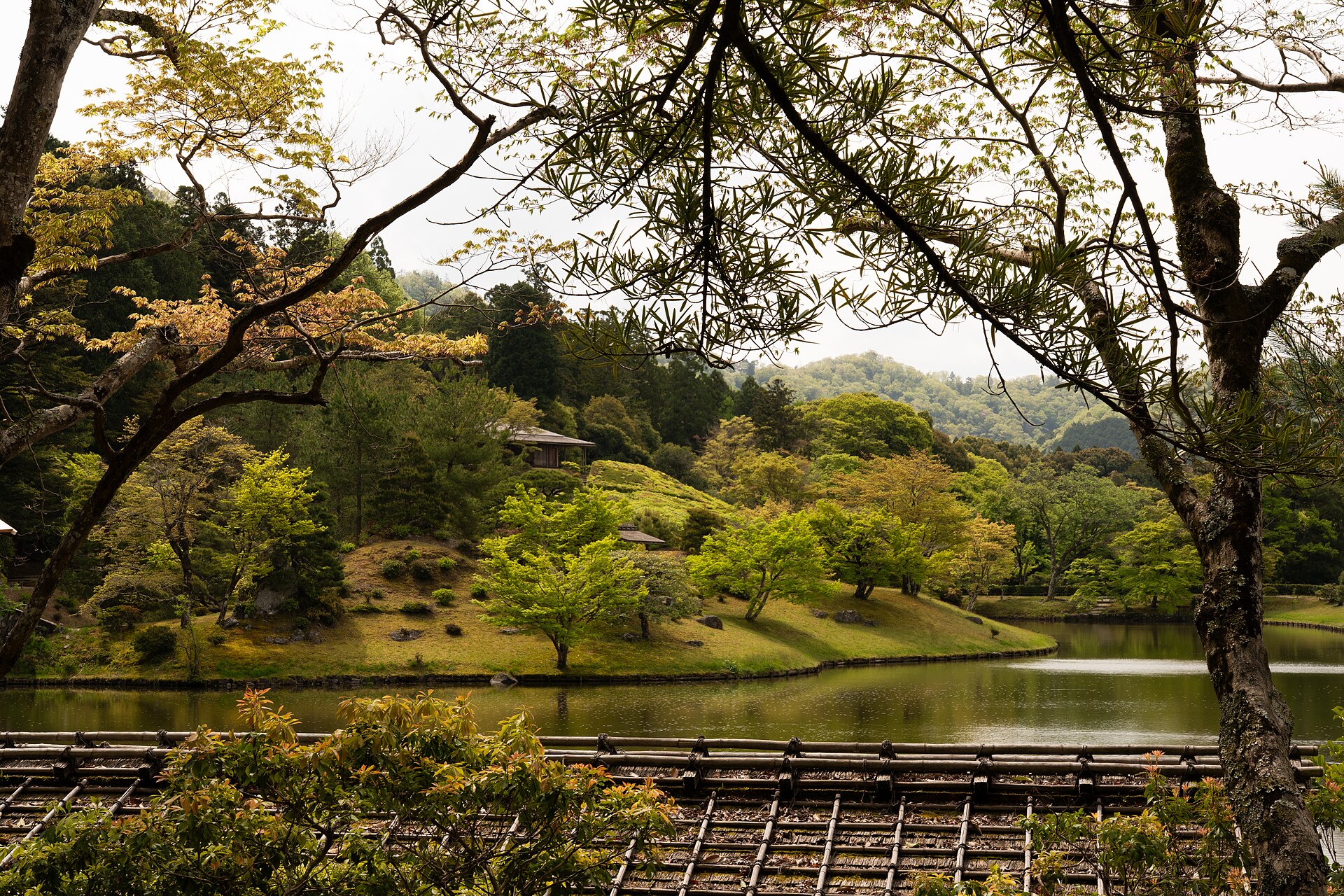
Shugakuin Imperial Villa
1.3 km · straight line
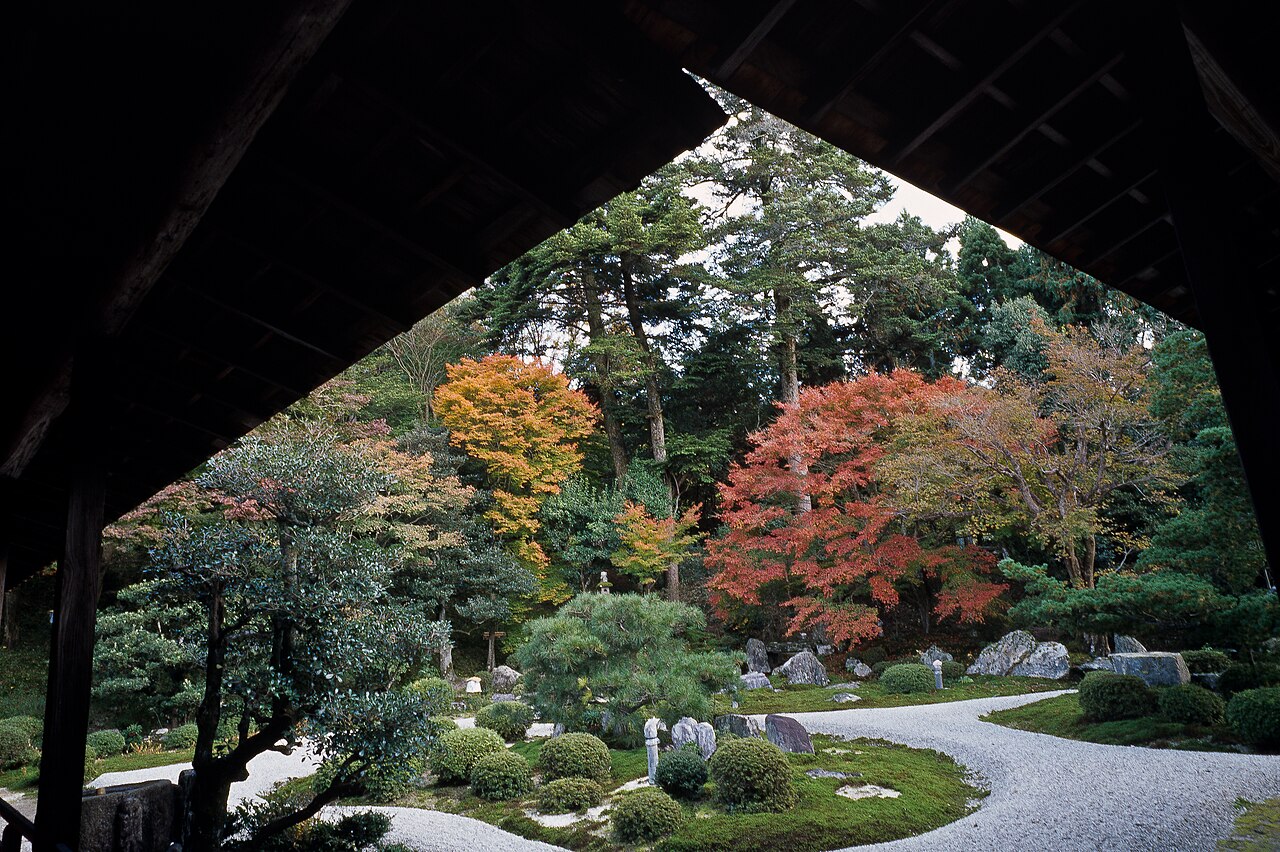 Lordcolus / CC BY 2.0
History · Kyoto★★
Manshuin Monzeki
1.7 km · straight line
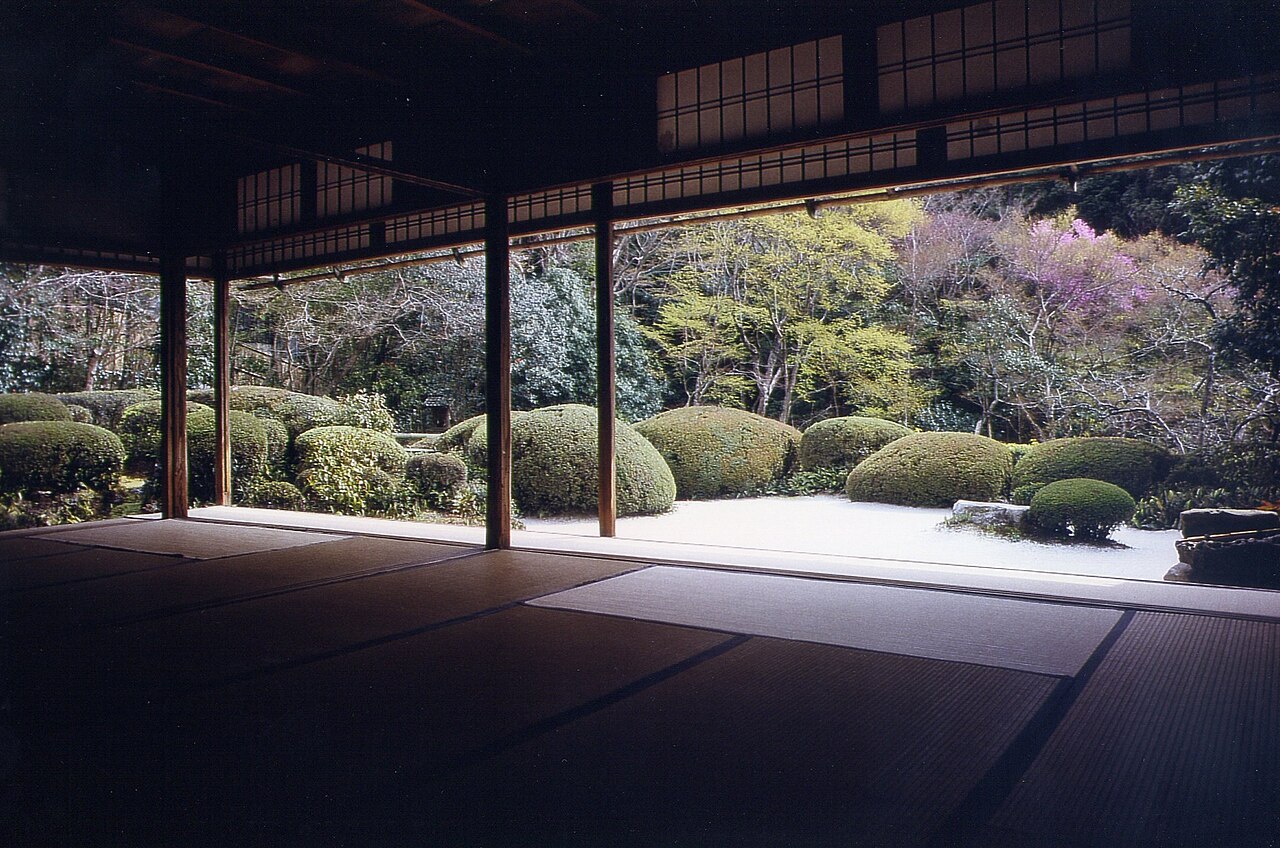 Bigjap / CC BY-SA 4.0
History · Kyoto★★
Shisendo
2.5 km · straight line
Distances are straight lines on the map, not travel times.