Saitama · Chichibu mountainsNo.401★★★Open in map →
Mitsumine Shrine
A mountain shrine deep in the Chichibu range where wolves, not lion-dogs, guard the approach. Founded by legend by Yamato Takeru, it sits above 1,000 metres and is reached by a single bus route running five times a day.
- FromIkebukuro Stn (Tokyo)
- ~2 h 40 minlimited express + bus (5/day)
- Get off atMitsumine-jinja bus stop (Seibu Kanko Bus)
- From there
- Mitsumine Shrine
Where it is
19 more notes in Saitama · open the map →What to look for — in walking order
- The wolf guardiansstone wolves in place of lion-dogs at the gates and beside the halls — the reason this shrine is unlike any other in the Kanto region
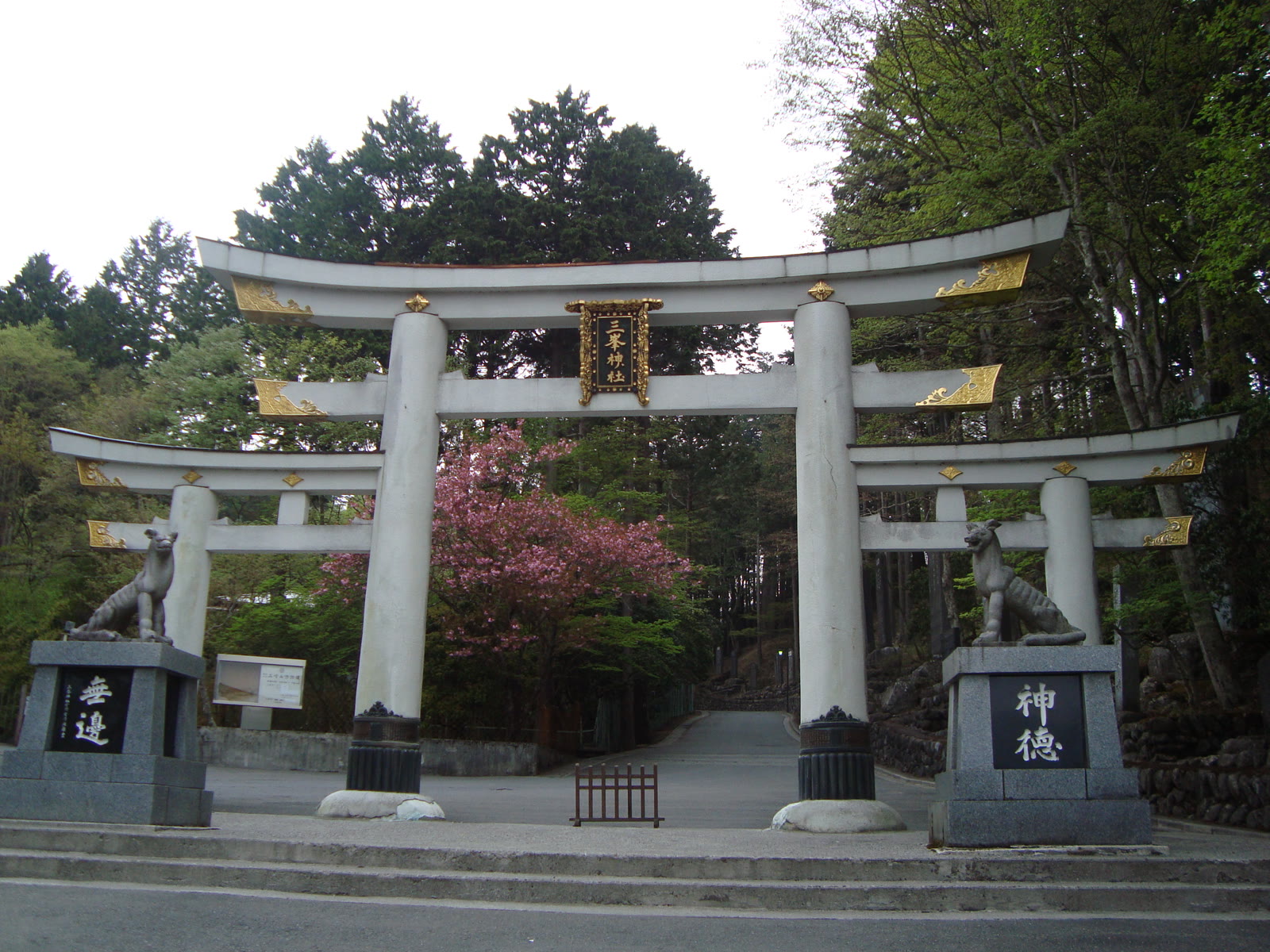
- The mitsu-toriithree myojin torii combined into a single gate before the worship hall, a form found at only a handful of shrines in Japan
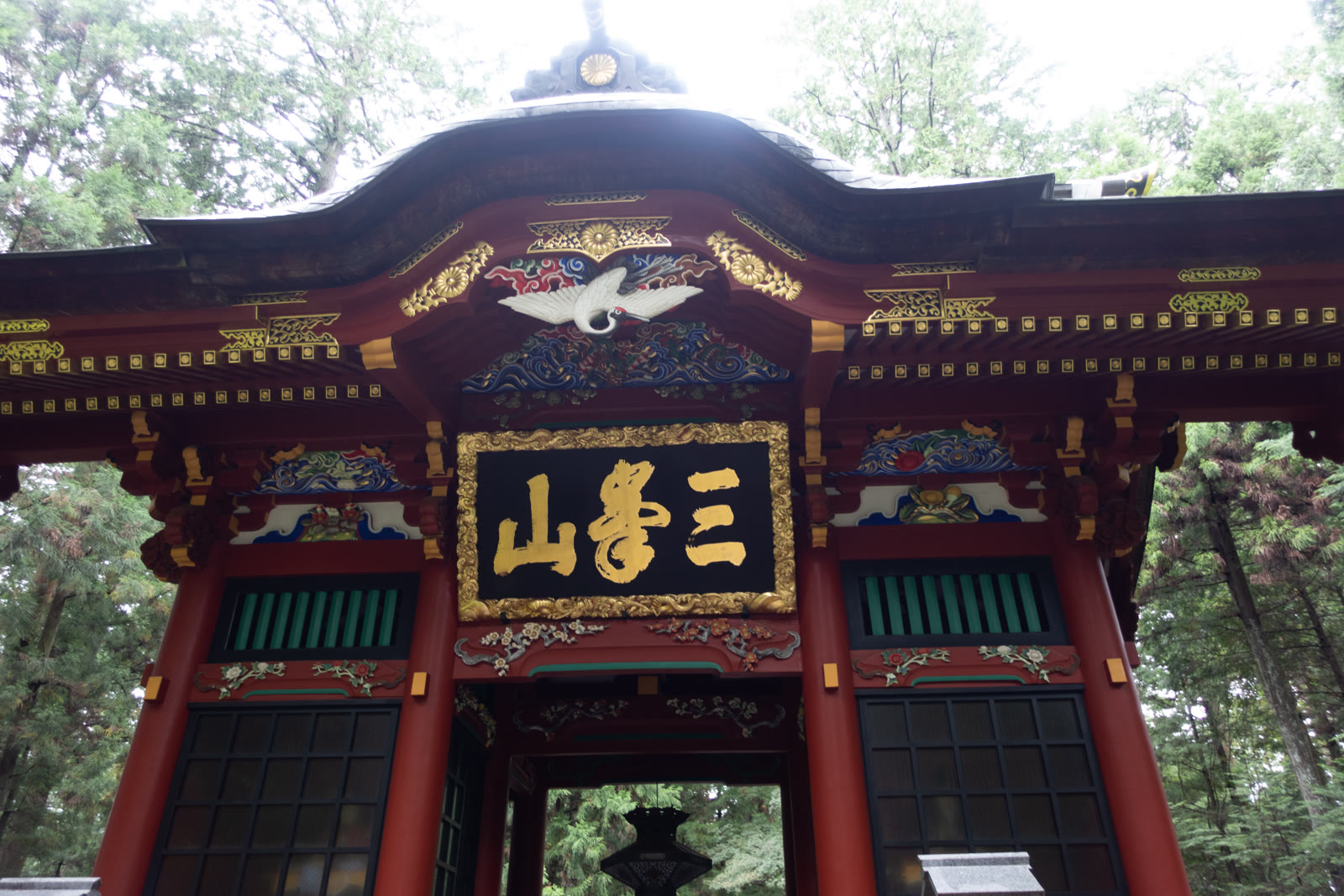
- The worship hall carvingspolychrome carved panels covering the hall in a style closer to Nikko than to the plain timber usual in mountain shrines
- The Zuishinmon gate and cedar approachthe vermilion gate and the ancient cedars along the path to it, with the Chichibu range dropping away on both sides
How to actually get there
- Ikebukuro Stn → Seibu-Chichibu Stn (Seibu limited express Laview, ~80 min, reserved seat).
- Seibu-Chichibu Stn → Mitsumine-jinja bus stop (Seibu Kanko Bus, ~75 min, about 5 round trips a day).
- Car park → cedar approach → Zuishinmon gate → mitsu-torii → worship hall (walk, ~10 min).
- Ikebukuro Stn → Seibu-Chichibu Stn, then the Mitsumine bus
- From Ikebukuro take the Seibu limited express Laview to Seibu-Chichibu Station, about 80 minutes and reserved-seat. From the station forecourt take the Seibu Kanko Bus bound for Mitsumine-jinja, about 75 minutes up the valley to the shrine car park. The bus runs about five round trips a day — this is the only public transport to the shrine, so treat the timetable as the fixed point of the day.
- Mitsumine-jinja → Seibu-Chichibu Stn → Ikebukuro
- The same bus returns from the shrine car park on a limited schedule; confirm the last departure when you arrive, not when you leave. From Seibu-Chichibu the Laview runs back to Ikebukuro into the evening. Missing the last bus means no way down without a taxi from the valley.
About the place
Mitsumine Shrine stands high in the Chichibu mountains of Saitama, and the thing that marks it out is what sits at the gates. Where almost every Japanese shrine has komainu — paired lion-dogs — Mitsumine has wolves. In the Edo period the wolves living in these mountains were revered as okuinu-sama, honoured messengers of the deities, and talismans from this shrine were carried across the Kanto plain as protection against fire and theft. The Japanese wolf has been extinct for over a century; the stone ones remain, dozens of them, along the approach and beside every subsidiary hall. The shrine enshrines Izanagi and Izanami, the creator deities, and its founding is attributed by legend to Yamato Takeru, who is said to have climbed here during his eastern campaign. Before the worship hall stands a mitsu-torii, an unusual gate made of three myojin torii combined into one structure — a form shared with only a handful of shrines in Japan. The worship hall itself is dense with polychrome carving, in a register closer to Nikko than to the plain cypress of most mountain shrines. The summit shrine, Oku-miya, is a separate matter: it sits on the peak of Mount Myohogatake and takes a couple of hours of mountain path from here, and is best treated as its own trip rather than an add-on.
How to enjoy it
The bus is the constraint, so plan around it rather than the shrine: five round trips a day from Seibu-Chichibu Station and roughly 75 minutes each way, which makes a day trip possible but tight — check the return times before you climb anything. If you want the sea of cloud that fills the valleys below at dawn, a day trip cannot give it to you; stay at the shrine's lodging, Kounkaku, and step outside before sunrise. Treat the Oku-miya on Mount Myohogatake as a separate expedition, not an afternoon extra — it is a proper mountain path of a couple of hours each way. The shrine sits above 1,000 metres and is markedly colder than Tokyo in any season.
Background & history
The shrine's founding is traditionally placed in the reign of Emperor Keiko, when Yamato Takeru is said to have climbed to this spot during his eastern campaign and dedicated it to Izanagi and Izanami. Wolf veneration developed strongly in the Edo period, when the shrine's fire-and-theft talismans spread through the surrounding provinces. A ropeway served the shrine from the valley for decades but was suspended in May 2006 after metal fatigue was found in the ageing structure, and formally abolished in December 2007 — bus is now the only public route up, though a feasibility study into reviving the line was scheduled for 2025. A more recent episode is instructive about the shrine's popularity: a white amulet issued only on the first of each month from 2012 drew queues that at their worst backed traffic up 26 kilometres and cost drivers seven and a half hours, and its issue was suspended in June 2018.
Before you go
- Cash
- Shrine entry is free; the treasure hall charges separately. Carry cash — this is a mountain-top site and the shops and the bus are more reliable with coins and notes than with cards. IC cards work on the Seibu line.
- Good to know
- There is no ropeway: the line was suspended in 2006 and abolished in 2007, so any guide suggesting you ride up is out of date. At over 1,000 metres the shrine is cold and can be snowbound in winter, and the bus is subject to weather closure. The white amulet that once drew month-start crowds has not been issued since 2018.
- Another way
- From Seibu-Chichibu you can also reach Mitsumineguchi Station on the Chichibu Railway and pick up the same bus route partway. By car, the Chichibu valley road climbs to a car park at the shrine, but the approach is narrow and busy at weekends.
- After you get off
- The bus terminates at the shrine car park. From there it is about 10 minutes on foot up through the cedars and the Zuishinmon gate to the mitsu-torii and the worship hall.
Nearby notes
 京浜にけ / CC BY-SA 3.0
History · Saitama★
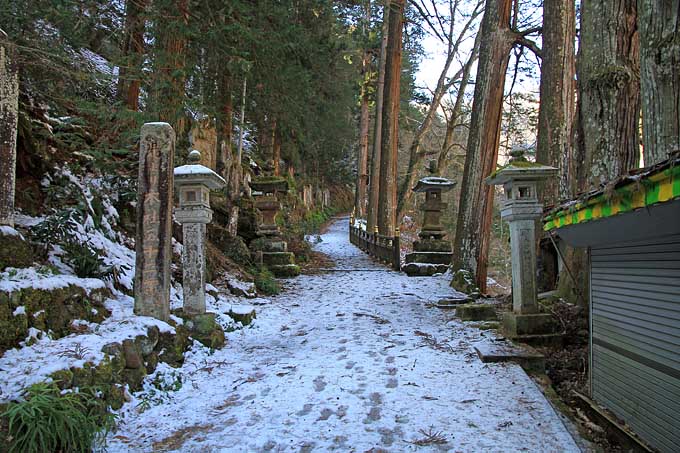
Mt. Myohogatake
1.8 km · straight line
 NY066 / CC BY-SA 3.0
Onsen · Saitama★
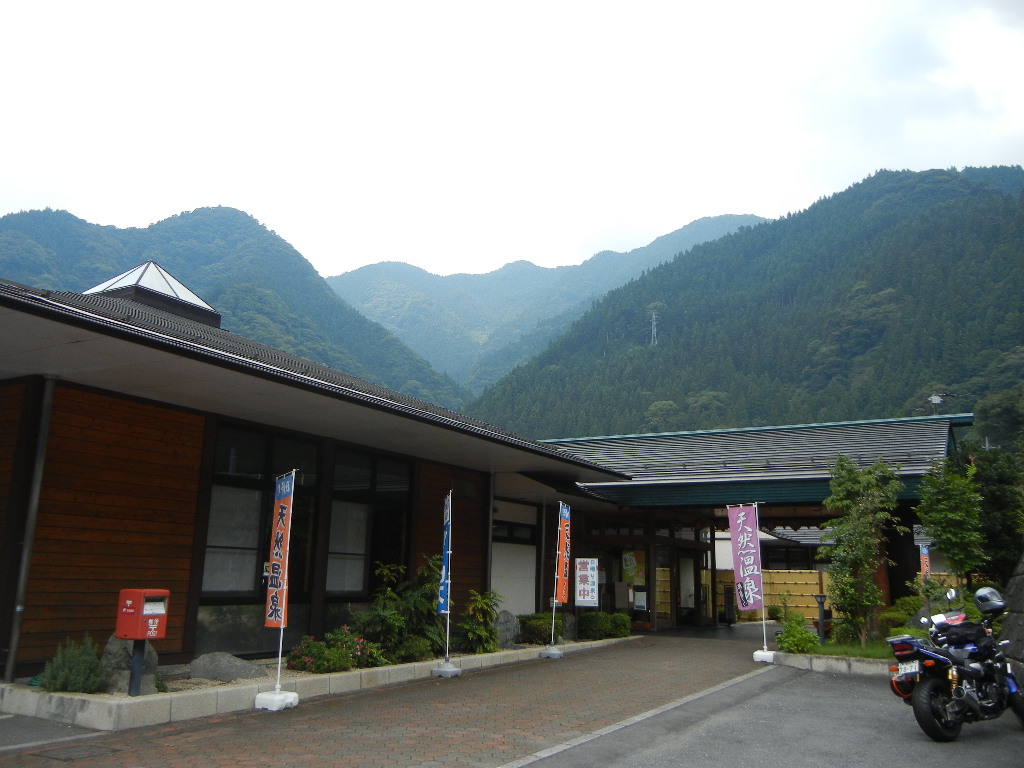
Otaki Onsen Yuyukan
2.8 km · straight line
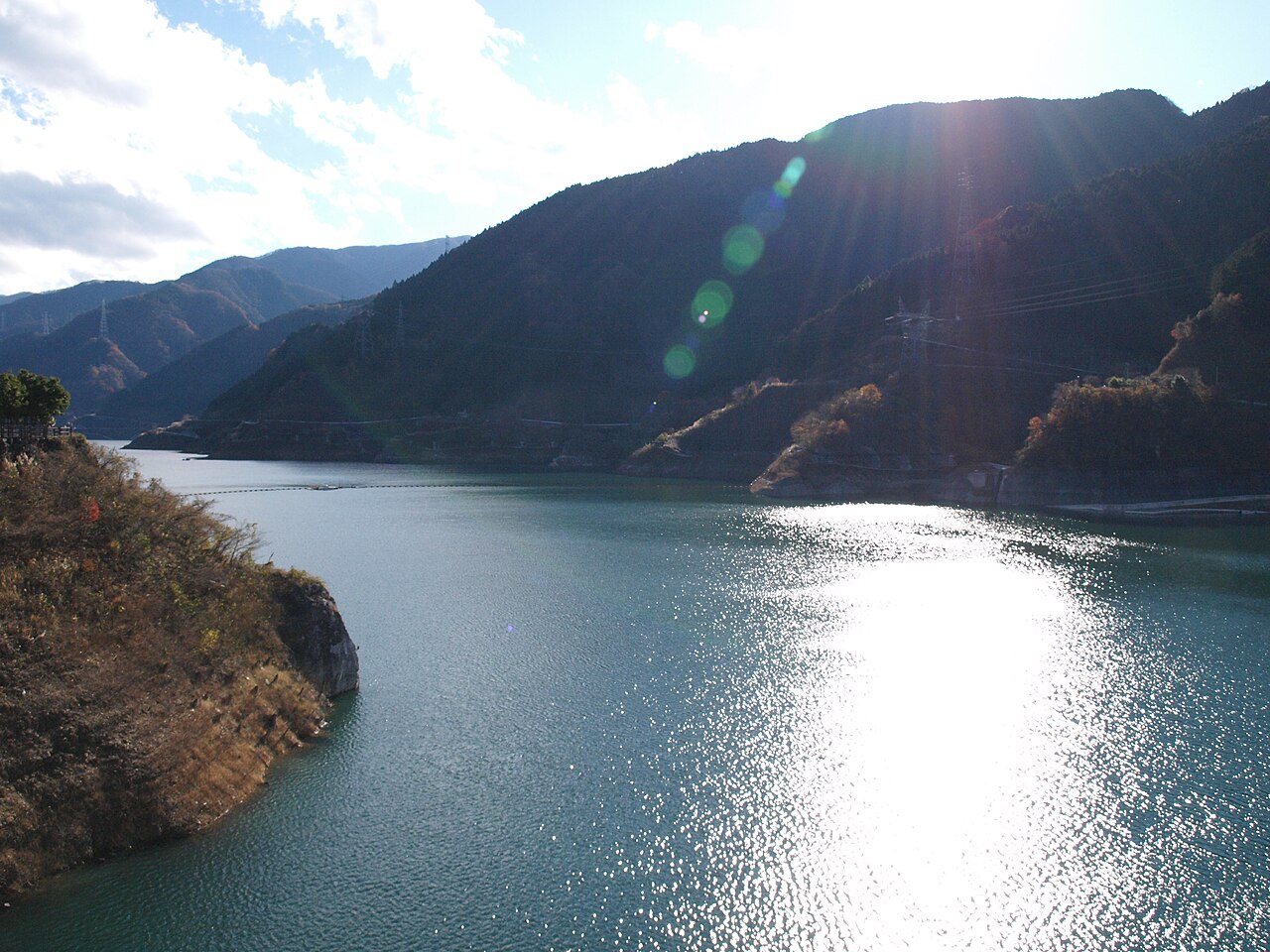 azzuriceo(https://www.flickr.com/photos/ / CC BY 2.0
Nature · Saitama★
Urayama Dam & Chichibu Sakura Lake
11.4 km · straight line
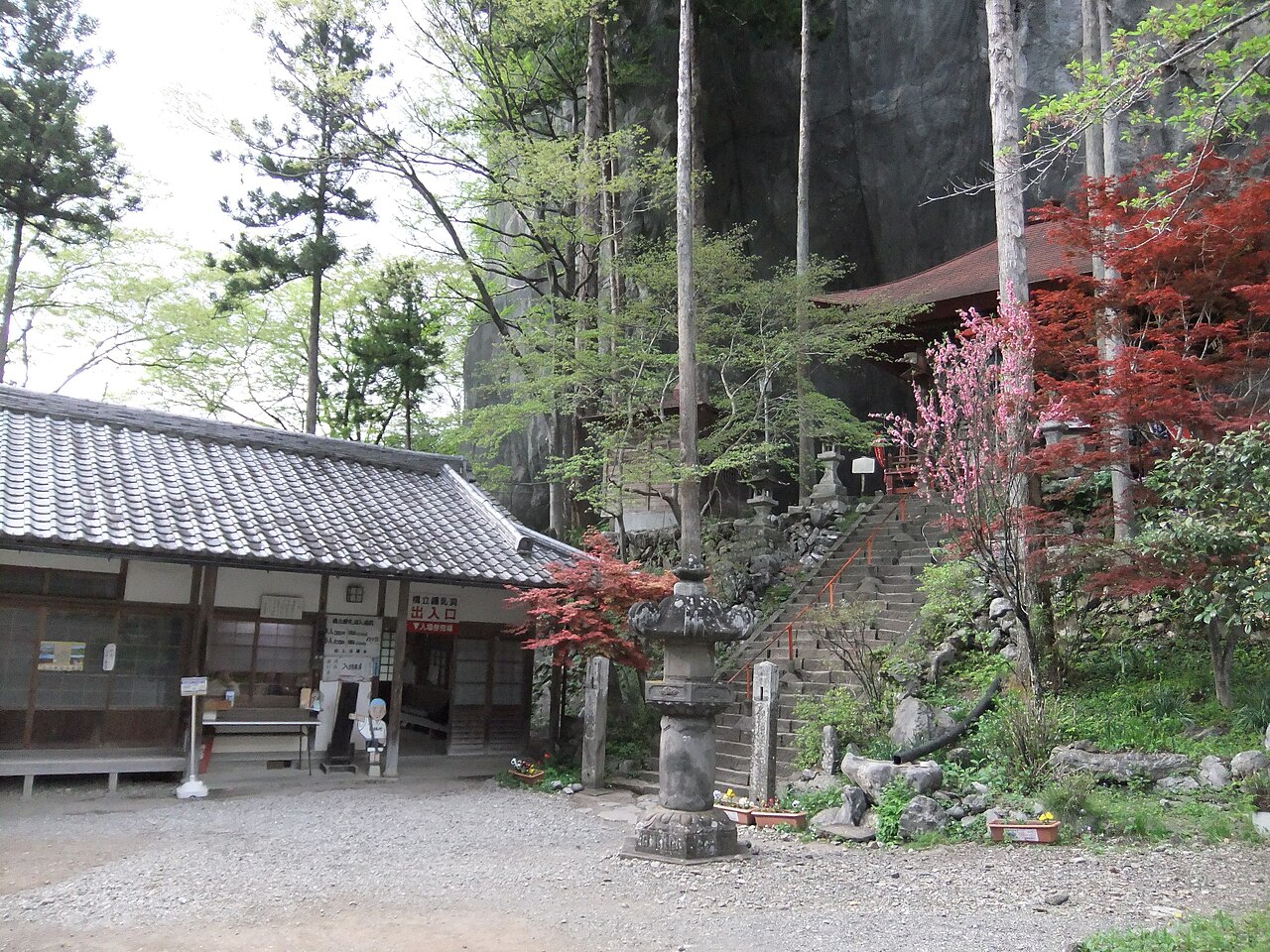 tak1701d / CC BY-SA 3.0
Nature · Saitama★
Hashidate Limestone Cave
12.4 km · straight line
Distances are straight lines on the map, not travel times.