East Ehime · NiihamaNo.1309★★Open in map →
Niihama Taiko Festival
— Giant embroidered floats lifted by hand each October
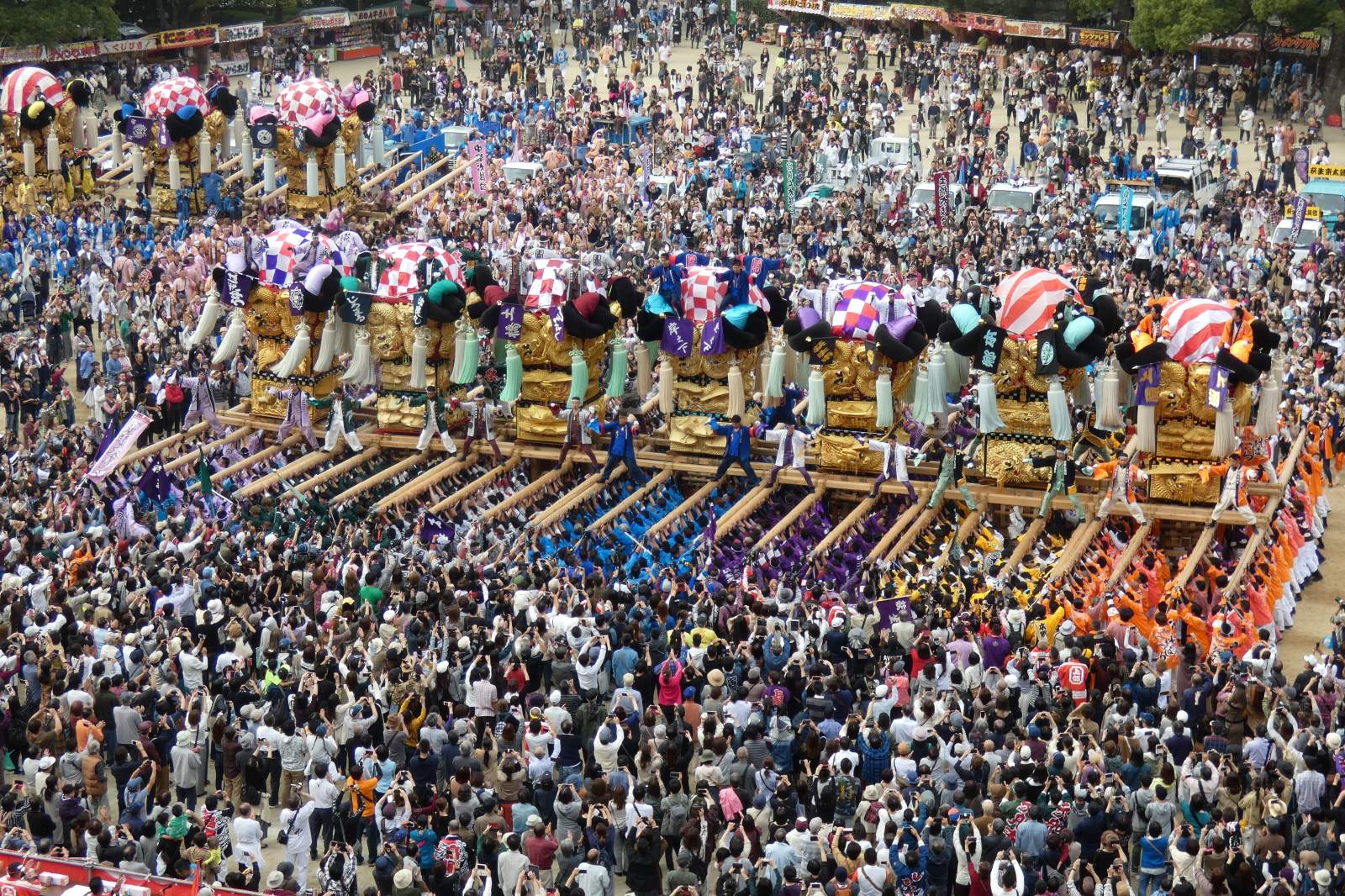
Every October, Niihama's districts carry out their taiko-dai, towering floats dressed in gold embroidery, and lift them overhead by hand. Beside the station, a museum keeps a real float on show for most of the year, so the festival can be met even out of season.
- FromNiihama Station (JR Yosan Line)
- ~1 min on footJR Niihama Station, 1 min walk
- Niihama Taiko Festival
The sweet spot
This is one of the best-known festivals in Shikoku, often counted among the island's three great festivals, so it is not a hidden event. The difficulty for a visitor is that it has no single stage. Kakikurabe run at many venues across the city at once, and the programme is set district by district each year.
Where it is
29 more notes in Ehime · open the map →What to look for
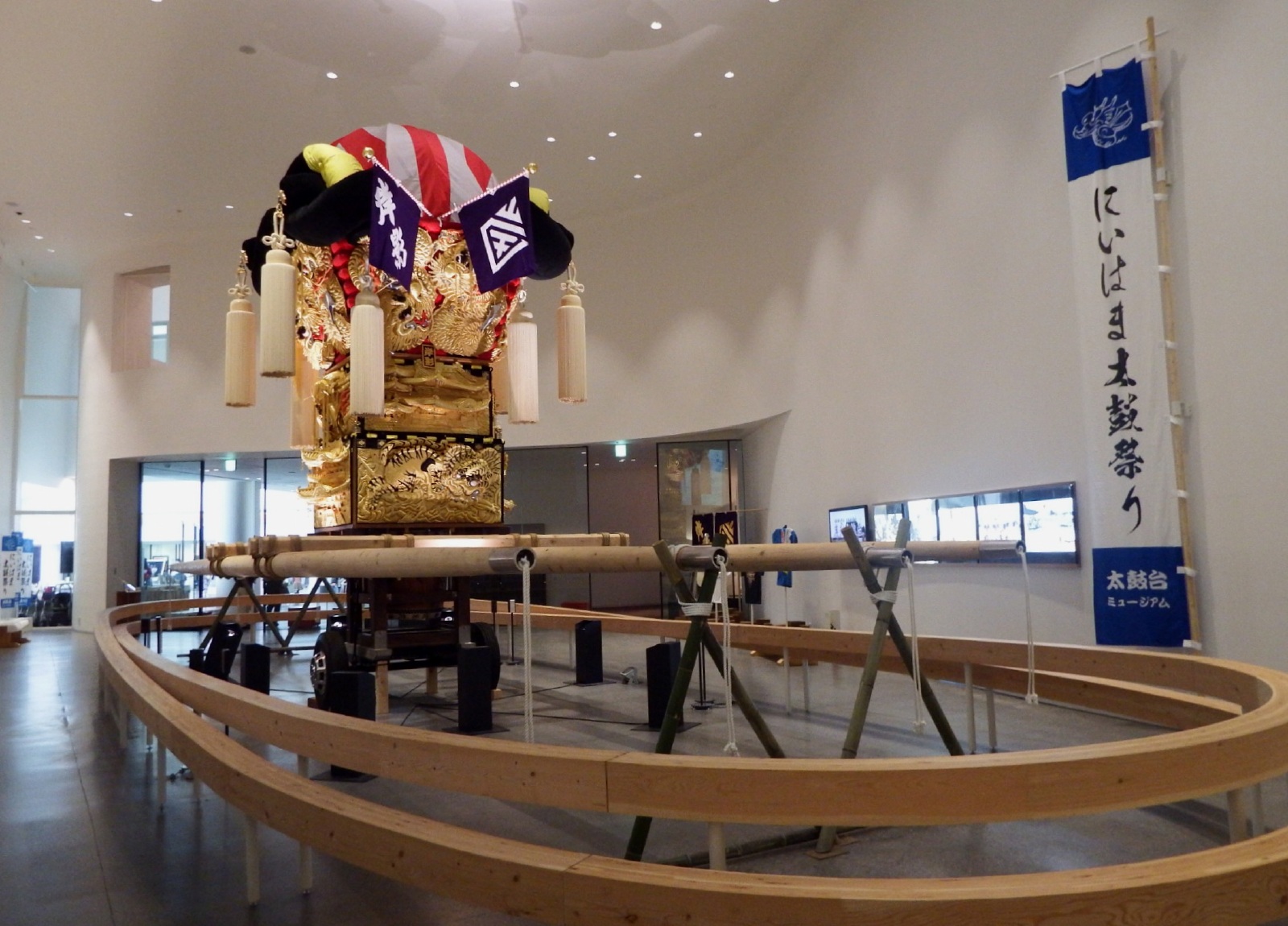
- Taiko-dai Museuma working float from one of the city's districts, changed in turn, shown with festival photos, happi coats and banners
- The 360° theatrefestival footage on a surround screen, with the sound of the drums at full force
- Ichinomiya Shrinethe shrine where the Kawanishi district's floats meet for kakikurabe in festival week
- Yamane Groundthe open ground where the Jobu district's floats gather together for a joint kakikurabe
How to actually get there
- Arrive at JR Niihama Station (JR Yosan Line).
- Niihama Station → Akagane Museum (walk about 1 min, north side of the station).
- See the float in the Taiko-dai Museum on the ground floor, then the 360° theatre.
- In festival week, pick venues from the city's district schedule and go on foot or by bicycle.
- On foot from JR Niihama Station
- Niihama is on the JR Yosan Line and is served by the Shiokaze and Ishizuchi limited expresses. The Akagane Museum, home of the Taiko-dai Museum, stands on the north side of the station, about a minute away on foot.
- Back to the station
- Walk back to JR Niihama Station. Trains run west toward Matsuyama and east toward Takamatsu, with limited expresses toward Okayama. On festival evenings the crowds are heavy, so check your train before the last kakikurabe ends.
About the place
A taiko-dai is a festival float that carries its own drum. Niihama's stand about 5.5 metres tall, wrapped in panels of gold embroidery under a swelling canopy, and each one is borne by a team of around 150 carriers. More than fifty of them turn out across the city's districts. The heart of the festival is the kakikurabe, where several floats meet in one place. The wheels used for moving them come off and the drum quickens. The carriers heave each float onto their shoulders, then push it overhead at arm's length, a lift called sashiage.
How to enjoy it
The festival runs from 16 to 18 October every year, and the Ojoin district starts a day early, on the 15th. Shortly before the festival the city publishes a district-by-district schedule of venues and times. Plan around that list rather than a single parade route. Outside festival week, the Taiko-dai Museum opens at 9:30.
Background & history
The festival's roots are said to reach back to the Kamakura or even the Heian period. Taiko-dai first appear in written records in the Bunsei era (1818–1830), usually under the name mikoshi-daiko. They were floats that escorted a shrine's portable shrine and gave thanks to the local deity for the harvest. As the Besshi copper mine drove the local economy, the districts that owned floats began to compete. From the middle of the Meiji period the floats grew rapidly in size, and their embroidered panels became richer as the needlework developed.
Before you go
- Cash
- Watching from public streets and open venues costs nothing. Paid stand seats (sajiki) are sold for some venues and booked online in advance. The museum car park charges 100 yen for the first hour and 100 yen per 30 minutes after that, and building users get three hours free.
- Good to know
- The city asks festival-goers not to drive to kakikurabe venues, because roads close and parking runs short; come on foot or by bicycle instead. Times and the number of floats can change with the weather or police arrangements. The museum is closed on Mondays (open when Monday is a public holiday) and over the New Year.
- Another way
- On the day of the Jobu district's joint gathering at Yamane Ground, the city ran a free shuttle bus from the south exit of JR Niihama Station in 2025. Check the current year's schedule before relying on it.
- After you get off
- The Akagane Museum stands just north of JR Niihama Station, about a minute on foot. The Taiko-dai Museum is on its ground floor.
Nearby notes
 Araiyasushige / CC0
History · Ehime★★
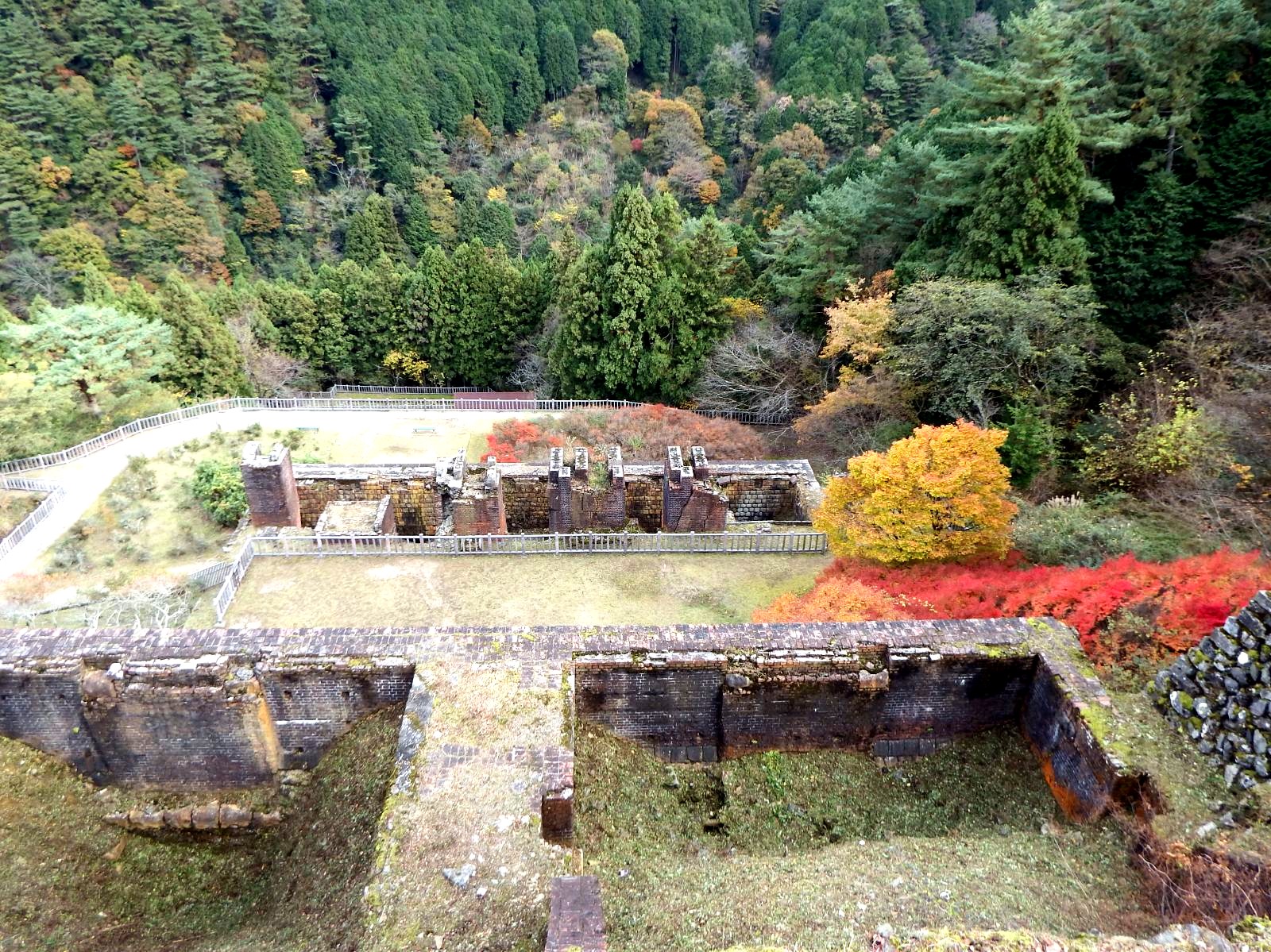
Besshi Copper Mine Tonaru Zone
8.3 km · straight line
 ぺ有家音 / CC BY-SA 3.0
Local life · Ehime★
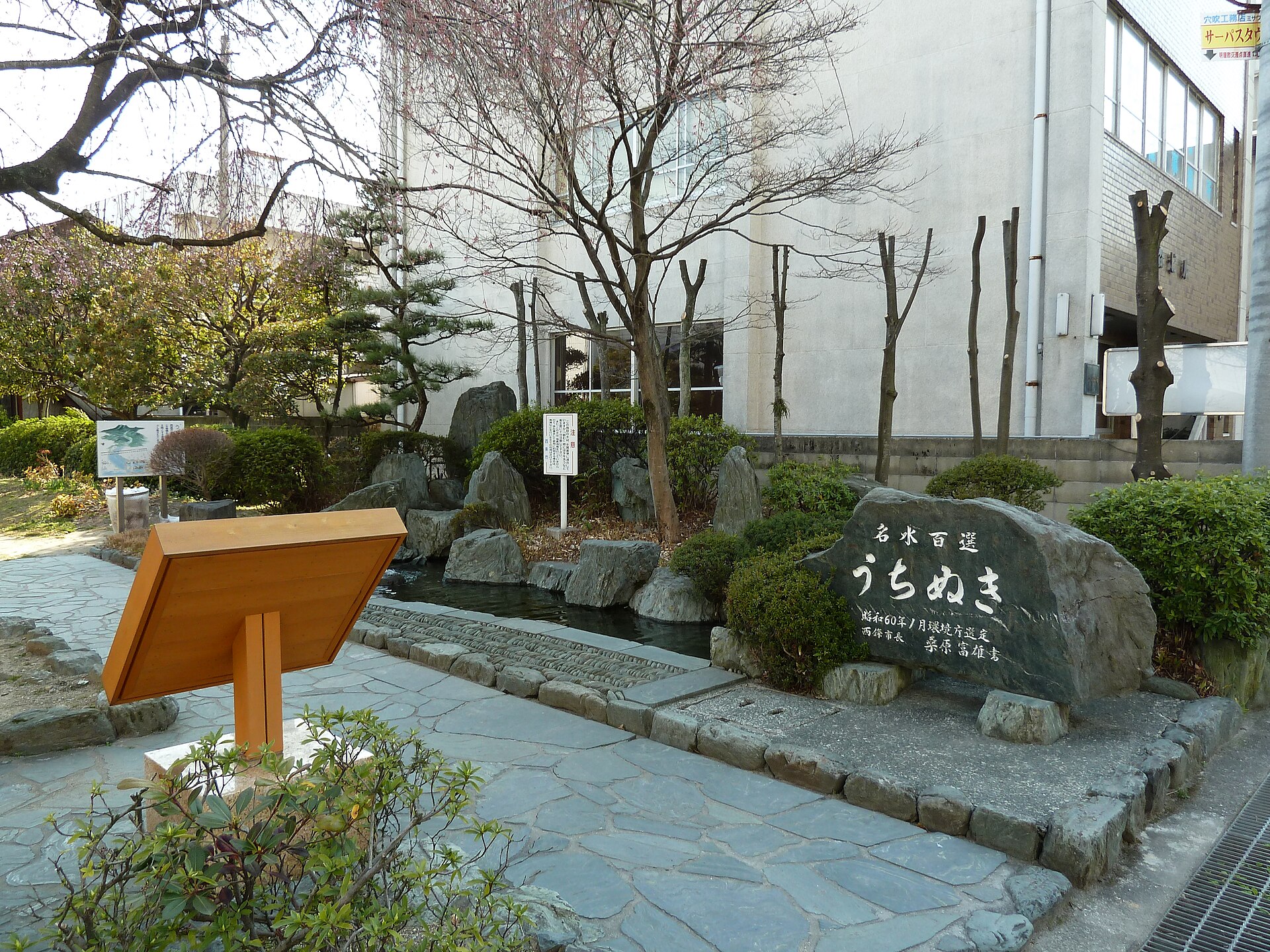
Saijo Uchinuki
11.0 km · straight line
 HN:依存性だんぢり中毒 / Public domain
Culture · Ehime★★
Saijo Festival
11.8 km · straight line
 HendrixEesti / CC BY-SA 3.0
Nature · Ehime★★★
Mount Ishizuchi
26.2 km · straight line
Distances are straight lines on the map, not travel times.