South Chiba · Kyonan / Mt. NokogiriNo.545★★Open in map →
Nokogiriyama Nihon-ji
— The cliff temple above Tokyo Bay in Chiba
A Soto Zen temple whose precinct is an entire quarried mountainside on the Boso Peninsula. Stone carvings are strung along the paths, and near the top a shelf of rock left by the quarrymen hangs out over the drop.
- FromTokyo Station
- ~2 hrJR (infrequent) + ropeway
- Get off atHamakanaya Station (JR Uchibo Line)
- From there
- Nokogiriyama Nihon-ji
The sweet spot
This is a well-known day trip from Tokyo, not a secret. What changes the visit is the direction you walk it: most people ride up, photograph the overhang and ride straight back down. Start down the paths between the carvings and the numbers thin out within minutes.
Where it is
50 more notes in Chiba · open the map →What to look for — in walking order
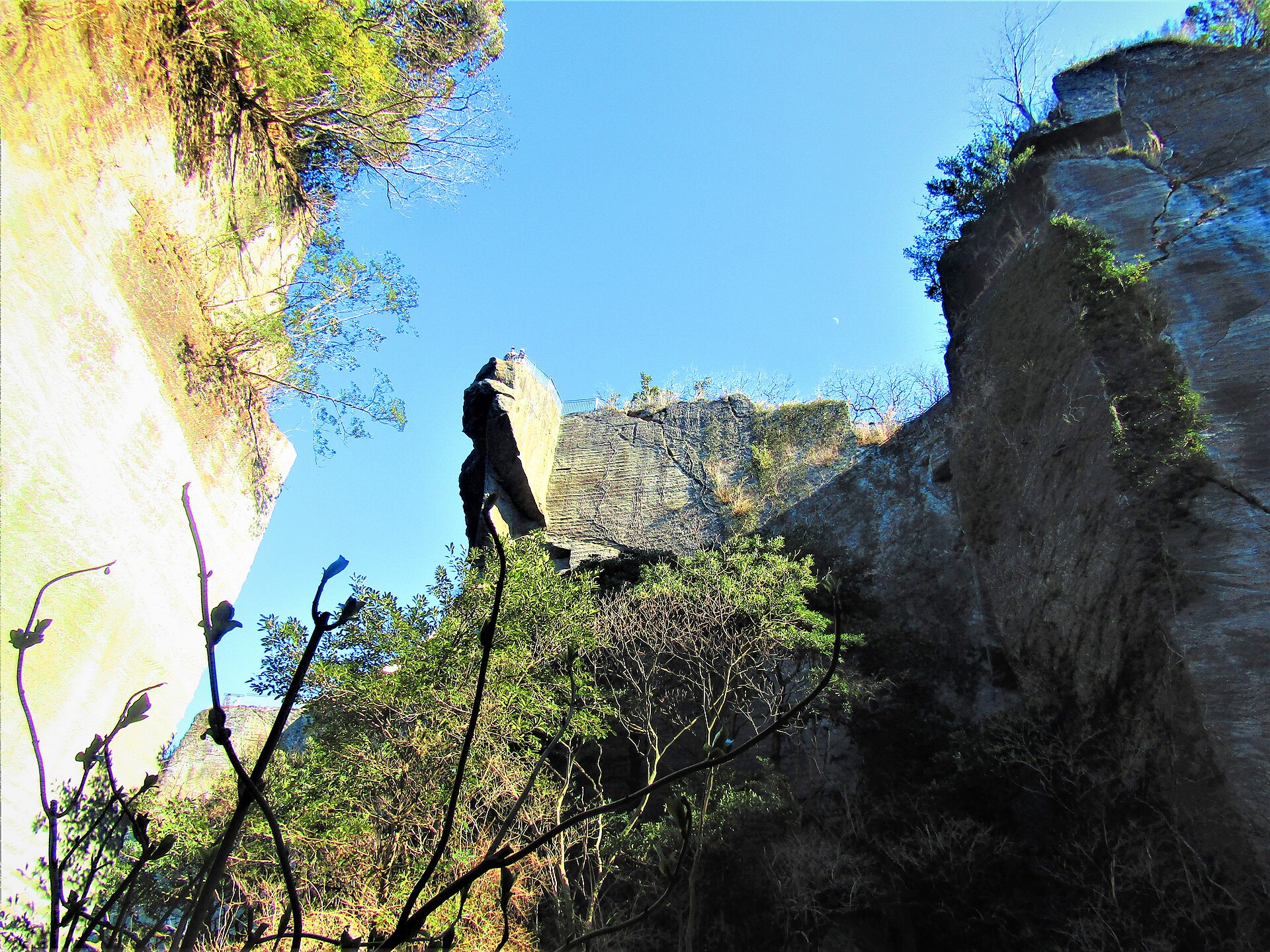
- Jigoku-nozoki, the Hell Peeka shelf of quarry rock jutting over the drop, with Tokyo Bay and the Boso hills beyond
- Hyakushaku Kannona Kannon carved to fill the wall of a worked-out quarry, standing in an enclosed pit of stone
- The Fifteen Hundred Arhatsranks of stone arhats along the paths and in the rock clefts, no two faces the same
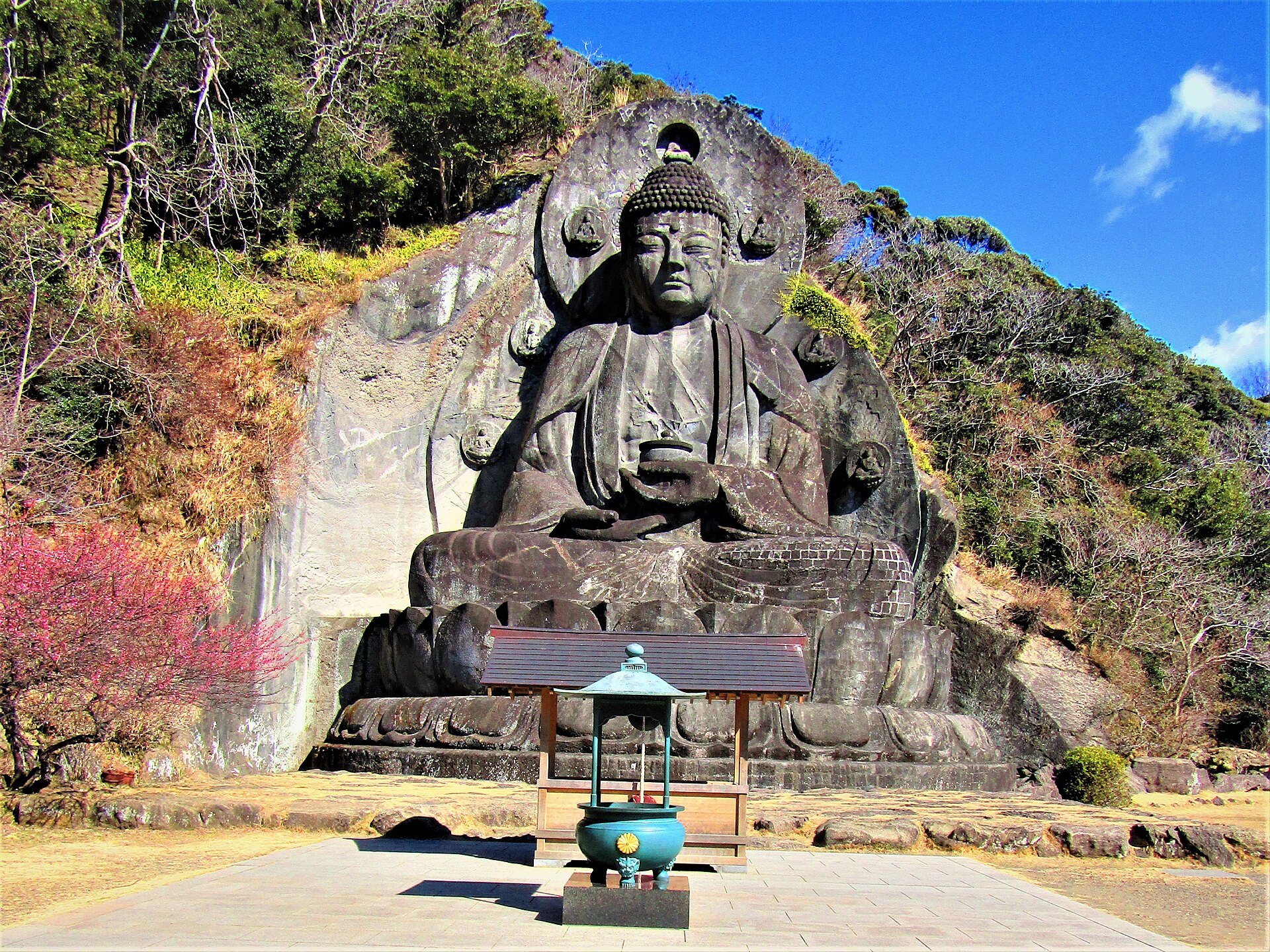
- The Great Buddha plazathe seated Yakushi Buddha cut from the hillside, with small wish-stones gathered below it
- Yakushi Hondo hallthe rebuilt hall of the temple's principal image, on the mid-slope on the way down
How to actually get there
- Tokyo Station → Chiba Station (JR Sobu Rapid Line).
- Chiba Station → Hamakanaya Station (JR Uchibo Line; services are thin, so check the day's timetable).
- Hamakanaya Station → Nokogiriyama Ropeway base station (on foot, along Route 127 toward Tateyama).
- Ropeway to the summit station, then into the temple's upper entrance.
- JR to Hamakanaya, then the ropeway
- Tokyo Station →(JR Sobu Rapid Line)→ Chiba →(JR Uchibo Line)→ Hamakanaya. From the station, walk out to Route 127 and follow it toward Tateyama to the ropeway base station. Uchibo Line services thin out the further south you go, so the timetable, not the distance, shapes the day.
- Return from Hamakanaya
- The Uchibo Line back toward Tokyo runs infrequently and thins further towards evening. Note the posted departures when you arrive at Hamakanaya, then work backwards from them so the climb back to the ropeway is not rushed.
About the place
Mount Nokogiri takes its name from its profile: generations of cutting Boshu stone left the ridge above Tokyo Bay notched like a saw. That entire south face is the precinct of Nihon-ji, a Soto Zen temple whose grounds run to more than a hundred thousand tsubo of wooded slope. The stonework is scattered rather than gathered into one hall — a seated Buddha cut straight out of the hillside, a Kannon filling the wall of a worked-out quarry, and ranks of arhats along the paths between them. Jigoku-nozoki is not a viewing platform that was built for the view. It is a shelf of rock the cutters simply left behind.
How to enjoy it
The ropeway from Hamakanaya runs at short intervals and reaches the top in a few minutes, so the easy version is to ride up and then work downhill through the carvings. Allow a couple of hours for the descent if you mean to stop at the arhats and the Great Buddha rather than pass them. The same slope has to be walked back up to the ropeway, so check the operator's last departure from the summit before you start down — it comes earlier in winter.
Background & history
The temple dates its founding to 725, when by tradition the monk Gyoki opened it under an imperial decree, and it calls itself the oldest imperially commissioned temple in the Kanto region. It has been burnt out and rebuilt more than once since. The stonework visitors come for is far later: in 1783 the sculptor Ono Jingoro Eirei and twenty-seven disciples began cutting the seated Yakushi Buddha out of the hillside, still the largest rock-carved Buddha in Japan, and the same hands filled the slopes with the Fifteen Hundred Arhats. A mountain fire in the twentieth century destroyed the halls, and rebuilding continues on donations and admissions.
Before you go
- Cash
- Admission is collected at whichever precinct gate you enter, and the ropeway is a separate fare. Rural counters often take cash only, so carry notes and coins. Both the temple and the ropeway publish their figures on their own sites — worth checking on the day you go.
- Good to know
- The Hota-side approach is closed by rockfall on the walkway leading into the precinct, and the temple directs visitors to the detour from the toll road, so read the official notice before planning to come up on foot from the south. The precinct is a mountainside of stone steps, uneven in places and slippery after rain, so wear shoes with grip.
- Another way
- From Kanagawa, the Tokyo Bay Ferry crosses from Kurihama to Kanaya port, and the ropeway base station is within walking distance of the pier.
- After you get off
- From Hamakanaya Station, come out to Route 127 and follow it toward Tateyama for about eight minutes to reach the ropeway base station. From the summit station the temple's upper entrance is close by.
Nearby notes
 Joli Rumi / CC BY-SA 4.0
History · Chiba★
Sharikido
0.9 km · straight line
 くろふね / CC BY-SA 4.0
Nature · Chiba★
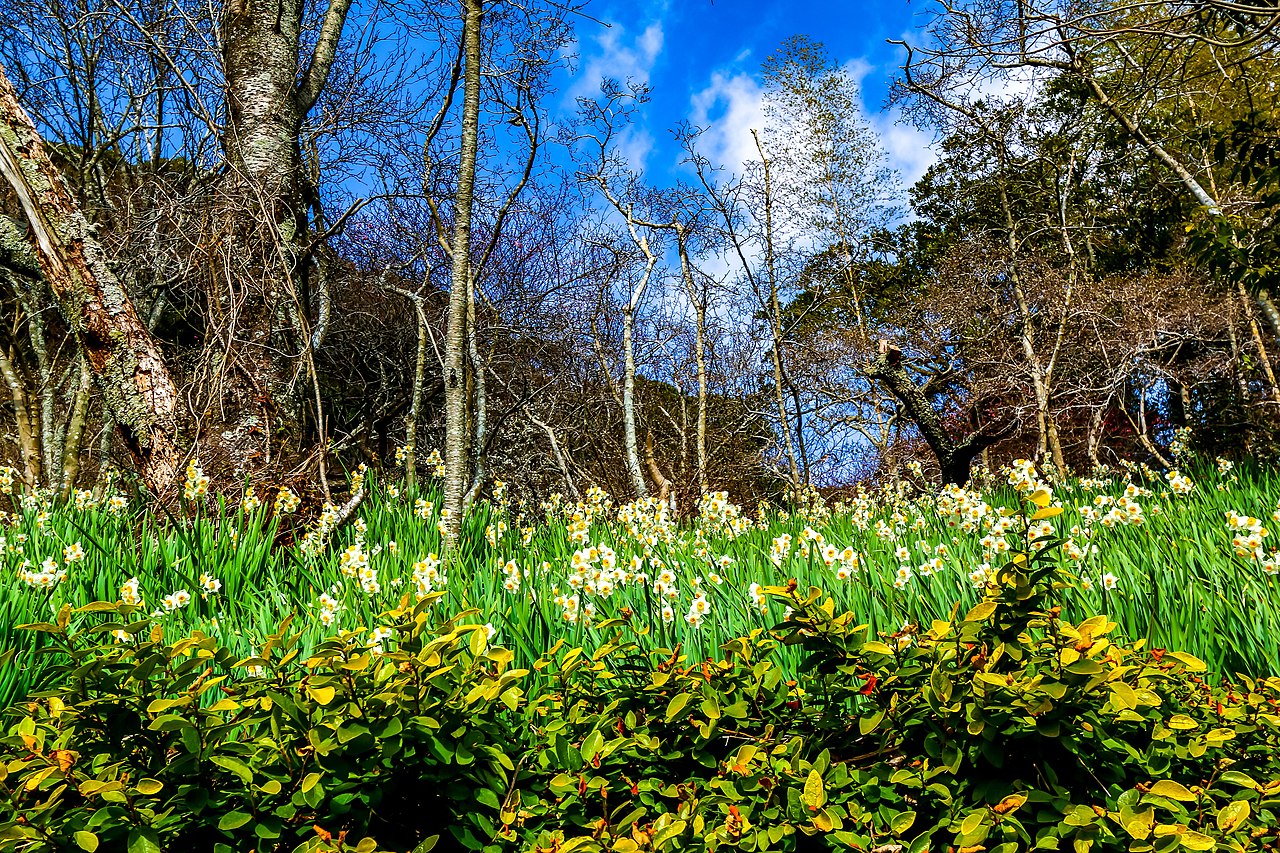
Ezuki Narcissus Road
2.1 km · straight line
 Katorisi / CC BY-SA 4.0
History · Chiba★
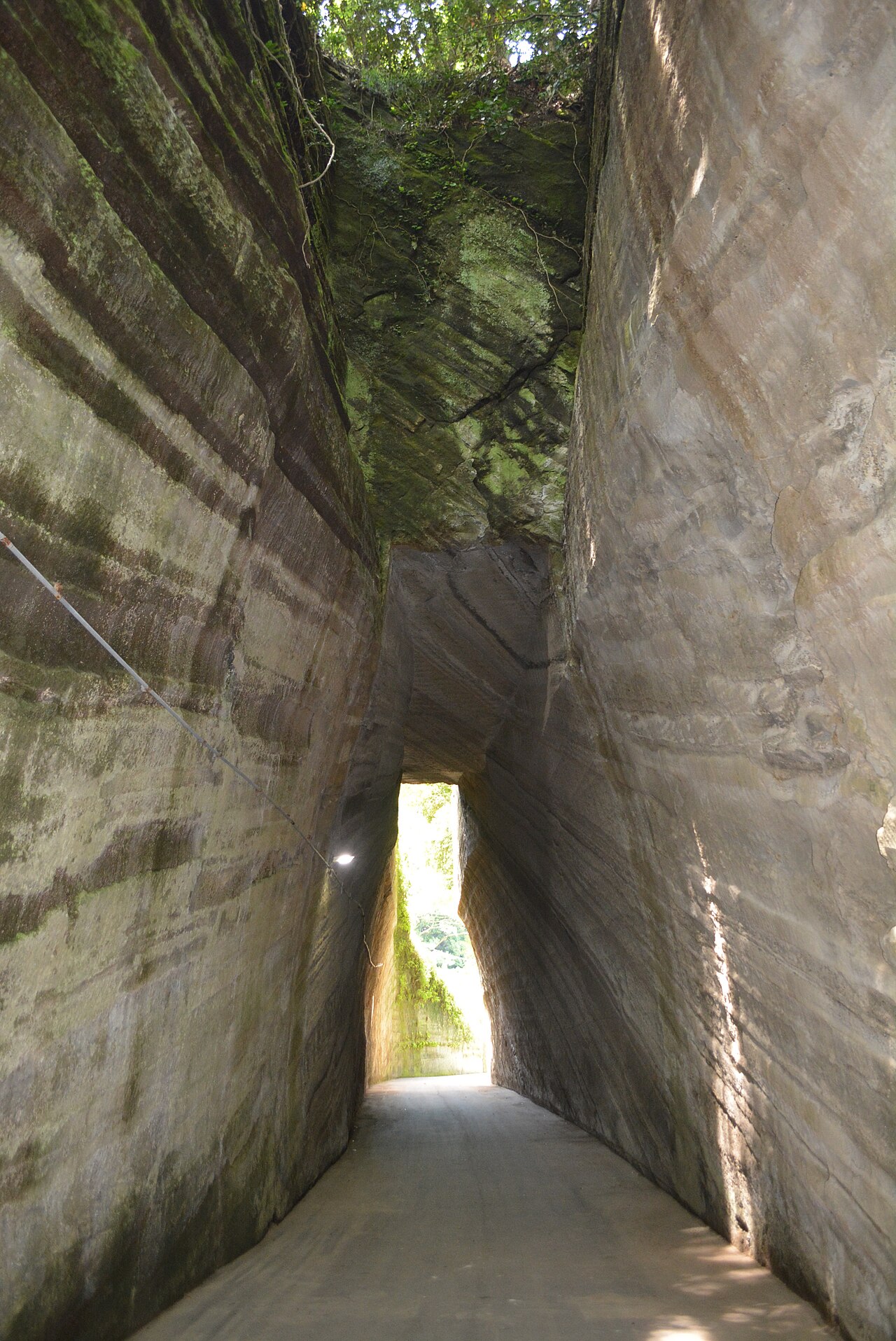
Torozaka Daishi Tunnel
5.2 km · straight line
 zenkota / CC BY-SA 3.0
Craft · Chiba★★
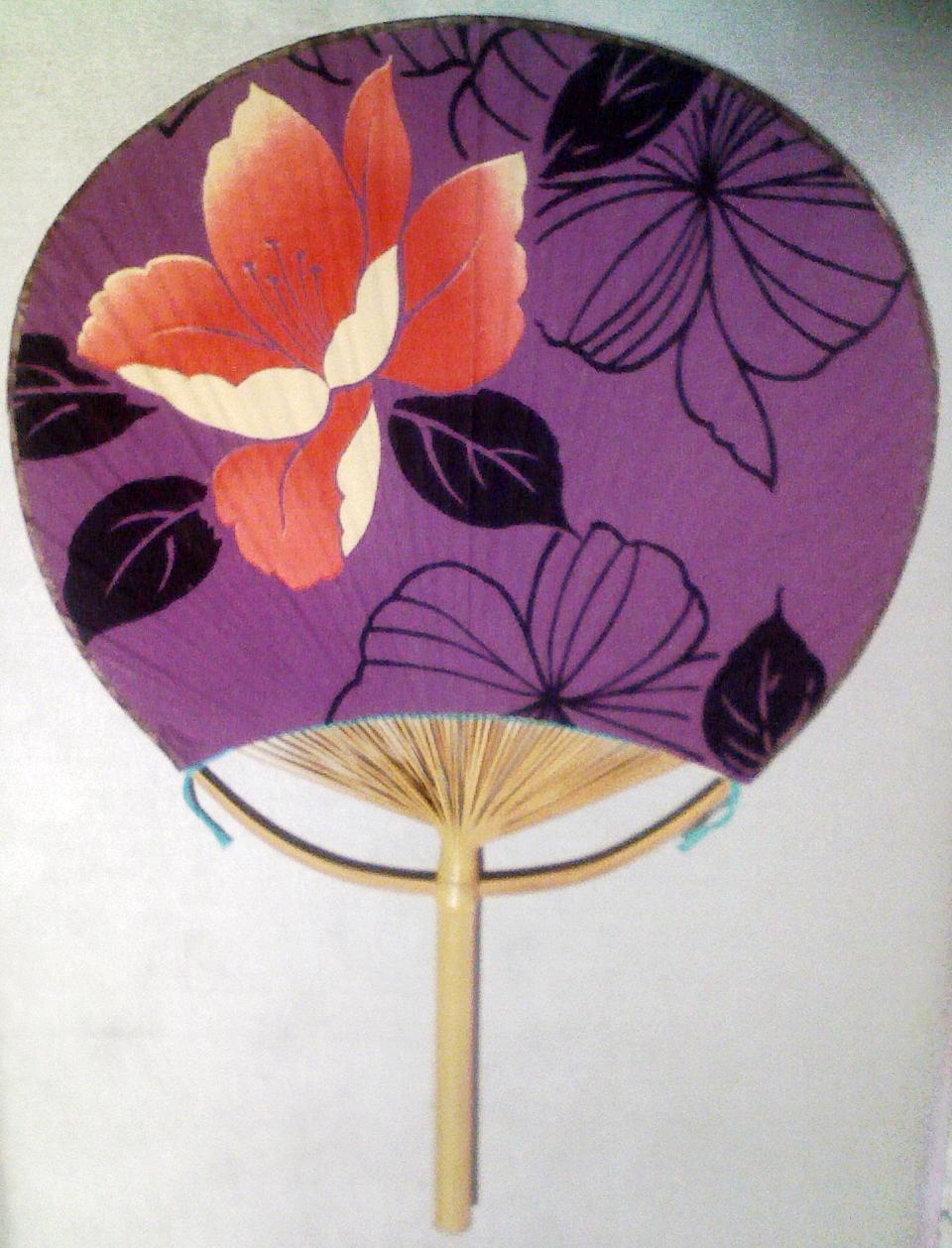
Boshu Uchiwa Fans
7.4 km · straight line
Distances are straight lines on the map, not travel times.