Tokyo · Odaiba waterfrontNo.391★★★Open in map →
Odaiba
— a Statue of Liberty facing Tokyo Bay
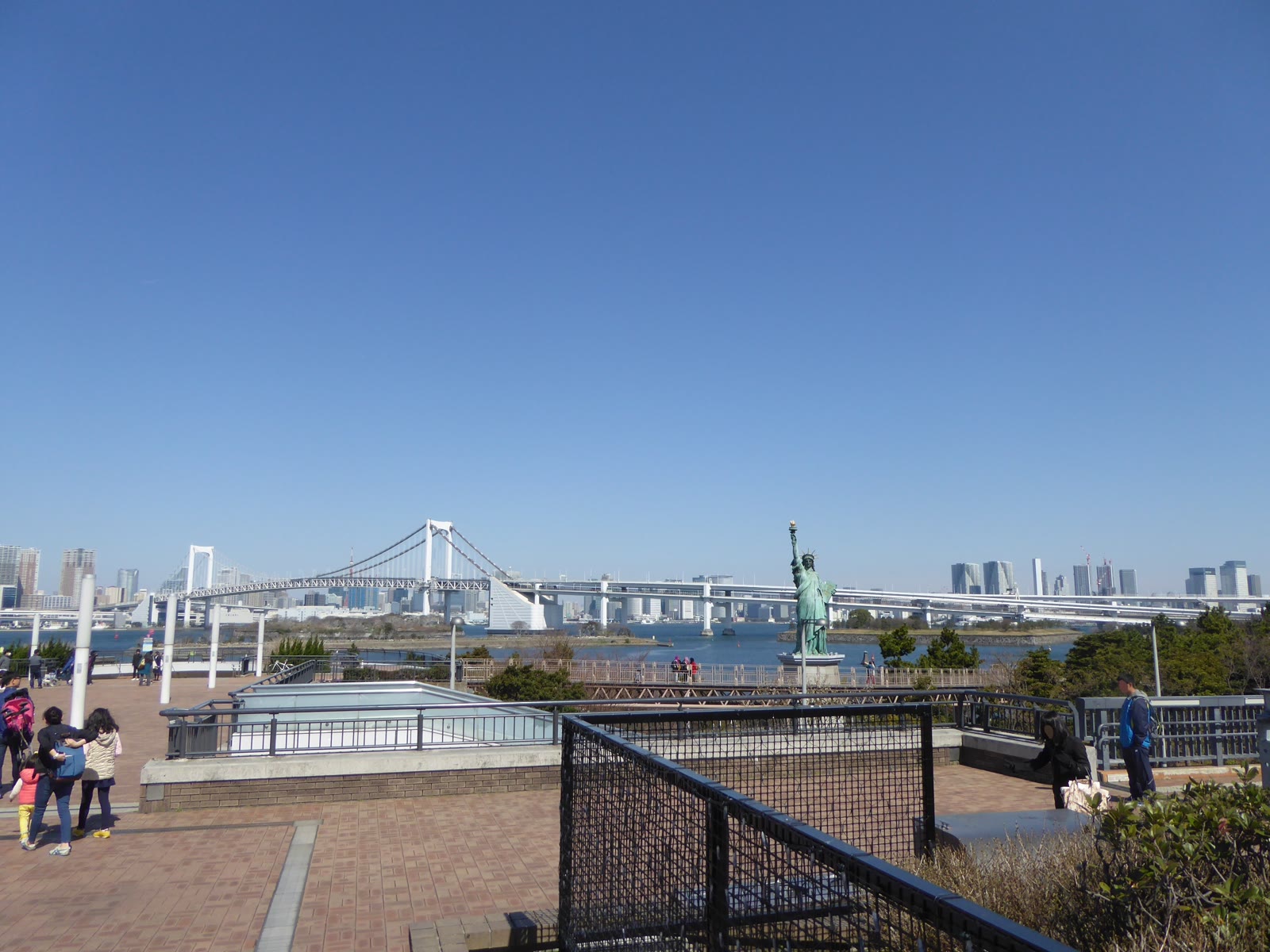
A reclaimed island in Tokyo Bay holding an 11-metre replica of the Statue of Liberty, with the Rainbow Bridge and the city skyline behind it. The view across the water at dusk is the reason almost everyone comes.
- FromShimbashi Stn
- ~30 minYurikamome monorail
- Get off atOdaiba-Kaihinkoen Station (Yurikamome)
- On foot
- Odaiba
Where it is
77 more notes in Tokyo · open the map →What to look for — in walking order
- The Statue of Liberty replicaabout 11 metres tall, based on the Paris statue, positioned so the Rainbow Bridge and the skyline sit directly behind her
- Rainbow Bridge at nightthe suspension bridge across the bay, lit after dark; the colour of the lighting changes with the season
- Rainbow Promenadea walkway along the bridge's lower deck, free to use in daylight hours, giving a view down onto the bay from the middle of the span
- Daiba Park and the surviving batteriesthe earthwork gun emplacements of the 1850s, preserved as a small park you can walk out to at the foot of the bridge
How to actually get there
- Shimbashi Stn → Odaiba-Kaihinkoen Stn (Yurikamome, ~13 min, crossing the Rainbow Bridge).
- Station → waterfront promenade → Statue of Liberty replica (walk, ~5 min).
- Stay for the bridge lighting after sunset, then either ride back or walk the Rainbow Promenade (~30-40 min).
- Shimbashi Stn → Odaiba-Kaihinkoen Stn (Yurikamome)
- From Shimbashi Station take the Yurikamome, the driverless elevated line, toward Toyosu. Odaiba-Kaihinkoen is about 13 minutes and the ride crosses the Rainbow Bridge on the way, which is half the point of taking it. The statue is about 5 minutes' walk from the station toward the water.
- Odaiba-Kaihinkoen Stn → Shimbashi Stn
- The Yurikamome runs back to Shimbashi until late in the evening. Alternatively walk one stop to Tokyo Teleport Station and take the Rinkai Line, which connects to the JR Saikyo Line and runs through to Shinjuku and Ikebukuro without a change.
About the place
Odaiba is built on artificial islands in Tokyo Bay, and the whole district is a product of deliberate waterfront development rather than organic growth — which is why it feels unlike anywhere else in the city, with wide promenades, a beach you cannot swim from, and buildings placed for the view. The Statue of Liberty replica stands about 11 metres tall and is modelled on the statue in Paris rather than the one in New York. It arrived in 1998 on loan from France for a Japan-France exchange year, proved so popular that a permanent replica was installed after the original went home, and has stood facing the bay ever since. The composition everyone photographs puts the statue in the foreground, the Rainbow Bridge behind her, and the towers of central Tokyo across the water. It works best after sunset, when the bridge is lit. The name Odaiba comes from the daiba, the artillery batteries built here in the 1850s to defend Edo against foreign warships; two of those gun emplacements survive as a park at the foot of the bridge.
How to enjoy it
Come in the late afternoon and stay through sunset — the statue reads as a curiosity in daylight and as a proper view once the bridge lights come on. The Yurikamome runs on an elevated track and loops over the Rainbow Bridge on the way in, so sit at the very front for the approach; the train is driverless and the front window is the best seat in Tokyo for the price of a local fare. If you have the time and the legs, walk back across the Rainbow Promenade instead of riding, which takes about 30 to 40 minutes and puts you above the water the whole way. Note that several older Odaiba attractions have closed in recent years, so check that anything specific you are travelling for is still open.
Background & history
The original daiba were coastal batteries constructed in haste from 1853, after Commodore Perry's squadron arrived in Edo Bay and the shogunate found itself with no way to keep foreign ships out. They were obsolete almost immediately and were never fired in anger. The islands were left largely unused until the late twentieth century, when Tokyo redeveloped the bay as a new sub-centre; the Rainbow Bridge opened in 1993 and the Yurikamome line the following year, turning what had been landfill into a leisure district. The Statue of Liberty replica dates from that phase, arriving in 1998 and becoming permanent in 2000.
Before you go
- Cash
- IC cards (Suica, PASMO) work on both the Yurikamome and the Rinkai Line. Neither is a JR line, so a Japan Rail Pass does not cover them. The statue, the promenade and Daiba Park are all free.
- Good to know
- The Rainbow Promenade walkway is open in daylight hours only, closes on one Monday each month, and may close in high wind — check before planning to walk across. It is a pedestrian route with no cycling. Odaiba is exposed and noticeably colder and windier than central Tokyo in winter.
- Another way
- The Rinkai Line from Osaki or Shinjuku reaches Tokyo Teleport Station directly. Water buses run from Hinode Pier and Asakusa to Odaiba Seaside Park, which is the most enjoyable approach if the timetable suits.
- After you get off
- From Odaiba-Kaihinkoen Station, walk toward the water and turn along the promenade; the statue stands on the deck in front of the shopping complex, about 5 minutes away.
Nearby notes
 江戸村のとくぞう / CC BY-SA 4.0
Food · Tokyo★★★
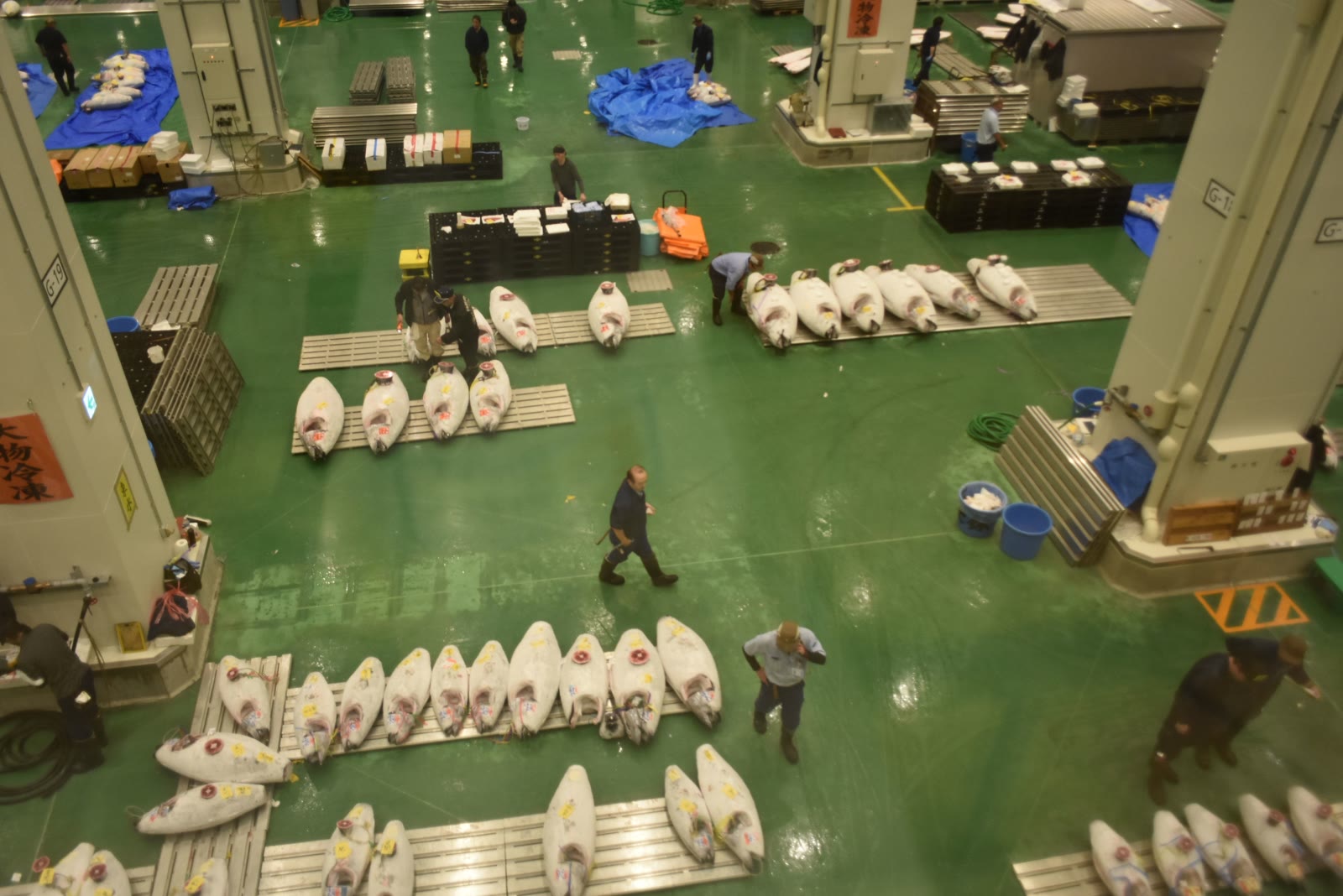
Toyosu Market
1.9 km · straight line
 Syced / CC0
Entertainment · Tokyo★★★
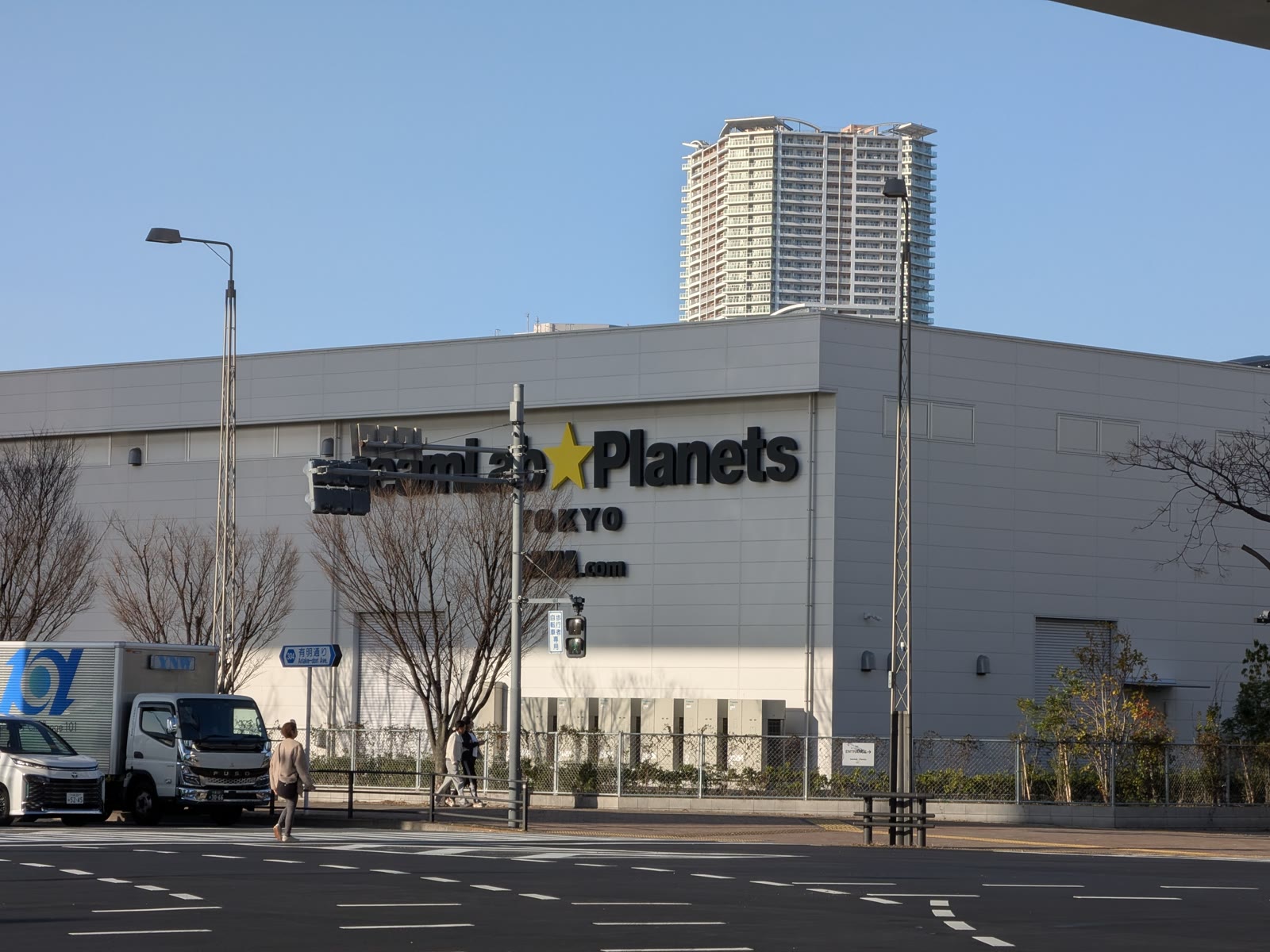
teamLab Planets TOKYO
2.8 km · straight line
 Guilhem Vellut from Annecy, France / CC BY 2.0
Nature · Tokyo★★★
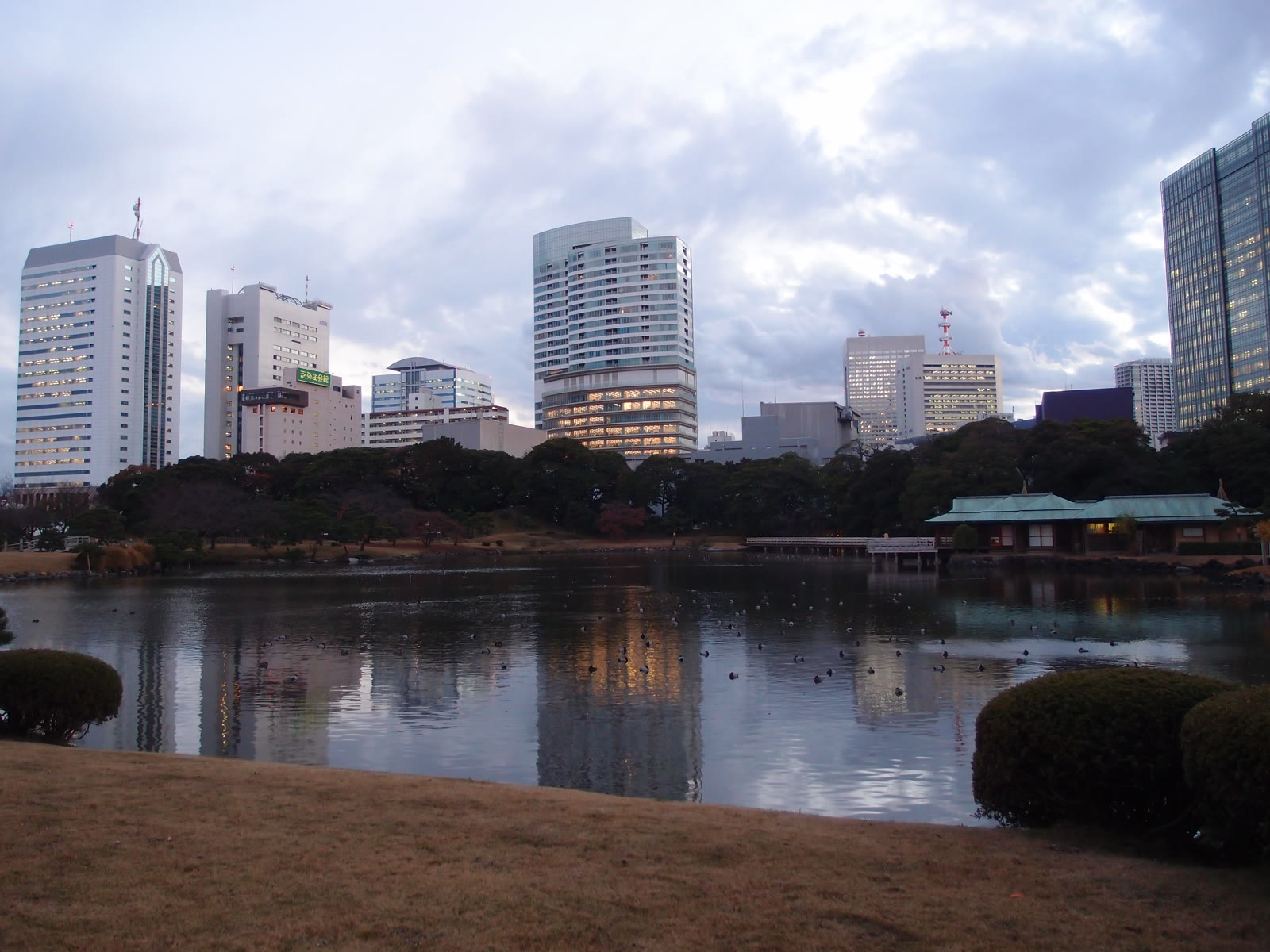
Hama-rikyu Gardens
3.5 km · straight line
 Reinhold Möller / CC BY-SA 4.0
History · Tokyo★★★
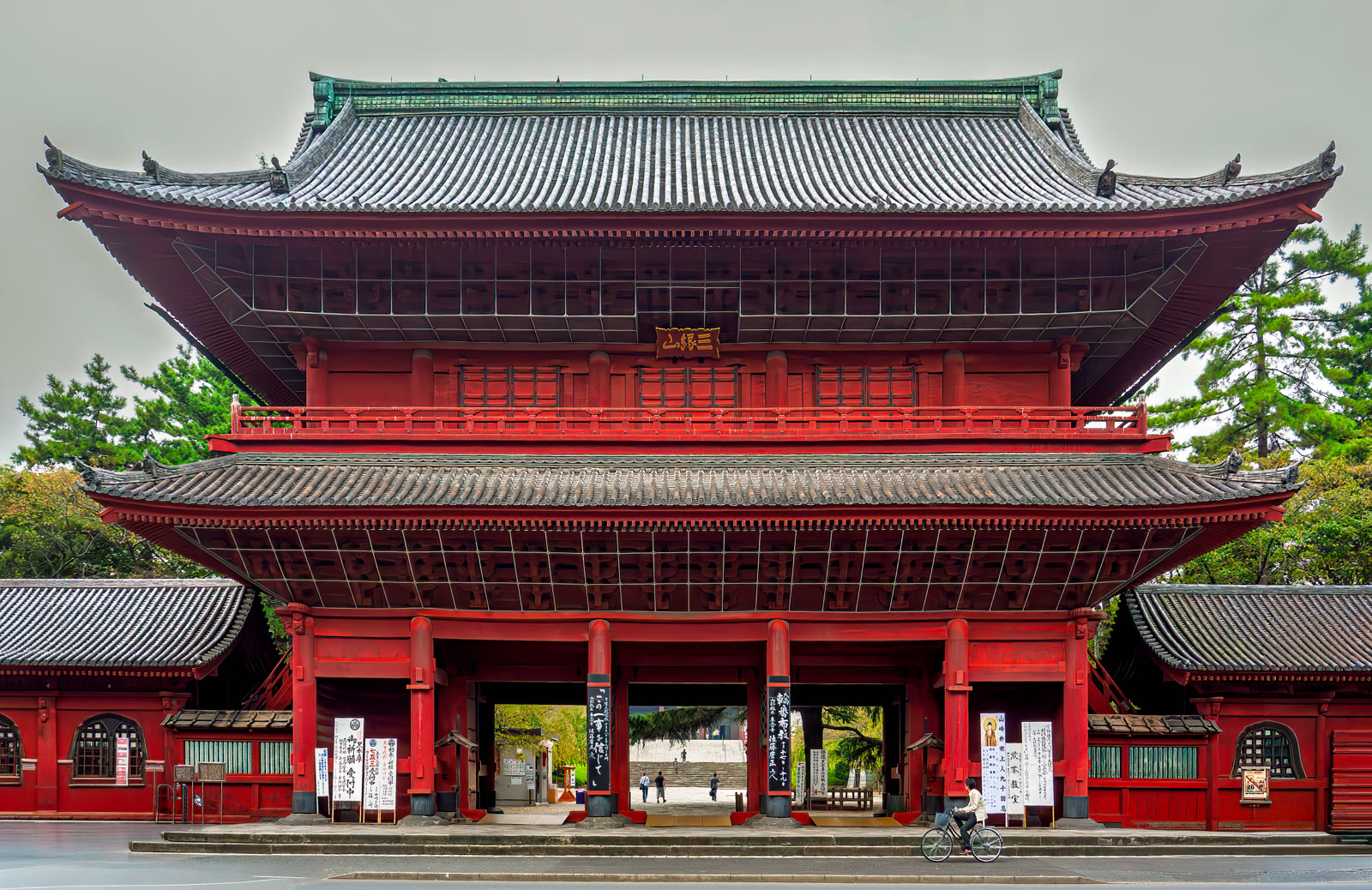
Zojo-ji Temple
3.9 km · straight line
Distances are straight lines on the map, not travel times.