Chiba east · IsumiNo.1293★★Open in map →
Ohara Hadaka Matsuri
— Isumi's autumn festival of mikoshi in the surf
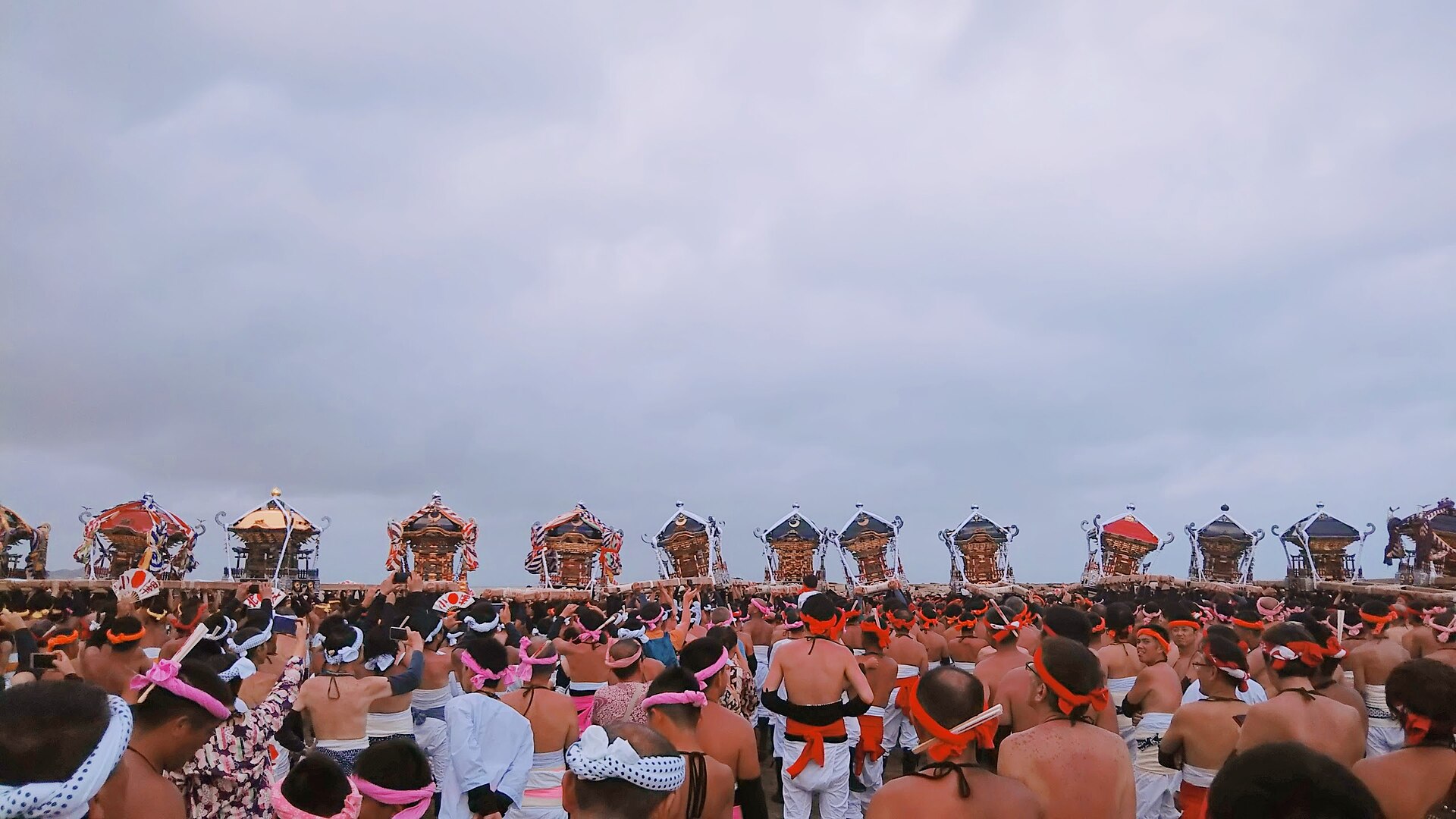
In late September, the shrines of Ohara, a fishing town in Isumi on Chiba's Pacific coast, carry their mikoshi into the surf and then through the streets. Both evenings end with a farewell in a schoolyard, under fireworks.
- FromTokyo Station
- ~90 minJR limited express, direct
- Get off atOhara Station (JR Sotobo Line)
- From there
- Ohara Hadaka Matsuri
The sweet spot
This is a well-known regional festival, not a hidden one, and the beach fills with spectators on the first day. The surf entry is the image everyone knows. Less talked about is the evening: the slow procession down the shopping street, and the farewell in the schoolyard, where the bearers sing about how hard it is to part.
Where it is
50 more notes in Chiba · open the map →What to look for — in walking order
- Ohara Fishing Portwhere the mikoshi gather on the first day for the prayer for good harvests and big catches
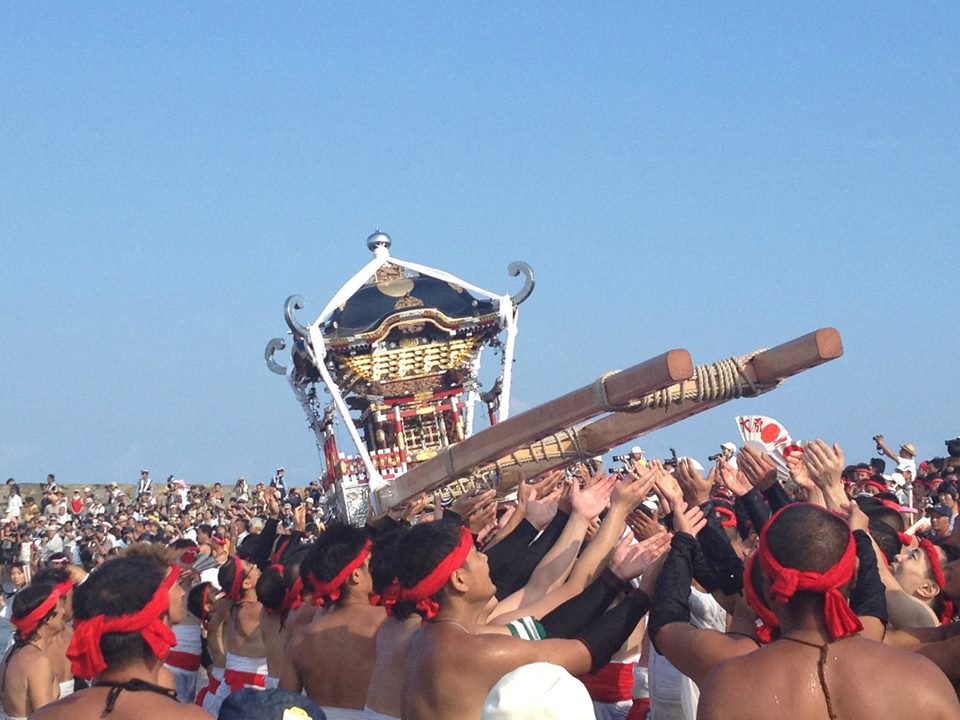
- Ohara Beachthe sandy shore of the shiofumi, where the mikoshi are carried out into the waves
- In front of Kidoizumi Brewerythe sake brewery at the head of the shopping street, where the mikoshi assemble as dusk falls
- Ohara Central Shopping Streetthe main street the procession fills with mikoshi and festival songs
- Ohara Elementary School groundsthe schoolyard of the Owakare-shiki farewell, where fireworks signal the mikoshi to gather
How to actually get there
- Tokyo Station → Ohara Station (JR Limited Express Wakashio, about 70 min).
- Ohara Station → Ohara Beach for the shiofumi (walk about 20 min).
- Walk back into town and follow the mikoshi down the central shopping street.
- Finish in the grounds of Ohara Elementary School for the Owakare-shiki farewell at dusk.
- JR Limited Express Wakashio to Ohara
- From Tokyo Station, the Limited Express Wakashio runs via the Keiyo and Sotobo lines to Ohara Station in about 70 minutes, with no change. All seats are reserved. From Ohara Station, Ohara Beach is about a 20-minute walk.
- Back from Ohara Station
- Return to Ohara Station and take the Wakashio or a local train toward Chiba. Limited express trains are not frequent, so check the return timetable before the evening events begin. On festival nights the procession continues in the shopping street until around 22:00.
About the place
The Ohara Hadaka Matsuri is the autumn festival of the Ohara area of Isumi. Shrines from three local districts, Ohara, Tokai and Namihana, each bring out their mikoshi, the portable shrines that carry a deity through its parish. The best-known rite is the shiofumi, or 'treading the tide'. More than ten mikoshi are run from Ohara Beach into the Pacific and jostled among the waves, as a prayer for good harvests and big catches. In the evening the procession fills about a kilometre of the central shopping street, then pours into the grounds of Ohara Elementary School. Isumi City and Chiba's official tourism site both call it second to none in the Kanto region.
How to enjoy it
On the first day, reach Ohara Beach in the afternoon for the shiofumi. As the light fades, walk back into town and follow the procession down the shopping street to the schoolyard for the Owakare-shiki; it is held on both evenings, so the second day is another chance. Outside the festival, Ohara Fishing Port holds a market every Sunday morning, though it may not run during the autumn festival.
Background & history
No document records when the festival began, and its origin is usually placed in the Edo period. The oldest firm evidence is a votive painting dated 1864 at Takiuchi Shrine in the Oi district, showing mikoshi in procession. According to Isumi City, the local lord valued the festival enough to have its safe completion reported to the lord of Otaki Castle by express courier. After Japan adopted the solar calendar, the festival moved to late September, around the autumn equinox.
Before you go
- Cash
- Neither Isumi City's festival page nor the prefectural event listing mentions a viewing fee; the events take place on the beach and in the town's streets. Ohara Station accepts Suica-type IC cards. The Wakashio needs a reserved-seat limited express ticket on top of the basic fare.
- Good to know
- Roads around the venues are closed for the processions, so the organisers recommend coming by public transport. The dates are set around the autumn equinox each year; check Isumi City's website for that year's schedule. The festival falls in typhoon season, and the sea is often rough on the day of the shiofumi.
- Another way
- Without the limited express, take a JR Sobu Line rapid train to Chiba Station and change to the Sotobo Line for Ohara. It takes longer but needs no limited express ticket.
- After you get off
- From Ohara Station, head northeast toward the coast. Ohara Beach is about 20 minutes on foot.
Nearby notes
 くろふね / CC BY 4.0
Nature · Chiba★
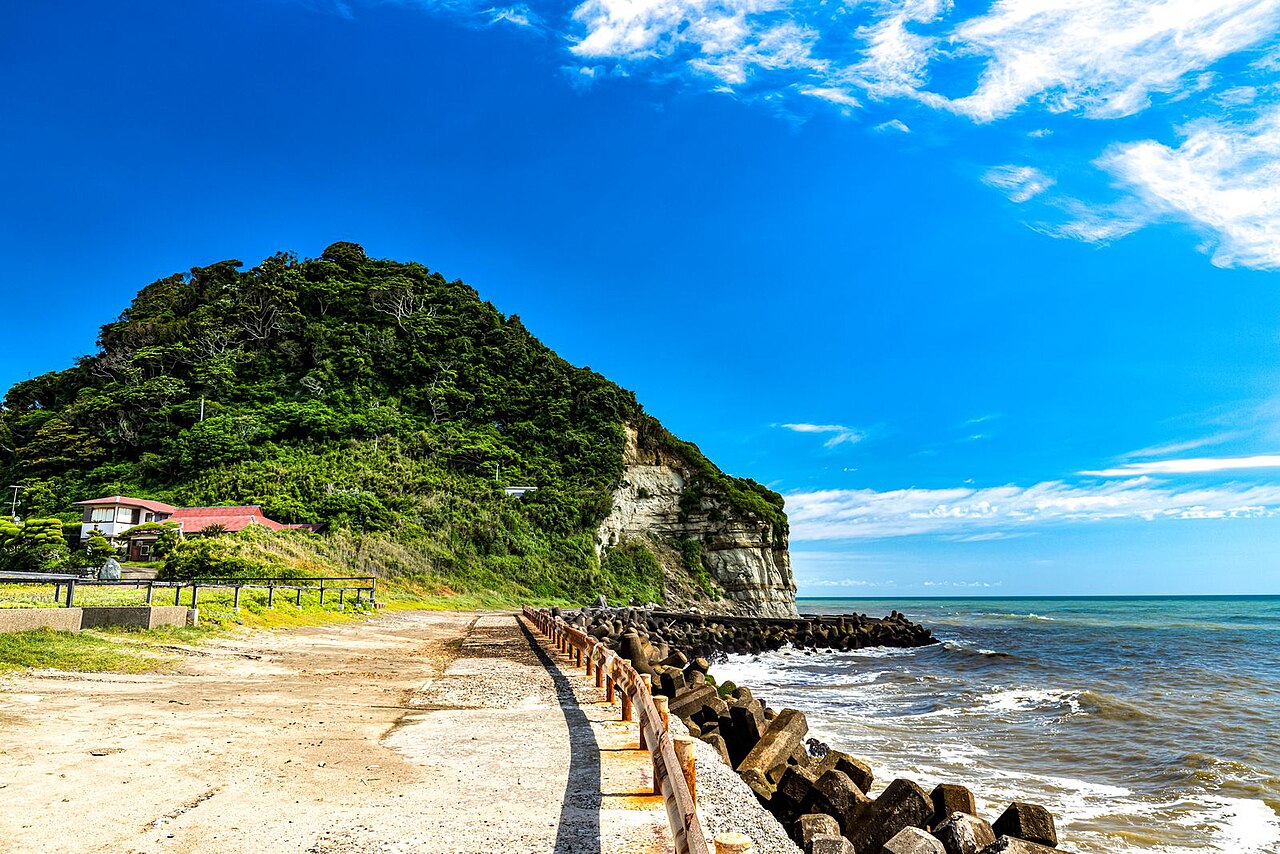
Taito Coastal Plant Colony
4.9 km · straight line
 illustration (AI-illustrated)
History · Chiba★
Iinawa-ji
5.5 km · straight line
 くろふね / CC BY-SA 4.0
Nature · Chiba★
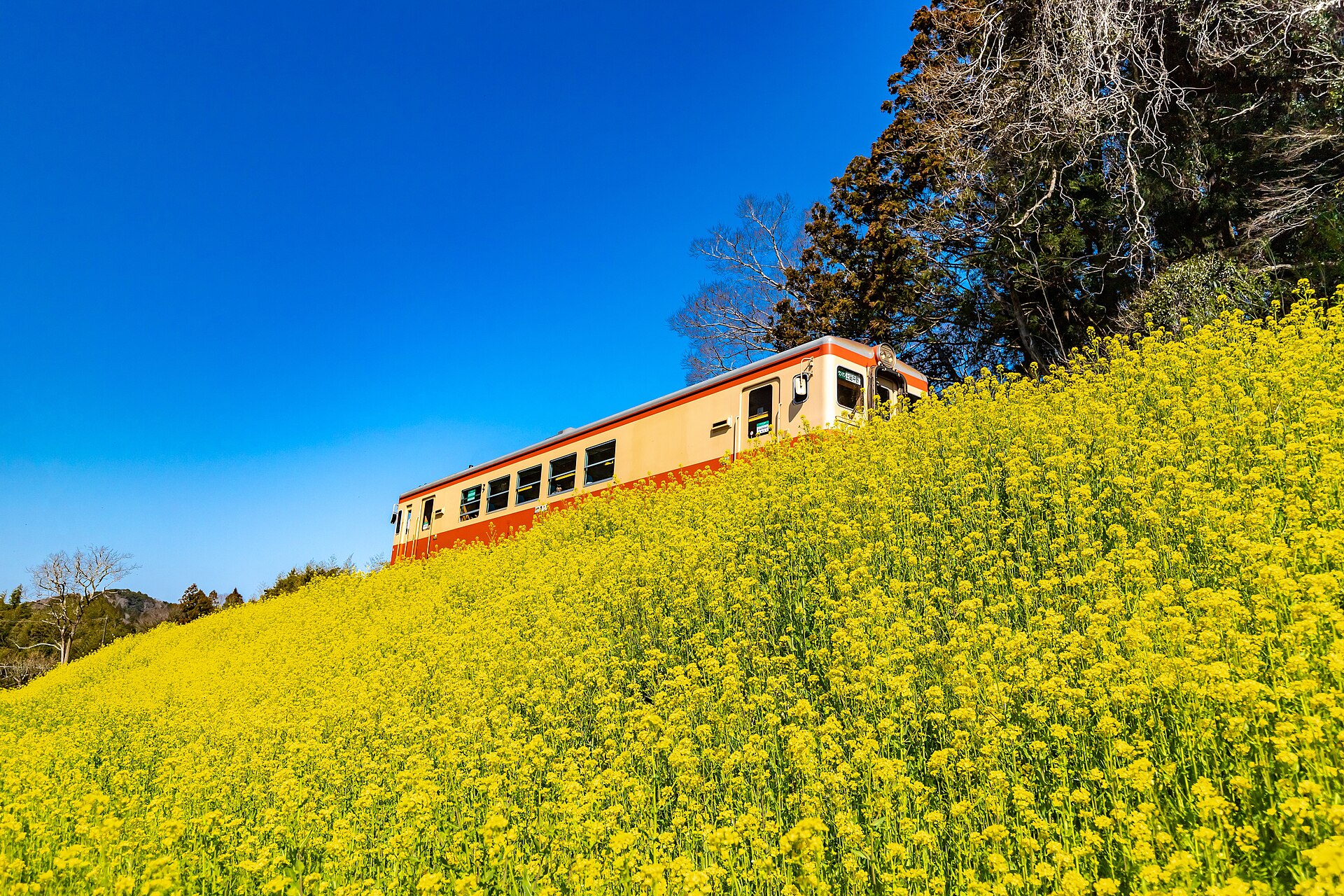
Isumi Railway Rapeseed Fields
8.1 km · straight line
 Pullwell / CC BY-SA 4.0
Culture · Chiba★★
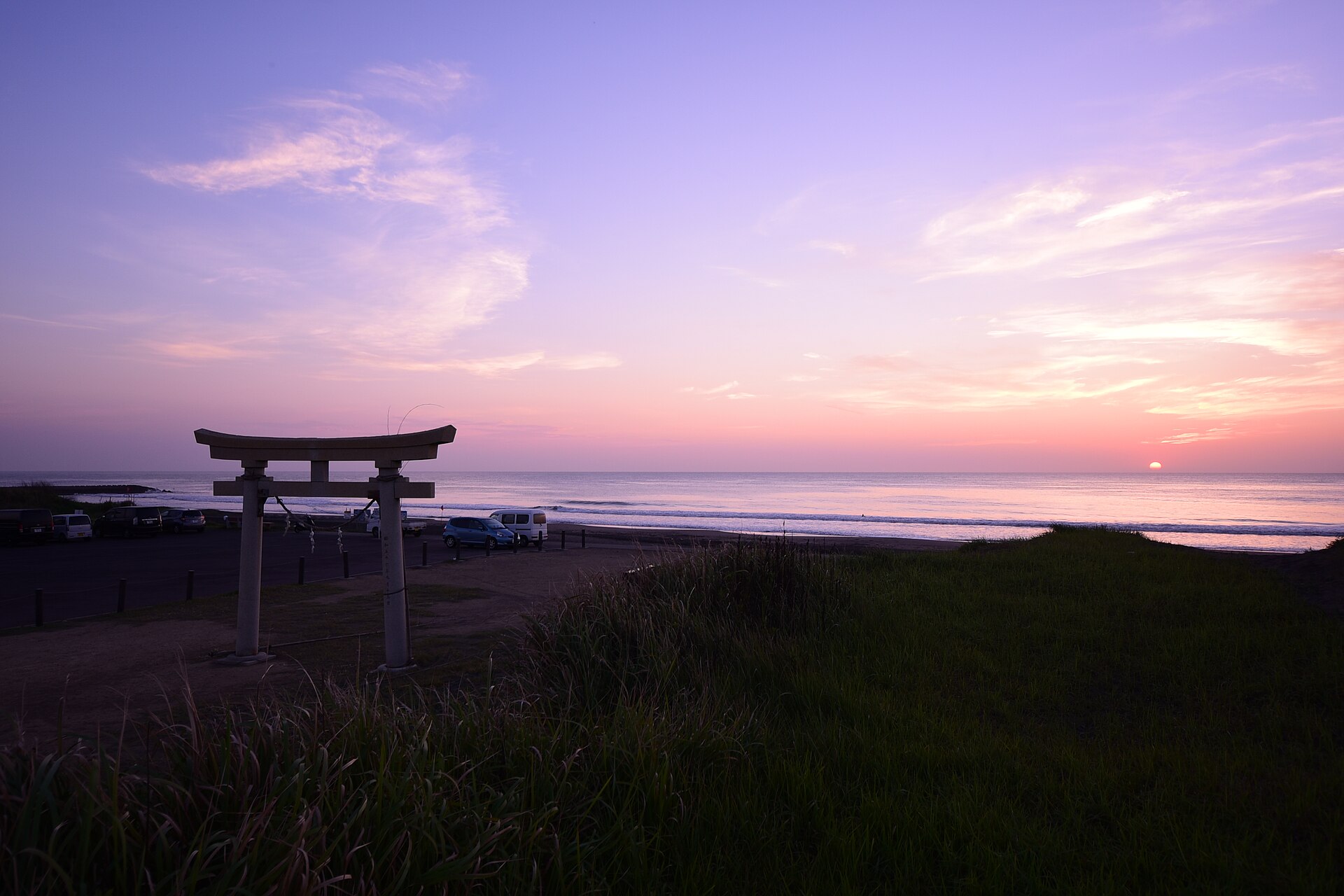
Tsurigasaki Beach
8.3 km · straight line
Distances are straight lines on the map, not travel times.