Chiba east · IsumiNo.114★Open in map →
Taito Coastal Plant Colony
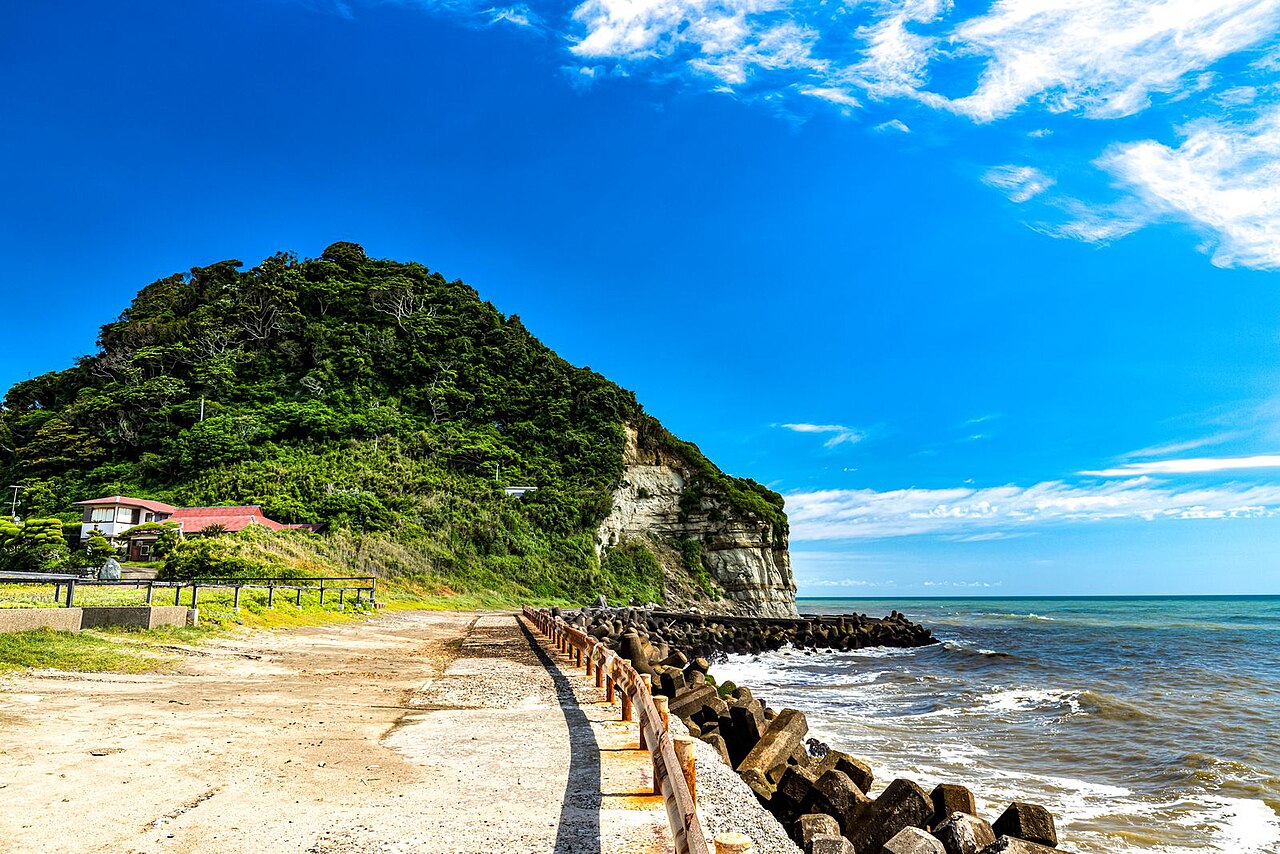
At the southern tip of Kujukuri Beach, a strip of native dune plants — including a coastal lily that is Isumi City's official flower — grows right against the sea wind on legally protected sand.
- FromTokyo Stn
- ~120 mintrain + long walk
- Get off atTaito Stn (Sotobo line)
- From there
- Taito Coastal Plant Colony
The sweet spot
From the road it reads as 'just a dune' with no signature monument, there is little English-language information about it, and it sits well off the main tourist route in southern Chiba — so foreign visitors rarely find it.
Where it is
50 more notes in Chiba · open the map →What to look for — in walking order
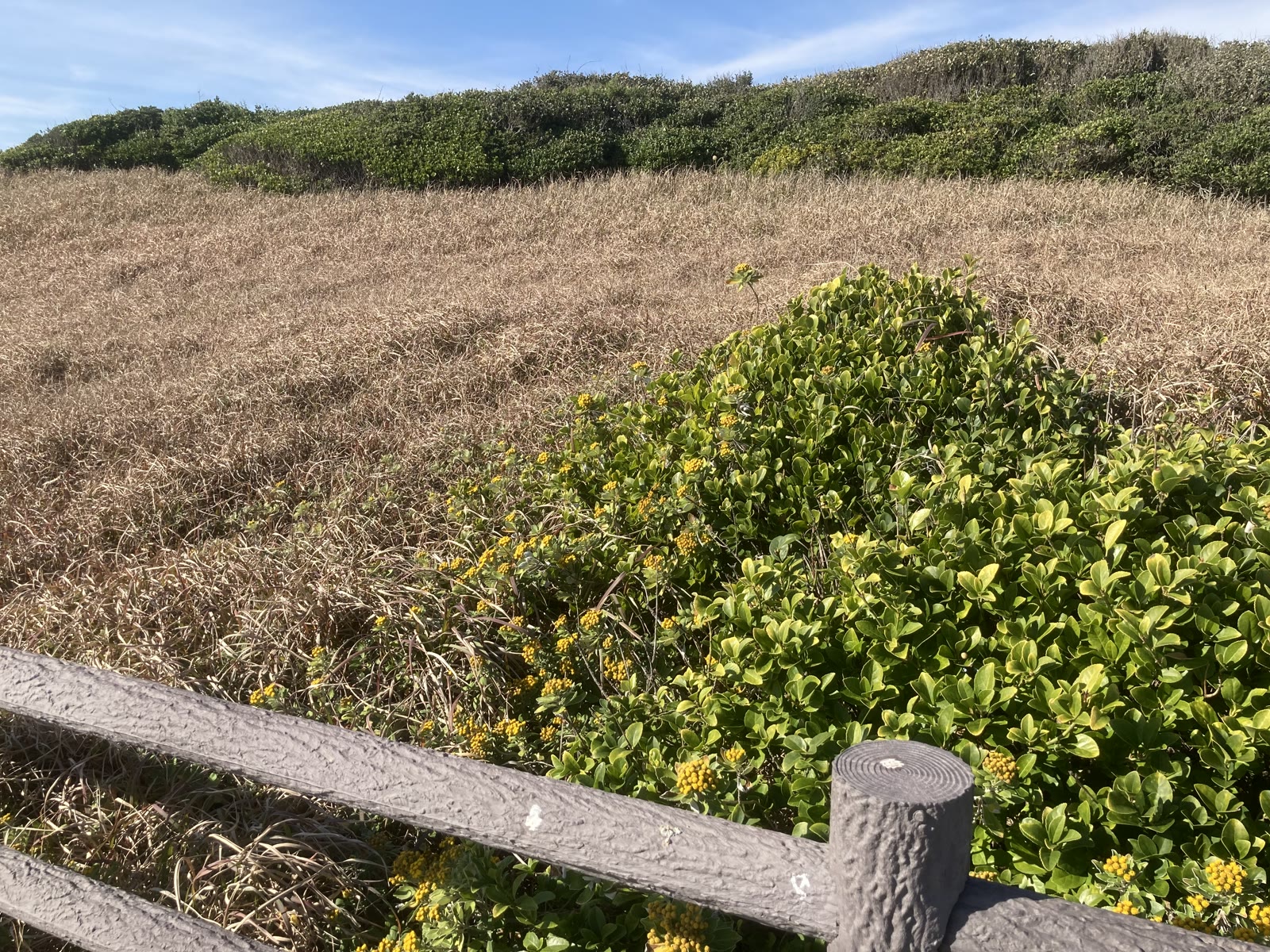
- Wooden boardwalkthe route over the protected dune; keeps visitors off the fragile sand
- Native coastal floraaround twenty recorded species, including isogiku, beach morning glory and beach pea
- Sukashiyuri in summera coastal lily and the official flower of Isumi City, blooming here in summer
- Kujukuri's southern endwhere the 60-km beach meets the headland and the coast turns to cliff
How to actually get there
- Tokyo Stn → Kazusa-Ichinomiya Stn (Limited Express Wakashio, ~65 min)
- Kazusa-Ichinomiya Stn → Taito Stn (local Sotobo line train, ~15 min)
- Taito Stn → the shore (walk ~40 min, or taxi ~10 min)
- Sotobo line to Taito Stn, then walk
- Tokyo Stn →(Limited Express Wakashio, ~65 min)→ Kazusa-Ichinomiya Stn →(local Sotobo line train, ~15 min)→ Taito Stn. The express does NOT stop at Taito, so you change to a local train at Kazusa-Ichinomiya. From Taito Stn it is about a 40-minute walk to the shore, or roughly 10 minutes by taxi. Total from Tokyo about 2 hours. Local trains on this section run only about once or twice an hour — check the day's timetable before leaving.
- Return the same way
- Retrace it: local Sotobo train from Taito Stn back to Kazusa-Ichinomiya, then the express to Tokyo. Local trains here are infrequent and thin out in the evening — check the return times posted at Taito Stn when you arrive so you are not left waiting.
About the place
Where the long sweep of Kujukuri Beach meets a low headland, a patch of wild sand still holds the plants that once covered this whole coast. Isogiku (a wild chrysanthemum), sukashiyuri (a coastal lily), beach morning glory and beach pea are among the roughly twenty coastal species recorded here, rooting and flowering in the sea wind. The colony was protected in 1920 as a representative example of Japan's coastal dune vegetation. Wooden boardwalks carry visitors over the fragile ground, and the surviving strip — though small — is genuinely old: a remnant garden that no one planted.
How to enjoy it
Come on a calm morning and follow the boardwalk. Early summer is when beach morning glory and the sukashiyuri lilies are in flower, with the low sun crossing the dune at a shallow angle and the sea flat beyond.
Background & history
The colony was designated a national natural monument on 17 July 1920 under the 1919 Historic Sites, Scenic Spots and Natural Monuments Preservation Act — one of Japan's first such monuments. At designation it spread across about five hectares. From the 1920s onward, land subsidence and severe coastal erosion pushed the shoreline back more than 100 metres, and most of the colony was lost. Part of the site was formally removed from the designation in 1985; what remains is roughly 0.6 hectares.
Before you go
- Cash
- There is no entry fee. Rural stations and taxis here may not take IC cards or credit cards, so carry some cash and coins.
- Good to know
- Stay on the wooden boardwalk — the sand and the plants are fragile and legally protected.
- Another way
- If the 40-minute walk from Taito Stn is too far, a taxi from the station reaches the shore in about 10 minutes.
- After you get off
- From Taito Stn, head toward the sea and follow the shore to the cape — about a 40-minute walk on flat roads, or about 10 minutes by taxi.
Nearby notes
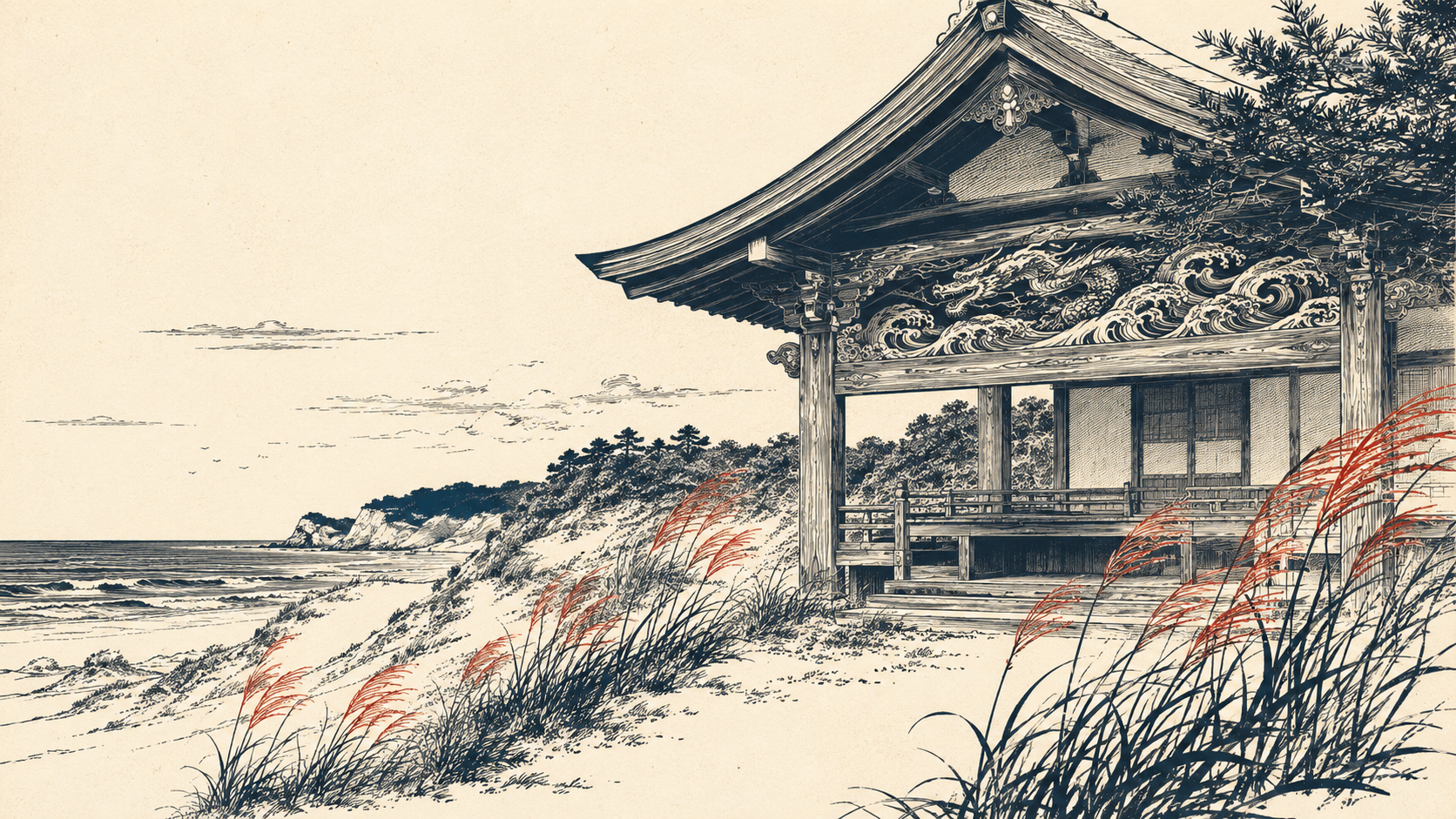 illustration (AI-illustrated)
History · Chiba★
Iinawa-ji
1.0 km · straight line
 Pullwell / CC BY-SA 4.0
Culture · Chiba★★
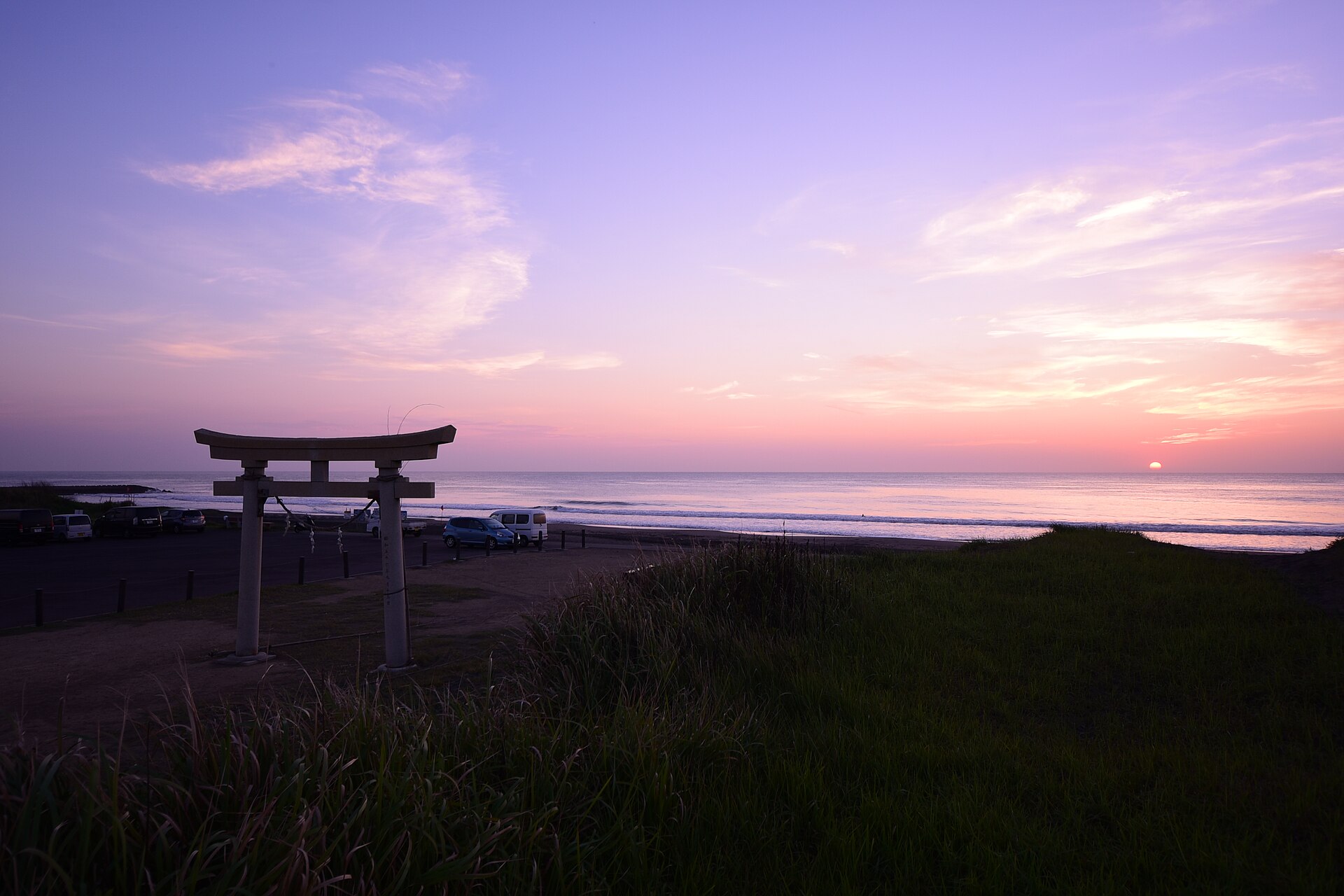
Tsurigasaki Beach
3.9 km · straight line
 HEATFISHER1972 / CC BY-SA 4.0
Culture · Chiba★★
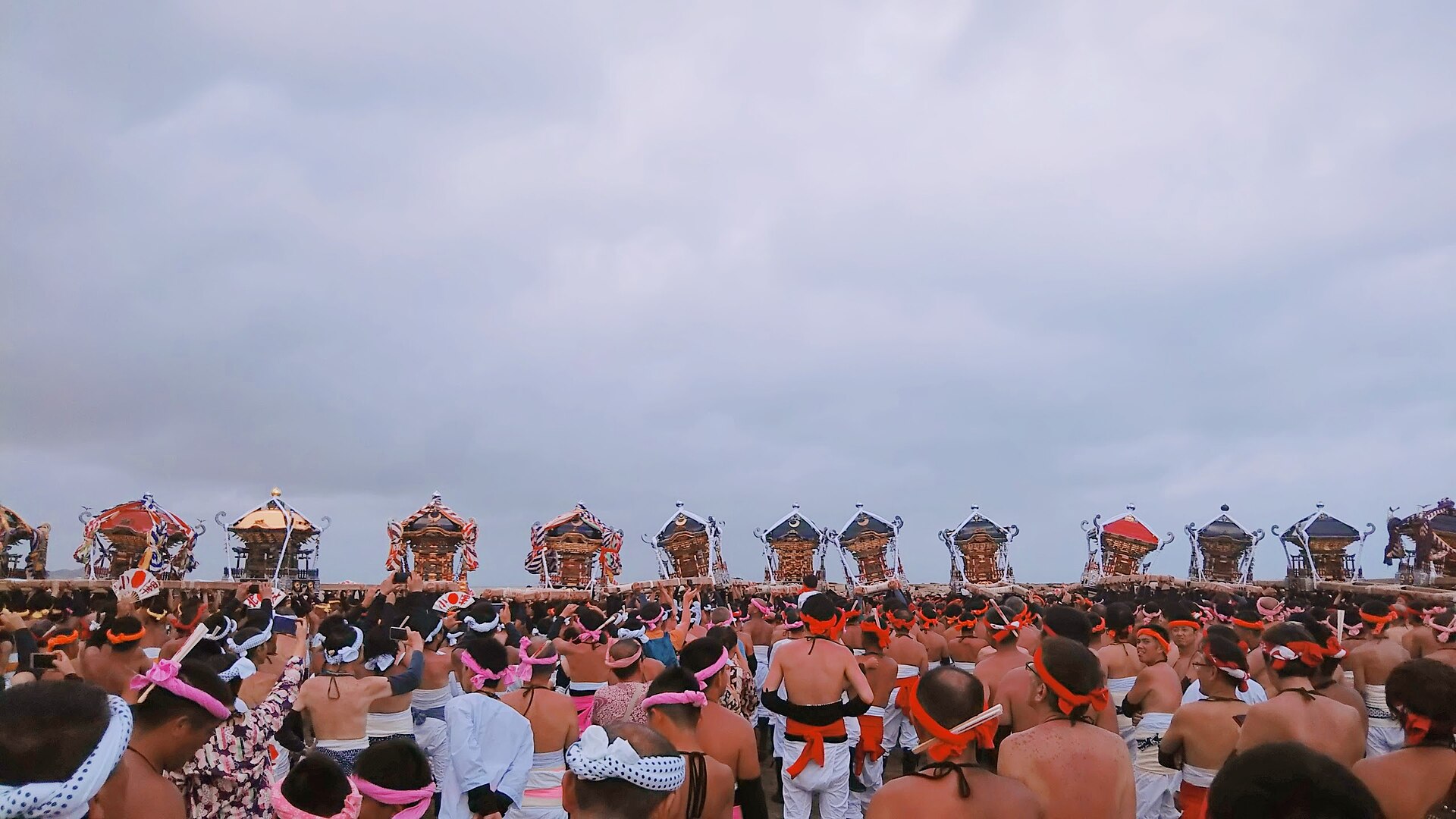
Ohara Hadaka Matsuri
4.9 km · straight line
 くろふね / CC BY-SA 4.0
Nature · Chiba★
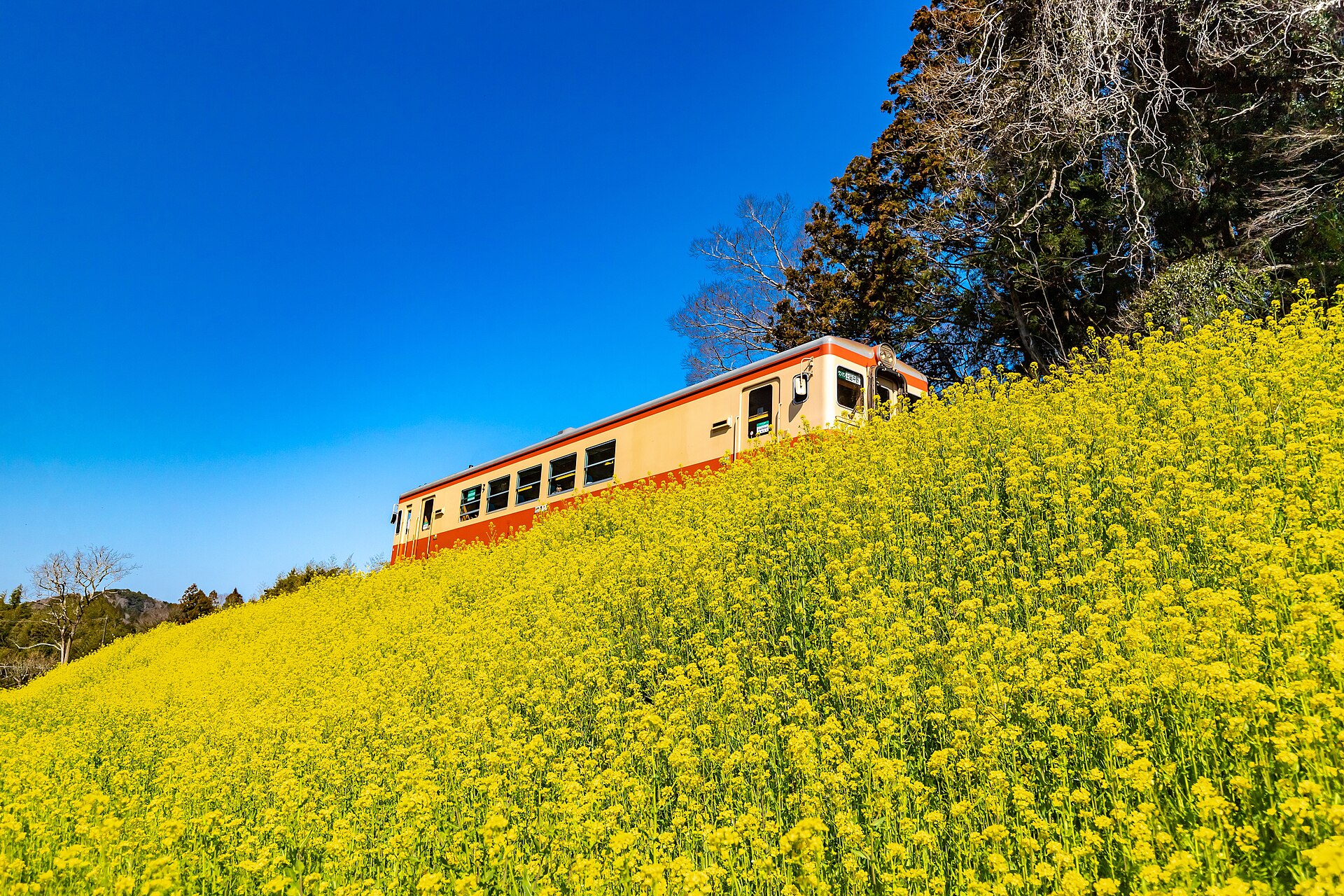
Isumi Railway Rapeseed Fields
9.3 km · straight line
Distances are straight lines on the map, not travel times.