Chiba east · IsumiNo.109★Open in map →
Iinawa-ji
— the Tengu Temple of Isumi
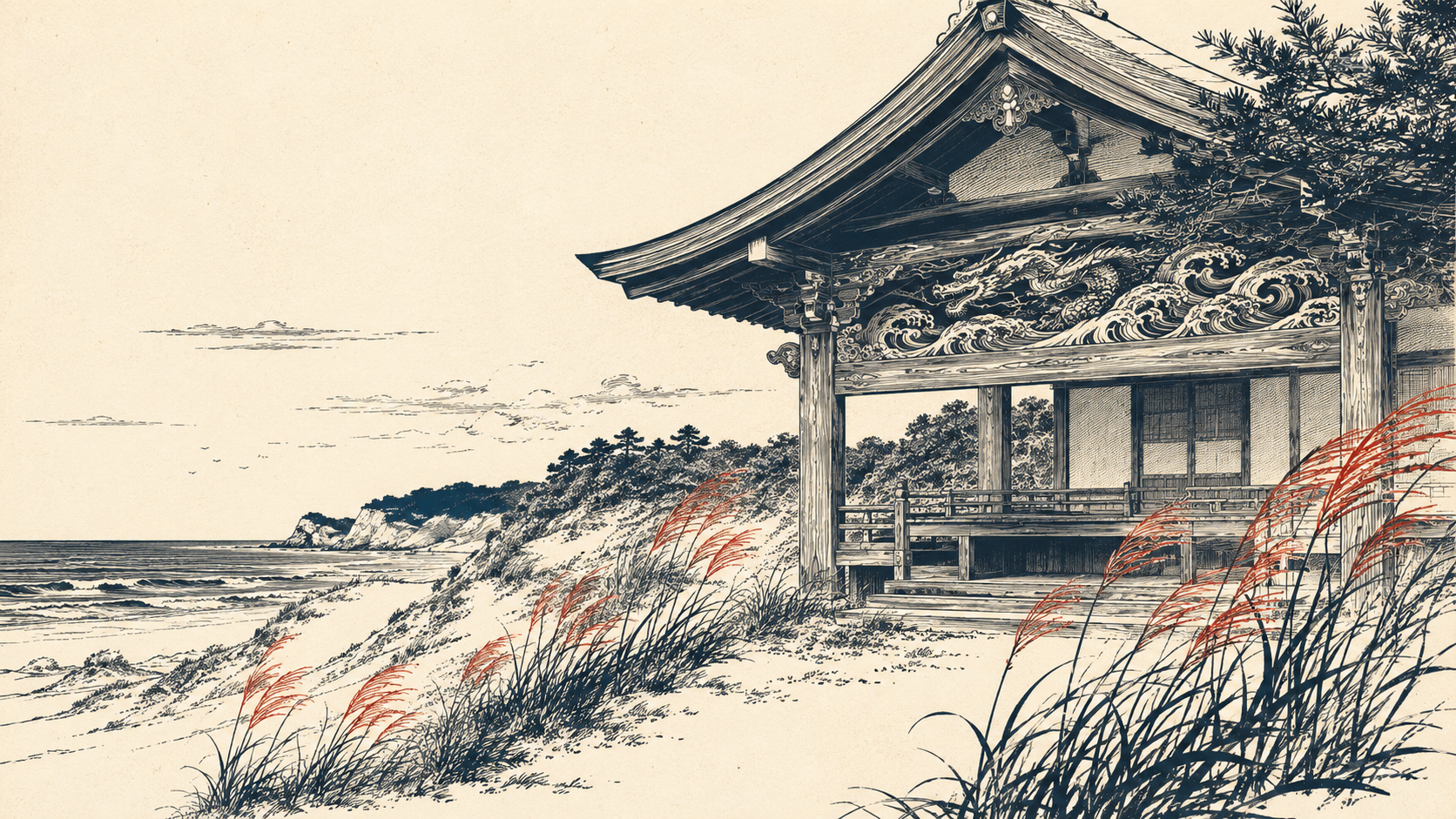
A Tendai Buddhist temple near the Chiba coast whose main hall holds a celebrated transom carving by the Edo-period sculptor Nami-no-Ihachi — and a wave panel that one local historian links to Hokusai's Great Wave.
- FromTokyo Stn
- ~75-90 mintrain + transfer (infrequent)
- Get off atTaito Stn (JR Sotobo Line)
- From there
- Iinawa-ji
The sweet spot
It stays quiet because there is very little English information about it, it sits away from the main tourist routes, and reaching it takes an express train, a local train, and a walk. Day-trip guides rarely list it.
Where it is
50 more notes in Chiba · open the map →What to look for — in walking order
- Ushiwaka-maru and the great tenguthe main-hall transom carved from a single keyaki plank about 4 metres long
- Ihachi's wave carvingssurging-wave reliefs that gave the sculptor his nickname 'Ihachi of the Waves'
- The tengu deityIizuna Daigongen, the temple's main object of worship, shown in tengu form
- The main hall of 1797the current hall, rebuilt in 1797 and listed as a Chiba prefectural cultural property
How to actually get there
- Tokyo Stn → Kazusa-Ichinomiya Stn (Limited Express Wakashio, ~60 min)
- Kazusa-Ichinomiya Stn → Taito Stn (local JR Sotobo Line, 2 stops, ~10 min)
- Taito Stn → the temple (walk ~35 min, or taxi ~5 min)
- Wakashio express + local Sotobo Line train
- Tokyo Stn →(Limited Express Wakashio toward Awa-Kamogawa, ~60 min)→ Kazusa-Ichinomiya Stn →(local JR Sotobo Line toward Ohara, 2 stops, ~10 min)→ Taito Stn →(walk, ~35 min, or ~5 min by taxi)→ the temple. Total ~75-90 min by train, plus the walk. Note: the Wakashio express runs only a few times a day, and local trains at Taito come only about 1-2 times an hour — check the day's timetable before you leave.
- Return the same way
- Retrace the route: walk or taxi back to Taito Stn, take a local Sotobo Line train to Kazusa-Ichinomiya, then the Wakashio express back to Tokyo. Local trains and the express both thin out through the afternoon and evening, so when you arrive check the return times posted at Taito Station.
About the place
Iinawa-ji (also read Izunadera) sits inland from the surf beaches of Isumi in eastern Chiba. Its main hall is best known for a single-plank keyaki transom — carved from a plank of Japanese zelkova hardwood — depicting the young Ushiwaka-maru (the childhood name of the warrior Minamoto no Yoshitsune) with a great tengu, the long-nosed mountain spirit of Japanese folklore. Local sources describe this panel as a masterwork of the carver Nami-no-Ihachi. The same hall keeps other Ihachi carvings, including the surging waves that gave him his nickname. A local researcher has argued that these waves may have influenced Hokusai's woodblock print 'The Great Wave,' though this remains one scholar's theory, not an established fact. The temple's main deity is Iizuna Daigongen, shown in tengu form — the source of its local nickname, the 'tengu temple.'
How to enjoy it
Come for the carvings. Take time to study the transom work up close — it is the reason to make the trip. The main hall is open 10:00 to 16:00; admission is a 300-yen cash fee and the hall may close in bad weather. You can pair the visit with the nearby Isumi coast.
Background & history
By tradition the temple was founded in 808 and is attributed to the monk Ennin (Jikaku Daishi). The present main hall was rebuilt in 1797 and is designated a Tangible Cultural Property of Chiba Prefecture. Nami-no-Ihachi — full name Takeshi Ihachiro Nobuyoshi (1752–1824) — is said to have worked at the temple around the time of that rebuilding, earning his nickname for vigorous carvings of surging water.
Before you go
- Cash
- The temple admission is a 300-yen cash fee paid at the hall, so carry coins. Small rural stations and buses in this area are often cash-only too.
- Good to know
- The main hall is open 10:00 to 16:00 and may close in bad weather. On quiet weekdays it is safest to phone ahead through the Isumi tourism office.
- Another way
- From Taito Station a taxi cuts the 35-minute walk to about 5 minutes. Taxis are not always waiting, so it helps to book one in advance.
- After you get off
- From Taito Station, walk inland on the paved lane toward the Taito Cape lighthouse area, then up the temple approach — about 35 minutes on foot.
Nearby notes
 くろふね / CC BY 4.0
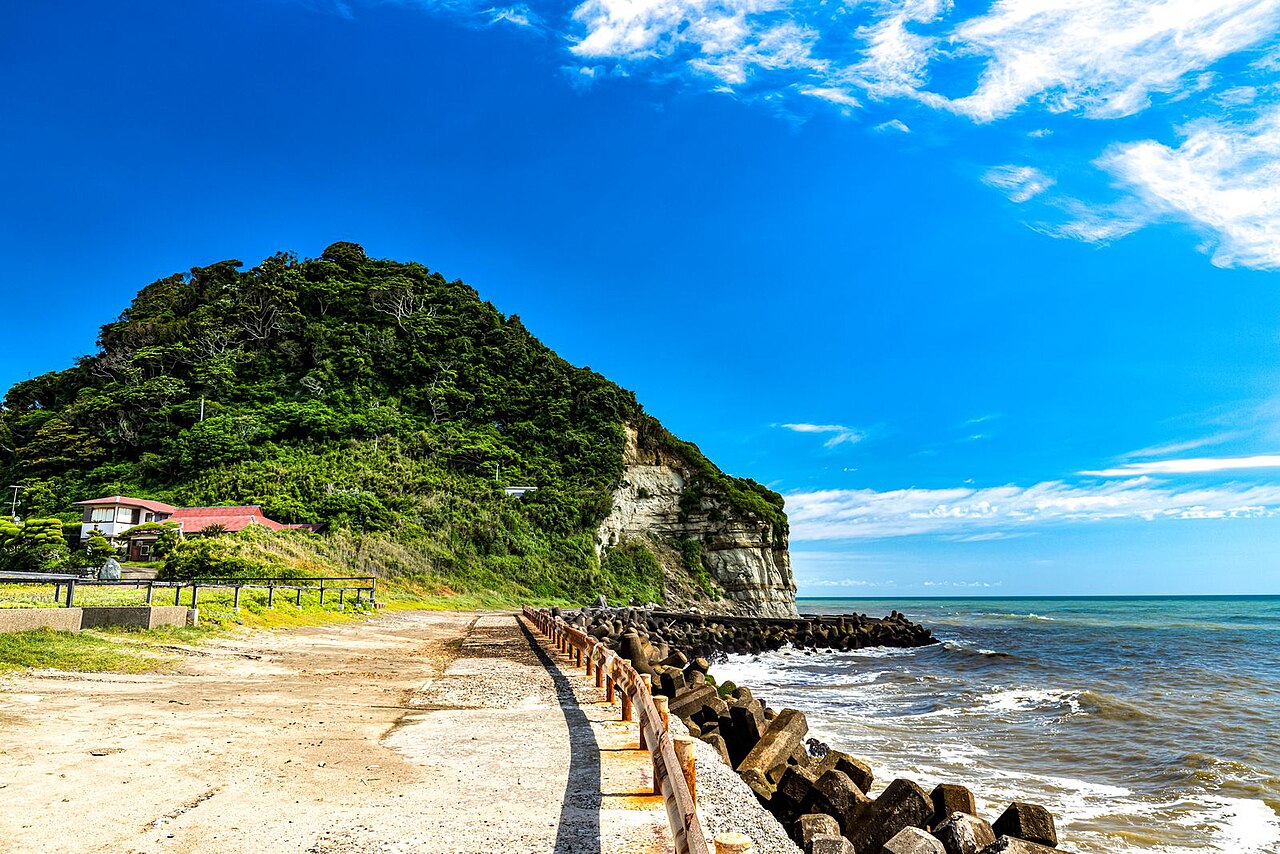
Nature · Chiba★
Taito Coastal Plant Colony
1.0 km · straight line
 Pullwell / CC BY-SA 4.0
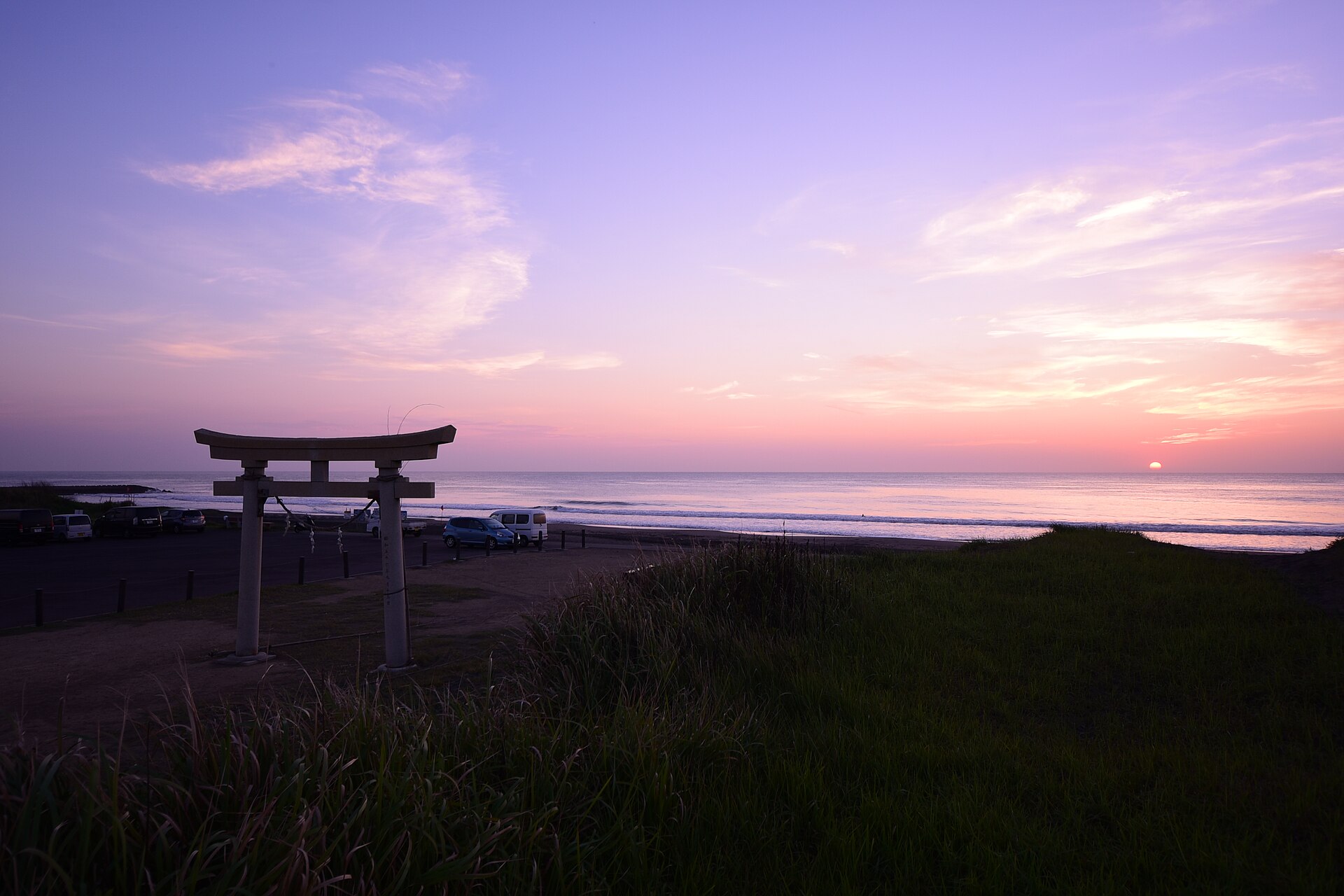
Culture · Chiba★★
Tsurigasaki Beach
3.0 km · straight line
 HEATFISHER1972 / CC BY-SA 4.0
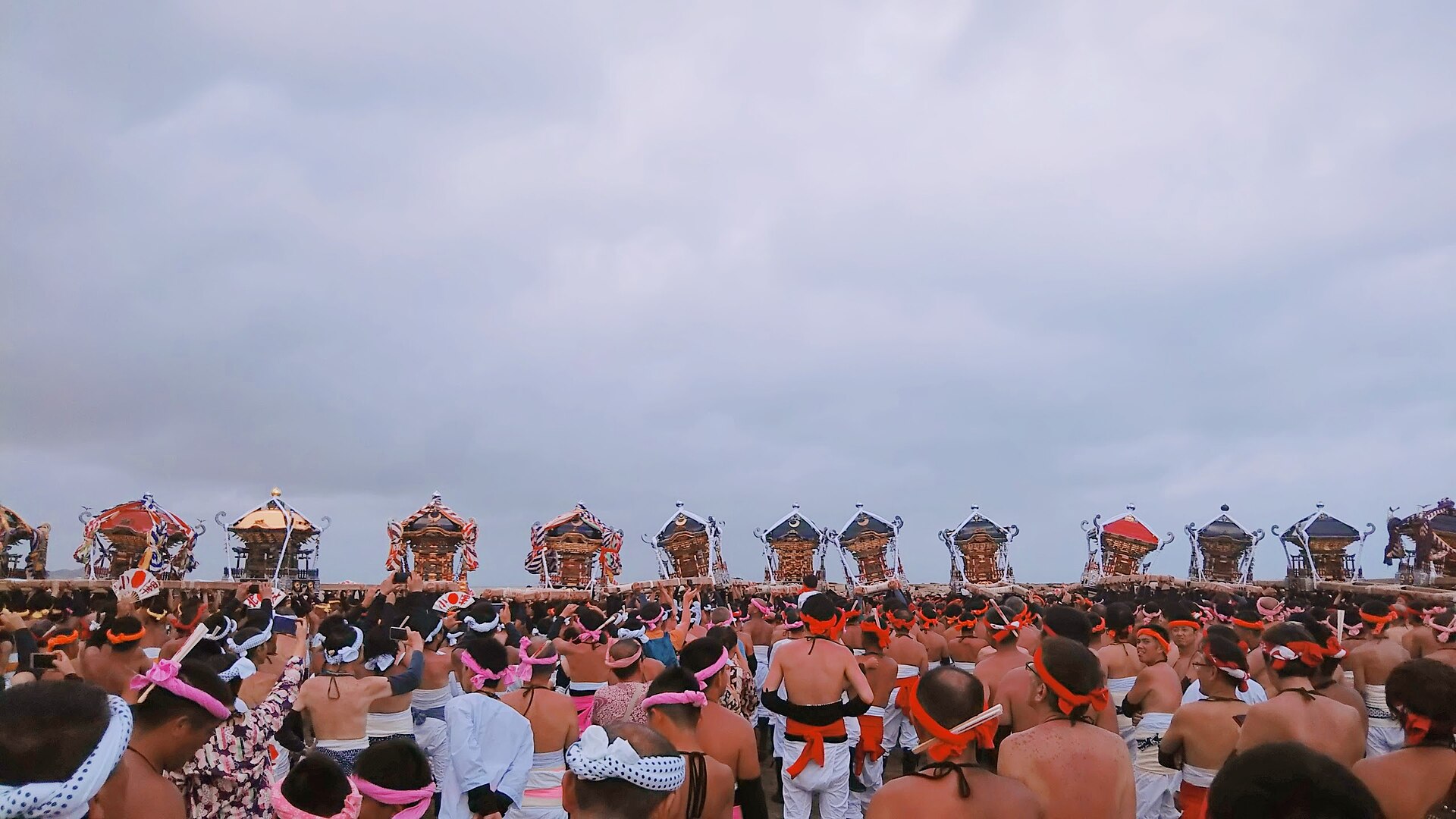
Culture · Chiba★★
Ohara Hadaka Matsuri
5.5 km · straight line
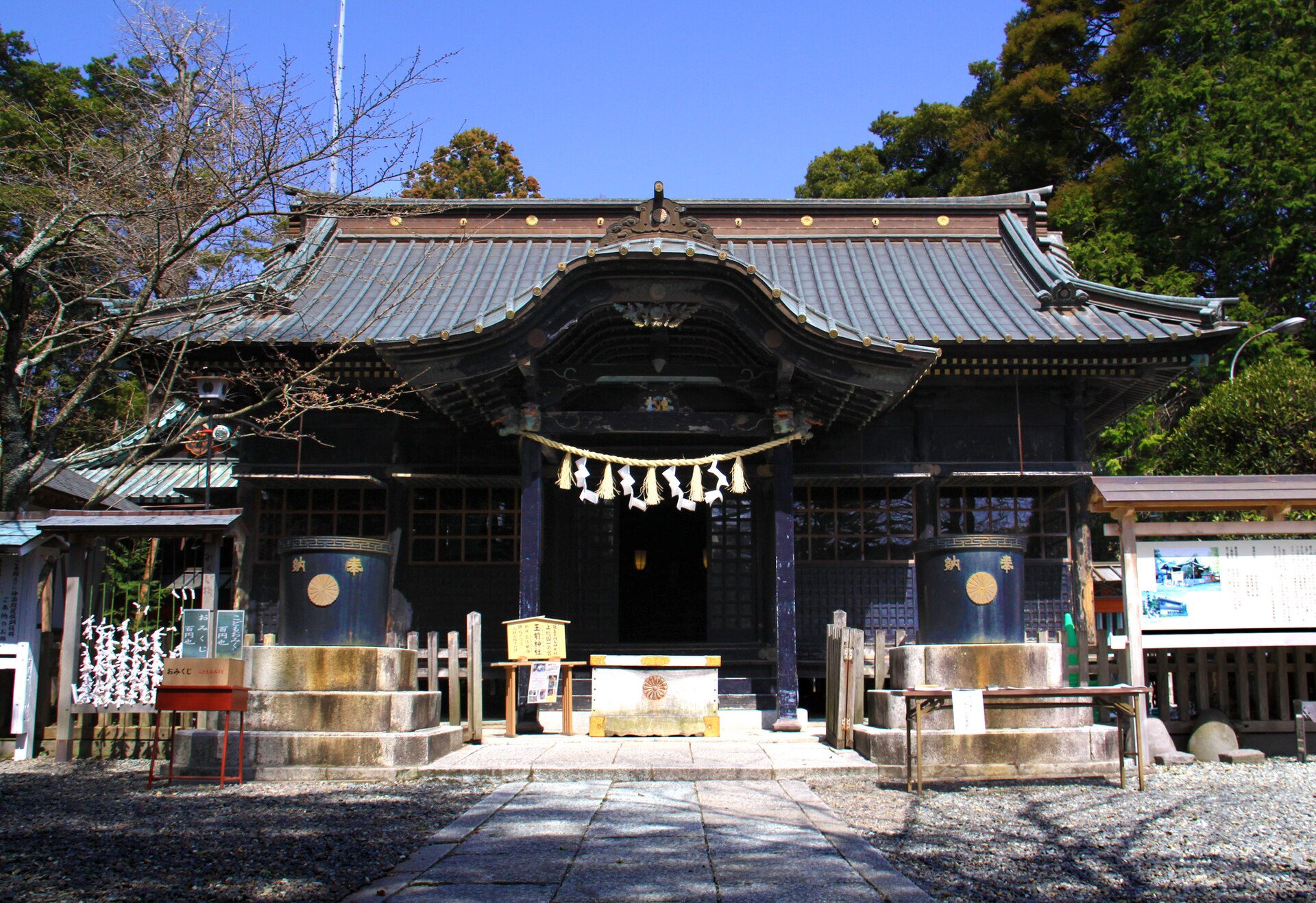 ChiefHira / CC BY-SA 3.0
History · Chiba★★
Tamasaki Shrine
8.4 km · straight line
Distances are straight lines on the map, not travel times.