Tochigi · Nikko / KinugawaNo.365★★Open in map →
Ryuokyo Ravine
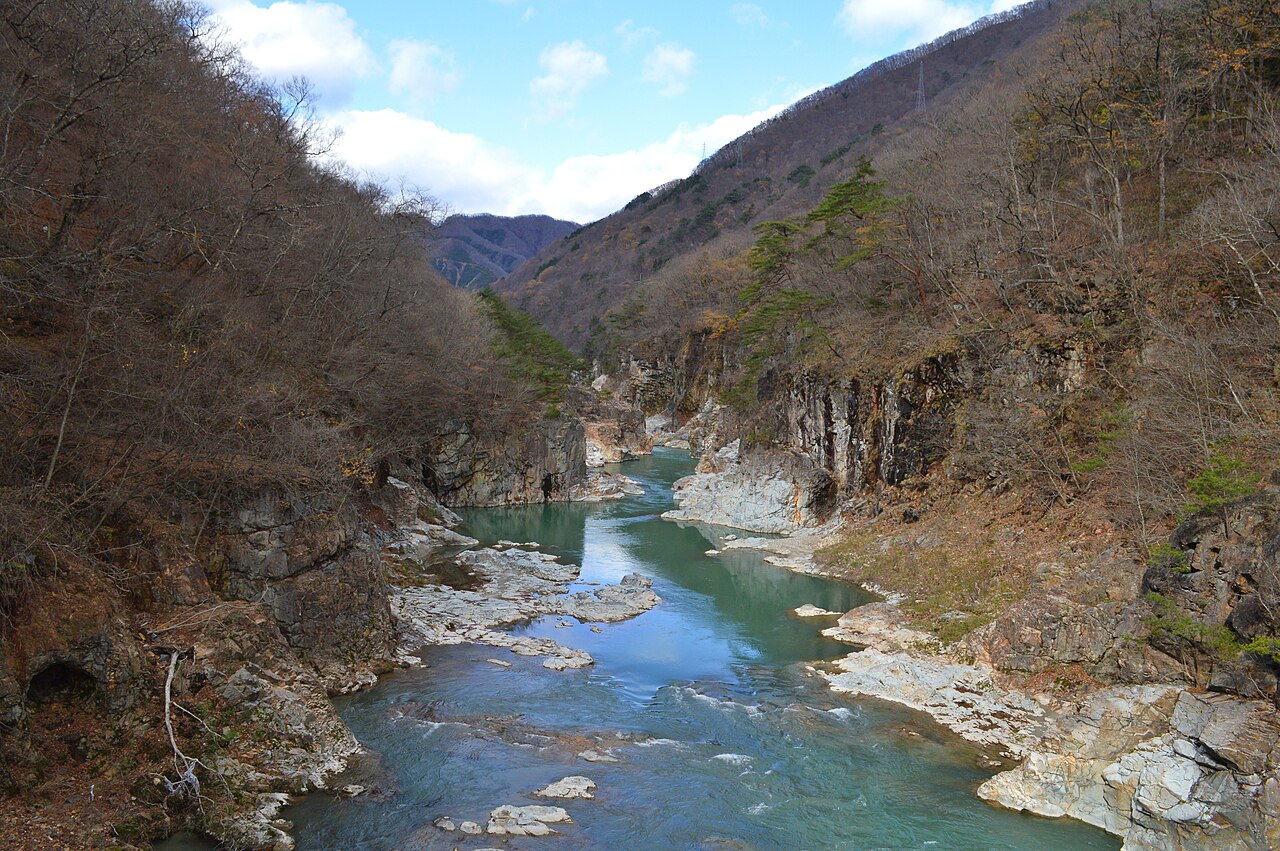
A gorge of about 3 km inside Nikko National Park, running between Kinugawa Onsen and Kawaji Onsen. The Kinugawa River has cut down through volcanic rock formed by undersea eruptions some 22 million years ago, and the changing rock colour gives the sections their white, blue and purple dragon names.
- FromAsakusa Stn (Tokyo)
- ~150 mintrain + local railway
- Get off atRyuokyo Station (Yagan Railway Aizu-Kinugawa Line)
- On foot
- Ryuokyo Ravine
The sweet spot
Kinugawa Onsen is a well-known hot spring town that most visitors treat as a destination in itself — hotel, bath, dinner, hotel. Ryuokyo is two stops further on the same track and is a completely different kind of place: a national-park gorge with a proper trail and a river that has been at work for millions of years. The white-blue-purple naming sounds like tourism copy until you actually walk it and watch the rock change colour under you.
Where it is
16 more notes in Tochigi · open the map →What to look for — in walking order
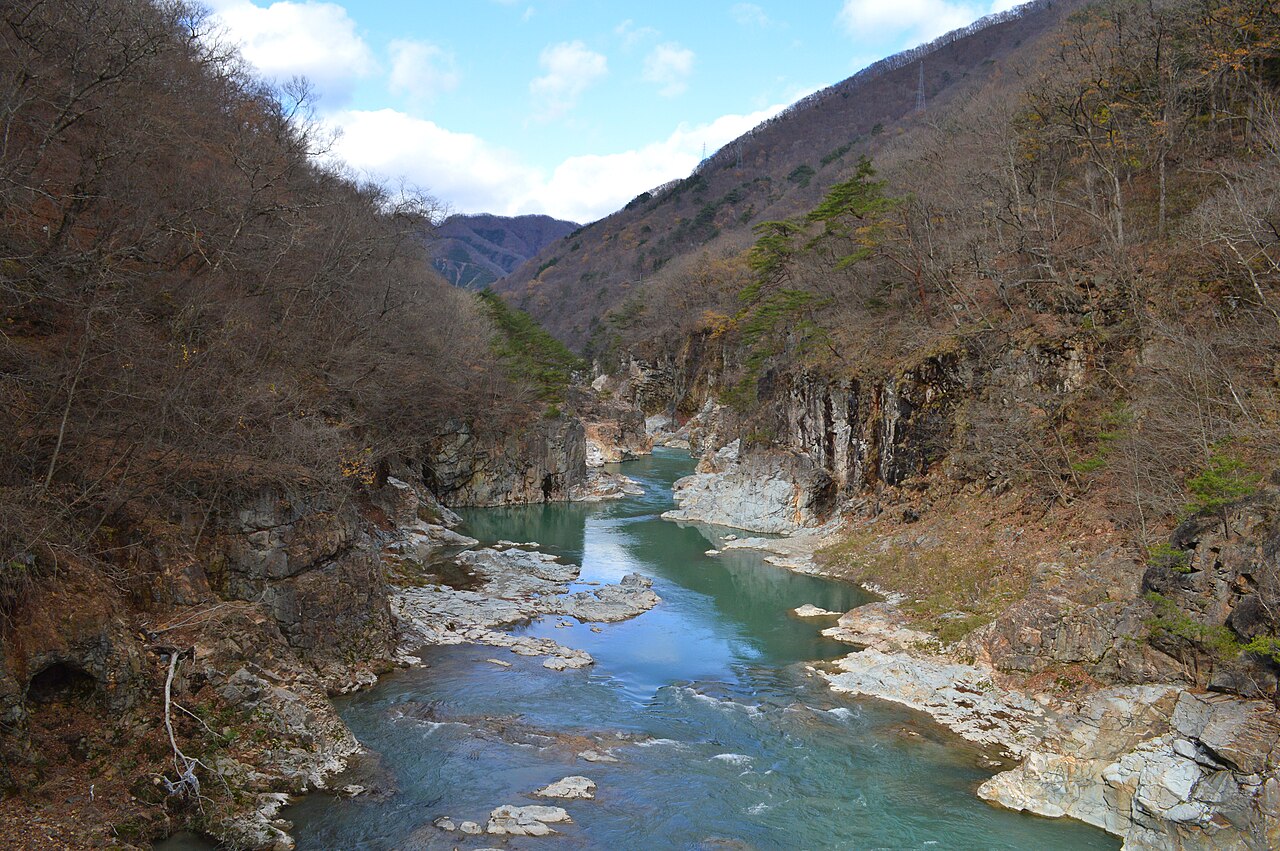
- The three dragon sectionsHakuryu, Seiryu and Shiryu — white, blue and purple, named for the colour of the rock the river has exposed in each stretch
- The gorge trailabout 7 km end to end with very little climbing, 3-4 hours from Kawaji Onsen; a short loop near the entrance covers the best of it in under an hour
- Ryuo Shrinethe shrine on the trail that gives the gorge its dragon-king name
- The river itselfthe Kinugawa, still cutting; the rock walls above it are the record of what it has already removed
How to actually get there
- Asakusa Station (Tokyo) → Kinugawa Onsen Station (Tobu limited express, ~2 hr).
- Kinugawa Onsen Station → Ryuokyo Station (Yagan Railway Aizu-Kinugawa Line, ~15-20 min; some limited expresses run through without a change).
- Ryuokyo Station → the trailhead (walk ~12 min).
- Walk the gorge trail — a short loop near the entrance, or the full ~7 km to Kawaji Onsen in 3-4 hours.
- Tobu limited express + Yagan Railway
- Asakusa Station (Tokyo) →(Tobu limited express toward Kinugawa Onsen, ~2 hr)→ Kinugawa Onsen Station →(Yagan Railway Aizu-Kinugawa Line, ~15-20 min)→ Ryuokyo Station → about a 12-minute walk to the gorge. Total about 2.5 hours. Some limited expresses run straight through onto the Yagan line and stop at Ryuokyo without a change — worth checking when you book.
- Ryuokyo or Kawaji-Onsen Station
- If you walk the gorge one way toward Kawaji Onsen, return from Kawaji-Onsen Station rather than doubling back — it is on the same Yagan Railway line. The Yagan Railway is a small local line with limited services, so check the return departures before you commit to the long version of the walk.
About the place
Twenty-two million years ago this was seabed, and undersea volcanic eruptions laid down the rock. The sea went, the land rose, and the Kinugawa River began cutting downward through it — which it is still doing. The result is a gorge of roughly three kilometres between Kinugawa Onsen and Kawaji Onsen, inside Nikko National Park, where the exposed rock changes colour as the river passes through different layers. Local naming turns that geology into three dragons: Hakuryu, the white dragon, Seiryu, the blue, and Shiryu, the purple, each name attached to the stretch whose rock face it describes. A walking trail runs the length of it with very little climbing, about seven kilometres end to end and three to four hours if you do the whole thing from Kawaji Onsen, and Ryuo Shrine sits along the way. What makes it unusually easy for a gorge is that it has its own station: Ryuokyo, on the Yagan Railway, is about twelve minutes' walk from the trail.
How to enjoy it
Decide before you go whether you are doing the short version or the long one. The loop near the trailhead delivers most of the rock scenery in under an hour and gets you back to Ryuokyo Station comfortably; the full seven kilometres to Kawaji Onsen takes three to four hours and commits you to the Yagan Railway timetable at the far end. Wear proper closed shoes — the official guidance specifically warns about leeches on the trail. Check the Nikko City site for closures on the morning you travel, and treat this as a half-day paired with a night in Kinugawa Onsen rather than a day trip squeezed out of Tokyo.
Background & history
The rock of Ryuokyo was formed about 22 million years ago by undersea volcanic activity. As the land rose, the Kinugawa River cut down through those layers and exposed them, producing the roughly three-kilometre gorge that runs between Kinugawa Onsen and Kawaji Onsen today. The stretches are traditionally named for the colour of the rock they expose — Hakuryu the white dragon, Seiryu the blue, Shiryu the purple — and Ryuo Shrine stands along the trail. The whole gorge lies within Nikko National Park.
Before you go
- Cash
- The gorge and the trail are free; there is no gate. Your costs are the Tobu limited express and the Yagan Railway fare, which is a separate operator from Tobu. The shops near the station and along the approach are small and local — bring cash, and do not count on card acceptance once you leave the onsen town.
- Good to know
- The trail is open through the year but sections have been closed at times for safety, and Nikko City posts current closure notices on its tourism site — check on the morning you travel. Practical warnings from the official guidance: this is leech country, so do not walk in sandals or barefoot, and the surface is uneven in places. Winter brings ice on the shaded rock.
- Another way
- By car, Ryuokyo is on Route 121 between Kinugawa Onsen and Kawaji Onsen with a car park at the trailhead. If you are already staying in Kinugawa Onsen, the gorge is the obvious half-day out from the hotel and needs no separate planning.
- After you get off
- Ryuokyo Station is a small unstaffed-feeling stop on the Yagan Railway with the trailhead about 12 minutes' walk away; there is a rest area and car park at the entrance to the gorge.
Nearby notes
 掬茶 / CC BY-SA 3.0
Onsen · Tochigi★
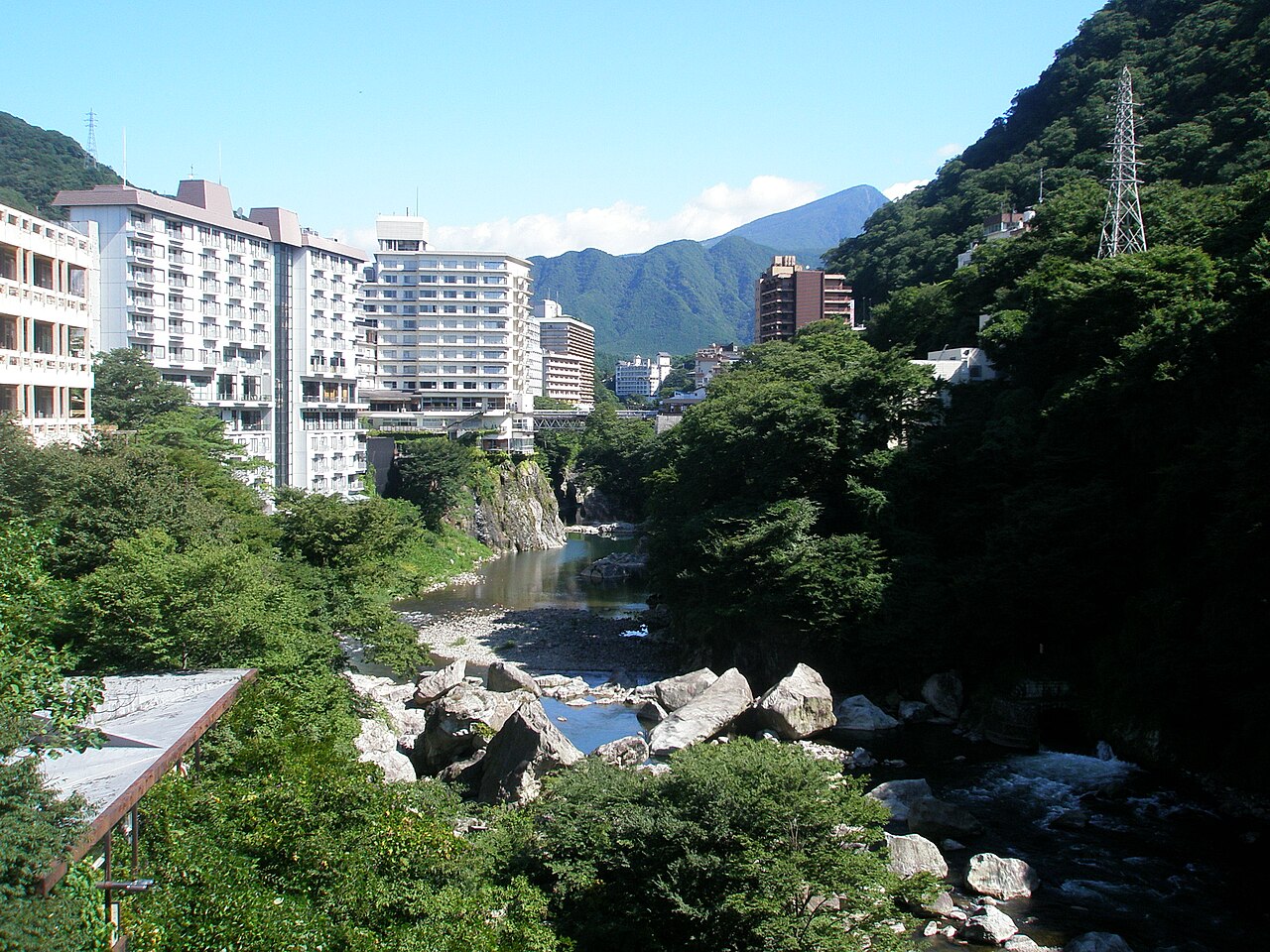
Kinugawa Onsen
4.3 km · straight line
 掬茶 / CC BY-SA 3.0
Entertainment · Tochigi★★
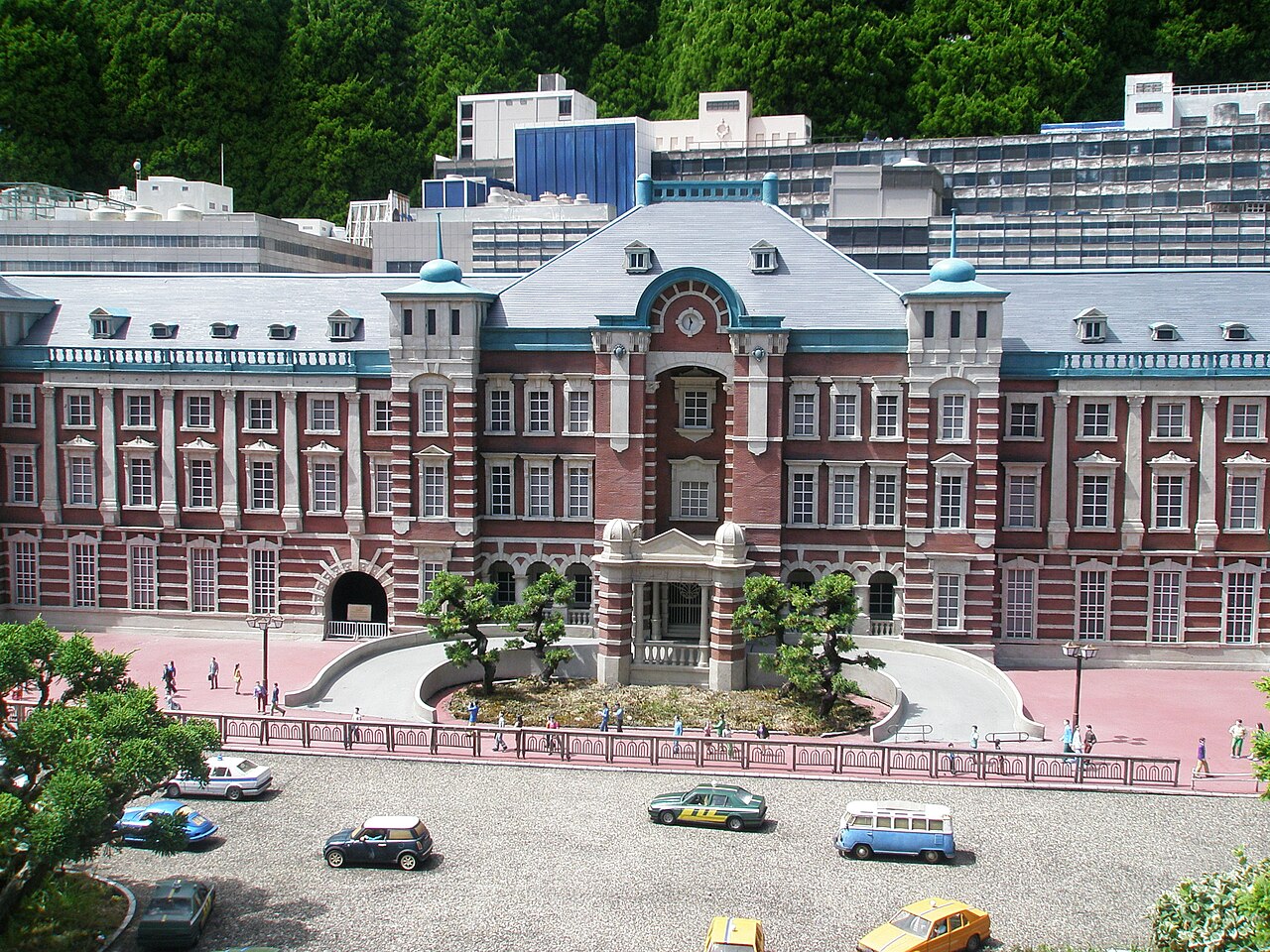
Tobu World Square
6.2 km · straight line
 Abasaa / Public domain
Entertainment · Tochigi★★
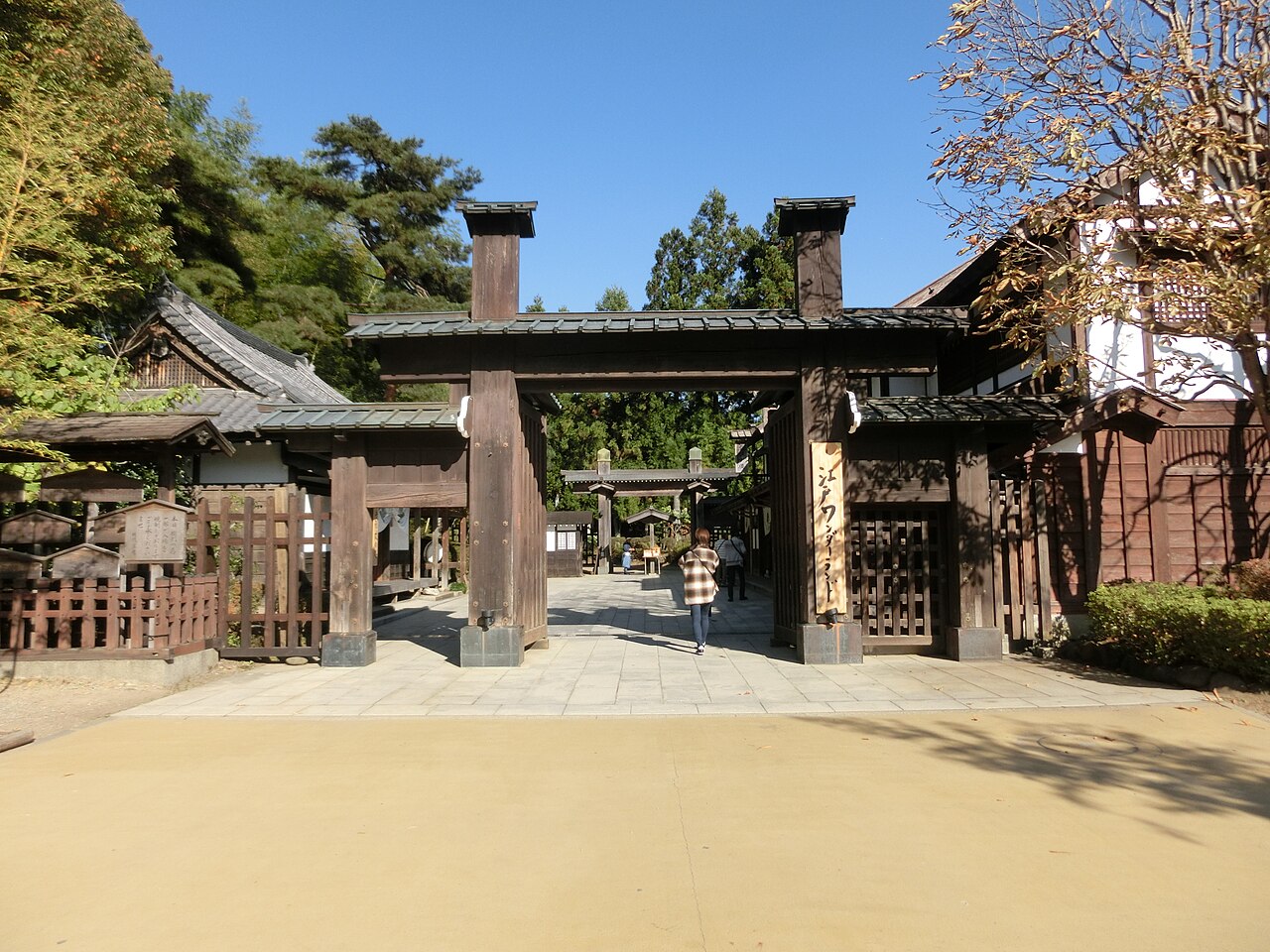
Edo Wonderland Nikko Edomura
8.0 km · straight line
 Miyuki Meinaka / CC BY-SA 4.0
Onsen · Tochigi★★
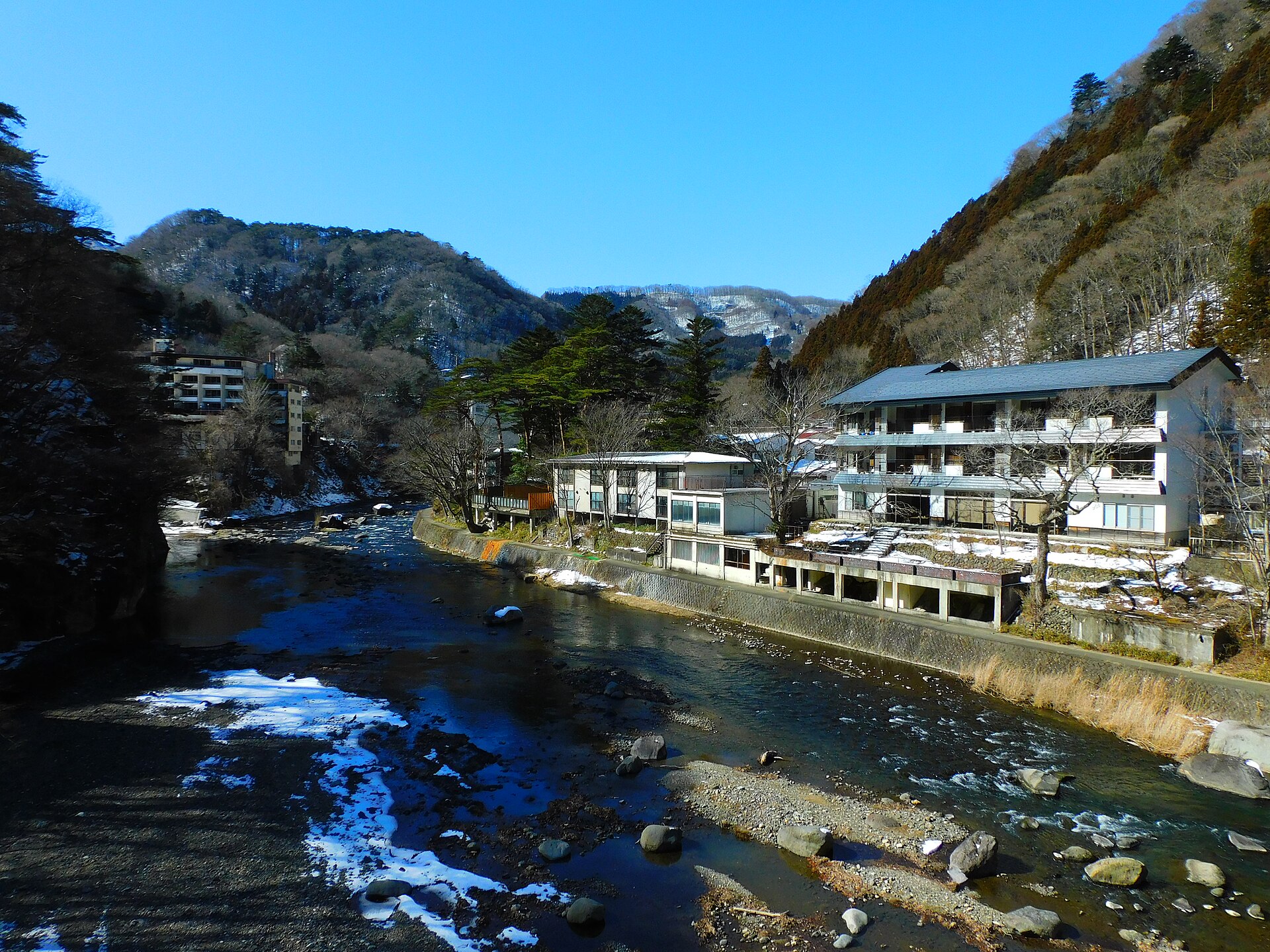
Shiobara Onsen
15.3 km · straight line
Distances are straight lines on the map, not travel times.